Our readers keep the lights on and my smoothie glass nicely filled. As an Amazon Associate, I earn from qualifying purchases.
The best digital small cameras prove that sensor size and lens reach, not brand name, are the true measures of pocket-ready photography. Whether you are chasing a bird in flight, capturing a street scene in low light, or vlogging on a busy sidewalk, the physics of the 1-inch sensor versus the 1/2.3-inch sensor determines what your final image actually looks like before you ever touch a filter or edit slider.
I’m Mohammad Maruf — the founder and writer behind WellFizz. I have spent hundreds of hours analyzing the engineering trade-offs between optical zoom ratios, sensor back-illumination, aperture ranges, and stabilization algorithms inside compact cameras to separate genuine performance from spec-sheet inflation.
This guide breaks down nine models spanning entry-level point-and-shoots to premium pocket powerhouses, distilling real-world image quality, autofocus behavior, and battery endurance so you can confidently choose among the best digital small cameras without falling for marketing tricks or pixel-counting traps.
How To Choose The Best Digital Small Cameras
Creating a high-quality digital small camera guide requires understanding that every millimeter of lens extension, every micron of sensor back-illumination, and every axis of stabilization translates directly into whether your vacation photos look like postcards or like blurry phone memories. The compact form factor hides enormous variation in optical capability, so you need to look past the “megapixel” number printed on the box.
Optical Zoom: The Real Reach Test
Optical zoom physically moves glass elements to magnify the scene without degrading resolution. Digital zoom crops into the sensor and throws away pixels. A camera with 30x optical zoom — like the Panasonic LUMIX ZS99 — can frame a distant animal or arena performer sharply, while a 3.6x lens like the Sony RX100 II forces you to walk closer or accept heavy cropping. If you shoot birds, concerts, or landscapes with distant details, prioritize optical zoom above all else. If you shoot selfies, street scenes, or indoor gatherings, moderate zoom with a wider aperture is the smarter trade-off.
Sensor Size: The Light-Gathering Bottleneck
The physical area of the imaging sensor determines how much light each pixel can collect. A 1-inch type sensor — found on the Canon PowerShot V10, Sony ZV-1F, and Sony RX100 II — captures roughly four times more light than the 1/2.3-inch sensors used in the Kodak AZ528 and Nikon P950. That extra surface area translates directly into cleaner shadows, less noise at higher ISO values, and better dynamic range when shooting sunrise landscapes or candlelit dinners. For general travel and everyday use, the 1-inch sensor cameras deliver visibly superior image quality in anything less than perfect daylight.
Autofocus Speed and Accuracy
Contrast detection autofocus — the most common system among budget and mid-range compacts — hunts for edges in the scene to lock focus. It works reliably in good light but struggles with moving subjects or low-contrast scenes. Hybrid autofocus, found on the Panasonic LUMIX ZS99, combines contrast detection with phase detection pixels on the sensor for faster, more confident lock-on during video recording or burst shooting. The Sony ZV-1F uses a 425-point contrast detection system that leverages Sony’s excellent subject-tracking algorithms to keep vloggers sharp even while walking. If you shoot action or unpredictable subjects, focus system sophistication matters far more than megapixel count.
Image Stabilization: Handheld Telephoto’s Best Friend
Optical image stabilization uses floating lens elements or a moving sensor to counteract hand shake. At a 52x or 83x zoom equivalent, even tiny hand tremors become massive frame shifts. The Nikon P950’s lens-shift stabilization makes handheld shots at 2000mm telephoto usable, whereas the same reach on an unstabilized camera would require a tripod with every shot. For compact cameras with zoom under 10x, stabilization is less critical for stills but still valuable for smooth handheld video. Make stabilization a non-negotiable requirement for any camera above 20x optical zoom.
Battery Endurance and Charging Convenience
Compact batteries are small by necessity, but capacity varies wildly. The Sony ZV-1F and Canon PowerShot V10 rely on the NP-BX1 cell, which typically delivers about an hour of continuous 4K recording. The Kodak AZ528 uses a standard lithium-ion pack that users report as “short” but cheap to replace. The Nikon P950’s larger body houses a bigger battery that can last through a full day of intermittent wildlife shooting. USB-C charging has become a must-have convenience, allowing you to top off from a portable power bank rather than hunting for a wall outlet. If you plan to shoot for hours without a break, look for models that support USB-C charging and carry a spare battery in your bag.
Quick Comparison
On smaller screens, swipe sideways to see the full table.
| Model | Category | Best For | Key Spec | Amazon |
|---|---|---|---|---|
| Sony ZV-1F | Premium Compact | Vlogging & Content Creation | 1-inch sensor, 20mm F2.0 lens | Amazon |
| Nikon COOLPIX P950 | Superzoom Bridge | Extreme Telephoto Wildlife | 83x optical zoom (2000mm equiv.) | Amazon |
| Panasonic LUMIX ZS99 | Premium Travel Zoom | Travel & Concerts | 30x LEICA zoom (24-720mm) | Amazon |
| Sony RX100 II | Premium Pocket Camera | High-Image-Quality Everyday | 1-inch sensor, F1.8 lens | Amazon |
| Canon PowerShot V10 | Compact Vlog Camera | Ultra-Portable Vlogging | 1-inch sensor, built-in stand | Amazon |
| Canon PowerShot ELPH 360 HS | Mid-Range Point-and-Shoot | Family & Beginner Photography | 12x optical zoom, 20.2MP sensor | Amazon |
| Kodak PIXPRO AZ528 | Mid-Range Superzoom | Wildlife & Birding on a Budget | 52x optical zoom, 24mm wide angle | Amazon |
| LOUM 8K Digital Camera | Entry-Level Vlogging | Budget-Friendly Vlogging | 2.8″ IPS touchscreen, WiFi | Amazon |
| Jukanur 5K Digital Camera | Entry-Level Photography | Beginner & Family Starter | 6x optical zoom, 5K video | Amazon |
In‑Depth Reviews
1. Sony ZV-1F

The Sony ZV-1F is purpose-built for content creators who need reliable 4K video in a pocketable body. Its 1-inch 20.1MP sensor with a wide-angle 20mm F2.0 lens lets you capture more background context in selfie-mode shots while letting in enough light to keep indoor vlogs clean. Sony’s Eye-AF and product showcase mode switch focus seamlessly from face to handheld object, making it the most creator-friendly setup in this list for talking-head and demonstration content.
The bundled kit adds a Deco Gear case, extra battery, external charger, filter set, tripod grip, 32GB SD card, and photo editing software, giving you a complete out-of-box vlogging rig. The directional 3-capsule microphone captures clear audio with minimal wind interference, and the built-in USB-C port allows charging from a power bank during long shoots. Active stabilization mode reduces walk-around shake noticeably, though aggressive walking still introduces some wobble.
Battery life is the main limiting factor — the NP-BX1 cell provides roughly one hour of continuous 4K recording, so the included spare battery is essential for full-day outings. The fixed 20mm zoomless lens means you cannot optically reach distant subjects, and the touchscreen interface can feel slightly menu-heavy until you customize the function button. For dedicated vloggers who prioritize audio and video quality over zoom flexibility, this kit delivers exceptional value.
Why it’s great
- Excellent 1-inch sensor with F2.0 aperture for low-light vlogging
- Directional 3-capsule mic captures clear audio without add-on gear
- Complete kit includes spare battery, case, tripod, and editing software
Good to know
- Fixed lens with no optical zoom limits framing flexibility
- Battery lasts roughly one hour of 4K video recording
- Menu system requires initial customization for efficient use
2. Nikon COOLPIX P950

The Nikon COOLPIX P950 delivers an extraordinary 83x optical zoom reaching a 2000mm equivalent focal length, making it the undisputed king of reach among compact digicams. This is the camera that lets you photograph the moon’s craters or a bald eagle perched a quarter-mile away without setting up a spotting scope. The 16MP CMOS sensor is modest by modern standards, but the lens-shift image stabilization does a credible job keeping handheld telephoto shots usable at maximum extension.
Built-in Bird and Moon scene modes remove the guesswork from specialty shooting — select the mode and the camera optimizes shutter speed, ISO, and focus settings automatically. The rotating LCD screen tilts for low-angle wildlife shots, and the electronic viewfinder helps frame in bright sunlight when the rear screen washes out. 4K UHD video at 30fps captures detailed footage of distant subjects, though the small sensor produces noticeable noise in anything less than bright daylight.
The autofocus struggles with low-contrast subjects at full zoom, often hunting before locking, but the easy-access manual focus wheel lets experienced users override quickly. The aperture narrows to F6.5 at maximum zoom, requiring good light or a tripod for sharp results. At its price point, no other compact camera offers this level of optical reach — the P950 is a specialist tool for wildlife and astronomy enthusiasts who prioritize magnification over sensor size.
Why it’s great
- 83x optical zoom reaches 2000mm with no resolution loss
- Dedicated Bird and Moon modes simplify specialty shooting
- Rotating LCD and electronic viewfinder aid outdoor framing
Good to know
- Small 1/2.3-inch sensor limits low-light performance
- Autofocus hunts frequently at maximum zoom in low contrast
- Narrow aperture at telephoto requires steady support for sharpness
3. Panasonic LUMIX ZS99

The Panasonic LUMIX ZS99 squeezes a 24-720mm LEICA DC Vario-Elmar zoom lens into a body that genuinely fits in a jacket pocket. That 30x optical zoom range covers everything from wide cathedral interiors to tight concert stage shots, making it the most versatile travel companion in this selection. The 20.3MP 1/2.3-inch sensor is paired with a hybrid autofocus system that locks faster than contrast-only designs, helping you catch fleeting candid moments.
The 1,840k-dot tiltable touchscreen is bright enough for outdoor framing, and the dedicated Send Image button paired with Bluetooth 5.0 transfers photos to your phone without digging through menus. Universal USB Type-C charging means one cable charges both the camera and your smartphone, a convenience you appreciate after long airport days. 4K PHOTO mode captures 30fps bursts that let you extract the perfect frame from a sequence of motion.
Image quality is solid through ISO 1600, with good color accuracy straight out of camera, though chromatic aberration appears at the corners at extreme zoom. The lens aperture narrows from F3.3 at wide to F6.4 at telephoto, so indoor concert shots require higher ISO than you might prefer. Battery life supports a full day of intermittent shooting, and the hybrid AF delivers a noticeably higher keeper rate for moving subjects than pure contrast-detect rivals in this price band.
Why it’s great
- 30x LEICA zoom fits in a pocket with genuine optical reach
- Hybrid autofocus improves moving-subject keeper rates
- USB-C charging and Bluetooth transfer simplify travel workflow
Good to know
- Small sensor shows noise above ISO 1600 in low light
- Chromatic aberration visible at corners at telephoto end
- Aperture narrows to F6.4 limiting indoor action shots
4. Sony RX100 II

The Sony RX100 II remains a benchmark for pocketable image quality thanks to its 20.2MP 1-inch Exmor R CMOS sensor paired with a bright F1.8 Carl Zeiss Vario-Sonnar lens. That combination delivers DSLR-rivaling image quality in a body that slides into a jeans pocket — clean ISO 800 shots with usable results through ISO 3200, far exceeding anything the 1/2.3-inch sensor cameras can produce in dim light. The 3.6x optical zoom (28-100mm equivalent) is modest, but the wide F1.8 aperture at the wide end lets you shoot interiors without flash.
The tiltable 3-inch LCD with 1,229,000 dots provides crisp playback and composition, though the lack of an electronic viewfinder means you shield the screen in bright sunlight. Built-in WiFi and NFC transfer images to your phone quickly, and the Multi-Interface shoe accepts external microphones or flash units for expanded creative control. The rear control dial and customizable front ring give experienced shooters the manual control that point-and-shoots typically strip away.
The 10fps continuous shooting captures action sequences without buffering delays, and full 1080p 60fps video with exposure control produces smooth footage. The aperture narrows to F4.9 at the telephoto end, reducing the low-light advantage at longer focal lengths. No memory card is included, so budget for a fast SD card. For photographers who prioritize image quality over zoom range and are comfortable without a viewfinder, the RX100 II offers the best sensor-to-size ratio in the lineup.
Why it’s great
- 1-inch sensor with F1.8 lens delivers exceptional low-light quality
- Fully pocketable form factor with manual control dials
- WiFi/NFC transfer and Multi-Interface shoe for accessories
Good to know
- 3.6x optical zoom is limited for distant subjects
- No electronic viewfinder — screen washes out in bright sun
- No memory card included in the package
5. Canon PowerShot V10

The Canon PowerShot V10 is arguably the most pocketable 1-inch sensor camera ever made, with a built-in flip-out stand that eliminates the need for a tripod during desktop or tabletop vlogging. Its fixed 19mm ultra-wide-angle lens (35mm equivalent) captures expansive backgrounds that make room tours, cooking demos, and outdoor vlogs feel immersive without requiring constant arm extension. The 15.2MP back-illuminated CMOS sensor and DIGIC processor produce clean 4K 30fps video with natural color reproduction.
The integrated stereo microphone array with a third central mic actively cancels background noise, and a firmware update (1.2.0 or later) adds three image stabilization modes — Off, On, and Enhanced — the latter providing the smoothest walking shots in this category. The retractable front-facing screen allows self-framing, and USB-C charging lets you power up from any portable battery. The body is so small it disappears into a fanny pack or even a large coat pocket.
The trade-off for this extreme portability is a complete lack of optical zoom — you frame entirely by walking closer or farther. The battery lasts about an hour of continuous recording, so heavy shooters need external power. The camera lacks a lens cover, and the built-in mic benefits from a windscreen in breezy conditions. For casual vloggers who want premium 1-inch video quality with zero setup time and maximum portability, the V10 is uniquely suited.
Why it’s great
- Smallest 1-inch sensor body with built-in folding stand
- Excellent 4K video quality with three stabilization modes
- Third mic reduces background noise effectively
Good to know
- Fixed ultra-wide lens offers zero optical zoom
- Battery life limited to roughly one hour of recording
- No included lens cover or windscreen; accessories sold separately
6. Canon PowerShot ELPH 360 HS
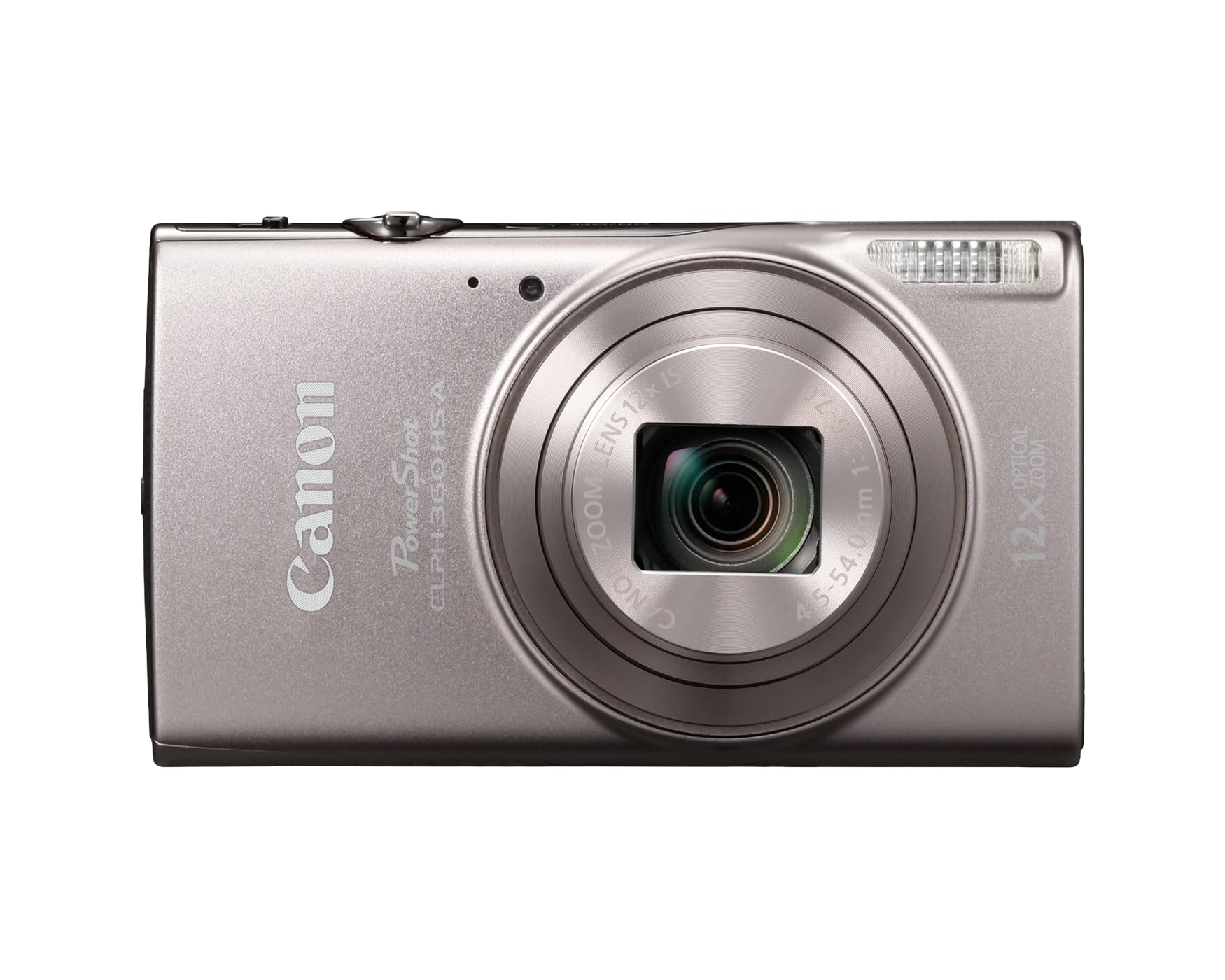
The Canon PowerShot ELPH 360 HS is a classic point-and-shoot designed for families who want easy-to-use image quality without learning manual controls. Its 20.2MP CMOS sensor and DIGIC 4+ processor deliver punchy, well-exposed JPEGs straight out of camera, while the 12x optical zoom (25-300mm equivalent) with Optical Image Stabilizer covers group portraits, zoo animals, and travel landmarks. The large 3-inch LCD makes framing straightforward even for users with limited photography experience.
Built-in WiFi and NFC transfer images to a smartphone in seconds, so you can share vacation shots on social media without connecting cables. Hybrid Auto mode records a four-second video clip before each still photo, then automatically compiles a highlight reel of your day — a fun feature for family albums and digital scrapbooks. The camera body is slim enough for a pocket or small purse, and the intuitive menu system requires almost no learning curve.
The F2.8-F5.6 aperture range limits low-light performance compared to 1-inch sensor competitors, and the camera lacks 4K video — maxing out at 1080p Full HD. The battery lasts roughly one hour of active use, which is short by modern standards, so a spare battery is recommended for day trips. Users who want better indoor and evening shots should look to the larger-sensor options above, but for bright-light family photography at a competitive price, the ELPH 360 HS delivers exactly what it promises.
Why it’s great
- Excellent point-and-shoot simplicity with good JPEG color science
- 12x optical zoom with stabilization covers common family scenarios
- WiFi transfer and Hybrid Auto mode create engaging albums
Good to know
- No 4K video — limited to 1080p recording
- Small aperture reduces quality in low-light settings
- Battery life of about one hour; spare recommended
7. Kodak PIXPRO AZ528
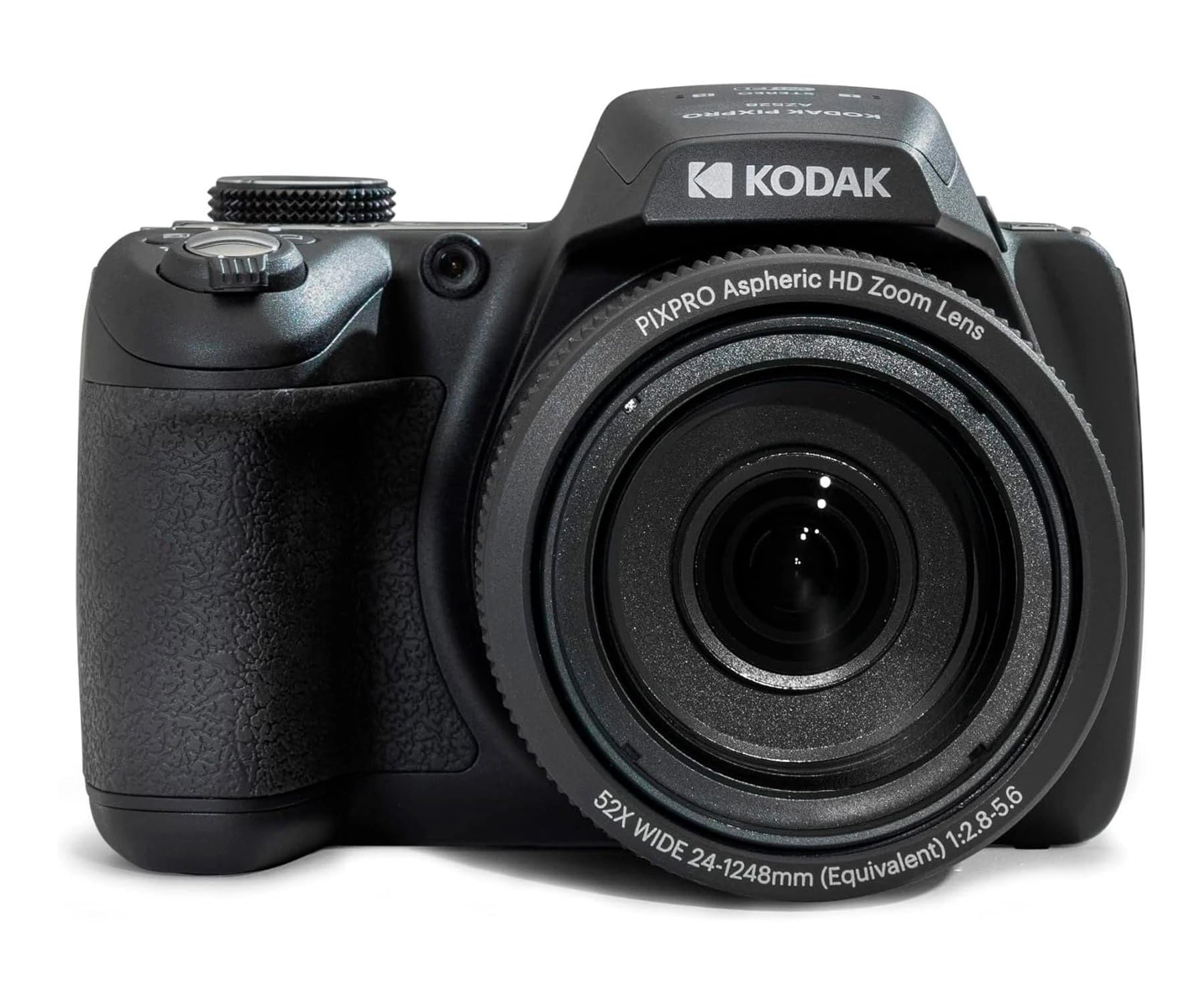
The Kodak PIXPRO AZ528 brings 52x optical zoom (24-1248mm equivalent) to an entry-level price point, making distant wildlife and sports events accessible without a premium budget. The 16MP BSI CMOS sensor with optical image stabilization helps keep telephoto shots steady, though user reports confirm that at maximum zoom, steady hands or a monopod are essential for sharp results. The 24mm wide-angle end captures sweeping landscapes before you zoom into distant details.
The 6fps burst mode captures action sequences of birds taking flight or kids on the soccer field, and the 3-inch LCD provides adequate framing. Built-in WiFi connects to the Kodak Pixpro app for wireless image transfer and remote shutter control. The camera accepts SD/SDHC/SDXC cards up to 512GB, giving you ample storage for a full day of high-resolution 1080p video and 16MP stills.
Image quality is typical of the 1/2.3-inch sensor class — solid in good daylight with some noise creeping in at higher ISOs. The autofocus is contrast-detect and can hunt in low-contrast scenes at long zoom. Battery life is described as “short” by some users, but the widely available lithium-ion pack is cheap to replace. The body feels lightweight and scuffs easily, so a protective bag is wise. For budget-conscious shooters who need serious zoom range, the AZ528 delivers the reach at a fraction of the premium competition.
Why it’s great
- 52x optical zoom reaches over 1200mm at a low price
- BSI CMOS sensor with OIS aids handheld telephoto shooting
- WiFi connectivity and 512GB card support for extended shooting
Good to know
- Small sensor produces noise above base ISO
- Autofocus hunts in low contrast at full zoom
- Battery life is relatively short; carry spares
8. LOUM 8K Digital Camera
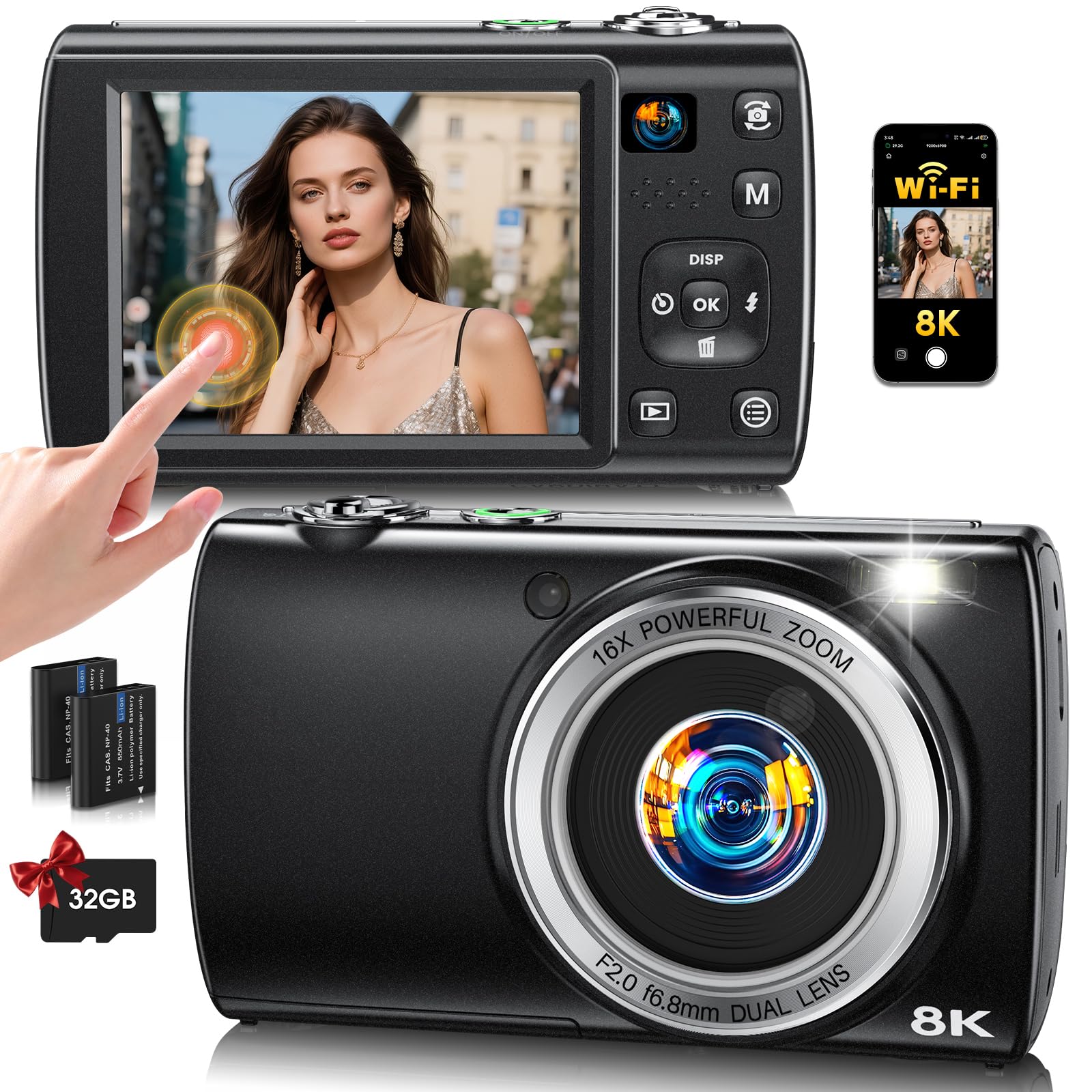
The LOUM 8K Digital Camera targets budget-conscious vloggers who want a modern feature set — touchscreen interface, WiFi sharing, and dual-lens selfie design — without spending on premium brands. The 2.8-inch IPS HD touchscreen provides responsive menu navigation and tap-to-focus, while electronic 5-axis image stabilization helps smooth walking shots. The front and rear dual cameras make self-framing easy for YouTube creators and social media shooters.
The 16x digital zoom is purely crop-based, so image quality degrades quickly as you zoom in, but the 8K video rating — which is interpolated, not native — captures high-resolution 4K-grade detail in good light. The included kit delivers strong value: 32GB memory card, two rechargeable batteries, charging cable, camera bag, and strap mean you start shooting immediately without extra purchases. WiFi transfer moves files to your phone for instant posting.
Image quality is competitive with other entry-level compacts in good light, but the interpolated 8K and 88MP figures are marketing numbers rather than native resolution. Low-light performance drops noticeably, and the digital zoom should be avoided at settings above 4x. The plastic body feels lightweight but durable enough for casual carry. For beginners, teens, or social media users who prioritize easy sharing and selfie convenience over ultimate image fidelity, this kit offers a complete starting package.
Why it’s great
- Responsive 2.8-inch touchscreen simplifies operation
- WiFi sharing and dual-lens design suit social media content
- Complete kit includes two batteries, card, and bag
Good to know
- 8K resolution is interpolated, not true 8K capture
- Digital zoom degrades quality quickly beyond 4x
- Low-light performance is limited by small sensor
9. Jukanur 5K Digital Camera
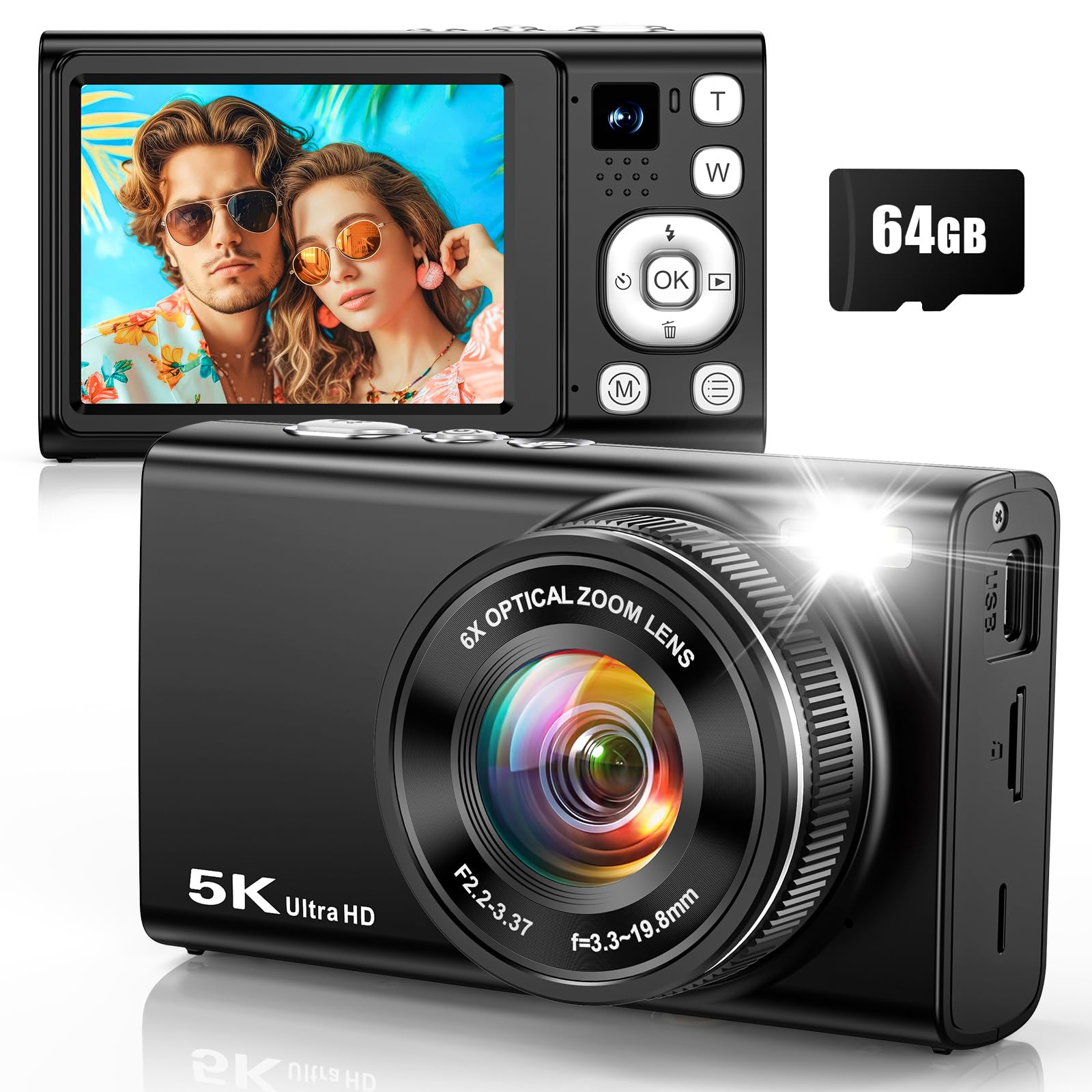
The Jukanur 5K Digital Camera is an entry-level point-and-shoot that balances accessible pricing with genuine optical zoom — 6x optical — so beginners can compose close-ups without resorting to cropped digital zoom. The IMX415 CMOS sensor captures 5K (5120×2880) video and interpolated 96MP stills, with anti-shake and a built-in flash helping produce stable images in low light or fast-moving scenarios. The dual-lens design includes front and rear lenses for selfie mode, a feature uncommon at this price tier.
The bundle includes a 64GB microSD card, storage bag, lanyard, adapter, and USB cable — everything needed to start shooting immediately. Creative modes like time-lapse, slow motion, continuous shooting, smile and face detection, and webcam mode for live streaming make it versatile for beginner content creation. The compact body with durable construction is designed for family trips, school projects, and casual daily photography.
Image quality is respectable for the price in good lighting, but the small sensor shows its limits in dim conditions, and autofocus can be inconsistent — some users report occasional half-blurry frames. The battery life of roughly one hour matches other compact entry-level cameras. The 96MP rating is interpolated, so real-world resolution is closer to 20MP native. For families, teens, and seniors who want a simple zoom camera with all accessories included and a generous 18-month warranty, this is a solid budget-friendly start.
Why it’s great
- 6x optical zoom provides genuine zoom without pixel loss
- Includes 64GB card and all necessary accessories out of box
- Webcam mode and creative modes add versatility for beginners
Good to know
- Small sensor and inconsistent autofocus in low light
- 96MP still rating is interpolated, not native resolution
- Battery lasts about one hour of active shooting
FAQ
What does optical zoom mean and why is it critical for a small camera?
Why is a 1-inch sensor better than a 1/2.3-inch sensor in a compact camera?
Can a budget digital small camera replace my smartphone for everyday photos?
What battery life should I expect from a compact digital camera when shooting video?
Does a higher megapixel count guarantee better image quality in small digital cameras?
Final Thoughts: The Verdict
For most users, the best digital small cameras winner is the Sony ZV-1F because its 1-inch sensor, bright F2.0 lens, and creator-focused features like Eye-AF and directional audio deliver premium vlogging and still performance without the bulk of interchangeable-lens cameras. If you need extreme optical reach for wildlife or moon photography, grab the Nikon COOLPIX P950 for its unmatched 83x zoom. And for the best balance of pocket-friendly portability and image quality with a versatile zoom range, the Panasonic LUMIX ZS99 with its 30x LEICA lens is the smart traveler’s choice.

Mo Maruf
I created WellFizz to bridge the gap between vague wellness advice and actionable solutions. My mission is simple: to decode the research and give you practical tools you can actually use.
Beyond the data, I am a passionate traveler. I believe that stepping away from the screen to explore new environments is essential for mental clarity and physical vitality.