Our readers keep the lights on and my smoothie glass nicely filled. As an Amazon Associate, I earn from qualifying purchases.
Every serious photographer knows the frustration of a missed focus, a noisy sensor in low light, or a body that just doesn’t keep up with the action. Choosing the right DSLR isn’t just about megapixels; it’s about understanding a system that marries an optical viewfinder with a mirror mechanism, phase-detection autofocus, and a vast array of interchangeable lenses to deliver a tactile, reliable shooting experience.
I’m Mohammad Maruf — the founder and writer behind WellFizz. My approach to building this guide involved cross-referencing sensor specifications, autofocus point counts, continuous shooting speeds, and real-world image quality assessments across mid-range and premium DSLR and mirrorless system options to pinpoint the models that offer genuine value for serious shooters.
After analyzing dozens of spec sheets and thousands of user reports on sensor performance and build quality, I’ve identified the top contenders for the best digital slr camera investment that balances resolution, speed, and system longevity.
How To Choose The Best Digital SLR Camera
Selecting the right DSLR involves more than just picking a popular brand. You need to match the camera’s sensor size, autofocus system, and build quality to your specific photography needs, whether that’s portraits, landscapes, fast action, or video work.
Sensor Size: APS-C vs. Full-Frame
Sensor size is the single most important factor determining image quality. APS-C sensors are smaller, making cameras lighter and lenses more affordable, while full-frame sensors offer superior low-light performance, greater dynamic range, and shallower depth of field. For budget-conscious beginners, APS-C is a fantastic starting point. Enthusiasts and professionals who need maximum image quality and control over depth of field should prioritize full-frame.
Autofocus System: Points, Types, and Coverage
An autofocus system’s speed and accuracy are defined by its number of points, their type (cross-type vs. standard), and coverage area. Cross-type sensors are more sensitive and accurate, especially with off-center subjects. A system with 45 or more cross-type points, like in the Canon 80D, provides excellent tracking. For fast, unpredictable subjects like birds in flight, a system with 153 AF points, like the Nikon D850, offers incredible precision and coverage.
Build Quality and Ergonomics
A DSLR is a tool you’ll carry for hours. A magnesium alloy body with weather sealing, like those found in the Nikon D7500 or Canon 5D Mark IV, offers durability against dust and moisture. Prioritize a comfortable grip, a bright optical viewfinder, and logically placed controls. A tilting touchscreen LCD is a modern convenience that aids low-angle and overhead shots, a feature found on the Canon EOS RP and Nikon D850.
Burst Rate and Buffer Depth
For action, sports, or wildlife, a high continuous shooting speed (frames per second, or fps) is crucial, but the buffer depth matters just as much. The buffer determines how many full-resolution shots you can take before the camera slows down. The Sony a7 III can shoot at 10 fps with a massive buffer, while the Canon EOS 80D offers 7 fps with a respectable buffer, making both solid choices for capturing the decisive moment.
Quick Comparison
On smaller screens, swipe sideways to see the full table.
| Model | Category | Best For | Key Spec | Amazon |
|---|---|---|---|---|
| Nikon D850 | Pro DSLR | Highest resolution & detail | 45.7MP BSI sensor / 153 AF points | Amazon |
| Canon EOS 5D Mark IV | Pro DSLR | Versatile pro photography | 30.4MP full-frame / 61 AF pts | Amazon |
| Sony Alpha 7 IV | Full-frame Mirrorless | Hybrid photo & video | 33MP Exmor R / 693 AF points | Amazon |
| Sony a7 III | Full-frame Mirrorless | Excellent value pro mirrorless | 24.2MP BSI sensor / 693 AF pts | Amazon |
| Canon EOS RP | Entry Full-frame Mirrorless | Compact entry to full-frame | 26.2MP full-frame / Dual Pixel AF | Amazon |
| Nikon D7500 | Mid-range DSLR | Versatile enthusiast action | 20.9MP APS-C / 51 AF pts | Amazon |
| Panasonic Lumix G85 | Mirrorless MFT | Compact travel with 4K video | 16MP MFT / 5-axis IBIS | Amazon |
| Canon EOS 80D (Renewed) | Mid-range DSLR | Fast, accurate autofocus | 24.2MP APS-C / 45 cross-type AF | Amazon |
| Canon Rebel T7 Bundle | Entry-level DSLR | Beginner with many accessories | 24.1MP APS-C / 9 AF pts | Amazon |
| OM SYSTEM OM-3 | Premium Compact MFT | Weather-sealed travel companion | 20MP Stacked BSI MFT / IP53 | Amazon |
| Canon EOS 5D Mark II | Older Pro DSLR | Budget-friendly full-frame classic | 21.1MP full-frame / 9 AF pts | Amazon |
In‑Depth Reviews
1. Nikon D850 FX-Format Digital SLR Camera Body

The Nikon D850 is widely regarded as one of the most capable DSLRs ever built, featuring a 45.7MP back-side illuminated (BSI) full-frame sensor that delivers extraordinary resolution and dynamic range. Its 153-point autofocus system provides exceptional coverage and tracking for fast-moving subjects, while a burst rate of up to 9 fps with full AF performance makes it suitable for high-speed action alongside high-resolution studio work.
Beyond stills, the D850 offers 4K UHD video recording and 8K time-lapse capabilities, making it a versatile tool for multimedia creators. The bright optical viewfinder offers nearly 100% frame coverage, and the tilting 3.2-inch touchscreen LCD provides flexible framing options. Build quality is superb with comprehensive weather sealing, ensuring reliability in demanding environments.
The camera’s body is substantial at over 2 pounds, which aids stability but can be heavy for all-day travel. The menu system is complex, and the Snapbridge WiFi setup has received criticism for being cumbersome. Despite these minor points, the D850’s image quality, autofocus performance, and sheer versatility set a benchmark in the DSLR market.
Why it’s great
- Incredible 45.7MP resolution with no optical low-pass filter for maximum sharpness
- Outstanding dynamic range and low-noise performance up to ISO 12800
- Fast 9 fps burst with robust 153-point phase-detection AF system
Good to know
- Heavy body without a pop-up flash
- Complex menus and cumbersome WiFi setup
- Video autofocus is not as reliable as its stills AF
2. Canon EOS 5D Mark IV Digital SLR Camera (Body Only)
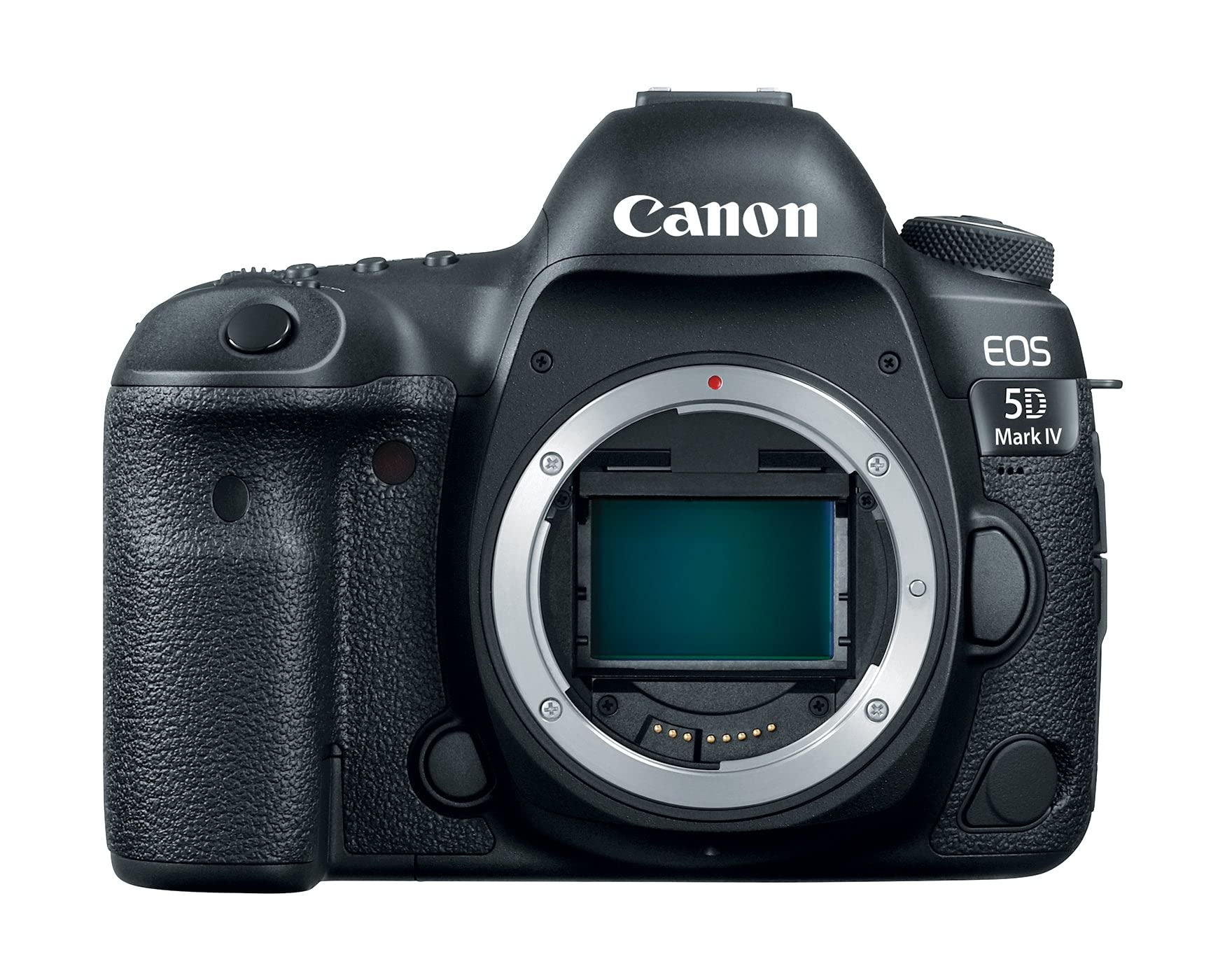
The Canon EOS 5D Mark IV is a professional mainstay that marries a 30.4MP full-frame CMOS sensor with the powerful DIGIC 6+ processor. This combination produces images with excellent detail, impressive dynamic range, and clean high-ISO performance. The 61-point autofocus system, all cross-type, is fast and customizable, making it suitable for a wide range of professional work from portraiture to event photography.
Video capabilities are strong, offering 4K Motion JPEG recording at 30/24 fps and Full HD up to 60 fps, with Dual Pixel CMOS AF providing smooth, responsive autofocus during live view and video capture. The Integrated GPS for geotagging and built-in Wi-Fi for easy file transfer are practical features for traveling professionals. Its magnesium alloy body with extensive weather sealing is built to withstand the rigors of daily professional use.
The 4K video files are large (Motion JPEG), and the lack of a vari-angle touchscreen is a notable omission for a camera in this class. The GPS functionality, when enabled, drains the battery relatively quickly. For professional photographers who need a reliable, time-tested tool, the 5D Mark IV remains an excellent choice, especially if they are invested in the Canon EF lens ecosystem.
Why it’s great
- Balanced 30.4MP full-frame sensor with excellent dynamic range and clean high ISO
- Fast and accurate 61-point all cross-type autofocus system
- Rock-solid build quality with comprehensive weather sealing
Good to know
- 4K video uses Motion JPEG, resulting in large file sizes
- Fixed LCD screen, not vari-angle for flexible composing
- GPS feature significantly depletes battery life
3. Sony Alpha 7 IV Full-frame Mirrorless Interchangeable Lens Camera

The Sony Alpha 7 IV is a powerful full-frame mirrorless camera designed for serious hybrid shooters, combining a 33MP back-illuminated Exmor R CMOS sensor with the BIONZ XR processing engine. This results in outstanding image quality with excellent detail and dynamic range. Its real-time Eye AF and 693-point phase-detection AF system are incredibly fast and reliable for both stills and video, tracking subjects with tenacity.
Video features are a major highlight, with 4K 60p 10-bit 4:2:2 recording and 7K oversampled 4K 30p, delivering professional-grade footage. The S-Cinetone color profile creates beautiful, cinematic colors straight out of camera. In-body image stabilization (IBIS) effectively counteracts camera shake, and the comfortable, weather-sealed body houses an articulating touchscreen and dual card slots (CFexpress Type A / SD).
There is a crop factor in 4K 60p mode, which is a consideration for some videographers. The electronic viewfinder, while good, can be prone to some lag in certain modes. The A7 IV’s menu system, while much improved over previous Sony models, still has a learning curve. For content creators and professionals who need a top-tier hybrid camera, the A7 IV is a phenomenal investment.
Why it’s great
- Excellent 33MP full-frame image quality with stunning dynamic range
- Industry-leading autofocus with Real-time Eye AF for humans, animals, and birds
- Powerful 4K 60p 10-bit 4:2:2 video with S-Cinetone profile
Good to know
- 4K 60p recording mode has a Super 35 crop
- No built-in flash
- Complex menu system despite improvements
4. Sony a7 III Full-Frame Mirrorless Interchangeable-Lens Camera with 28-70mm Lens

The Sony a7 III set a new standard for full-frame mirrorless value, pairing a 24.2MP back-illuminated sensor with incredible 15-stop dynamic range and a native ISO range up to 204,800. Its 693-point phase-detection AF system covers 93% of the sensor, delivering fast, accurate tracking for a wide variety of subjects. The 10 fps burst rate with silent shutter and AE/AF tracking is ideal for capturing action.
Battery life is exceptional for a mirrorless camera, rated for 710 shots per charge, which is a significant advantage for all-day shoots. The in-body image stabilization provides up to 5.5 stops of shake correction, enabling sharper handheld shots in low light. The kit lens is decent for starting out, but the camera truly shines with premium glass.
The menus are notoriously complex and clunky to navigate. The 28-70mm kit lens, while functional, doesn’t do the sensor’s potential full justice. The rear LCD is not fully articulating, and the single UHS-II card slot can be a bottleneck for some workflows. Despite its age and minor interface flaws, the a7 III remains an extraordinary value proposition for those entering or upgrading to full-frame.
Why it’s great
- Superb 24.2MP BSI sensor with 15-stop dynamic range and incredible low-light performance
- Fast and reliable 693-point autofocus with excellent tracking
- Outstanding battery life of ~710 shots per charge
Good to know
- Complex and unintuitive menu system
- Kit lens is decent but not a match for the sensor’s potential
- Fixed rear screen and single UHS-II card slot
5. Canon EOS RP Full-Frame Mirrorless Camera + RF24-105mm Lens F4-7.1 IS STM

The Canon EOS RP is the most affordable entry point into Canon’s full-frame mirrorless RF system, featuring a compact and lightweight body that is ideal for travel and vlogging. The 26.2MP full-frame sensor and DIGIC 8 processor produce sharp, clean images with pleasing color science. The kit’s RF 24-105mm F4-7.1 IS STM lens has up to 5 stops of image stabilization, making it versatile for everyday shooting.
The Dual Pixel CMOS AF provides fast, accurate, and smooth autofocus during both stills and video, with excellent face and eye detection. Its intuitive controls and fully articulating touchscreen make it easy to use for beginners upgrading from a smartphone or compact camera. The EOS RP also serves as a high-quality webcam via USB or clean HDMI output.
The kit lens has a variable aperture that can be slow in low light, and the camera’s burst rate of 5 fps is limited for action photography. The single SD card slot and smaller battery with moderate life are compromises to achieve its compact size. For photographers transitioning to full-frame who prioritize portability and intuitive handling, the EOS RP is an excellent starting point.
Why it’s great
- Smallest and lightest full-frame mirrorless body, perfect for travel
- Intuitive controls and user-friendly interface for beginners
- Dual Pixel CMOS AF provides smooth, reliable autofocus and eye detection
Good to know
- Kit lens aperture is slow (F4-7.1) for low-light performance
- Limited to 5 fps burst shooting
- Smaller battery and single SD card slot
6. Nikon D7500 20.9MP DSLR Camera with AF-S DX NIKKOR 18-140mm f/3.5-5.6G ED VR Lens

The Nikon D7500 inherits core technology from the flagship D500, offering class-leading image quality and performance in a mid-range DX format body. Its 20.9MP sensor, EXPEED 5 processor, and metering system deliver excellent dynamic range and clean high-ISO results. The 51-point AF system with 15 cross-type sensors and Group Area AF is highly effective for tracking moving subjects, complemented by a rapid 8 fps burst rate.
The 18-140mm VR kit lens provides an incredibly versatile zoom range, equivalent to roughly 27-210mm in full-frame terms, covering wide-angle to telephoto. The camera feels robust with a deep grip and weather-resistant construction. The large 3.2-inch tilting touchscreen LCD is useful for composing low-angle shots, and the D7500 offers 4K UHD video with stereo sound.
The D7500 only has a single SD card slot, which is a downgrade from its predecessor, the D7200. It also uses the smaller EN-EL15a battery, which offers good but not exceptional life. For an enthusiast who wants a durable, fast-action APS-C DSLR with an incredibly versatile kit lens, the D7500 is a powerful and enduring choice.
Why it’s great
- Excellent image quality and low-light performance derived from the D500
- Fast and accurate 51-point AF system with 8 fps burst shooting
- Versatile 18-140mm VR kit lens covers wide to telephoto range
Good to know
- Only a single SD card slot limits backup options
- Smaller battery than some competitors
- No built-in flash
7. Panasonic LUMIX G85 4K Digital Camera, 12-60mm Power O.I.S. Lens

The Panasonic Lumix G85 is a compact and highly capable Micro Four Thirds camera that packs exceptional value, especially for video. Its 16MP sensor, which lacks a low-pass filter, delivers sharp stills, while the class-leading 5-axis Dual Image Stabilization (IBIS + OIS) provides incredibly smooth handheld footage and allows for sharp photos at shutter speeds that would be impossible with other systems.
The G85 shoots 4K video with full sensor readout and features Panasonic’s excellent 4K Photo and Post Focus modes, which allow you to extract 8MP stills from a 4K video burst or change the focus point after capture. The body is built with a magnesium alloy front frame and is splash-proof and dust-proof, providing durability for outdoor use. The kit lens, the 12-60mm Power O.I.S., is a sharp, versatile performer.
The Micro Four Thirds sensor has a crop factor of 2x, which means it struggles more in very low light compared to APS-C or full-frame sensors. Battery life is also a notable weakness for mirrorless cameras, and the autofocus can occasionally hunt in low light for 4K video. For travel and vloggers who prioritize stabilization, video features, and a compact, weather-sealed kit, the G85 is a fantastic choice.
Why it’s great
- Superb 5-axis Dual Image Stabilization (IBIS + OIS) for stills and video
- Excellent 4K video features including 4K Photo and Post Focus
- Weather-sealed magnesium alloy body at a mid-range price
Good to know
- Smaller MFT sensor has less low-light performance than larger sensors
- Battery life is below average
- 4K autofocus can be sluggish in low light
8. Canon EOS 80D Digital SLR Camera Body (Black) (Renewed)

The Canon EOS 80D is a celebrated mid-range DSLR, particularly renowned for its exceptional 45-point all cross-type autofocus system. This provides incredibly fast, accurate, and sensitive focusing performance, even with off-center subjects, making it a phenomenal tool for photographers who shoot sports, wildlife, or fast-moving children. The 24.2MP APS-C sensor and DIGIC 6 processor produce high-quality images with good dynamic range.
The camera features a bright Intelligent Viewfinder with 100% coverage, which is a joy to use. The 7 fps continuous shooting speed is adequate for capturing action, and the Dual Pixel CMOS AF ensures quick and smooth autofocus during live view and video. Its solid build quality and comfortable grip make it a pleasure to handle.
This specific unit is a renewed model, meaning it is a pre-owned, refurbished item, which can vary in cosmetic condition. The 80D lacks 4K video recording, maxing out at Full HD 1080p. While the AF system is excellent, its 24.2MP sensor is now surpassed by newer sensors. For a shopper on a budget who values the best autofocus system in its class and a comfortable shooting experience, the 80D (renewed) is a savvy choice.
Why it’s great
- Excellent 45-point all cross-type AF system for fast and accurate focusing
- Bright 100% coverage optical viewfinder
- Dual Pixel CMOS AF for smooth live view and video autofocus
Good to know
- Renewed product; cosmetic condition may vary
- Limited to Full HD 1080p video, no 4K
- Sensor technology is a generation behind current models
9. Canon EOS Rebel T7 Digital SLR Camera 18-55mm f/3.5-5.6 is II Kit Bundle
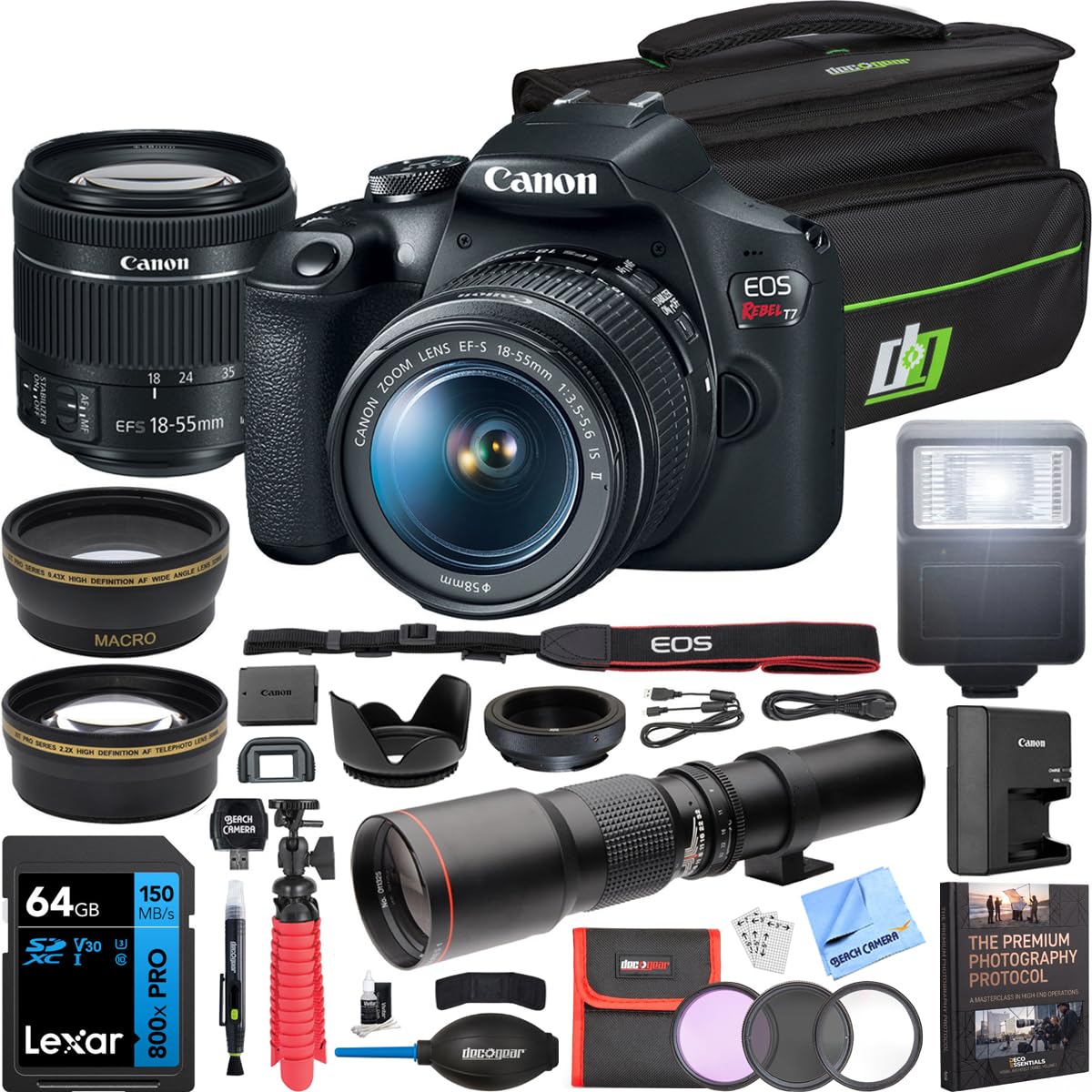
The Canon EOS Rebel T7 is a classic entry-level DSLR designed for absolute beginners who want to learn the fundamentals of photography. Its 24.1MP APS-C sensor and DIGIC 4+ processor deliver photos that are a significant step up in quality from any smartphone, with solid color and detail in good light. The included 18-55mm IS II kit lens is a fine starting point for learning composition.
This massive bundle adds value with a huge array of accessories including a 500mm telephoto lens, wide-angle and macro attachment lenses, a flash, a bag, a memory card, and a tripod. The Scene Intelligent Auto Mode makes it easy for beginners to capture good results immediately, while Creative Filters offer fun in-camera effects.
The Rebel T7 has a basic 9-point AF system and a slow 3 fps burst rate, limiting its ability to capture fast action effectively. Its optical viewfinder offers only 95% coverage, meaning you might capture slightly more than you see. The battery life is a known weakness, with some users reporting rapid drain. For a complete starter kit with all the accessories for exploring different types of photography, the T7 bundle is an unbeatable value.
Why it’s great
- Excellent value bundle includes telephoto, wide-angle, flash, bag, and card
- Great image quality from the 24.1MP APS-C sensor for a beginner
- Simple, user-friendly interface with Scene Intelligent Auto
Good to know
- Basic 9-point AF system and slow 3 fps burst rate
- Optical viewfinder only shows 95% of the frame
- Battery drains quickly, limiting shooting sessions
10. OM SYSTEM Olympus OM-3 Silver Micro Four Thirds System Camera with 12-45mm F4.0 PRO Lens

The OM SYSTEM OM-3 is a beautifully designed Micro Four Thirds camera that combines a premium vintage aesthetic with modern high-performance internals. Its 20MP Stacked BSI Live MOS sensor and TruePic X processor deliver excellent image quality, fast readout speeds, and impressive computational photography features like built-in ND filters and high-resolution modes. The 5-axis IBIS is class-leading, allowing for impossibly steady handheld shots.
This camera is built to withstand the elements with an IP53 dustproof, splashproof, and freezeproof rating, making it a perfect travel companion in any weather. The 2.36m-dot OLED electronic viewfinder is sharp and bright. The M.Zuiko Digital ED 12-45mm F4.0 PRO lens is a compact, sharp, and weather-sealed professional zoom that pairs perfectly with this body.
The Micro Four Thirds sensor will not match the low-light performance of a full-frame camera, and the price point places it in a premium bracket where competition is fierce. The retro metal body is beautiful but has a flatter front lacking a deep grip, which may require adjustment. For a discerning photographer who prioritizes portability, weather sealing, and a beautiful, inspiring tool, the OM-3 is a unique and compelling choice.
Why it’s great
- Class-leading 5-axis IBIS and impressive computational features
- Stunning vintage metal design with IP53 weather sealing
- Compact, professional kit lens with excellent sharpness
Good to know
- MFT sensor has less low-light performance than full-frame alternatives
- Premium price point for a non-full-frame system
- Ergonomic grip is minimalist; may not suit all hand sizes
11. Canon EOS 5D Mark II 21.1MP Full Frame CMOS Digital SLR Camera with EF 24-105mm f/4 L IS USM Lens

The Canon EOS 5D Mark II is a legendary camera that democratized full-frame photography and HD video. Its 21.1MP full-frame sensor still produces beautiful images with excellent color and dynamic range, and the included EF 24-105mm f/4 L IS USM lens is a professional-grade L-series zoom with outstanding image quality and silent autofocus. This combination remains a fantastic entry point into the full-frame Canon ecosystem.
The large, bright optical viewfinder is a joy to compose with, and the weight of the magnesium alloy body aids stability for slow shutter speeds. Its ability to use all Canon EF and many third-party lenses via adapters makes it a versatile and affordable way to access a vast library of glass. The camera’s vintage status also means it can often be found at very attractive prices for the level of image quality it provides.
The autofocus system is very basic by modern standards, with only 9 AF points, making it struggle for action and sports. The 3.9 fps burst rate is slow, and the shutter is loud. It lacks modern conveniences like built-in Wi-Fi or an articulating screen. For photographers who love classic gear and prioritize beautiful still-image quality and access to the L-series lens line over modern speed and features, the 5D Mark II is a classic choice.
Why it’s great
- Full-frame sensor produces stunning, classic image quality with great color science
- Includes a professional-grade L-series 24-105mm f/4 IS lens with excellent build
- Affordable entry point into the full-frame system with massive lens compatibility
Good to know
- Very basic 9-point AF system, poor for fast action
- Slow 3.9 fps burst rate with a loud shutter
- Lacks modern features: no Wi-Fi, no articulating screen, no 4K video
FAQ
Is a DSLR still worth buying with mirrorless cameras being popular?
What is the difference between an optical viewfinder and an electronic viewfinder?
How many megapixels do I really need in a DSLR?
Final Thoughts: The Verdict
For most users, the best digital slr camera winner is the Nikon D850 because it offers an unbeatable combination of record-breaking resolution, a phenomenal autofocus system, and robust build quality that serves both high-end studio and fast-action photographers. If you want a better video-centric hybrid system, grab the Sony Alpha 7 IV. And for an affordable entry into the full-frame world with a legendary kit lens, nothing beats the value of the Canon EOS 5D Mark II classic.

Mo Maruf
I created WellFizz to bridge the gap between vague wellness advice and actionable solutions. My mission is simple: to decode the research and give you practical tools you can actually use.
Beyond the data, I am a passionate traveler. I believe that stepping away from the screen to explore new environments is essential for mental clarity and physical vitality.