Our readers keep the lights on and my smoothie glass nicely filled. As an Amazon Associate, I earn from qualifying purchases.
A frozen mid-air catch, a sprinter’s foot leaving the block, a puck blurring past the goalie’s glove — the difference between a usable frame and a blur in sports photography comes down to milliseconds. Your camera’s autofocus system and burst rate are the gatekeepers of that split second, and choosing the wrong body means missing the decisive moment entirely.
I’m Mohammad Maruf — the founder and writer behind WellFizz. This guide is built on hundreds of hours comparing AF point counts, frames-per-second specs, buffer depths, and sensor readout speeds across the entire DSLR and mirrorless spectrum to find the bodies that actually deliver in live game conditions.
The right choice among our analyzed digital slr camera for sports photography options depends on whether you prioritize deep buffer capacity for long sequences, cross-type AF point density for erratic subject movement, or weather sealing for outdoor field conditions.
How To Choose The Best Digital SLR Camera For Sports Photography
Sports photography places unique demands on a camera body that general photography or studio work simply does not. You need a system that can lock focus on a moving target, fire frames in rapid succession, and maintain that pace long enough to capture an entire play sequence. Understanding the three core pillars — autofocus architecture, burst performance, and build resilience — will steer your decision.
Autofocus Point Density and Coverage
The number of autofocus points and how many of them are cross-type sensors directly determines how well your camera can track an athlete cutting across the frame. A 9-point system with only one cross-type point, like entry-level DSLRs, forces you to keep the subject dead center and recompose — a recipe for missed shots when a receiver breaks toward the sideline. Cameras with 51 or more AF points and a high proportion of cross-type sensors (such as the Nikon D7500 or D500) allow the camera’s algorithm to follow the subject anywhere in the viewfinder without you needing to micro-adjust.
Burst Rate and Buffer Depth
Frames per second (fps) tells you how many shots the camera can capture in one second, but buffer depth tells you how long it can sustain that rate before slowing down. A body shooting 10 fps with a shallow buffer of 20 frames will stop after two seconds of continuous fire, potentially missing the end of a touchdown dive or a goal celebration. Cameras like the Nikon D500 with a 200-frame buffer at up to 10 fps give you the breathing room to hold the shutter down through an entire play sequence without the camera choking. For sports, a deeper buffer often matters more than the raw fps number.
Sensor Size and Low-Light Performance
Full-frame sensors (FX format) offer superior dynamic range and high-ISO performance, which is critical for indoor sports like basketball or hockey where artificial lighting forces you to shoot at ISO 6400 or above. APS-C sensors (DX format) provide an effective 1.5x crop factor, giving your telephoto lenses extra reach on outdoor fields — a 300mm lens behaves like 450mm on a DX body. The trade-off is that larger pixels on full-frame sensors generally produce less noise at equivalent ISOs. Match your sensor choice to your primary shooting environment: indoor arena favors full-frame, daytime field sports favor APS-C for the reach advantage.
Quick Comparison
On smaller screens, swipe sideways to see the full table.
| Model | Category | Best For | Key Spec | Amazon |
|---|---|---|---|---|
| Nikon Z 9 | Flagship Mirrorless | Pro-level action with no blackout | 30 fps / 493 AF points / 45.7 MP | Amazon |
| Sony Alpha 9 III | Global Shutter | Distortion-free ultra-fast action | 120 fps / 759 AF points / Global shutter | Amazon |
| Canon EOS R3 | Pro Mirrorless | Eye Control AF for sports | 30 fps / 1053 AF points / 24.1 MP | Amazon |
| Nikon D6 | DSLR Flagship | Optical viewfinder pro tracking | 14 fps / 105 AF points / 20.8 MP | Amazon |
| Nikon D850 | High-Res DSLR | High-res action and studio hybrid | 7 fps (9 w/ grip) / 153 AF points / 45.7 MP | Amazon |
| Nikon D500 | APS-C Speedster | Wildlife and outdoor sports reach | 10 fps / 153 AF points / 20.9 MP | Amazon |
| Sony a7 III | Full-Frame Hybrid | All-around action with great battery | 10 fps / 693 AF points / 24.2 MP | Amazon |
| Nikon D7500 | Mid-Range DSLR | Versatile DX with 4K video | 8 fps / 51 AF points / 20.9 MP | Amazon |
| Nikon Df | Retro Full-Frame | Low-light static/ambient sports | 5.5 fps / 39 AF points / 16.2 MP | Amazon |
| Canon T7 (Rebel T7) Bundle | Entry-Level DSLR | Learning sports basics on budget | 3 fps / 9 AF points / 24.1 MP | Amazon |
| Canon EOS 2000D (Rebel T7) Kit | Entry-Level DSLR | Starter bundle with accessories | 3 fps / 9 AF points / 24.1 MP | Amazon |
In-Depth Reviews
1. Nikon Z 9
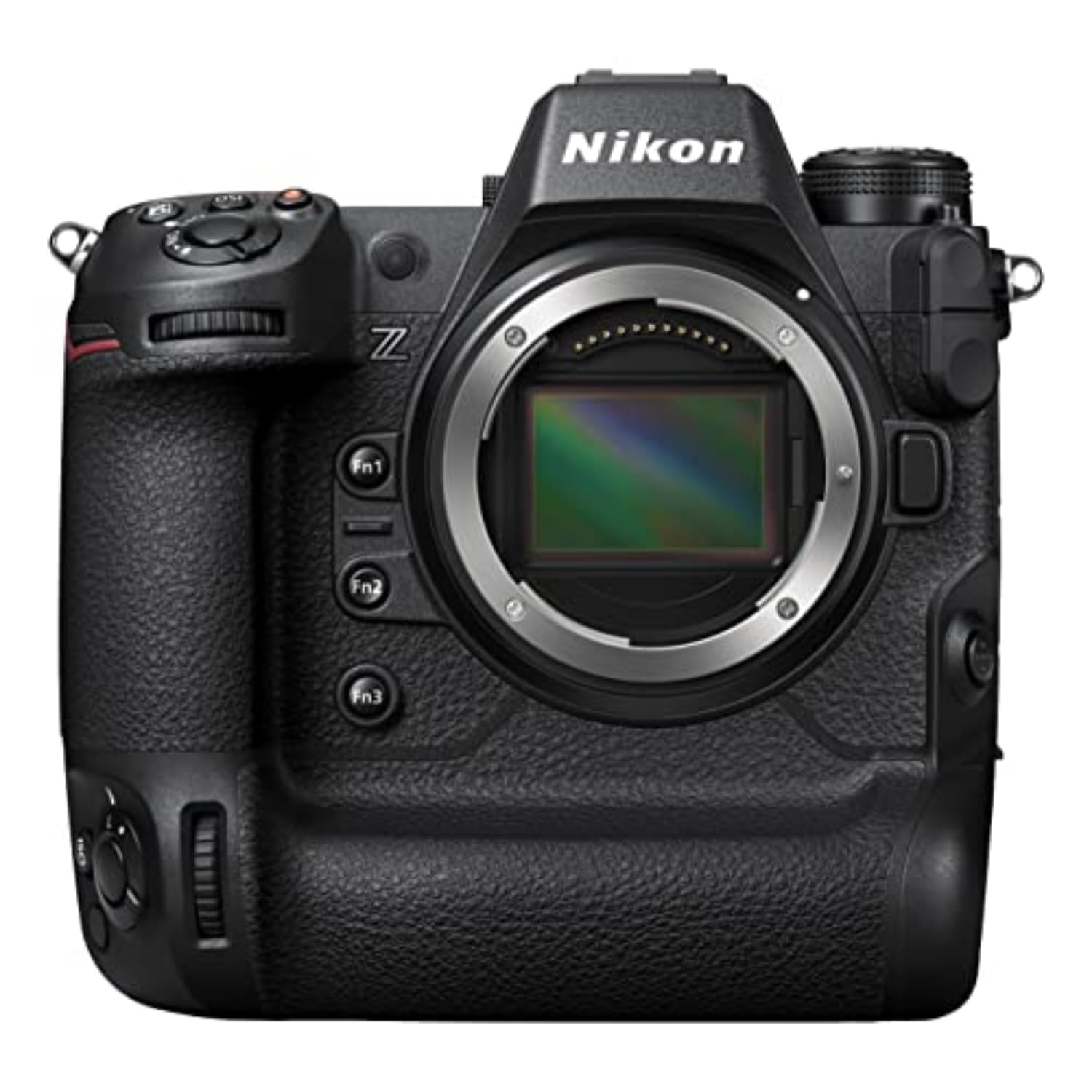
The Nikon Z 9 sets the benchmark for action photography with a 45.7MP stacked CMOS sensor and EXPEED 7 processor that deliver blackout-free 30 fps RAW bursts with full AF/AE tracking. Its deep-learning subject detection automatically recognizes people, animals, birds, and vehicles without requiring menu changes — a massive advantage when the action shifts from a runner to a cyclist mid-sequence. The camera captures 45.7MP stills at up to 30 fps or 120 fps at 11MP, all with no viewfinder blackout, so you never lose sight of the play.
The 493-point hybrid AF system locks onto subjects with speed and accuracy rivaling dedicated sports DSLRs, and the 8K/30p video capability (over 2 hours without overheating) makes it a hybrid powerhouse. The high-efficiency RAW file format compresses to one-third the size of uncompressed RAW without sacrificing dynamic range, saving memory card space during marathon events. The weather-sealed magnesium alloy body handles rain and dust on the sideline without complaint.
User feedback highlights the instant AF acquisition and 3D tracking as transformative for moving subjects, with a keeper rate that surpasses previous Nikon flagships. The ergonomics are praised for long handheld sessions despite the substantial weight. Expect a learning curve due to the deep customization options, but the investment pays off in frame-after-frame consistency.
Why it’s great
- Blackout-free 30 fps with full tracking
- Deep-learning subject detection (animals, vehicles, people)
- 8K/60p internal recording with no overheating
- High-efficiency RAW saves storage space
Good to know
- Heavier than comparable mirrorless bodies
- Advanced customization menu can be overwhelming initially
- Requires CFexpress Type B or XQD cards for full performance
2. Sony Alpha 9 III

The Sony Alpha 9 III introduces the world’s first full-frame global shutter sensor, eliminating all rolling shutter distortion when capturing fast-moving subjects. A 24.6MP Exmor RS stacked CMOS sensor reads all pixels simultaneously, so a swinging bat or a speeding race car appears with zero skew — a fundamental advantage over cameras that read lines sequentially. Combined with blackout-free shooting at an astonishing 120 fps and full AF/AE tracking, this body can capture micro-moments no other camera can.
The AI-assisted subject recognition system uses deep learning to identify and track human eyes, animal eyes, birds, cars, trains, and airplanes, adapting instantly when the subject type changes mid-sequence. The maximum shutter speed of 1/80,000 sec freezes the fastest motion, and flash sync is possible at any shutter speed — meaning you can light a dark basketball gym with no high-speed sync drop-off. The 759-point phase-detection AF array covers almost the entire frame, giving you composition freedom without needing to center the action.
Users migrating from the A7 IV or A7R V describe the A9 III as a game-changer for sports and wildlife, noting the pre-capture function that records frames before you fully press the shutter — invaluable for unpredictable peak action. The 24.6MP resolution is considered ample for most professional work, including headshots, and the high ISO handling is praised for dim arena conditions. The only real trade-off is the lower megapixel count compared to the A7R line, but for sports, the speed and AF architecture more than compensate.
Why it’s great
- Global shutter: zero rolling distortion on fast subjects
- 120 fps continuous shooting with full AF/AE tracking
- Flash sync at any shutter speed
- Pre-capture function for unpredictable moments
Good to know
- Lower resolution (24.6 MP) compared to studio-focused Sony bodies
- Fastest burst rates require CFexpress Type A cards
- Menu system can be complex for new Sony users
3. Canon EOS R3

The Canon EOS R3 packs a stacked 24.1MP full-frame CMOS sensor and DIGIC X processor to deliver 30 fps electronic shutter shooting with full servo AF tracking. Its standout feature — Eye Control AF — allows you to select the focus point simply by looking at it through the viewfinder, a leap in instinctive shooting for sports photographers who need to track a player breaking across the frame without moving their thumb off the shutter. The 1,053-point Dual Pixel CMOS AF system covers nearly the entire frame and includes subject detection for eyes, faces, bodies, animals, and vehicles.
The R3 also introduces Registered Person Priority, which recognizes and prioritizes up to 10 specific registered individuals — ideal for team sports where you need to keep focus on a star player or a particular athlete. The Panning Assist feature uses optical image stabilization to correct motion blur during slow shutter panning, helping you get more keepers when shooting a runner with a blurred background. Video capabilities include 6K RAW at 60 fps and 4K at 120 fps uncropped, making it a competent hybrid for sideline-to-editor workflows.
Users consistently rate the R3’s autofocus and ergonomics as superior to the R5, with the Eye Control AF described as transformative once calibrated. The solid build and lighter weight compared to the older 1D-series bodies are praised for reducing fatigue during all-day shoots. The only frequent note is that the vertical grip is slightly small for large hands, causing fingers to curl under rather than rest flat — a minor ergonomic adjustment, not a dealbreaker.
Why it’s great
- Eye Control AF selects focus points instantly
- 30 fps electronic shutter with servo AF
- Registered Person Priority tracks specific athletes
- Panning Assist reduces motion blur at slow shutter speeds
Good to know
- Vertical grip shape uncomfortable for some larger hands
- Requires RF lenses for native performance
- Eye Control AF needs calibration for glasses wearers
4. Nikon D6

The Nikon D6 remains the brand’s flagship DSLR for sports professionals who prefer the optical viewfinder experience. Its 20.8MP FX-format sensor is paired with a 105-point AF system, all cross-type, delivering fast and reliable focus acquisition even down to f/8 — critical when using a 400mm f/2.8 with a 2x teleconverter for distant field action. The 14 fps continuous shooting with full AF/AE tracking keeps up with the fastest plays, and the deep buffer allows extended bursts without slowing the drive.
The D6’s Multi-CAM 37K AF engine offers dedicated settings for specific sports scenarios, including customizable group-area AF and 3D tracking that follows subjects with high reliability. The 180K-pixel RGB sensor provides advanced scene recognition, helping the camera fine-tune exposure and AF priority based on what it detects. The integrated GPS geotags every frame for event-based organization, and the dual CFexpress/XQD slots provide fast write speeds and redundant backup during critical games.
Professional users report that the D6’s AF is roughly 15% better than the D5, though many note the D5 already captured 95% of frames in focus. The main improvements lie in customization depth, button assignment flexibility, and the addition of Memory Recall to save and switch between custom setups instantly. The battery life is exceptional, and the weather sealing is tested to withstand rain showers on the sideline. For those who love an optical finder with no lag, the D6 is the final word in Nikon DSLR sports bodies.
Why it’s great
- All 105 AF points are cross-type for precision
- AF works at f/8 for long telephoto + teleconverter combos
- Memory Recall for instant custom setup switching
- Exceptional battery life and weather sealing
Good to know
- Incremental upgrade from D5; D5 users may wait for mirrorless
- No high-ISO improvement over D5
- Bulky and heavy compared to mirrorless alternatives
5. Nikon D850
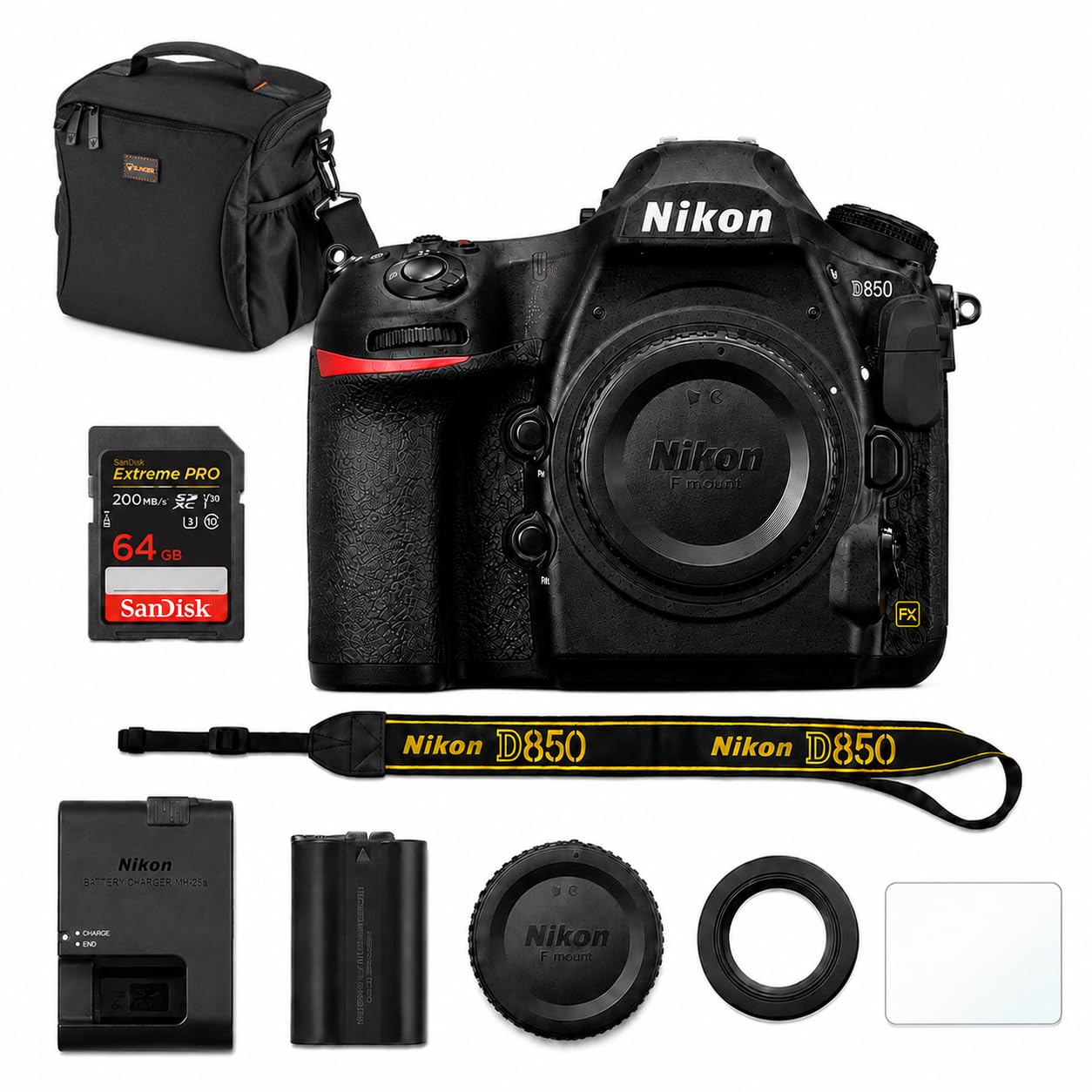
The Nikon D850 marries a 45.7MP FX-format BSI CMOS sensor with the Multi-CAM 20K 153-point AF system taken from the D5, making it a dual-purpose body that delivers both studio-grade resolution and credible sports autofocus. The 7 fps continuous shooting rate (9 fps with the optional battery grip) is not the fastest in this class, but the deep buffer captures 51 RAW frames before slowing — enough to cover a full play sequence in most sports. The EXPEED 5 processor ensures low noise at native ISO 64, producing files with exceptional dynamic range for later cropping and composition edits.
For sports photographers who also shoot commercial or editorial work, the D850 eliminates the need for a second high-resolution body. The 4K UHD video at 30p with 8K time-lapse capability, Focus Shift Mode for macro stacking, and the Negative Digitizer Mode for scanning film archives add versatility. The tilting 3.2-inch touchscreen LCD with 2.36 million dots allows comfortable framing from low angles on the sideline or over crowds. Built-in SnapBridge Wi-Fi and Bluetooth provide seamless image transfer to a phone or tablet for social sharing during events.
Users consistently praise the D850’s image quality and low-light autofocus as excellent for its generation. The trade-off is speed — 7 fps is adequate but not class-leading, so those primarily shooting ultra-fast action like motorsports or field sports may prioritize a D5 or D6. Many note the D780 is better for low-light video, but for stills that require high resolution and reliable AF, the D850 remains a strong hybrid choice for sports shooters who also deliver portrait or product work.
Why it’s great
- 45.7 MP allows generous cropping for distant action
- 153-point AF system with excellent low-light performance
- Deep buffer holds 51 RAW frames at 7 fps
- Versatile video and time-lapse features
Good to know
- 7 fps base rate slower than dedicated sports bodies
- Requires grip for 9 fps and improved handling
- Heavy build; less comfortable for all-day handheld use
6. Nikon D500

The Nikon D500 is the APS-C sports champion, pairing a 20.9MP DX-format sensor with the D5-derived Multi-CAM 20K 153-point AF system. This combination delivers flagship-level autofocus and 10 fps continuous shooting with a massive buffer of 200 14-bit RAW frames — meaning you can hold the shutter down for 20 seconds of continuous action before the camera slows. The 1.5x crop factor effectively multiplies the reach of your lenses, turning a 200-500mm f/5.6 into a 300-750mm equivalent, perfect for field sports and wildlife.
The EXPEED 5 processor and native ISO 51200 (expandable to 1.64 million) provide respectable low-light performance for an APS-C sensor, allowing usable frames at ISO 10,000 with careful exposure. The 3.2-inch tilting touchscreen with 2,539K dots offers sharp live-view for awkward angles, and the weather-sealed magnesium alloy body is built to withstand rain and dust during outdoor events. The built-in Wi-Fi and Bluetooth (SnapBridge) enable quick image transfer to a phone, though some users find the app connectivity inconsistent.
Users upgrading from the D7100 or D7200 describe the D500 as a massive leap in AF speed, buffer depth, and build quality. The 10 fps rate with no buffer limitation is frequently cited as the decisive feature for sports shooters who cannot afford to miss frames during a sprint finish or a goal-line play. The ergonomics are praised — backlit buttons and a joystick for AF point selection make operation intuitive even in dim lighting. The D500 is arguably the best dedicated sports DSLR on the market for those who do not need full-frame shallow depth of field.
Why it’s great
- 200-frame buffer at 10 fps — non-stop action capture
- 153-point AF with D5-grade tracking performance
- 1.5x crop factor gives telephoto lenses extra reach
- Weather-sealed magnesium alloy body
Good to know
- SnapBridge wireless app can be unreliable
- APS-C limits shallow depth-of-field compared to full-frame
- Aftermarket batteries may cause stability issues
7. Sony a7 III

The Sony a7 III is a full-frame hybrid that balances 24.2MP resolution, 10 fps burst rate, and an industry-leading 693 phase-detection AF points covering about 93% of the sensor area. This AF density allows the camera to track athletes across the frame with confidence, and the Eye AF for humans and animals makes portrait-style action shots straightforward. The 15-stop dynamic range and BSI CMOS sensor deliver clean files up to ISO 12,800, making it capable for dim arena venues where you cannot add light.
The a7 III’s 10 fps continuous shooting with mechanical or silent electronic shutter includes AE/AF tracking, and the buffer holds approximately 89 compressed RAW frames before slowing — enough for most game sequences. The built-in 5-axis optical image stabilization gives you a 5-stop advantage for handheld shooting with non-stabilized lenses, and the battery life is rated for approximately 710 shots per charge, far surpassing most mirrorless competitors. The kit 28-70mm f/3.5-5.6 lens is decent for starters, but sports shooters will want to budget for a telephoto zoom like the 70-200mm f/2.8.
Users upgrading from older Canon DSLRs or other entry-level mirrorless bodies praise the a7 III’s autofocus speed and low-light performance as transformative, with many noting that the Eye AF nearly eliminates focus errors. The menu system is often described as complex but deep, rewarding those who invest time in customization. The weather sealing is adequate for light rain but may not hold up to sustained downpours, so a rain cover is recommended for outdoor events.
Why it’s great
- 693 phase-detection AF points with 93% frame coverage
- 15-stop dynamic range and excellent high-ISO performance
- ~710 shots per charge — class-leading battery life
- 5-axis in-body stabilization works with all lenses
Good to know
- Menu system is dense and not beginner-friendly
- Kit lens (28-70mm) is not ideal for sports reach
- Weather sealing is moderate, not pro-grade
8. Nikon D7500

The Nikon D7500 offers a compelling mid-range entry for sports photography with a 20.9MP DX sensor, the same EXPEED 5 processor found in the D500, and a 51-point AF system with 15 cross-type sensors. The 8 fps continuous shooting rate is fast enough for most amateur and enthusiast sports, and the buffer holds 50 14-bit RAW frames at that speed — enough for a full play sequence. The Group-area AF mode effectively tracks erratic subjects, making it a solid choice for youth sports, high school games, and recreational action.
The 18-140mm f/3.5-5.6 ED VR kit lens provides a versatile focal range equivalent to 27-210mm in full-frame terms, covering wide sidelines to moderate telephoto reach without changing glass. The tilting 3.2-inch touchscreen with 922K dots allows low-angle framing on the track or court, and 4K UHD video with stereo sound adds hybrid capability for filming game highlights. Battery life is excellent, and the weather-resistant construction handles unexpected sprinkles on the field.
Users moving up from entry-level Nikon bodies describe the D7500 as a noticeable step up in AF speed, image quality, and build feel. The 51-point system with cross-type sensors offers reliable tracking for typical sports scenarios, though it lacks the density and reach of the D500’s 153-point system. The lack of dual SD slots is a minor limitation for backup-conscious shooters, but the single slot combined with a deep buffer is workable for non-professional use. The 18-140mm lens is praised as a flexible travel companion that does not compromise image quality.
Why it’s great
- 51-point AF with 15 cross-type sensors for reliable tracking
- 8 fps continuous shooting with deep buffer
- Versatile 18-140mm kit lens covers many sports scenarios
- Weather-resistant build and excellent battery life
Good to know
- Single SD card slot limits backup/failover
- No headphone jack for audio monitoring during video
- AF system less dense than D500 for very fast subjects
9. Nikon Df

The Nikon Df is a niche full-frame DSLR that prioritizes low-light image quality and retro design over sports action speed. Its 16.2MP FX-format sensor is derived from the Nikon D4, offering excellent high-ISO performance up to ISO 12,800 (expandable to 204,800), which makes it capable for dim indoor sports if you can work with its slower 5.5 fps burst rate. The 39-point AF system with 9 cross-type sensors is adequate for slower-paced action but lacks the density and tracking sophistication needed for fast-moving field sports.
The Df’s magnesium alloy body with mechanical exposure dials appeals to photographers who want a tactile shooting experience, but the ergonomics are compromised when mounting heavy telephoto lenses — the body is small and the right strap lug can interfere with grip. It is compatible with all Nikon F-mount lenses, including non-AI lenses, giving access to vintage glass that adds character to sports portraits or ambient sideline images. No video recording means the Df is a pure stills camera, which simplifies operation but limits its hybrid utility.
Users consistently describe the Df as an emotional purchase rather than a logical one. Those who love it point to the D4-derived sensor’s smooth tonal transitions, accurate color, and clean high-ISO output. Others note the cramped AF point spread near the center, the lack of a battery grip, and the mediocre low-light AF accuracy. For sports photography specifically, the Df is best suited to ambient-light, low-action scenarios like a boxing match between rounds or a swimmer standing poolside — not for tracking a running back through the secondary.
Why it’s great
- D4-derived sensor with exceptional high-ISO quality
- Compact, lightweight full-frame body
- Works with non-AI vintage lenses
- Excellent battery life (~1,400 shots per charge)
Good to know
- 5.5 fps burst is slow for most sports
- 39-point AF with narrow spread and poor low-light AF
- No video recording capability
- Single SD card slot
10. Canon T7 (Rebel T7) Bundle
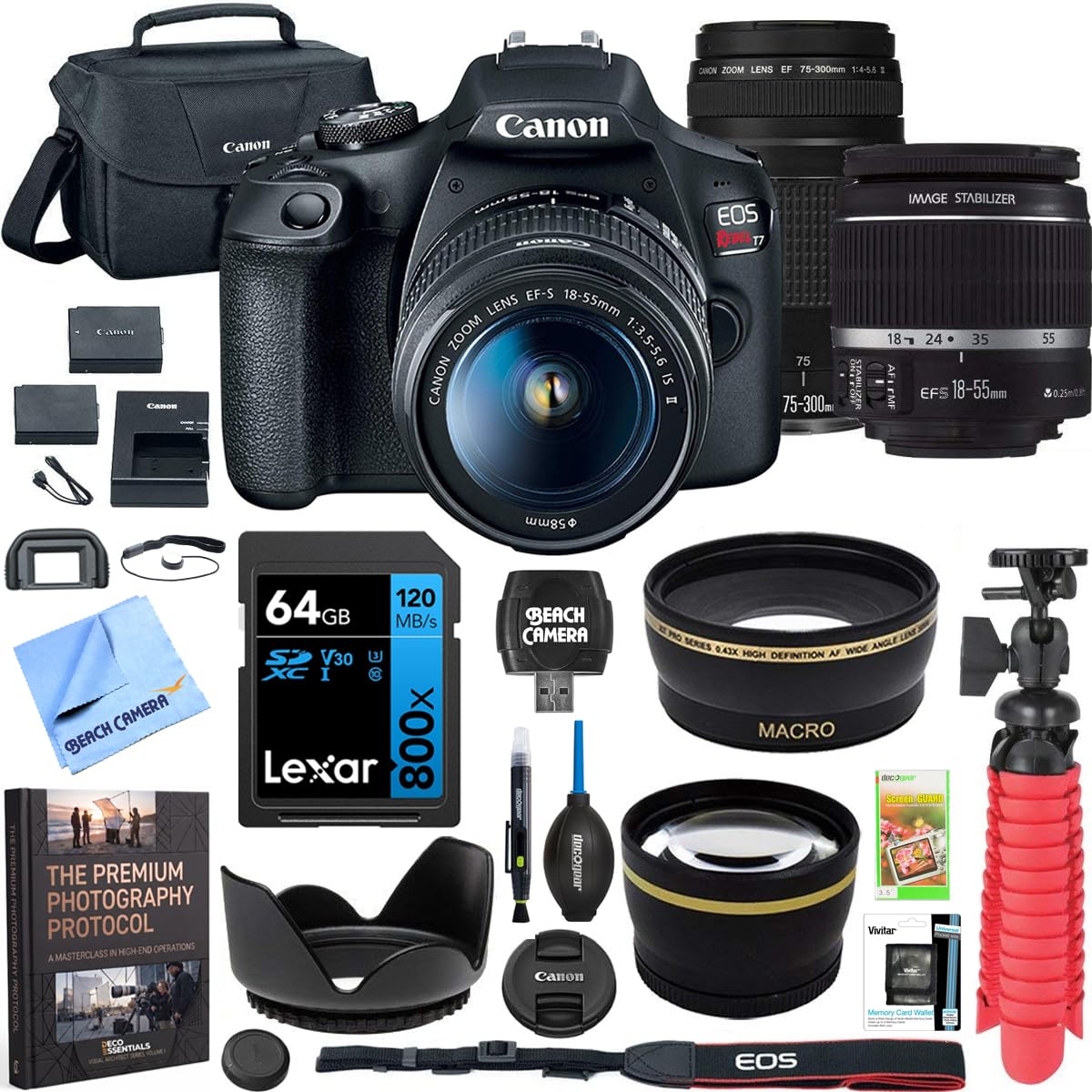
The Canon T7 (Rebel T7) bundle is a budget-friendly entry point for learning the fundamentals of sports photography. The 24.1MP APS-C sensor and DIGIC 4+ processor deliver decent image quality for daylight outdoor sports, but the 9-point AF system with a single cross-type point requires discipline — you must keep the subject under the active AF point, then recompose, which is slow for fast action. The 3 fps continuous shooting rate is severely limiting for capturing peak moments; you will rely heavily on timing single shots rather than bursts.
This bundle includes both the 18-55mm IS II and 75-300mm III lenses, giving you telephoto reach that is essential for field sports, along with a tripod, memory card, extra battery, and carrying case. The built-in Wi-Fi and NFC allow easy image transfer to a phone for social sharing during games. The 3-inch LCD with 920K dots is functional but fixed, making low-angle sideline shots awkward without kneeling or lying on the ground.
Users describe the T7 as a great starter camera for learning exposure, manual control, and composition, but consistently note that both the battery life and the 3 fps burst rate are bottlenecks for serious sports work. Many recommend buying spare batteries and a better tripod, as the included one is prone to breaking. The 75-300mm lens provides reach but is slow at f/5.6 at the long end, making it difficult to freeze action in anything less than bright sunlight. For pure learning with a low entry cost, this bundle delivers; for capturing game-winning shots consistently, consider stepping up to at least a D7500 or D500.
Why it’s great
- Affordable bundle includes telephoto lens and accessories
- 24.1 MP APS-C sensor produces sharp daylight images
- Built-in Wi-Fi for quick sharing to phone
- Easy-to-use interface for beginners
Good to know
- 3 fps burst and 9-point AF miss fast action
- Included tripod is fragile
- Battery drains quickly in continuous use
- 75-300mm lens slow in low light
11. Canon EOS 2000D (Rebel T7) Kit

The Canon EOS 2000D (known as the Rebel T7 outside the US) is functionally identical to the standard T7 body, offering the same 24.1MP APS-C sensor, DIGIC 4+ processor, 9-point AF system, and 3 fps burst rate. This particular bundle distinguishes itself by including a wide-angle and telephoto accessory lens alongside the 18-55mm kit lens, plus a 128GB memory card, flash, case, filter kit, and tripod — a comprehensive starter package for someone who wants everything in one box before their first game shoot.
The camera’s 9-point AF system with AI Servo AF can track a subject once it is locked, but the limited AF coverage means you must keep moving athletes within a small central cluster, making composition tight and action framing challenging. Full HD 1080p video at 30 fps is available but lacks the frame rate for smooth slow-motion analysis of plays. The optical viewfinder with 95% coverage gives a slightly smaller viewing area than what the sensor captures, so you need to mentally account for the extra frame edges when composing.
Buyers report high satisfaction for the price, citing ease of use, good daylight photo quality, and the convenience of having multiple lenses without separate purchases. The Wi-Fi feature for transferring photos to a phone is popular for sharing game snapshots immediately after the event. The 3 fps burst and 9-point AF are the primary limitations — this is best suited for learning the basics of exposure and composition before investing in a faster body. For parents photographing youth soccer on a sunny Saturday, it gets the job done; for Friday night football under lights, the limits become apparent.
Why it’s great
- Comprehensive bundle with wide-angle, telephoto, flash, tripod, and 128GB card
- 24.1MP APS-C sensor delivers good daylight detail
- Easy to learn and use for beginners
- Built-in Wi-Fi and NFC for quick sharing
Good to know
- 3 fps burst and 9-point AF miss fast-action moments
- Accessory lenses are lower optical quality than premium glass
- Battery not included — must purchase separately
- No built-in image stabilization; relies on lens VR
FAQ
What ISO range should I look for in a sports camera for indoor arenas?
How many AF points are truly necessary for tracking football or soccer players?
Should I choose a DSLR or a mirrorless camera for sports photography in 2025?
What shutter speed should I use to freeze different sports?
Final Thoughts: The Verdict
For most users, the digital slr camera for sports photography winner is the Nikon D500 because it delivers flagship D5-grade 153-point AF, a massive 200-frame buffer at 10 fps, and a 1.5x sensor crop that extends telephoto reach — all at a mid-range price that keeps the total system cost lower than full-frame bodies. If you want the absolute highest burst rate and global shutter performance for distortion-free action, grab the Sony Alpha 9 III. And for a do-everything body that shoots 30 fps blackout-free with advanced subject detection and 8K video, nothing beats the Nikon Z 9.

Mo Maruf
I created WellFizz to bridge the gap between vague wellness advice and actionable solutions. My mission is simple: to decode the research and give you practical tools you can actually use.
Beyond the data, I am a passionate traveler. I believe that stepping away from the screen to explore new environments is essential for mental clarity and physical vitality.