Our readers keep the lights on and my smoothie glass nicely filled. As an Amazon Associate, I earn from qualifying purchases.
Shooting in dimly lit environments—wedding receptions, night street scenes, indoor sports—exposes the raw truth about a camera’s sensor. A body that delivers crisp, noise-free files at high ISO separates the gear that collects dust from the one you carry everywhere after dark.
I’m Mohammad Maruf — the founder and writer behind WellFizz. I’ve spent hundreds of hours cross-referencing sensor architectures, native ISO ceilings, phase-detection array layouts, and real-world noise profiles to build this guide around the single trait that matters most when the lights go down.
Whether you’re covering a candlelit ceremony or chasing nocturnal wildlife, you need a body that sees clearly in the dark. This guide breaks down the top contenders to help you pick the best digital slr camera for low light that fits your budget and shooting style.
How To Choose The Best Digital SLR Camera For Low Light
Not every DSLR labeled “low light” actually delivers usable files at ISO 6400. The difference lies in three specific areas: the physical sensor size, the efficiency of the image processor, and the density of the autofocus system. Ignore any marketing claim that skips these specs.
Sensor Size: Full-Frame vs. APS-C
The single largest factor in high-ISO performance is the sensor’s surface area. Full-frame sensors (roughly 36mm x 24mm) gather significantly more light per pixel at the same aperture than APS-C sensors do. This directly translates to lower noise at ISO 6400 and beyond. If your primary use is low-light event or documentary work, prioritize full-frame bodies. APS-C cameras like the Nikon D500 create manageable noise up to ISO 6400 but show visible grain above that.
Native ISO Range and Dynamic Range
The native ISO ceiling—not the expanded “Hi” setting—determines where the sensor delivers usable dynamic range. Look for a body with a native ISO of at least 6400, and ideally native 25600 or higher. The expanded ranges (Hi 1, Hi 2) usually compress shadow detail and introduce banding. The best low-light cameras maintain 12+ stops of dynamic range at their top native sensitivity.
Autofocus in Dim Conditions
A high-density phase-detection array with cross-type sensors matters enormously in low contrast. Cameras offering 51 or more AF points with at least 15 cross-type sensors, or a 153-point array with dedicated low-light sensitivity, lock focus faster in near-darkness than simpler 9- or 11-point systems. The center point on most pro bodies works down to -4 EV or better.
Quick Comparison
On smaller screens, swipe sideways to see the full table.
| Model | Category | Best For | Key Spec | Amazon |
|---|---|---|---|---|
| Nikon D5 | Premium Pro Body | Sports & Events at ISO 102400+ | Native ISO 102400, 153 AF points | Amazon |
| Nikon D850 | Premium FX | Landscape & Studio with 45.7MP | Native ISO 64-25600 | Amazon |
| Nikon D780 | Mid-Range Hybrid | Event & Low-Light Video | Live View 273-point PDAF, ISO 51200 | Amazon |
| Pentax K-1 Mark II | Mid-Range FX | Astro & Landscape with Pixel Shift | Native ISO 819200, GPS Astrotracer | Amazon |
| Canon 5D Mark IV | Premium FX | Portrait & Natural Light | 30.4MP, 61-point AF, ISO 32000 | Amazon |
| Nikon D500 | Premium DX | Wildlife & Sports at 10fps | Native ISO 51200, 153 AF points | Amazon |
| Nikon D810 | Mid-Range FX | Studio & Detail Work | 36.3MP, Native ISO 12800 | Amazon |
| Nikon D7000 | Entry-Level DX | Enthusiast Walkaround | 16.2MP, Native ISO 6400 | Amazon |
| Nikon D700 | Mid-Range FX | Low-Noise at ISO 6400 | 12.1MP, Native ISO 6400 | Amazon |
| Canon T7 Rebel | Entry-Level DX | Budget Learning Kit | 24.1MP, Native ISO 6400, 9 AF points | Amazon |
| Sony Alpha 7 V | Premium Mirrorless | Hybrid Photo & Video | 33MP Stacked, ISO 51200 native | Amazon |
In‑Depth Reviews
1. Nikon D5 (CF Version)

The Nikon D5 stands as the benchmark for low-light DSLR performance. Its native ISO ceiling of 102400 (expandable to 3280000) allows you to shoot in conditions where the human eye struggles. The Multi-CAM 20K 153-point AF system locks focus at -4 EV, making it nearly impossible to miss even in pitch-black venues.
At 12 fps with full AF tracking and a 200-frame buffer, it’s built for sports, news, and wedding photographers who cannot afford a single blurry frame. The 20.8MP FX-format sensor prioritizes noise performance over raw pixel count—files at ISO 25600 are cleaner than most competitors at ISO 6400.
One trade-off: the CF version requires CompactFlash cards, and the low-ISO dynamic range is slightly behind the D850 for landscape work. But for pure light-gathering ability, nothing in this list matches the D5’s native sensitivity. The body feels indestructible, with deep weather sealing and a shutter rated for 400,000 cycles.
Why it’s great
- Highest native ISO of any DSLR here
- 153-point AF works at -4 EV
- 12 fps burst with unlimited JPEG buffer
Good to know
- Low-ISO dynamic range behind D850
- Heavy body (over 1400g with battery)
2. Nikon D780 with 24-120mm f/4G ED VR

The Nikon D780 bridges the gap between DSLR and mirrorless with a backside-illuminated 24.5MP full-frame sensor. The BSI architecture improves light-gathering efficiency by positioning circuitry behind the photodiodes, resulting in cleaner files at ISO 6400 and 12800 compared to older designs.
Its dual AF system gives you the traditional 51-point optical viewfinder array plus a 273-point phase-detection grid in live view. This makes video work—full-frame 4K UHD at 30p and 1080/120p slow motion—remarkably sharp with accurate eye tracking. The 12 fps silent electronic shutter in live view outperforms many mirrorless bodies in that price band.
The bundled 24-120mm f/4G ED VR lens is a versatile travel companion, offering constant aperture and VR stabilization that lets you handhold in challenging light. Battery life is exceptional at 2260 shots per charge, though some units have reported charger defects from third-party sellers.
Why it’s great
- BSI sensor delivers class-leading high ISO
- 273-point PDAF in live view for video
- 12 fps silent burst with e-shutter
Good to know
- Bundled kit lens is f/4 constant aperture
- Some bodies lack serial numbers
3. Nikon D850 with 64GB Bundle
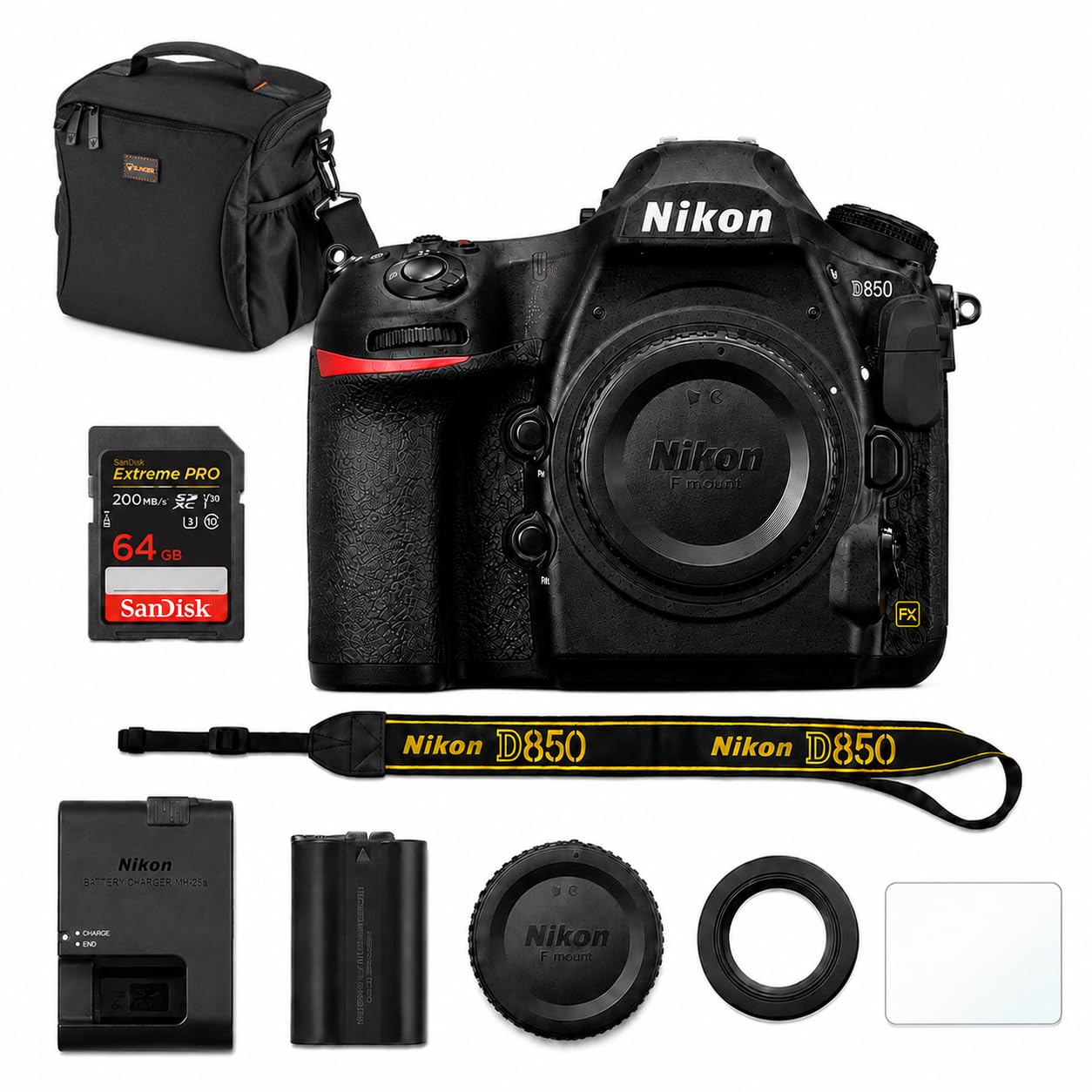
The Nikon D850 delivers an extraordinary balance—45.7 megapixels packed onto a BSI full-frame sensor with native ISO 64-25600. At ISO 6400, the EXPEED 5 engine suppresses chroma noise so effectively that prints at 24×36 inches remain gallery-worthy. The Multi-CAM 20K 153-point AF system reliably tracks subjects down to -4 EV.
It shoots 7 fps natively or 9 fps with the optional battery grip, and records 4K UHD at 30p with full pixel readout. The 3.2-inch tilting touchscreen LCD (2.36 million dots) makes waist-level and overhead compositions easy. Native ISO 64 offers the cleanest dynamic range of any Nikon DSLR, ideal for long exposures in mixed lighting.
The included bundle adds a 64GB SD card and multi-device shoulder bag, saving you a trip to the accessory store. The only caveat is that the high 45.7MP output demands fast UHS-II cards and substantial hard drive space. For hybrid shooters who need both resolution and high-ISO capability, this is the most versatile full-frame DSLR ever produced.
Why it’s great
- Exceptional 45.7MP resolution with BSI sensor
- Excellent high-ISO performance at 6400
- 153-point AF with -4 EV sensitivity
Good to know
- 7 fps is slower than D5 for fast action
- High resolution files require fast cards
4. Pentax K-1 Mark II with 28-105mm WR

The Pentax K-1 Mark II stands apart with a top sensitivity of ISO 819200, the highest native ceiling in this lineup. Its 36.4MP full-frame sensor, coupled with the PRIME IV imaging engine, delivers surprisingly usable files at ISO 51200 for web and social media use.
The Pixel Shift Resolution System II captures four sequential images and combines them into a single RAW file with extraordinary detail and color fidelity—especially valuable for low-light landscape work. The 5-axis, 5-step Shake Reduction II compensates for hand movement, allowing you to shoot at shutter speeds up to 5 stops slower than normal.
Built with 87 weather seals and a flexible tilt-type LCD monitor, the K-1 Mark II excels in challenging weather conditions. The GPS-based Astrotracer simplifies astrophotography without an external mount. The bundled DFA 28-105mm WR lens is a sharp, weather-sealed kit lens that matches the body’s robust build philosophy.
Why it’s great
- Highest ISO ceiling in this guide (819200)
- 5-axis IBIS for handheld low-light
- Pixel Shift for archival detail
Good to know
- Limited native lens ecosystem
- AF speed slower than Nikon/Canon pro bodies
5. Nikon D500 DX Body

The Nikon D500 is the only APS-C body in this guide that genuinely competes with full-frame cameras in low light. Its 20.9MP DX sensor, paired with the EXPEED 5 processor, delivers usable images at ISO 10,000 and social-media-ready files at ISO 25,600. The Multi-CAM 20K 153-point AF system inherits the D5’s phase-detection engine, locking onto subjects in near-darkness.
At 10 fps with a 200-frame buffer, it outpaces many full-frame bodies in burst speed—ideal for indoor sports and fast-moving wildlife. The 3.2-inch tilting touchscreen (2.36 million dots) and backlit buttons make operation intuitive in low ambient light. The built-in Wi-Fi and Bluetooth allow seamless tethering, though SnapBridge compatibility with iOS has been inconsistent.
One pragmatic advantage: DX lenses are lighter and cheaper than their FX counterparts, and the D500’s crop factor gives telephoto lenses extra reach without sacrificing the high-ISO performance that smaller sensors often lack.
Why it’s great
- Best-in-class DX high-ISO up to 25600
- 153-point AF with D5-level low-light sensitivity
- 10 fps burst for action
Good to know
- DX sensor still noisier than FX at ISO 12800
- SnapBridge app has mixed reviews
6. Canon 5D Mark IV (Renewed)

The Canon EOS 5D Mark IV pairs a 30.4MP full-frame CMOS sensor with a native ISO range of 100-32000 (expandable to 102400). The DIGIC 6+ processor produces excellent color science at high ISOs, maintaining smooth tonal gradations in shadow areas at ISO 6400. The 61-point AF system with 41 cross-type sensors provides robust vertical coverage.
At 7 fps with full AF tracking, it handles portrait sessions and event work reliably. The 3.2-inch touchscreen LCD with 1.62 million dots offers clear Live View composition. The Mark IV also records 4K video with Motion JPEG compression, though the file sizes are larger than modern codecs.
The renewed condition units offer significant savings, but it’s worth verifying the shutter count before purchase. Users consistently praise its portrait and natural-light performance, though the fixed LCD screen can be limiting for overhead or ground-level work compared to tilting alternatives.
Why it’s great
- 61-point AF with 41 cross sensors
- Excellent high-ISO color rendition
- 3.2-inch touchscreen LCD
Good to know
- Fixed screen limits shooting angles
- 4K Motion JPEG creates large files
7. Nikon D810 (Renewed)

The Nikon D810’s 36.3MP FX-format sensor, with no optical low-pass filter, captures an extraordinary amount of fine detail. Its native ISO range runs from 64 to 12800 (expandable to 51200), and the EXPEED 4 processor handles noise well enough that ISO 3200 files are clean enough for large prints.
The Multi-CAM 3500FX 51-point AF system, though a generation behind the D5, still performs admirably in dim lighting down to -2 EV. Full HD 1080p video at 60/30/24 fps gives you flexibility for slow-motion capture without moving to 4K. The 3.2-inch 1,229k-dot LCD is sharp for Live View focus checking.
Being a renewed model, you can save considerably compared to new prices. However, check for non-USA models that might void warranty coverage. The D810 lacks built-in Wi-Fi and has no tilting screen, so it’s best suited for tripod-based studio or landscape work where low-light detail matters most.
Why it’s great
- No optical low-pass filter maximizes detail
- Native ISO 64 for clean dynamic range
- 51-point AF reliable in dim conditions
Good to know
- No built-in Wi-Fi or tilting screen
- Renewed units may have non-USA firmware
8. Nikon D700

The Nikon D700 remains a cult favorite among low-light shooters for good reason. Its 12.1MP FX-format sensor features a large 8.45µm pixel pitch that provides a remarkable signal-to-noise ratio. At ISO 6400, the D700 produces cleaner, more film-like grain than many modern cameras with higher pixel counts.
The 51-point AF system with 3D Focus Tracking locks on quickly in dim environments, and the body’s magnesium-alloy chassis with weather sealing gives it a rugged feel. The D700 shoots up to 5 fps (8 fps with the MB-D10 grip) and delivers images with wide dynamic range straight from the sensor.
There is no video mode, no built-in flash, and only a single CF card slot. The 12.1MP resolution limits cropping flexibility—this is a camera for getting it right in the frame. But if you shoot events in candlelight or night street photography where extreme high-ISO image quality is paramount, the D700 still holds its own.
Why it’s great
- Large 8.45µm pixel pitch for clean high ISO
- 51-point AF with 3D tracking
- Weather-sealed magnesium body
Good to know
- No video, single card slot
- 12.1MP limits cropping flexibility
9. Nikon D7000 with 18-105mm

The Nikon D7000 offers a solid entry point to low-light photography without breaking into full-frame territory. Its 16.2MP DX-format CMOS sensor, paired with the EXPEED 2 processor, delivers bright, colorful images up to ISO 3200 with minimal noise. At ISO 6400, chroma noise becomes visible but remains manageable for web sharing and small prints.
The 2016-pixel RGB (3D Color Matrix) exposure sensor reads scene information with high accuracy, and the 39-point AF system provides decent coverage for moving subjects in modest light. The D7000 also shoots 1080p HD video at 24 fps with full-time autofocus, though the autofocus motor is audible on the recording.
The bundled 18-105mm f/3.5-5.6 VR lens features Vibration Reduction for handheld stability in dim environments. Dual SD card slots allow for overflow or backup—a rare feature in this price tier. Some early units had AF calibration issues, but most copies are reliable after firmware updates.
Why it’s great
- 16.2MP sensor performs well up to ISO 3200
- Dual SD card slots for backup
- Vibration Reduction kit lens
Good to know
- Video AF motor is audible
- Some units had early AF calibration issues
10. Canon T7 Rebel with Dual Lenses
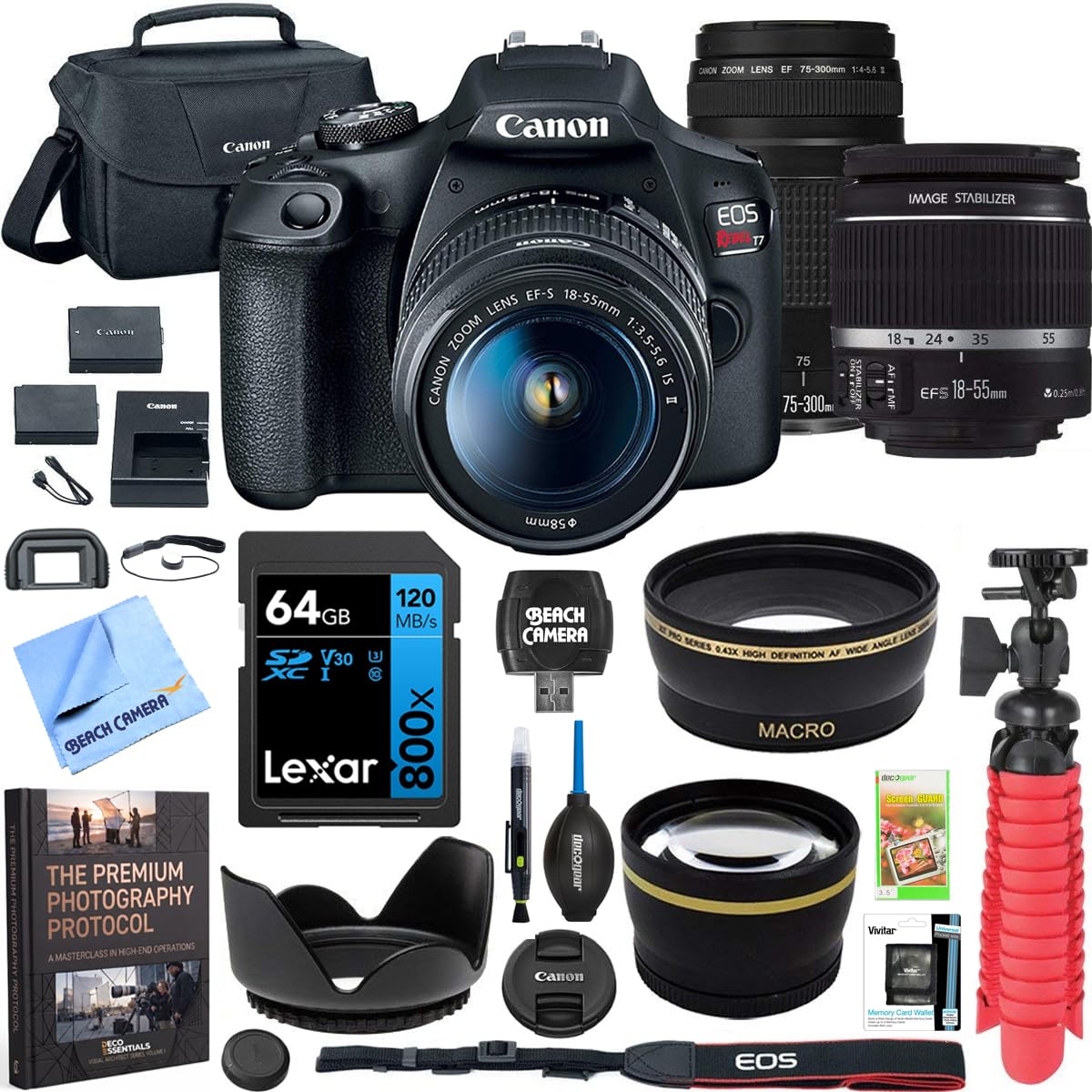
The Canon EOS Rebel T7 serves as an approachable entry-level option for photographers learning the craft in mixed lighting. Its 24.1MP APS-C CMOS sensor and DIGIC 4+ processor produce decent images at ISO 800-1600, but noise becomes heavy at ISO 3200 and above. The 9-point AF system with AI Servo tracking is basic compared to advanced bodies.
The bundle includes two zoom lenses (18-55mm f/3.5-5.6 IS II and 75-300mm f/4-5.6 III) that cover a wide focal range, plus a 64GB SD card, tripod, bag, and cleaning kit—everything a beginner needs to start shooting day one. Built-in Wi-Fi and NFC allow image transfer and remote shooting from a smartphone.
The battery life is notably limited; several users report rapid drain, with the camera dying after as few as 8 shots on a fresh charge. The 3 fps continuous shooting speed is also sluggish for action. The T7 is best viewed as a complete teaching tool where low-light work is secondary to learning exposure fundamentals.
Why it’s great
- Complete kit with dual lenses and accessories
- Built-in Wi-Fi and NFC for sharing
- 24.1MP sensor for daylight shooting
Good to know
- High noise at ISO 3200+
- Battery drains fast in some units
11. Sony Alpha 7 V (Body Only)
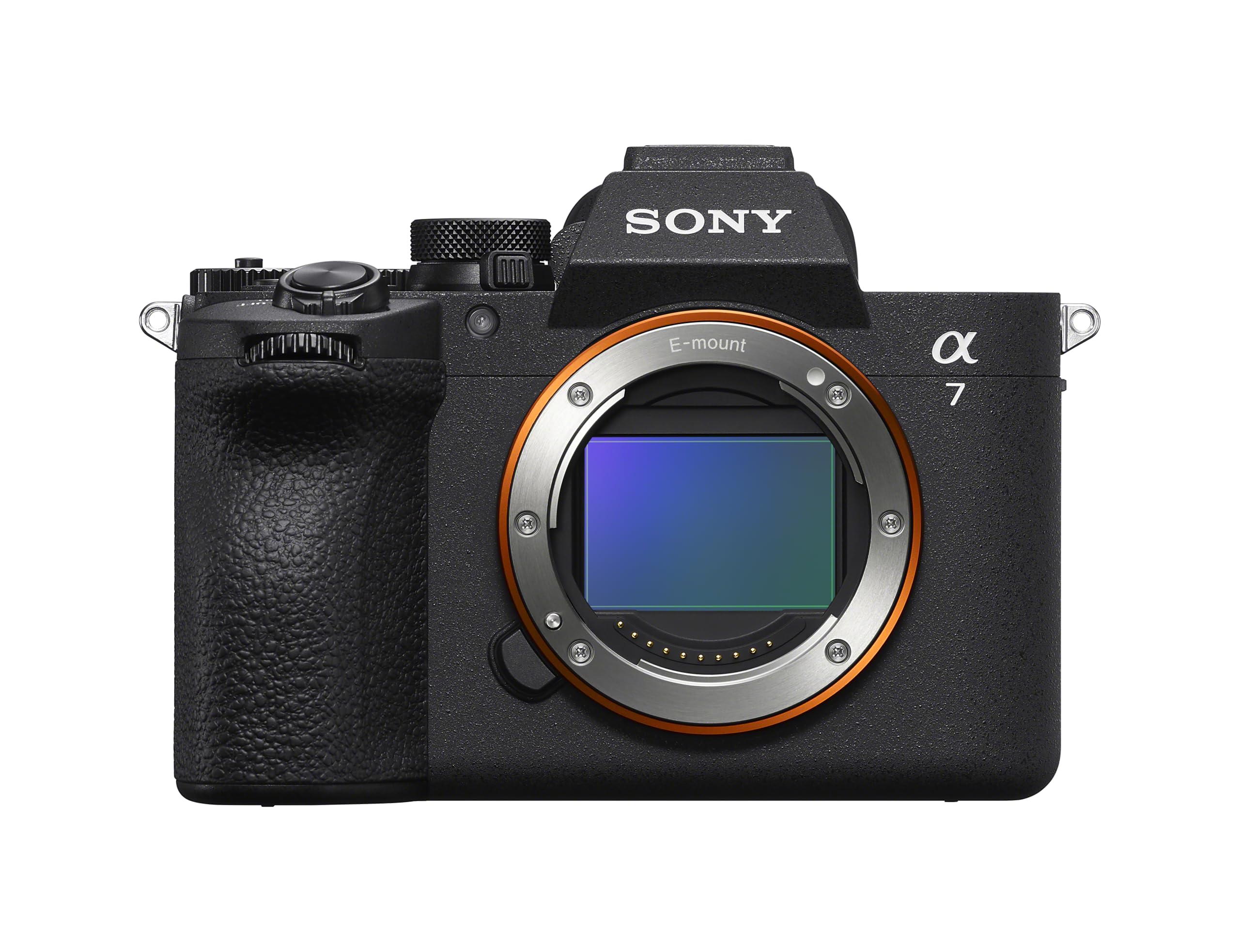
The Sony Alpha 7 V, while technically a mirrorless body, earns its place here because of its unparalleled low-light hybrid capabilities. The partially stacked 33MP Exmor RS CMOS sensor reads data approximately 4.5 times faster than the A7 IV, enabling blackout-free 30 fps bursts with full AF/AE tracking and up to 16 stops of dynamic range.
The AI-based Real-time Recognition AF uses human pose estimation to track eye, head, and body position even in dim environments where contrast detection fails. The 5-axis in-body image stabilization provides up to 7.5 steps of correction, allowing handheld long exposures in near darkness. 4K 120p video with full pixel readout makes it a true hybrid for film shooters.
The native ISO range of 100-51200 (expandable to 50-204800 for stills) produces exceptionally clean files throughout. The Sony E-mount ecosystem includes fast prime lenses like the 50mm f/1.2 GM that maximize light gathering. Battery life is improved over previous generations, but heavy video use will still require spares.
Why it’s great
- 30 fps burst with blackout-free shooting
- AI-based eye/body tracking in low light
- 7.5-stop IBIS for handheld night shots
Good to know
- Requires investment in fast E-mount glass
- Heavier video use drains battery quickly
FAQ
Can an APS-C DSLR deliver good low-light images?
Is native ISO more important than megapixel count for low light?
Should I prioritize more autofocus points for low-light work?
Final Thoughts: The Verdict
For most users, the digital slr camera for low light winner is the Nikon D850 because it combines the highest usable resolution (45.7MP) with excellent high-ISO performance up to ISO 25600, a professional 153-point AF system, and versatile 4K video in a durable full-frame body. If you need extreme native ISO for sports and events, grab the Nikon D5. And for hybrid shooters who demand 30 fps bursts and AI-driven AF in near darkness, nothing beats the Sony Alpha 7 V.

Mo Maruf
I created WellFizz to bridge the gap between vague wellness advice and actionable solutions. My mission is simple: to decode the research and give you practical tools you can actually use.
Beyond the data, I am a passionate traveler. I believe that stepping away from the screen to explore new environments is essential for mental clarity and physical vitality.