Our readers keep the lights on and my smoothie glass nicely filled. As an Amazon Associate, I earn from qualifying purchases.
The best digital retro camera isn’t just a tool; it’s a statement. It’s a deliberate choice to slow down, to feel the tactile click of a dial, and to capture images that carry a sense of timelessness. In a world of soulless computational photography, these cameras bring back the joy of shooting with a purpose, wrapping cutting-edge sensors and stabilization in classic analog bodies.
I’m Mohammad Maruf — the founder and writer behind WellFizz. This guide is the result of dozens of hours spent cross-referencing sensor specs, comparing build materials, and analyzing real user feedback for the current wave of retro-styled digital cameras.
After thoroughly examining the market, I’ve compiled this guide to the best digital retro camera to help you find the perfect blend of vintage aesthetics and modern performance for your shooting style.
How To Choose The Best Digital Retro Camera
Choosing a retro-styled digital camera is a balancing act between vintage aesthetics and modern performance. The best camera for you depends on what kind of photographer you are and how much you value portability versus image quality.
Sensor Size: The Foundation of Image Quality
The sensor is the heart of any digital camera. Full-frame sensors (like in the Leica Q3) offer the best dynamic range, low-light performance, and depth of field control, but they come in larger, pricier bodies. APS-C sensors (found in the Fujifilm X100VI and Nikon Z fc) offer an exceptional balance of quality and portability, and are the sweet spot for many enthusiasts. Compact 1-inch sensors (like in the Sony RX100 VII) allow for incredible zoom ranges in a truly pocketable size, but they can’t match the bokeh and low-light capabilities of larger sensors.
Fixed Lens vs. Interchangeable Lenses
This is a core philosophical choice. Fixed-lens cameras like the Ricoh GR IIIx and Fujifilm X100VI force you to zoom with your feet and compose creatively, often leading to stronger, more intentional photography. They are also more compact and have no risk of dust on the sensor. Interchangeable lens cameras like the Fujifilm X-E5 or OM System OM-D E-M10 Mark IV offer immense versatility, letting you switch from a wide-angle for landscapes to a portrait lens in seconds. If you want one camera to rule them all, an interchangeable lens system is the way to go. If you want a dedicated everyday companion, a fixed lens is hard to beat.
IBIS: The Steady Hand
In-body image stabilization (IBIS) is a game-changer. It shifts the sensor to counteract your hand shake, allowing you to shoot at shutter speeds 4-to-7 stops slower than you normally could. This means sharp images in low light without a tripod. The OM System E-M10 Mark IV offers 4.5 stops, while the Fujifilm X-E5 offers up to 7 stops. If you shoot in dim conditions without a flash, IBIS should be a top priority.
Film Simulations and JPG Output
One of the biggest appeals of retro digital cameras is the ability to get a beautiful, film-like look straight out of the camera, bypassing hours of editing. Fujifilm is the undisputed king here, with its Film Simulation modes (Velvia, Classic Chrome, Astia, etc.). The new Fujifilm X-E5 even has a dedicated dial for selecting your film sim. The OM System cameras also offer Art Filters, including an Instant Film option. If you want to spend less time in front of a computer, this feature is a major differentiator.
Quick Comparison
On smaller screens, swipe sideways to see the full table.
| Model | Category | Best For | Key Spec | Amazon |
|---|---|---|---|---|
| Fujifilm X100VI | Premium Compact | Everyday street photography | 40.2MP APS-C / 6-Stop IBIS | Amazon |
| Fujifilm X-E5 | Interchangeable Lens | Versatile system with film sims | 40.2MP APS-C / 7-Stop IBIS | Amazon |
| Nikon Z fc | Interchangeable Lens | Retro feel with modern Z glass | 20.9MP APS-C / 4K UHD | Amazon |
| OM SYSTEM E-M10 IV | Mirrorless System | Lightweight travel system | 20MP Four Thirds / 4.5-Stop IBIS | Amazon |
| Leica Q3 | Full-Frame Premium | Ultimate image quality | 60MP Full-Frame / f/1.7 Lens | Amazon |
| Sony RX100 VII | Pocket Zoom | Travel & concerts | 20.1MP 1-inch / 24-200mm Zoom | Amazon |
| Ricoh GR IIIx HDF | Pocket Compact | Ultimate pocketable camera | 24.2MP APS-C / 40mm f/2.8 | Amazon |
| Panasonic LUMIX ZS99 | Superzoom Compact | Value zoom for travel | 30x Opt. Zoom / 24-720mm | Amazon |
| Pentax K1000 | Film Camera | True analog film experience | Full Manual / Pentax K Mount | Amazon |
In‑Depth Reviews
1. Fujifilm X100VI Digital Camera

This is the camera that defines the retro digital category. The X100VI marries a stunning 40.2MP X-Trans CMOS 5 HR sensor with up to 6 stops of in-body image stabilization inside a body that looks and feels like a classic rangefinder. The fixed 23mm f/2 lens (35mm equivalent) is legendary for its sharpness and character, and the hybrid optical/electronic viewfinder is a pure joy to use, letting you frame shots with zero lag or a digital overlay.
The real magic is the film simulations. The 20 Film Simulation modes, including the new REALA ACE, produce gorgeous JPEGs straight out of the camera. You can set your shutter speed, aperture, and ISO with dedicated dials on the top plate, then instantly get a Classic Chrome look with no editing required. Its compact size and magnesium alloy build make it an indestructible everyday companion.
Coupled with the built-in 4-stop ND filter, the X100VI is a street photographer’s dream. The autofocus is fast and reliable, though some reviews note the linear motors in the lens can struggle a bit with the new AI detection algorithms. Battery life is moderate, especially with IBIS active, but this is the camera that makes you want to go out and shoot.
Why it’s great
- Exceptional 40.2MP sensor and class-leading film simulations.
- In-body stabilization provides 6 stops of shake reduction.
- Beautiful, tactile design with dedicated analog dials.
Good to know
- Fixed lens means no optical zoom; you must zoom with your feet.
- Autofocus can occasionally hunt when tracking fast-moving subjects.
- Battery life is average; carrying a spare is recommended.
2. Fujifilm X-E5 Mirrorless Digital Camera
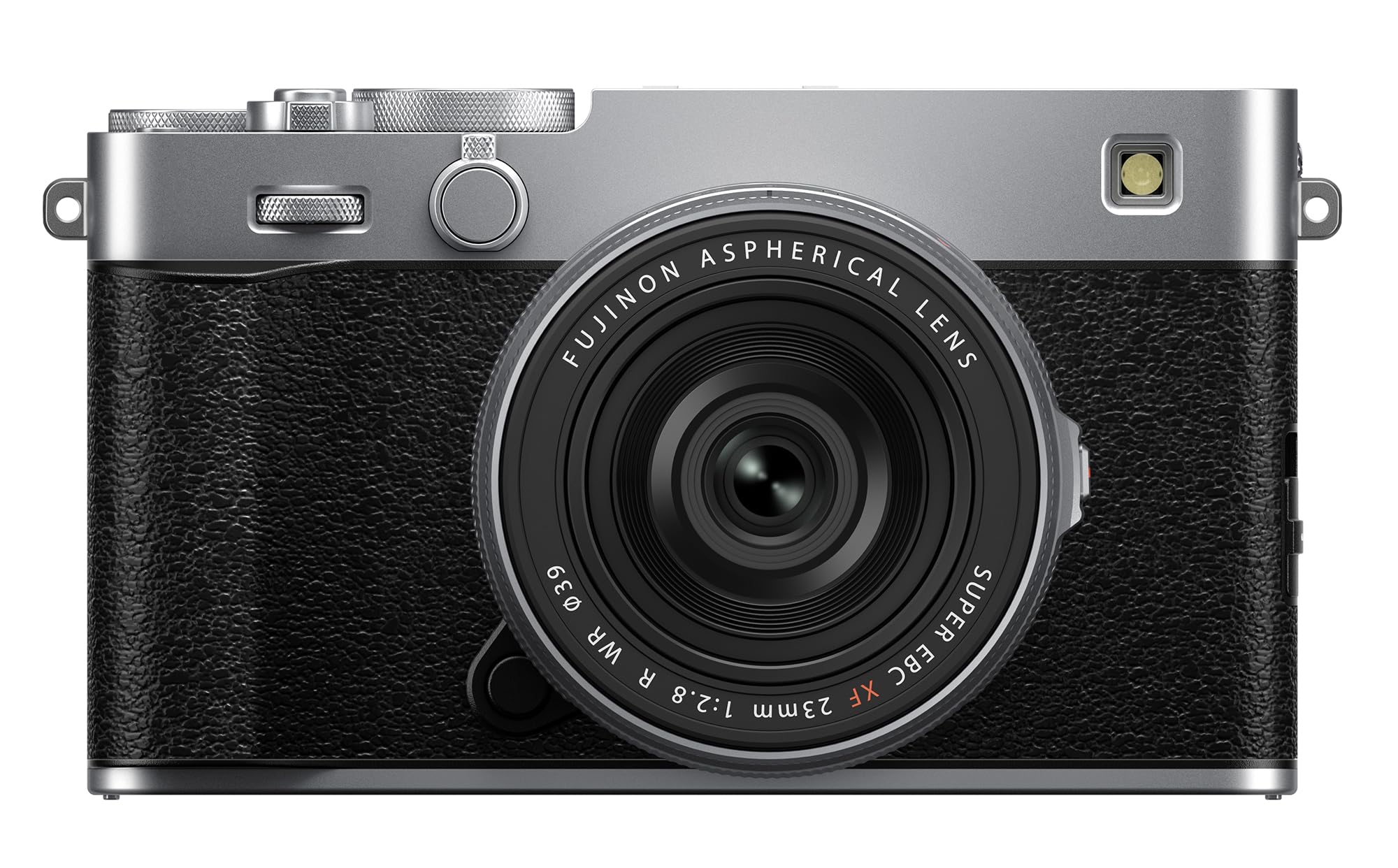
The X-E5 is effectively the X100VI’s more versatile sibling. It packs the same 40.2MP X-Trans 5 HR sensor and the powerful X-Processor 5, but gives you the option to swap lenses. It’s built around a stunning machined aluminum top-plate with retro lines that echo classic rangefinder film cameras. The new customizable Film Simulation dial, discreetly placed under the top plate with a circular viewing window, is an innovative touch that lets you flip between looks without diving into menus.
The 7-stop IBIS is class-leading and makes this the best camera for handheld low-light shooting in this weight class. The included XF23mmF2.8 R WR pancake lens is a perfect pairing, maintaining the compact ethos while offering weather resistance. The eye-detection autofocus, powered by deep learning AI, is fast and accurate, making it suitable for both portraits and street photography.
Some reviewers noted the battery life isn’t the longest, and the camera body lacks formal weather sealing (unlike the X-T5). The new Film Simulation dial is a treat for customization, but it adds a slight premium. If you want that X100VI aesthetic with the flexibility to mount a portrait telephoto or an ultra-wide lens, this is the perfect choice.
Why it’s great
- 40.2MP sensor and 7-stop IBIS in a compact, rangefinder-style body.
- Compact and portable body with the included pancake lens.
- Interchangeable lens system gives immense creative freedom.
Good to know
- Battery life is moderate; plan for a spare on longer shoots.
- Body is not weather-sealed; caution in rain or dust.
3. Nikon Z fc

The Nikon Z fc is a love letter to the iconic Nikon FM film SLR. It replicates the look and feel of that classic 1970s camera with a modern digital heart. The top deck features dedicated dials for shutter speed, ISO, and exposure compensation, each clicking with satisfying precision. This camera is designed to make you feel the shot before you take it, forcing you to think about exposure in a way that modern PASM dials simply don’t.
Under the hood, it packs a 20.9MP DX (APS-C) sensor with the EXPEED 6 processing engine. Image quality is excellent, with vibrant colors and good dynamic range. The vari-angle touchscreen is perfect for vlogging and self-shots, and the 4K UHD video is capable, with full-time eye-detection AF in video mode. The SnapBridge app makes transferring images to your phone seamless.
It’s important to note the Z fc is not weather-sealed and relies on lens-based VR for stabilization, so the IBIS fans might want to look at the Fujifilm options. The kit lens (16-50mm) is a solid performer but doesn’t have the same retro aesthetic as the body. Despite that, the pure joy of the tactile controls and the classic SLR silhouette make this a top contender for anyone who values the shooting experience as much as the final image.
Why it’s great
- Gorgeous, highly tactile retro design that mimics classic film SLRs.
- Excellent image quality and user-friendly interface.
- Versatile vari-angle touchscreen for vloggers.
Good to know
- Lacks in-body stabilization; relies on lens-based VR.
- No weather sealing, so be careful in wet conditions.
4. OM SYSTEM Olympus E-M10 Mark IV

This camera from OM System (formerly Olympus) is an incredibly lightweight and compact interchangeable lens system. The silver and black styling gives it a classic retro look that pairs beautifully with its small pancake zoom lens. The 20MP Live MOS Micro Four Thirds sensor is paired with a 5-axis IBIS system capable of 4.5 shutter speed steps of compensation — a remarkable feature at this price point.
The flip-down touchscreen enables a dedicated selfie mode, making it easy to compose vlogs or self-portraits. It has a generous 16 Art Filters, including an Instant Film option that mimics the look of old Polaroid photos. The camera is small enough to fit in a jacket pocket, making it one of the most portable systems you can buy, especially with the collapsing 14-42mm EZ pancake lens.
The image quality is very good, especially for its size. The IBIS is its secret weapon, allowing sharp handheld shots down to 1-second exposures. Some reviewers noted it doesn’t use USB-C for charging, requiring a separate charger for spare batteries. The autofocus is contrast-detection, which is reliable but slower than phase-detect systems. For the ultimate portable, high-value retro system with stellar stabilization, this is a fantastic choice.
Why it’s great
- Highly compact and lightweight system for extreme portability.
- Excellent 4.5-stop in-body stabilization for sharp low-light shots.
- Dedicated selfie mode and flip-down screen.
Good to know
- Autofocus is slower than phase-detect alternatives.
- No USB-C charging; requires an external charger for spare batteries.
5. Leica Q3 Compact Digital Camera
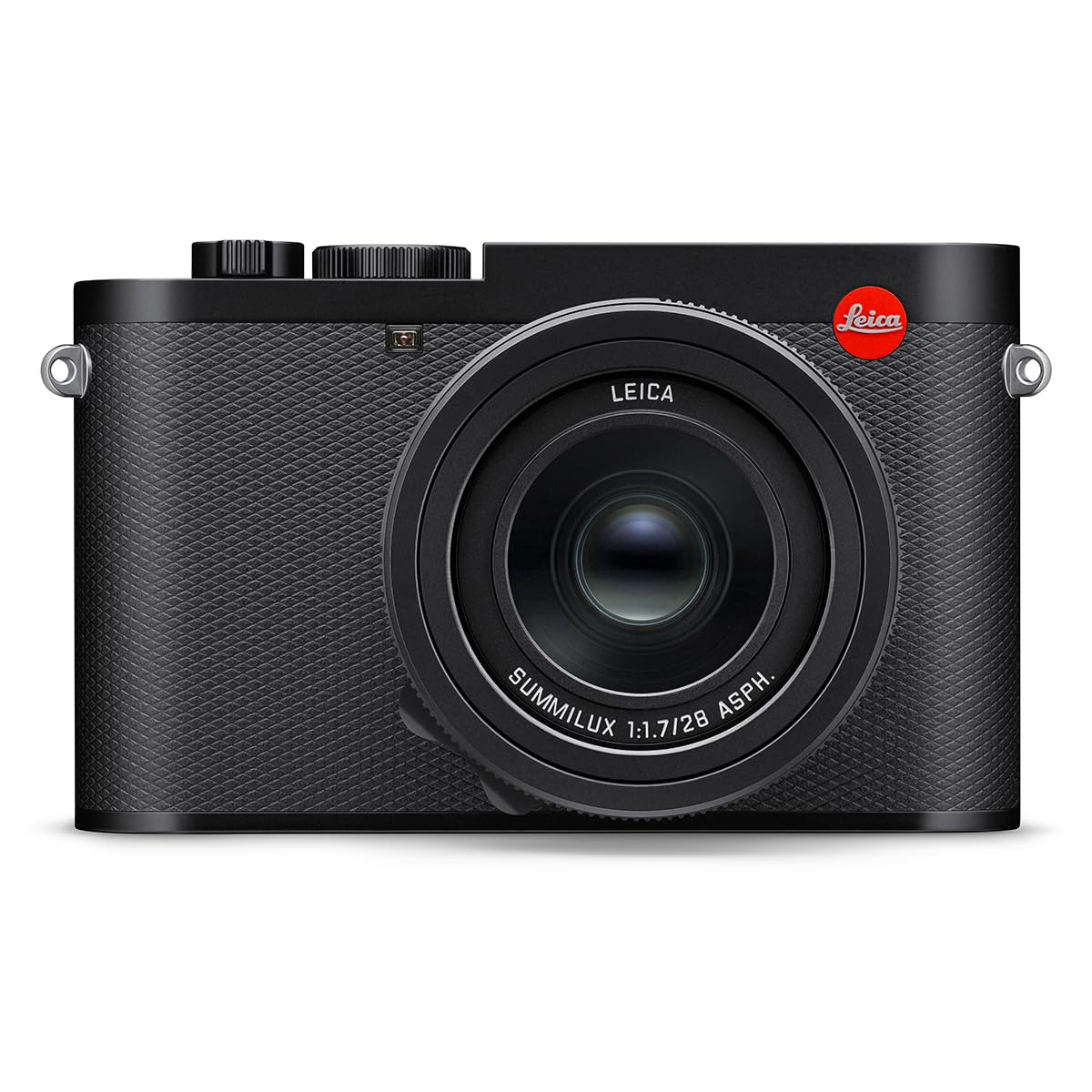
If money is no object and you demand the absolute pinnacle of image quality in a compact retro body, the Leica Q3 is in a league of its own. It features a groundbreaking 60MP full-frame BSI CMOS sensor with Triple Resolution Technology, paired with a legendary Summilux 28mm f/1.7 ASPH lens that is astoundingly sharp. The Maestro IV processor with 8GB of memory ensures lightning-fast performance.
The build quality is absolutely superb. Every dial, button, and surface feels milled from a solid block of metal. The hybrid autofocus system is fast and accurate, and the digital zoom functions (up to 90mm) give you framing flexibility without sacrificing too much resolution. The simplistic, boxy design is the epitome of understated elegance, making it the perfect camera for street photography or a discerning travel companion.
It’s important to address the elephant in the room: the price is stratospheric. It also lacks IBIS, relying on digital stabilization instead. The fixed 28mm lens is a wide angle, which won’t suit everyone. This is a luxury investment for professionals and collectors who value the intangible qualities of a Leica, from the build to the unique color science. As one reviewer put it, it’s the “James Bond” of cameras—suave and ready for action.
Why it’s great
- Best-in-class image quality with a 60MP full-frame sensor.
- Stunning f/1.7 Summilux lens that is incredibly sharp.
- Superb build quality and tactile, minimalist design.
Good to know
- Premium price point puts it out of reach for most buyers.
- Fixed 28mm wide-angle lens is not for everyone.
- Relies on digital stabilization, not mechanical IBIS.
6. Sony RX100 VII
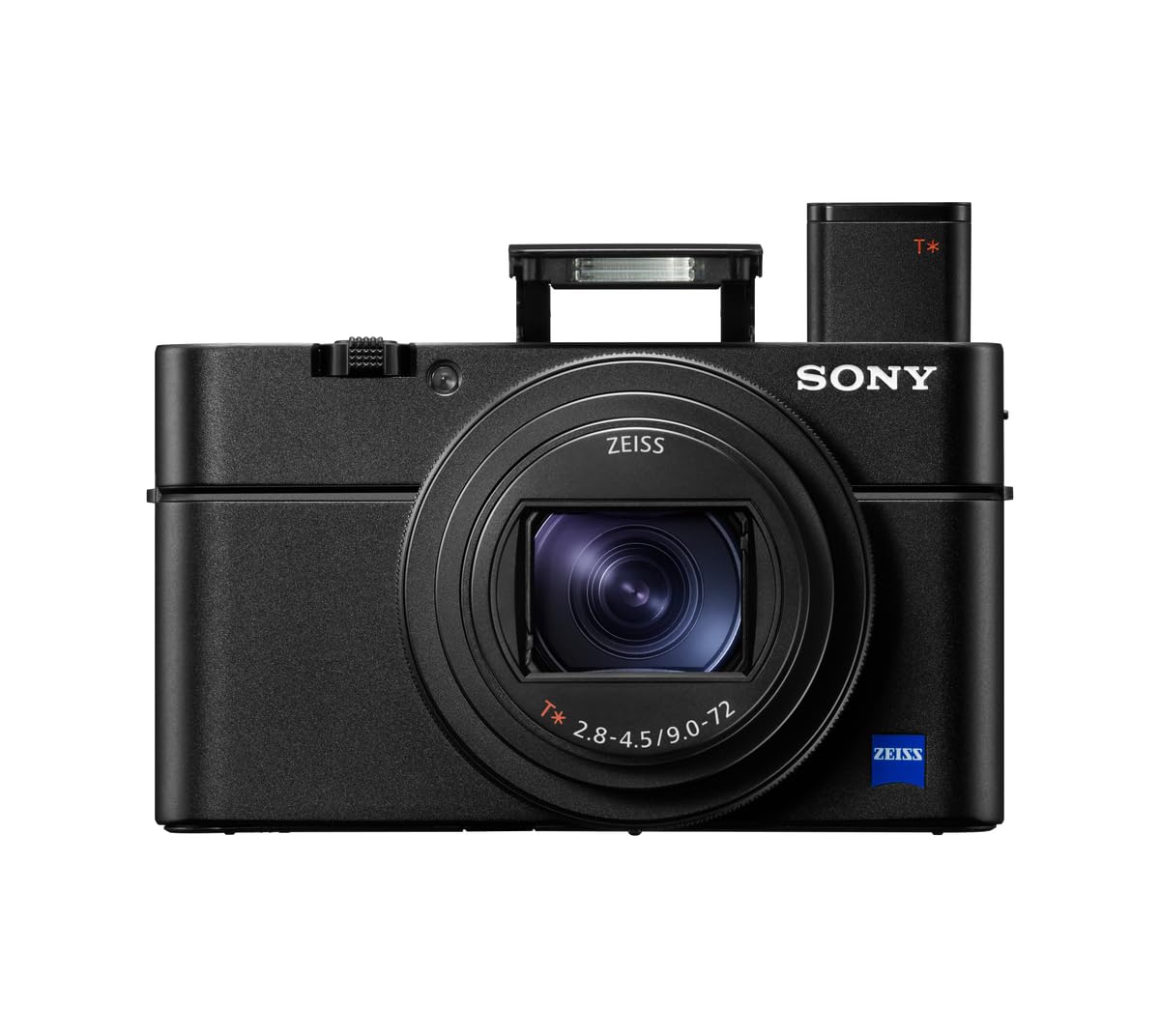
The Sony RX100 VII is the Swiss Army knife of compact cameras. While it doesn’t scream “retro” in its styling, its form factor is a classic point-and-shoot silhouette that fits in a jeans pocket. The main attraction is its Zeiss Vario-Sonnar T 24-200mm f/2.8-4.5 lens, offering a massive 8.3x optical zoom range that is unmatched in any camera this small.
Performance is blistering. The 20.1MP 1-inch stacked CMOS sensor enables blackout-free shooting at 20fps with 357 point phase-detection AF and 425 point contrast AF. The real-time Eye AF for humans and animals is incredibly sticky, making this the best choice for capturing fast action or wildlife. It also shoots 4K video with a microphone jack and active stabilization, making it a vlogger’s dream.
Some owners have noted the body is very slippery without an add-on grip, and the menu system, while powerful, can be complex. Image quality is excellent in good light but drops off compared to APS-C or full-frame sensors in low light. It lacks weather sealing. For the traveler who needs the ultimate all-in-one zoom in a pocketable package, the RX100 VII is still the king.
Why it’s great
- Excellent 24-200mm optical zoom in an ultra-compact body.
- Blazing fast 0.02s autofocus with excellent subject tracking.
- High-speed shooting at 20fps with no blackout.
Good to know
- Body is slippery; an add-on grip is recommended.
- Image quality falls behind APS-C cameras in low light.
- No weather sealing and a complex menu system.
7. Ricoh GR IIIx HDF

The Ricoh GR IIIx is the ultimate stealth camera. It fits completely unnoticed into a front pants pocket, yet packs a massive 24.2MP APS-C sensor and a sharp 40mm f/2.8 (equiv.) lens. This is the camera you take everywhere without even thinking about it. The HDF (Highlight Diffusion Filter) version adds a built-in, switchable filter that gently blooms highlights for a dreamy, filmic look with more depth and emotion.
The image quality is phenomenal for its size. The GR lens is legendary for its resolving power and contrast. It starts up in under a second, and the snap focus system lets you pre-focus for instant street photography. The body is minimalist and discreet, with a dark silver shutter button differentiating the HDF model. The USB-C charging is a modern convenience that makes it easy to top up.
The main compromises are a fixed focal length (no zoom) and a slower contrast-detect autofocus that can miss fleeting moments. The small body can also be prone to dust ingress, which can be mitigated with a JJC adhesive filter. It lacks a viewfinder (you use the rear screen), and the battery life is average. For the photographer who demands the highest quality in the smallest possible retro body, the GR IIIx HDF is unmatched.
Why it’s great
- APS-C sensor in a truly pocketable, everyday-carry form factor.
- Exceptional sharpness from the GR 40mm f/2.8 lens.
- Innovative Highlight Diffusion Filter for dreamy, filmic looks.
Good to know
- Slow autofocus can miss fast-paced action shots.
- Fixed focal length means no optical zoom capability.
- Dust ingress can be an issue; a filter adapter is recommended.
8. Panasonic LUMIX ZS99

The Panasonic LUMIX ZS99 is an entry-level compact camera that offers incredible reach in a budget-friendly package. Its Leica 24-720mm lens with 30x optical zoom is completely unmatched at this price bracket, letting you capture distant wildlife, concert stages, or architectural details that other cameras in its class simply cannot touch. The 1,840k-dot tiltable touchscreen is useful for shooting from tricky angles.
It’s designed for easy sharing with built-in Bluetooth 5.0 and a dedicated Send Image button. The 4K video and 4K PHOTO (30fps burst) modes add versatility. The body is compact, making it a great travel companion for those who don’t want to carry multiple lenses.
There are serious trade-offs at this price point. The small sensor severely limits low-light performance; images get noisy quickly compared to APS-C options. The 4K video is capped at 15 minutes before overheating, and the battery dies after a few hours of heavy use. Some users have reported a dented lens housing. This camera is best for daytime, outdoor shooting where the zoom range is the primary priority.
Why it’s great
- Unrivaled 30x optical zoom in a compact, affordable body.
- Good image quality in bright daylight conditions.
- Easy image sharing via Bluetooth and the Panasonic app.
Good to know
- Small sensor leads to poor low-light performance and noise.
- 4K recording is limited to 15 minutes due to overheating.
- Build quality is less robust than premium models.
9. Pentax K1000 Film Camera

For the purest analog experience, the Pentax K1000 is a legend. This is not a digital camera; it’s a fully manual, battery-free SLR film camera. It is the gold standard for learning photography because it forces you to understand the exposure triangle. You set the aperture, shutter speed, and focus manually. It’s incredibly robust with an all-mechanical design and a built-in light meter (which requires one LR44 battery).
The included 50mm f/2 prime lens is perfectly sharp and offers a natural field of view. The Pentax K mount is compatible with a huge selection of affordable vintage and modern lenses, making it a great entry point into the film ecosystem. It’s a timeless, beautiful camera that feels substantial in your hand.
It’s crucial to understand the caveats. These are renewed cameras with significant age. Customer reviews indicate a real risk of receiving a unit with a broken light meter or a scratched mirror. It has no autofocus, no auto-exposure, and no flash. You are also committing to the cost and hassle of buying, shooting, and developing film. If you want the authentic retro experience and the look of real film grain, this is the ultimate choice, but ensure you buy from a seller with a good return policy.
Why it’s great
- The purest, most direct photographic experience possible.
- Extremely robust, all-mechanical build quality that lasts decades.
- Excellent and affordable 50mm lens with a huge range of K-mount lenses.
Good to know
- Renewed units can have defects like broken light meters or scratched mirrors.
- Fully manual with no autofocus, auto-exposure, or modern aids.
- Requires film, processing, and scanning—a recurring cost and effort.
FAQ
Is a 40.2MP sensor worth the upgrade over a 20MP sensor for a retro camera?
What is the difference between phase-detect and contrast-detect autofocus?
Should I buy a film camera like the Pentax K1000 or a digital retro camera?
Do I need a screen protector for my retro-styled digital camera?
Final Thoughts: The Verdict
For most users, the best digital retro camera winner is the Fujifilm X100VI because it delivers the perfect, highly polished package of retro aesthetics, top-tier image quality, and incredible film simulations in a compact body. If you want a versatile system with interchangeable lenses, grab the Fujifilm X-E5. And for the ultimate pocketable everyday camera, nothing beats the Ricoh GR IIIx HDF.

Mo Maruf
I created WellFizz to bridge the gap between vague wellness advice and actionable solutions. My mission is simple: to decode the research and give you practical tools you can actually use.
Beyond the data, I am a passionate traveler. I believe that stepping away from the screen to explore new environments is essential for mental clarity and physical vitality.