Our readers keep the lights on and my smoothie glass nicely filled. As an Amazon Associate, I earn from qualifying purchases.
A clogged ear, a child tugging at their lobe, or that persistent feeling of fullness — without a direct view inside the ear canal, you are left guessing. A digital otoscope replaces that guesswork with a live, high-definition image of the eardrum and ear canal, letting you see wax buildup, irritation, or blockages before deciding on a cleaning method. Whether you are monitoring hearing aid users, managing chronic earwax, or simply want to avoid costly ENT visits for routine checks, the right device turns your phone or a dedicated screen into a diagnostic window.
I’m Mohammad Maruf — the founder and writer behind WellFizz. My research into digital otoscopes involves cross-referencing camera sensor specs, LED brightness ratings, lens diameters, and real-world feedback from audiologists and home users to separate capable hardware from frustratingly blurry optics.
This guide evaluates the critical specifications — from lens diameter and resolution to standalone screen quality and gyroscopic stabilization — to help you find the best digital otoscope for safe, clear, and practical home ear examinations.
How To Choose The Best Digital Otoscope
Selecting the right digital otoscope involves balancing image clarity, ease of use, and the specific scenario — checking your own ears versus examining a child or elderly family member. Three factors consistently separate useful tools from frustrating ones.
Standalone Screen vs. Smartphone App
Phone-powered otoscopes generally cost less and leverage your phone’s larger screen, but they require a stable OTG connection and app installation. Dedicated screen models turn on instantly without app pairing, which is invaluable for quick checks on multiple family members. The trade-off is a smaller built-in display, though premium units now offer 4-inch to 4.5-inch IPS screens.
Lens Diameter and Camera Resolution
An otoscope camera tip must fit comfortably into the ear canal. Lenses around 3.9mm in diameter are the current standard for adult ear access without causing discomfort. Combined with a 1080p sensor, a 3.9mm lens provides enough detail to see the tympanic membrane and distinguish wax from skin irritation. Wider lenses may feel intrusive, while lower resolution can miss subtle redness or perforations.
Lighting and Stabilization
The ear canal is a dark, narrow space. Six LED lights with adjustable brightness levels give you control over illumination without washing out the image. For standalone devices, a built-in gyroscope automatically rotates the screen image to remain upright as you move the wand, preventing the disorientation that makes ear exams frustrating. Without a gyroscope, you may need to twist your wrist awkwardly to maintain a proper view orientation.
Quick Comparison
On smaller screens, swipe sideways to see the full table.
| Model | Category | Best For | Key Spec | Amazon |
|---|---|---|---|---|
| ScopeAround MS450 | Standalone | Physician-recommended home use | 4.5″ IPS, Gyroscope, 32GB | Amazon |
| Anykit Digital Otoscope | Standalone | Ear wax monitoring with hearing aids | 4.0″ Screen, Gyroscope, 32GB | Amazon |
| Aertnelz 1080P HD Otoscope | Standalone | Multi-cavity inspection (ear/nose/skin) | 1.38″ Screen, 1080p, Type-C | Amazon |
| ScopeAround Digital Otoscope | Standalone | Quick daily ear checks | IPS Screen, 3.9mm, 8GB Card | Amazon |
| Kaugic Ear Wax Removal Kit | Irrigation Kit | Water-based wax removal with camera | 4 Pressure Levels, Temp Control | Amazon |
| AnyScope Digital Otoscope | Phone-Based | Budget-friendly smartphone otoscopy | 3.8mm Lens, iOS/Android | Amazon |
| WEUANY Ear Wax Removal Kit | Irrigation Kit | All-in-one irrigation and camera bundle | 1080p Camera, Sprayer, Rechargeable | Amazon |
In‑Depth Reviews
1. ScopeAround MS450 Digital Otoscope

The ScopeAround MS450 stands out with a 4.5-inch IPS screen — the largest dedicated display among these models — eliminating the need for a phone or app entirely. Its 3.9mm slim camera wand, combined with a built-in gyroscope, keeps the image oriented correctly as you move, which is critical when examining a squirming child or your own ear. Six adjustable LED lights provide enough illumination to see the tympanic membrane clearly in a dark canal.
Audiologists and physicians who reviewed the MS450 praised its solid metal wand construction, excellent battery life, and ability to view not just ears but nasal passages and throat. The included 32GB microSD card lets you snap photos and record videos directly to the device without worrying about storage space, and the images are sharp enough to share with a healthcare provider for remote assessment.
The fixed-focus lens requires a steady hand and a working distance of roughly 0.5 to 0.8 inches for optimal clarity — practice improves the learning curve. The bundled ear spoons and specula feel functional but rudimentary; most users prefer using the otoscope purely for inspection rather than attempting removal with the included tools.
Why it’s great
- Large 4.5″ IPS screen with crisp detail
- Gyroscope keeps image oriented correctly
- Solid metal wand and long battery life
- Includes 32GB card for photos and videos
Good to know
- Fixed focus requires practice for sharp images
- Included cleaning tools are basic
- Ear canal hairs can obstruct the view
2. Anykit Digital Otoscope with Gyroscope
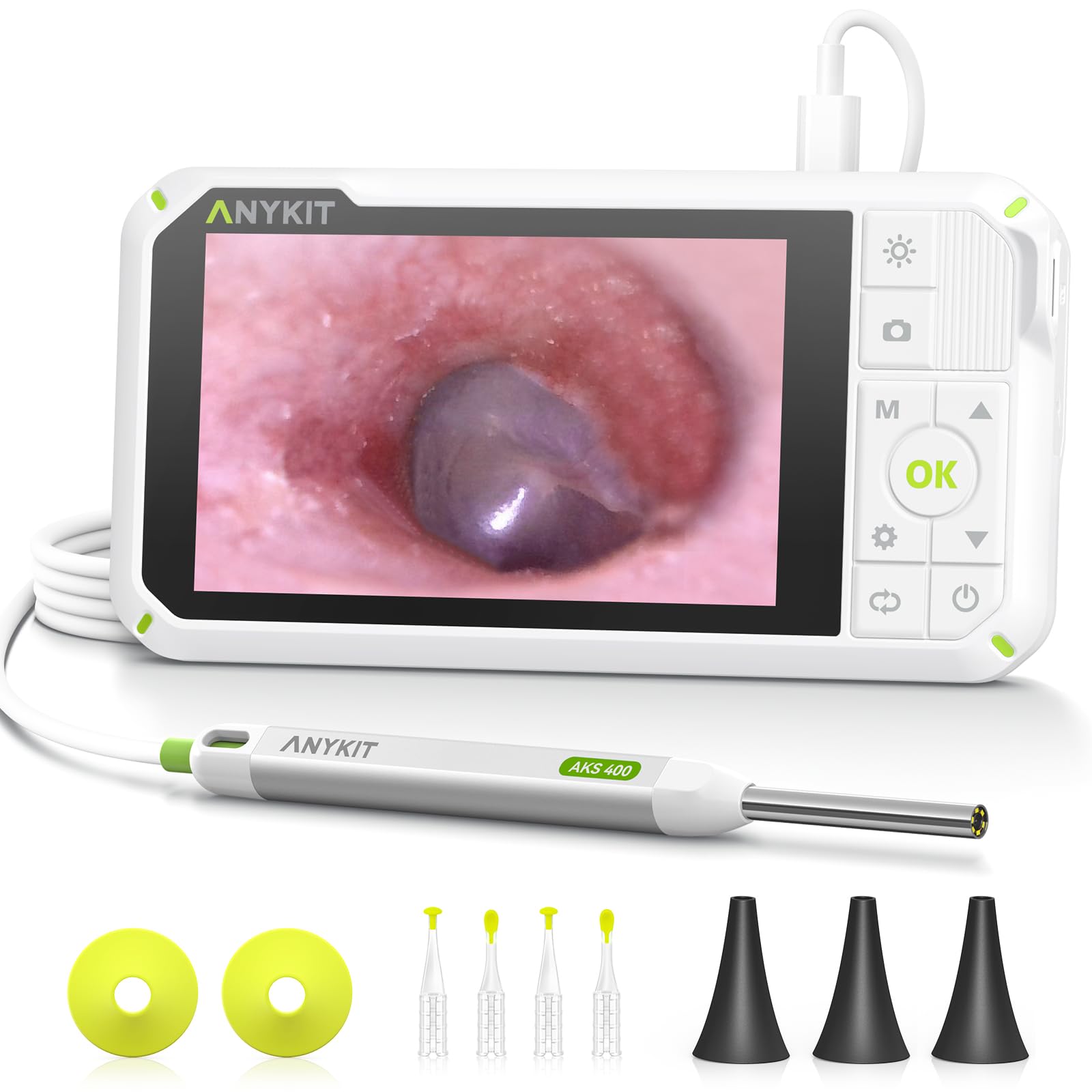
Anykit’s offering features a 4.0-inch HD screen and an intelligent directional gyroscope that stabilizes the live image as you rotate the wand, making self-examination far less disorienting. The 3.9mm camera delivers 1080p resolution, and the six LED lights offer adjustable brightness levels to avoid glare while still illuminating the deepest parts of the ear canal. This model is ready to use right out of the box with no app download or phone pairing required.
Users with hearing aids found this otoscope especially valuable for monitoring wax buildup that could interfere with device fit, reducing the need for frequent ENT visits. The image quality on the built-in screen is crisp in real-time, and the photo/video capture feature with the included 32GB card allows for progress tracking over time. The build quality feels notably more durable than many budget alternatives, with a solid wand and responsive controls.
The included soft silicone ear picks and specula are functional but some users reported that the ear scrapers broke relatively quickly with regular use, and the black specula tips may not fit as snugly as expected. The device’s battery life is strong, supporting multiple inspection sessions between charges.
Why it’s great
- 4.0″ HD screen with real-time image
- Gyroscope prevents image flipping
- Durable build and long battery life
- No app or phone pairing needed
Good to know
- Included scrapers may break with use
- Some specula fit loosely
- Requires steady hand for focus
3. Aertnelz 1080P HD Otoscope
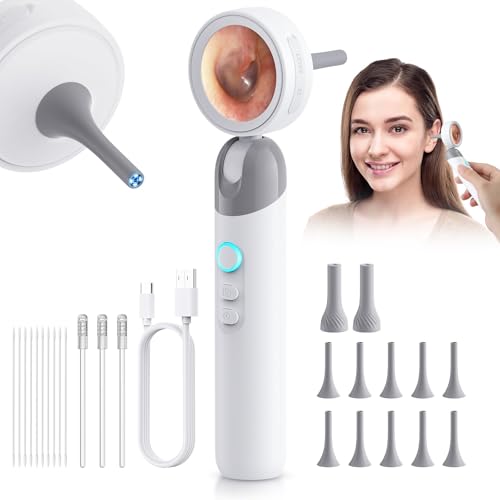
The Aertnelz 1080P HD Otoscope differentiates itself with interchangeable probe tips for ear, nose, oral, and skin inspection, making it a multi-cavity health tool rather than a dedicated ear scope. The 1.38-inch IPS LCD screen is compact but sufficient for quick checks, and the device supports USB-C fast data transfer for PC viewing. An audiologist reviewer specifically highlighted its crisp ear canal images and ease of saving and sharing files via the mobile app or directly from the device.
The camera captures 1080p resolution with 4 adjustable LED lights and 3x magnification, though the optimal working distance is narrow — 1.4 to 2 cm — requiring deliberate positioning. The kit includes 12 silicone tips, 3 adhesive ear sticks, and a USB-C cable, offering solid out-of-box value. FCC, CE, ROHS, and UKCA certifications add a layer of quality assurance for home medical use.
The live PC viewing feature was reported to have compatibility issues with some Windows versions, and the device requires a separately purchased MicroSD card for video and photo storage. The wand is longer and stiffer than some alternatives, which can make maneuvering feel less natural, especially when inspecting your own ears.
Why it’s great
- Multi-cavity tips (ear, nose, skin)
- 1080p HD with 3x magnification
- Type-C charging and PC connectivity
- Audiologist and physician endorsed
Good to know
- PC viewing may not work on all Windows
- Requires MicroSD card (not included)
- Long stiff wand reduces maneuverability
4. ScopeAround Digital Otoscope with Built-in Screen
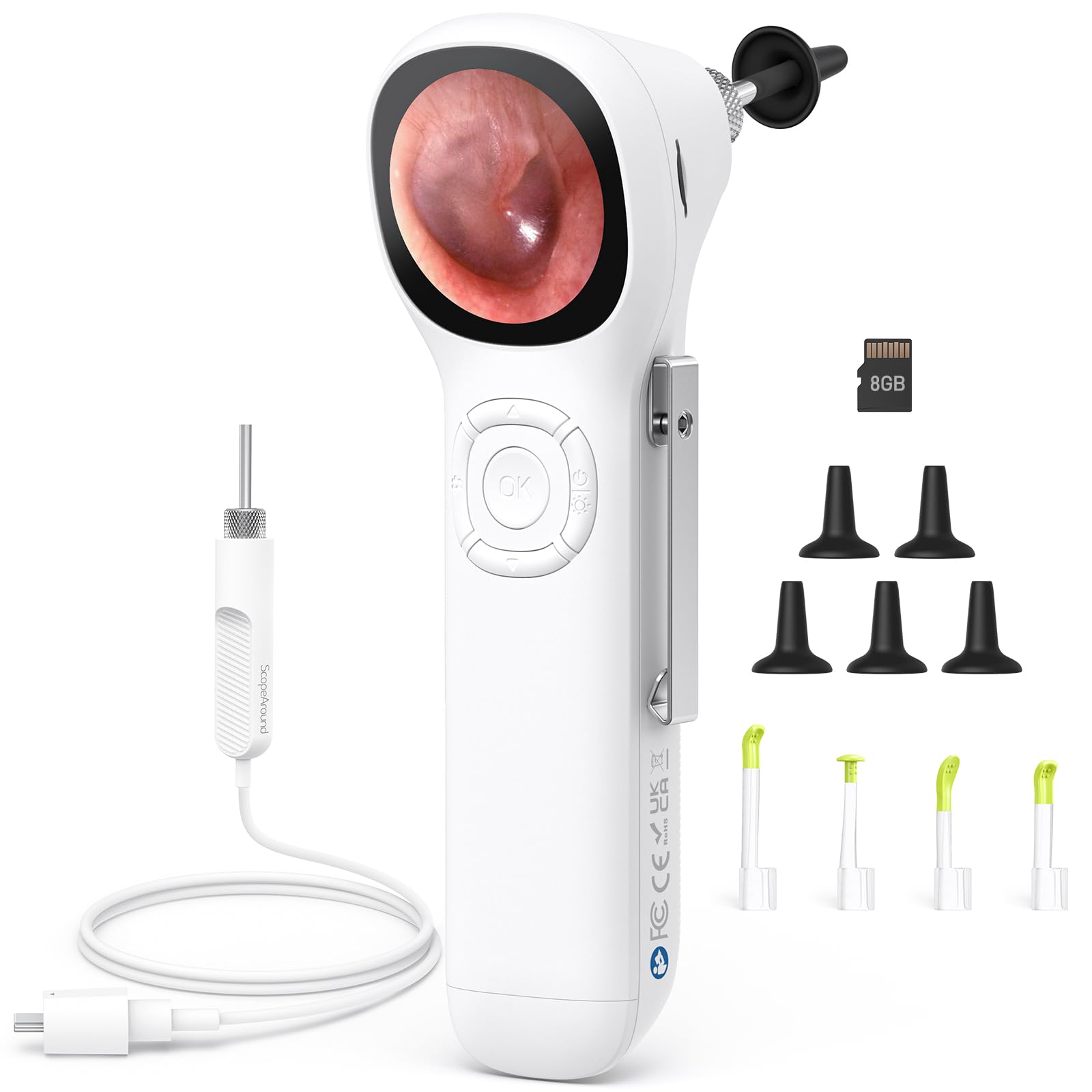
ScopeAround’s entry-level standalone otoscope keeps things simple: a clear IPS display, a 3.9mm slim lens, and six LED lights with three brightness levels — all without requiring a phone or app. The detachable lens on an extended cable allows you to comfortably inspect your own ears or assist family members without awkward angles. The included 8GB memory card captures photos and videos for tracking changes over time.
Users consistently praise the screen brightness and image clarity, noting that the device helps visualize fibers from Q-tips lodged deep in the ear canal or monitor earwax buildup. The FSA/HSA eligibility is a practical bonus for those with flexible spending accounts. The kit includes specula, ear picks, alcohol pads, and Q-tips, making it a comprehensive starter package.
The camera resolution is effectively 720p rather than full 1080p, which shows in less detailed images of the eardrum compared to higher-end models. The build quality is more plastic-heavy than the premium ScopeAround MS450, and the cable connection point feels slightly less robust over repeated use. Still, for straightforward daily checks, this model delivers reliable performance.
Why it’s great
- Standalone use with clear IPS screen
- Detachable lens with cable for self-exam
- 3 brightness levels for comfortable viewing
- FSA/HSA eligible
Good to know
- 720p effective resolution, not 1080p
- Plastic build feels less premium
- Cable connection may wear over time
5. Kaugic Ear Wax Removal Kit
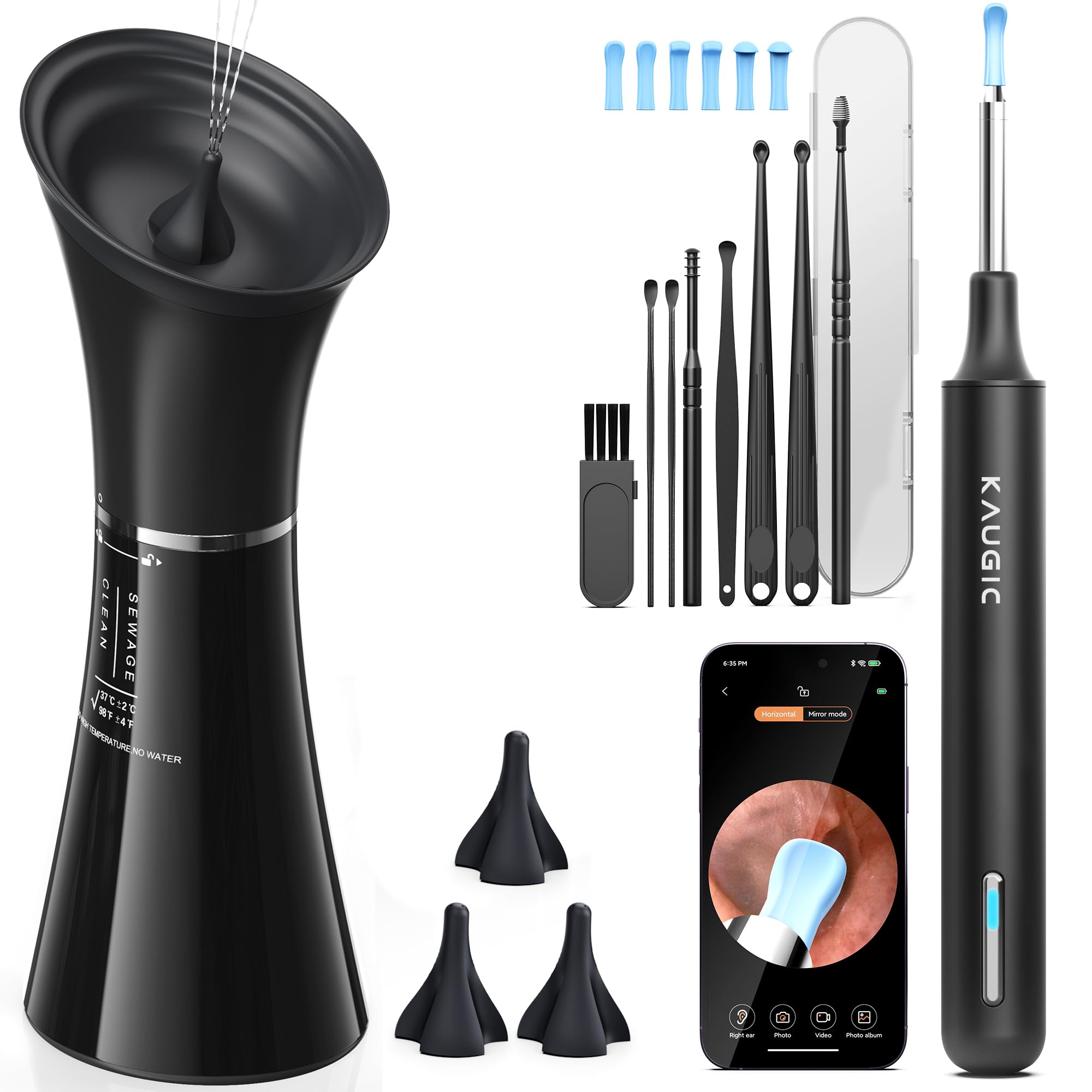
The Kaugic kit combines a digital ear camera with an electric irrigation system, creating a complete ear cleaning workflow: inspect first, flush with warm water, then confirm the canal is clear. The ear cleaner features four adjustable water pressure settings and an intelligent temperature indicator — a green light signals the water is at the ideal temperature, while a red light warns if the unit is overheating, protecting the sensitive ear canal from burns.
Users report that the drainage system is particularly well-designed, catching water runoff rather than soaking the user, which addresses a major pain point of traditional bulb syringes. The camera stick provides real-time visual monitoring during irrigation, though some users found it challenging to coordinate the sprayer and camera simultaneously. The kit successfully resolved stubborn wax blockages that over-the-counter drops could not soften.
The camera image quality is adequate for visualizing major wax deposits but lacks the fine detail of dedicated standalone otoscopes. The app-based camera requires phone pairing, which may feel cumbersome compared to devices with built-in screens. The kit is best suited for those who want an all-in-one cleaning solution rather than a pure inspection tool.
Why it’s great
- Inspect-and-irrigate workflow in one kit
- 4 adjustable water pressure levels
- Temperature safety indicator prevents burns
- Effective drainage system minimizes mess
Good to know
- Camera requires smartphone app pairing
- Coordination of sprayer and camera takes practice
- Camera detail lower than standalone otoscopes
6. AnyScope Digital Otoscope
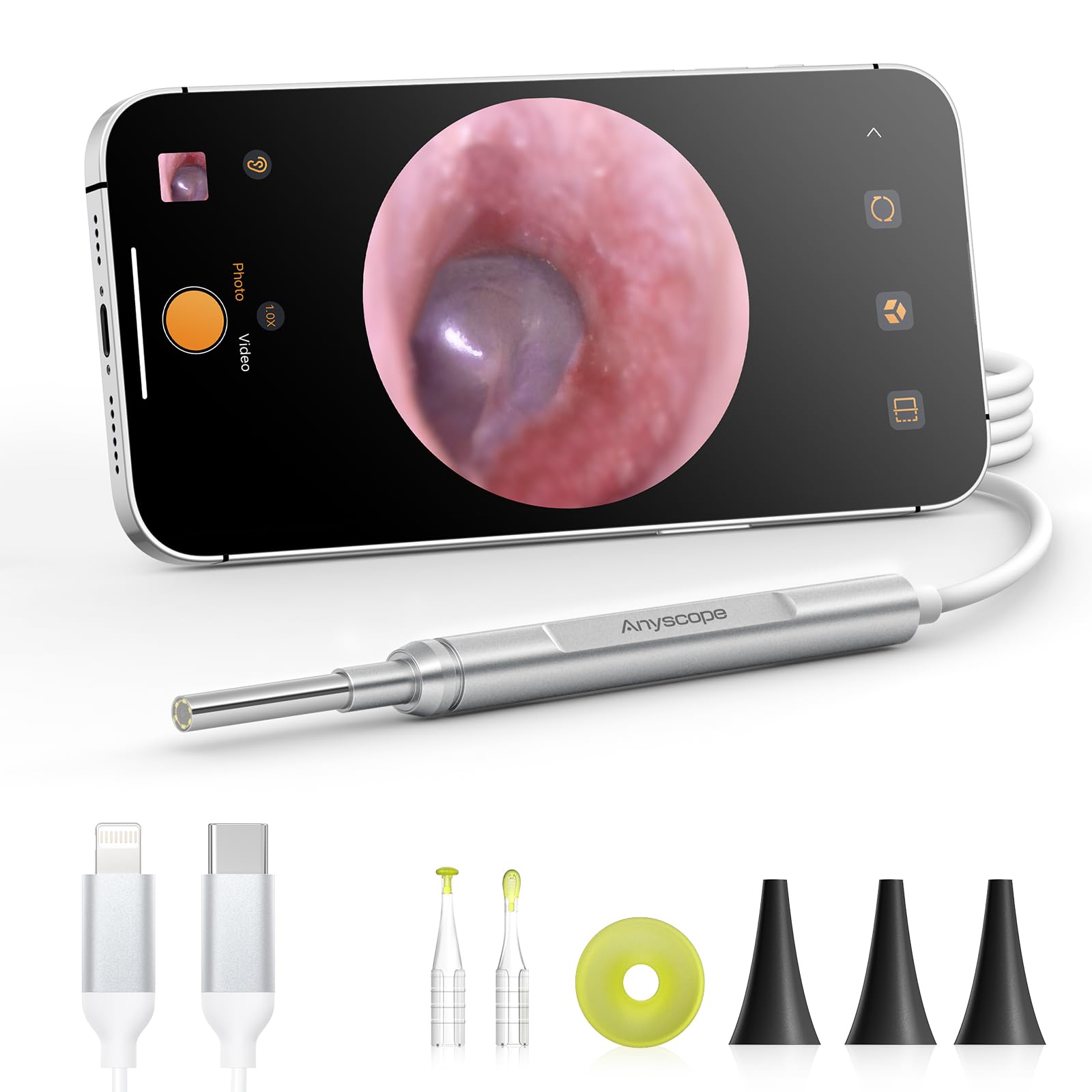
The AnyScope Digital Otoscope is a compact phone-powered ear camera with an ultra-fine 0.15-inch diameter lens — one of the slimmest available — making it easy to navigate the ear canal even in narrow passages. It connects to iPhones (iOS 9.0+) and Android devices (8.0+ with OTG support) and offers full-screen and split-screen viewing modes, the latter letting you compare a live view against a previously captured image for monitoring changes over time.
Users consistently report surprisingly clear visualization of the tympanic membrane, with an iPhone 15 Pro Max reviewer noting that the image quality exceeded expectations for the price point. The adjustable protection cover helps prevent inserting the speculum too deeply, which is a genuine safety consideration for home users. Photos save directly to the phone’s camera roll, making sharing with a healthcare professional straightforward.
The device does not support PC connections, and there is no onboard storage or dedicated screen. The lack of text tagging for photos (e.g., marking left vs. right ear) is a minor organizational inconvenience. The most notable omission is the absence of a carrying case — the unit comes in a plastic holder inside a cardboard box, which feels flimsy for a tool you may want to keep clean and portable.
Why it’s great
- Ultra-slim lens for easy ear access
- Clear tympanic membrane visualization
- One-click photo saves to phone gallery
- Split-screen mode for comparison
Good to know
- No carrying case included
- Requires OTG support for Android
- Does not work with PC
7. WEUANY Ear Wax Removal Kit with Camera
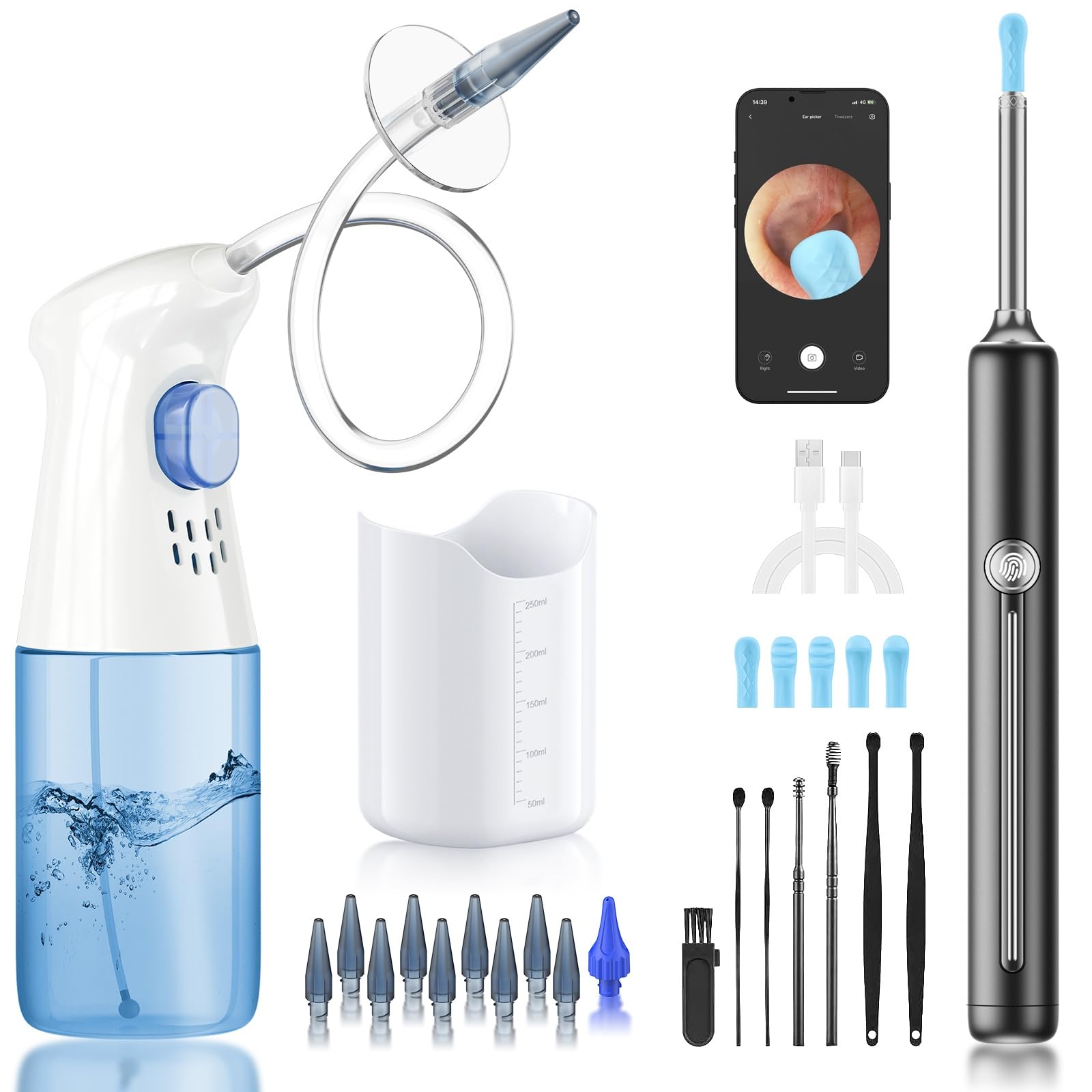
The WEUANY Ear Wax Removal Kit bundles a 1080p HD ear camera with an irrigation sprayer, offering a complete solution for those who want to see and remove wax in one purchase. The sprayer uses a unique nozzle design with a 5-hole and 1-hole option, delivering different water pressures for varying wax hardness. The camera features 6 LED lights and comes with three radian ear scoop options so you can choose the curvature that best matches your ear canal shape.
User reviews highlight the peace of mind the camera provides — being able to see exactly where wax buildup is located before flushing removes the guesswork. The kit includes multiple ear tip sizes, a brush for cleaning, a rack for tools, and soft rubber tips that feel gentle against the ear canal. The FSA/HSA eligibility adds practical value for budget-conscious buyers using health spending accounts.
The standalone camera tools (tweezers, scrapers) do not attach to the camera handle, meaning you cannot view the ear canal while using them — you must rely on the camera for inspection and then switch to separate tools. The irrigation system requires manual pumping and cup holding, making solo operation somewhat tricky. The camera image is clear but the app interface feels less polished than dedicated phone-based otoscope apps.
Why it’s great
- All-in-one camera and irrigation kit
- Dual-nozzle sprayer for different wax types
- Multiple ear scoop curvatures for fit
- FSA/HSA eligible
Good to know
- Tools don’t attach to camera for live view use
- Irrigation requires manual pumping
- App interface less polished than competitors
FAQ
What is the ideal working distance for a digital otoscope camera?
Can a digital otoscope replace a visit to an ENT specialist?
Why do some otoscopes need an app while others have a built-in screen?
How many LED lights are sufficient for ear canal illumination?
Final Thoughts: The Verdict
For most users, the best digital otoscope winner is the ScopeAround MS450 because it combines the largest dedicated 4.5-inch screen, gyroscopic stabilization, and physician-approved build quality in a standalone device that works instantly for the whole family. If you want a gyroscope-equipped screen model with excellent battery life at a slightly lower entry point, grab the Anykit Digital Otoscope. And for a budget-friendly phone-powered option that still delivers surprisingly clear eardrum images, nothing beats the AnyScope Digital Otoscope.

Mo Maruf
I created WellFizz to bridge the gap between vague wellness advice and actionable solutions. My mission is simple: to decode the research and give you practical tools you can actually use.
Beyond the data, I am a passionate traveler. I believe that stepping away from the screen to explore new environments is essential for mental clarity and physical vitality.