Our readers keep the lights on and my smoothie glass nicely filled. As an Amazon Associate, I earn from qualifying purchases.
Digital night vision has moved far beyond the grainy green glow of old analog tubes. Today’s binoculars capture 4K video, record 48MP stills, and stream footage to your phone — all while letting you see clearly in total darkness at distances that would have seemed impossible just a few years ago. The challenge isn’t finding night vision; it’s filtering through dozens of almost-identical devices to find the one that matches your actual needs, whether that’s hands-free hiking, long-range wildlife observation, or thermal scanning for property security.
I’m Mohammad Maruf — the founder and writer behind WellFizz. I’ve spent hundreds of hours studying the specifications, reading real user feedback, and comparing sensor quality, infrared power, battery life, and recording capabilities across the most popular digital night vision binoculars on the market.
This guide breaks down the key specs and real-world performance of nine models so you can confidently choose the best digital night vision binoculars for your specific budget and outdoor needs.
How To Choose The Best Digital Night Vision Binoculars
Digital night vision binoculars are essentially light-sensitive cameras with a screen built into the body. Unlike traditional analog image intensifiers, digital units can record video, switch between color and monochrome modes, and even connect to WiFi. Three factors separate a capable device from a disappointing one: sensor technology, infrared illumination quality, and battery endurance.
Start With the Sensor and Resolution
The sensor is the heart of any digital night vision device. Look beyond marketing megapixel numbers and check whether the sensor supports true 4K video capture — many budget models upscale a lower native resolution. Premium units like the VisioGear Night Thunder X1 use a STARVIS 2 sensor, which delivers military-grade low-light sensitivity and true color reproduction rather than the washed-out greens you get from generic CMOS sensors. For still images, 48MP or higher is common, but dynamic range and noise handling at high ISO matter more for usable nighttime photos.
Infrared Power and Range
In total darkness, the built-in infrared illuminator is your only light source. The standard is an 850nm IR LED, which provides a good balance between visibility and stealth (it produces a faint red glow when active). Power is measured in brightness levels — the best units offer 4 to 7 adjustable levels. Range claims vary wildly; a unit promising 1300 feet with IR may only deliver usable clarity at 400-500 feet. Check real-world reviews for actual effective range rather than the theoretical maximum. For close-to-mid range work under 300 feet, most 850nm illuminators perform well.
Battery Life and Recording Capability
Digital night vision binoculars consume significant power, especially when recording video with IR active. A 5000mAh battery is the sweet spot, offering around 10-16 hours of mixed use. Lower-capacity units may need recharging mid-expedition. Recording features are equally important: make sure the device includes a memory card (32GB or 64GB is standard) and supports expansion up to 256GB. If you plan to document wildlife or security patrols, prioritize models with WiFi sharing and app control so you can transfer footage without removing the card.
Quick Comparison
On smaller screens, swipe sideways to see the full table.
| Model | Category | Best For | Key Spec | Amazon |
|---|---|---|---|---|
| AKASO Seemor-200 | Premium Digital NV | Low-light color vision | AI-ISP sensor, 3280ft range | Amazon |
| VisioGear Night Thunder X1 | Premium Digital NV | Extended range & app control | STARVIS 2, 3940ft range | Amazon |
| GOYOJO Dual-Screen (NV980) | Mid-Range Digital NV | Dual-screen immersive viewing | Adjustable IPD, 1000ft IR | Amazon |
| GOYOJO Head-Mounted (NV980) | Mid-Range Digital NV | Hands-free operation | Diopter -8.0, 984ft IR | Amazon |
| WOSPORTS NV400 | Mid-Range Digital NV | High optical zoom | 10x optical + 8x digital | Amazon |
| HUVIOVED NV8300 | Mid-Range Digital NV | 3D binocular viewing | Dual 1.4″ screens, IP54 | Amazon |
| HOTPEAK Rangefinder | Mid-Range Digital NV | Distance measurement | 1200yd laser rangefinder | Amazon |
| Teslong TTS390 | Thermal Monocular | Heat signature detection | 384×256 thermal sensor | Amazon |
| RIX Pocket K2 | Thermal Monocular | Ultra-portable thermal imaging | 256×192, 200g weight | Amazon |
In‑Depth Reviews
1. AKASO Seemor-200

The AKASO Seemor-200 is the benchmark for digital night vision in this class, thanks to its AI-ISP image processing that delivers full-color visibility in ultra-low light conditions. Most digital night vision units revert to monochrome or washed-out greens when light fades — the Seemor-200 maintains 99 percent color accuracy even near darkness, which is a huge advantage for wildlife identification and property surveillance. The 16x digital zoom and 3280-foot range provide serious reach for a handheld device weighing under 500 grams.
Recording capability is equally impressive: 4K video capture with 7 infrared brightness modes gives you flexibility whether you’re documenting a camping trip or monitoring a backyard. The built-in 6-axis gyroscope and compass keep the image stable and oriented, which matters when you’re trying to capture usable footage at maximum zoom. Two rechargeable batteries are included with an external charger, delivering up to 8 hours of continuous use — enough for a full night of observation without scrambling for a power outlet.
The IPX5 water resistance means you can use it confidently in rain or mist, and the 1/4-inch mounting threads on the top and bottom allow for tripod, helmet strap, or lanyard attachment. Some users note the menu system takes a few minutes to learn, and the maximum zoom does show image degradation, but for the combination of true color night vision, light weight, and 4K recording, the Seemor-200 is the strongest all-rounder here.
Why it’s great
- True full-color night vision via AI-ISP processing
- Lightweight under 500g with dual battery system
- Stable image with built-in gyroscope and compass
Good to know
- Digital zoom loses detail at full 16x extension
- UI navigation requires initial learning period
2. VisioGear Night Thunder X1
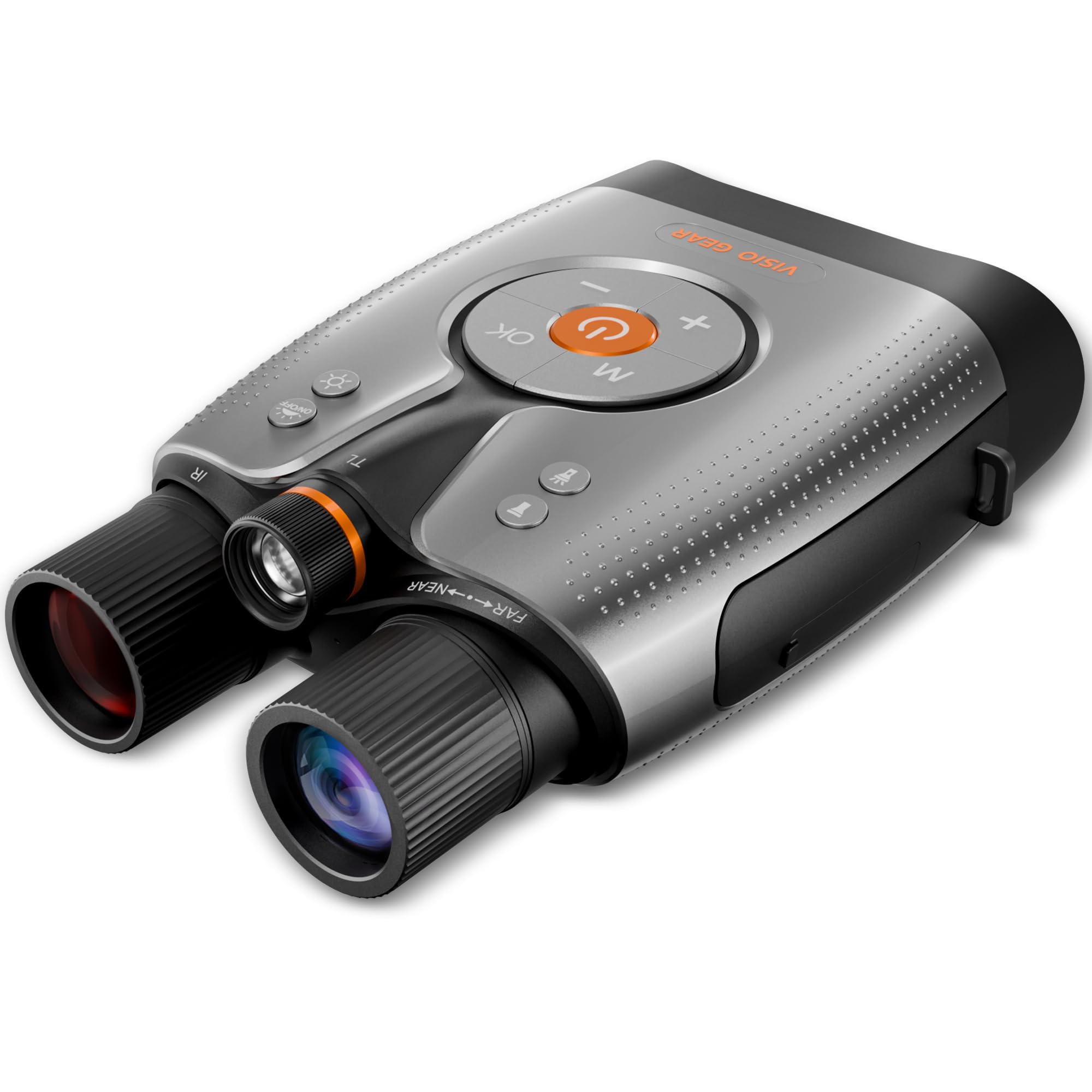
If your priority is maximum viewing distance in complete darkness, the VisioGear Night Thunder X1 sets the standard with its military-grade STARVIS 2 sensor and 3940-foot range. This is the only unit in this lineup that combines a 42mm objective lens with a 13-degree field of view and AI Color+ processing, which renders near-natural colors even when the IR illuminator is the only light source. The 4-level 850nm IR can be dialed up or down to match the environment — useful whether you’re scanning a distant treeline or checking activity near your tent.
Beyond raw distance, the Night Thunder X1 packs impressive tech features: built-in WiFi with app control for live streaming and file sharing, a tactical flashlight, a temperature sensor, and a speaker for audio recording. The 5000mAh battery delivers up to 18 hours of daytime use or 10 hours with IR active, which is the best endurance in this price tier. The IP67 waterproof rating means it can survive full immersion in shallow water — a meaningful reliability upgrade over less-sealed units.
Build quality is solid with a titanium silver shell, and the included 64GB card gives you plenty of storage out of the box. Some users report that the focus ring is sensitive and that footage quality at 150 yards is decent but not exceptional — the sweet spot for crisp video is closer to 50 yards. For anyone who needs the longest possible detection range and wants to stream or share recordings without pulling the SD card, the Night Thunder X1 is the premium choice.
Why it’s great
- STARVIS 2 sensor with exceptional low-light sensitivity
- 3940ft range with 4-level IR and AI Color+
- IP67 waterproof and 10-hour IR battery life
Good to know
- Sharpest 4K video achieved within 50 yards
- Sensitive focus ring requires steady hand for adjustments
3. GOYOJO Dual-Screen NVG (NV980)

The GOYOJO dual-screen model addresses a common problem with budget digital night vision: eye fatigue from single-screen viewing. By splitting the image across two displays with adjustable interpupillary distance from 60 to 72mm, it creates a natural binocular experience that feels much closer to traditional optics. The 3W 850nm infrared illuminator with 7 brightness levels provides clear visibility up to 1000 feet in total darkness, and the adjustable IR output lets you conserve battery when conditions are only moderately dark.
Recording is handled in 4K video and 36MP still photo resolution, which is competitive with other mid-range units. The unit ships with a 32GB memory card and supports expansion up to 256GB. What sets this model apart is the mounting flexibility: it works as handheld binoculars, can be attached to a headband for hands-free use, or mounted on a tactical helmet via the included bracket. The aluminum, rubber, and high-quality glass construction gives it a robust feel that surpasses the all-plastic budget alternatives.
User feedback consistently highlights the clear image quality in IR mode, the comfortable viewing experience, and the ease of switching between white light and night vision modes. The main trade-off is price — this is one of the more expensive mid-range options — but the dual-screen design genuinely reduces eye strain during extended observation sessions.
Why it’s great
- Dual-screen binocular design reduces eye fatigue
- Adjustable IPD (60-72mm) fits a wide range of faces
- Flexible mounting: handheld, headband, or helmet
Good to know
- Premium price compared to single-screen alternatives
- No built-in compass or WiFi streaming
4. GOYOJO Head-Mounted NVG (NV980)
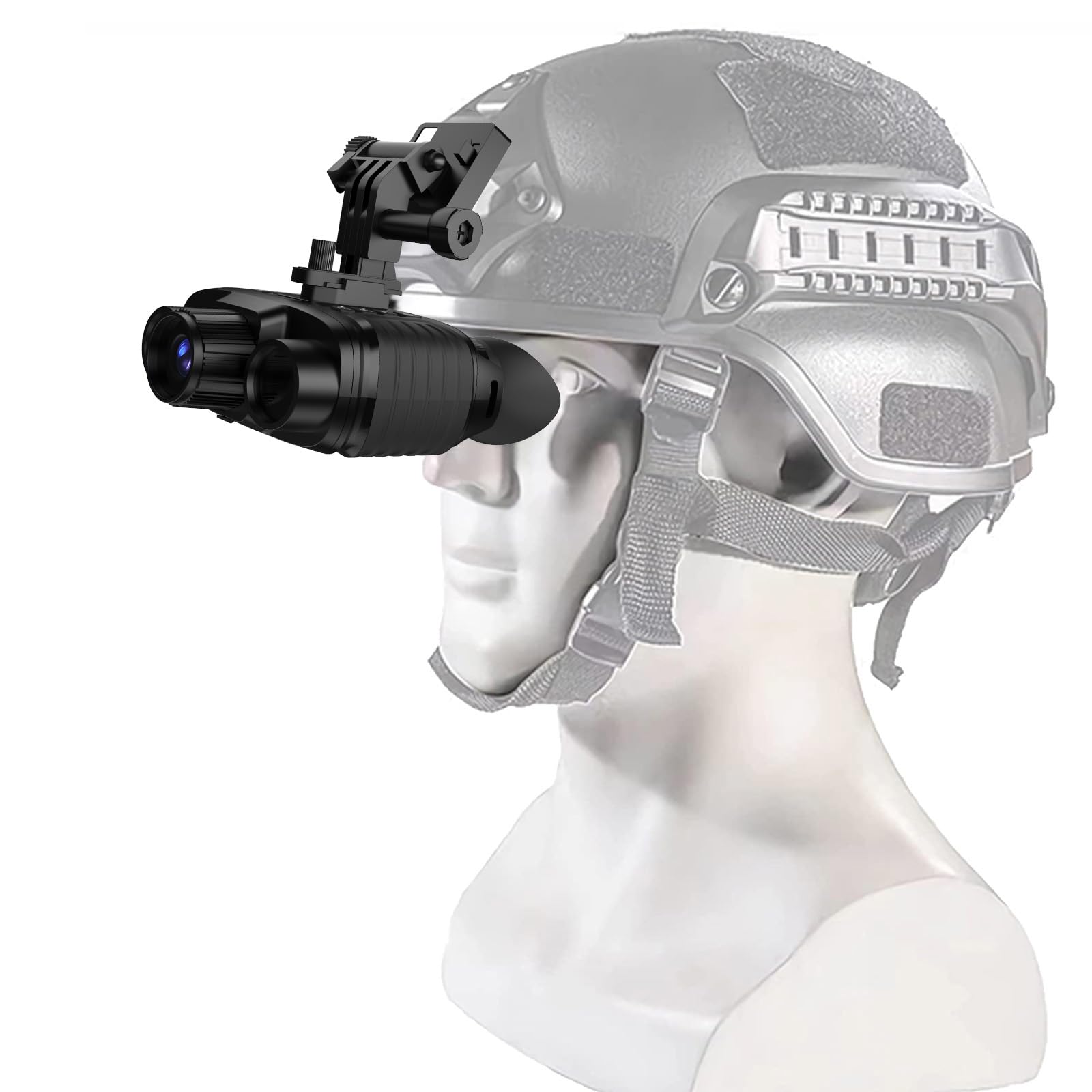
This GOYOJO variant prioritizes hands-free operation above all else. It ships with a head strap and helmet-compatible mounting bracket, making it ideal for users who need both hands free while navigating, setting up camp, or conducting surveillance. The diopter adjustment rings on each eyepiece accommodate users with up to -8.0 diopters of nearsightedness without glasses — a rare and thoughtful inclusion that makes the unit accessible to spectacle wearers.
The 4500mAh rechargeable battery provides solid endurance for a head-mounted unit, and the 7-level infrared illumination reaches 984 feet in total darkness. Recording is handled in 4K video with the included 32GB card, and the backlit buttons make operation simple when you’re fumbling in the dark. Users consistently report clear image quality and easy IR-to-white-light switching, plus the unit feels lightweight enough to wear for extended periods.
One important caveat: this is not a device for walking around in rough terrain. Like many head-mounted digital night vision units, the single large internal screen shared by both eyepieces creates a flat image with limited depth perception. It excels for stationary observation, property monitoring, or scanning from a fixed position, but moving through uneven ground with these on is not recommended.
Why it’s great
- Fully hands-free with head strap and helmet mount
- Diopter adjustment works for nearsighted users up to -8.0
- Lightweight construction with backlit buttons
Good to know
- Flat image limits depth perception when walking
- Best suited for stationary or tripod-mounted use
5. WOSPORTS NV400
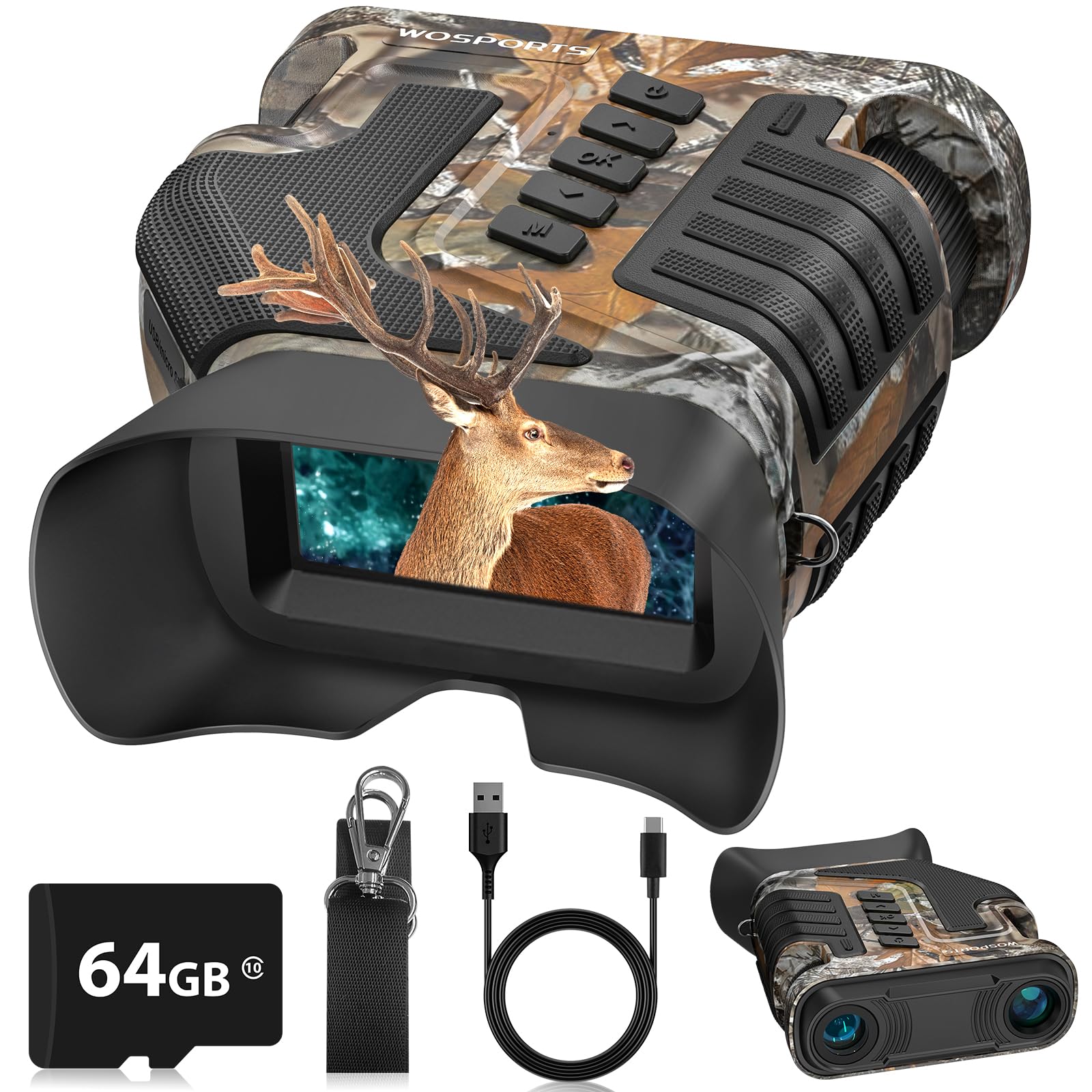
The WOSPORTS NV400 stands apart from the crowd because it includes genuine 10x optical zoom in addition to 8x digital zoom, for a total magnification of up to 80x. Most digital night vision binoculars rely entirely on digital zoom, which crops and enlarges the sensor image and quickly reveals pixelation. The optical zoom stage means distant targets stay sharper longer, giving the NV400 a real advantage for identifying animals, structures, or landmarks at range.
Beyond the zoom, the unit records in true 4K video with 48MP photo capture and includes a 64GB TF card in the box — a larger starting capacity than the standard 32GB. The 3-inch HD screen provides a clear real-time view, and the 5000mAh battery delivers up to 20 hours of continuous use, which is the best endurance in this comparison. The IPX-rated waterproof build and tripod mount add to its practicality for all-weather outdoor use.
Real-world users confirm the image is sharp at high magnification, the IR night vision reaches advertised distances, and the included card and case add genuine value. The learning curve for the button layout is the most common complaint, and the menu font is small, but for the combination of true optical zoom and best-in-class battery life, the WOSPORTS NV400 is a strong mid-range contender.
Why it’s great
- 10x optical zoom preserves image sharpness at distance
- 5000mAh battery rated for up to 20 hours
- 64GB card included, supports expansion to 256GB
Good to know
- Button layout takes time to learn
- Menu font is small and hard to read in the field
6. HUVIOVED NV8300

The HUVIOVED NV8300 uses a patented naked-eye 3D display technology with two independent 1.4-inch screens, one for each eye. Unlike single-screen units that show the same flat image to both eyes, this design recreates a three-dimensional scene with depth perception. Each eyepiece has independent diopter adjustment covering +/-3.5 diopters, so users with mild myopia or hyperopia can dial in sharp focus without glasses.
The 7x magnification combined with 8x digital zoom provides adequate reach for the 250-300 meter viewing range in total darkness. The IP54 waterproof rating means it can handle rain and splashes, and the all-metal alloy housing with glass optics feels robust in the hand. Users report it works well for hog hunting and wildlife observation, with crisp image quality and good zoom capability.
The most common complaint involves battery reliability — a small number of users report the battery failing to hold a charge after several weeks. While this isn’t universal, it’s worth noting for anyone planning frequent extended use. The unit’s compact size and multiple mounting options (neck strap, head strap, tactical helmet) add versatility, but the battery concern keeps it from being a universal recommendation.
Why it’s great
- True 3D binocular viewing with dual independent screens
- Diopter adjustment covers +/-3.5 for glasses-free use
- IP54 waterproof with rugged metal alloy housing
Good to know
- Some reports of battery failing to hold charge
- Limited to 300m IR range, not for extreme distance
7. HOTPEAK Rangefinder NV
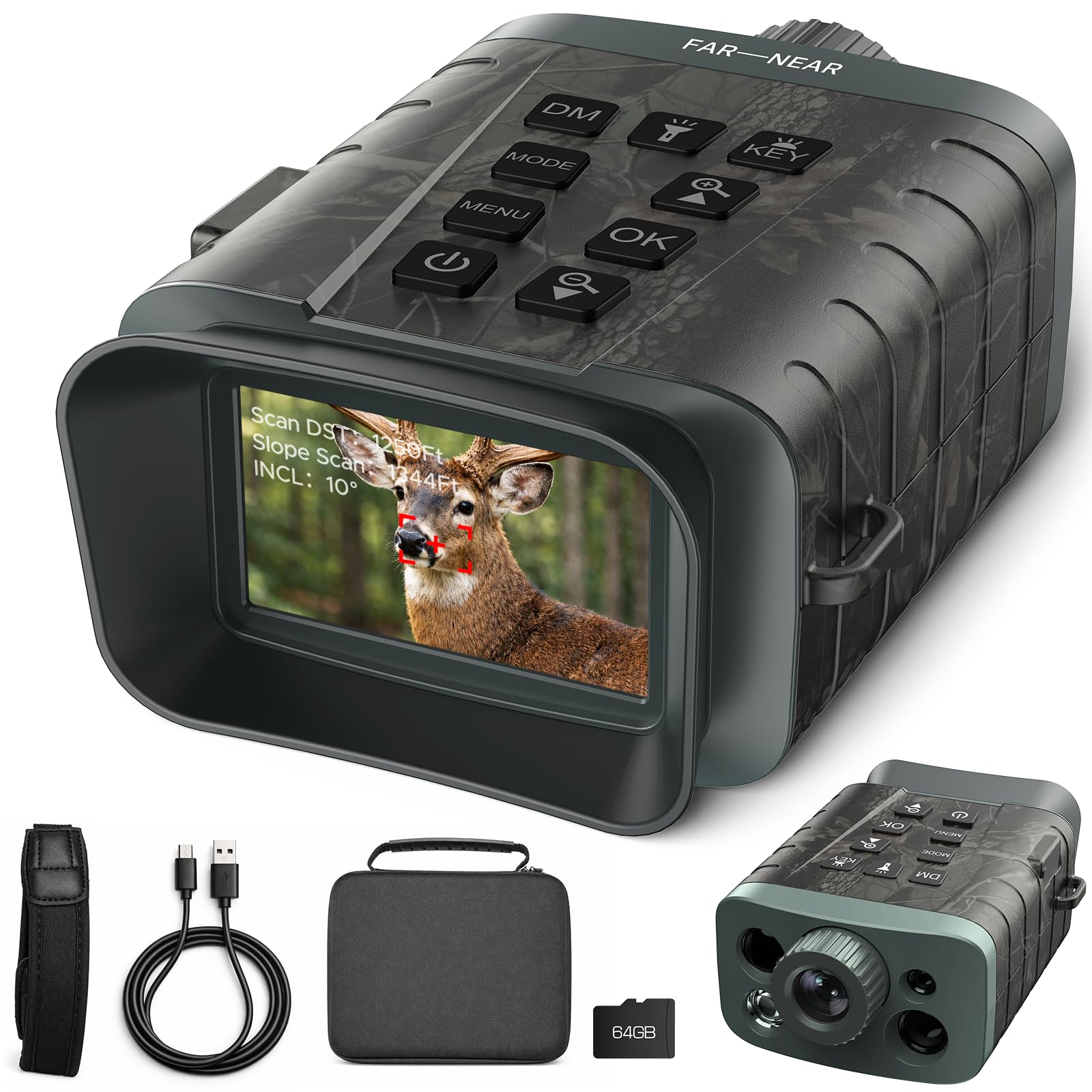
The HOTPEAK night vision binoculars are unique in this lineup because they integrate a laser rangefinder capable of measuring distances up to 1200 yards. You can switch between yards, meters, and feet, making this a genuinely useful tool for hunters who need to know exactly how far away a target is before taking a shot. The 5000mAh battery provides up to 16 hours of daytime use or 10 hours with IR on, and the unit ships with a 64GB card for immediate 4K recording.
The 3-level backlit buttons are a practical touch — they make operation in complete darkness much easier than units with unlit controls. A built-in white flashlight adds utility for emergencies or general camp use, and the 1/4-inch tripod mount allows stable hands-free observation. The night camo finish and oxford fabric case give it a rugged, field-ready appearance.
It’s worth understanding that this is a digital viewing device with a screen held close to your face, not a traditional optical binocular. Image quality is good for the price point, and the rangefinder is accurate, but the digital zoom can feel limited. Some users found the unit underwhelming for the price, while others appreciated the convenience of having distance measurement and night vision in one package.
Why it’s great
- Built-in laser rangefinder up to 1200 yards
- 5000mAh battery with 10-hour night vision runtime
- Backlit buttons and white flashlight for dark operation
Good to know
- Digital viewing screen, not traditional binocular optics
- Digital zoom is limited compared to optical zoom models
8. Teslong TTS390 Thermal Monocular
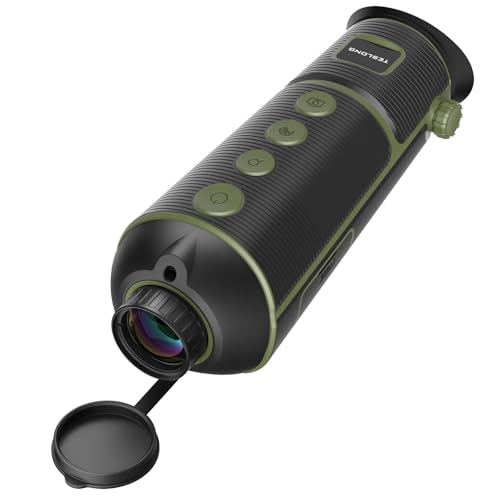
The Teslong TTS390 is a thermal monocular, not a standard night vision binocular — it detects heat signatures rather than amplifying visible or IR light. This makes it fundamentally different from the other devices on this list and essential for anyone who needs to spot people, animals, or warm objects hidden behind foliage, in smoke, or in total darkness where IR illumination falls short. The 384×256 thermal sensor with a 50Hz refresh rate delivers smooth, real-time motion tracking that competitive hunters and security personnel rely on.
The 25mm lens provides recognition of human-sized targets at up to 266 yards, while the 4800mAh battery lasts up to 10 hours on a single charge. Five thermal color palettes (White Hot, Black Hot, Red Hot, Green Hot, Iron Oxide) let you choose the view that best highlights the scene. Built-in 32GB storage records thermal photos and video directly, and the Mini HDMI output allows playback on a larger screen for post-mission review.
Users consistently praise the clarity of the display compared to similarly priced alternatives, with many noting it performs like units costing more. The main limitations are that thermal imagers cannot see through glass or water, and the close-up performance requires a minimum distance of several meters to focus properly. For pure heat detection at a reasonable price, the Teslong TTS390 is hard to beat.
Why it’s great
- 384×256 thermal sensor detects heat through obstacles
- 50Hz refresh rate for smooth motion tracking
- 10-hour battery with 5 color palettes and HDMI output
Good to know
- Cannot see through glass, foliage, or water
- Minimum focus distance of 6-7 meters for full frame
9. RIX Pocket K2 Thermal Monocular

The RIX Pocket K2 is about sheer portability — at 200 grams and smaller than most smartphones, it’s the most pocketable thermal monocular in this roundup. The 256×192 sensor with a 50Hz refresh rate and NETD under 25mK provides respectable thermal sensitivity for its size, allowing you to detect subtle temperature differences in various weather conditions. The integrated lens cover slides open and closed with a finger, eliminating the vanished-cap problem that plagues field gear.
Resolution Enhanced Technology (RET) uses AI algorithms to simulate surrounding pixels, effectively doubling image resolution to approach the clarity of higher-sensor units. The Electronic Image Stabilization (EIS) reduces shake during handheld use, which is critical when you’re scanning with a device this small. The 800×600 OLED display provides rich contrast, and the IP67 waterproof rating ensures protection against full immersion.
User feedback is overwhelmingly positive for scanning at close to moderate ranges, where the K2 excels at picking out small birds, animals, and heat signatures. It’s not a long-range detection tool — the 256×192 sensor is entry-level by thermal standards — but for hikers, campers, and hunters who want to know what’s moving in the dark without carrying a full-size unit, the Pocket K2 is a game-changer.
Why it’s great
- Ultra-light at 200g, truly pocket-friendly
- RET technology enhances apparent image resolution
- IP67 waterproof with EIS for stable handheld use
Good to know
- Entry-level 256×192 sensor limits long-range detection
- Fixed focus, no manual zoom adjustment
FAQ
What is the real-world IR range of digital night vision binoculars?
Can I use digital night vision binoculars with glasses?
What is the difference between optical zoom and digital zoom?
How long does the battery last with infrared on?
Are thermal monoculars better than digital night vision binoculars?
Final Thoughts: The Verdict
For most users, the best digital night vision binoculars winner is the AKASO Seemor-200 because it combines true full-color night vision, lightweight portability, and reliable battery life into a single affordable package. If you want maximum viewing range and WiFi streaming, grab the VisioGear Night Thunder X1. And for hands-free observation with glasses-friendly diopter adjustment, nothing beats the GOYOJO Head-Mounted NVG.

Mo Maruf
I created WellFizz to bridge the gap between vague wellness advice and actionable solutions. My mission is simple: to decode the research and give you practical tools you can actually use.
Beyond the data, I am a passionate traveler. I believe that stepping away from the screen to explore new environments is essential for mental clarity and physical vitality.