Our readers keep the lights on and my smoothie glass nicely filled. As an Amazon Associate, I earn from qualifying purchases.
A digital microscope isn’t just a magnifying glass with a screen—it’s a dedicated inspection station that reveals the hidden world of solder joints, coin errors, and biological specimens. The wrong choice means squinting at blurry images, fighting with poor lighting, or discovering too late that you can’t fit a full silver dollar in the frame. This guide cuts through the spec sheet noise to find the models that deliver sharp, usable magnification for real tasks.
I’m Mohammad Maruf — the founder and writer behind WellFizz. I’ve spent countless hours analyzing the technical specifications, reading through thousands of verified buyer experiences, and comparing sensor resolutions and lighting systems to separate useful digital microscopes from the ones that just look good in product photos.
From the full-coin viewing capabilities needed by numismatists to the long working distances essential for electronics repair, the following models represent the most reliable options available today. This review of the best digital microscope options focuses on real-world usability, image quality, and build integrity rather than marketing claims.
How To Choose The Best Digital Microscope
Selecting a digital microscope requires matching the device’s core specs to your primary use case. A general-purpose unit works well for hobbyists, but coin collectors, electronics repair technicians, and biology enthusiasts each need specific features that make or break the experience.
Screen Size and Panel Quality
The display is where you’ll spend all your time looking. Larger screens—10.1 inches being the current sweet spot—reduce eye strain during extended sessions. An IPS panel with a 178-degree viewing angle ensures colors stay accurate and the image doesn’t wash out when you shift your head. Resolution matters less than panel quality; a good 1080p IPS screen outperforms a cheap 4K panel with poor contrast and narrow viewing angles.
Magnification Range vs. Working Distance
High magnification numbers sell microscopes, but they often come at the cost of working distance—the space between the lens and your subject. For soldering, you need at least 4 to 6 inches of working distance to fit your tools and hands under the lens. Coin inspection requires moderate magnification with enough room to light the surface evenly. The 2500X and 1500X claims on many units are digital zoom numbers; real optical magnification tops out much lower, so focus on usable clarity at the magnification levels you’ll actually need.
Lighting System Depth
Integrated LED arrays are standard, but not all lighting systems are equal. Adjustable brightness on both the ring light and side lights allows you to control reflections and shadows. For coin collectors, being able to shift light from the side reveals mint marks and scratches that top-down lighting hides. For biology slides, a bottom light stage is essential for transmissive viewing. The best models let you control each light source independently rather than offering a single on/off switch.
Quick Comparison
On smaller screens, swipe sideways to see the full table.
| Model | Category | Best For | Key Spec | Amazon |
|---|---|---|---|---|
| TOMLOV TriL110 | Premium | Multi-use with rotating lenses | 3-lens system (1000X/1500X/2500X) | Amazon |
| TOMLOV DM9 Max | Premium | High-resolution imaging | 20MP photo resolution | Amazon |
| Andonstar AD210 | Mid-Range | Versatile kit for hobbyists | 10.2″ working distance | Amazon |
| LINKMICRO LM210 | Mid-Range | Full coin viewing | 12.6″ metal stand with fine gears | Amazon |
| BEAVERLAB Finder | Entry-Level | Portable kids’ exploration | 4.0″ IPS screen, 1600X zoom | Amazon |
In‑Depth Reviews
1. TOMLOV TriL110
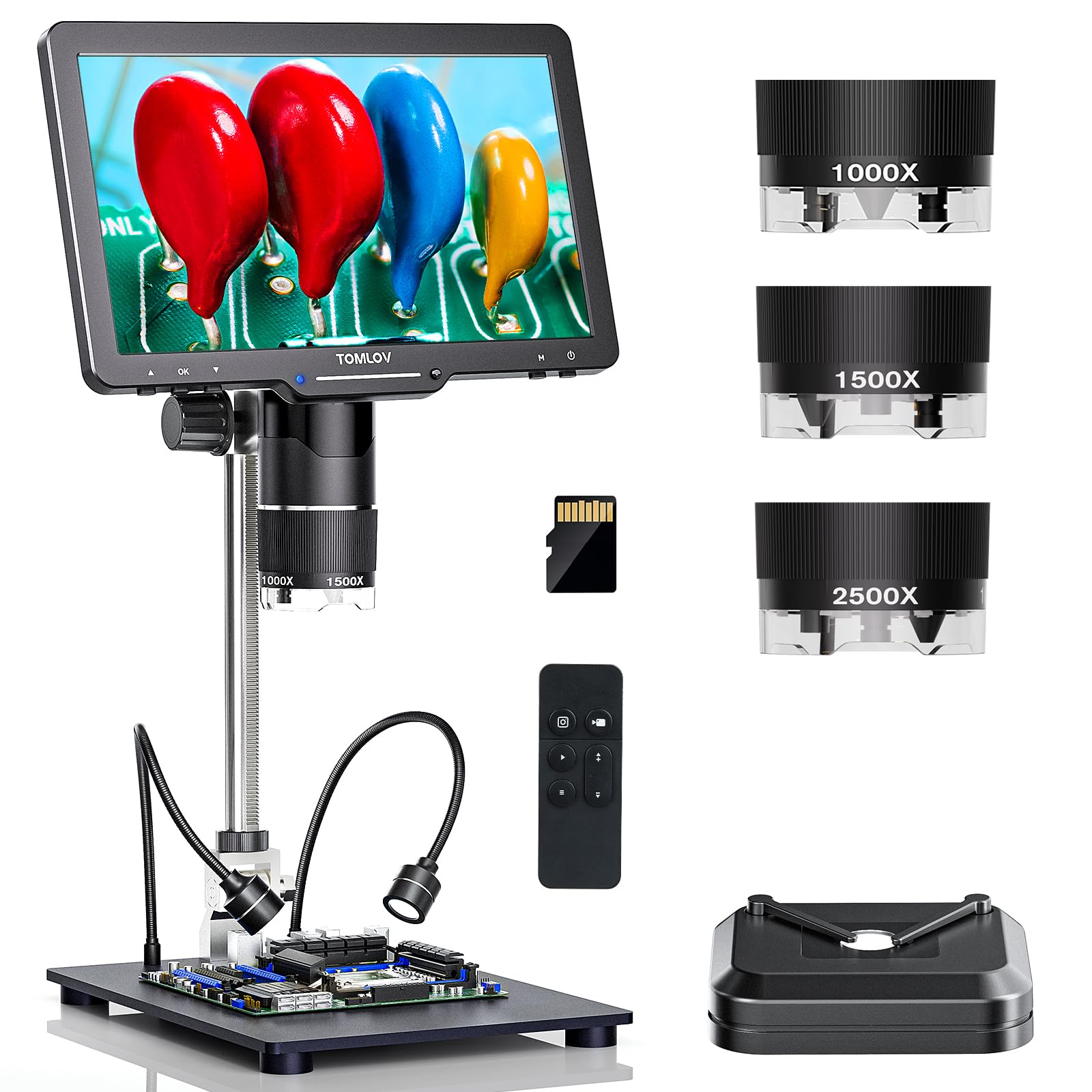
The TOMLOV TriL110 redefines versatility with its rotating barrel that houses three distinct lenses. Instead of relying on a single lens and digital zoom, you get a dedicated 1000X lens optimized for full-coin viewing, a 1500X lens with longer working distance for soldering, and a 2500X lens for biological slides. This hardware-based approach delivers genuine optical clarity at each magnification range, avoiding the pixelated mess that comes from pushing digital zoom too far. The 10.1-inch IPS screen produces crisp 2K video, and the 14-LED lighting array—12 around the lens plus two gooseneck side lights—provides shadow-free illumination from every angle.
The aluminum alloy build and 12.6-inch stand with a large base create a rock-solid platform. The 1000X lens can frame an entire silver dollar without stitching images together, a critical feature for numismatists who need to assess surface condition at a glance. Wireless remote control reduces vibration-induced blur during capture, and the pre-installed MicroSD card means you can start documenting discoveries immediately. The 2500X biological lens has a very short working distance of 3-4mm, which is expected at that magnification but worth noting for slide work.
For professionals and serious hobbyists who switch between coin grading, PCB repair, and biological observation, the TriL110 eliminates the need for multiple separate microscopes. The triple-lens system is not a gimmick—each lens genuinely serves its intended purpose with dedicated optical paths. This is the closest a single digital microscope gets to being a complete lab station.
Why it’s great
- Three dedicated optical lenses cover coin, soldering, and biological use cases without compromise
- 2K video resolution and 24MP photo capture deliver reference-grade image quality
- 14 independently adjustable LEDs provide precise lighting control for every specimen type
Good to know
- 2500X biological lens requires the specimen to be 3-4mm from the lens, making it challenging for thick samples
- Magnification adjustment wheel can feel slightly finicky during fine-tuning
- Some users report needing a specific HDMI cable for TV output not included in the box
2. TOMLOV DM9 Max
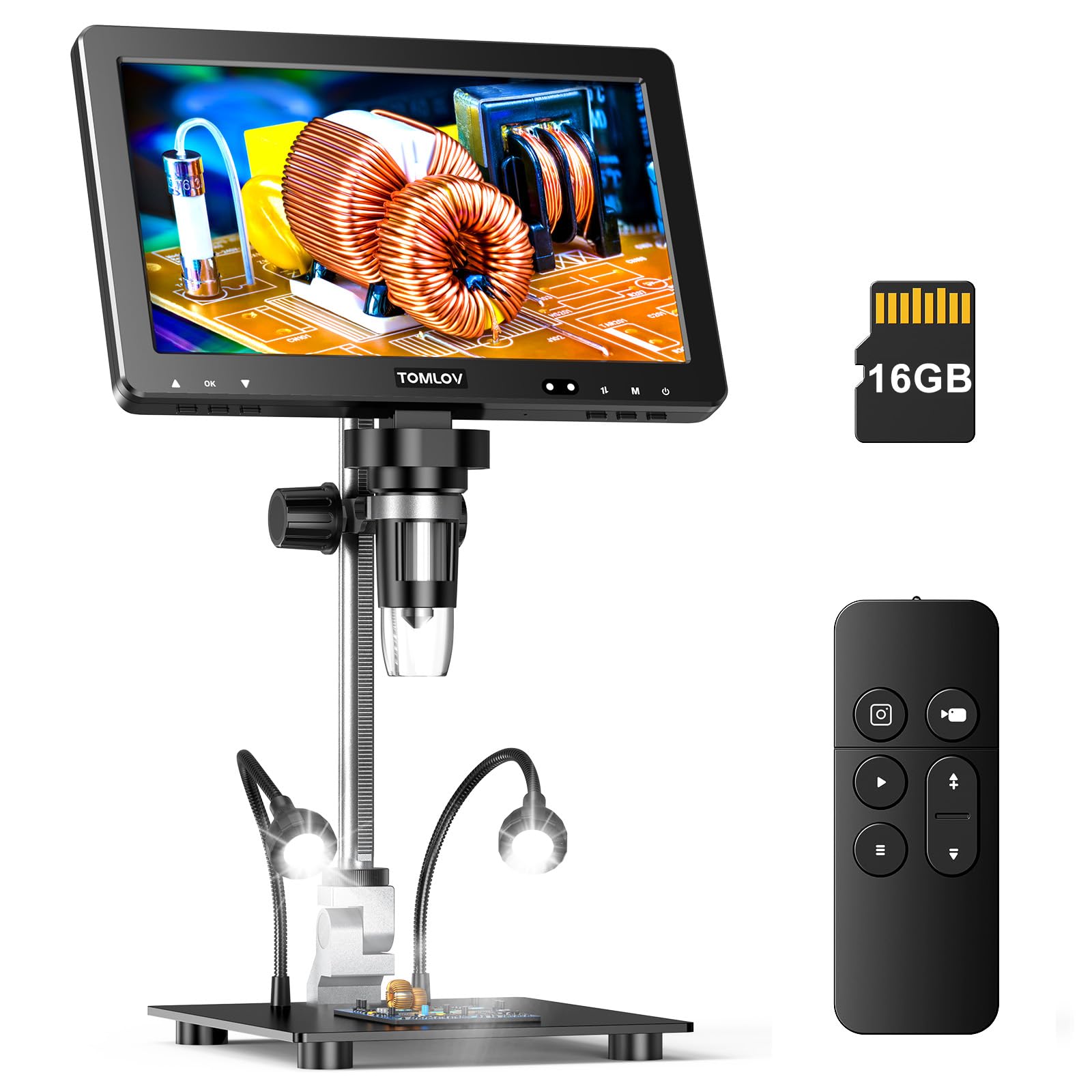
The TOMLOV DM9 Max prioritizes raw image capture quality above all else. Its 20MP sensor captures photos at 6096×3424 resolution—enough to zoom in on a single mint mark or hairline crack after the fact without losing detail. The 10.1-inch IPS display offers a 178-degree viewing angle, and the 5X to 1500X zoom range covers everything from full coin overviews to tight solder joint inspections. The 12.6-inch stand with a 7×8-inch base provides ample workspace for larger projects like motherboard repairs or multi-coin comparisons.
What sets the DM9 Max apart is its lighting system: 8 adjustable LEDs around the lens paired with two gooseneck side lights. Each light source dims independently, letting you create raking light to reveal surface topography on coins or eliminate glare on reflective PCB components. The integrated noise reduction chip and microphone mean video recordings include clear audio narration, useful for instructional content or documenting repair sequences. The unit runs on battery power for short sessions but performs best plugged in for sustained use.
PC connectivity via USB allows you to use your computer monitor as a larger display, which is helpful for lengthy inspection sessions or when demonstrating details to a group. The wireless remote control eliminates camera shake during capture, and the included 16GB MicroSD card provides immediate storage. The standout clarity at 20MP makes this the top choice for anyone who needs to produce publication-quality documentation of their work.
Why it’s great
- 20MP sensor captures image detail that reveals features invisible at lower resolutions
- Independent dimming on all 10 LED light sources gives total control over specimen illumination
- Noise reduction chip and microphone enable clear audio recording for video documentation
Good to know
- Battery life is limited to around one hour on a full charge; best used plugged in
- Included USB cables are short; longer cables recommended for comfortable placement
- Power adapter with two USB ports required since screen and stand each need power
3. Andonstar AD210

The Andonstar AD210 hits the sweet spot between capability and cost, offering a complete kit that includes the 10.1-inch IPS screen, metal stand, 32GB SD card, remote control, bottom light stage, and prepared biological slides. The 10.2-inch working distance provides comfortable access for soldering irons and tweezers, while the 1cm to 26cm adjustable stand height accommod everything from tiny SMD components to larger coins. The 1080P video and 12MP photo resolution deliver solid detail for hobbyist and educational use without the premium price tag of higher-end models.
The three-zone LED lighting system is the AD210’s standout feature at this price point. Top lights illuminate the subject from above, side lights create shadow detail for coin textures, and the bottom light stage transmits light through biological slides for transparent specimen viewing. Each zone dims independently, giving you lighting control usually found on more expensive units. The remote control handles digital zoom, image capture, and color adjustment without touching the screen, reducing vibration and keeping the image stable.
Users consistently praise the AD210’s ease of setup and straightforward operation. The metal stand provides stability that plastic alternatives lack, and the ability to capture full pennies and half dollars in a single frame makes it immediately useful for coin collectors. The included biological slide kit adds educational value for families or classroom settings. Build quality on the remote and the plastic display housing feels less robust than premium competitors, but for the price, the AD210 delivers outstanding versatility.
Why it’s great
- Three independent LED light zones (top, side, bottom) offer professional-grade lighting control on a budget
- 10.2-inch working distance paired with tall stand makes soldering and repair work comfortable
- Includes 32GB SD card, remote control, and biological slide kit for immediate out-of-box use
Good to know
- Plastic housing on the display and remote feels less durable than all-metal alternatives
- At 4X digital zoom, the image no longer covers a full penny in one frame
- Included biological slides are basic and less impressive at the AD210’s magnification range
4. LINKMICRO LM210

The LINKMICRO LM210 stakes its reputation on one specific capability that matters deeply to coin collectors: the ability to capture the entire surface of a silver dollar or half dollar in a single frame. Many digital microscopes force you to pan across large coins and mentally stitch together the image, but the LM210’s optical configuration and 10.1-inch IPS screen show the full coin at once. This makes error identification—mint marks, die cracks, lamination errors, and edge details—immediately visible without guesswork.
The 12.6-inch heavy-duty metal stand with precision fine-adjustment gears provides exceptional stability for both coin inspection and electronics repair. The 3D lighting system includes 8 adjustable top LEDs, dual flexible side lights, and a bottom-lit slide holder. Each light source adjusts independently, letting you create exaggerated side lighting that makes coin surface details pop. The wireless remote control enables hands-free operation, and the 32GB SD card and card reader included in the kit ensure you can store and transfer documentation immediately.
Some users note that the screen field of view differs slightly from the captured image in picture mode, which can make framing difficult. The UI is also somewhat clunky—digital zoom adjustments only work in video mode, not photo mode. However, the core inspection functionality is excellent. The 260X maximum magnification is more honest than inflated digital zoom claims on competing units, and the image quality at that magnification is crisp and usable. For dedicated numismatists, the LM210 is purpose-built for their primary use case.
Why it’s great
- Captures full silver dollars and half dollars in a single frame without panning or stitching
- 12.6-inch all-metal stand with precision gears provides unmatched stability for detailed work
- Three-zone adjustable lighting system reveals surface details that fixed lighting misses
Good to know
- Screen field of view does not perfectly match the captured image in photo mode, complicating framing
- Digital zoom adjustment is only accessible in video mode, not while taking photos
- User manual is sparse and instructions are somewhat unclear for advanced features
5. BEAVERLAB Finder 4.0″

The BEAVERLAB Finder 4.0″ takes a fundamentally different approach from the desktop models above: it is a handheld portable microscope designed for spontaneous exploration. The 4.0-inch IPS display is small enough to fit in a pocket but large enough to see detail clearly, and the 100X to 1600X magnification range covers everything from fabric fibers to insect wings. The built-in 2MP CMOS sensor captures 1080P video and HD photos, and the integrated Wi-Fi hotspot lets you upload discoveries directly to a phone for sharing on social media or with classmates.
The 8 adjustable LED lights around the lens allow for brightness control based on the specimen and ambient conditions. Designed primarily for children ages 3 and up, the BEAVERLAB Finder uses an ABS plastic body with an aviation aluminum alloy inner rail for structural rigidity. The included 8GB TF card provides storage, and the USB charging cable keeps the unit powered. Setup is genuinely simple—charge it, turn it on, and start exploring leaves, coins, and household objects immediately.
Image quality is satisfactory for its purpose but does not match the clarity of larger desktop units. The camera button is reported as somewhat hard to press, and photo confirmation feedback is delayed, which can confuse younger users. However, the portability factor is unmatched—kids can take this microscope outside, to the park, or on nature walks without needing a power outlet or a desk. For parents wanting to spark curiosity in microscopy without committing to a full desktop system, this handheld option is an engaging starting point.
Why it’s great
- Fully portable with a built-in screen and Wi-Fi hotspot for instant sharing from anywhere
- 8 adjustable LED lights provide adequate illumination for a wide variety of specimens
- Simple operation makes it accessible for children as young as three with minimal assistance
Good to know
- Image quality and detail do not compete with larger desktop models at similar magnification claims
- Camera button is stiff, and photo confirmation feedback is noticeably delayed
- Charging adapter is not included in the box; only a USB cable is provided
FAQ
Can a digital microscope replace a traditional stereo microscope for soldering work?
What causes the blurry edges on some digital microscopes?
How important is the IPS display versus standard LCD?
Final Thoughts: The Verdict
For most users, the best digital microscope winner is the TOMLOV TriL110 because its triple-lens system delivers genuinely optimized optics for coin inspection, soldering, and biological observation in a single sturdy unit, eliminating the need for multiple specialized devices. If you need the highest possible image capture resolution for documentation and publication, grab the TOMLOV DM9 Max. And for dedicated coin collectors who want to see full silver dollars in one frame without compromise, nothing beats the LINKMICRO LM210.

Mo Maruf
I created WellFizz to bridge the gap between vague wellness advice and actionable solutions. My mission is simple: to decode the research and give you practical tools you can actually use.
Beyond the data, I am a passionate traveler. I believe that stepping away from the screen to explore new environments is essential for mental clarity and physical vitality.