Our readers keep the lights on and my smoothie glass nicely filled. As an Amazon Associate, I earn from qualifying purchases.
Missing a small die crack or a subtle double strike on a Morgan Silver Dollar isn’t just frustrating — it can cost you hundreds of dollars in misidentified value. A dedicated digital microscope for coins brings those tiny mint errors into clear view, turning casual scanning into confident grading.
I’m Mohammad Maruf — the founder and writer behind WellFizz. I’ve spent hundreds of hours cross-referencing magnification specs, sensor resolutions, lighting systems, and stand stability metrics across the most popular hobbyist microscopes to build this practical guide.
This guide breaks down the seven best options on Amazon right now, each evaluated for how well it handles real coin-collecting tasks. Whether you are hunting for RPMs on a Lincoln cent or checking edge reeding on a quarter, these reviews will help you find the best digital microscope for coins that matches your collection and your workflow.
How To Choose The Best Digital Microscope For Coins
Picking the right coin microscope comes down to more than just a high magnification number. You need a device that lets you see the entire surface of a coin clearly, with lighting that reveals subtle raised details and die varieties without washing them out. Here are the key factors to weigh before you buy.
Screen Size and IPS Panel Quality
A 7-inch screen is functional, but a 10.1-inch IPS display with a 178-degree viewing angle gives you a far more comfortable view of an entire coin without having to pan around. IPS panels also maintain color accuracy and contrast when viewed from an angle, which matters when you are sharing finds with a friend or adjusting your head position during long grading sessions.
Magnification vs. Working Distance
Coin collectors rarely need 2000X magnification. Most mint errors — die cracks, doubled dies, repunched mint marks — become visible between 10X and 100X. What matters more is working distance: the space between the lens and the coin. A long working distance (10 inches or more) lets you see a full silver dollar in one frame and gives you room to manipulate the coin under the lens without bumping the stand.
Lighting Systems
Top-mounted LED rings alone often create harsh glare on reflective coin surfaces. The best coin microscopes include dual flexible gooseneck side lights that you can angle to cast shadows across the coin’s surface, highlighting die markers and subtle depressions. Adjustable brightness is essential — you want to dial in just enough light to see detail without washing out the coin’s natural patina.
Stand Stability and Build Quality
A plastic base wobbles under high magnification, ruining your focus. Look for an aluminum alloy base and stand that stays planted on your desk. A 12.6-inch tall column with precision rack-and-pinion gears allows you to fine-tune the camera height and maintain sharp focus across the entire coin face. Metal construction also resists heat if you use the microscope for soldering tasks alongside coin inspection.
Quick Comparison
On smaller screens, swipe sideways to see the full table.
| Model | Category | Best For | Key Spec | Amazon |
|---|---|---|---|---|
| TOMLOV DM9 Max | Premium | Full coin view & high-res recording | 10.1″ IPS, 20MP sensor, 1500X | Amazon |
| TOMLOV TriL107 | Premium | Triple-lens versatility | 3 rotating lenses, 7″ IPS, 2500X | Amazon |
| Andonstar AD210 | Mid-Range | All-purpose coin & solder inspection | 10.1″ IPS, 12MP, 260X, remote | Amazon |
| LINKMICRO LM210 | Mid-Range | Full silver dollar coverage | 10.1″ IPS, 12MP, 260X, 32GB | Amazon |
| Leipan 7″ LCD | Mid-Range | Budget-friendly with side lights | 7″ 1080p, 12MP, 1200X, metal stand | Amazon |
| Hayve 7″ LCD | Mid-Range | Entry-level coin & PCB viewing | 7″ 1080p, 16MP, 1200X, 10 LEDs | Amazon |
| Andonstar AD249S-M | Premium | Pro soldering & HDMI output | 3 lenses, 10.1″ LCD, 2040X, HDMI | Amazon |
In‑Depth Reviews
1. TOMLOV DM9 Max
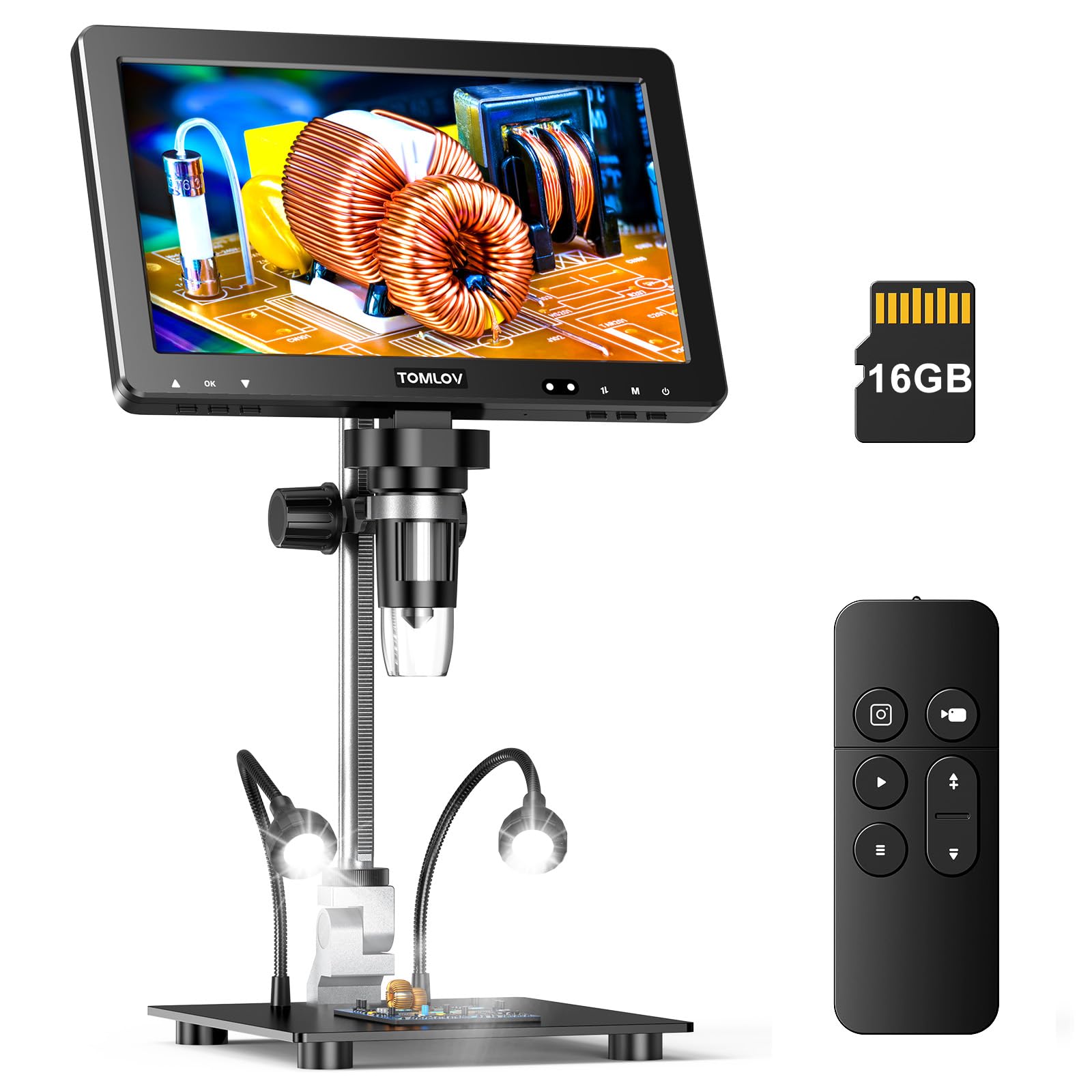
The TOMLOV DM9 Max is the gold standard for coin collectors who want a screen large enough to view an entire dollar at once. Its 10.1-inch IPS display with a 178-degree viewing angle delivers crisp, color-accurate images straight out of the box. The 20MP sensor captures 6096×3424 stills, giving you enough resolution to zoom in digitally on a specific die crack after you have taken the photo.
The 5X to 1500X magnification range covers everything from low-power full-coin inspection to extreme close-ups of mint marks. The 12.6-inch aluminum stand provides a stable 7×8-inch base, and the wireless remote lets you snap photos or start video without jostling the camera. The built-in 16GB SD card saves your finds immediately, and the included noise reduction chip keeps recorded commentary clear while you narrate your grading process.
Two flexible gooseneck side lights complement the eight adjustable top LEDs, giving you total control over shadow direction. Users consistently praise the clarity and ease of assembly, though the power button requires a five-second hold to turn on, which takes a moment to learn. The DM9 Max runs on both AC power and battery, making it portable for club meetings or shows.
Why it’s great
- Full 10.1-inch IPS panel reduces eye strain during long grading sessions
- 20MP sensor captures high-resolution stills suitable for digital zoom later
- Wireless remote eliminates camera shake when recording video documentation
Good to know
- No AC adapter included for powering both stand and screen simultaneously
- Battery life is limited to about one hour on the screen alone
2. TOMLOV TriL107
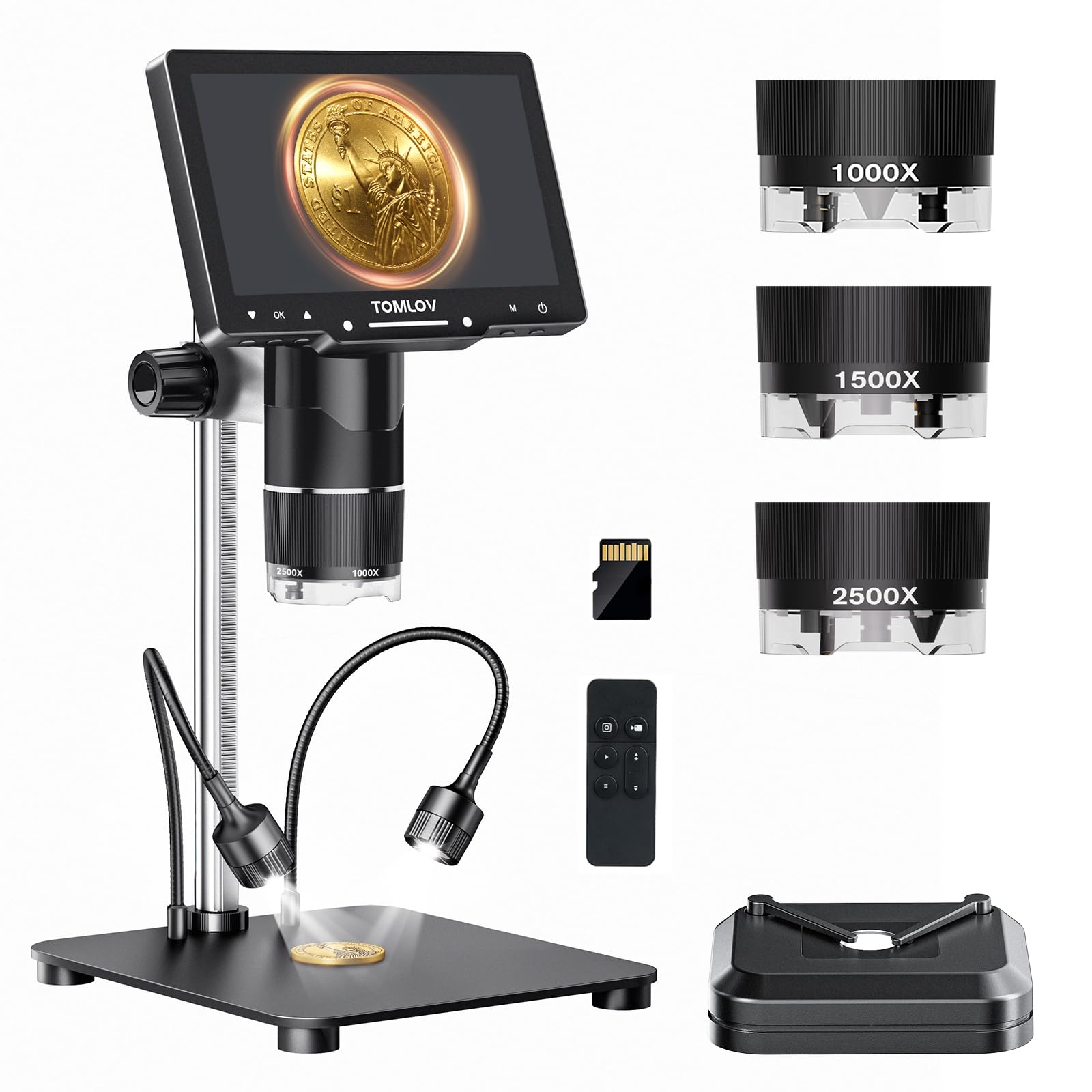
The TOMLOV TriL107 solves the biggest frustration with single-lens coin microscopes: lens swapping. A rotating barrel lets you switch between the 1000X coin lens, the 1500X soldering lens, and the 2500X biological lens without unscrewing anything. For coin collecting, the Lens A setting at 2X to 1000X is the star — it captures a full view of a Morgan Dollar and then lets you zoom into the tiniest repunched mint mark detail.
The 7-inch IPS screen is smaller than the DM9 Max, but the 30MP photo resolution and 2K video capture provide exceptional clarity for documentation. A 12.6-inch stand with a rock-solid aluminum base keeps the camera steady even at high magnification. The three lighting zones — 12 built-in lens LEDs, two gooseneck side lights, and a slide bottom light — give you complete control over how light hits the coin surface, which is critical for spotting lamination errors or strike doubling.
Users report that the image remains crystal clear across all three lenses, and the intuitive controls make it easy to operate without reading a manual. The remote control reduces vibration, and the included MicroSD card stores hours of video. The 2500X biological lens requires the camera to sit 3-4mm from the object, making it less practical for coins but excellent for prepared slides included in the kit.
Why it’s great
- Rotating lens barrel eliminates the hassle of swapping lenses manually
- 2K video resolution produces detailed video documentation of error coins
- Three independent lighting zones provide shadow control for die marker detection
Good to know
- 7-inch screen is smaller than 10.1-inch competitors for full-coin viewing
- Some units arrive with minor height adjustment damage that requires replacement
3. Andonstar AD210

The Andonstar AD210 delivers a large 10.1-inch IPS display and a generous 10.2-inch working distance at a price that undercuts many premium competitors. The 12MP camera captures 1080P video and stills sharp enough to identify die varieties on a Lincoln Memorial cent. The 178-degree viewing angle means you can share the screen with a fellow collector without losing image quality.
Three adjustable LED lighting zones — top, side, and bottom — give you flexibility for both opaque coins and transparent biological slides. The bottom light stage is a nice bonus for kids or students exploring the included slide kit, but the side lights are what coin collectors will use most to create the raking light that reveals surface texture. The remote control supports digital zoom (0X, 2X, 4X) and photo capture, helping you avoid camera shake.
Users consistently praise the build quality and ease of setup. The metal stand with a 12.6-inch column feels sturdy and provides ample space for soldering or watch repair alongside coin work. A few reviewers note that the plastic components on the remote and display housing feel less premium than the metal stand, and the included biological slides are underwhelming at this magnification level. The 32GB SD card and card reader are welcome inclusions.
Why it’s great
- Large 10.1-inch IPS screen and long working distance for full-coin views
- Three independent lighting zones adapt to coins, slides, and soldering tasks
- Included 32GB SD card and remote control add real value out of the box
Good to know
- Digital zoom at 4X does not fully cover a penny in the frame
- Screen field of view sometimes differs from the captured image in photo mode
4. LINKMICRO LM210

The LINKMICRO LM210 is purpose-built for coin collectors who need to see an entire silver dollar — including the edge lettering — in a single frame. The 10.1-inch IPS display with vivid color reproduction makes identifying subtle toning and die varieties straightforward. The 12MP camera records 1080P video, and the included 32GB SD card gives you plenty of room to store high-resolution images of your collection.
The 12.6-inch metal stand with precision fine-adjustment gears provides smooth focus control, which is essential when you are scanning a coin surface for minute details like die scratches or planchet flaws. The advanced 3D lighting system combines eight adjustable top LEDs with dual flexible side lights and a bottom-lit slide holder. This setup lets you direct light from multiple angles to cast shadows that reveal raised or recessed features without washing out the patina.
Users report that the LM210 is excellent for identifying mint errors that are invisible to the naked eye. The remote control makes hands-free operation easy, and the kit includes prepared slides, tweezers, and a collection box for biological exploration. A few users mention that the zoom adjustment is only available in video mode, which feels clunky when switching between still capture and live viewing. The lack of an external monitor output may limit some users.
Why it’s great
- Captures entire Silver Dollar and Half Dollar in a single frame
- Precision rack-and-pinion gears enable smooth, accurate focus adjustments
- Comprehensive kit includes remote control, SD card, and prepared slides
Good to know
- Zoom adjustment is restricted to video mode only
- No HDMI or USB output for external monitor connection
5. Leipan 7″ LCD Digital Microscope

The Leipan 7-inch microscope proves you don’t need to spend a fortune to get a solid coin-viewing tool. The 12MP camera outputs 1080P video to the rotatable screen, and the 10X to 1200X magnification range covers everything from full-coin scanning to close-up mint mark inspection. The 90-degree screen rotation eliminates neck strain during extended grading sessions — a thoughtful ergonomic touch at this price point.
What separates the Leipan from other budget options is the dual lighting system. Eight adjustable top LEDs handle general illumination, while two flexible gooseneck side lights let you create raking light angles that reveal subtle die markers. The aluminum alloy stand and base provide stability that most entry-level plastic stands lack, making it suitable for both coin work and light soldering tasks. The wired remote helps reduce camera shake when capturing stills.
The microscope connects to a Windows or Mac PC via USB for larger viewing, running the default operating system camera app without extra software. Users appreciate the build quality and magnification performance for the price, though some note that the image can appear slightly grainy at higher magnifications, and the camera’s auto-exposure sometimes overrides side-light brightness adjustments. The metal construction gives it a durable feel that outclasses its price tier.
Why it’s great
- Aluminum alloy stand delivers stability typically found in more expensive models
- Two flexible gooseneck side lights enable directional shadow casting for error detection
- Rotatable 7-inch screen reduces neck fatigue during long inspection sessions
Good to know
- Image can appear slightly grainy at maximum digital magnification
- Auto-exposure system can override manual side-light brightness adjustments
6. Hayve 7″ LCD Digital Microscope
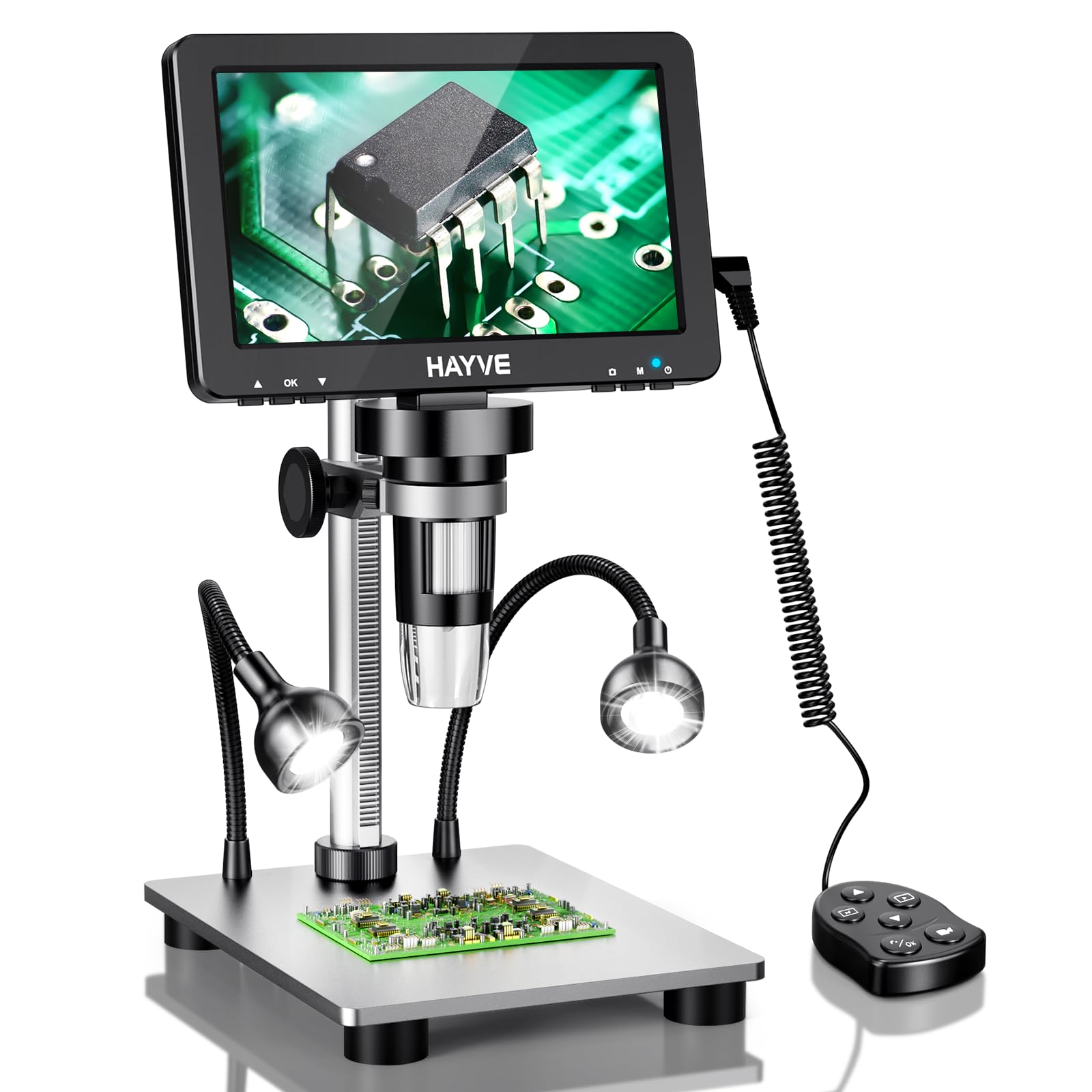
The Hayve DM9 is a straightforward, no-fuss option for collectors who want a dedicated coin scope without extra frills. The 7-inch HD screen with a 16MP camera provides clear 1080P images, and the 10X to 1200X continuous magnification lets you go from a full quarter view to a tight crop of a single letter in seconds. The 90-degree rotatable screen makes it easy to share your view with someone across the table.
Eight top LEDs plus two flexible gooseneck side lights give you ten lighting points, which is generous for a mid-range model. The side lights are independently adjustable and can be powered separately from the microscope, giving you more control over light placement. The adjustable aluminum bracket and metal base are surprisingly stable for the price, and the microscope connects to a PC via USB for larger viewing without additional software.
Users find the Hayve DM9 effective for identifying components on circuit boards and inspecting coins, praising its ease of use and solid build. A few reviewers note that the actual magnification depends heavily on the distance between the lens and the object, so you may need to experiment to find the sweet spot for coin inspection. The included remote and simple interface make it a good choice for beginners or classroom demonstrations.
Why it’s great
- 16MP sensor delivers slightly higher resolution than many 12MP competitors at this tier
- Ten LED lighting points provide comprehensive illumination for various coin surfaces
- Simple plug-and-play USB connection works with Windows and Mac without extra software
Good to know
- Magnification requires careful distance adjustment for best clarity on coins
- 7-inch screen limits full-coin viewing compared to 10.1-inch alternatives
7. Andonstar AD249S-M

The Andonstar AD249S-M is the most versatile option in this lineup, designed for serious coin collectors who also work on electronics repair or biological slides. The three-lens system — Lens A (4.5-180X for coins), Lens L (15-60X for soldering), and Lens D (450-2040X for slides) — covers nearly every magnification scenario you could need. The 10.1-inch LCD screen outputs crisp 2160P UHD video, and the HDMI port lets you connect to a larger monitor for group viewing or detailed inspection.
The pro boom arm stand is a standout feature. Unlike fixed-column stands, the boom arm adjusts front-to-back, left-to-right, and angle, giving you far more flexibility to position the camera over a coin without moving the base. The metal construction withstands soldering temperatures, and the 32GB MicroSD card stores extensive video documentation. The included measurement software for Windows PC allows you to measure coin features in millimeters, which is useful for cataloging error sizes.
Users consistently praise the build quality and the convenience of swapping lenses without fumbling with tools — each lens simply screws into the camera body. The wireless remote and eight-level adjustable LED lights make operation smooth, though the microscope requires a learning curve to understand which lens suits each task. The AD249S-M is overkill if you only inspect coins, but for collectors who also repair watches or examine stamps, it is a comprehensive investment.
Why it’s great
- HDMI output allows connection to large monitors for detailed error inspection
- Boom arm stand offers greater positioning flexibility than standard fixed columns
- Professional measurement software enables precise sizing of coin errors and features
Good to know
- Three-lens system requires practice to select the correct lens for each task
- Premium price and pro features may be excessive for casual coin collectors
FAQ
Can a digital microscope see die cracks and doubled dies on coins?
What is the difference between optical zoom and digital zoom for coin inspection?
How important are flexible gooseneck side lights for coin microscopes?
Final Thoughts: The Verdict
For most users, the digital microscope for coins winner is the TOMLOV DM9 Max because its 10.1-inch IPS screen, 20MP sensor, and dual flexible side lights provide the best balance of full-coin visibility and error-detection detail in a stable metal stand. If you want a triple-lens system that adapts from coin inspection to soldering and biological slides without lens swapping, grab the TOMLOV TriL107. And for a budget-friendly entry point that still offers a metal stand and gooseneck lighting, nothing beats the Leipan 7-inch LCD.

Mo Maruf
I created WellFizz to bridge the gap between vague wellness advice and actionable solutions. My mission is simple: to decode the research and give you practical tools you can actually use.
Beyond the data, I am a passionate traveler. I believe that stepping away from the screen to explore new environments is essential for mental clarity and physical vitality.