Our readers keep the lights on and my smoothie glass nicely filled. As an Amazon Associate, I earn from qualifying purchases.
A camera’s built-in flash is the difference between a memory preserved in crisp detail and a grainy, motion-blurred disappointment. Whether you’re capturing a candlelit birthday party, a spontaneous concert moment, or a fast-moving pet indoors, the ability to fill a scene with controlled light is non-negotiable — and not all digital cameras handle that job equally. From pocket-sized point-and-shoots to advanced mirrorless systems, the flash quality, power, and synchronization speed vary enough to make or break your shots.
I’m Mohammad Maruf — the founder and writer behind WellFizz. I’ve spent countless hours analyzing customer feedback and technical specs for digital cameras with built-in flash units, separating marketing claims from real-world performance in dimly lit rooms and nighttime outdoor scenes.
This guide covers nine distinct models engineered to handle low-light situations, from budget-friendly entry-level options to high-end compacts, so you can confidently choose among the best digital cameras with flash that match your shooting style and budget.
How To Choose The Best Digital Cameras With Flash
Not every built-in flash delivers the same punch. When you’re shopping for a camera that includes a flash, you need to look beyond the simple “has flash” checkbox. The flash’s guide number, recycle time, and synchronization speed determine whether you’ll capture sharp, well-lit images or end up with harsh shadows and blown-out highlights. Below are the critical factors to weigh before you commit.
Flash Guide Number and Reach
The guide number (GN) tells you how far the flash can effectively illuminate your subject. Measured in meters at ISO 100, a higher GN means the flash can light a larger room or a more distant subject. Entry-level cameras often have a GN around 5-10, while premium compact models may reach 15 or higher. If you often shoot in large indoor spaces like auditoriums or banquet halls, prioritize a camera with a higher guide number.
Flash Modes: Fill, Slow Sync, and Red-Eye Reduction
A good flash system offers multiple modes, not just on/off. Fill flash forces the flash to fire even in daylight to reduce harsh shadows on faces. Slow-sync flash combines a slower shutter speed with flash to capture both the subject and the ambient background — essential for night portraits. Red-eye reduction fires a pre-flash to shrink pupils before the main flash. A camera that lacks these modes will feel limiting in real-world mixed-lighting scenarios.
Hot-Shoe Compatibility for External Flash
Some cameras have built-in flash but also include a hot-shoe mount for attaching a more powerful external flash unit. If you plan to grow your photography skills, a hot-shoe allows you to use bounce flash, off-camera flash, or studio strobes. DSLR and mirrorless models typically offer this, while most point-and-shoot and budget compacts do not. Decide whether you want the option to upgrade later or if the built-in flash alone will suffice.
Sensor Size and Low-Light Performance
Larger sensors — like APS-C or 1-inch types — capture more light naturally, reducing how often you need to use flash. A camera with a 1-inch sensor and a good high-ISO ceiling might produce usable images in dim conditions with just a subtle fill flash, whereas a small 1/2.3-inch sensor will rely heavily on flash for any indoor shot. Pair sensor size with flash power for the most versatile low-light setup.
Quick Comparison
On smaller screens, swipe sideways to see the full table.
| Model | Category | Best For | Key Spec | Amazon |
|---|---|---|---|---|
| Sony RX100 VII | Premium Compact | Ultimate pocketable image quality with flash | 1-inch stacked CMOS, 20.1MP, 24-200mm | Amazon |
| Canon EOS R100 | Mirrorless | Entry-level mirrorless with flash hot-shoe | APS-C 24.1MP, 4K video, Dual Pixel AF | Amazon |
| Panasonic LUMIX ZS99 | Travel Zoom | Compact 30x zoom for concerts and trips | 30x Leica zoom, 24-720mm, 4K | Amazon |
| Xtra Muse Pocket Gimbal | Vlogging Camera | Stabilized 4K video with flash | 1-inch CMOS, 3-axis gimbal, 4K/120fps | Amazon |
| Canon EOS 2000D/Rebel T7 | DSLR Bundle | Beginner DSLR with bundled flash | APS-C 24.1MP, 18-55mm kit, 9-point AF | Amazon |
| Kodak PIXPRO AZ528 | Superzoom Bridge | Extreme 52x zoom with fill flash | 16MP BSI CMOS, 52x zoom, 24mm wide | Amazon |
| Panasonic LUMIX FZ80D | Bridge Camera | 60x zoom with optical stabilization | 60x zoom, 20-1200mm, 4K Photo | Amazon |
| Canon EOS 4000D/Rebel T100 | Budget DSLR | Low-cost DSLR with flash kit | 18MP APS-C, 18-55mm, Wi-Fi | Amazon |
| Jukanur 5K 96MP | Budget Point-and-Shoot | Ultra-budget camera with flash | 5K video, 6x optical zoom, 64GB card | Amazon |
In‑Depth Reviews
1. Sony RX100 VII
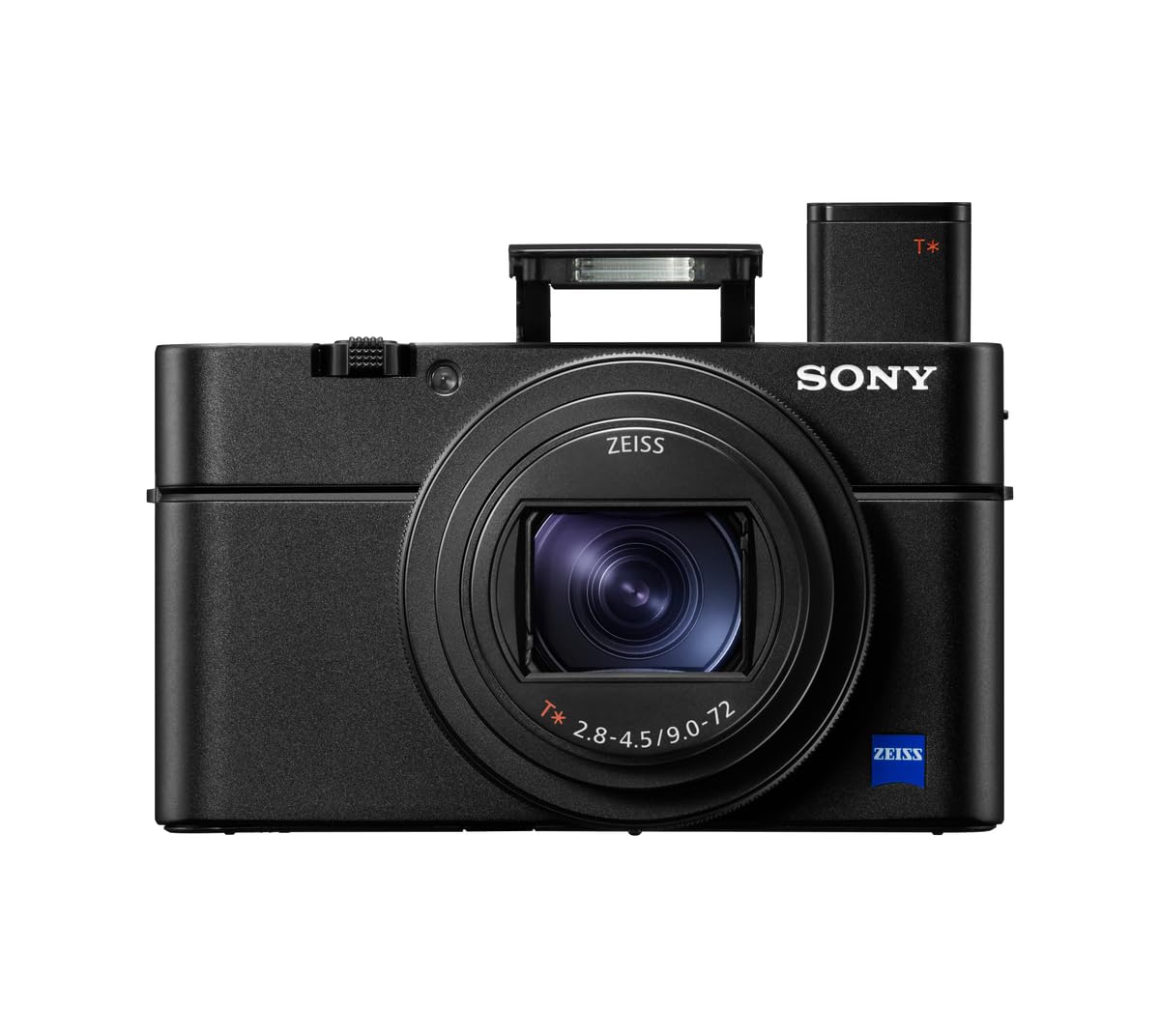
The Sony RX100 VII represents the pinnacle of pocketable cameras with a capable built-in flash. Its 1-inch stacked CMOS sensor delivers exceptional image quality even before the flash fires, and when you need extra light, the pop-up flash provides a guide number that comfortably lights subjects up to about 10 meters away. The 20.1MP resolution combined with Zeiss 24-200mm zoom means you can compose wide or tight and still get sharp, well-exposed results in dim environments.
What sets this Sony apart is the 357-point phase-detection autofocus system, which locks onto faces and eyes instantly — a huge advantage when using flash for candid portraits. The flash syncs with the electronic shutter for silent, blackout-free shooting up to 20 fps, so you can capture fleeting expressions without the distraction of a loud mechanical shutter. For video shooters, the microphone jack and 4K with S-Log3 give you professional control, though the flash is not usable during video recording.
The camera is small enough to slide into a coat pocket, but the flash mechanism sits flush when closed, adding no bulk. Battery life is solid for a compact, lasting a full day of mixed shooting. The main compromise is price — this is a premium investment — but for photographers who demand the best image quality in the smallest possible body with flash on demand, the RX100 VII is the gold standard.
Why it’s great
- Superb 1-inch sensor with exceptional low-light performance
- Lightning-fast 357-point phase-detection AF with real-time eye tracking
- Pop-up flash with 20 fps blackout-free continuous shooting
- Versatile 24-200mm Zeiss zoom lens in a pocket-size body
Good to know
- No external flash hot-shoe (built-in flash only)
- Flash not usable during 4K video recording
- No weather sealing, so protect from rain and dust
2. Canon EOS R100

The Canon EOS R100 is the most affordable entry point into Canon’s RF mirrorless system, and it includes both a built-in flash and a hot-shoe for external flash units. The built-in pop-up flash is handy for casual indoor shots, but the real advantage is the hot-shoe, which lets you attach a Speedlite for bounce flash or off-camera lighting. The 24.1MP APS-C sensor captures clean images up to ISO 6400, so you won’t always need flash, but when you do, the system is ready.
Dual Pixel CMOS AF with 143 zones covers the frame with phase-detection focus, and face/eye detection works for both humans and animals. In continuous shooting mode, the R100 fires off 6.5 fps with One-Shot AF — fast enough for action shots with flash at the decisive moment. The DIGIC 8 processor enables 4K video at 24 fps, though the built-in flash does not function while recording video, so consider an external hot-shoe light for vlogging.
The body is compact and lightweight — the smallest in the EOS R series — making it easy to carry on trips. The kit lens (RF-S18-45mm F4.5-6.3) includes optical image stabilization, which helps in low light when you want to avoid flash. Battery life is about a day of casual shooting. This camera is ideal for beginners who want room to grow into more advanced flash setups without buying a second camera.
Why it’s great
- Built-in pop-up flash plus hot-shoe for external Speedlites
- Excellent 24.1MP APS-C sensor with clean high-ISO performance
- Fast Dual Pixel CMOS AF with face/eye/animal detection
- Lightweight body — smallest in EOS R series — easy to travel with
Good to know
- No in-body image stabilization (relies on lens stabilization)
- 4K video limited to 24 fps; built-in flash off during video
- No external microphone input for video recording
3. Panasonic LUMIX ZS99

The Panasonic ZS99 is a pocket-sized travel zoom that packs a 30x optical Leica lens (24-720mm equivalent) alongside a reliable built-in flash. The flash is particularly useful at the wide end, where you can light group shots indoors, and at moderate telephoto distances. The 5-Axis Hybrid O.I.S. stabilization ensures that even at full zoom in dim light, your handheld shots remain sharp without requiring flash at every opportunity.
4K video recording at 30p and 4K PHOTO burst mode at 30 fps give you flexibility for capturing fast-moving subjects — useful at concerts or family events where you need both zoom reach and flash. The 1,840k-dot tiltable touchscreen makes it easy to frame shots from awkward angles. Built-in Bluetooth v5.0 and a dedicated Send Image button streamline transferring photos to your phone for quick social sharing.
Battery life is about two hours of active use, which is typical for a compact zoom, and the USB Type-C charging means you can top up with a power bank. Image quality is very good up to ISO 1600, with the flash filling in when light drops lower. The main compromise is the small 1/2.3-inch sensor, which limits dynamic range compared to larger-sensor cameras, but for the combination of extreme zoom and pocket portability with flash, the ZS99 is hard to beat.
Why it’s great
- 30x Leica zoom (24-720mm) with built-in flash for indoor versatility
- 5-Axis Hybrid O.I.S. keeps shots steady at full telephoto
- Tiltable touchscreen and USB Type-C charging for travel convenience
- 4K PHOTO mode for extracting perfect frames from video bursts
Good to know
- Small 1/2.3-inch sensor limits low-light dynamic range
- Flash recycle time can be slow during rapid shooting
- No hot-shoe for external flash accessories
4. Xtra Muse Pocket Gimbal Camera

The Xtra Muse is a unique hybrid that combines a 1-inch CMOS sensor with a 3-axis gimbal stabilizer, and it includes a built-in flash for stills. The 1-inch sensor captures significantly more light than typical pocket cameras, and the flash provides a solid fill for indoor scenes or backlit portraits. The 4K/120fps video capability is rare at this price, and while the flash does not fire during video, the gimbal ensures smooth footage in low-light venues where you might otherwise rely on a flash.
Master Follow and face/object tracking keep moving subjects centered in the frame — ideal for dance, hiking, or active family moments. The 2-inch touchscreen flips for selfies, and the 10-bit X-Log color mode delivers one billion colors for professional-grade color grading in post. The flash has a decent guide number for a compact, lighting subjects up to 8 meters, though it’s best used as a fill flash rather than a primary light source.
The standard bundle includes a carrying bag, wrist strap, and a handle with a 1/4-inch thread for tripod mounting. Battery life is around 2 hours of continuous recording, extendable via USB power bank. The main trade-off is that the flash is basic — no hot-shoe, no manual power control — but for vloggers who want a stabilized camera that can also take flash-lit stills, the Xtra Muse offers a compelling package.
Why it’s great
- 1-inch CMOS sensor plus 3-axis gimbal for ultra-smooth footage
- Master Follow keeps subjects centered during active filming
- 4K/120fps recording with 10-bit X-Log color for professional grading
- Compact, portable design with a capable built-in fill flash
Good to know
- Flash not usable during video recording
- No hot-shoe for external flash or microphone
- Battery lasts about 2 hours; external power bank recommended for long sessions
5. Canon EOS 2000D / Rebel T7 Bundle

The Canon EOS 2000D (Rebel T7) is a classic entry-level DSLR that comes in a generous bundle including a hammerhead flash — significantly more powerful than the typical pop-up unit. The 24.1MP APS-C sensor delivers excellent image quality, and the bundled external flash provides a much higher guide number, allowing you to light subjects in large rooms or bounce light off ceilings for softer portraits. The pop-up flash is also present for quick casual use, but the real value is the included hot-shoe flash.
The 9-point autofocus system with phase detection is basic but reliable for static subjects, and the Scene Intelligent Auto mode handles flash exposure decisions automatically — great for beginners who are still learning manual settings. Wi-Fi and NFC are built in for easy photo transfer to your phone. The bundle also includes a tripod, case, and wide-angle/telephoto lens attachments, making it a complete starter kit.
The main limitation is the camera’s age — DIGIC 4+ processor and 3 fps continuous shooting feel dated compared to newer models. Video is limited to 1080p at 30 fps, and there is no external microphone input. For a beginner who wants to learn flash photography with a real DSLR and a dedicated flash unit without spending a fortune, this bundle is a fantastic starting point.
Why it’s great
- Includes a powerful hammerhead flash for bounce lighting
- APS-C 24.1MP sensor produces clean, detailed images
- Loaded bundle with tripod, case, and lens attachments
- Wi-Fi and NFC for easy image sharing
Good to know
- Dated DIGIC 4+ processor and 3 fps burst rate
- No 4K video; 1080p at 30 fps only
- No external microphone input for vlogging audio
6. Kodak PIXPRO AZ528
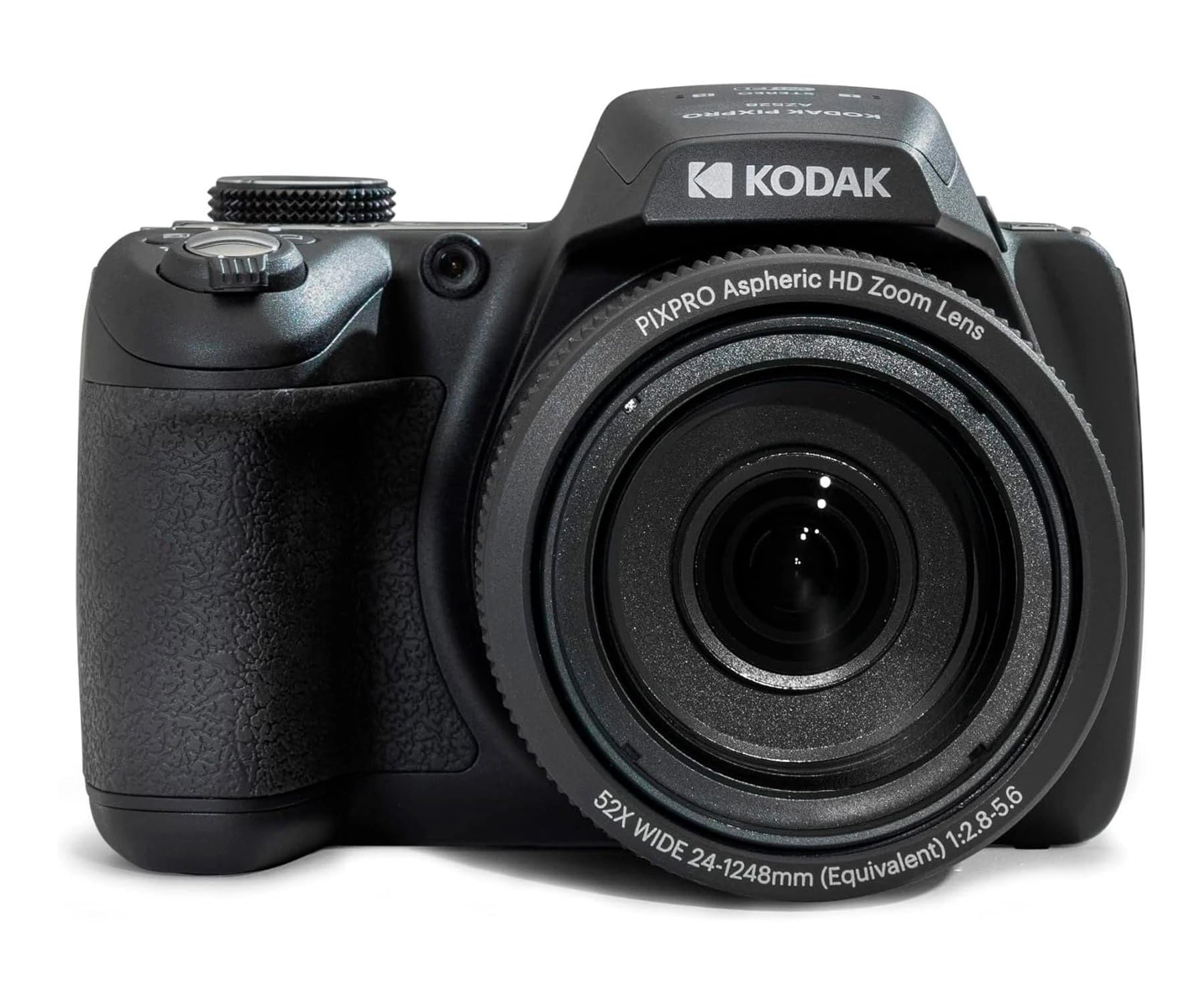
The Kodak PIXPRO AZ528 is a bridge camera that combines a massive 52x optical zoom (24-1248mm equivalent) with a built-in flash. The flash is essential for telephoto shots in dim conditions, as the narrow field of view at full zoom amplifies camera shake. The OIS (optical image stabilization) works in tandem with the flash to deliver sharp images. The 16MP BSI CMOS sensor performs adequately in good light, with usable results up to ISO 800.
Burst shooting at 6 fps is useful for capturing birds in flight or sports action. The built-in Wi-Fi lets you share images directly to your phone, and the 3-inch LCD provides a bright view for composing. The flash guide number is moderate, best for subjects within 8-10 meters at the wide end. For telephoto flash shots, you’ll need to be closer, but the zoom reach means you can often fill the frame without closing the physical distance.
Battery life is fair — about 200 shots per charge, with the flash draining it faster. The camera is lightweight for its zoom range, making it a good hiking companion. The main compromises are the small sensor, which struggles in very low light even with flash, and the slow contrast-detect autofocus. For the price, it offers tremendous zoom reach and a functional flash in a single package.
Why it’s great
- 52x optical zoom (24-1248mm) with OIS for handheld telephoto shots
- Built-in flash works at moderate distances for wildlife and events
- Lightweight bridge design — great for hiking and travel
- Built-in Wi-Fi for instant photo sharing
Good to know
- 16MP BSI CMOS sensor shows noise above ISO 800
- Slow contrast-detect autofocus in low light
- Flash recycle time increases with battery drain
7. Panasonic LUMIX FZ80D

The Panasonic LUMIX FZ80D pushes the superzoom envelope with a staggering 60x optical zoom (20-1200mm equivalent) and a built-in flash. The flash is integrated into the body and is adequate for moderate distances — ideal for lighting up a campsite or filling shadows on a portrait at the wide end. The POWER O.I.S. (Optical Image Stabilizer) is crucial here, as hand shake is amplified at the telephoto extreme. The 2,360k-dot large LVF viewfinder remains clear even in bright sunlight.
4K Video mode records at 30p, and the 4K Photo feature lets you extract 8MP stills from video — useful when you need to capture a decisive moment that the flash might otherwise miss. Post Focus is a standout feature: you can tap to select the focus point after the shot, which helps when flash illumination and focus don’t align perfectly on the first try. The 39-point contrast-detection autofocus is decent for a bridge camera, though not as snappy as phase-detection systems.
Battery life is about 300 shots, slightly less with heavy flash use. The camera accepts SD/SDHC/SDXC cards up to 512GB. Image quality from the 1/2.3-inch sensor is good in bright light but noisy at higher ISOs. The flash cannot be used during 4K video recording. For photographers who need extreme reach and a flash capable of lighting subjects at normal distances, the FZ80D offers exceptional versatility.
Why it’s great
- 60x zoom (20-1200mm) — one of the longest reaches available in a compact body
- POWER O.I.S. keeps telephoto shots sharp with or without flash
- Post Focus lets you adjust focus after capturing an image
- 4K Photo mode extracts stills from video bursts
Good to know
- Small sensor struggles with noise at high ISO
- Flash not usable during 4K video recording
- Battery life ~300 shots; drains faster with flash
8. Canon EOS 4000D / Rebel T100 Bundle
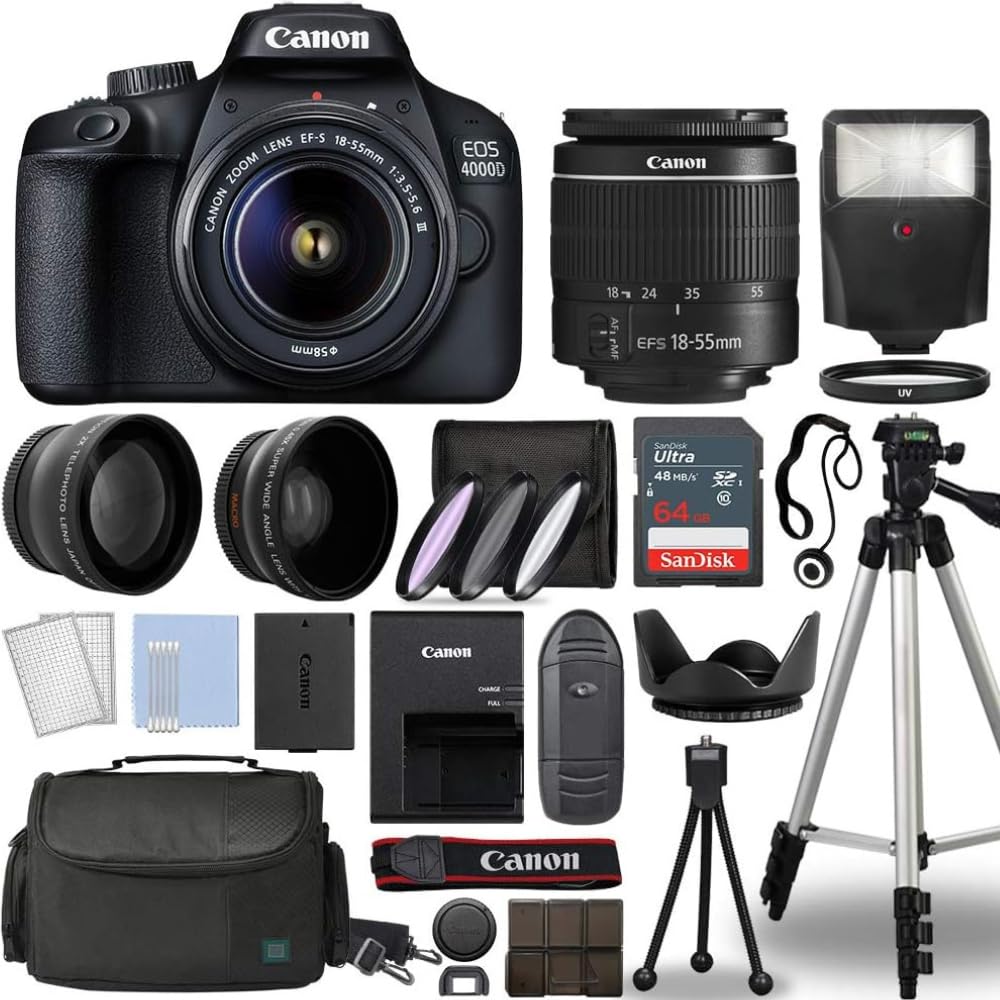
The Canon EOS 4000D (Rebel T100) is the most affordable entry into Canon DSLR ownership, and this bundle includes a dedicated flash unit alongside the camera and 18-55mm kit lens. The 18MP APS-C sensor is lower resolution than the T7 but still capable of producing nice prints and social media images. The bundled flash significantly outperforms the camera’s built-in pop-up flash, providing better reach and the ability to bounce light for softer portraits.
The 9-point autofocus system with AI Servo AF is basic but functional for learning. Scene Intelligent Auto and Creative Auto modes handle flash decisions automatically, making it very beginner-friendly. The bundle includes a 64GB SD card, tripod, filter kit, and case — everything a new photographer needs to start shooting with flash immediately. Wi-Fi is built in for transferring images to a smartphone.
The DIGIC 4+ processor and 3 fps burst rate are the main limitations, along with a small 2.7-inch 230k-dot LCD. Video is capped at 1080p 30 fps. For a shoestring budget, this is a complete flash photography learning kit. The bundled flash alone would cost a significant portion of the total package price if bought separately, making this a smart entry point for students or families.
Why it’s great
- Includes a dedicated external flash for better reach and bounce lighting
- Full bundle with 64GB card, tripod, case, and filters
- APS-C sensor delivers better image quality than any phone
- Wi-Fi connectivity for easy photo sharing
Good to know
- 18MP sensor with DIGIC 4+ is dated technology
- 2.7-inch LCD with low 230k-dot resolution
- 3 fps burst rate and 9-point AF are very basic
9. Jukanur 5K 96MP Digital Camera
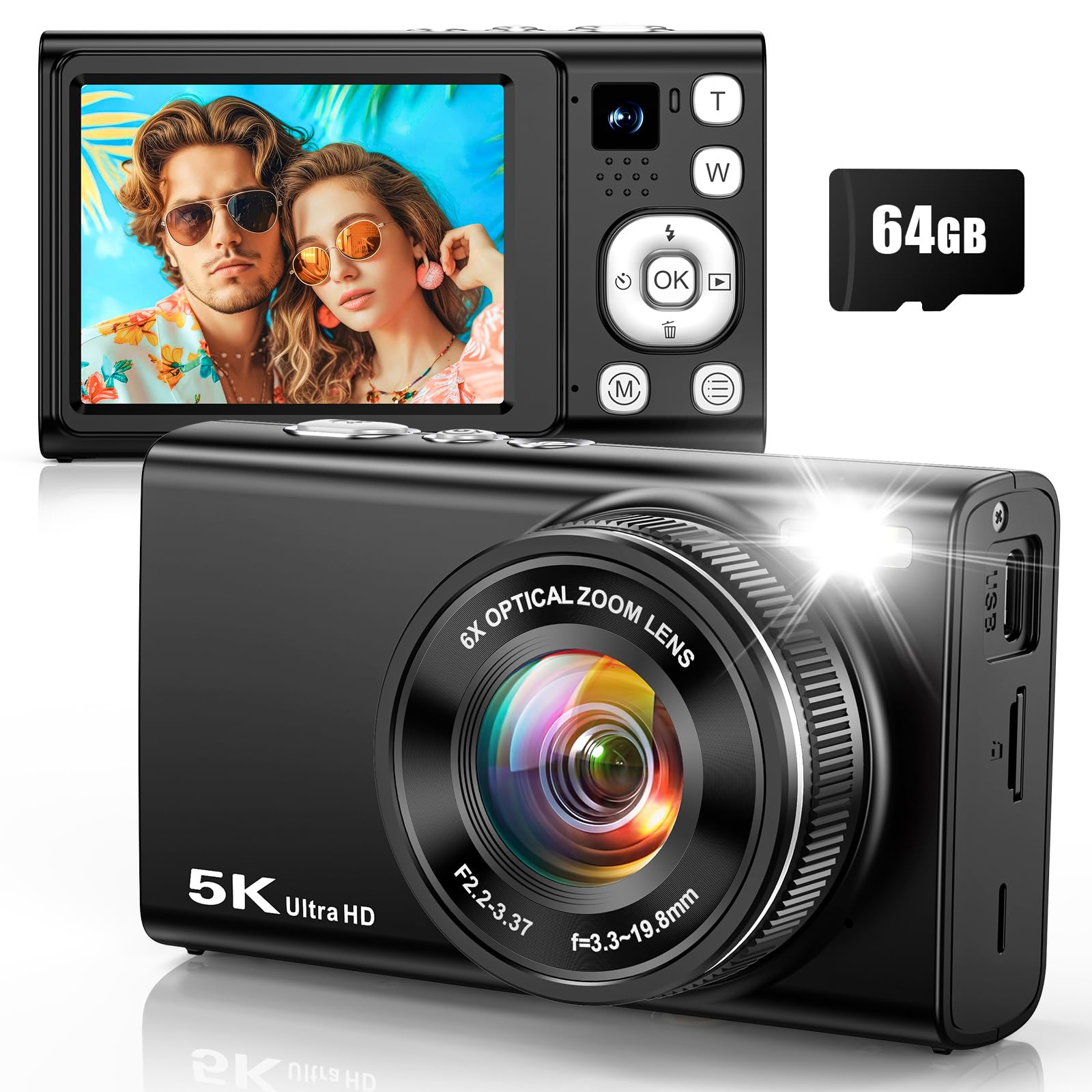
The Jukanur 5K 96MP camera is a budget-friendly point-and-shoot that includes a built-in flash and an impressive specification on paper: 5K video resolution, 6x optical zoom, and a 64GB micro SD card included. The flash is basic but functional for close-range subjects — think family gatherings in small rooms or filling shadows on a selfie at arm’s length. The IMX415 CMOS sensor is the same type used in some dashcams, so expect daytime images to be respectable but low-light quality to be limited.
The camera features front and rear dual lenses, making it easy to switch to selfie mode. Autofocus is present but slow compared to more expensive models, and the anti-shake feature helps reduce blur in moderately lit conditions. Multifunctional modes including time-lapse, slow-motion, and various filters add creative options. The date/time stamp feature is a nice touch for travel documentation.
The built-in battery removes the hassle of separate batteries — just plug in via USB to charge. User reviews are mixed, with some praising the value and ease of use for kids and teens, while others note poor battery life (about 2 hours) and inconsistent autofocus. For the absolute lowest entry point to a camera with flash and 5K capability, the Jukanur works well as a starter camera for young beginners or as a disposable-quality travel camera.
Why it’s great
- 5K video resolution at a very low entry price
- Includes 64GB card, built-in flash, and dual lens for selfies
- Multifunctional modes — time-lapse, slow-motion, filters
- No separate battery needed; USB rechargeable
Good to know
- Battery life about 2 hours; drains faster with flash use
- Autofocus is slow and inconsistent in low light
- Image quality is not comparable to branded compacts or DSLRs
FAQ
Can I use the built-in flash for professional portraits?
Will the flash drain the battery faster than normal shooting?
Why do my flash photos look orange or yellow?
What does “red-eye reduction” actually do?
Can I use the flash while recording 4K video?
Final Thoughts: The Verdict
For most users, the best digital cameras with flash winner is the Canon EOS R100 because it offers a versatile built-in flash plus a hot-shoe for future expansion, all within an affordable mirrorless system. If you want extreme zoom reach with flash, grab the Panasonic LUMIX FZ80D. And for premium pocketable image quality where flash is a secondary but capable tool, nothing beats the Sony RX100 VII.

Mo Maruf
I created WellFizz to bridge the gap between vague wellness advice and actionable solutions. My mission is simple: to decode the research and give you practical tools you can actually use.
Beyond the data, I am a passionate traveler. I believe that stepping away from the screen to explore new environments is essential for mental clarity and physical vitality.