Our readers keep the lights on and my smoothie glass nicely filled. As an Amazon Associate, I earn from qualifying purchases.
Shooting indoors at a birthday party or out in the backyard, the biggest fight you’ll have with a cheap camera isn’t the controls—it’s the blur. Low-light noise, slow autofocus, and digital zoom that turns a bird into a watercolor painting are the real pain points. The trick is finding a model that puts the majority of its budget into the lens and sensor, not into inflated megapixel numbers on the box.
I’m Mohammad Maruf — the founder and writer behind WellFizz. I’ve spent hundreds of hours cross-referencing spec sheets, customer build-quality reports, and real-world image samples to separate cameras that deliver crisp results from those that just look good on paper.
Whether you need a lightweight companion for travel vlogs or a simple point-and-shoot for everyday snapshots, this guide breaks down the nine strongest contenders to help you choose the right digital camera under $200 without wasting a dime on inflated marketing claims.
How To Choose The Best Digital Camera Under $200
Staying firmly below the $200 ceiling means you’re shopping for entry-level point-and-shoots, budget-friendly bridge cameras, and occasionally a renewed DSLR or mirrorless body that slipped through the pricing cracks. The compromise here is never about whether the camera can take a photo—it’s about how reliably it captures the shot you want in the light you’re actually shooting in.
Optical Zoom — The True Reach
Digital zoom simply crops and enlarges the center of the frame, discarding resolution and introducing pixelation. Optical zoom, by contrast, physically moves the lens elements to magnify the subject without sacrificing detail. In this price range, look for at least 5x to 6x optical zoom for general versatility. The Kodak PIXPRO AZ255’s 25x optical zoom is an outlier that provides serious reach for wildlife or sports, but most competitors at this level top out between 5x and 6x.
Sensor Size vs. Megapixel Count
A 44-megapixel sensor in a tiny 1/3-inch package will almost always deliver softer, noisier images than a 16-megapixel sensor in a larger 1/2.3-inch or APS-C format. Higher megapixels only benefit you if the sensor itself is large enough to absorb enough light per pixel. Ignore the headline number; look for the sensor type (CMOS vs. CCD) and, if listed, the physical sensor size. APS-C sensors found on renewed DSLRs like the Nikon D3200 completely outclass tiny smartphone-sized sensors.
Autofocus and Image Stabilization
In this category, autofocus can be the single biggest differentiator between a keeper and a throwaway shot. Contrast detection is the most common system at the budget level—it’s slow but usable in good light. Phase detection is faster and tracks moving subjects better. For stabilization, optical image stabilization (OIS) physically shifts a lens element to counteract shake, while digital stabilization crops the frame and tries to smooth it out. OIS will always deliver cleaner handheld video and sharper low-light stills.
Quick Comparison
On smaller screens, swipe sideways to see the full table.
| Model | Category | Best For | Key Spec | Amazon |
|---|---|---|---|---|
| Nikon D3200 (Renewed) | DSLR | Learning manual controls & interchangeable lenses | 24.2MP APS-C CMOS sensor | Amazon |
| Kodak PIXPRO FZ55 Bundle | Point & Shoot | Family snapshots & travel simplicity | 16MP 1/2.3″ CMOS + 5x optical zoom | Amazon |
| YiFuar 8K 88MP | Vlogging | Video content & WiFi sharing | 18x digital zoom + 3″ flip screen | Amazon |
| Kodak PIXPRO AZ255 | Bridge | Long-range shooting & vlogging | 25x optical zoom + OIS | Amazon |
| FlyFrost 8K | Vlogging | Touchscreen control & dual batteries | 8K video + 3.2″ touch screen | Amazon |
| Nsoela 5K WiFi | Compact | WiFi transfers & pocket size | 5K video + 6x optical zoom | Amazon |
| Jukanur 5K 96MP | Compact | Beginner value & included 64GB card | 5K video + 6x optical zoom | Amazon |
| Minolta MND20 | Compact | Gift for teens & lightweight carry | 44MP stills + 2.7K video | Amazon |
In‑Depth Reviews
1. Nikon D3200 24.2MP DSLR with 18-55mm Lens (Renewed)
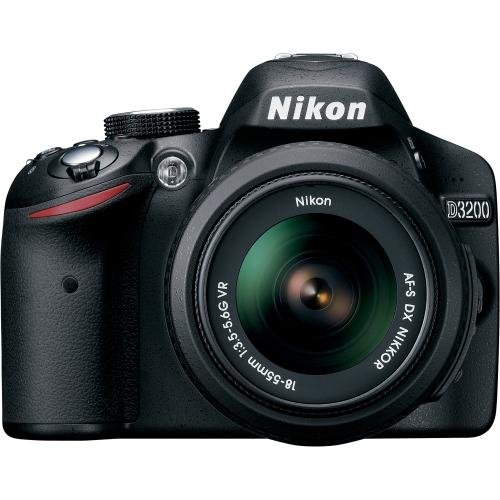
The Nikon D3200 is a certified refurbished DSLR that brings a true 24.2-megapixel APS-C CMOS sensor—dramatically larger than any sensor found in a sub-$200 point-and-shoot. That larger sensor area translates directly into better low-light performance, more natural background blur (bokeh), and the ability to crop heavily without turning your image into noise. The bundled AF-S DX NIKKOR 18-55mm f/3.5-5.6 zoom lens covers standard wide-to-portrait focal lengths with solid sharpness.
Autofocus relies on an 11-point phase-detection system through the optical viewfinder, which is fast enough for kids and pets in good light. The 3-inch 921K-dot LCD screen is bright and sharp for review. One-touch 1080p Full HD video at 30 fps gives you clean footage, though tracking autofocus during video is basic. The DIGIC-equivalent EXPEED 3 processor keeps burst shots flowing at 4 frames per second.
The key catch is that this is a renewed unit—cosmetic wear is likely, and the included battery may be a third-party replacement rather than an original Nikon. There is no built-in WiFi, so transferring photos requires a card reader or an optional dongle. The 18-55mm lens provides no stabilization itself, so you rely on the camera’s sensor or your own hand-holding technique for steady shots.
Why it’s great
- Large DX-format APS-C sensor for genuine low-light capability and depth of field control
- True optical viewfinder with fast 11-point phase-detect autofocus
- Interchangeable lens system lets you grow beyond the kit lens
Good to know
- Refurbished unit may show cosmetic wear and include a third-party battery
- No built-in WiFi or Bluetooth for instant photo transfer
- Kit lens lacks optical image stabilization
2. Kodak PIXPRO FZ55 Bundle (Black)
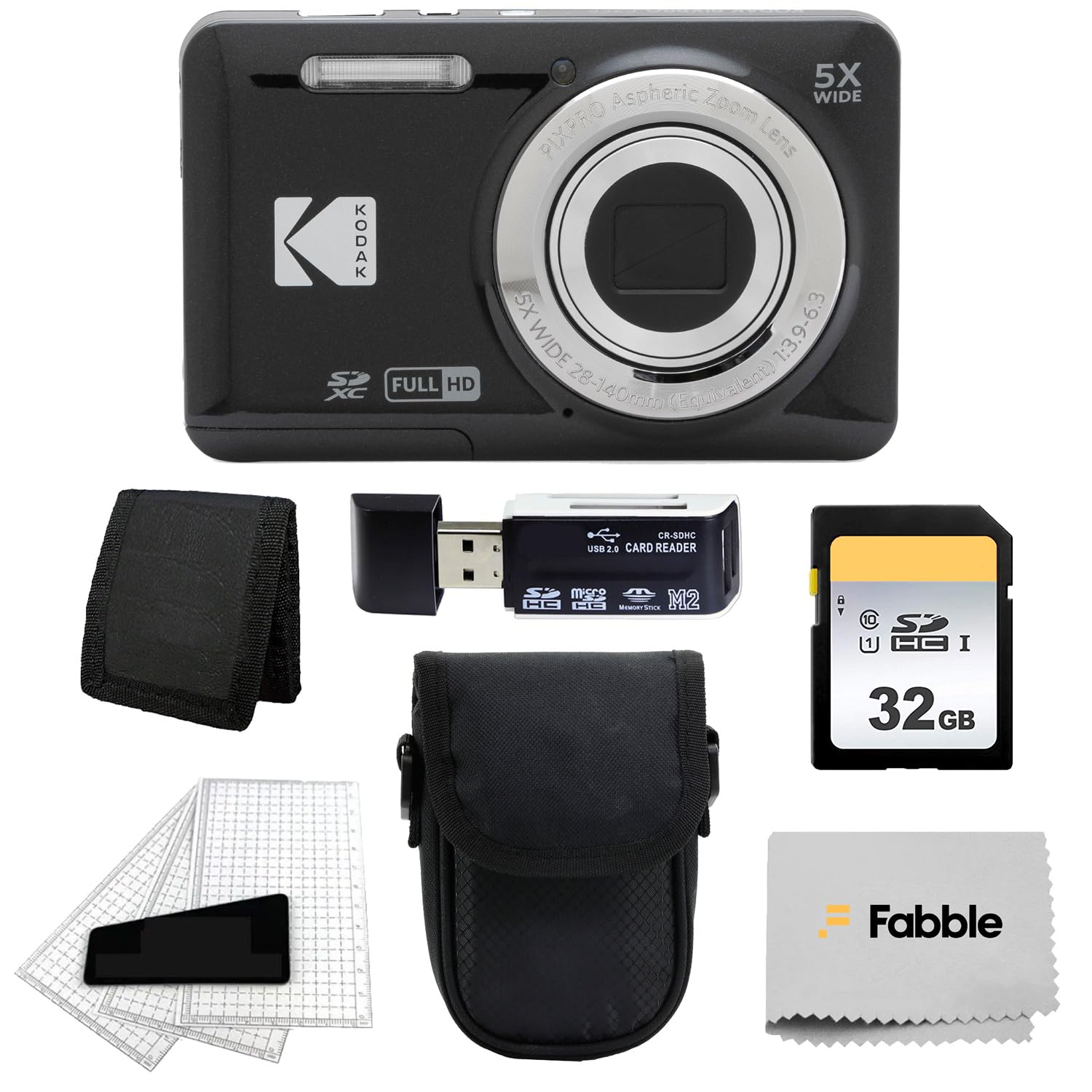
The Kodak PIXPRO FZ55 is a straightforward 16-megapixel point-and-shoot with a 28mm wide-angle lens and 5x optical zoom, capturing clean 1080p Full HD video at 30 fps. The 1/2.3-inch CMOS sensor is the standard size for this class, but the bundle—including a 64GB UHS-I U3 SD card, card reader, case, and screen protectors—means you’re ready to shoot out of the box without buying extra accessories. The digital image stabilization helps reduce minor hand shake but can’t match optical stabilization for smooth video.
Operation is refreshingly simple: a dedicated mode dial offers scene presets, panorama, and program auto without buried menus. Face and smile detection work reliably in good daylight, and the built-in flash provides usable fill light indoors up to about 10 feet. The 2.7-inch LCD is smaller than average, but it’s bright enough for outdoor framing. Battery life from the included rechargeable lithium-ion cell is adequate for a day of casual family shooting, roughly 200-250 shots per charge.
The optical zoom range is modest compared to superzoom competitors. At 5x, you can fill the frame with a basketball player at half-court but not a bird across a pond. The lens is not particularly fast at the telephoto end (f/6.8), which forces higher ISO or slower shutter speeds in dim conditions. The plastic body feels light and a bit hollow, though it survives a few drops from waist height with no damage.
Why it’s great
- All-in-one bundle with 64GB U3 card, case, reader, and screen protectors included
- Simple mode dial and scene presets ideal for beginners and seniors
- 28mm wide-angle lens fits more into the frame for group shots and landscapes
Good to know
- 5x optical zoom is limited vs bridge cameras—not suitable for distant wildlife
- Plastic body feels less substantial than metal-frame alternatives
- LCD is only 2.7 inches, small for precise manual focus review
3. YiFuar 8K 88MP Digital Camera with 18x Zoom
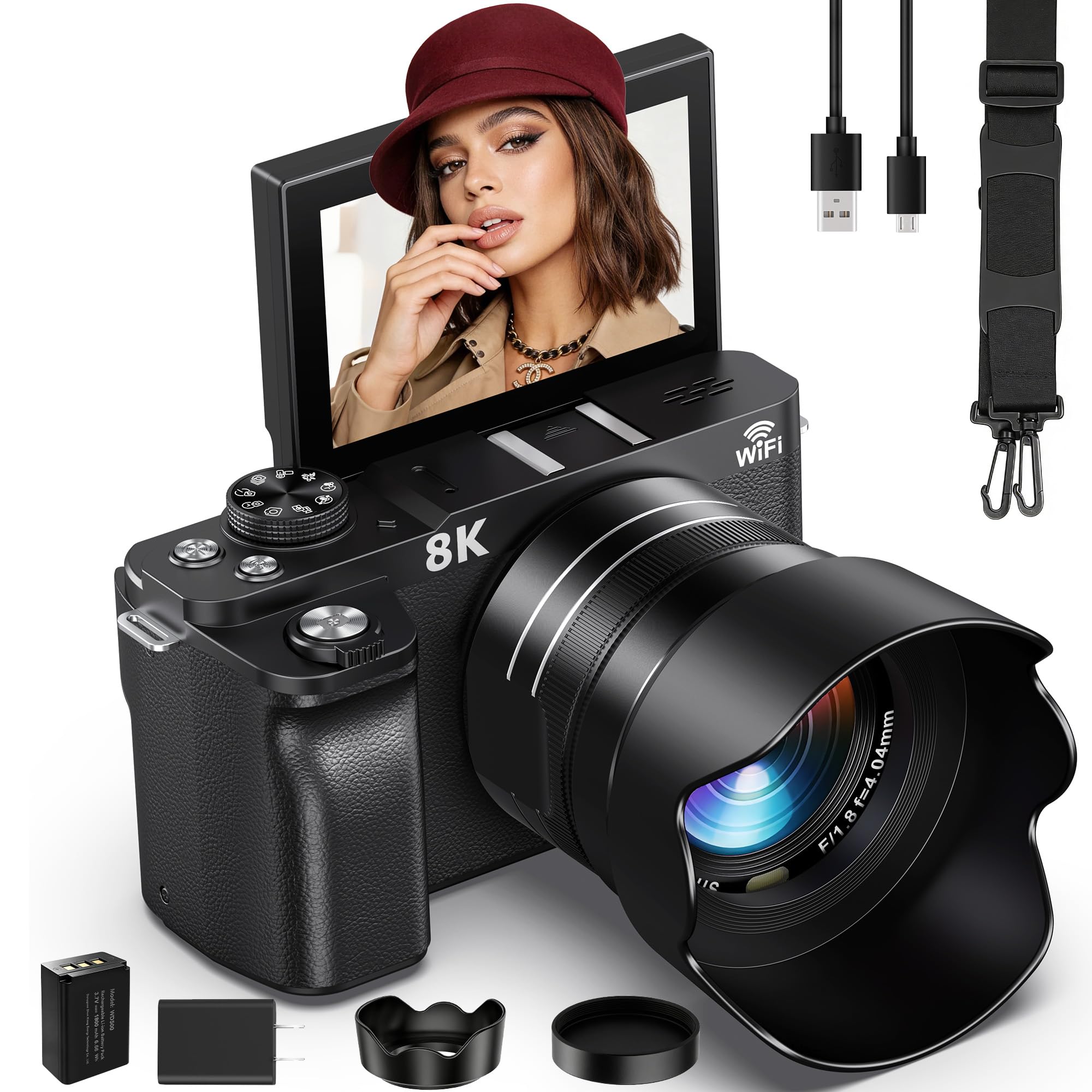
The YiFuar 8K camera targets the vlogging crowd with a 3-inch IPS screen that flips 180 degrees for self-framing, a built-in flash, and an 88-megapixel still mode that produces large, detailed files suitable for social media posting. The 18x digital zoom, however, is purely cropping-based—zoom past about 5x and sharpness drops noticeably. The real story here is the bundled kit: a 2500mAh rechargeable battery, a 64GB SD card, a lens hood, and a cleaning cloth make this a nearly self-contained starter studio.
The hybrid autofocus system offers three modes—auto, semi-manual, and fixed focus—giving you some control over focal point in tricky lighting. WiFi connectivity via the companion app allows quick photo transfers and remote shutter control, which is handy for group shots or tripod-based vlogs. The camera also doubles as a UHD webcam for streaming, using the same 8K sensor to deliver crisp 1080p video to your computer over USB.
Build quality is where the budget constraints show: the body is entirely plastic and the buttons feel soft with vague click feedback. In low light, the sensor introduces noticeable grain even at moderate ISO settings. The claimed 8K resolution is interpolated rather than native, so you won’t get true 8K sharpness—expect 4K-equivalent detail in practice. Battery life with the 2500mAh cell lasts roughly 3 hours of continuous use, which is solid for this bracket.
Why it’s great
- 180-degree flip screen makes self-framing and vlogging effortless
- Large 2500mAh battery lasts longer than most compact cameras in this class
- Comprehensive bundle includes lens hood, 64GB card, and webcam functionality
Good to know
- 18x zoom is digital only; image quality degrades quickly beyond 5x reach
- Button feel is soft and plastic body lacks premium texture
- 8K video is interpolated, not native sensor resolution
4. Kodak PIXPRO AZ255 25x Optical Zoom

The Kodak PIXPRO AZ255 is a bridge camera that brings 25x optical zoom (24-600mm equivalent) into a sub-$200 budget—by far the longest reach available in this price range. That zoom range is paired with optical image stabilization (OIS) that compensates for hand shake at the telephoto end, where even small movements create major frame wobble. The 16-megapixel CMOS sensor captures 1080p Full HD video at 30 fps with decent color reproduction in bright outdoor conditions.
The 3-inch LCD screen is large and clear, though it is fixed and cannot tilt or flip. Autofocus uses contrast detection with multi-area and sensor-based modes; it hunts a bit in dim conditions but locks quickly in daylight. The camera runs on four AA batteries, which is a double-edged sword—it’s easy to swap in fresh cells anywhere, but battery life is limited to about 250 shots with alkaline batteries. The body is larger than any compact here, so it won’t slip into a jeans pocket, but the deep grip makes one-handed shooting comfortable.
The lens at full 25x zoom is slow (f/6.5 at the long end), meaning you need good sunlight to maintain shutter speeds above 1/100s. Wide-angle macro mode down to 1 cm is a pleasant surprise for detail shots of flowers or small objects. The camera lacks a hot shoe or external mic port, so vloggers must rely on the internal mono microphone for audio. The menu system is straightforward, with dedicated buttons for ISO, EV, and white balance adjustments.
Why it’s great
- 25x optical zoom (24-600mm equivalent) offers unmatched reach for this price tier
- Optical image stabilization effectively smooths handheld shots at full zoom
- AA battery power means instant replacement anywhere, no proprietary charger needed
Good to know
- AA alkaline batteries drain quickly; rechargeable NiMH cells recommended for regular use
- Fixed, non-articulating LCD screen limits creative angles and self-framing
- No external microphone input or hot shoe for accessory expansion
5. FlyFrost 8K 88MP Digital Camera with 16x Zoom
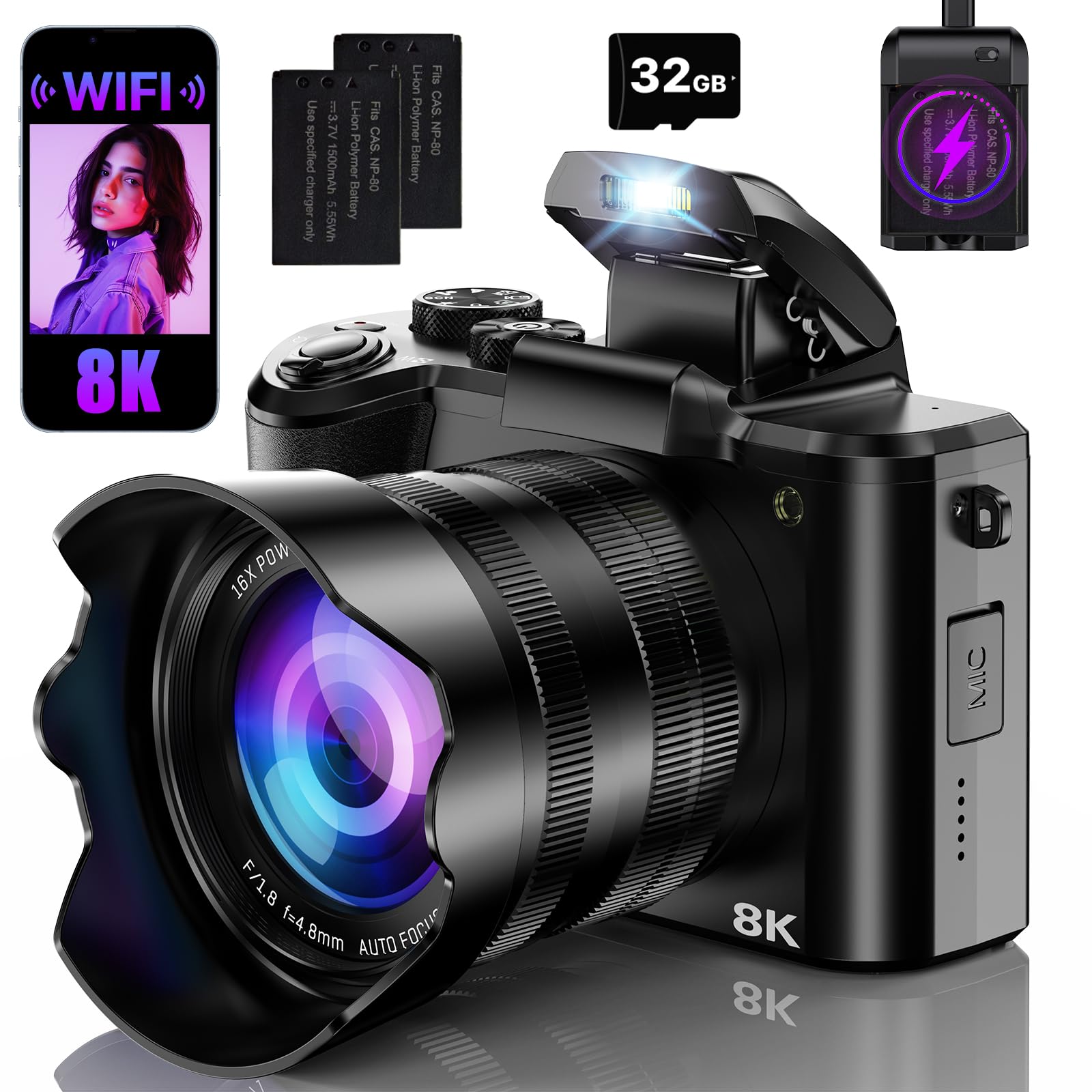
The FlyFrost 8K camera distinguishes itself with a 3.2-inch IPS touch screen, which allows gesture-based controls such as pinch-to-zoom during playback and tap-to-focus while shooting. The 88-megapixel still mode and 8K video capture are both interpolated—real-world output is closer to good 4K-quality in bright conditions—but the flexibility of the touch interface makes adjusting settings faster than scrolling through button menus. The 16x digital zoom shares the same cropping limitation as others in this tier but works fine for framing at moderate distances.
WiFi transfer via the “iSmart DV2” app enables quick photo sharing to a phone, though the app interface could be streamlined. The dual-lens design includes both front and rear cameras, letting you switch between standard shooting and selfie mode with a single tap on the screen. The package includes two rechargeable lithium-polymer batteries and a charging stand, effectively eliminating battery anxiety for a full day of shooting. The built-in flash fires automatically in low light and is adjustable for fill vs. full power.
Low-light performance is this camera’s weakest point. The fixed f/2.2 aperture sounds fast, but without a larger physical sensor, images show noticeable noise above ISO 800. The plastic chassis feels lightweight but the tactile texture on the grip area helps with stability. The 360-degree rotary dial on top switches between eight shooting modes (auto, program, portrait, landscape, slow motion, time-lapse, scene, and filters) quickly, though the dial can be accidentally turned when pulling the camera out of a bag.
Why it’s great
- Large 3.2-inch touch screen with gesture controls speeds up menu navigation
- Two batteries plus a charging stand keep you shooting all day without downtime
- 360-degree mode dial offers quick access to eight distinct shooting modes
Good to know
- 8K video and 88MP stills are interpolated, not native sensor resolutions
- Digital zoom crops aggressively, detail degrades past mid-range
- Fixed plastic lens—no optical zoom available, only digital cropping
6. Nsoela 5K WiFi Digital Camera with 6x Optical Zoom
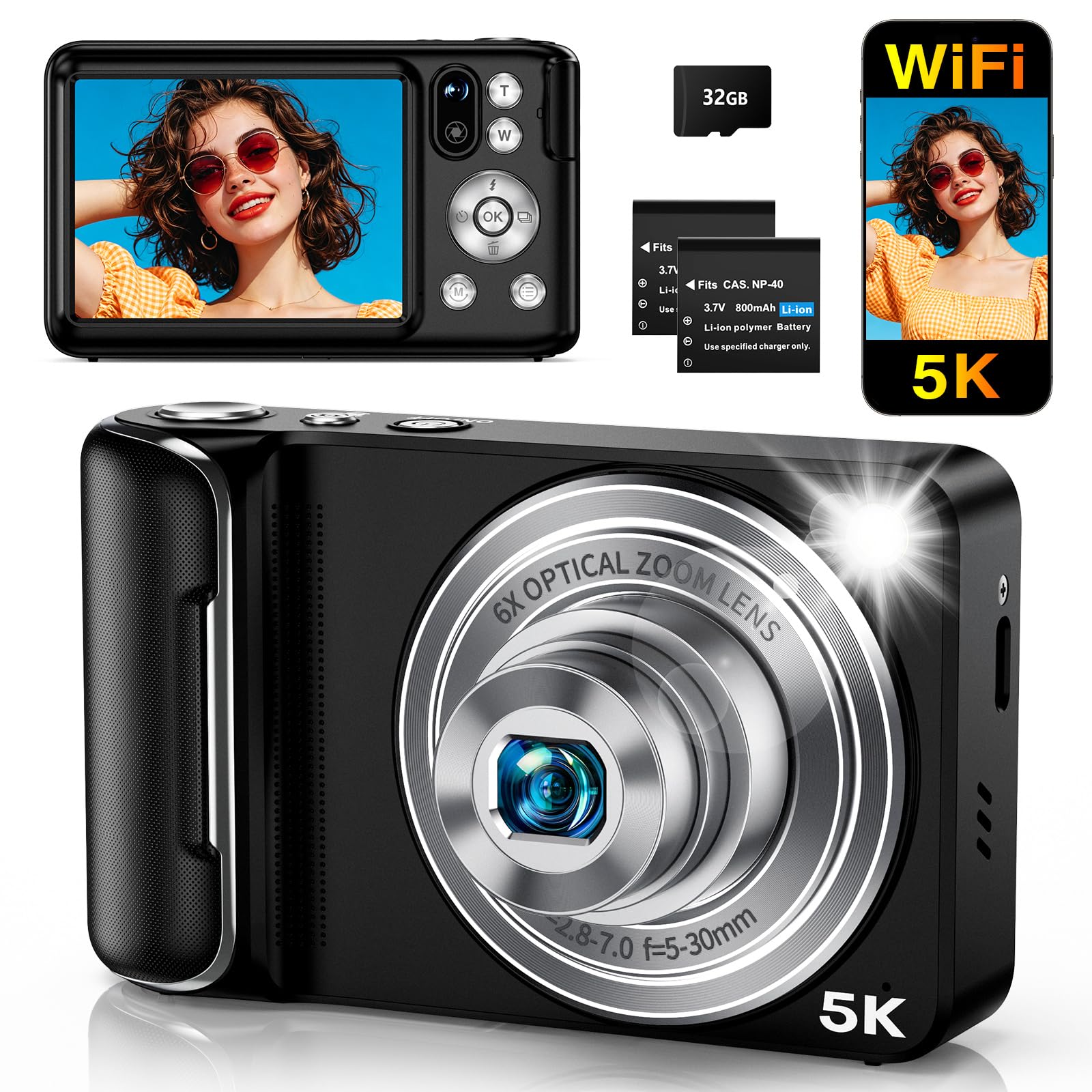
The Nsoela 5K camera brings genuine 6x optical zoom to the table, meaning you can reach distant subjects without the resolution decay that plagues digital-only zoom. The 64-megapixel still mode is interpolated, but the 5K video sensor does capture higher detail than standard 1080p. The 2.8-inch IPS touch screen supports swipe and pinch gestures, making it easy to scroll through photos and tap to set focus points during filming.
Built-in WiFi connects to the Viipulse app for remote viewing, remote capture, and one-tap downloads of original-quality footage. The camera also doubles as a webcam via USB-C, supporting live streaming and video calls with the ability to switch between the front and rear lenses. The package includes two rechargeable batteries, a 32GB microSD card, a camera case, and a neck strap—everything you need to start shooting immediately.
Autofocus is fast in good light but struggles in dim conditions, occasionally hunting for a few seconds before locking. The auto-opening dust- and scratch-resistant lens cover is a thoughtful touch—it removes the need for a separate lens cap and eliminates the risk of forgetting to remove it before a shot. The textured anti-slip grip is comfortable for one-handed use during long walking shoots. Battery life is rated for about 2.5 hours of continuous recording; the record-while-charging function via the Type-C port is a lifesaver for extended vlogging sessions.
Why it’s great
- True 6x optical zoom provides sharp distant shots without resolution loss
- WiFi app integration enables remote capture and fast photo transfer
- Auto-opening lens cover eliminates the need for a removable cap
Good to know
- Autofocus hunts noticeably in low-light indoor conditions
- 64MP still resolution is interpolated, not native sensor performance
- Included 32GB card is small for extended 5K video recording
7. Jukanur 5K 96MP Digital Camera with 6x Optical Zoom
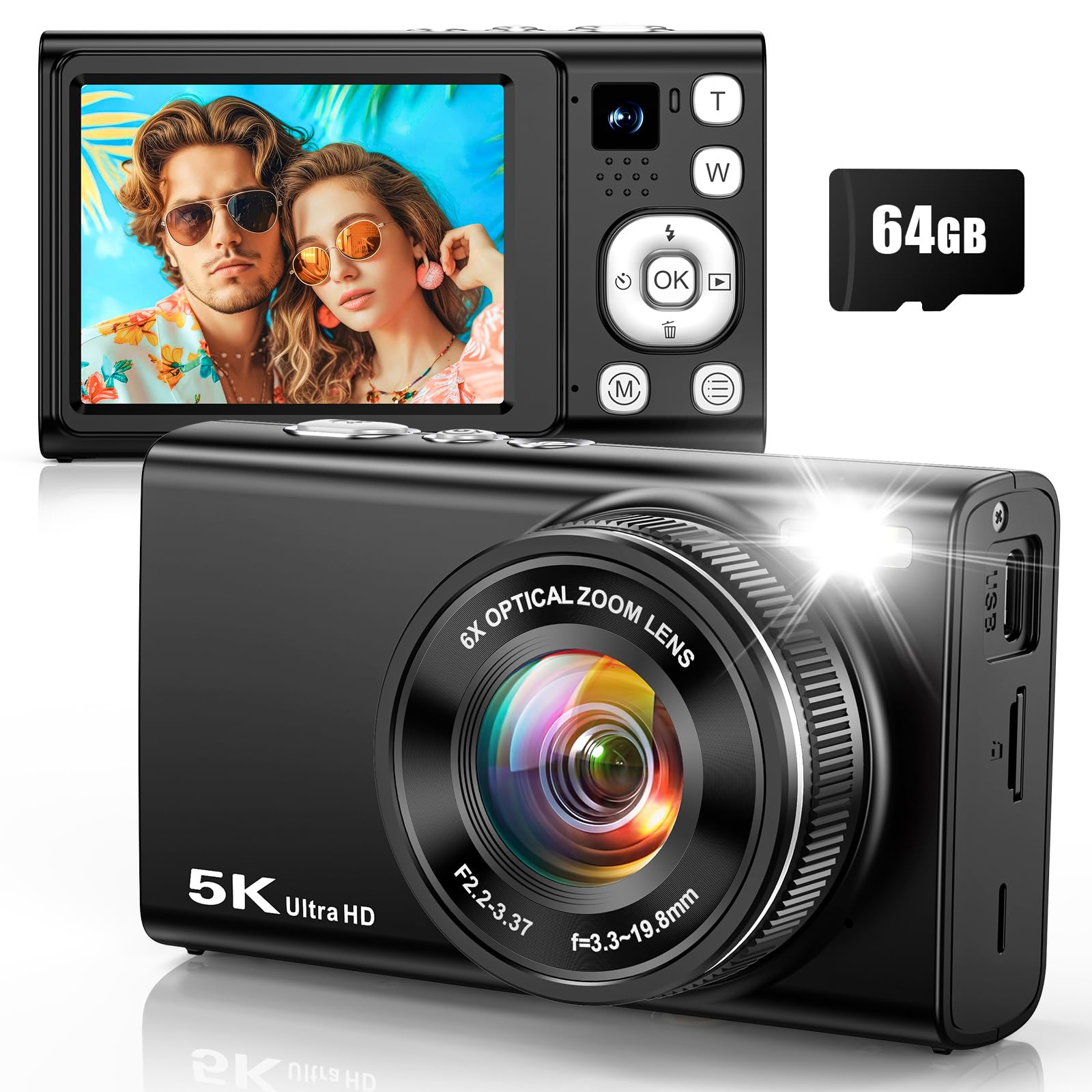
The Jukanur 5K camera is one of the most aggressive value propositions in this guide, pairing a 6x optical zoom lens with a 96-megapixel interpolated still mode and native 5K video recording. The IMX415 CMOS sensor is the same base sensor used in many dashcams and action cams, giving it decent dynamic range for outdoor shots. The built-in anti-shake function and flashlight assist handheld shooting in low light, though the anti-shake is digital and will crop the frame slightly to smooth out movement.
First-time camera users will appreciate the beginner-friendly interface: dedicated buttons for date/time stamp, white balance, exposure compensation, and continuous shooting sit within easy reach. The smile and face detection modes work well for family group shots, automatically triggering the shutter when subjects smile. Time-lapse and slow-motion modes add creative flexibility without needing to learn complex post-processing software. The 64GB microSD card included right in the box means you’re shooting immediately with no additional purchase—a noticeable advantage over competitors that ship with only 32GB.
A small percentage of user reports mention inconsistent autofocus performance, with some units delivering blurry images or a battery life of only around two hours during continuous use. The plastic construction feels light, but the micro Four Thirds compatible mounting system is essentially a standard tripod thread—there’s no interchangeable lens system despite that listing detail. The lens cap is a separate piece that must be removed manually, so there’s a risk of accidentally shooting with the cap on until you build the habit.
Why it’s great
- True 6x optical zoom gives sharp at-distance shots without digital cropping
- Generous 64GB memory card included for hours of video and thousands of photos
- Face and smile detection automates group shots and selfies reliably
Good to know
- Inconsistent autofocus performance reported on some units
- Separate manual lens cap increases risk of shooting covered frames
- Flagged “Micro Four Thirds compatible mount” is just a tripod socket, not a lens system
8. Minolta MND20 44MP Digital Camera
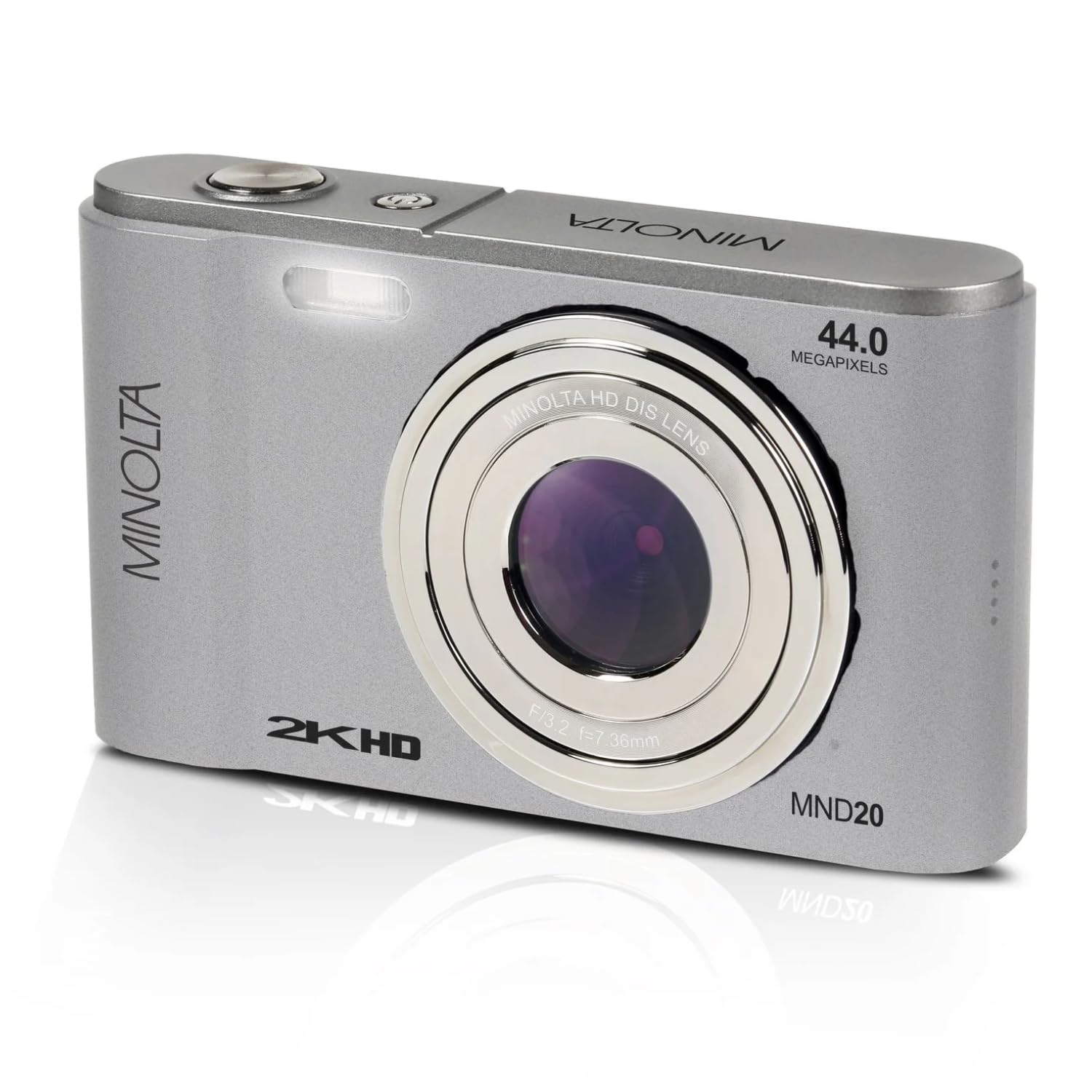
The Minolta MND20 trades on the historic brand name to deliver a compact pocket camera with a 44-megapixel CMOS sensor and 2.7K Quad HD video recording—a step above basic 1080p. The 16x digital zoom is a marketing number; effective detail starts falling off at around 4x, but the panorama, photo burst, and scene preset modes give young users creative options without needing to edit on a computer. The 2.9-inch LCD screen is nice and large for the body size, making it easy for kids and teens to frame their shots accurately.
Anti-shake stabilization reduces blur from gentle hand shake, though it struggles with active children or pets moving through the frame. Face and smile detection work well in good daylight—the camera reliably triggers when the subject grins, which adds a playful element to candid shots. Time-lapse mode supports adjustable intervals, turning a sunset or busy street into a short clip. The camera weighs only 8 ounces, so it’s genuinely pocketable in a jacket pocket or large purse.
The fixed focus lens has no manual focus ring and no manual aperture control—everything is fully automatic. In low light, the f/3.2 fixed aperture forces high ISO, producing soft and flat colors. The 44MP number is interpolated; actual EXIF data shows the native sensor output is closer to 12-14 megapixels. Battery life is the weakest point here: the proprietary lithium-ion battery drains in about 90 minutes of continuous use, and replacement batteries require ordering a Minolta-specific model. This is best thought of as a fun, inexpensive toy for a young photographer taking their first steps.
Why it’s great
- Very lightweight at 8 ounces—easy for kids, teens, or travel carry
- Smile capture and panorama modes make photography interactive and fun
- Time-lapse and burst shooting modes provide creative variety
Good to know
- 44MP is interpolated from a much lower native sensor resolution (approx. 12MP)
- Proprietary battery drains quickly and requires a specific replacement model
- Fixed focus with no manual aperture or focus adjustment
FAQ
Is the Nikon D3200 worth buying renewed instead of a new point-and-shoot?
What does “interpolated resolution” mean on these budget cameras?
Can I use a camera under $200 for professional photography?
Why does the Kodak PIXPRO AZ255 use AA batteries instead of a rechargeable pack?
Do these budget cameras shoot good video for YouTube vlogging?
Final Thoughts: The Verdict
For most users, the digital camera under $200 winner is the Nikon D3200 (Renewed) because its APS-C sensor delivers genuinely superior image quality and the ability to change lenses later. If you want long-range zoom without swapping lenses, grab the Kodak PIXPRO AZ255. And for a beginner or teen who wants a simple, lightweight starter with a flip screen and WiFi, the YiFuar 8K is the best balance of features and price.

Mo Maruf
I created WellFizz to bridge the gap between vague wellness advice and actionable solutions. My mission is simple: to decode the research and give you practical tools you can actually use.
Beyond the data, I am a passionate traveler. I believe that stepping away from the screen to explore new environments is essential for mental clarity and physical vitality.