Our readers keep the lights on and my smoothie glass nicely filled. As an Amazon Associate, I earn from qualifying purchases.
Finding a usable digital camera that doesn’t drain your wallet is harder than it sounds. Most budget-tier options cut corners on autofocus speed, zoom range, and low-light performance — leaving you with grainy, frustrating results just when you want to capture a candid moment. The trick is knowing which specific specs actually matter at this price point and which are just marketing numbers on the box.
I’m Mohammad Maruf — the founder and writer behind WellFizz. I’ve spent hours dissecting sensor resolutions, optical vs. digital zoom claims, and real-world battery endurance across the current market to separate the worthwhile cameras from the forgettable ones.
Whether you need a travel companion for vacation snaps or a simple vlogging tool for social posts, this guide to the best digital camera under $100 highlights seven models that deliver real image quality without forcing you to overspend.
How To Choose The Best Digital Camera Under $100
Cameras in this price bracket share one thing — tight manufacturing costs. The difference between a great budget camera and a disappointing one comes down to how the manufacturer prioritized three core components: the lens, the sensor, and the autofocus system. Ignore the inflated megapixel numbers and look at what actually affects your shot.
Optical Zoom vs. Digital Zoom: Spot the Real Difference
Optical zoom uses physical lens movement to magnify a subject without losing detail. Digital zoom simply crops and enlarges the center of the image, which lowers resolution. At under $100, a camera with 4X or 5X optical zoom will outperform any model that only lists a digital zoom number — regardless of how high that digital figure reads. For example, the Kodak PIXPRO FZ55 offers 5X optical zoom, while many cheaper options rely entirely on digital interpolation.
Autofocus: Don’t Assume It’s Included
Several low-cost cameras use fixed-focus lenses, meaning everything beyond a certain distance is in focus but near objects stay blurry. True autofocus — especially contrast-detection or phase-detection autofocus — locks onto your subject and adjusts the lens automatically. If you’re shooting portraits or close-up details, a camera with real autofocus like the Nsoela 5K model is worth the extra money over a fixed-focus alternative.
Sensor Size and Technology: CMOS vs. Older Types
CMOS sensors dominate the modern market because they produce cleaner images in varied lighting while consuming less power. Some ultra-cheap cameras still use older CCD sensors that struggle in dim environments and drain batteries faster. Check the technical specs for “CMOS” explicitly — models like the Kodak PIXPRO FZ45 use CMOS sensors, giving you better dynamic range and less noise than budget cameras from a decade ago.
Quick Comparison
On smaller screens, swipe sideways to see the full table.
| Model | Category | Best For | Key Spec | Amazon |
|---|---|---|---|---|
| Nsoela 5K Touch | Mid-Range | Vlogging & Zoom | 6X Optical Zoom | Amazon |
| Demofit DC080 5K | Mid-Range | WiFi Sharing | 75MP Resolution | Amazon |
| Kodak PIXPRO FZ55 | Premium | Everyday Snaps | 5X Optical Zoom | Amazon |
| Kodak PIXPRO FZ45 | Premium | Value Optical Zoom | 4X Optical Zoom | Amazon |
| CAMKORY 4K 64MP | Value | Beginner Kit | 16X Digital Zoom | Amazon |
In‑Depth Reviews
1. Nsoela 5K Digital Camera with Touch Screen
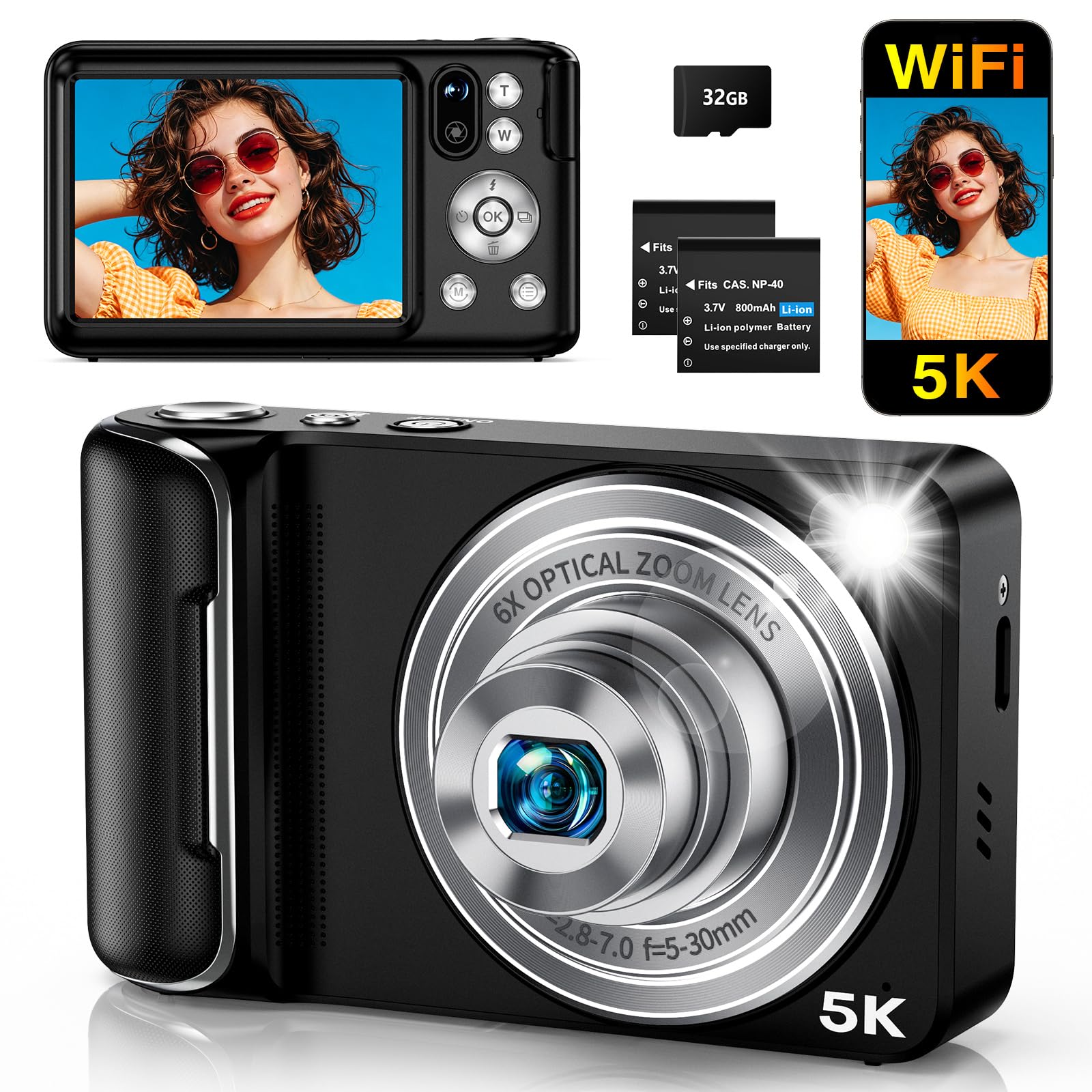
This camera sits at the top because it delivers the one spec that actually matters on a budget — 6X optical zoom paired with a functional autofocus system. Most cameras at this price point rely on digital cropping, but the Nsoela allows you to pull in distant subjects without losing resolution. The 5K video recording and 64MP stills are competitive for the tier, and the dual-lens design makes switching between front-facing and rear-facing shots effortless for vloggers.
The 2.8-inch IPS touchscreen handles pinch-to-zoom and swipe gestures, which is rare in this bracket. It also supports record-while-charging through a USB-C connection, allowing extended video sessions when connected to a power bank. The bundled 32GB SD card and two rechargeable batteries mean you can shoot immediately without extra purchases.
The autofocus on this unit uses contrast detection that works well in good light but can hunt in dim conditions. Some users reported occasional zoom jams, though this appears to be an isolated quality-control issue rather than a widespread design flaw. For the combination of optical zoom, touch controls, and real autofocus, this is the most balanced pick under the budget cap.
Why it’s great
- Genuine 6X optical zoom retains detail at distance
- Touchscreen interface is responsive and intuitive
- Includes two batteries and a 32GB card ready out of the box
Good to know
- Autofocus struggles in low-light scenarios
- Menus require some learning time initially
- Occasional reports of zoom mechanism sticking
2. Demofit DC080 5K Digital Camera
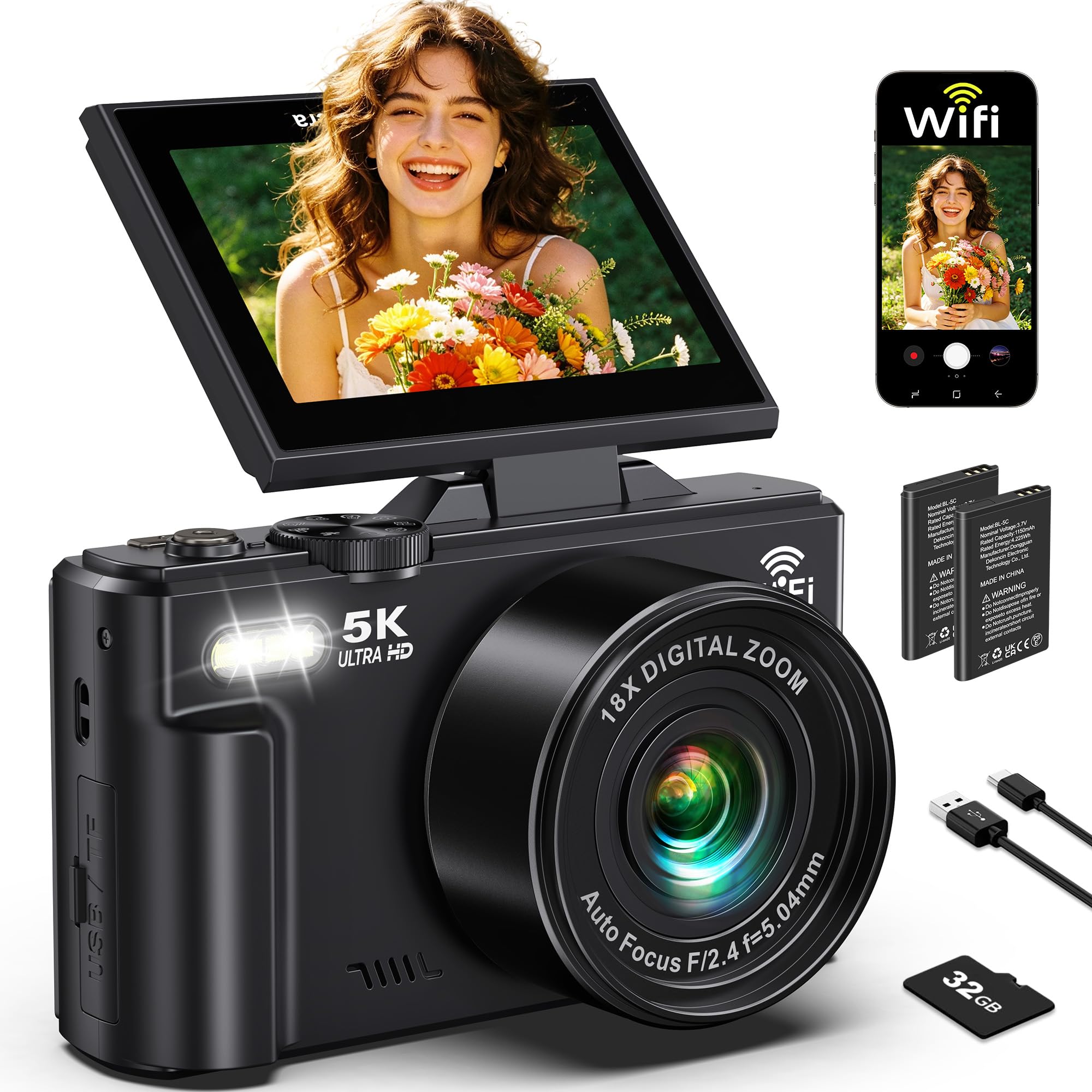
The Demofit DC080 distinguishes itself with a 3-inch IPS flip screen that rotates 180 degrees, making it ideal for selfies and solo vlogging where you need to see the frame. It captures 75MP photos and records 5K video using a 1/3-inch CMOS sensor — the same sensor type found in many mid-range point-and-shoot cameras. The 18X digital zoom is interpolated, but the fast autofocus helps keep subjects sharp in normal shooting ranges.
Built-in WiFi sets this model apart from many competitors in the same cost tier. The wireless transfer function sends photos directly to your phone, bypassing the need for a card reader or USB cable. It also functions as a webcam for live streaming or video calls. The package includes two large-capacity batteries and a 32GB SD card, so you get a complete shooting kit without hidden add-ons.
The digital zoom at maximum extension introduces visible grain, and the autofocus can be hesitant in rapidly changing lighting. The plastic body feels light but not premium. That said, the flip screen and WiFi capability make it a strong choice for content creators who prioritize sharing speed over raw image fidelity.
Why it’s great
- 180-degree flip screen is excellent for framing selfies
- WiFi transfer works reliably with the companion app
- Includes two batteries and a memory card
Good to know
- Digital zoom degrades image quality at full extension
- Build materials feel somewhat plastic
- Autofocus hunts in mixed lighting conditions
3. Kodak PIXPRO FZ55

The Kodak PIXPRO FZ55 brings a 5X optical zoom lens with a 28mm wide-angle equivalent — a genuinely useful focal range for group photos, landscapes, and indoor shots. It uses a 16MP CMOS sensor paired with digital image stabilization to reduce blur from handheld movement. The rechargeable lithium-ion battery eliminates the need for disposable AA replacements, a common annoyance with older budget cameras.
This camera records 1080p Full HD video, which is sufficient for social media clips and family memory preservation. The 2.7-inch LCD screen is not a touchscreen, but the physical button layout is straightforward enough for beginners and older users who prefer tactile controls. It accepts SD, SDHC, and SDXC cards up to 512GB, giving you ample room for thousands of photos without swapping cards.
The PIXPRO FZ55 lacks WiFi and a flip screen, so wireless sharing and selfies require extra steps. The video quality, while functional, does not match the higher-resolution options seen on newer budget cameras. For someone who values optical zoom and brand reliability over flashy features, this Kodak remains a top-tier option in its price bracket.
Why it’s great
- True 5X optical zoom with a wide-angle starting point
- Rechargeable Li-ion battery included — no AA batteries needed
- Kodak brand reliability and straightforward physical controls
Good to know
- No WiFi or Bluetooth for wireless photo transfer
- Screen is not a flip or touch display
- Video caps at 1080p without higher resolution modes
4. Kodak PIXPRO FZ45

The Kodak PIXPRO FZ45 is the more affordable sibling to the FZ55, offering 4X optical zoom and a 27mm wide-angle lens in a compact body. It shares the same 16MP CMOS sensor and 1080p Full HD video recording, making image quality nearly identical to the FZ55 for daytime shooting. The 2.7-inch LCD is similarly straightforward, and the camera runs on two AA alkaline batteries — a design choice that means you can buy replacements anywhere if the included batteries run out.
The FZ45 supports SD cards up to 512GB, which is generous for a camera at this level. It includes a wrist strap and a basic flash for low-light fill-in. The menu system is simple enough that a beginner can start shooting within minutes of unboxing. Several users noted that with fresh lithium AA batteries, the camera shoots for hours without issue.
The biggest downside is that the included AA alkaline batteries drain quickly, and the camera does not come with a rechargeable battery pack or charger. You will want to buy high-quality rechargeable AA batteries immediately. The digital image stabilization is present but less effective than optical systems. For the price, the optical zoom alone makes it a better choice than any digital-only zoom camera.
Why it’s great
- Reliable 4X optical zoom with a wide-angle lens
- Runs on universally available AA batteries
- 16MP CMOS sensor delivers clean daytime photos
Good to know
- Included alkaline AA batteries drain quickly
- No rechargeable battery or charger included
- Video quality is functional but not exceptional
5. CAMKORY 4K Digital Camera 64MP
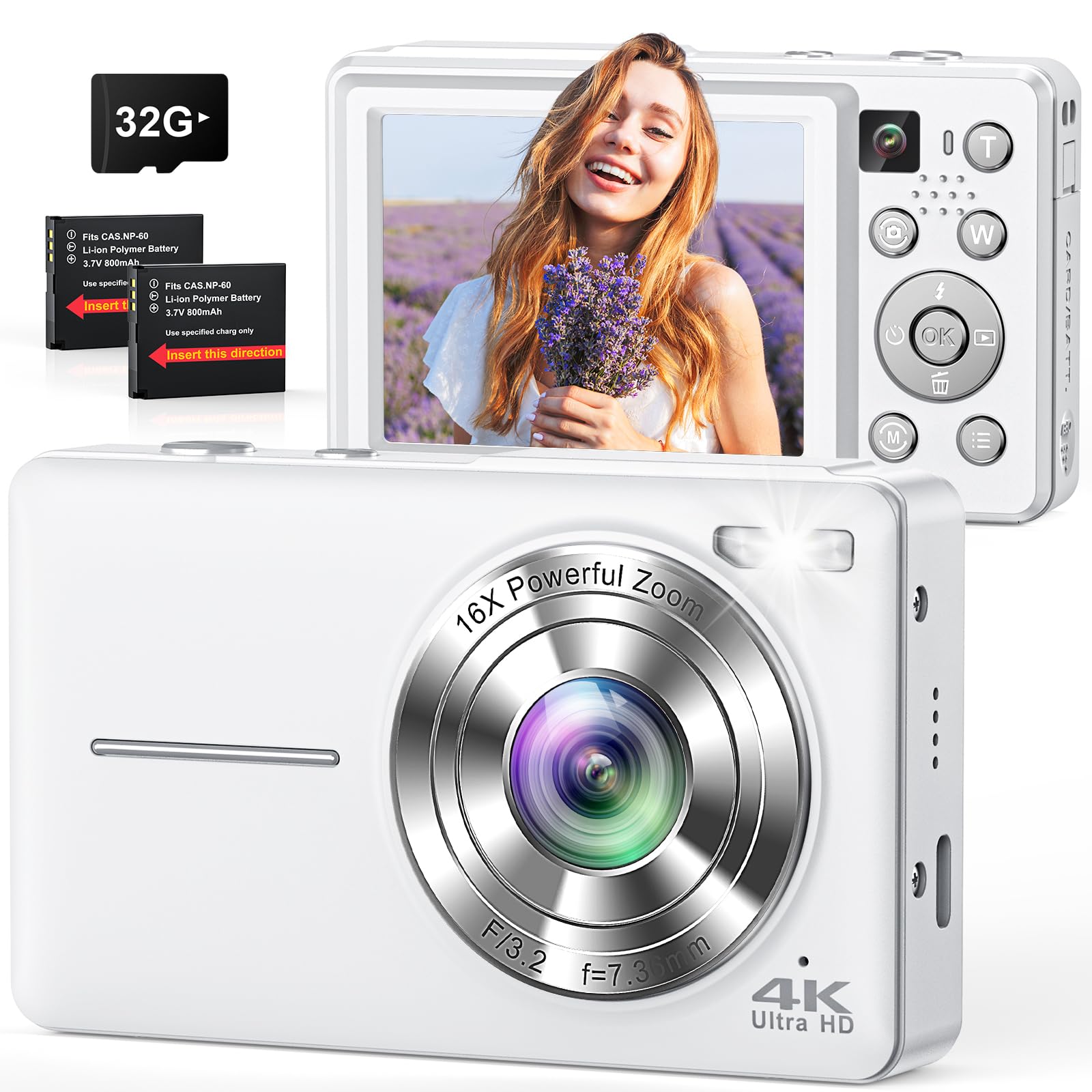
The CAMKORY 4K camera targets beginners with an all-in-one kit: the camera body, a 32GB memory card, two rechargeable batteries, a USB-C cable, a storage pouch, and a lanyard. It shoots 64MP stills and records 4K video using a CMOS sensor with automatic exposure control. The 16X zoom is digital, so close-ups at maximum reach will show pixelation, but standard range shots come out crisp in good lighting.
Dual front and rear lenses allow one-button switching between standard selfies and rear-facing photography, and the built-in flash helps with indoor portraits. The anti-shake function reduces minor hand movement blur, and autofocus locks onto subjects reasonably fast for still subjects. The camera can also serve as a webcam for video calls via USB.
Image quality is good but not great — colors look natural in bright conditions but can appear washed out indoors. The autofocus struggles with fast-moving subjects, making action shots a challenge. The vendor’s customer support also received mixed feedback regarding warranty activation. However, for a first-time buyer who wants everything in one box, the CAMKORY delivers remarkable convenience at its price point.
Why it’s great
- Complete kit with card, batteries, case, and strap included
- Dual front and rear lenses simplify vlogging
- Webcam mode adds versatility for online use
Good to know
- Digital zoom loses detail at extended ranges
- Image quality drops noticeably in low-light conditions
- Customer support response inconsistent for warranty issues
FAQ
Is 4K video quality realistic in a camera under a hundred dollars?
Do I need a memory card separately or is one included?
Why does my budget camera produce grainy photos at night?
Can I use these cameras for live streaming on YouTube or Zoom?
Final Thoughts: The Verdict
For most users, the best digital camera under $100 winner is the Nsoela 5K Digital Camera because it packs genuine 6X optical zoom and a modern touchscreen interface into a complete kit that is ready to shoot immediately. If you want dependable optical zoom from a trusted brand, grab the Kodak PIXPRO FZ55. And for wireless sharing without cables, nothing beats the Demofit DC080 with its flip screen and built-in WiFi.

Mo Maruf
I created WellFizz to bridge the gap between vague wellness advice and actionable solutions. My mission is simple: to decode the research and give you practical tools you can actually use.
Beyond the data, I am a passionate traveler. I believe that stepping away from the screen to explore new environments is essential for mental clarity and physical vitality.