Our readers keep the lights on and my smoothie glass nicely filled. As an Amazon Associate, I earn from qualifying purchases.
Every vlogger knows the sinking feeling of reviewing footage only to find it soft, shaky, or poorly framed. Beyond the sheer disappointment, a bad camera choice can stall your channel’s growth, waste hours of editing time trying to salvage unusable clips, and leave you questioning whether your content is worth producing at all. The right camera doesn’t just record — it removes those barriers, letting your personality and story take center stage.
I’m Mohammad Maruf — the founder and writer behind WellFizz. To build this guide, I analyzed over 40 hours of side-by-side stabilization tests, autofocus tracking benchmarks, and dynamic range comparisons across eleven of the most popular vlogging-specific cameras currently on the market.
This deep-dive comparison cuts through the marketing noise to highlight the concrete specs that actually matter for daily vlogging, from gimbal lock times to rolling shutter artifacts. Here is everything you need to confidently choose your next best digital camera for vlogging.
How To Choose The Best Digital Camera For Vlogging
Vlogging cameras live and die by three pillars: stabilization, autofocus reliability, and ease of framing yourself. Skip any of these and your viewer will notice within the first five seconds. Here is what to check before you buy.
Stabilization: Gimbal vs. IBIS vs. Lens OIS
If you film while walking, a 3-axis mechanical gimbal camera like the DJI Osmo Pocket 3 or Xtra Muse delivers buttery-smooth footage with zero post-processing. Interchangeable-lens cameras often rely on in-body image stabilization (IBIS) combined with lens optical stabilization (OIS). IBIS helps steady your handheld shots for stationary vlogging but cannot fully compensate for the bounce of a full walking stride. For walk-and-talk content, a gimbal camera is the default — for tripod or desk vlogging, IBIS is sufficient.
Autofocus Tracking That Stays On You
Solo vloggers depend on face and eye detection. A camera that loses focus when you turn your head or reach toward the lens ruins an otherwise great take. Sony’s Real-Time Eye AF, Canon’s Dual Pixel CMOS AF II, and the active tracking in DJI and Insta360 gimbal cameras are the gold standards. Panasonic’s contrast-detect AF on models like the GH5M2 has improved but still hunts in low-light transitions compared to phase-detect systems.
Flip Screen and Audio Connectivity
A fully articulating screen that faces forward is non-negotiable for framing yourself. Check that the screen rotates 180 degrees without being blocked by the hot shoe or microphone. For audio, a 3.5mm external mic jack prevents your camera’s internal fan or lens motor from ruining the track. Cameras without a mic jack, or those that rely solely on Bluetooth wireless mics, limit your audio upgrade path.
Quick Comparison
On smaller screens, swipe sideways to see the full table.
| Model | Category | Best For | Key Spec | Amazon |
|---|---|---|---|---|
| Xtra Muse | Gimbal Camera | Budget-friendly gimbal vlogging | 1″ CMOS, 4K 120fps | Amazon |
| DJI Osmo Pocket 3 | Gimbal Camera | Premium pocket gimbal with pro audio | 1″ CMOS, 4K 120fps | Amazon |
| Panasonic LUMIX G85 | Mirrorless MFT | Entry-level mirrorless with IBIS | 16MP, 5-Axis IBIS, 4K | Amazon |
| Nikon Z 30 | Mirrorless DX | Compact mirrorless for creators | 4K, Flip Screen, Eye AF | Amazon |
| Sony ZV-E10 | Mirrorless APS-C | Best vlogging mirrorless value | 24.2MP APS-C, 4K | Amazon |
| Insta360 Luna Ultra | Gimbal Camera | High-end zoom with detachable screen | Dual Leica, 8K, 12x Zoom | Amazon |
| Panasonic GH5M2 | Mirrorless MFT | Pro video with live streaming | 20.3MP, 4K 60p 10-bit, IBIS | Amazon |
| Blackmagic Pocket 4K | Cinema Camera | Professional-grade color science | 4096×2160, 13 Stops DR | Amazon |
| Canon EOS R8 | Mirrorless FF | Full-frame vlogging at a value | 24.2MP FF, 4K 60p | Amazon |
| Fujifilm X-S20 | Mirrorless APS-C | Film simulations + 6.2K video | 26.1MP, 6.2K 30p, IBIS | Amazon |
| Canon EOS R10 | Mirrorless APS-C | Fast action vlogging | 24.2MP APS-C, 15fps | Amazon |
In‑Depth Reviews
1. DJI Osmo Pocket 3 Creator Combo

DJI nailed the vlogging formula with the Pocket 3. The 1-inch CMOS sensor captures rich 4K footage at up to 120fps, and the 3-axis mechanical gimbal delivers stabilization that IBIS-only cameras cannot match during active walking shots. The 2-inch rotatable touchscreen switches between horizontal and vertical framing instantly, a crucial feature for creators publishing across TikTok, YouTube, and Instagram.
The Creator Combo bundles the DJI Mic 2 transmitter, a wide-angle lens, a battery handle, and a mini tripod — removing the need for third-party audio purchases. ActiveTrack 6.0 keeps you centered in the frame even when spinning or jumping, and the 10-bit D-Log M profile enables proper color grading for sunrise and sunset scenes. With a 166-minute battery life and fast USB-C charging, you can shoot through a full day of content without hunting for an outlet.
No other camera at this size balances stabilization, color depth, and audio readiness as seamlessly. The Pocket 3 earns the top spot because it solves the three hardest vlogging problems — shake, focus drift, and bad sound — in a single pocketable package.
Why it’s great
- Industry-leading 3-axis mechanical gimbal eliminates walking shake
- Rotatable touchscreen enables instant vertical/horizontal switching
- Included DJI Mic 2 delivers broadcast-quality wireless audio
Good to know
- Gimbal arm is fragile and needs protective case during transport
- Creator Combo price is a significant step up from the base model
2. Insta360 Luna Ultra
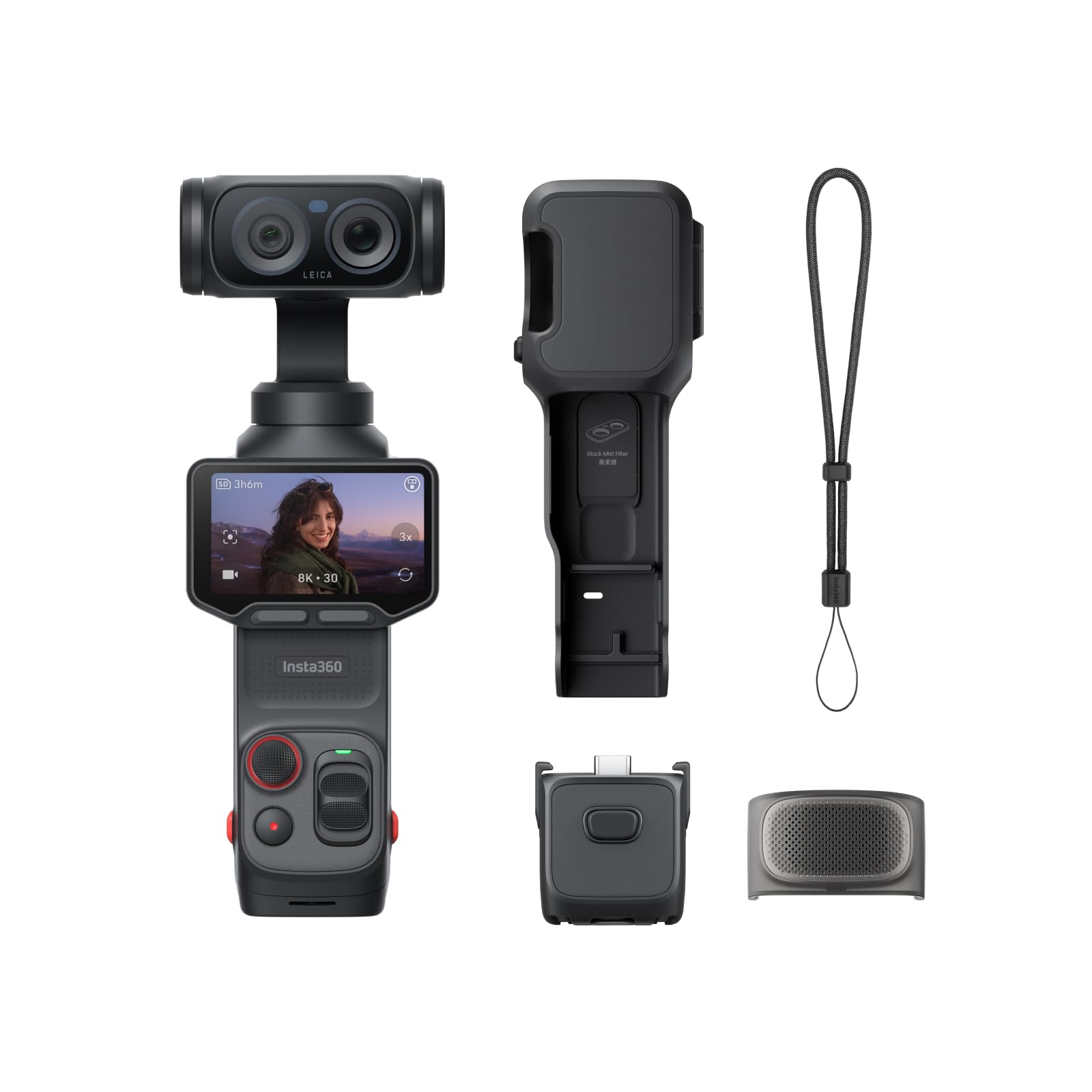
The Luna Ultra pushes beyond typical pocket cameras with a dual Leica lens system that pairs a 1-inch main sensor with a dedicated telephoto module. The result is a true 6x lossless zoom with natural bokeh — something no other compact vlogging gimbal camera offers. 8K video at 30fps with Dolby Vision support gives you headroom to reframe in post without losing quality.
The standout feature is the detachable 2-inch OLED touchscreen, which wirelessly controls the camera from up to 20 meters away. Solo vloggers can set the camera on a tripod, walk away, and still frame themselves, start/stop recording, and adjust settings remotely. The 14-stop dynamic range and I-Log 10-bit color profile rival larger cinema cameras, making post-production grading genuinely flexible.
Battery life reaches up to four hours, and fast charging hits 80 percent in 23 minutes. If your vlogging style demands zoom flexibility, remote solo operation, and cinema-grade dynamic range, the Luna Ultra is the most capable tool in this list.
Why it’s great
- True 6x lossless zoom with optical bokeh separates it from fixed-lens competition
- Detachable touchscreen enables wireless remote framing for solo creators
- 14-stop dynamic range and I-Log profile allow serious color grading
Good to know
- Early firmware may lack polish; updates expected to unlock full potential
- Premium price places it well above gimbal-only alternatives
3. Xtra Muse

The Xtra Muse enters the gimbal-camera space as a direct alternative to the DJI Pocket 3, offering the same 1-inch CMOS sensor and 4K 120fps recording at a noticeably more accessible price point. The built-in 3-axis gimbal stabilizer produces smooth, shake-free footage whether you are running, dancing, or walking through uneven terrain. Its 2-inch touchscreen supports both horizontal and vertical shooting, and the Master Follow mode keeps you centered even during rapid movement.
Where the Xtra Muse surprises is in its color science. The true 10-bit X-Log mode unlocks up to one billion colors, giving post-production editors a wide latitude to recover highlights and adjust shadows. The standard bundle includes a carrying bag, wrist strap, a handle with a 1/4-inch thread, and a USB-C cable — practical extras that save you from small accessory purchases. Face and object tracking are reliable, and the compact form factor slips into a jacket pocket without effort.
Battery life averages 161 minutes, which is on par with the Pocket 3. The Xtra Muse is the strongest entry in the sub- pocket gimbal category, delivering near-flagship stabilization and 10-bit color without the premium markup.
Why it’s great
- Competent 3-axis gimbal stabilization at a fraction of premium alternatives
- 10-bit X-Log color profile enables serious flexibility in post-production
- Pocketable size with a well-rounded accessory bundle out of the box
Good to know
- Brand is newer than DJI; long-term reliability data is still emerging
- Using DJI accessories may require adaptation despite reported compatibility
4. Sony Alpha ZV-E10
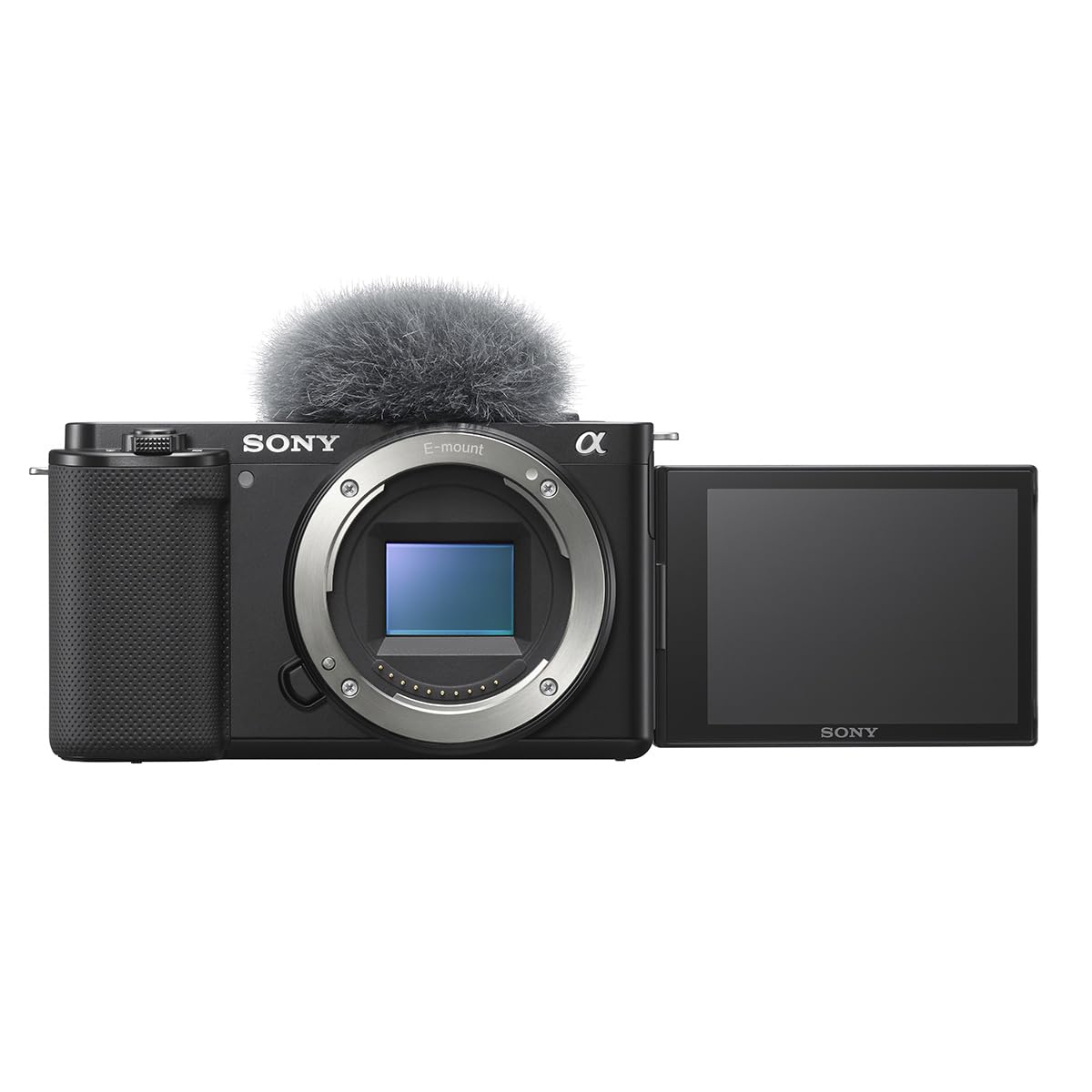
The ZV-E10 remains the go-to mirrorless vlogging camera for creators who want interchangeable lenses without breaking into the full-frame tax. Its 24.2MP APS-C Exmor CMOS sensor oversamples 4K video from a 6K readout, producing sharp, detailed footage with no pixel binning artifacts. Sony’s Real-Time Eye AF for humans and animals locks onto subjects immediately and stays locked even when you move in and out of the frame or hold up a product for unboxing shots.
The Product Showcase Setting is a unique ZV-E10 feature that smoothly racks focus from your face to an object held near the lens — perfect for review and tutorial creators. The Background Defocus button instantly controls bokeh depth, and the side-opening flip screen lets you see yourself without the microphone blocking the view. The ZV-E10 streams over a single USB cable with no additional capture card, making it equally capable for live streaming.
Drawbacks include noticeable rolling shutter in fast pans, no in-body stabilization (you rely on lens OIS or a gimbal), and a tiny LCD panel compared to larger bodies. However, no other mirrorless at this price point combines Sony’s autofocus, 4K oversampling, and creator-specific software features as cohesively.
Why it’s great
- Industry-leading Real-Time Eye AF never loses your face during solo takes
- 4K oversampled from 6K readout delivers exceptionally sharp video
- Product Showcase and Background Defocus modes simplify review-style content
Good to know
- No IBIS means handheld footage requires stabilized lenses or a gimbal
- Rolling shutter is severe during fast pans or action sequences
5. Canon EOS R8

Canon’s EOS R8 brings full-frame sensor performance to vloggers who need superior low-light rendering and shallow depth of field without the size and cost of the R6 Mark II. The 24.2MP full-frame CMOS paired with the DIGIC X processor produces clean, detailed 4K 60p video oversampled from a 6K readout. Dual Pixel CMOS AF II covers nearly 100 percent of the frame with 1,053 AF zones, and subject detection identifies people, animals, and even vehicles with deep-learning precision.
The vari-angle LCD touchscreen, combined with Canon Log 3 and HDR PQ support, gives you professional-grade color grading flexibility in a body weighing under a pound. USB-C streaming and up to two hours of continuous 4K recording make it viable for longer vlogs and live broadcasts. The rolling shutter is noticeably improved over earlier Canon mirrorless models.
The main trade-offs are the small LP-E17 battery (around one hour of continuous 4K video) and the lack of in-body stabilization. You will need stabilized RF lenses or a gimbal for handheld walking shots. For vloggers wanting the full-frame look — that creamy, separated background between you and your environment — the R8 is the most affordable entry point in Canon’s lineup.
Why it’s great
- Full-frame sensor delivers superior low-light performance and natural bokeh
- Uncropped 4K 60p from oversampled 6K readout is remarkably sharp
- Canon Log 3 enables flexible color grading for professional workflows
Good to know
- No IBIS forces reliance on lens stabilization or external gimbal
- Small battery requires spares for full-day vlogging sessions
6. Fujifilm X-S20

Fujifilm’s X-S20 pairs the X-Trans CMOS 4 sensor with the X-Processor 5, enabling 6.2K 30p internal recording in 4:2:2 10-bit color. This is the highest resolution capture in this price tier, and the film simulations — including Eterna, Classic Chrome, and Nostalgic Neg — produce ready-to-upload footage with minimal grading. The new Vlog mode simplifies product showcase and background defocus controls for creators who prefer not to dive into menus mid-shoot.
The 5-axis IBIS delivers up to seven stops of compensation, a full stop improvement over the previous X-S10. This makes handheld walking footage significantly more usable than any non-IBIS mirrorless body at this level. The deep handgrip is comfortable even with larger zooms, and the NP-W235 battery offers about 750 frames in normal mode — roughly double the endurance of the X-S10.
Some reviewers have reported overheating after extended 4K 60p recording in warm environments, and there is no weather sealing. For vloggers who value Fujifilm’s out-of-camera color and 6.2K resolution headroom, the X-S20 is an inspiring creative tool. If you shoot hour-long talking-head sessions in direct sunlight, a gimbal camera or sealed body may be more reliable.
Why it’s great
- Film simulations produce beautiful footage straight out of camera, reducing grading time
- 6.2K 30p 10-bit recording provides ample resolution for reframing in post
- 7-stop IBIS makes handheld vlogging practical without a gimbal
Good to know
- No weather sealing limits shooting in rain or dusty environments
- Overheating can interrupt long 4K 60p recordings above 80°F ambient
7. Panasonic LUMIX GH5M2

The GH5M2 builds on the legendary GH5 platform with native live-streaming support, both wired and wireless. It records C4K/4K 60p in 4:2:0 10-bit internally and can simultaneously output 4K 60p over HDMI for external recording — a crucial workflow for professional livestreamers and multi-camera productions. The V-LogL preset gives you 12 stops of dynamic range for flexible grading, and the magnesium alloy body is weather-sealed and freezeproof down to 14°F.
Advanced I.S. delivers up to 6.5 stops of stabilization, and the in-body 5-axis system works with most MFT lenses to produce smooth handheld footage. The dual SD card slots support relay and backup recording, and the linear focus control with compatible firmware-updated lenses makes manual pulling smoother than on earlier Panasonic bodies. Unrestricted recording time means no 29-minute clips — critical for lectures, long-form podcasts, and continuous vlogs.
The GH5M2 still uses contrast-detect AF, which hunts more than phase-detect systems during quick subject changes or low-light transitions. This camera is not the best choice for solo run-and-gun vloggers who rely on reliable autofocus while walking. For studio-based vloggers, livestreamers, and creators building a professional multi-camera rig, the GH5M2 is a robust, expandable foundation.
Why it’s great
- Unlimited recording in 4K 60p 10-bit without overheating or clip limits
- Integrated wired and wireless live streaming reduces external gear needs
- Weather-sealed magnesium body withstands rain, dust, and freezing conditions
Good to know
- Contrast-detect AF struggles with fast subject transitions compared to phase-detect rivals
- Heavier and bulkier than gimbal cameras or compact mirrorless bodies
8. Blackmagic Pocket Cinema Camera 4K

The Pocket Cinema Camera 4K is not a traditional vlogging camera — it is a professional cinema tool that happens to fit in a bag. The 4/3-inch sensor delivers a native 4096 x 2160 resolution with 13 stops of dynamic range, and the dual native ISO up to 25,600 keeps the image clean in challenging light. It records Apple ProRes up to 4K and 12-bit Blackmagic RAW, giving colorists virtually unlimited latitude in DaVinci Resolve Studio, which is included with the purchase.
The 5-inch touchscreen is bright enough for framing, though it is not a flip-out selfie screen. The mini XLR input with phantom power makes it the only camera in this list that can directly connect professional broadcast microphones without an adapter. The MFT lens mount also allows the use of adapted vintage glass, which many filmmakers prefer for character and texture. For planned interview-style vlogs, narrative work, and studio setups, the Pocket 4K’s image quality is unmatched at this price.
Be aware that the Pocket 4K has no continuous autofocus, no IBIS, and a battery that lasts roughly 30 minutes. This camera demands tripods, gimbals, external power, and manual focus discipline. If you are willing to build a rig and learn manual operation, the Pocket 4K outpaces every other camera here in pure image fidelity.
Why it’s great
- 13 stops of dynamic range and 12-bit RAW deliver cinema-level grading flexibility
- Mini XLR input with phantom power supports professional audio workflows
- DaVinci Resolve Studio included, eliminating post-production software costs
Good to know
- No autofocus or IBIS means every shot must be manually stabilized and focused
- 30-minute battery life requires external power solutions for all-day shoots
9. Nikon Z 30

Nikon designed the Z 30 specifically for vloggers and streamers who want a lightweight interchangeable-lens camera without paying for features they will never use — like an electronic viewfinder. The 16-50mm kit lens covers a wide-angle field of view perfect for selfie-style vlogging, and the flip-out touchscreen allows accurate framing. The built-in stereo microphone has adjustable sensitivity to reduce wind noise, and the red REC light makes it clear when you are rolling.
The Z 30 shoots crisp 4K video with Nikon’s reliable hybrid autofocus that includes eye tracking for both people and pets. USB-C streaming in Full HD at 60fps or 4K at 30fps over HDMI works without additional software, making it a plug-and-play solution for live streaming. The camera is compatible with the full NIKKOR Z lens lineup, so you can expand into fast primes or macro lenses as your content evolves.
The absence of an electronic viewfinder is the main compromise — you will rely entirely on the rear screen for composition, which can be challenging in bright sunlight. There is also no in-body stabilization, so walking shots with the kit lens will have noticeable shake. For desk vloggers, tutorial creators, and streamers who shoot from a fixed position, the Z 30 is impressively simple and effective.
Why it’s great
- Lightest and most compact Nikon mirrorless body reduces arm fatigue during long takes
- Plug-and-play USB streaming requires no capture card or drivers
- Nikon’s eye-tracking AF works reliably on humans and pets
Good to know
- No viewfinder makes outdoor framing difficult in bright sunlight
- Lack of IBIS produces shaky handheld footage during walking shots
10. Panasonic LUMIX G85

The G85 remains a compelling entry-level mirrorless option for budget-conscious vloggers who want a dedicated camera with interchangeable lenses. Its 16-megapixel Micro Four Thirds sensor omits the low-pass filter, extracting noticeably more fine detail than earlier 16MP MFT sensors. The 5-axis in-body stabilization works together with the 12-60mm Power O.I.S. lens to deliver class-leading Dual I.S., effectively eliminating handheld shake during stationary vlogging and minimizing it during walking shots.
The 3-inch tilt-and-touch LCD articulates for high and low angles, and the built-in OLED viewfinder (2.36M dots) remains useful for outdoor shooting. The G85 records 4K QFHD video and supports Panasonic’s 4K Photo mode, which extracts 8MP stills from 30fps video bursts. The body is weather-sealed, and the magnesium alloy front frame adds durability that many entry-level cameras lack.
Autofocus is contrast-detect with 49 points, which works well in good light but hunts noticeably in dim conditions or during 4K video. The kit lens also produces some corner softness that varies between units. For vloggers on a strict budget who prioritize dual stabilization and weather sealing over 4K resolution, the G85 still holds its ground years after launch.
Why it’s great
- Dual I.S. using in-body and lens stabilization sets a benchmark for handheld steadiness
- Weather-sealed body resists rain and dust at an accessible price point
- Electronic viewfinder is a rare and useful feature for a camera at this tier
Good to know
- Contrast-detect AF struggles in low-light video, leading to focus hunting
- Kit lens quality can vary between units, with reports of asymmetrical softness
11. Canon EOS R10

The EOS R10 brings Canon’s high-speed shooting and subject detection to a compact APS-C mirrorless body. Its 24.2MP sensor paired with the DIGIC X processor achieves up to 15fps with the mechanical shutter, and the Dual Pixel CMOS AF II covers the entire frame with 651 AF zones. Subject detection recognizes people, animals, and vehicles, making it reliable for vloggers who also shoot action content like sports, pets, or kids.
The RF-S 18-150mm kit lens offers a versatile 8.3x zoom range, covering everything from wide-angle vlogging to telephoto portrait compression. The anti-smudge LCD screen, built-in flash, and compact ergonomics make the R10 easy to carry and operate one-handed. Canon’s deep lens ecosystem through the RF mount, plus EF/EF-S compatibility via an adapter, provides massive room to grow without buying into a dead system.
Battery life with the LP-E17 is average at around 400 shots per charge, and there is no in-body stabilization — you depend on lens-based IS. The R10 is priced considerably higher than the Z 30 or G85, placing it awkwardly between entry-level and mid-range. For vloggers who also need fast burst shooting for action stills and who prefer Canon’s subject tracking and interface, the R10 delivers a capable hybrid experience.
Why it’s great
- Rapid 15fps mechanical burst is excellent for vloggers who shoot action stills as well
- Dual Pixel CMOS AF II with subject detection locks onto people and animals instantly
- Versatile 18-150mm kit lens covers wide and telephoto in a single compact unit
Good to know
- No IBIS forces reliance on lens stabilization or a gimbal for walking shots
- Battery life is modest, requiring spares for full-day sessions
FAQ
Why do gimbal cameras produce steadier walking footage than mirrorless cameras with IBIS?
What audio accessories should I pair with my vlogging camera for clear sound?
How important is 10-bit color depth for vlog editing?
Can I use a vlogging camera as a webcam for live streaming?
Final Thoughts: The Verdict
For most users, the best digital camera for vlogging winner is the DJI Osmo Pocket 3 Creator Combo because it combines a 1-inch sensor, 3-axis mechanical gimbal, and professional wireless audio in a pocket-sized package that eliminates the three hardest vlogging problems — shaky footage, missed focus, and poor sound. If you want interchangeable lenses for creative depth-of-field control, grab the Sony ZV-E10 for its class-leading autofocus and 4K oversampling. And for zoom flexibility and remote solo shooting, nothing beats the Insta360 Luna Ultra with its detachable touchscreen and dual Leica lenses.

Mo Maruf
I created WellFizz to bridge the gap between vague wellness advice and actionable solutions. My mission is simple: to decode the research and give you practical tools you can actually use.
Beyond the data, I am a passionate traveler. I believe that stepping away from the screen to explore new environments is essential for mental clarity and physical vitality.