Our readers keep the lights on and my smoothie glass nicely filled. As an Amazon Associate, I earn from qualifying purchases.
A camera for a tween is a bridge—between the blurry phone snapshots they’re used to and the intentional art of framing a moment. The right model encourages patience, teaches composition, and delivers photos that feel like an upgrade from a smartphone without the distraction of a full app suite or cellular data plan. What matters most is a tactile shutter button, a flip screen for selfies, and autofocus that actually works when a pet or sibling runs through the frame.
I’m Mohammad Maruf — the founder and writer behind WellFizz. I’ve spent dozens of hours breaking down sensor resolutions, autofocus speeds, zoom mechanics, and kit accessories to find the seven models that genuinely serve a young photographer’s first creative steps.
These recommendations are built on real-world specs and verified buyer feedback, not marketing claims, to help you find the best digital camera for tweens that balances durability with image quality.
How To Choose The Best Digital Camera For Tweens
Three factors separate a camera a tween will actually use from one that collects dust on a shelf: autofocus reliability, physical interface simplicity, and battery endurance. Tweens lack the patience for manual focus hunting or menus buried four layers deep. They need a camera that locks focus in under a second, includes a flip screen for selfie framing, and runs on batteries that last through a weekend trip or a day at the park.
Autofocus and Shutter Lag
A slow autofocus system turns moving subjects—dogs, siblings, sports—into a blurry frustration. Look for models that advertise “phase detection” or contrast-detect autofocus with speeds under 0.5 seconds. A 48MP sensor means nothing if every shot of a running kid is soft.
Screen Type and Size
A fixed screen forces awkward angles for selfies and low-angle shots. A 180-degree flip screen lets a tween see themselves while framing, reducing the guesswork. A 3-inch IPS display with decent outdoor visibility prevents squinting in sunlight.
Battery and Storage Included
A camera that requires separate battery and memory card purchases creates friction. The best starter kits include at least two rechargeable batteries and a 32GB SD card so the tween can start shooting immediately. Cameras that rely on AA alkaline batteries (like some Kodak models) require constant replacement unless you invest in rechargeable AA sets.
Quick Comparison
On smaller screens, swipe sideways to see the full table.
| Model | Category | Best For | Key Spec | Amazon |
|---|---|---|---|---|
| Canon EOS Rebel T7 Kit | DSLR | Serious beginners ready to learn | 24.1MP APS-C + 18-55mm lens | Amazon |
| FLATIC 5K WiFi | Point & Shoot | WiFi sharing & macro close-ups | 5K 64MP + 64GB card + 2 batts | Amazon |
| Pedtail 5K WiFi | Point & Shoot | YouTube vlogging with WiFi | 5K 75MP + 18X zoom + flip | Amazon |
| CAMKORY 4K 64MP | Point & Shoot | Dual front/rear camera vlogging | 4K 64MP + 39-point AF + flash | Amazon |
| Duluvulu 4K 48MP | Point & Shoot | Budget all-in-one kit | 4K 48MP + 32GB card + 2 batts | Amazon |
| Ploomen 56MP 4K | Point & Shoot | Fast 0.2s autofocus & portability | 4K 56MP + 0.2s AF + 2000mAh | Amazon |
| Kodak PIXPRO FZ45 | Point & Shoot | Entry-level simplicity & brand trust | 16MP + 4X optical zoom + AA | Amazon |
In‑Depth Reviews
1. Canon EOS Rebel T7 DSLR Camera Kit
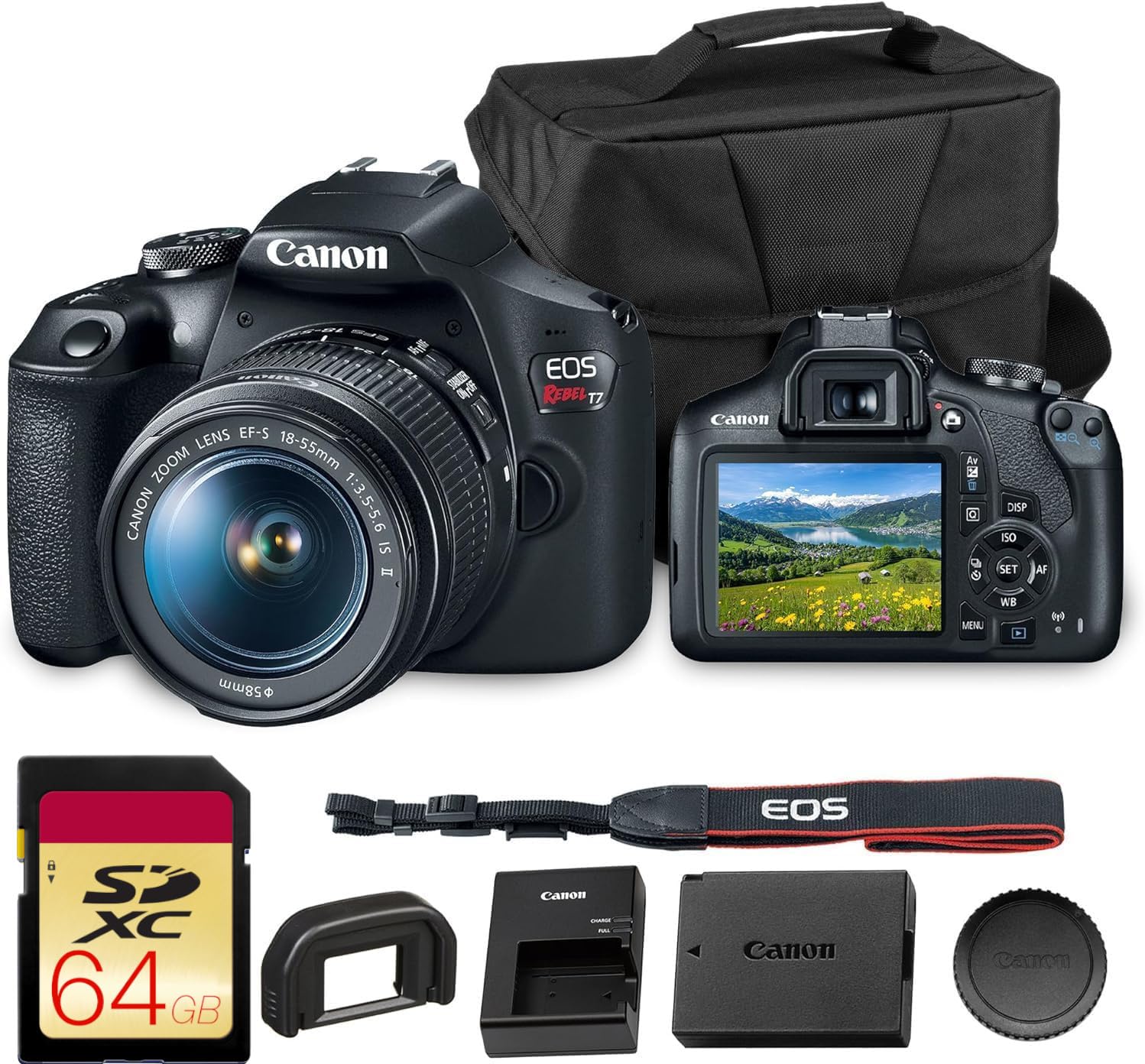
The Canon Rebel T7 is the entry point to interchangeable-lens photography. Its 24.1MP APS-C sensor and DIGIC 4+ processor deliver image quality that outpaces any point-and-shoot in this price range—richer colors, better low-light performance, and real depth-of-field control when paired with the included 18-55mm lens. The optical viewfinder teaches a tween to compose through the lens rather than a screen, building fundamental photography habits.
Built-in Wi-Fi and NFC allow quick photo transfers to a parent’s phone for sharing, and the kit includes a shoulder bag and 64GB card so nothing extra is needed. The 9-point autofocus is contrast-detect, which means slower lock-on than a modern mirrorless system, but for static subjects and slow-moving family scenes it’s perfectly adequate. The 3-inch LCD is fixed (no flip-out), so selfies require some creative positioning.
The Rebel T7 runs on an LP-E10 battery rated for around 500 shots per charge—enough for a full day of shooting. It’s heavier than a compact camera (over a pound with the kit lens), but that weight gives it a durable feel that can survive a backpack. The learning curve is real: a tween who wants to grow beyond auto mode will benefit from the manual controls and lens upgrade path.
Why it’s great
- True DSLR image quality and lens compatibility
- Optical viewfinder teaches real photography technique
- Full kit including bag and 64GB card is ready to use
Good to know
- Fixed screen—no flip-out for selfies
- Heavier and bulkier than compact models
- Autofocus is slower than modern mirrorless cameras
2. FLATIC 5K Digital Camera with WiFi
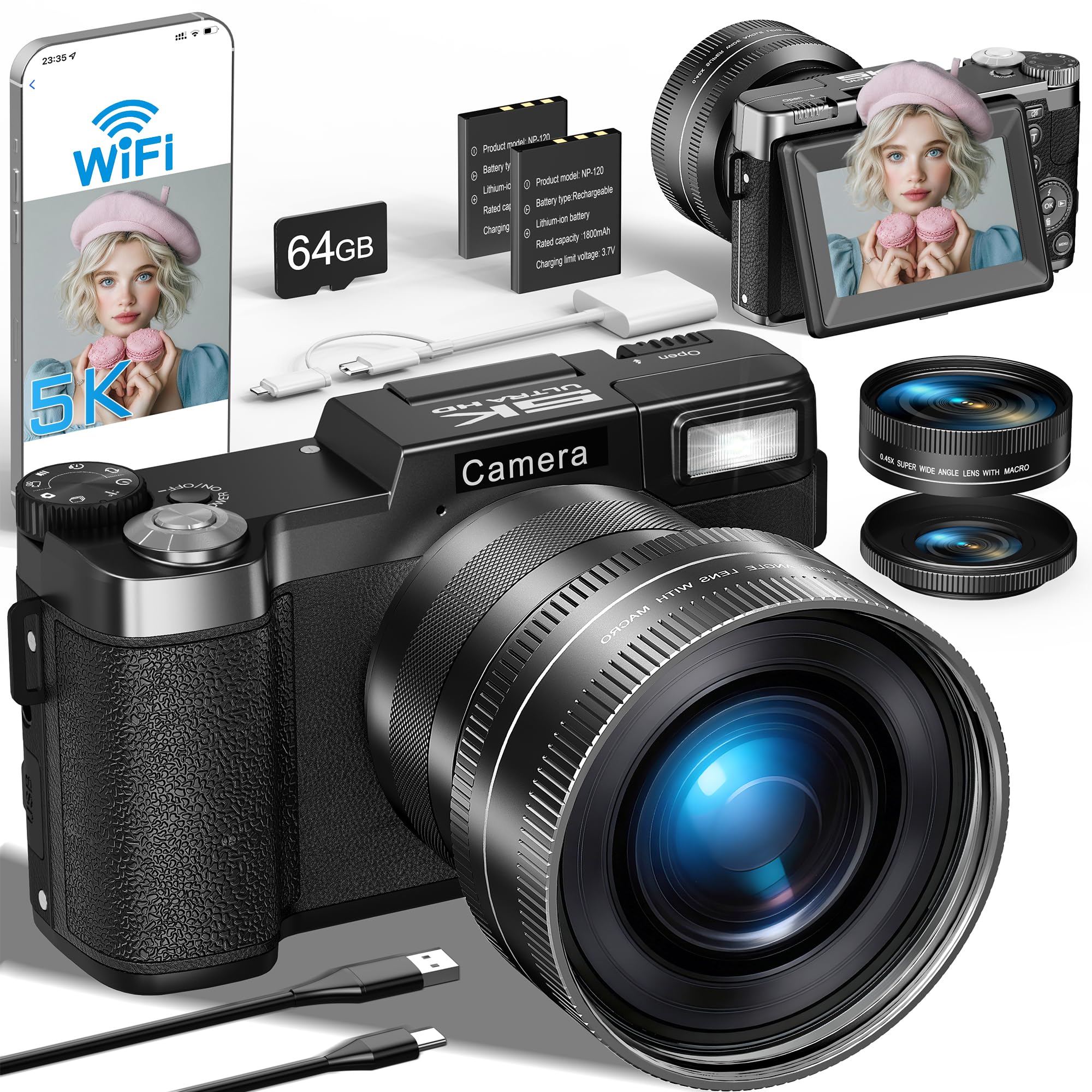
The FLATIC 5K punches above its size by offering 64MP stills and 5K video in a compact body that fits a tween’s small hands. The 180-degree flip screen is essential for vlogging and selfies, and the 18X digital zoom gives enough reach for stage performances or wildlife at a distance. What sets it apart is the included macro and wide-angle lenses—accessories that let a curious tween experiment with close-up insect shots or sweeping landscapes without buying extra gear.
WiFi connectivity means photos move to a smartphone wirelessly, bypassing the need for a cable or card reader. The autofocus uses phase detection, which locks on faster than contrast-detect systems in this tier. Two batteries and a 64GB memory card are included, so storage anxiety disappears. The lack of a built-in flash is a notable omission—low-light indoor shots will rely on ambient light or the fill light function.
Some users reported the autofocus can hunt for 30 seconds in certain conditions, and far-away subjects may not resolve sharply. The macro lens adds genuine creative value, but image quality at full 5K resolution is not on par with higher-end sensors. For a tween who wants instant social sharing and lens variety, this is a strong mid-range choice.
Why it’s great
- Macro and wide-angle lenses included for creative experimentation
- WiFi transfer eliminates cable fumbling
- 5K video with flip screen ideal for vlogging
Good to know
- No built-in flash for indoor shots
- Autofocus can be inconsistent in some conditions
- Image quality is good but not exceptional at full resolution
3. Pedtail 5K WiFi Digital Camera
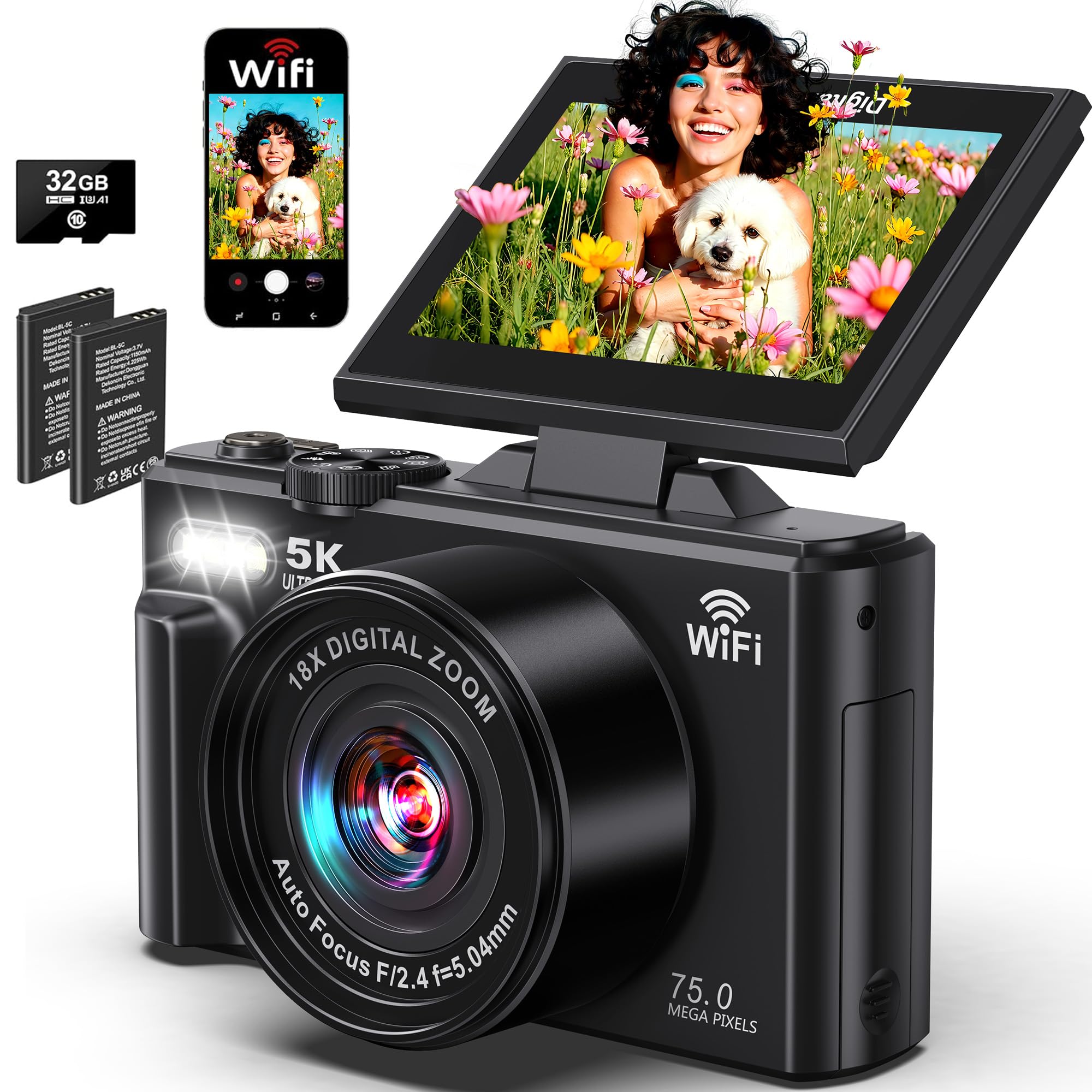
The Pedtail 5K offers a 75MP effective still resolution and 5K video capture at a competitive price point. Its 3-inch IPS 180-degree flip screen makes self-framing straightforward, and the 18X digital zoom allows a tween to pull in distant subjects during school events or park outings. The built-in flash is a welcome addition for dim indoor birthday parties where other budget cameras struggle.
WiFi connectivity enables direct smartphone transfers, and the webcam function lets the camera double as a streaming device for YouTube or TikTok. Two rechargeable batteries and a 32GB SD card are included in the box. The camera is small enough to drop into a backpack pocket, and the tripod mount helps with stabilization for long exposures or group shots.
Image quality shines in good lighting but drops noticeably in low light—the 1/3-inch CMOS sensor is the limiting factor. Autofocus is reliable for static subjects but can miss fast-moving pets or sports. The included accessories are generous for the price, and the camera is genuinely intuitive for a tween who has never used a dedicated camera before.
Why it’s great
- Flip screen and flash for vlogging and indoor use
- WiFi and webcam modes add versatility
- Compact and lightweight for daily carry
Good to know
- Low-light image quality is average
- Autofocus struggles with fast movement
- Sensor is small; don’t expect DSLR-level detail
4. CAMKORY 4K 64MP Point and Shoot
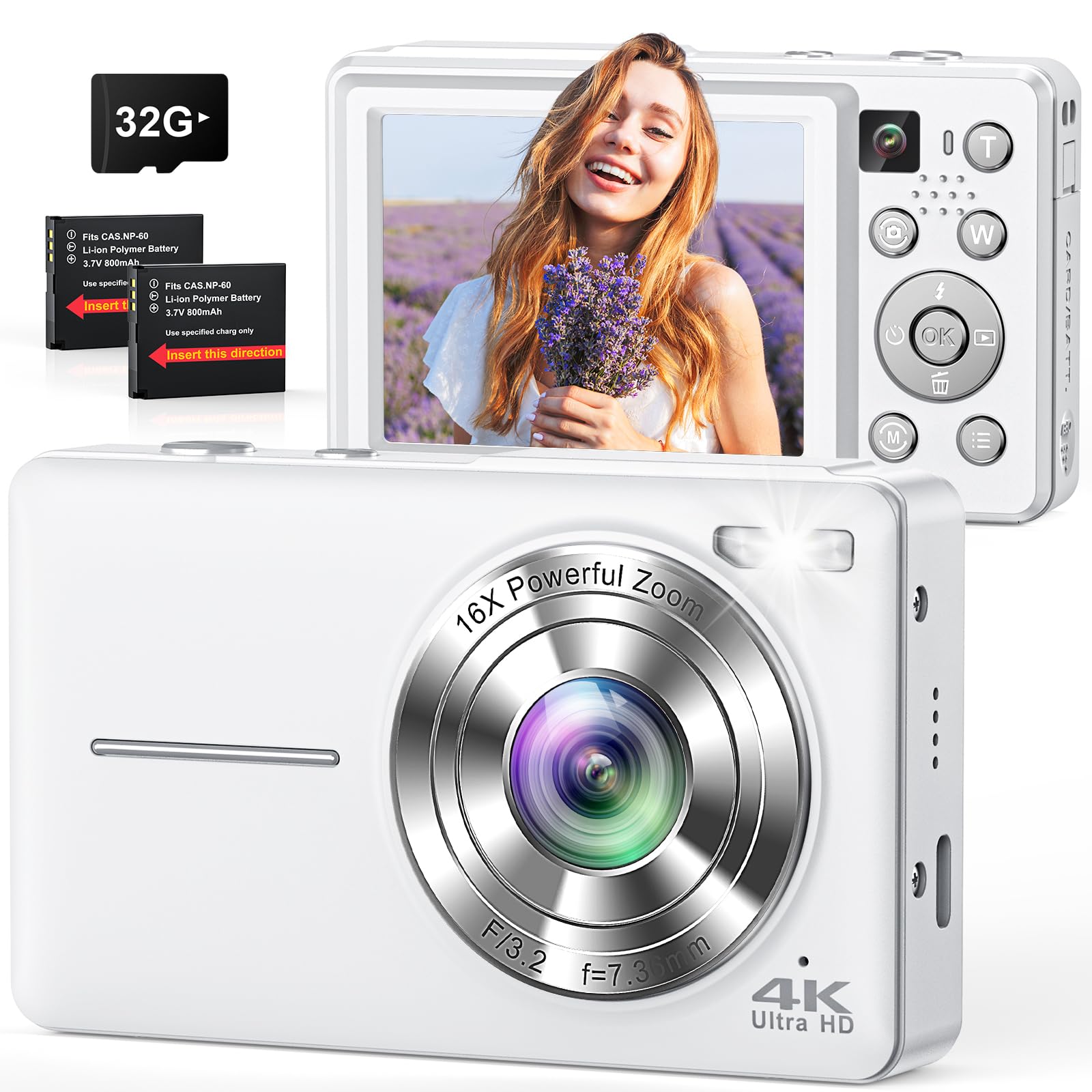
The CAMKORY 4K stands out for its dual front and rear cameras, a feature usually reserved for action cams or smartphones. A single button press switches between the main lens and a front-facing lens, making this an excellent choice for a tween who wants to record both the scene and their own reactions simultaneously. The 64MP sensor and 4K video capture are backed by a 39-point autofocus system—more AF points than any other camera in this lineup—which reduces hunting and improves lock-on speed.
The built-in flash and anti-shake stabilization help in lower light, and the 16X digital zoom covers typical distance needs. The kit includes two rechargeable batteries, a 32GB SD card, USB-C cable, and a storage pouch, so it’s fully functional out of the box. Recording while charging is supported, which removes battery anxiety during long events.
Image quality is good but not great—colors look natural, and the autofocus is reliable for static subjects, but fast action may still produce soft frames. The dual-camera gimmick is genuinely useful for vlogging but adds a slight thickness to the body. A few users reported vendor communication issues for warranty support, though the camera itself has strong ratings overall.
Why it’s great
- Front and rear cameras for simultaneous vlogging
- 39-point autofocus is best in class at this level
- Records while charging for nonstop use
Good to know
- Image quality is decent but not sharp under all conditions
- Dual camera design adds a little bulk
- Warranty support reported as inconsistent
5. Duluvulu 4K 48MP Digital Camera

The Duluvulu 4K is a compelling entry-level kit because it leaves nothing to chance: the box includes the camera, a 32GB memory card, two rechargeable batteries, a USB-C cable, lens cap, strap, and a dedicated camera bag. A tween can unbox it and start shooting within minutes. The 48MP still resolution and 4K video are standard for this tier, but the autofocus and 16X digital zoom are welcome additions that keep shots crisp in good light.
The 180-degree flip screen makes selfie framing intuitive, and features like face detection, smile detection, beauty mode, and various filters give a tween creative tools without requiring manual adjustment. The anti-shake function helps reduce blur from unsteady hands. The camera doubles as a webcam for video calls and live streaming.
Image quality is excellent in bright conditions but degrades in low light, and the digital zoom introduces softness at full extension. The autofocus is a single-point system, so it may not lock on as quickly as multi-point setups. The 18-month warranty provides peace of mind for a gift purchase, and the included bag protects the camera during backpack transport.
Why it’s great
- Complete kit with bag, card, and two batteries
- Flip screen and creative filters for instant fun
- Webcam mode adds extra functionality
Good to know
- Single-point autofocus is slower than multi-point systems
- Digital zoom reduces image sharpness at max range
- Low-light performance is limited
6. Ploomen 56MP 4K Digital Camera
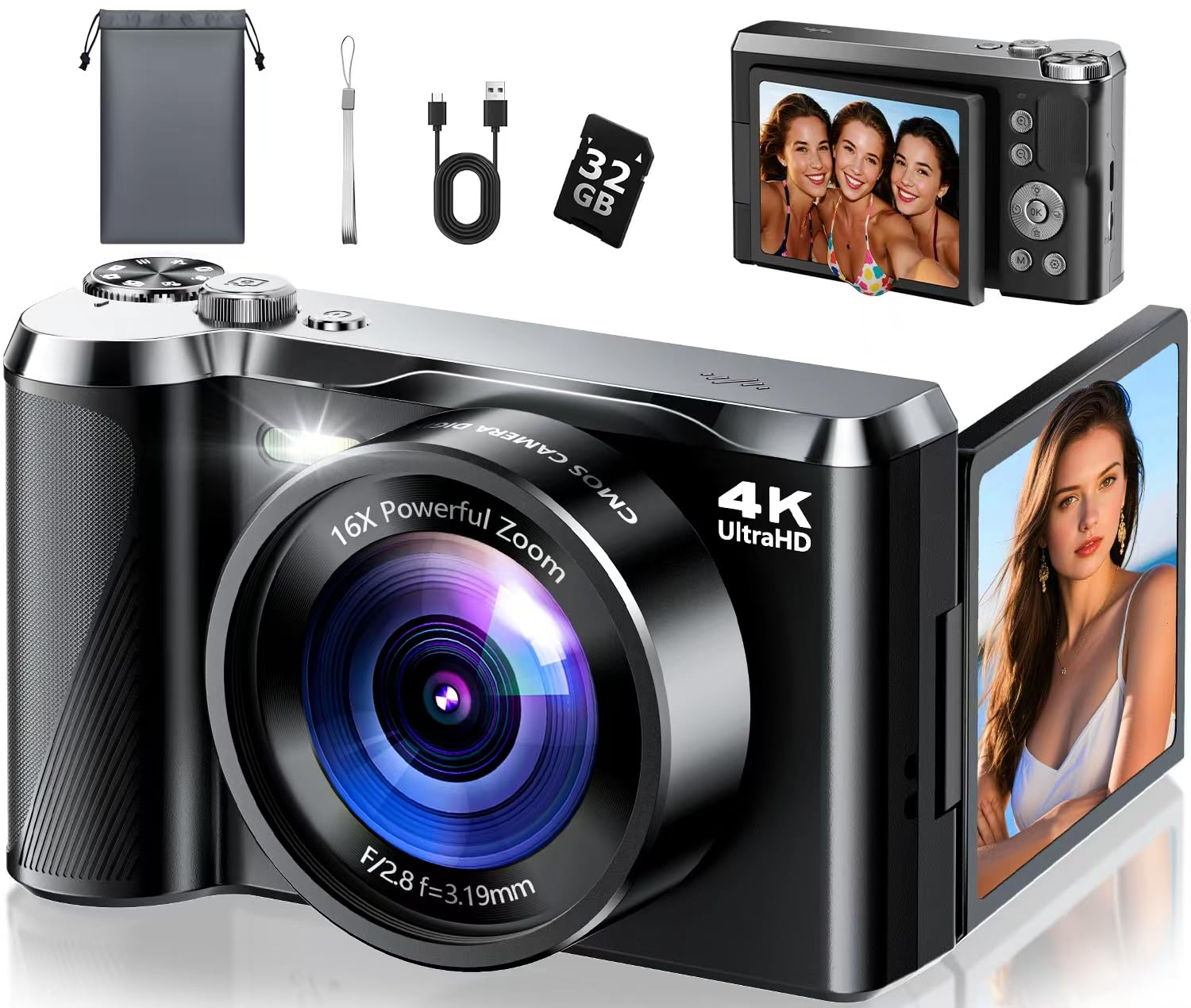
The Ploomen 56MP camera focuses on what matters most for a tween: speed. Its 0.2-second autofocus lock is the fastest in this price range, which means fewer missed shots of a skateboard trick or a dog jumping for a frisbee. The 56MP still resolution and 4K video are paired with a 3-inch IPS 180-degree flip screen, making self framing as easy as flipping the display up.
The 16X digital zoom and electronic anti-shake stabilization work together to reduce blur from hand movement, and a built-in fill light assists in dim indoor settings. The 2000mAh battery capacity is larger than most peers, allowing extended shooting sessions without swapping cells. A 32GB memory card and USB-C charging are included in the box.
The Ploomen’s image quality is consistent in good lighting, with lively colors that don’t require heavy editing. Low-light shots show noise, and the image stabilization reduces but doesn’t eliminate motion blur. The menu interface is simple enough for a tween to navigate without help, and the pocket-friendly size means it won’t be left at home due to bulk.
Why it’s great
- 0.2-second autofocus is best-in-class for the price
- 2000mAh battery lasts significantly longer than competitors
- Compact size and simple interface suit young users
Good to know
- Image noise increases in low-light conditions
- 16X digital zoom loses detail at max range
- Anti-shake helps but does not fully eliminate blur
7. Kodak PIXPRO FZ45 Digital Camera

The Kodak PIXPRO FZ45 is the simplest camera on this list—and that’s its superpower. With a 16MP sensor and 4X optical zoom, it doesn’t chase high megapixel numbers or gimmicky video resolutions. Instead, it focuses on reliable point-and-shoot operation with a 27mm wide-angle lens and a 2.7-inch LCD screen. The optical zoom is notable because it maintains image quality at full extension, unlike the digital zoom systems in most budget competition.
The FZ45 runs on two AA alkaline batteries (included), which is a double-edged sword: they’re easy to replace anywhere, but they drain quickly compared to rechargeable lithium packs. The camera supports up to 512GB SD, SDHC, or SDXC cards, so storage is effectively unlimited. It records 1080p full HD video, which is sufficient for social media but below the 4K standard of other models in this list.
The absence of autofocus (it uses contrast detection) and a flip screen limits its appeal for selfie-focused tweens. The built-in flash is effective for close-up indoor shots. Several users strongly advise replacing the included batteries with name-brand lithium or rechargeable AAs for reasonable longevity. The Kodak name carries brand trust, but the feature set is minimal—ideal for a very young or easily overwhelmed user.
Why it’s great
- Optical 4X zoom preserves image quality
- AA batteries are universally available for quick replacement
- Simple operation perfect for young beginners
Good to know
- No flip screen or autofocus
- AA batteries drain quickly; buy rechargeables
- Only 1080p video; no 4K option
FAQ
Should I buy a DSLR or a point-and-shoot for my tween?
How many batteries should a tween camera come with?
Is a flip screen necessary for a tween camera?
What memory card size do I need for a tween camera?
Can a tween use a camera with digital zoom only?
Final Thoughts: The Verdict
For most users, the digital camera for tweens winner is the Canon EOS Rebel T7 Kit because it offers interchangeable lenses, DSLR image quality, and a path to grow into serious photography. If you want WiFi sharing and creative lens variety without breaking the bank, grab the FLATIC 5K WiFi Camera. And for a budget-friendly all-in-one kit that works straight out of the box, nothing beats the Duluvulu 4K 48MP Camera.

Mo Maruf
I created WellFizz to bridge the gap between vague wellness advice and actionable solutions. My mission is simple: to decode the research and give you practical tools you can actually use.
Beyond the data, I am a passionate traveler. I believe that stepping away from the screen to explore new environments is essential for mental clarity and physical vitality.