Our readers keep the lights on and my smoothie glass nicely filled. As an Amazon Associate, I earn from qualifying purchases.
Capturing a game-winning goal, a last-second sprint, or a perfectly timed jump requires a camera that can think and fire faster than the action itself. The difference between a blurry streak and a frame-worthy shot comes down to autofocus speed, burst rate, and the sensor’s ability to handle fast-changing light.
I’m Mohammad Maruf — the founder and writer behind WellFizz. I’ve spent hundreds of hours analyzing technical specifications, comparing real-world burst speeds and autofocus systems, and curating the best options for photographers who demand sharp results from the sideline or the bleachers.
This guide cuts through the noise to help you find the best digital camera for sports, with picks ranging from versatile mirrorless options to proven DSLRs built for speed.
How To Choose The Best Digital Camera For Sports
Sports photography demands a camera that combines rapid shooting, reliable subject tracking, and good performance in less predictable lighting. Before you buy, focus on three critical areas that separate an action-ready camera from a general-purpose model.
Burst Rate and Buffer Depth
Burst rate, measured in frames per second (fps), determines how many consecutive shots a camera can capture while the shutter is pressed. A minimum of 8 fps is recommended for most team sports, while faster action like motorsports or track events benefits from 12 fps or higher. Equally important is the buffer depth — the number of frames the camera can hold before it slows down. A shallow buffer can stop the action mid-play, forcing you to wait before shooting again.
Autofocus Tracking and Coverage
Phase-detection autofocus systems with wide coverage across the frame allow the camera to lock onto a moving subject and keep it sharp. Look for cameras with dedicated subject-tracking modes for people and animals, especially models that use AI-based algorithms. The more autofocus points spread across the sensor, the better the camera handles subjects moving unpredictably across the frame.
Sensor Size and Low-Light Performance
Full-frame sensors generally offer superior low-light performance and shallower depth of field, which helps isolate a subject against a busy background. APS-C sensors provide a crop factor that effectively extends the reach of telephoto lenses — a real advantage when shooting from the stands. Choose full-frame for indoor arenas or evening games, and APS-C for outdoor field sports where extra reach matters.
Quick Comparison
On smaller screens, swipe sideways to see the full table.
| Model | Category | Best For | Key Spec | Amazon |
|---|---|---|---|---|
| Canon EOS R10 | Mirrorless | Action tracking & vlogging | 15fps mech / 23fps electronic burst | Amazon |
| Nikon D7500 | DSLR | Field sports with telephoto reach | 8fps continuous with 51-point AF | Amazon |
| Canon EOS R50 | Mirrorless | Entry-level mirrorless speed | 15fps electronic shutter, Dual Pixel AF II | Amazon |
| Canon EOS RP | Full-Frame Mirrorless | Indoor/low-light sports | Full-frame sensor, 5-stop IS kit lens | Amazon |
| Sony a7R III | Full-Frame Mirrorless | High-resolution action & detail | 42.4MP sensor, 10fps with AF/AE | Amazon |
| Canon EOS R | Full-Frame Mirrorless | Controlled action shots & portrait-sports | 0.05s AF, 5,655 selectable points | Amazon |
| Canon EOS 2000D / Rebel T7 | DSLR | Budget-friendly sports entry | 3fps burst, 9-point AF system | Amazon |
In‑Depth Reviews
1. Canon EOS R10 Mirrorless Camera Kit with RF-S 18-45mm Lens
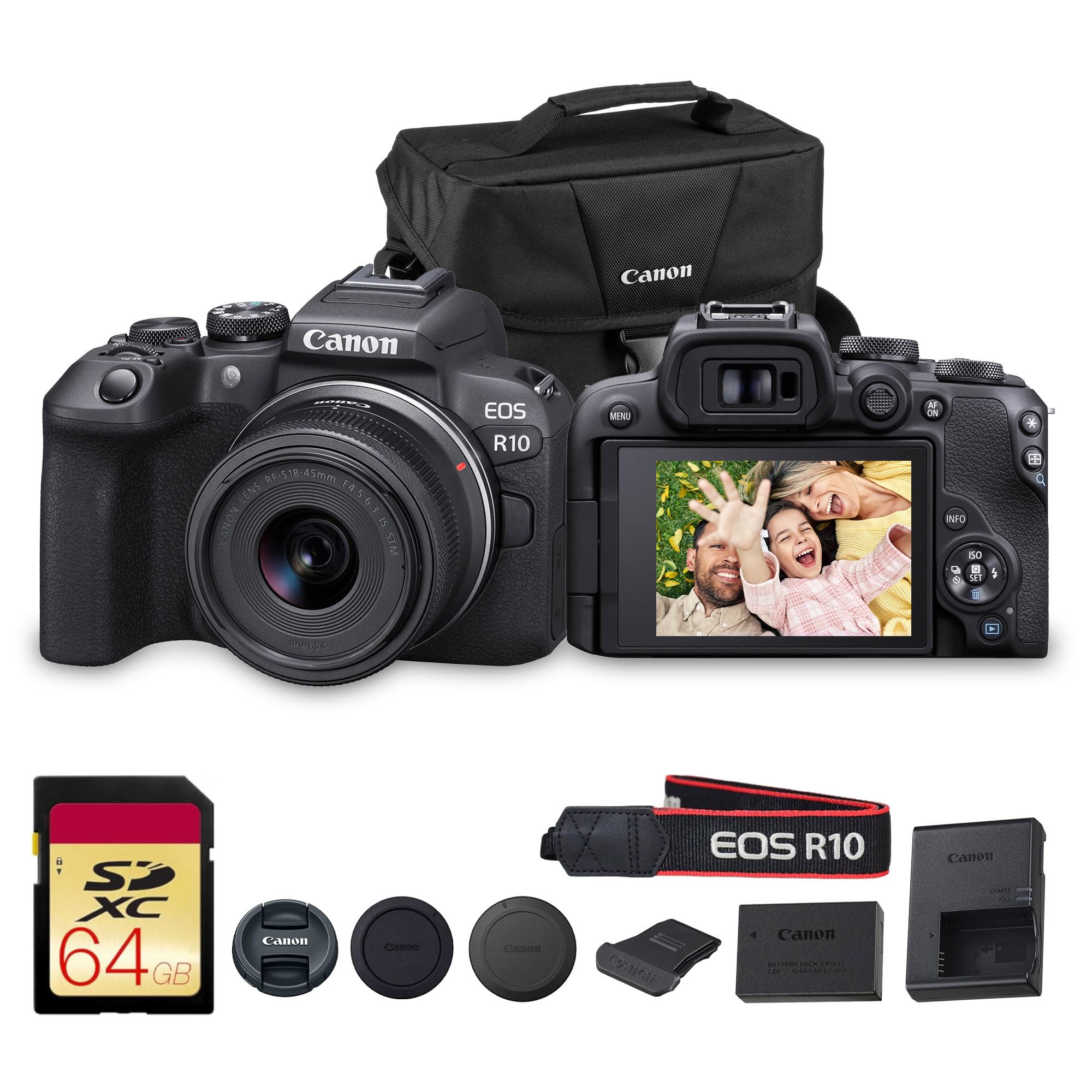
The Canon EOS R10 hits the sweet spot for sports shooters who want mirrorless technology without jumping to full-frame prices. Its 24.2MP APS-C sensor paired with the DIGIC X processor delivers a burst rate of 15 frames per second with the mechanical shutter and a staggering 23 fps with the electronic shutter. That kind of speed, combined with Canon’s advanced Dual Pixel CMOS AF II, means you can track a sprinting wide receiver or a cycling peloton with reliable precision. The RF-S 18-45mm kit lens offers a decent starting range, and the crop factor gives extra reach for field-side shooting.
The vari-angle touchscreen makes it easy to frame low-angle sideline shots or overhead action without contorting your body. Weighing under 430 grams, the R10 is light enough to hold steady for an entire match. The autofocus system includes subject-tracking modes for people, animals, and vehicles, which simplifies composition when the play is moving fast and unpredictably.
Beginner-friendly guided menus and customizable dials allow you to grow into more manual control as your sports photography skills develop. The kit bundle includes a 64GB memory card and shoulder bag, so you’re ready to shoot out of the box. Just be aware that the included shoulder bag has a strong plastic smell initially, and the RF-S lens ecosystem is still expanding — plan for an adapter if you want to use older EF glass.
Why it’s great
- Exceptional 23 fps burst with electronic shutter captures critical moments.
- Dual Pixel CMOS AF II tracks people, animals, and vehicles reliably.
- Lightweight body ideal for handheld shooting during long games.
- 4K 60p slow-motion video for highlight reels.
Good to know
- APS-C sensor limits low-light performance compared to full-frame options.
- RF-S lens lineup is still maturing; EF adapter may be needed for longer telephoto.
- Kit bag has a noticeable chemical odor when new.
2. Nikon D7500 20.9MP DSLR with AF-S DX NIKKOR 18-140mm Lens

The Nikon D7500 is a proven DSLR workhorse that borrows its metering and image processing from the flagship D500. Its 20.9MP APS-C sensor and EXPEED 5 processor deliver 8 fps continuous shooting, which is enough for most field and court sports. The 51-point autofocus system includes 15 cross-type sensors and group-area AF that locks onto subjects even in cluttered backgrounds — ideal for tracking a soccer player through a crowd of teammates.
The included 18-140mm f/3.5-5.6 VR lens offers an effective zoom range of 27-210mm in full-frame terms, giving you solid reach for sideline work without switching lenses. The 3.2-inch tilting touchscreen LCD simplifies low-angle shots, and the weather-sealed body gives you confidence when shooting under overcast skies or in light drizzle. Battery life is excellent, easily lasting through a full tournament day without needing a swap.
While the D7500 lacks the latest mirrorless tech like real-time exposure previews or silent electronic shutters, its optical viewfinder provides a lag-free view of the action — something many sports photographers still prefer. The 4K UHD video at 30 fps and stereo sound are functional for quick clips, but the camera’s real strength remains its fast, accurate phase-detection AF and durable build. The 18-140mm lens delivers good image quality across its range, making this a reliable one-lens solution for amateur and intermediate sports shooters.
Why it’s great
- 51-point AF with 15 cross-type sensors tracks subjects in complex scenes.
- Weather-sealed body and excellent battery life for all-day events.
- 18-140mm VR lens provides versatile reach for field sports.
- Optical viewfinder offers zero-lag action framing.
Good to know
- 8 fps burst is lower than many mirrorless competitors at this price tier.
- Heavier build compared to mirrorless alternatives.
- Only one SD card slot for backup redundancy.
3. Canon EOS R50 Mirrorless Camera Body (White) Bundle
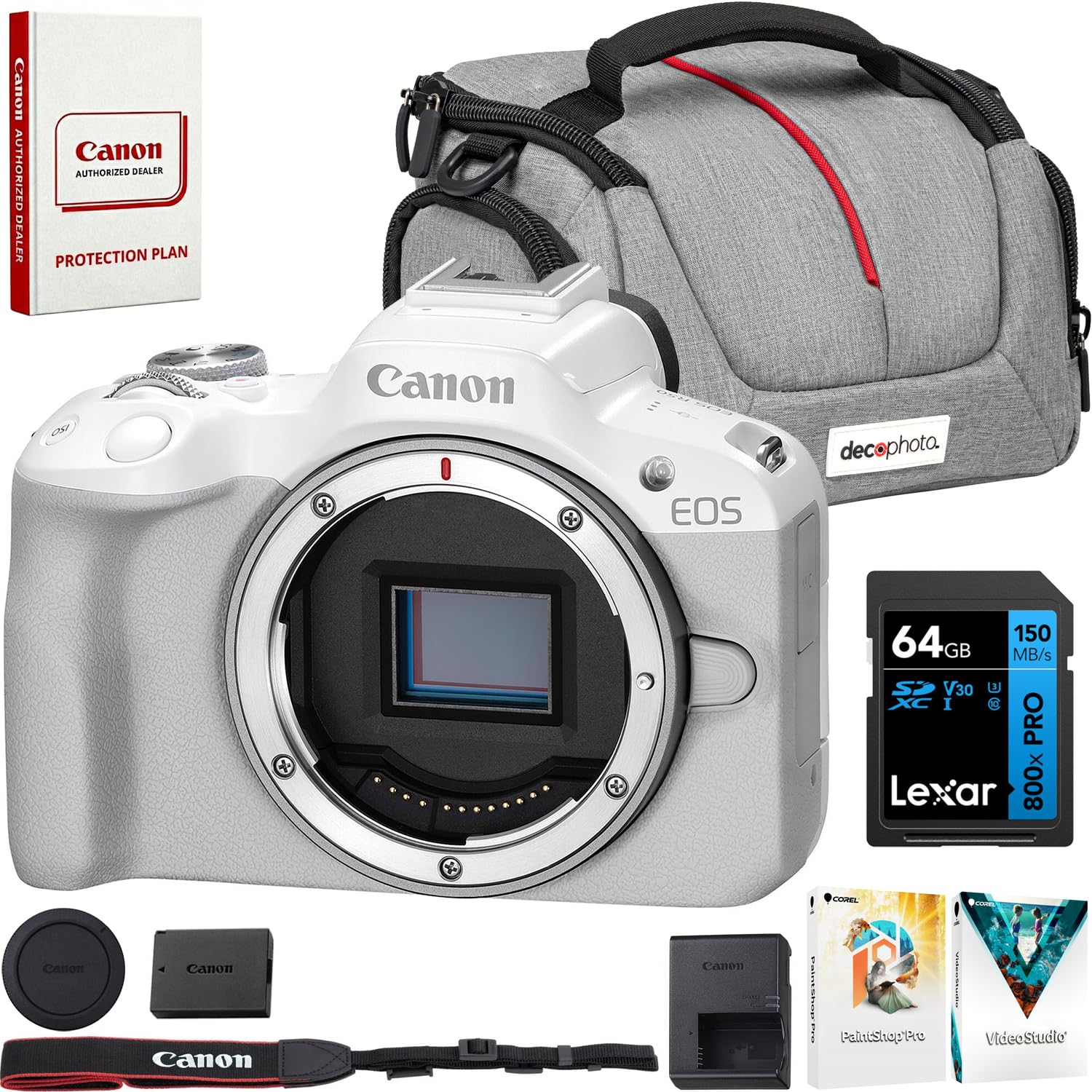
Canon’s EOS R50 packs a 24.2MP APS-C sensor and the DIGIC X processor into a body that’s smaller and lighter than most entry-level DSLRs, yet still offers 15 fps shooting with the electronic shutter. The Dual Pixel CMOS AF II system inherits subject-tracking technology from Canon’s higher-end R-series models, making it surprisingly capable of tracking kids on a soccer field or a dog catching a frisbee. The 4K video is oversampled from 6K, delivering crisp slow-motion clips for sharing highlights.
The white color option gives this camera a distinct look that stands out on the sideline, and the vari-angle touchscreen makes it easy to shoot from awkward angles. The bundle includes a 64GB Lexar SD card, a Deco Essentials camera bag, and a Corel Photo Video Suite, which adds post-processing value for those just starting to edit their sports shots. The guided menu system helps new users understand how aperture and shutter speed affect action shots.
Battery life is the main limitation — expect to carry a spare for full-day tournaments. The included bag is functional but a bit cramped if you plan to add a telephoto zoom later. The camera is also UVC/UAC compatible, meaning it can double as a high-quality webcam for streaming or coaching review sessions. Overall, the R50 is a smart entry point for someone who wants mirrorless speed without spending into the thousand-plus range.
Why it’s great
- 15 fps electronic shutter in a compact, lightweight body.
- Subject-tracking AF from higher-end Canon mirrorless models.
- 6K oversampled 4K video for sharp highlight clips.
- Guided UI helps beginners learn sports photography settings.
Good to know
- Battery life is limited; a spare is recommended for long shoots.
- Kit bag is compact and may not fit larger telephoto lenses.
- Body-only kit requires lens purchase or adapter for existing glass.
4. Canon EOS RP Full-Frame Mirrorless with RF24-105mm Lens Kit

The Canon EOS RP is one of the most affordable ways to get a full-frame sensor into your sports kit. The larger sensor handles indoor arena lighting and dusk games far better than APS-C alternatives, delivering clean images at higher ISO settings. The RF 24-105mm f/4-7.1 IS STM kit lens includes optical stabilization that helps keep shots sharp when you’re shooting handheld from the stands, and the maximum magnification of 0.4x allows for passable close-ups of gear or pre-game moments.
The Dual Pixel CMOS AF system provides face-detection autofocus that works reliably for slower-moving sports like baseball, volleyball, or swimming, where subjects follow more predictable paths. The vari-angle touchscreen is great for overhead or low-angle compositions, and the electronic viewfinder gives a real-time preview of exposure — helpful when adjusting settings between innings. The body is compact and lightweight for a full-frame camera, making it comfortable for extended handheld use.
It’s critical to note the limits: 4K video comes with a significant crop factor and a 30-minute recording limit, and the burst rate isn’t competitive for high-speed action like sprinting or motorsports. The kit lens also lacks a dedicated AF/MF switch, requiring menu diving to toggle. For budget-conscious shooters who prioritize image quality over raw speed, especially in lower light, the RP is a strong contender. Consider pairing it with a fast prime or a longer RF telephoto for better sports results.
Why it’s great
- Full-frame sensor delivers excellent low-light performance for indoor sports.
- Lightweight and compact for a full-frame body.
- 5-stop image stabilization on kit lens helps handheld shots.
- Face-detection AF works well for predictable action.
Good to know
- Burst rate is too slow for fast continuous action.
- 4K video has a significant crop and 30-minute limit.
- Kit lens AF/MF control requires menu navigation.
5. Sony a7R III Full-Frame Mirrorless 42.4MP Camera Body

The Sony a7R III is a resolution monster that doesn’t sacrifice speed. Its 42.4MP back-illuminated full-frame sensor pairs with an updated BIONZ X processor to deliver 10 fps continuous shooting with continuous autofocus and auto-exposure tracking — a rare combination in the high-resolution category. The 399-point phase-detection AF system includes eye-tracking for humans and animals, ensuring that even fast-moving subjects remain critically sharp across the frame.
The 1200-zone evaluative metering handles tricky sideline lighting well, and the 10 fps burst can be sustained for a solid sequence before the buffer fills. The electronic viewfinder is crisp and responsive, and the weather-sealed magnesium alloy body inspires confidence in unpredictable conditions. Battery life is excellent for a mirrorless camera, easily lasting through a standard match or cross-country meet without needing a charge.
The menus are dense and take time to customize, but the extensive button mapping and the high-resolution sensor make this a top-tier choice for sports photographers who also shoot landscapes or portraits. The lack of a fully articulated touchscreen is a minor drawback, and the 4K video is limited to 30 fps without cropping. Still, for those who want to crop deep into a frame after the shot and still retain detail, the a7R III delivers pro-grade results. The body-only package means you’ll need to budget for a quality telephoto lens to realize its full sports potential.
Why it’s great
- 42.4MP sensor allows aggressive cropping while retaining detail.
- 10 fps continuous shooting with full AF/AE tracking.
- Excellent battery life for all-day shooting.
- Weather-sealed body built for outdoor conditions.
Good to know
- Complex menu system requires time to configure.
- Body-only — requires separate lens purchase for sports.
- Touchscreen is limited to focus point selection only.
6. Canon EOS R Full-Frame Mirrorless Body

The Canon EOS R was Canon’s first full-frame mirrorless body, and it brought the brand’s renowned color science into a new mount system. The 30.3MP CMOS sensor paired with the DIGIC 8 processor offers a burst rate of up to 12 fps when using fixed zone AF, and the Dual Pixel CMOS AF system covers a massive 5,655 manually selectable points. The 0.05-second autofocus speed makes it reactive for sports like basketball or tennis, where subject movement is rapid but somewhat contained.
The built-in electronic viewfinder with 3.69 million dots provides a clear, lag-free preview of your exposure settings — removing the guesswork that comes with optical viewfinders. The magnesium alloy chassis is durable, and the silent electronic shutter mode is a lifesaver when shooting golf, tennis, or other quiet sports where shutter noise is disruptive. The vari-angle touchscreen LCD is excellent for awkward sideline or floor-level angles.
Servo AF burst drops lower than the fixed zone rate, so burst performance isn’t consistent across all AF modes. The 4K video has a crop factor and a 30-minute recording limit, which limits its utility for extended game recording. Eye AF works best within 15-20 feet, making it more suited to court sports than wide-field action. For photographers transitioning from a Canon DSLR who want a familiar menu system with full-frame quality, the EOS R is a solid choice — especially when paired with RF-mount telephoto glass or an EF adapter for existing lenses.
Why it’s great
- 30.3MP full-frame sensor delivers excellent low-light and color quality.
- Massive 5,655 AF points for precise subject tracking.
- Silent electronic shutter ideal for quiet sports environments.
- Durable magnesium alloy body built for pro use.
Good to know
- Servo AF burst rate is slower than fixed zone.
- 4K video includes a crop and 30-minute recording cap.
- Eye AF performance drops at distances beyond 20 feet.
7. Canon EOS 2000D / Rebel T7 DSLR 3-Lens Bundle

The Canon EOS 2000D, also known as the Rebel T7, is the budget-friendly entry point for sports photography. The 24.1MP APS-C sensor and DIGIC 4+ processor deliver decent image quality for its price, and the 9-point AF system with AI Servo AF can track slower-moving subjects in good lighting. It shoots at 3 fps, which is sufficient for posed team shots, static action like a pitcher on the mound, or beginner practice sessions where the pace is controlled.
This deluxe bundle includes an 18-55mm lens, a wide-angle and telephoto lens, a 128GB memory card, a flash, a tripod, a filter kit, and a carrying case — everything a newcomer needs to start shooting. The built-in Wi-Fi and NFC allow quick image transfers to a phone for social sharing. The Scene Intelligent Auto mode simplifies exposure for beginners who aren’t yet comfortable with manual controls.
Optical zoom is limited to 3x with the included lens, and the 3 fps burst rate will miss fast plays and critical moments. The bundle tripod is flimsy and likely to break within months, so plan to replace it. The T7 is best suited for learners who want to understand exposure fundamentals at a low cost; for serious sports shooting, consider a faster body. It’s a capable starter camera but not a long-term action photography solution.
Why it’s great
- Very low entry cost for learning photography basics.
- Bundle includes lenses, memory, flash, and accessories.
- Built-in Wi-Fi for quick image sharing.
- Simple Scene Intelligent Auto mode for beginners.
Good to know
- 3 fps burst rate is too slow for fast-paced sports action.
- 9-point AF system is basic for tracking moving subjects.
- Bundle tripod is low quality and prone to breaking.
- Only 3x optical zoom with kit lens is limited for field sports.
FAQ
What is the minimum burst rate I need for sports photography?
Should I choose a full-frame or APS-C sensor for sports?
Does mirrorless or DSLR matter for sports photography?
Final Thoughts: The Verdict
For most users, the best digital camera for sports winner is the Canon EOS R10 because its combination of 23 fps burst speed, reliable Dual Pixel CMOS AF II, and lightweight mirrorless design offers the best balance of performance and value for sideline shooters. If you need full-frame low-light performance for indoor games and can work with a slower burst rate, grab the Canon EOS RP. And for high-resolution detail with the ability to crop deeply — the Sony a7R III stands alone in its class.

Mo Maruf
I created WellFizz to bridge the gap between vague wellness advice and actionable solutions. My mission is simple: to decode the research and give you practical tools you can actually use.
Beyond the data, I am a passionate traveler. I believe that stepping away from the screen to explore new environments is essential for mental clarity and physical vitality.