Our readers keep the lights on and my smoothie glass nicely filled. As an Amazon Associate, I earn from qualifying purchases.
Balancing a college budget with the need for a capable camera is a classic student dilemma. You need something that can capture crisp lecture notes, document weekend adventures, and develop your photography skills without emptying your wallet or being too bulky for a crowded backpack. The right camera bridges the gap between a smartphone’s convenience and the creative control of a dedicated system.
I’m Mohammad Maruf — the founder and writer behind WellFizz. I’ve analyzed dozens of camera specifications, real-world reviews, and value propositions to build this guide specifically for the student mindset, where every dollar spent must earn its keep in versatility and longevity.
This guide breaks down the top options to help you find the right digital camera for college students that fits your major, your lifestyle, and your budget.
How To Choose The Best Digital Camera For College Students
A college camera needs to be a jack-of-all-trades: portable enough for daily carry, capable enough for class projects, and durable enough to survive a semester in a backpack. Prioritizing the right specs from the start saves you from buyer’s remorse halfway through the year.
Sensor Size and Image Quality
The sensor is the heart of the camera. For students, an APS-C or Micro Four Thirds sensor offers a massive leap in image quality over a smartphone, especially in low-light lecture halls or evening study sessions. A larger sensor captures more light, giving you better detail, less noise, and the ability to create that desirable blurred-background effect (bokeh) in portraits. While full-frame sensors (like the one in the Canon EOS RP) are superior, they often push the budget and lens costs higher. For most student needs, a modern APS-C sensor provides the best balance of quality and cost.
Portability and Build
You’ll be carrying this camera between classes, libraries, and social events. Weight and size are critical. Mirrorless cameras, like the Canon EOS R100 or Sony ZV-E10, are generally more compact than traditional DSLRs like the Canon EOS Rebel T7. Look for a body that feels secure in your hand, has responsive controls, and doesn’t require a dedicated camera bag to transport. A flip-out or tilting touchscreen is a major plus for vlogging, group selfies, or shooting from awkward angles during a campus event.
Autofocus Performance
A reliable autofocus system ensures you don’t miss the shot. For students covering everything from a professor’s lecture demo to a fast-moving intramural sports game, look for cameras with phase-detection autofocus points. Systems with human and animal eye detection, like the Dual Pixel CMOS AF II in the Canon EOS R8, make tracking moving subjects effortless. A higher number of autofocus points generally means better coverage across the frame, reducing the chance of your subject falling out of focus.
Video Capabilities
Video is no longer an afterthought for college creatives. Whether you’re producing a film project, creating content for a club, or just filming a group trip, 4K video recording is a valuable feature. Look for cameras that offer clean 4K without heavy cropping, as this gives you more flexibility in post-processing. Features like a headphone jack for monitoring audio (rare in entry-level models) or in-body image stabilization (IBIS) for smooth handheld footage can be decisive for video-heavy students.
Quick Comparison
On smaller screens, swipe sideways to see the full table.
| Model | Category | Best For | Key Spec | Amazon |
|---|---|---|---|---|
| Canon EOS R8 | Mirrorless | Premium All-Rounder | 24.2MP Full-Frame Sensor | Amazon |
| Nikon Z50 II | Mirrorless | Creative Presets | 20.9MP DX (APS-C) Sensor | Amazon |
| Canon EOS RP | Mirrorless | Entry Full-Frame | 26.2MP Full-Frame Sensor | Amazon |
| Sony a7 III | Mirrorless | Pro-Level Hybrid | 24.2MP Full-Frame BSI Sensor | Amazon |
| Sony ZV-E10 | Mirrorless | Vlogging & Content | 24.2MP APS-C Sensor | Amazon |
| Panasonic LUMIX G85 | Mirrorless | Video Stabilization | 16MP Micro Four Thirds Sensor | Amazon |
| Canon EOS R100 | Mirrorless | Compact Entry Point | 24.1MP APS-C Sensor | Amazon |
| Canon EOS Rebel T7 | DSLR | Traditional Learning | 24.1MP APS-C Sensor | Amazon |
| Sony Alpha a3000 | Mirrorless | Budget DSLR-Style | 20.1MP APS-C Sensor | Amazon |
In‑Depth Reviews
1. Canon EOS R8 Mirrorless Camera Body

For the student who wants a serious creative tool without the bulk of a professional rig, the Canon EOS R8 is a standout. It packs a 24.2MP full-frame sensor and the latest DIGIC X processor into Canon’s lightest full-frame RF mount body, making it a powerhouse for both photography and video. The Uncropped 4K 60p video, oversampled from 6K, delivers incredibly sharp footage that rivals cameras costing much more.
The Dual Pixel CMOS AF II is a game-changer for reliability, with 1,053 AF zones and intelligent subject detection that tracks people, animals, and even vehicles with precision. For a student balancing a journalism major with freelance work, this autofocus speed means you never miss a critical moment. The 40fps electronic shutter with full AF is exceptional for capturing action shots at a campus sports event.
While the battery life is a known limitation (around 500 shots per charge), and there is no in-body stabilization, the sheer image quality and video versatility justify the premium price for a student serious about their craft. It offers pro-level results that can carry you well beyond graduation.
Why it’s great
- Uncropped 4K 60p with 10-bit internal recording
- Incredibly fast and intelligent Dual Pixel CMOS AF II
- Lightweight full-frame body perfect for daily carry
Good to know
- Shorter battery life requires carrying a spare
- No in-body image stabilization
- Single SD card slot
2. Nikon Z50 II Mirrorless Camera

The Nikon Z50 II is a thoughtfully designed mirrorless camera that makes creating unique content feel effortless. Its 20.9MP DX-format (APS-C) sensor is a clear step above any smartphone, and the standout feature is the Picture Control button, which gives you instant access to 31 built-in presets. Students can dial in a specific look—vintage, cinematic, or vibrant—right in the camera, saving hours of editing time for social media posts or class projects.
Autofocus is robust, with reliable subject detection for people, dogs, cats, birds, and vehicles, including dedicated bird and airplane modes—a fun feature for aviation or nature enthusiasts on campus. The 4K UHD/60p video and in-camera 120p slow-motion in Full HD make it a capable tool for video essays and short films. The body is compact and lightweight, fitting easily into a laptop bag.
The built-in flash is a practical addition for indoor evening events, and connectivity via the Nikon SnapBridge app is seamless for quick sharing. The only minor downsides are a shorter battery life and a single card slot, but for the student who values creativity and ease of use, the Z50 II is a compelling and enjoyable choice.
Why it’s great
- 31 unique Picture Control presets for immediate creative looks
- Excellent subject detection AF including animals and vehicles
- Compact, weather-sealed design for campus life
Good to know
- Battery life is limited; plan for a spare
- Only one SD card slot
- No in-body sensor cleaning
3. Canon EOS RP + RF24-105mm Lens Kit

Entering the full-frame world has never been more accessible than with the Canon EOS RP. This camera offers a 26.2MP full-frame sensor in a lightweight, travel-friendly body that is a joy to use for photography. The bundled RF24-105mm F4-7.1 IS STM lens is an incredibly versatile walk-around zoom, covering wide-angle landscapes to portrait-length telephoto, complete with 5 stops of optical image stabilization for sharp handheld shots.
The image quality is a significant step up from any APS-C camera, offering superior low-light performance, beautiful color science, and impressive depth of field control. For a student majoring in photography, film, or fine arts, the RP provides a professional-level canvas for learning about exposure and composition. The 1080p video is excellent with Canon’s excellent face-detection AF, though the 4K mode has a crop and limited features.
The RP is a fantastic platform for exploring the Canon RF lens ecosystem. It feels solid and well-built, with a simple menu system that is easy to navigate. While the burst rate is slow and the single card slot is a limitation for professional use, as a primary tool for a serious student, it offers incredible image quality and value for the price.
Why it’s great
- Excellent full-frame image quality at an entry-level price
- Lightweight and comfortable to hold for long shoots
- Versatile kit lens with 24-105mm range and stabilization
Good to know
- 4K video has significant crop and no Dual Pixel AF
- Slow 5fps mechanical burst rate
- Single SD card slot
4. Sony a7 III + 28-70mm Lens

The Sony a7 III has become a legend for a reason. Its 24.2MP back-illuminated full-frame sensor delivers phenomenal dynamic range and low-light performance that was once reserved for flagship cameras. With 693 phase-detection and 425 contrast AF points covering 93% of the image, the autofocus is fast and tenacious, making it an ideal tool for a student who needs to capture anything from a theater performance to a busy street scene.
The 15-stop dynamic range gives you incredible flexibility to push shadows and recover highlights in post-processing, a huge advantage for learning advanced editing techniques. The 10fps silent or mechanical shutter with AE/AF tracking is more than capable for action. Battery life is exceptional, rated for about 710 shots per charge, which will easily last through a full day of shooting.
The kit lens (28-70mm) is a reliable starting point, but the real power of this camera is unlocked with high-quality glass. The menu system can be initially overwhelming, but its performance and robust build quality make it a camera you can grow into for years. For a dedicated student who plans to freelance or build a portfolio, the a7 III is a professional investment that pays dividends.
Why it’s great
- Industry-leading dynamic range and low-light performance
- Fast and reliable 693-point phase-detection AF system
- Excellent battery life for all-day shooting
Good to know
- Menu system can be complex for beginners
- Kit lens is decent but upgrade is recommended
- Weather sealing may not be as robust as some competitors
5. Sony Alpha ZV-E10
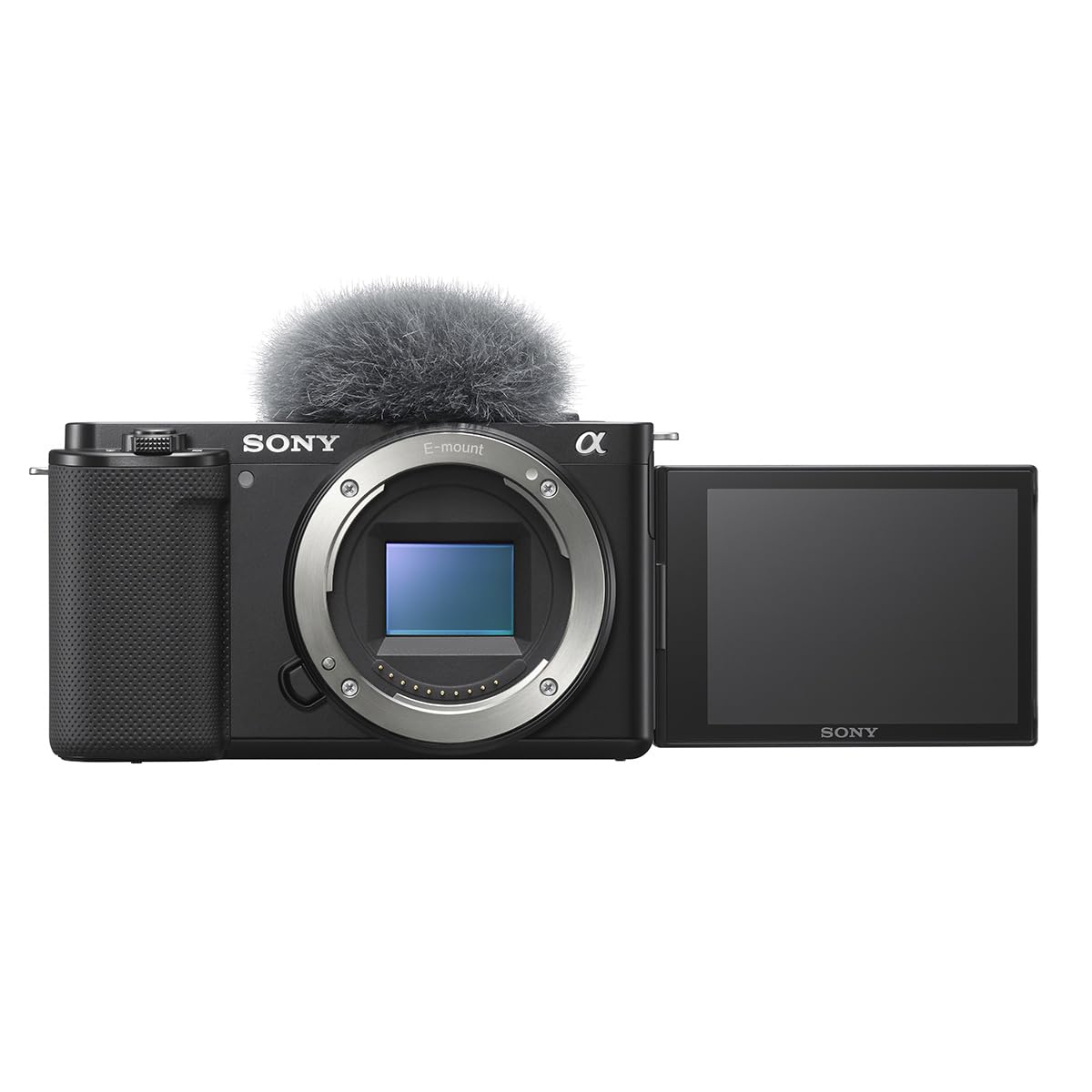
The Sony ZV-E10 is arguably the best dedicated content creation camera for students. It is purpose-built for the vlogging and social media generation, with features like the Product Showcase Setting, which quickly pulls focus from your face to an object in front of you. The Background Defocus button allows you to instantly toggle a shallow depth-of-field for a more professional look, all without diving into complex menus.
Under the hood, it features a large 24.2MP APS-C sensor and a BIONZ X processor that delivers sharp 4K video oversampled from 6K. The 425-point phase-detection autofocus with real-time Eye AF for both humans and animals is incredibly sticky, ensuring you stay in perfect focus while moving around. The flip-out screen is ideal for self-recording, and the built-in directional 3-capsule mic provides better audio than most entry-level cameras.
It is lightweight, compact, and can easily be used as a high-quality webcam via USB for online classes. Its design sacrifices a viewfinder (relying on the screen) and lacks in-body stabilization, but for the student focused on video essays, reviews, or documenting their art, its tailored feature set is unmatched at this tier.
Why it’s great
- Product Showcase and Background Defocus modes simplify video creation
- Excellent 4K quality and reliable real-time Eye AF
- Compact, lightweight body with a versatile flip-out screen
Good to know
- No viewfinder and no in-body image stabilization
- Battery life is modest, especially in 4K
- Can suffer from rolling shutter in fast pans
6. Panasonic LUMIX G85 + 12-60mm Lens

For the student who shoots a lot of video handheld, the Panasonic LUMIX G85 is a standout. Its secret weapon is the class-leading 5-axis in-body dual image stabilization (IBIS), which works seamlessly with the lens-based stabilization to produce incredibly smooth footage, effectively turning any lens into a stabilized platform. This feature alone makes it a fantastic choice for documentary work, event coverage, or just daily vlogging without a gimbal.
The 16MP Micro Four Thirds sensor, while smaller than APS-C, offers excellent resolving power and a healthy boost in fine detail thanks to the lack of a low-pass filter. The camera is built like a tank with a magnesium alloy front plate and weather sealing, giving you confidence in unpredictable weather. The 4K video output is crisp, and the exclusive Lumix 4K Photo modes let you pull high-resolution stills from video bursts.
The articulating touchscreen and excellent electronic viewfinder make composition easy. The kit lens (12-60mm) offers a very versatile 24-120mm equivalent range. While the Micro Four Thirds sensor has a noise penalty at very high ISOs compared to larger sensors, the G85’s combination of build quality, stabilization, and value makes it an enduringly popular choice for the practical student.
Why it’s great
- Exceptional dual image stabilization for smooth handheld video
- Weather-sealed, durable build for campus life
- Versatile kit lens with a useful zoom range
Good to know
- Micro Four Thirds sensor has higher noise at high ISOs
- Battery life is below average
- No headphone jack for audio monitoring
7. Canon EOS R100 + RF-S18-45mm Lens

The Canon EOS R100 is the perfect gateway into the world of mirrorless cameras. It is the smallest and lightest body in the EOS R series, making it incredibly easy to slip into a bag or even a large coat pocket. Its 24.1MP APS-C sensor produces beautiful, vibrant images straight out of camera, and the DIGIC 8 processor offers responsive performance that is very beginner-friendly.
It features Dual Pixel CMOS AF with 143 zones and human face and eye detection, making autofocus simple and reliable for portraits and everyday shooting. The ability to shoot 4K video (at up to 24fps) and high-speed Full HD at 60fps gives you room to grow your video skills. The kit lens, a compact RF-S18-45mm, is a perfect match, providing a standard zoom range for most subjects.
While the body lacks in-body stabilization and the 4K video is limited in framerate, the R100 is about simplicity, portability, and exceptional image quality at an entry-level price point. It is an ideal first real camera for a student who wants to learn the fundamentals of photography and videography without feeling overwhelmed by a complex array of features.
Why it’s great
- Extremely compact and lightweight design
- Reliable Dual Pixel CMOS AF with face detection
- Great starting point into the Canon RF system
Good to know
- No in-body image stabilization
- 4K video is limited to 24fps
- Charger not included in the box
8. Canon EOS Rebel T7 DSLR Kit

The Canon EOS Rebel T7 is the quintessential beginner’s DSLR. For a student who wants to learn the fundamental principles of photography—aperture, shutter speed, and ISO—through a traditional optical viewfinder, this camera is the perfect training tool. The 24.1MP APS-C sensor delivers excellent image quality in good light, and the included EF-S 18-55mm lens covers the basics for everyday photography.
The 9-point AF system is basic by modern standards but perfectly adequate for learning manual focus and understanding composition. The camera is lightweight for a DSLR and features built-in Wi-Fi and NFC for easy sharing of your work. The deep grip and familiar DSLR interface are comfortable to hold and easy to operate, making it a great platform for taking a photography 101 class.
It is a robust and reliable entry point that will teach you the core skills you need before moving to a more advanced system. The autofocus can be slow in low light, and the video is limited to Full HD, but for its intended purpose of building a strong photographic foundation, it remains a highly capable and affordable choice for the budget-conscious student.
Why it’s great
- Excellent tool for learning photography basics with an optical viewfinder
- Lightweight and comfortable for a DSLR
- Good image quality and solid battery life
Good to know
- Autofocus system is dated and struggles in low light
- No 4K video recording
- SD card not included in the box
9. Sony Alpha a3000 + 18-55mm OSS Lens

The Sony Alpha a3000 is a unique entry that blends a DSLR-like form factor with a mirrorless internals. It features a 20.1MP APS-C sensor that produces very good images, particularly at lower ISO settings. The built-in electronic viewfinder (EVF) is a rare and valuable feature at its price point, giving you a clear, bright view even in bright sunlight—a huge advantage over using just a rear LCD.
The body has a comfortable, deep grip that feels like a traditional DSLR, making it easy to handle with larger lenses. It shoots Full HD video and offers useful features like manual focus peaking, which helps you achieve critical focus with adapted vintage lenses—a fun and cheap way to experiment. Its lightweight build makes it an excellent travel companion for documenting trips and campus life.
The resolution of the EVF and LCD are lower than modern standards, and the autofocus is slower, relying on contrast detection. Battery life is also a known weakness. However, for the student with the absolute tightest budget who wants interchangeable lenses and an EVF, the a3000 offers incredible value. It’s a bare-bones but capable platform to start your photographic journey.
Why it’s great
- Integrated electronic viewfinder for a budget price
- Very comfortable and secure grip for handling
- Good image quality from a large APS-C sensor
Good to know
- Poor battery life requires frequent recharging
- Low-resolution EVF and LCD screen
- Slow contrast-detection autofocus system
FAQ
Is a full-frame camera worth it for a college student?
Can I use a digital camera as a webcam for online classes?
What is the difference between a DSLR and a mirrorless camera for a student?
How important is 4K video for a college camera?
Should I buy a kit lens or a body-only camera?
Final Thoughts: The Verdict
For most users, the digital camera for college students winner is the Canon EOS R8 because it offers an unbeatable combination of professional-grade full-frame image quality, uncropped 4K video, and lightning-fast autofocus in a lightweight body that won’t weigh you down between classes. If you want a more affordable entry point with creative flexibility, grab the Nikon Z50 II. And for the budget-conscious student focused on vlogging and content creation, nothing beats the tailored feature set of the Sony ZV-E10.

Mo Maruf
I created WellFizz to bridge the gap between vague wellness advice and actionable solutions. My mission is simple: to decode the research and give you practical tools you can actually use.
Beyond the data, I am a passionate traveler. I believe that stepping away from the screen to explore new environments is essential for mental clarity and physical vitality.