Our readers keep the lights on and my smoothie glass nicely filled. As an Amazon Associate, I earn from qualifying purchases.
Breaking clay soil with a cheap, flimsy digging fork is a frustrating cycle of bent tines and broken handles. A proper fork needs to transfer your force into the ground without flexing or snapping, turning a back-breaking chore into a productive session. The right tool is forged from a single piece of steel or uses a welded socket that can handle your full body weight on the step.
I’m Mohammad Maruf — the founder and writer behind WellFizz. I analyze hundreds of customer test results and spec sheets to separate tools built for a single season from those engineered for a lifetime of service.
This guide breaks down the seven best models available, from forged carbon steel legends to stainless steel workhorses, so you can confidently pick the best digging fork for your garden’s unique demands.
How To Choose The Best Digging Fork
Digging forks look similar at first glance, but the metallurgy, handle attachment, and geometry separate a heirloom tool from a disposable one. Focus on these three factors before you buy.
Head Material and Tine Gauge
Carbon steel heads — especially forged carbon steel — resist bending better than lower-grade stainless. Forged carbon steel (like the Spear & Jackson Neverbend) uses a single hot-stamped piece that aligns the grain structure along the tine, making it virtually unbendable under normal digging. Stainless steel heads (like the Berry&Bird) offer rust resistance but require thicker cross-sections to achieve similar stiffness. Check the tine gauge: thicker tines (roughly 8mm to 10mm square) handle rocky soil, while thinner tines (6mm) are adequate for raised beds and sandy loam.
Handle Construction and Grip Style
The handle-to-socket junction is the most common failure point. Look for a head that extends into a solid socket — either a forged eye (continuous metal from tine to handle) or a deep welded socket with a steel collar. Wood handles offer comfort and shock absorption, but ash or hickory is essential for strength; softwoods snap unpredictably. D-grip handles (like Truper 30293 and Berry&Bird) give lateral control during lifting, while T-handles (like Ymachray) reduce wrist strain during twisting motions. Fiberglass handles (Nohovu) never rot but transmit more vibration.
Flat vs. Curved Tine Profile
Flat tines with a slight diamond cross-section penetrate compacted soil with less resistance than round tines. Curved tines (often called “banana tines”) are better for lifting and turning heavy clods but create more friction during initial entry. For general digging — breaking new beds, dividing perennials, aerating clay — flat, square-section tines offer the best balance of penetration and lift. The Truper and TABOR TOOLS models use flat tines that slice into hard ground instead of bulldozing it.
Quick Comparison
On smaller screens, swipe sideways to see the full table.
| Model | Category | Best For | Key Spec | Amazon |
|---|---|---|---|---|
| Spear & Jackson Neverbend | Forged Carbon Steel | Breaking hard clay and rocky soil | 5.4 lb, 39.17″ ash handle, 4 tines | Amazon |
| TABOR TOOLS J59A | Alloy Steel Shaft | Heavy clay and root penetration | 40″ solid-steel shaft, 4 tines | Amazon |
| Berry&Bird Digging Fork | Stainless Steel | General cultivation and raised beds | 6.24 lb, 43.9″ ash D-grip handle | Amazon |
| Ymachray 5-Tine | Stainless Steel | Clay soil with leverage bracket | 41.3″ steel shaft, 5 tines | Amazon |
| Truper 30293 | Steel Head with Wood Handle | Turning compost and annual beds | 30″ wood D-handle, 4 tines | Amazon |
| Dikuyeel Heavy Duty | Manganese Steel | Budget-friendly general digging | 45″ wood handle, 4.4 lb | Amazon |
| Nohovu 5 Tine | Fiberglass Handle | Mulching and moving compost | 58″ fiberglass handle, 5 tines | Amazon |
In‑Depth Reviews
1. Spear & Jackson Neverbend Professional Digging Fork

The Spear & Jackson Neverbend is built with solid forged carbon steel tines that handle cement-like clay with zero deflection. The tines are thick and heat-treated to maintain their edge and shape even when you step hard on the shoulders. It weighs in at 5.4 pounds with a 39.17-inch weatherproofed hardwood shaft, giving you enough heft to drive deep but not so much that you fatigue quickly.
Users report this fork breaks up heavy clay that would stall cheaper tools. The 4-tine design provides ample lift for turning soil and aerating without excessive side loading. The handle is made from ash, which absorbs shock better than fiberglass, and the shaft is sealed against moisture to prevent rot over seasons of use.
One reviewer noted the handle snapped at an unusual spot, though this appears rare given the 39-inch length. The Neverbend tolerates root penetration better than most, with a 6’3″ user confirming it handles tough terrain effectively. For those dealing with compacted ground, this fork is a genuine time-saver.
Why it’s great
- Forged carbon steel tines resist bending in rocky and clay-heavy soil.
- Weatherproofed ash wood handle dampens vibrations during extended digging.
- 39-inch length provides comfortable leverage for tall users up to 6’3″.
Good to know
- Wood handle is susceptible to snapping if side-loaded on large rocks.
- Heavier than some alternatives at 5.4 pounds.
2. TABOR TOOLS Digging Fork J59A

The TABOR TOOLS J59A uses a solid alloy steel shaft from head to handle — no wood, no fiberglass, no possible rot. The 4 tines are welded directly to the shaft in a single unit, creating a monolithic structure that transfers all your force into the ground. At 40 inches, it offers a balanced reach for general digging without feeling oversized.
Owner testimonials highlight its performance in black clay soil where wood-handled competitors broke during the first use. The black oxide finish adds corrosion resistance, and the flat tines slice through compacted dirt with minimal effort. One user dug up dense sunflower stalks without bending a tine, unlike a previous fork from a big-box store.
The trade-off is weight and lack of shock absorption. The all-steel construction transmits more vibration through the grip than a wood or fiberglass handle. Some tall users wish it were 12 inches longer for a more upright posture. Still, for anyone who prioritizes longevity above all else, this fork is as close to indestructible as it gets.
Why it’s great
- One-piece alloy steel shaft eliminates handle breakage entirely.
- Welded tine-to-shaft connection outperforms riveted or clamped designs.
- Black oxide finish resists corrosion in wet conditions.
Good to know
- Lacks vibration dampening — wearing gloves is recommended for extended use.
- 40-inch length may feel short for users over 6 feet tall.
3. Berry&Bird Gardening Digging Fork

The Berry&Bird fork pairs a stainless steel 4-tine head with an ergonomic ash wood D-grip handle sourced from FSC-certified forests. Stainless steel offers excellent rust resistance, making this a strong choice for wet coastal gardens or year-round outdoor storage. The 43.9-inch overall length is the longest in this comparison, reducing back strain during extended sessions.
Customer reviews confirm it performs well for aerating raised beds and moving compost, with straight tines that pull cleanly out of the soil without sticking. The D-grip provides secure lateral control when lifting heavy clods. One user reported three months of beach-adjacent use with no visible rust, validating the stainless head’s corrosion protection.
The head is bolted to the handle rather than welded, which means the wood handle remains replaceable but the socket isn’t as robust as a forged eye. Users in heavy clay note they avoid prying sideways to protect the joint. For general cultivation in medium soil, this fork balances weight, comfort, and environmental conscience.
Why it’s great
- Stainless steel head provides outstanding rust resistance in damp conditions.
- 43.9-inch ash wood handle reduces bending for taller gardeners.
- FSC-certified wood supports sustainable forest management.
Good to know
- Bolted handle connection is less durable than a forged or welded socket.
- Heavier than similar wood-handled forks at 6.24 pounds.
4. Ymachray 5-Tine Heavy Duty Pitch Fork

The Ymachray 5-tine stands out with a stainless steel head and a welded boron steel blade that can outperform a rototiller on compacted soil. Its unique design includes an extra bracket lever that acts as a step bar and lifting fulcrum, reducing the force needed to break heavy clay. The T-handle geometry eases stress on the hand and wrist compared to standard D-grips.
Reviews consistently praise its ability to cut through Georgia red clay without bending. The 41.3-inch length and 6-pound weight provide enough momentum to penetrate hard ground, yet the fork remains light enough for comfortable handling. One user with back issues found it essential for avoiding strain during deep digging sessions.
This tool is not designed for side-to-side prying — the lever bracket is for downward pressure and lifting only. Users in rocky soil should avoid twisting it to prevent tine damage.
Why it’s great
- Lever bracket provides mechanical advantage for penetrating hard clay.
- Weld-free T-handle reduces wrist and hand fatigue during repetitive use.
- Stainless steel head resists rust and minimizes soil adhesion.
Good to know
- Not suited for side-to-side prying in rocky ground.
- Handle could be 6 inches longer for very tall users.
5. Truper Spading Fork 30293
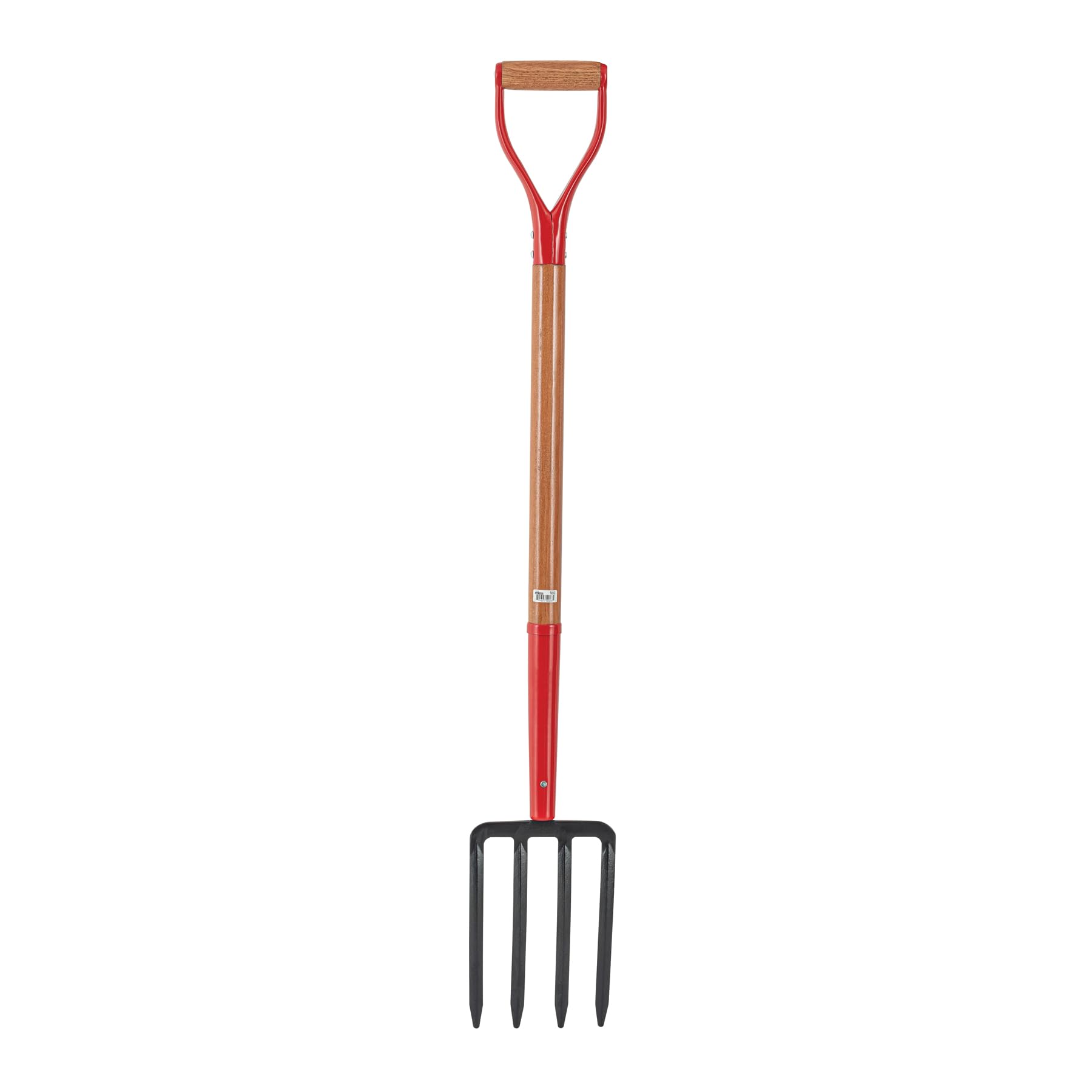
The Truper 30293 is a traditional 4-tine spading fork with a steel head and a 30-inch wood D-handle. Its compact size makes it highly maneuverable in tight raised beds and between established plants. The green-painted ash handle provides a comfortable grip, and the D-grip gives solid control when turning compost or lifting soil.
Users note its sturdy construction for routine garden tasks like dividing perennials and aerating mulch. One reviewer had the same model for ten years before a tine eventually broke in light soil — a testament to its durability in normal conditions. The weight sits at 3.7 pounds, making it one of the lighter options here, which reduces fatigue during all-day gardening.
The handle is slightly shorter than most digging forks at 30 inches, which may cause taller gardeners to bend more than they’d like. And while the steel head is strong, it can flex on large rocks if you apply maximum force. It’s best suited for maintenance work rather than breaking new, hard-packed ground.
Why it’s great
- Compact 30-inch build excels in raised beds and tight planting areas.
- Proven longevity with users reporting a decade of service.
- Low weight minimizes fatigue during extended weeding and turning.
Good to know
- Short handle forces bending for users over 5’10”.
- Tines may bend under excessive force in rocky earth.
6. Dikuyeel Heavy Duty Garden Fork

The Dikuyeel fork uses a manganese steel head with an anti-rust coating and a 45-inch wooden D-handle. Manganese steel offers good elasticity and high tensile strength, making this head resistant to bending and cracking under heavy loads. The one-piece roll-forging process ensures the tines are part of a continuous metal structure, not welded attachments.
Customer reviews confirm its ability to handle ice removal and clay soil without damage. The 4.4-pound weight and 45-inch length hit a comfortable middle ground for adults of average height. The sharp V-shaped tines are designed to penetrate hard soil efficiently, making it suitable for digging, loosening, and harvesting root vegetables.
Some users note that the handle can cause blisters until the tool breaks in, so gloves are advisable for the first few sessions. The packaging could also be improved — the fork arrived in an oversized box, though no damage was reported. Overall, it delivers solid performance at a budget-friendly price for casual to moderate use.
Why it’s great
- Manganese steel head offers good impact resistance against hard soil.
- One-piece roll-forging ensures structural continuity across the head.
- 45-inch handle reduces back strain for average-height users.
Good to know
- Handle texture may cause blisters before the tool breaks in.
- Oversized packaging increases shipping waste volume.
7. Nohovu 5 Tine Pitchfork

The Nohovu 5-tine model is built for volume work: mulch turning, hay moving, and manure management. Its 58-inch fiberglass handle is the longest in this group, reducing the need to bend during use. The head is made of carbon steel with a rust-resistant coating, and the handle features two over-molded non-slip grip zones for sweaty or gloved hands.
Weighing just 3.88 pounds, it is one of the lightest five-tine forks available. Users praise its balanced feel and the fact that it costs less than similar tools from big-box hardware stores. One reviewer noted that at 6’1″, the long handle provides an ergonomic posture for extended sessions without lower back strain.
The fork arrived well-rated but some customers noted packaging issues — one unit had slightly bent tines due to insufficient protection during shipping. The lightweight fiberglass handle is great for portability but transmits more vibration than ash wood. It’s ideal for gardeners who prioritize reach and low weight but don’t face extreme clay conditions.
Why it’s great
- 58-inch fiberglass handle nearly eliminates bending for tall users.
- Lightweight at 3.88 pounds reduces fatigue during repetitive lifting.
- Five tines increase carrying capacity for mulch and leaves.
Good to know
- Packaging may allow tine bending during transit.
- Fiberglass transmits more vibration than wood handles.
FAQ
Do I need a 4-tine or 5-tine digging fork?
Can I use a digging fork as a pry bar for rocks?
Should I choose a wood or steel handle for my digging fork?
Final Thoughts: The Verdict
For most users, the best digging fork winner is the Spear & Jackson Neverbend because its forged carbon steel tines and ash wood handle deliver the best balance of strength, shock absorption, and longevity for both clay and loam. If you want zero risk of handle failure, grab the TABOR TOOLS J59A — its all-steel construction is the most durable option available. And for coastal gardeners or those who prioritize rust resistance, nothing beats the Berry&Bird with its stainless steel head and FSC-certified ash handle.

Mo Maruf
I created WellFizz to bridge the gap between vague wellness advice and actionable solutions. My mission is simple: to decode the research and give you practical tools you can actually use.
Beyond the data, I am a passionate traveler. I believe that stepping away from the screen to explore new environments is essential for mental clarity and physical vitality.