Our readers keep the lights on and my smoothie glass nicely filled. As an Amazon Associate, I earn from qualifying purchases.
That tight, distended feeling after a meal isn’t just uncomfortable—it can derail your entire afternoon. The right digestive support targets the root cause of gas and water retention, helping you feel lighter without overhauling your diet.
I’m Mohammad Maruf — the founder and writer behind WellFizz. I’ve spent hundreds of hours analyzing enzyme profiles, strain libraries, and clinical data to separate supplements that actually work from those that just market well.
This guide cuts through the noise to find the truly effective options so you can eat confidently again. I’ve researched and ranked the top formulas to give you a clear, actionable list of the best digestive enzymes for bloating right now.
How To Choose The Best Digestive Enzymes For Bloating
Not all gut supplements are created equal. Some target gas from fermentation, others help break down specific food proteins. To pick the right one, you need to look past the label and focus on three key factors that actually drive results.
Strain Diversity vs. Targeted Action
A broad probiotic blend (10–15 strains) supports overall microbiome balance, which is ideal for general digestive health. However, if your bloating is triggered by specific foods—like dairy or gluten—a formula with targeted enzymes like DPP-IV or lactase will offer faster relief. Some products combine both approaches.
CFU Count and Survivability
Colony-forming units (CFU) indicate the number of live microorganisms per dose. For bloating, 30–60 billion CFU is common, but count isn’t everything. Look for acid-resistant capsules or enteric coatings that protect the bacteria from stomach acid so they reach the intestines alive.
Additional Digestive Aids
Enzymes like amylase, lipase, and protease break down carbs, fats, and proteins directly. Botanicals like ginger, fennel, and peppermint can calm the gut lining and reduce gas production. A formula that layers enzymes with these herbs often provides more complete bloating relief than a probiotic alone.
Quick Comparison
On smaller screens, swipe sideways to see the full table.
| Model | Category | Best For | Key Spec | Amazon |
|---|---|---|---|---|
| HUM Flatter Me Extra Strength | Enzyme Blend | Fast-acting debloating | 18 full-spectrum enzymes | Amazon |
| Physician’s CHOICE Probiotics 60B | Probiotic + Prebiotic | Daily microbiome support | 60 Billion CFU, 10 strains | Amazon |
| Florastor Advanced Gas and Bloat | Probiotic + Enzymes | Gas & bloating from S. boulardii | Lipase, protease, cellulase | Amazon |
| Garden of Life Once Daily | Pre/Pro/Postbiotic | Gas relief with triple action | 50 Billion CFU, 15 strains | Amazon |
| Integrative Therapeutics Similase GFCF | Targeted Enzyme | Gluten & casein digestion | DPP-IV activity support | Amazon |
In‑Depth Reviews
1. HUM Flatter Me Extra Strength Digestive Enzymes

HUM Formulates this extra-strength blend with 50% more digestive enzymes than their original, packing 18 full-spectrum enzymes including lipase, amylase, and bromelain. Users report feeling noticeably less bloated within 30 minutes of taking it with a meal—a speed that sets it apart from probiotics that need days to build up.
The inclusion of ginger and peppermint leaf serves a dual purpose: these botanicals help calm the gut lining and reduce gas production directly. Many reviewers noted a visible change in their waistline after consistent use, suggesting the formula also helps with water retention around the abdomen.
With 60 capsules per bottle, this is a two-month supply at one per meal. The capsules are easy to swallow and don’t require refrigeration. A few users mentioned mild residual bloating if they ate exceptionally heavy meals, but overall satisfaction remains very high.
Why it’s great
- Fast-acting debloating in under an hour
- Broad enzyme coverage for proteins, carbs, and fats
- Botanicals help soothe the gut naturally
Good to know
- Higher price point for the enzyme category
- Not a probiotic—does not build long-term microbiome
2. Physician’s CHOICE Probiotics 60 Billion CFU

This formula delivers 60 billion CFUs from 10 diverse strains, paired with organic prebiotics to feed the good bacteria once they arrive. It’s a general-purpose probiotic designed to address occasional constipation, diarrhea, gas, and bloating—making it a strong all-around choice for daily gut health maintenance.
The acid-resistant capsules and shelf-stable bottle ensure the bacteria survive stomach acid and remain viable without refrigeration. Many users reported reduced bloating within the first week and improved regularity after a month. Some noted stronger immunity as a side benefit, staying healthy when others around them fell ill.
Each bottle provides a 30-day supply. The capsules are odorless and easy to swallow. A few long-term users mentioned they switch probiotics every few months to prevent their body from adapting, but the vast majority saw consistent results with this product alone.
Why it’s great
- High CFU count with prebiotic support
- No refrigeration needed for storage
- Third-party tested for purity and potency
Good to know
- May take a week to notice bloating relief
- Some users rotate strains for best long-term effect
3. Florastor Advanced Gas and Bloat Probiotic

Florastor takes a unique approach by centering on the clinically studied strain Saccharomyces boulardii CNCM I-745, which has over 70 years of safety research. They pair it with a digestive enzyme blend—amylase, protease, cellulase, and lipase—plus botanicals ginger, fennel seed, and peppermint leaf for immediate gas relief.
This dual-action format is ideal for people who want both short-term gas relief and long-term gut resilience. Customers reported feeling bloating control within two days of starting, and many appreciated that the formula works even when taken alongside antibiotics without destroying the probiotic benefit.
The capsules are vegetarian, gluten-free, and free of titanium dioxide. A 30-count bottle provides a 15-day supply at the recommended dose of two capsules daily. Some users noted the cost per serving is higher than broader probiotics, but the targeted results justify the price for those with persistent gas issues.
Why it’s great
- Fast gas relief within 48 hours for many users
- Works alongside antibiotics without killing the probiotic
- Enzymes plus botanicals for immediate support
Good to know
- Higher daily cost due to two-capsule serving
- Lower CFU counts than multi-strain competitors
4. Garden of Life Once Daily Pre/Pro/Postbiotic
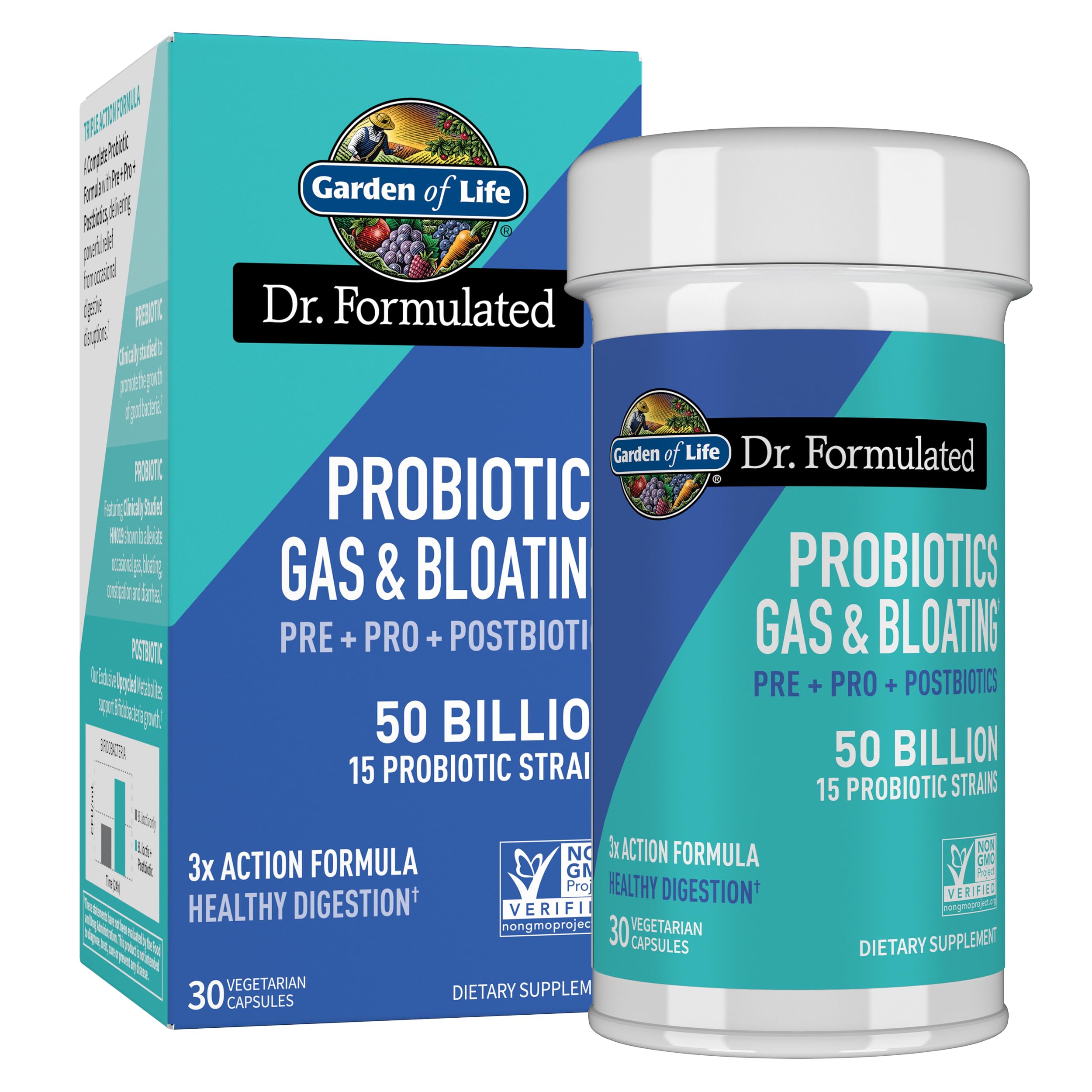
Garden of Life’s Wholebiotic formula combines prebiotics, probiotics, and postbiotics in one vegetarian capsule—a rare triple-action approach. With 50 billion CFUs from 15 clinically studied strains including HN019, plus organic potato and acacia fiber as prebiotics, it targets occasional gas and bloating from multiple angles.
The postbiotic component is derived from upcycled ingredients, adding sustainability to the product’s appeal. It is NSF Certified Gluten-Free, Non-GMO, vegan, and shelf-stable. Users consistently report relief from bloating and appreciate the once-daily convenience that doesn’t require timing with meals like some enzyme products do.
Some long-term users noted that the formula’s effectiveness can taper after a few months—a pattern common with fixed-strain probiotics. Rotating with a different probiotic every quarter was a suggested workaround. Overall, it’s a clean, well-rounded option for those seeking daily digestive balance.
Why it’s great
- One capsule per day is highly convenient
- Includes postbiotics for extra gut support
- Certified gluten-free and non-GMO
Good to know
- Effectiveness may fade with extended use
- Not enzyme-based—no quick carb/fat breakdown
5. Integrative Therapeutics Similase GFCF
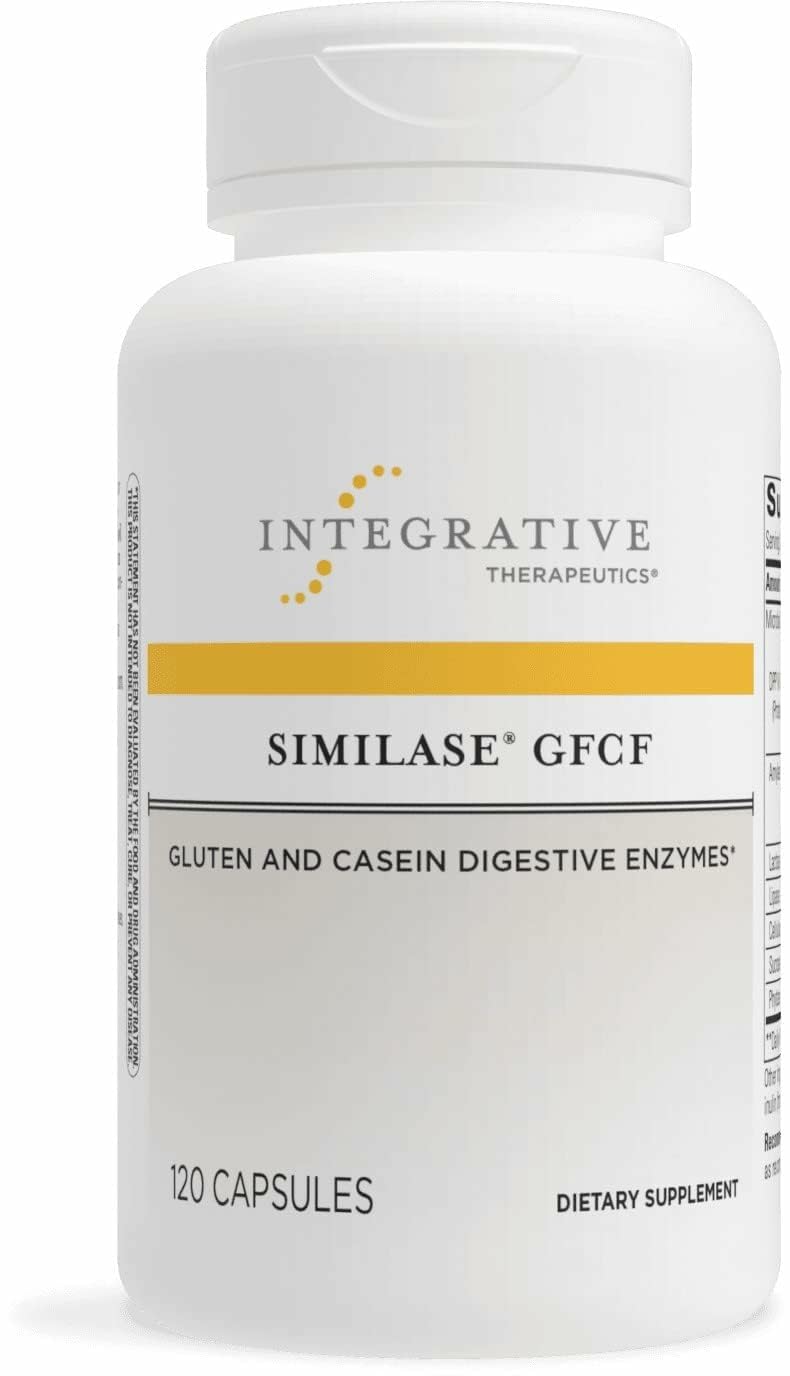
Similase GFCF is a specialist enzyme supplement built for digesting gluten and casein. It supports dipeptidyl peptidase IV (DPP-IV) activity, which breaks down the proline-rich peptides in these proteins that often trigger bloating in sensitive individuals. This makes it a go-to for those with gluten or dairy intolerances.
The formula is dairy-free, vegan, and free from artificial colors or preservatives. Users with celiac or alpha-gal syndrome report it allows small amounts of trigger foods without the usual pain, gas, and exhaustion. Many say it works better than general enzyme blends for their specific need.
At 120 capsules per bottle (60 servings, two per meal), it offers strong value for targeted use. Some users experienced excess gas when starting, which subsided with continued use. The brand’s 25-year reputation for quality and transparency adds confidence for long-term supplementation.
Why it’s great
- Specifically targets gluten and casein digestion
- Long-standing brand with clinical trust
- Large bottle provides two months of support
Good to know
- May cause initial gas as gut adjusts
- Requires two capsules per serving
FAQ
Should I take digestive enzymes with or without food for bloating?
Can digestive enzymes for bloating cause more gas at first?
How long does it take for digestive enzymes to reduce bloating?
Final Thoughts: The Verdict
For most users, the best digestive enzymes for bloating winner is the HUM Flatter Me Extra Strength because its 18-enzyme blend paired with gut-soothing botanicals delivers rapid, reliable debloating without requiring a long-term commitment. If you want a daily microbiome foundation with solid bloating relief, grab the Physician’s CHOICE Probiotics 60B. And for those specifically struggling with gluten or dairy triggers, nothing beats the Integrative Therapeutics Similase GFCF.

Mo Maruf
I created WellFizz to bridge the gap between vague wellness advice and actionable solutions. My mission is simple: to decode the research and give you practical tools you can actually use.
Beyond the data, I am a passionate traveler. I believe that stepping away from the screen to explore new environments is essential for mental clarity and physical vitality.