Our readers keep the lights on and my smoothie glass nicely filled. As an Amazon Associate, I earn from qualifying purchases.
The moment the grid goes dark, your priorities shift from convenience to survival. A diesel generator for home use isn’t a luxury—it’s the difference between a spoiled freezer, a dark house, and a real emergency. These machines deliver the sustained, fuel-efficient power that gasoline units simply can’t match, especially during multi-day outages where fuel availability becomes the deciding factor. The market is flooded with options, but only a handful of models combine the wattage, durability, and transfer-switch readiness that a real home backup system demands.
I’m Mohammad Maruf — the founder and writer behind WellFizz. I’ve spent countless hours cross-referencing engine displacements, surge watt ratings, fuel consumption data, and real-world customer experiences across dozens of portable and standby generators to separate the true workhorses from the marketing fluff.
This guide cuts through the noise to present only the most reliable, spec-verified options for keeping your family safe and powered. After reviewing every major player, I’ve built a focused list of the best diesel generator for home backup, prioritizing models with proven whole-house capability and robust build quality.
How To Choose The Best Diesel Generator For Home
Selecting the right generator hinges on understanding your home’s specific power appetite. A unit that hums along powering a few lights and a fridge will choke trying to start a central air conditioner or a well pump. You need to calculate your running wattage (the continuous power draw) and your starting wattage (the surge needed to kick on motor-driven appliances like refrigerators and AC compressors). A generator that is only 10-20% above your calculated load is a recipe for brownouts and frustration during an outage.
Wattage and Fuel Type: The Core Decision
Your first decision is the power floor. For a typical home, 10,000 running watts is the bare minimum to cover a fridge, a few lights, a furnace fan, and a well pump. Larger homes with central AC or electric heat need 15,000 running watts or more. Fuel type is equally critical. Dual-fuel models (gasoline and propane) offer flexibility but require storing volatile fuel. Standby generators connected to natural gas or a large propane tank provide nearly limitless runtime, making them the gold standard for long-term emergency preparedness.
Start Method and Safety Features
Electric start with a key fob or remote start is a massive convenience during a storm. You don’t want to be fighting a pull cord in the rain. Look for models with reliable battery-included key-start systems. Carbon monoxide (CO) detection with automatic shutoff is no longer optional—it is a safety essential that can save lives if the generator is placed too close to a home’s intake. Low-oil shutdown and automatic voltage regulation (AVR) protect the generator itself and your sensitive electronics from damage.
Transfer Switch and Outlet Readiness
A generator is only useful if you can safely connect it to your home. A transfer switch (manual or automatic) is the professional, code-compliant way to power your home without backfeeding into the grid and endangering utility workers. Look for models that are explicitly “transfer switch ready” with a NEMA 14-50R 50-amp outlet. For standby units, the transfer switch is integrated into the purchase, making installation straightforward for a licensed electrician.
Quick Comparison
On smaller screens, swipe sideways to see the full table.
| Model | Category | Best For | Key Spec | Amazon |
|---|---|---|---|---|
| Generac 22kW Guardian | Automatic Standby | Whole-house, no-refuel backup | 22,000W / 999cc G-Force engine | Amazon |
| Westinghouse 28kW | Open Frame Portable | Massive whole-home power | 28,000W peak / 999cc V-Twin | Amazon |
| DuroMax XP15000HX | Dual Fuel Portable | Heavy-duty jobsite/home hybrid | 15,000W / 670cc engine | Amazon |
| Champion 11kW Inverter | Inverter Portable | Quiet, clean power for electronics | 11,000W / 64 dBA / 459cc | Amazon |
| DuroMax XP11000iH | Inverter Dual Fuel | Clean power, fuel flexible | 11,000W / 459cc / <3% THD | Amazon |
| Westinghouse 14.5kW | Dual Fuel Portable | Larger homes, propane primary | 14,500W peak / 550cc engine | Amazon |
| Generac 10kW Guardian | Automatic Standby | Budget standby, small homes | 10,000W / 460cc G-Force | Amazon |
| Westinghouse 12.5kW (CO) | Dual Fuel Portable | Best value whole-house portable | 12,500W peak / 457cc engine | Amazon |
| Westinghouse 12.5kW | Dual Fuel Portable | Reliable mid-range backup | 12,500W peak / 457cc engine | Amazon |
| DuroStar DS13000MX | Dual Fuel Portable | Entry-level whole-home power | 13,000W peak / 500cc engine | Amazon |
| WEN DF1100T | Dual Fuel Portable | Budget-conscious home backup | 11,000W peak / 457cc engine | Amazon |
| OSCAL PowerMax 6000 | Solar Generator | Clean, quiet zero-fuel backup | 6000W AC / 3600Wh LiFePO4 | Amazon |
| EcoFlow Delta Pro Ultra | Solar Generator | High-capacity solar + battery | 7200W AC / 6144Wh LiFePO4 | Amazon |
In‑Depth Reviews
1. Generac 22kW Guardian
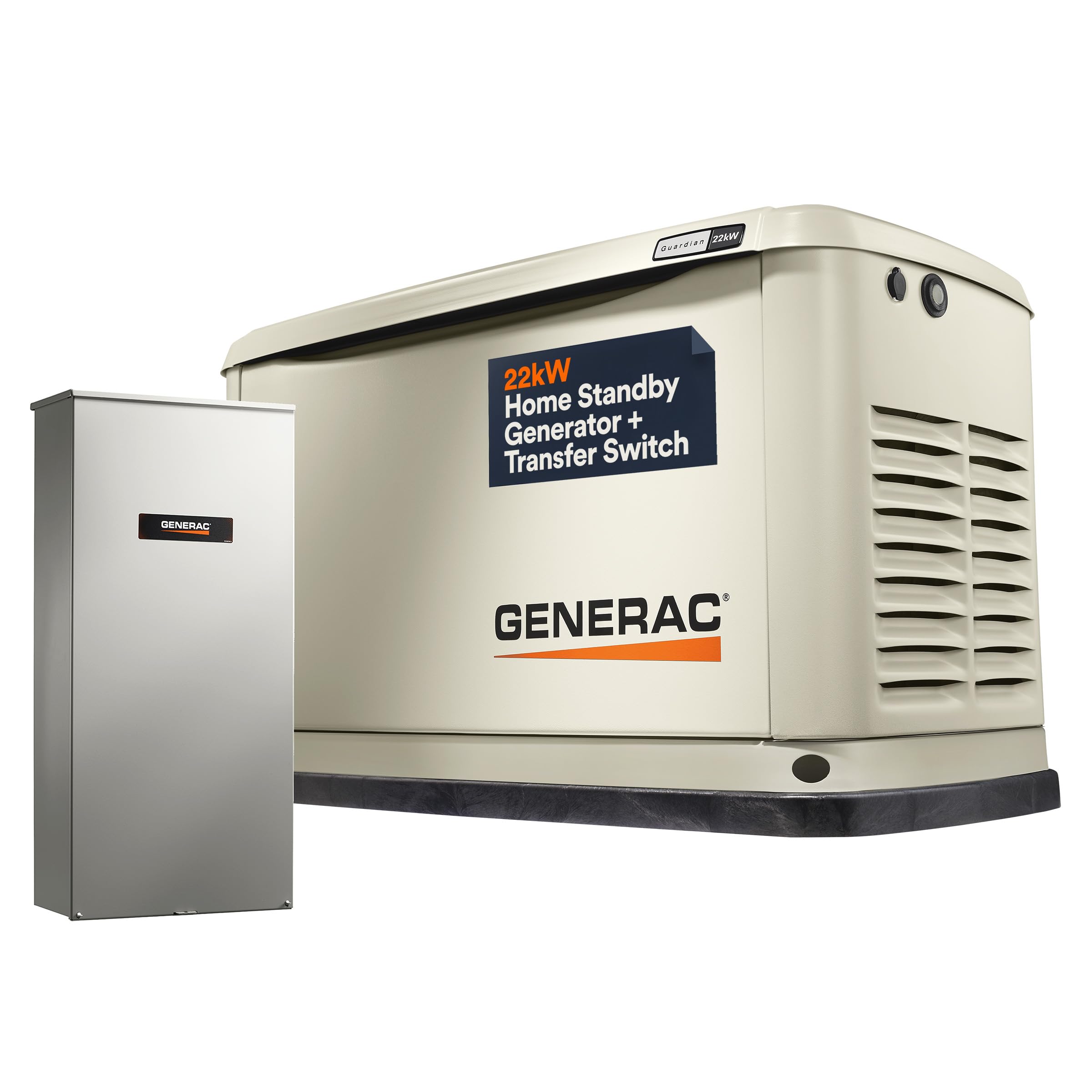
The Generac 22kW Guardian is the gold standard for automatic whole-house backup. This is not a portable machine you haul out of the garage—it’s a permanently installed unit that lives outside and fires up automatically within seconds of a grid failure. The G-Force 999cc engine is purpose-built for standby duty, delivering 22,000 watts of clean power with under 5% total harmonic distortion (THD), which is safe for sensitive electronics like computers and smart TVs. The included 200-amp NEMA 3R smart transfer switch simplifies installation and eliminates the need to run extension cords.
The true value here is the hands-off reliability. You don’t refuel it during a storm—it runs on natural gas or liquid propane, giving you days of continuous runtime as long as the fuel supply lasts. The Mobile Link Wi-Fi module lets you monitor oil level, battery status, and exercise cycle history from your phone. Owners consistently report that a professional install is required, but once in place, the unit operates flawlessly through multi-day outages, carrying everything from central AC to water heaters without hesitation.
The 5-year limited warranty is among the best in the industry, reflecting Generac’s confidence in its engineering. The only real downside is the upfront investment and the mandatory professional installation cost. For a homeowner who wants to set it and forget it, this is the definitive solution. For those on a tighter budget or who want a portable option, the lower-wattage models or dual-fuel portables below offer a different value proposition.
Why it’s great
- Fully automatic operation with integrated 200A transfer switch
- Wi-Fi enabled remote monitoring and 5-year warranty
- Runs on natural gas or propane for unlimited runtime
Good to know
- Requires professional installation by a licensed electrician
- Higher upfront cost than portable generators
2. Westinghouse 28kW

The Westinghouse 28kW unit is an absolute monster, designed for homes with massive power demands—think dual central AC units, a well pump, electric range, and a workshop full of tools. Its 999cc V-Twin OHV engine with a cast iron sleeve provides 28,000 peak watts and 20,000 running watts, easily handling loads that would trip a smaller generator. The heavy-duty copper windings and low THD make it safe for sensitive electronics, and the automatic idle control helps conserve fuel when demand drops.
What sets this generator apart is its incredible fuel efficiency. The 17-gallon tank delivers up to 15 hours of run time at 25% load, which is exceptional for a machine of this size. The control panel is well-organized with four GFCI 120V outlets, two 50-amp 14-50R outlets for transfer switch connection, and two 30-amp L14-30R outlets for flexible hookups. The remote start key fob and electric start make deployment quick, even in bad weather.
The unit is heavy at 541 pounds, so it’s not something you casually move around. It requires a team to unbox and position, and the freight shipping can sometimes result in cosmetic damage. However, the performance and reliability are top-notch. For a portable generator that can genuinely power an entire large home, this is the top contender. The warranty is solid, though some users note that it covers parts only, so careful initial setup is crucial.
Why it’s great
- Massive 20,000 running watts powers entire large homes
- Low THD for sensitive electronics and copper windings
- Excellent fuel efficiency with 15-hour runtime at 25% load
Good to know
- Extremely heavy (541 lbs), difficult to move
- Fuel type is gasoline only, not dual fuel
3. DuroMax XP15000HX
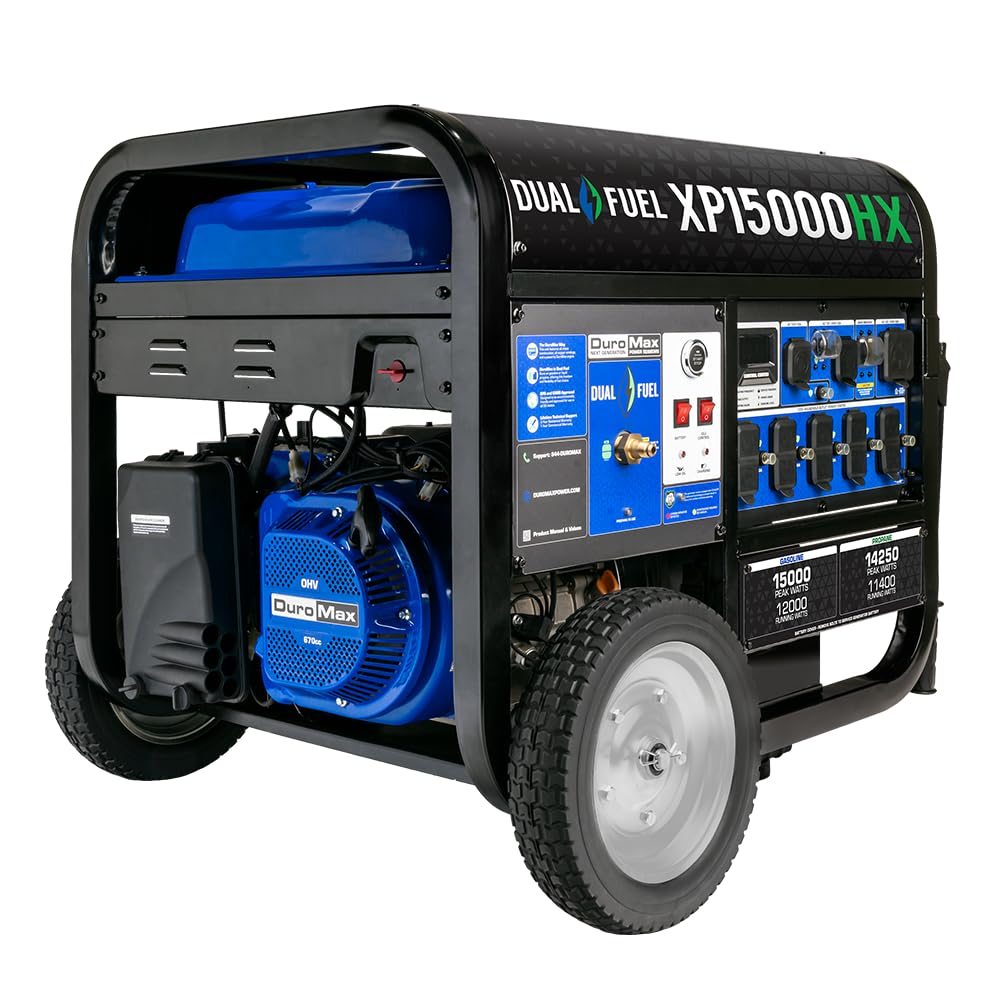
The DuroMax XP15000HX delivers 15,000 peak watts from its 670cc OHV engine, making it one of the most powerful dual-fuel portables on the market. The ability to switch between gasoline and propane at the touch of a button gives you fuel flexibility that is critical during extended outages when gasoline may be scarce. The CO Alert system automatically shuts down the generator if dangerous carbon monoxide levels are detected, adding an important safety layer.
The control panel is fully loaded with five 120V GFCI outlets, a 50-amp 14-50R outlet for transfer switch hookup, and both 30-amp twist-lock and standard 30-amp outlets. The digital multimeter displays voltage, frequency, and run hours, helping you track maintenance intervals. The all-copper windings are a standout feature—copper dissipates heat better than aluminum, extending the generator’s lifespan under high continuous loads.
At 345 pounds and with a 38-inch frame, this is a large machine that requires the included wheel kit and some muscle to position. Some users have reported issues with the idle control switch and customer service responsiveness, so buying from a retailer with a good return policy is wise. For heavy-duty dual-fuel performance that can handle a welder and an entire home simultaneously, the XP15000HX is a compelling choice for those who prioritize power over portability.
Why it’s great
- Dual fuel (gas/propane) for fuel flexibility
- All-copper windings for heat dissipation and longevity
- CO Alert automatic safety shutdown
Good to know
- Heavy and large, difficult to move around
- Customer service responsiveness varies
4. Champion 11kW Inverter

The Champion 11kW inverter generator is the quietest high-power portable on this list, producing just 64 dBA from 23 feet—that’s quieter than a normal conversation. The inverter technology delivers clean power with less than 3% THD, making it safe for sensitive electronics like mini-split AC units, laptops, and smart home systems. The 459cc Champion engine is reliable and has cold start technology for freezing weather starts.
The wireless remote key fob lets you start and stop the generator from up to 80 feet away, a huge convenience during a storm. The CO Shield auto shutoff adds safety, and the 5.5-gallon tank provides up to 15 hours of run time at 25% load. The power panel includes two 120V GFCI duplex outlets, a 30-amp locking outlet, and a 37.5-amp outlet for transfer switch connection.
Some users have reported that the CO sensor can be overly sensitive in enclosed outdoor spaces, causing unnecessary shutdowns. The lack of a floating neutral switch can be an issue for some setups. However, for a home that needs clean, quiet power to run mini-splits and sensitive electronics without the roar of a conventional generator, the Champion 11kW is a standout. The 3-year warranty and lifetime technical support are strong bonuses.
Why it’s great
- Very quiet operation at 64 dBA
- Clean inverter power (<3% THD) for sensitive electronics
- Wireless remote start from 80 feet
Good to know
- CO sensor can shut down in well-ventilated outdoor areas
- No floating neutral switch
5. DuroMax XP11000iH
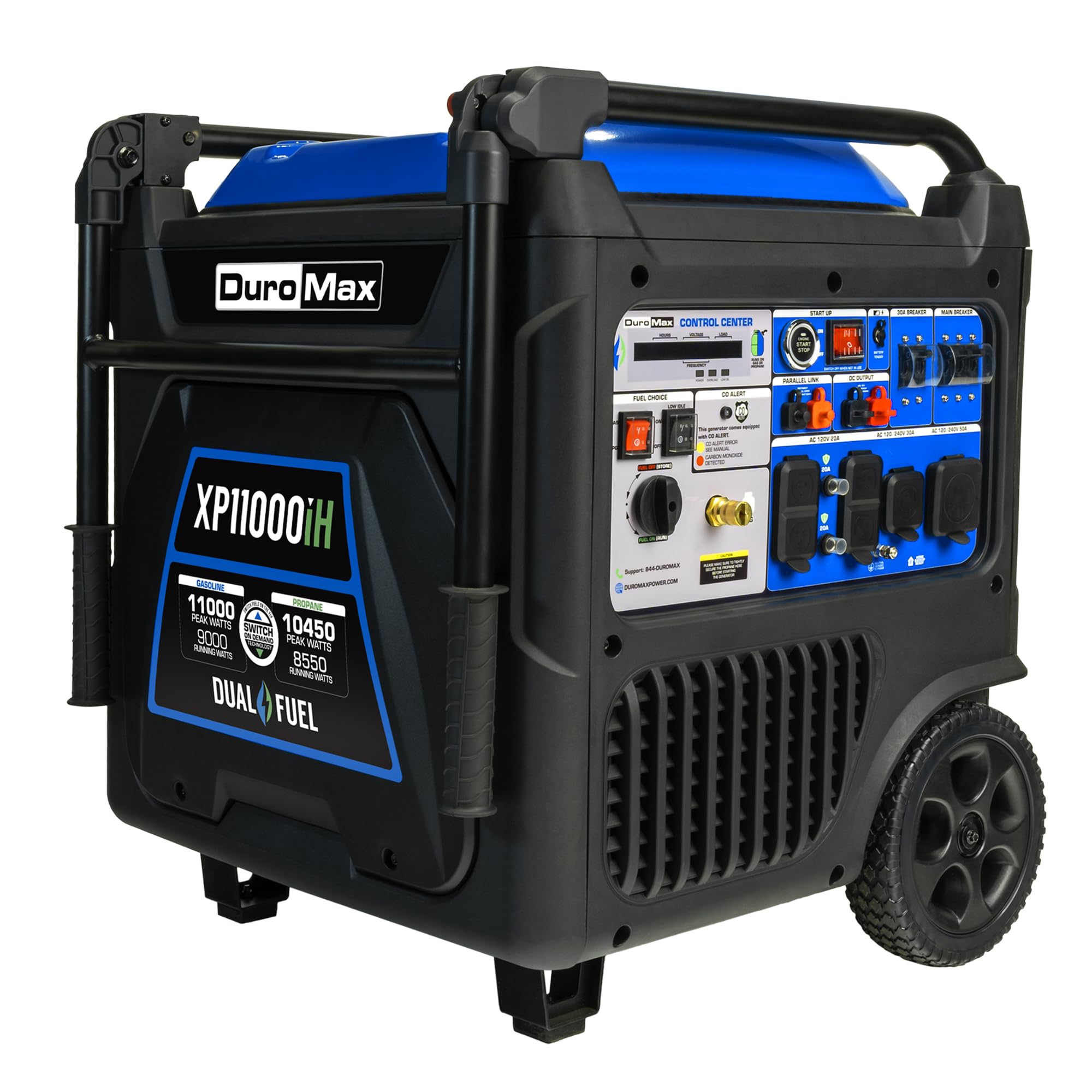
The DuroMax XP11000iH combines inverter technology with dual fuel capability, giving you clean power and fuel flexibility in one package. The 459cc engine produces 11,000 peak watts and 9,000 running watts, and the inverter system keeps THD low enough to safely run TVs, computers, and other electronics. The parallel capability allows you to connect two XP11000iH units for up to 22,000 peak watts, a nice upgrade path for growing power needs.
The CO Alert automatic shutdown, low oil shutoff, and battery tender are all built-in features that protect both the generator and your home. The remote start is convenient, and the ATS outlet makes it easy to connect to a compatible automatic transfer switch. On propane, the unit runs cleaner and extends engine life, making it a solid choice for homeowners who want to minimize maintenance.
The oil fill location is poorly designed, often causing oil spills during changes, and the dipstick is hard to access. Some users report that it is louder than the 61 dBA claim under full load. For those who want inverter-grade power with the ability to switch fuels and eventually parallel two units, this is a strong mid-range option. If you prefer a simpler, cheaper machine, the DuroStar or WEN models below offer a more budget-friendly path.
Why it’s great
- Inverter technology for clean power to sensitive electronics
- Dual fuel (gas and propane) with remote start
- Parallel capable for double the output
Good to know
- Oil fill location causes spills during changes
- Louder than the 61 dBA specification under load
6. Westinghouse 14.5kW Tri-Fuel
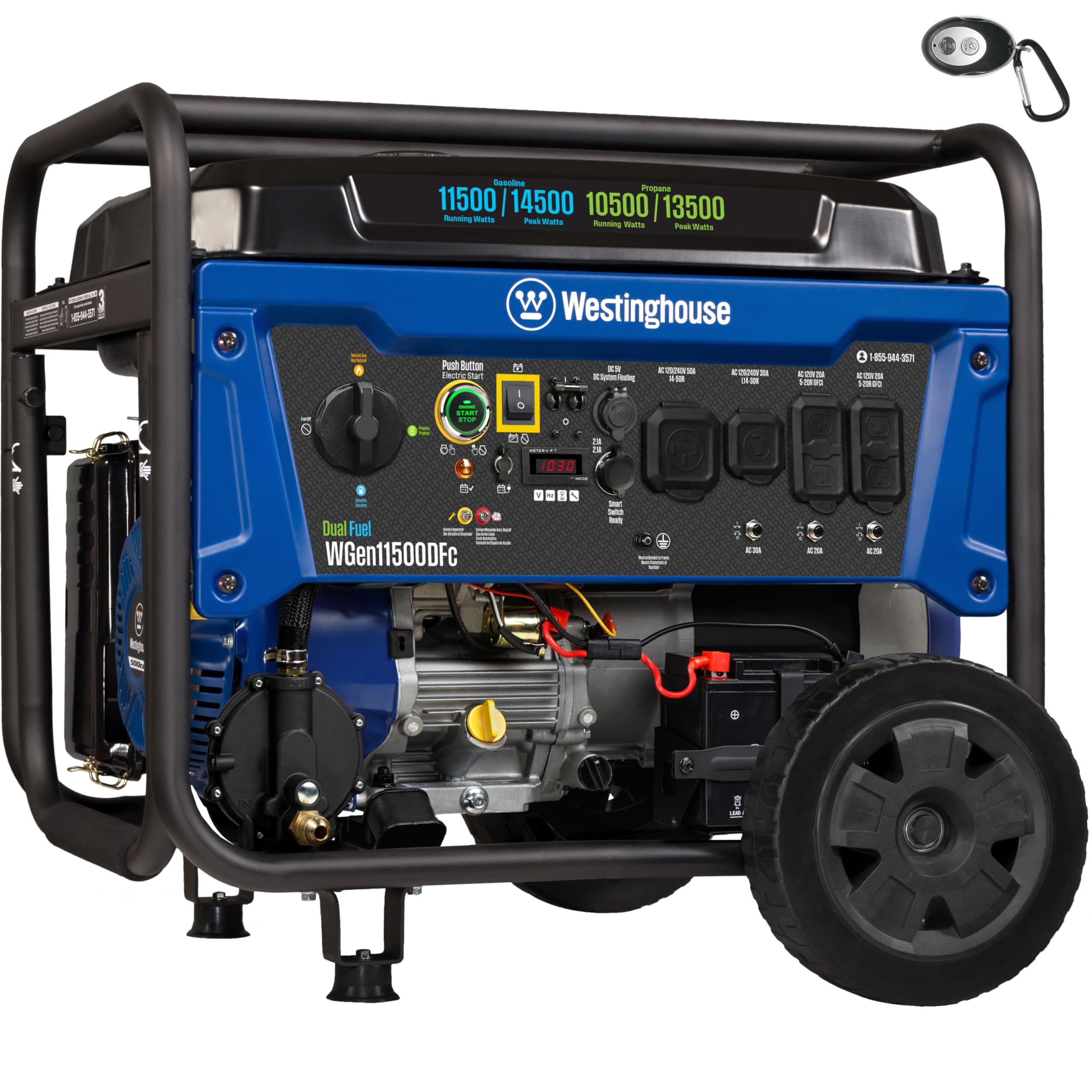
The Westinghouse 14.5kW generator offers tri-fuel capability (gasoline, propane, and natural gas), the most versatile fuel option in this lineup. The 550cc OHV engine with a cast iron sleeve produces 14,500 peak watts and 11,500 running watts on gasoline. The 9.5-gallon fuel tank provides up to 19 hours of runtime on gasoline, and a 20-pound propane tank runs for up to 7 hours—significant numbers for multi-day outages.
This unit is built for larger homes. It has no trouble powering a 1.5-ton AC, split unit, fridge, stove, and water heater simultaneously, according to user reports. The remote start key fob, electric start, and recoil backup ensure you can get it running regardless of battery condition. The control panel is clear with multiple outlets including a 50-amp 14-50R for transfer switch hookup.
The unit is heavy at 230 pounds and requires assembly. Some units arrive with freight damage, though this is usually cosmetic. The tri-fuel capability is its defining advantage—if you have natural gas at your home, you can connect this generator to your gas line for essentially unlimited run time without refueling. For a portable generator that can be used on natural gas, this is one of the few options that delivers.
Why it’s great
- Unique tri-fuel (gas, propane, natural gas) capability
- Long 19-hour runtime on gasoline from 9.5-gallon tank
- Powerful enough for large homes with central AC
Good to know
- Heavy and requires assembly
- Freight damage can occur in transit
7. Generac 10kW Guardian

The Generac 10kW Guardian is the entry point into automatic standby power. While 10,000 watts won’t power a large home’s central AC and electric stove simultaneously, it is more than sufficient for a smaller home or apartment to run a fridge, furnace fan, well pump, lights, and a few electronics. The included 100-amp 16-circuit transfer switch makes installation straightforward for a licensed electrician, and the G-Force 460cc engine is built for long-term standby service.
The Mobile Link Wi-Fi connectivity gives you status updates and maintenance alerts from your phone, and the True Power Technology keeps THD under 5%. The unit runs on natural gas or propane, eliminating fuel storage concerns. Owners of smaller homes consistently report that this unit carries them through multi-day outages without issue, and the 5-year warranty provides peace of mind.
The main limitation is the wattage. If you ever plan to add a central AC or large workshop tools, you will outgrow this unit quickly. The installation cost can be significant relative to the generator’s price, and some users find the Wi-Fi setup frustrating. For a low-cost entry into automatic standby power, especially for a vacation home or small house, this is a reliable and well-supported choice.
Why it’s great
- Automatic standby with 100A transfer switch included
- Wi-Fi remote monitoring and 5-year warranty
- Runs on natural gas or propane, no refueling needed
Good to know
- 10kW may not be enough for central AC or electric heat
- Professional installation costs add to total investment
8. Westinghouse 12.5kW (CO Sensor)

The Westinghouse 12.5kW with CO Sensor is one of the best-value dual-fuel portable generators for whole-home backup. The 457cc engine delivers 12,500 peak watts on gasoline and 11,200 on propane, which is enough to power a fridge, well pump, furnace, lights, and a few appliances. The CO Sensor auto-shutdown ensures safety, and the cast iron sleeve engine provides long-term durability.
The control panel includes two GFCI 120V outlets, a 30-amp L14-30R outlet, and a 50-amp 14-50R outlet for transfer switch connection. The remote start key fob and electric start work reliably. The 6.6-gallon fuel tank provides up to 12 hours of run time at 50% load. Users consistently praise the ease of setup and the quality of the included components.
The unit is loud, as are most open-frame generators, though it has a deeper hum that is less annoying than high-pitched alternatives. Some units arrive with minor cosmetic damage from shipping. For the price, this is the most balanced combination of power, features, and build quality in the portable category. If you want a generator that can handle most of your home without breaking the bank, start here.
Why it’s great
- Excellent value with 12,500W peak dual fuel power
- CO sensor auto-shutdown for safety
- Remote start key fob and 50-amp outlet
Good to know
- Open frame is loud
- Some units arrive with cosmetic shipping damage
9. Westinghouse 12.5kW (Original)

This is the original version of the Westinghouse 12.5kW, before the CO sensor was added. It shares the same 457cc engine with a cast iron sleeve, the same 12,500 peak watt output, and the same excellent build quality. The dual fuel capability runs it on gasoline or propane, and the remote start key fob works flawlessly. The power panel includes a 50-amp 14-50R outlet for transfer switch connection, making it ready for whole-home backup.
The build quality is a standout. The frame is rugged, the control panel is well laid out, and the engine is the same heavy-duty unit used in Westinghouse’s more expensive models. Users report that it starts easily on gasoline and propane, and the 6.6-gallon tank provides up to 12 hours of runtime at half load. The warranty is a solid 3-year limited service, labor, and parts coverage.
Without the CO sensor, some owners need to be more careful about placement to prevent carbon monoxide buildup. The unit is also loud, as are all open-frame generators. For those who already have a CO alarm setup or plan to place the generator far from the house, this is a slightly more affordable version of the same reliable machine. If CO detection is a priority, the newer version with the sensor is worth the small extra investment.
Why it’s great
- Proven 457cc cast iron sleeve engine
- Dual fuel with remote start and 50-amp outlet
- 3-year warranty with nationwide service network
Good to know
- No built-in CO sensor
- Open frame is loud
10. DuroStar DS13000MX

The DuroStar DS13000MX is a budget-friendly dual-fuel generator that still packs 13,000 peak watts from its 500cc engine. It comes with a CO sensor for safety, push-button electric start, and a remote control—features typically found on more expensive models. The all-metal construction with a reinforced steel frame gives it a rugged, durable feel that should withstand years of use.
The power panel includes a 50-amp 14-50R outlet for transfer switch hookup, plus multiple 120V outlets. Users report that it powers an entire home including a 1.5-ton AC, fridge, stove, and water heater without issue, and that it is fuel-efficient at partial loads. The included wheel kit makes it relatively easy to move on flat ground, though at 220 pounds, it’s still a heavy unit.
The assembly is straightforward, and the instructions are clear. Some users warn that the battery may not come fully charged, so a portable charger is helpful. For the price, this offers exceptional value for a non-inverter generator. If you need more power, the DuroMax XP15000HX is the step up. If you want quieter operation, the Champion inverter is a better choice.
Why it’s great
- Excellent value with 13,000W dual fuel power
- CO sensor, electric start, and remote control included
- All-metal construction for durability
Good to know
- Heavy at 220 pounds
- Battery may need charging before first use
11. WEN DF1100T

The WEN DF1100T is a solid entry-level dual-fuel generator that has been on the market for years and has a proven track record. The 457cc engine produces 11,000 surge watts and 8,300 running watts on gasoline, and 9,500 surge and 7,500 running on propane. The electric start is battery-powered, and the 6.6-gallon tank provides up to 8.5 hours of half-load runtime. The control panel includes a 50-amp 14-50R outlet for transfer switch hookup.
Users consistently praise its value and reliability during multi-day outages, with many reporting that it powers their entire 120V home loads without issue. The fuel consumption is reasonable, and the dual fuel capability allows you to switch to propane when gasoline is scarce. WEN’s two-year warranty is decent, and customer service is generally responsive.
The generator is loud, and the battery may die after a few months of storage if not maintained. The lack of a built-in CO sensor is a safety concern—you must place it outdoors and away from windows. Some units have shipping damage or initial starting issues that require carburetor adjustment, but these are typically easy fixes. For a budget-conscious buyer who needs reliable backup power and is comfortable with basic maintenance, this is a dependable choice.
Why it’s great
- Proven, reliable dual-fuel platform
- 50-amp outlet for transfer switch hookup
- Good value for the wattage output
Good to know
- No built-in CO sensor
- Battery may die if not maintained
12. OSCAL PowerMax 6000
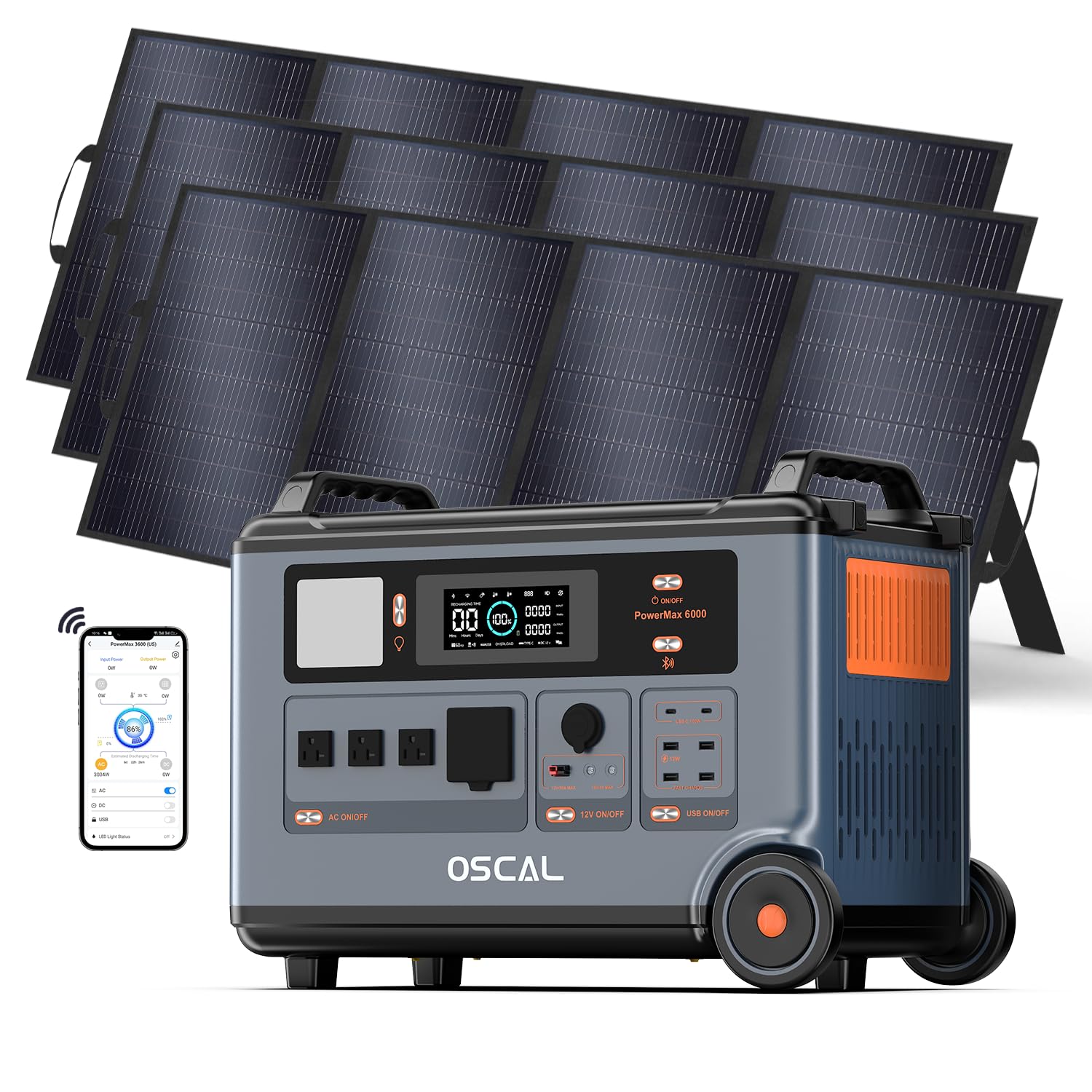
The OSCAL PowerMax 6000 represents a different approach to home backup: a solar generator that runs silently on stored battery power. It uses LiFePO4 batteries (3,500 cycles) and produces 6000 watts of AC output (9000W peak) from its 3600Wh battery bank. The 120/240V split-phase output is compatible with standard home panels, and the EPS switchover happens in 5-8 ms, enough for most electronics.
The system includes three 400W solar panels for a combined 2400W solar input, and the 2200W AC charger can fill the battery in under 2 hours. The app control allows you to monitor usage and charge status from your phone. This is a zero-emission, near-silent backup solution ideal for homeowners who want to avoid storing fuel and dealing with engine maintenance.
The limitations are significant for whole-home use. The 3600Wh battery capacity is only enough for critical loads (fridge, lights, and a few electronics) for about 24 hours without solar recharging. The unit is heavy (100 pounds), and some users report the battery drains faster than expected. It’s not a replacement for a 15kW gasoline generator for a large home. It is best suited as a clean, quiet backup for small homes or as a supplement to a larger generator.
Why it’s great
- Silent, zero-emission solar generator with included panels
- Fast EPS switchover (5-8 ms) for sensitive electronics
- LiFePO4 battery lasts 3,500 cycles
Good to know
- Limited battery capacity (3600Wh) for whole-home use
- Heavy and expensive for the wattage output
13. EcoFlow Delta Pro Ultra

The EcoFlow Delta Pro Ultra is a premium solar generator that redefines what battery backup can do. With 7200W of AC output (21.6kW with three inverters), it can run a 3-ton central air conditioner, something most battery systems cannot. The 6144Wh LiFePO4 battery is expandable to 90kWh with additional batteries, providing over 30 days of essential power for a typical home. The 2-hour full recharge time is the fastest in its class.
The 120/240V split-phase output is compatible with standard home transfer switches, and the UPS function has a 0-ms transfer time, meaning your electronics never flicker during a power outage. The EcoFlow app gives you granular control over which circuits get power, helping you optimize for efficiency. The system can also charge from EV charging stations, solar panels, or standard wall outlets, giving you multiple fuel sources.
The main drawback is the cost and the lack of professional-grade customer service. Some users report poor support when issues arise, and the online-only manual is unhelpful during an outage. For the price, a whole-house gasoline generator is significantly cheaper. But for those who want clean, silent, zero-emission power with the ability to expand over time, the Delta Pro Ultra is the most capable consumer battery system on the market. It is best paired with a portable generator as a backup for the backup.
Why it’s great
- 7200W output can run central AC and heavy appliances
- Expandable to 90kWh for multi-week backup
- Fast 2-hour recharge and 0-ms UPS switchover
Good to know
- Very expensive compared to gasoline generators
- Customer service and documentation are inconsistent
FAQ
What size generator do I need to run my whole house?
Is a dual fuel generator worth it for home backup?
Can I install a portable generator myself?
How often do I need to change the oil in a generator?
Are inverter generators worth the extra cost?
Final Thoughts: The Verdict
For most users, the best diesel generator for home backup is the Westinghouse 14.5kW Tri-Fuel because it offers the most versatile fuel options (gasoline, propane, natural gas) at a price that undercuts dedicated standby units. If you want full automation and zero-effort backup, the Generac 22kW Guardian is the gold standard for whole-house peace of mind. And for those who prioritize clean, quiet power and want to avoid fuel storage entirely, the EcoFlow Delta Pro Ultra represents the leading edge of solar battery backup technology, best paired with a portable generator for ultimate redundancy.

Mo Maruf
I created WellFizz to bridge the gap between vague wellness advice and actionable solutions. My mission is simple: to decode the research and give you practical tools you can actually use.
Beyond the data, I am a passionate traveler. I believe that stepping away from the screen to explore new environments is essential for mental clarity and physical vitality.