Our readers keep the lights on and my smoothie glass nicely filled. As an Amazon Associate, I earn from qualifying purchases.
A newborn’s skin is still developing its protective barrier, making it uniquely vulnerable to moisture, friction, and acidity from waste. The wrong ointment can trap irritants instead of blocking them, turning a mild red spot into a raw, painful rash in hours. Choosing a formula that seals out wetness without clogging pores or introducing unnecessary chemicals is a foundational decision for any new parent.
I’m Mohammad Maruf — the founder and writer behind WellFizz. My research focuses on the intersection of pediatric dermatology and consumer-grade infant skincare, analyzing ingredient profiles, barrier-forming agents, and user-reported efficacy across hundreds of real-world tests.
Whether you’re building a diaper bag kit or stocking the nursery changing station, understanding which specific ointment best balances zinc oxide concentration, texture, and ingredient simplicity is crucial. This guide breaks down the top contenders to help you confidently choose the right diaper ointment for newborns.
How To Choose The Best Diaper Ointment For Newborns
Choosing a diaper ointment for a newborn requires a different set of priorities than selecting a cream for an older infant or toddler. A newborn’s skin has a thinner stratum corneum, a higher pH, and a less developed microbiome, so the ointment must protect without overwhelming the skin’s natural repair process. The three considerations below will narrow your options effectively.
Zinc Oxide Percentage and Particle Size
Zinc oxide is the active barrier ingredient. Higher percentages (12–20%) provide heavier occlusion and are better for treating active rashes, while lower percentages (10–13%) suit daily prevention on healthy skin. Non-nano zinc oxide particles sit on the surface of the skin and do not absorb systemically, making them safe for newborns. Pastes with very high zinc content can be thick to spread and require a dedicated wipe-off routine.
Base Ingredients and Spreadability
The base determines how the ointment feels, how easily it spreads, and how thoroughly it wipes off. Petrolatum-based formulas (like Aquaphor) create a semi-occlusive seal that is excellent for prevention but can trap existing moisture if the skin is not bone-dry. Beeswax- and oil-based formulas (like Badger) form a breathable barrier that sits lighter on the skin. Dimethicone is a silicone-based barrier that helps the cream glide smoothly but may not hold up as long overnight.
Fragrance, Dye, and Preservative Profile
Newborns are extremely sensitive to allergens and irritants. The safest formulas are marked “fragrance-free,” “paraben-free,” and “phthalate-free.” Avoid any product that lists more than a handful of recognizable ingredients — fewer components mean lower odds of a contact-dermatitis reaction. Pediatrician-recommended labels are a strong signal, but always cross-check the ingredient list yourself for known irritants like balsam of Peru or synthetic dyes.
Quick Comparison
On smaller screens, swipe sideways to see the full table.
| Model | Category | Best For | Key Spec | Amazon |
|---|---|---|---|---|
| Desitin Daily Defense | Mid-Range | Daily prevention and mild rash | 13% zinc oxide, wipes off easily | Amazon |
| Triple Paste Diaper Rash Cream | Premium | Overnight treatment for active rashes | 12.8% non-nano zinc oxide, oat extract | Amazon |
| Aquaphor Baby Healing Ointment | Mid-Range | Multi-purpose barrier and dry skin | 41% petrolatum, panthenol, bisabolol | Amazon |
| A+D Original Diaper Rash Ointment | Budget | Newborn daily barrier on a budget | Zinc oxide + dimethicone + aloe | Amazon |
| Badger Baby Diaper Rash Cream | Mid-Range | Minimal-ingredient sensitive skin | Only 4 ingredients: zinc, oil, beeswax, vitamin E | Amazon |
In‑Depth Reviews
1. Desitin Daily Defense Baby Diaper Rash Cream

Desitin Daily Defense strikes a precise balance between prevention and treatment. The 13% zinc oxide concentration is high enough to create a reliable barrier against wetness and acidity during overnight stretches, yet the creamy base spreads smoothly without the paste-like stiffness that makes many heavy zinc creams difficult to apply evenly. Multiple pediatricians and parents rank it as the first-choice formula for good reason.
Clinically, the barrier forms on contact and remains intact through multiple wet cycles, reducing redness by the next diaper change. The formula is paraben-, phthalate-, fragrance-, and dye-free, making it suitable for newborns whose skin reactivity is still unknown. The 16-ounce tub delivers months of daily use, which keeps the cost-per-application low without sacrificing medical-grade protection.
One practical advantage is the wipe-off ease. Thicker ointments often leave a sticky residue that requires olive oil or dedicated wipes, but Desitin’s base cleans off with standard diaper wipes. This reduction in friction during changes is meaningful for newborns with already irritated skin. Parents who use it preventatively at every change report that rashes rarely appear at all.
Why it’s great
- 13% zinc oxide provides strong barrier without paste-like thickness
- Cleans off easily with standard wipes, reducing friction on sore skin
- Free of fragrance, dyes, parabens, and phthalates — safe for daily newborn use
Good to know
- Thicker cream requires thorough hand washing after each application
- Tub format less hygienic than a tube for on-the-go use
2. Triple Paste Diaper Rash Cream for Baby
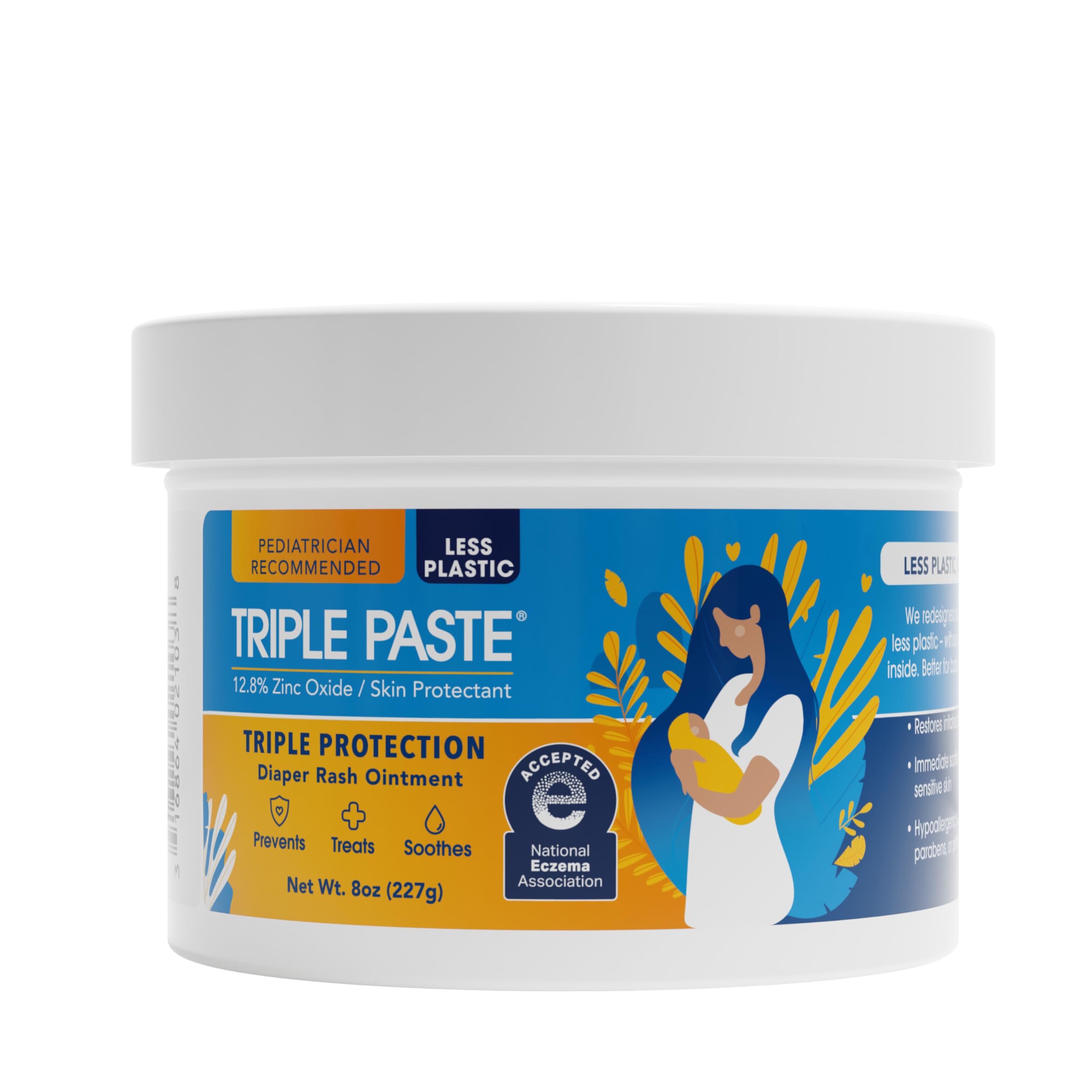
Triple Paste has earned a reputation as the “gold standard” among parents whose babies suffer from persistent, angry rashes that resist standard ointments. The 12.8% non-nano zinc oxide is paired with oat extract and beeswax to create a thick, adherent barrier that stays in place through long overnight stretches. The texture is notably denser than Desitin, which helps it cling to raw skin without migrating.
User reports consistently describe active rashes resolving within 24 hours — often after just one application — even when petroleum-based alternatives like pure petrolatum failed. The inclusion of oat extract provides additional soothing properties by forming a film that reduces itching and irritation. The formula is completely free of fragrance, alcohol, talc, dyes, parabens, and preservatives, meeting the strictest criteria for newborn safety.
Because the cream is so thick, it requires more effort to remove during changes. Parents recommend applying only after the skin is fully dry to avoid trapping moisture under the seal. The 8-ounce tub is smaller than some competitors, but the density means a little goes a long way. It is the best choice for parents who want a single heavy-hitter rather than a separate preventive and treatment cream.
Why it’s great
- Thick barrier cream that stays in place for 8+ hours overnight
- Oat extract provides additional soothing and itch relief beyond zinc alone
- Pediatrician-recommended for sensitive and eczema-prone newborn skin
Good to know
- Thick texture requires more effort to wipe off at diaper changes
- Skin must be completely dry before application to avoid trapping moisture
3. Aquaphor Baby Healing Ointment Advanced Therapy
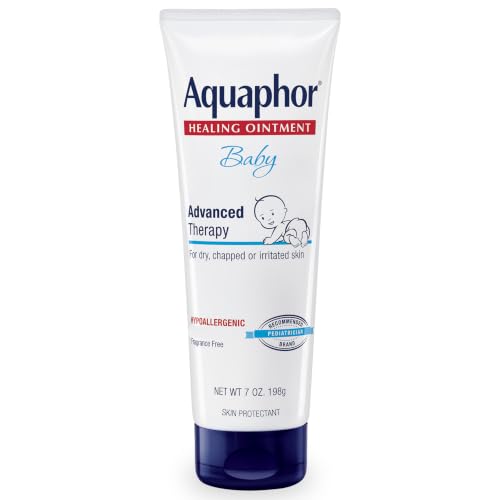
Aquaphor Baby is not a zinc oxide ointment — it is a petrolatum-based barrier that functions differently from the other products on this list. The 41% petrolatum content, combined with panthenol (provitamin B5) and bisabolol (chamomile-derived), creates a semi-occlusive seal that traps moisture while allowing the skin to repair. This makes it an exceptional preventive layer for newborns who do not yet have an active rash but need protection against wetness.
The key distinction is versatility. The same tube can treat drool rash on the chin, chapped cheeks from cold air, minor scrapes on knees, and even the parent’s own dry hands or cracked lips. Parents who travel appreciate carrying one tube that covers the entire family’s skin needs. The texture is greasy by design — the greasiness is what ensures the barrier lasts — but a thin layer is sufficient because the product spreads across a large surface area.
For newborns specifically, Aquaphor works best as a first line of defense. If a rash appears, parents should switch to a zinc-based treatment. The greasy feel can also transfer onto clothing and diaper liners more readily than creamy zinc pastes. Despite these trade-offs, the 7-ounce tube is a staple in many nursery routines because it addresses more than just diaper area irritation.
Why it’s great
- Multi-use formula treats diaper rash, drool rash, chapped skin, and minor scrapes
- Panthenol and bisabolol actively support skin barrier repair
- Fragrance-free and preservative-free; safe for newborn skin from day one
Good to know
- Greasy texture can transfer to clothing and diaper liners
- Not ideal for treating an active, already-developed diaper rash alone
4. A+D Original Diaper Rash Ointment
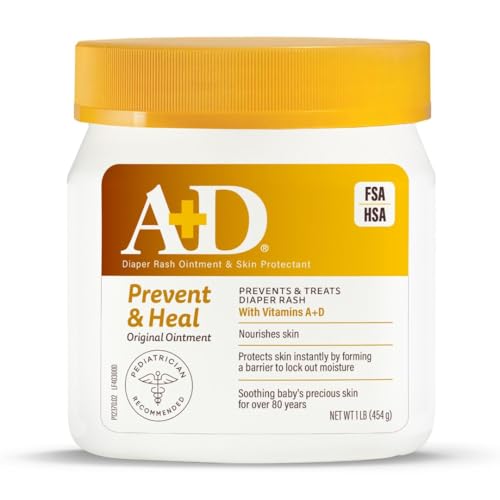
A+D Original has been a pharmacy shelf staple for over 80 years, and its formula reflects that long-running trust. The combination of zinc oxide and dimethicone creates a dual-action barrier that is less greasy than pure petrolatum but more durable than light creams. Soothing aloe is included to calm immediate irritation, making this a forgiving option for newborns with mildly sensitive skin who need gentle daily coverage.
The 16-ounce tub provides significant volume at an entry-level price point, which matters for budget-conscious parents who plan to use ointment at every diaper change. The texture is smooth and non-greasy, spreading evenly without clumping. It does not feel heavy on the skin, and parents report that it wipes off cleanly without leaving a white chalky residue, unlike some high-zinc pastes that cake in skin folds.
For moderate to severe rashes, the lower zinc oxide concentration (relative to Desitin or Triple Paste) may require more frequent reapplication to maintain full protection. The formula also contains a mild fragrance component, although it is free of parabens, dyes, and phthalates. If your newborn has extremely reactive skin, the aloe and vitamin A/D profile is gentle enough for trial, but the fragrance could be a trigger point for some infants.
Why it’s great
- Large 16-ounce tub offers many weeks of daily use at a low cost
- Non-greasy texture spreads easily and wipes off without residue
- Contains soothing aloe and vitamins A & D for skin nourishment
Good to know
- Lower zinc oxide concentration requires more frequent reapplication for active rashes
- Mild fragrance may irritate extremely sensitive newborn skin
5. Badger Baby Diaper Rash Cream
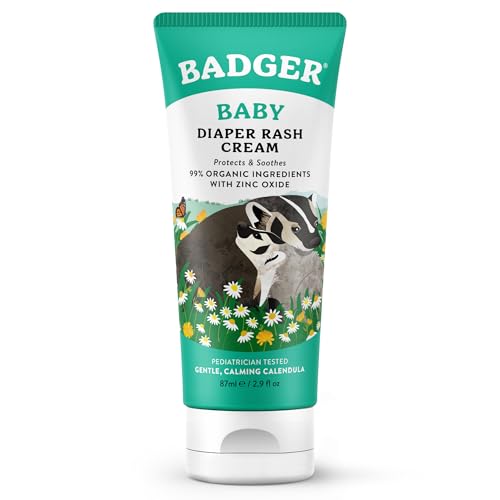
Badger Baby Diaper Rash Cream exists for the parent who reads every ingredient label and wants absolute minimalism. The formula contains exactly four ingredients: mineral zinc oxide, organic sunflower oil, organic beeswax, and vitamin E. That is it — no emulsifiers, no synthetic preservatives, no fillers. This stark simplicity makes it one of the safest choices for newborns whose skin reactivity profile is completely unknown.
The beeswax base provides a breathable barrier that is less occlusive than petrolatum, allowing the skin to regulate moisture exchange naturally. The organic sunflower oil delivers essential fatty acids that support the lipid barrier, while the vitamin E offers antioxidant protection. Multiple parents report that this cream healed severe, raw rashes within a single day after other zinc-based pastes had failed, suggesting that the ingredient purity itself may be a therapeutic advantage.
The trade-off is price per ounce — this is a smaller tube (2.9 fl oz) compared to the tubs from Desitin or A+D, and the beeswax texture can be slightly stiffer in cooler room temperatures. It also requires the skin to be perfectly dry before application to avoid trapping dampness under the wax barrier. Despite these minor inconveniences, Badger is the right choice for families committed to an organic, low-ingredient approach without sacrificing efficacy.
Why it’s great
- Only four total ingredients — ideal for minimizing allergen exposure
- Organic sunflower oil and beeswax support skin barrier repair
- Healed severe rashes within 24 hours in multiple user reports
Good to know
- Smaller tube offers fewer applications per purchase compared to tubs
- Beeswax base can stiffen in cool temperatures; warm in hand before use
FAQ
Can I use a standard diaper cream on a newborn under one month old?
Should I apply ointment at every diaper change or only when redness appears?
What is the difference between a diaper rash cream and a diaper rash ointment?
How long should I leave a zinc oxide ointment on before wiping it off?
Final Thoughts: The Verdict
For most users, the diaper ointment for newborns winner is the Desitin Daily Defense because its 13% zinc oxide concentration hits the perfect sweet spot between barrier strength and wipe-off ease, making it suitable for both daily prevention and early treatment. If you want a thick overnight formula that tackles severe rashes fast, grab the Triple Paste. And for a multi-purpose, petrolatum-based barrier that handles drool rash, chapped skin, and diaper area alike, nothing beats the Aquaphor Baby Healing Ointment.

Mo Maruf
I created WellFizz to bridge the gap between vague wellness advice and actionable solutions. My mission is simple: to decode the research and give you practical tools you can actually use.
Beyond the data, I am a passionate traveler. I believe that stepping away from the screen to explore new environments is essential for mental clarity and physical vitality.