Our readers keep the lights on and my smoothie glass nicely filled. As an Amazon Associate, I earn from qualifying purchases.
A pair of diagonal cutters should disappear into your hand and reappear only as a clean, flush cut on the other side—no crushed wire ends, no pinched fingers, no dull blades that force you to saw back and forth. Whether you are trimming zip ties off a network rack, snipping component leads on a circuit board, or cutting piano wire in a tight engine bay, the difference between a great cutter and a frustrating one comes down to edge hardness, jaw geometry, and leverage ratio. The wrong pair chews up the wire and your patience; the right one makes the cut feel like it never happened.
I’m Mohammad Maruf — the founder and writer behind WellFizz. I’ve spent hundreds of hours cross-referencing Rockwell hardness ratings, cutting-edge angles, and real-world user reports to separate the diagonal cutters that hold an edge from the ones that dull after a dozen snips.
After analyzing the materials, leverage mechanics, and user feedback across five distinct models, I’ve narrowed the field to the best diagonal cutters for precision work, heavy-duty jobs, and everything in between.
How To Choose The Best Diagonal Cutters
Diagonal cutters look like a simple lever, but the geometry inside the jaw dictates everything—how cleanly the wire shears, how much hand fatigue you accumulate, and how many cuts you get before the edge rounds over. Three factors separate a lifetime tool from a frustration magnet.
Cutting-Edge Hardness and Material
The edge is where the work happens. High-carbon steel edges hardened to 56–64 HRC (Rockwell C scale) resist deformation when you cut hard wire like piano wire or soft steel. Softer edges (below 50 HRC) deform after repeated cuts, forcing you to squeeze harder and produce a jagged shear. Premium brands like Knipex shoot for around 64 HRC on the cutting edge while keeping the body tough enough not to chip.
Leverage Ratio and Rivet Position
A cutter’s mechanical advantage is determined by how close the pivot rivet sits to the cutting edge. A high-leverage design places the rivet closer to the jaw, multiplying your hand force at the cut point by up to 36 percent compared to standard designs. This lets you cut thicker wire with less effort—crucial for repetitive work or thicker materials like 12 AWG Romex or cotter pins.
Jaw Geometry: Flush, Angled, or Beveled
Flush-cut jaws leave a flat, clean surface on the remaining wire—ideal for component leads on circuit boards or zip tie tails where a protruding sharp end would be a hazard. Angled heads let you reach into tight, recessed spaces where straight jaws cannot fit. Beveled cutting edges give a slightly more aggressive shear for general-purpose wire cutting but leave a small nub on the workpiece. Choose based on whether you prioritize a flush finish or access to confined areas.
Quick Comparison
On smaller screens, swipe sideways to see the full table.
| Model | Category | Best For | Key Spec | Amazon |
|---|---|---|---|---|
| Klein Tools D248-8-GLW | Premium | Dim worksites / Hi-Viz need | Glow-in-the-dark handles, 36% more cutting power | Amazon |
| KNIPEX 74 01 200 | Premium | Tough continuous use / piano wire | 64 HRC cutting edge hardness | Amazon |
| IRWIN VISE-GRIP 1968333 | Mid-Range | Rewiring / general construction | Laser heat-treated cutting edges | Amazon |
| Hakko CHP-170 3PK | Mid-Range | Electronics / 3D printing / crafts | 12 mm carbon steel jaw, 5 kg cutting force | Amazon |
| HOUSERAN 10-Pack | Budget | Multi-location / disposable use | Spring-loaded, 10-pack bundle | Amazon |
In‑Depth Reviews
1. Klein Tools D248-8-GLW Pliers
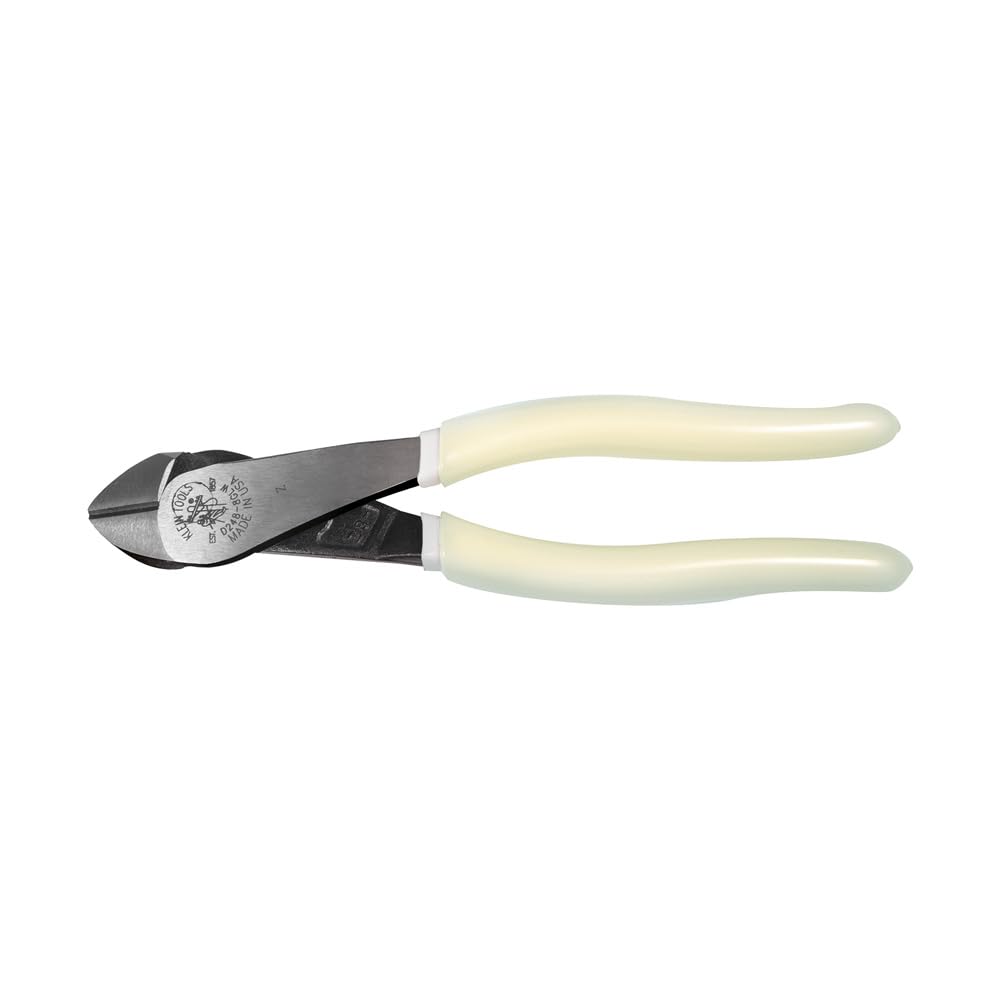
The Klein D248-8-GLW is a Made-in-USA diagonal cutter that solves a very specific worksite problem: losing your cutter in a dark attic or dim crawlspace. The Hi-Viz handles charge in both natural and artificial light, emitting a glow that helps you spot the tool even when it drops behind a joist. Beyond the visibility trick, the angled head and short jaws let you reach into confined electrical boxes where a straight 8-inch cutter would wedge tight.
Klein moved the rivet closer to the cutting edge for a 36 percent increase in mechanical advantage, meaning you cut 12 AWG solid wire with noticeably less hand strain. The beveled edges shear cleanly and leave a flush result on most soft wire, though the jaw action felt stiff out of the box and required a break-in period with light oil before the pivot smoothed out. The glow intensity is modest—bright enough to find the tool in a dim room but not powerful enough to serve as a work light.
The handles are thicker than typical diagonal cutters, which some users found too bulky for fine manipulation. The laser-etched American flag on the jaw adds a nice detail, but the plastic handle surface scuffs easily when rubbing against conduit or toolbag dividers. For electricians and tradespeople who regularly work in low-light environments, the visibility trade-off justifies the thicker grip.
Why it’s great
- Glow-in-the-dark handles save minutes locating dropped tools on dim worksites
- High-leverage design delivers 36% more cutting power than standard pliers
- Angled head and short jaws fit tight electrical boxes
Good to know
- Thick handles can feel chunky for detailed or repetitive cuts
- Glow brightness fades relatively quickly and requires recharging
2. KNIPEX 74 01 200 High Leverage Diagonal Cutters

The Knipex 74 01 200 is the cutter you reach for when soft steel, piano wire, or cotter pins are on the menu. The cutting edge is hardened to roughly 64 HRC, which is among the hardest you will find in a hand-held diagonal cutter. That extreme edge hardness translates into clean, burr-free shears through materials that would roll the edge on a budget cutter after a few repetitions.
The high-leverage geometry is optimized through the cutting-edge angle, transmission ratio, and handle shape working together rather than just moving the rivet. The result is a cutter that feels surgically precise even when you are snipping 12 AWG steel wire. The ergonomic plastic handles are contoured to fit the palm without the chunky feel of the Klein, and the 7.88-inch overall length provides plenty of reach without being unwieldy.
The only caveat is the price sits at the premium end of the spectrum, and the edge hardness that makes it so effective also means you must avoid cutting materials harder than the tool itself—concrete tie wire or hardened steel nails will chip the edge. For pros who cut hard wire daily, the investment pays back in edge longevity and reduced hand fatigue. For occasional users, a mid-range option might be more practical.
Why it’s great
- 64 HRC cutting edge handles piano wire and hard steel without dulling
- Optimized leverage ratio reduces hand fatigue during repetitive cuts
- Comfortable, non-bulky handle shape suits extended use
Good to know
- Premium price point may be overkill for hobbyist or occasional users
- Hard edge can chip if used on materials harder than the cutter design
3. IRWIN VISE-GRIP Diagonal Cutting Pliers, 8-inch
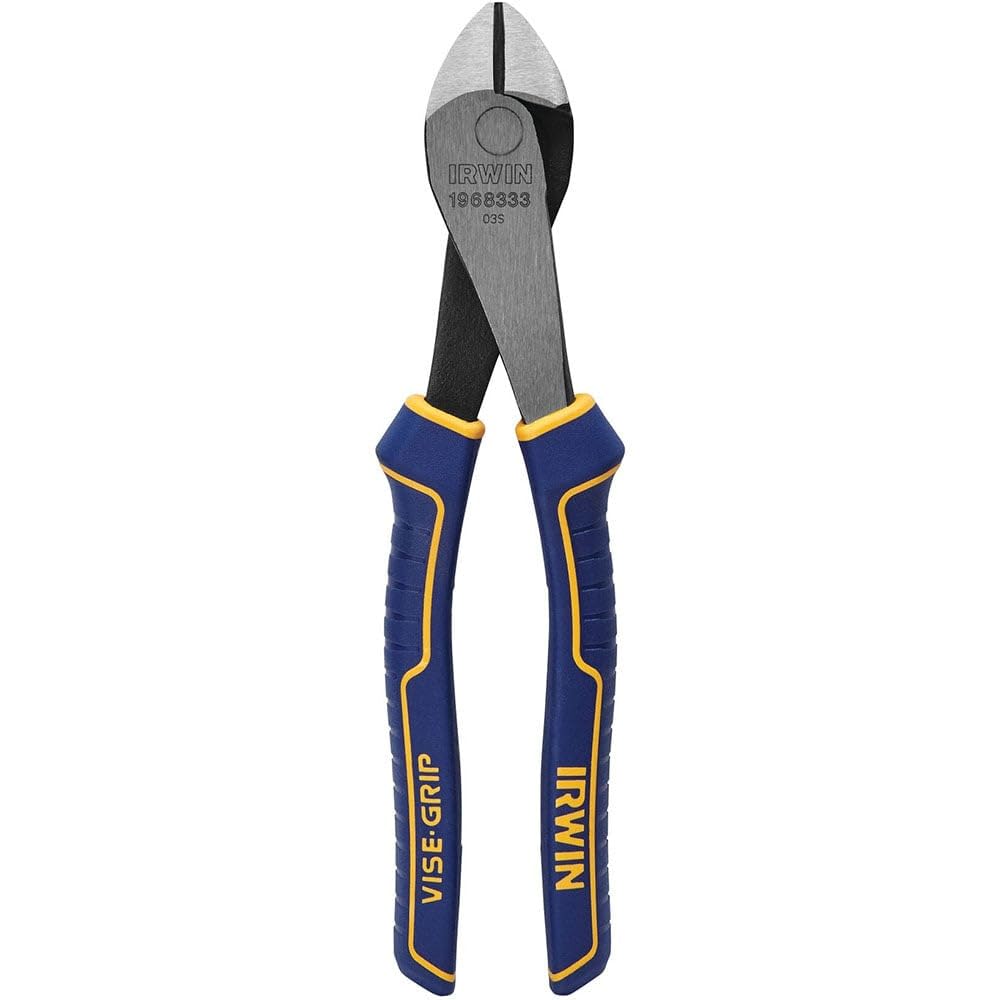
The IRWIN VISE-GRIP 1968333 is a solid mid-range diagonal cutter that does not try to be exotic—it focuses on doing the basics well. The laser heat-treated cutting edges stay sharp longer than untreated edges, and the high-carbon alloy steel construction provides enough toughness to cut through 12 AWG Romex and finish nails without the edge rolling over. Users who rewired entire houses with one pair reported that the cutters stayed crisp through hundreds of cuts.
The 2-Zone comfort grips are contoured with a dual-density design: a firmer inner core for torque transfer and a softer outer layer for palm comfort. The handles provide good cushioning, but several reviewers noted that the grips feel too chunky—the bulk reduces the fine manipulation needed for precise cuts in tight spaces. The lack of a spring-loaded mechanism also means you have to manually open the jaws after each cut, which slows down repetitive work.
One standout real-world detail: a user accidentally cut through a live Romex wire, which burned a hole in the cutting edge, but the insulated grips prevented any shock transmission. The warranty replacement process was smooth. For builders and electricians who need a reliable, affordable cutter for daily job site use, the IRWIN delivers consistent performance without demanding a premium investment.
Why it’s great
- Laser heat-treated edges resist dulling during heavy construction use
- 2-Zone grips provide cushion and torque control
- Backed by IRWIN lifetime guarantee for reliable replacement
Good to know
- Chunky handle design can feel awkward for controlled, delicate cuts
- No spring-loaded mechanism slows down repetitive snip work
4. Hakko CHP-170 3PK Micro Soft Wire Cutter

The Hakko CHP-170 is a micro flush cutter built for precision tasks where a burr or a protruding nub creates a functional problem—think trimming component leads on a PCB, snipping zip ties flush to the locking head, or cleaning up 3D-printed support material. The 12 mm high-frequency hardened carbon steel jaw provides a sharp flush cut that leaves a flat surface on the remaining wire, requiring no filing or sanding afterward.
The internal spring-loaded mechanism opens the jaws automatically after each cut, which makes repetitive work like clipping dozens of zip ties or trimming 24 AWG wire on an assembly line significantly faster. The PVC-covered handles are thin and lightweight, making the cutter easy to keep in a pocket or a small electronics kit. The cutting force required is roughly 5 kg, which feels light enough for extended use without hand fatigue.
The major limitation is material capacity—the Hakko is designed for copper and soft wire up to 16 AWG. Trying to cut steel wire, nails, or thicker gauges will damage the cutting edge. The 3-pack bundle lets you stash one at the electronics bench, one in the 3D printing station, and one in a travel kit. For dedicated electronics and craft work, the CHP-170 is the cleanest flush-cutting tool at its price point.
Why it’s great
- Flush-cut jaw leaves a perfectly flat surface on remaining wire
- Spring-loaded action speeds up repetitive cutting tasks
- Lightweight and thin handles ideal for bench use and pocket carry
Good to know
- Limited to soft wire up to 16 AWG—steel or heavy gauges will chip the edge
- Not suited for heavy construction or nail cutting
5. HOUSERAN 170 Wire Cutters, 10-Pack

The HOUSERAN 10-pack is a pure volume play: you get ten spring-loaded micro flush cutters for the price of a single premium tool, and each one is sharp enough to cut copper wire, zip ties, and soft plastic cleanly out of the box. The 5-inch length and thin PVC-covered handles make them easy to stash in multiple toolboxes, drawers, or workstations so you always have a cutter within arm’s reach without worrying about losing it.
The internal spring mechanism is present on every cutter, which is a nice touch at this price tier—most budget packs skip the spring and leave you manually opening the jaws. The carbon steel jaw cuts copper and soft wire up to 18 AWG reliably and leaves a reasonably flush result, though not as perfectly flat as the Hakko. Users reported the cutters being sharp enough for trimming plastic parts, artificial flower stems, and PC board leads.
The trade-offs are predictable. The edge hardness is lower than premium cutters, meaning the blades will dull faster if you push them against thicker or harder wire regularly. The packaging also received complaints about being unsealed or arriving with missing units. If you need a single cutter for heavy daily use, spend the money on one quality pair. If you need cutters distributed across multiple locations or workstations, this is the most practical approach.
Why it’s great
- Ten cutters for the price of one premium model—great for multi-location setups
- Spring-loaded mechanism included on every cutter, even at budget price
- Sharp enough out of the box for copper wire, zip ties, and soft plastic
Good to know
- Lower edge hardness means faster dulling with hard or heavy wire
- Packaging quality inconsistent; check contents on arrival
FAQ
What is the difference between diagonal cutters and side cutters?
Can I cut hardened steel or piano wire with any diagonal cutter?
Why do some diagonal cutters have an angled head and others have straight jaws?
Final Thoughts: The Verdict
For most users, the best diagonal cutters winner is the Knipex 74 01 200 because its 64 HRC edge and optimized leverage handle the hardest wire without dulling quickly, making it the best investment for long-term performance. If you want glow-in-the-dark visibility and 36 percent more cutting power for dim worksites, grab the Klein Tools D248-8-GLW. And for budget-sensitive buyers who need cutters scattered across multiple tool stations, nothing beats the sheer utility of the HOUSERAN 10-pack.

Mo Maruf
I created WellFizz to bridge the gap between vague wellness advice and actionable solutions. My mission is simple: to decode the research and give you practical tools you can actually use.
Beyond the data, I am a passionate traveler. I believe that stepping away from the screen to explore new environments is essential for mental clarity and physical vitality.