Our readers keep the lights on and my smoothie glass nicely filled. As an Amazon Associate, I earn from qualifying purchases.
That persistent, nagging itch at night. The feeling of sandpaper against your bedsheets. The worry about a small crack turning into a wound that won’t heal. For anyone managing diabetes, foot care is not just about comfort—it is a critical part of daily health maintenance. Finding a cream that truly hydrates without leaving a greasy mess, that soothes without stinging, and that helps repair the skin barrier is a specific challenge that standard lotions simply cannot meet.
I’m Mohammad Maruf — the founder and writer behind WellFizz. I’ve spent hundreds of hours analyzing clinical studies on xerosis, comparing humectant concentrations like urea and lactic acid, and cross-referencing ingredient safety lists with the specific needs of neuropathic and dry diabetic skin to build this guide.
After deep-diving into formulation science, customer feedback, and dermatological guidelines, I’ve curated a list of the most effective options available. This guide breaks down everything you need to confidently choose the best diabetic foot cream for your specific skin concerns.
How To Choose The Best Diabetic Foot Cream
Diabetic skin is different. High blood sugar levels can lead to dehydration, reduced circulation, and a compromised skin barrier, making feet prone to cracking, infection, and slow healing. The right cream does more than just smell nice—it must actively restore moisture, strengthen the skin, and be free of irritants.
Look for Key Active Ingredients
Urea is a powerhouse for diabetic foot care. It is a natural moisturizing factor that both hydrates and gently exfoliates dead, thick skin. Lactic acid serves a similar purpose, breaking down calluses and promoting cell turnover. Zinc oxide is another valuable ingredient, known for its soothing properties and ability to support the healing of minor sores and irritations.
Prioritize Non-Greasy, Fast-Absorbing Formulas
A heavy, greasy residue is not just unpleasant—it can be dangerous. A slick foot is a slipping hazard, and trapped moisture between the toes can encourage fungal growth. The ideal formula feels thick upon application but disappears into the skin quickly, leaving it feeling soft, not sticky.
Check for Diabetes-Safe Formulations
Many premium foot creams are explicitly labeled as safe for diabetics. This means they are free from harsh alcohols, synthetic fragrances, and dyes that can cause irritation or allergic reactions. Unscented doesn’t mean ineffective; it means the product relies on its active ingredients rather than perfumes to deliver results.
Quick Comparison
On smaller screens, swipe sideways to see the full table.
| Model | Category | Best For | Key Spec | Amazon |
|---|---|---|---|---|
| O’Keeffe’s Healthy Feet | Concentrated Cream | Extremely dry, cracked feet | 6.4 oz, Hypoallergenic | Amazon |
| Peppermint Foot Cream | Lactic Acid Therapy | Callus removal & refreshment | 5% Lactic Acid, 4 oz | Amazon |
| Eucerin UreaRepair Plus | Urea Cream | Very dry, rough skin texture | 10% Urea, 3.5 oz | Amazon |
| EASE-Z Diabetic Lotion | Zinc-Infused Lotion | Itch relief & wound healing | Zinc + Shea Butter, 10.9 oz | Amazon |
| Organic Tea Tree Foot Balm | Natural Balm | Odor control & deep repair | Tea Tree, Shea, Jojoba, 7 oz | Amazon |
In‑Depth Reviews
1. O’Keeffe’s for Healthy Feet Foot Cream

O’Keeffe’s is the gold standard when your feet have hit the point of cracking and pain. This is not a thin lotion; it is a concentrated cream that creates a protective layer over the skin. Users consistently report that a small amount applied at bedtime dramatically softens even the most stubborn calluses and deep heel cracks by morning. The formula is designed to lock moisture in without feeling tacky, making it safe for use before slipping into socks.
The fact that it is unscented and hypoallergenic makes it a top-tier choice for diabetics concerned about irritation or allergic reactions. The jar contains 6.4 ounces, and because the cream is so dense, it lasts a surprisingly long time. Customer feedback from those with diabetic neuropathy highlights how it reduces the sensation of roughness and pulling on the skin, providing tangible relief from the day’s first application.
While it is incredibly effective at repairing existing damage, it is best viewed as a therapeutic treatment. For daily maintenance or those who prefer a lighter feel, it might be overkill. However, for the core mission of healing severely dry, cracked feet in a diabetic-safe manner, this cream outperforms almost everything else on the market.
Why it’s great
- Instant relief for deep, painful cracks
- Fragrance-free and non-greasy after absorption
- Extremely concentrated, a little goes a long way
Good to know
- Best suited for overnight or after-bath use
- Thick texture may feel heavy to some users initially
2. Peppermint Foot Cream for Cracked Heels
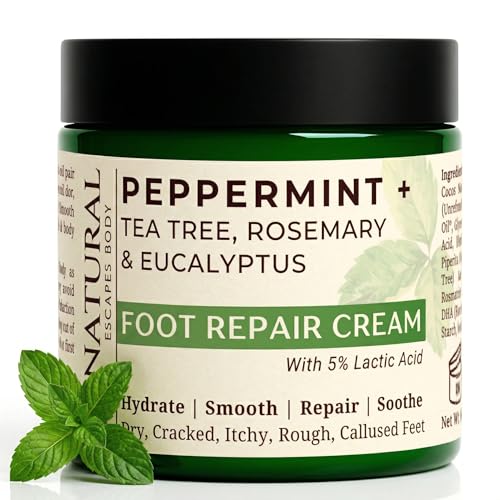
This cream stands out because it tackles two problems at once: dryness and fatigue. It contains 5% lactic acid, an alpha-hydroxy acid that gently exfoliates the thick, dead skin layers that cause calluses, while the aloe vera base provides deep hydration without water being the primary ingredient. The formula is thick but absorbs with a cooling sensation, offering immediate relief for tired, achy feet.
The peppermint and tea tree essential oils are not just for scent; they provide a natural cooling effect that supports circulation and helps control foot odor. Many users with diabetes report that this cream helps reduce the itchiness associated with dry skin while also making their heels visibly smoother within a week. It is vegan, cruelty-free, and free from parabens and petroleum, which aligns with cleaner skincare standards.
Because of the active essential oils, those with extremely sensitive skin or open wounds should patch-test first. The lactic acid is effective, but over-use on raw or cracked skin could cause a tingle. For anyone looking to combine the benefits of a chemical exfoliant with a rich moisturizer, and who enjoys a spa-like sensory experience, this is a fantastic premium choice.
Why it’s great
- Chemically exfoliates calluses while moisturizing
- Cooling sensation relieves foot fatigue
- Uses aloe vera as the primary base, not water
Good to know
- Essential oils may irritate very sensitive skin
- Smaller 4 oz jar compared to other options
3. Eucerin UreaRepair Plus Foot Cream 10% Urea
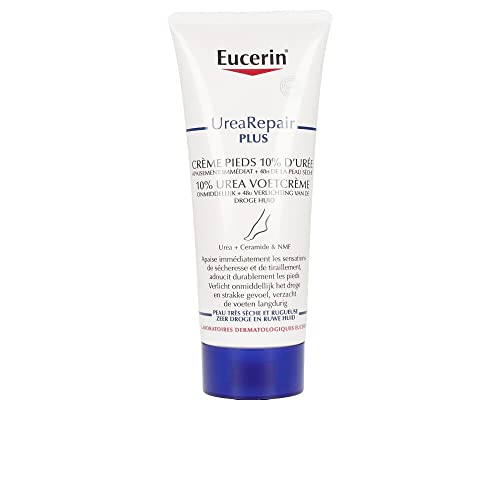
Eucerin brings pharmaceutical-grade science to the table with a 10% urea formulation. Urea at this concentration is a true active ingredient that breaks down the protein bonds holding dead, hard skin to the foot. Users on chemotherapy or with severe dryness from diabetes find this cream indispensable because it keeps the skin moist and prevents fissures that can lead to infection.
The oil-in-water emulsion is fragrance-free and colorant-free, relying entirely on its clinical efficacy. It absorbs very well and does not leave a greasy film, making it suitable for daytime use under socks. Multiple reviews highlight its ability to reduce itching on the first application, with visible softening of rough patches after just a few days. It is a simple, no-nonsense formula backed by dermatological testing.
On the downside, this cream comes in a 3.5-ounce tube, which is small relative to its price point. For someone needing to treat both feet and elbows daily, it runs out faster than a jar-based product. It is a premium, specialized tool best suited for those who need the specific keratolytic action of a high-urea concentration rather than a general moisturizer.
Why it’s great
- High 10% urea concentration for tough calluses
- Clinically proven, fragrance-free formula
- Absorbs quickly without a greasy residue
Good to know
- Small tube size for the price
- Best for targeted treatment rather than full-body use
4. EASE-Z Diabetic Lotion for Dry Skin
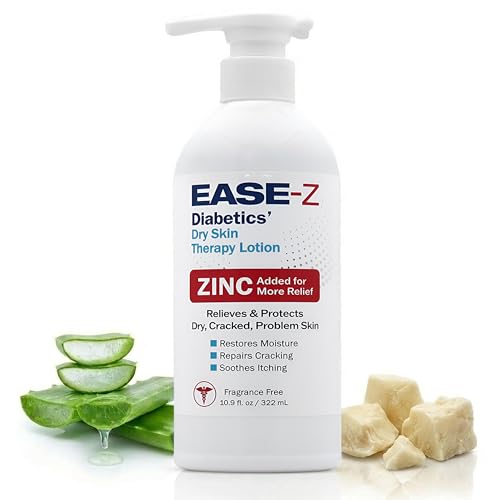
EASE-Z is a formula built from the ground up for the diabetic foot, and it shows. The inclusion of zinc is a smart move; zinc is well-known for its skin-healing and soothing properties, making this lotion ideal for feet that have minor cracks, redness, or irritation. The base uses shea butter, glycerin, and dimethicone to deliver deep hydration that soaks in rather than sitting on top of the skin.
Users specifically praise how this lotion stops the nighttime itching that keeps them awake. The texture hits a sweet spot—it is thick enough to feel effective but thin enough to absorb quickly, leaving no greasy trail on the sheets. With 10.9 ounces in the bottle, it offers a generous amount of product, making it a practical choice for daily use on both feet and legs.
It is important to note that while it supports healing of minor scrapes, it is not a medical wound treatment. For standard maintenance and comfort, this is one of the most targeted and affordable options available. It is a straightforward, effective daily moisturizer that addresses the specific complaints of diabetic dry skin without any unnecessary additives.
Why it’s great
- Zinc helps soothe and heal minor skin irritations
- Absorbs quickly, no greasy residue for nighttime use
- Large bottle size offers great value for daily use
Good to know
- Not as concentrated as cream-based treatments
- Thin lotion, not for deep, thick calluses
5. Organic Tea Tree Foot Balm
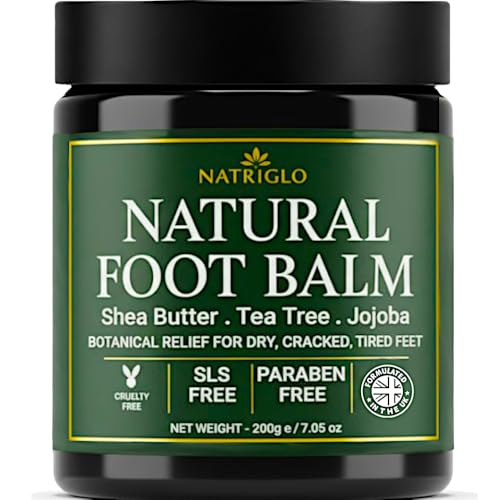
For those who prefer a natural-first approach, this balm delivers powerful results. The combination of organic tea tree oil with shea butter and jojoba oil provides a triple-action effect: deep moisturization, antifungal properties, and odor control. This makes it a strong choice for diabetics who are also concerned about athlete’s foot or general foot hygiene.
Users report dramatic softening of cracked heels after just a few nights of use. The formula is thick and balmy, requiring a small amount to cover both feet. While it feels oily upon application, it absorbs fully by morning, leaving skin smooth for days without needing to reapply constantly. The 7-ounce jar provides a solid amount of product for the price.
Tea tree oil is potent, and while most users love its clarifying scent, those with allergies or extremely reactive skin should proceed with caution. This balm is best for people who want a versatile, organic option that doubles as a cuticle and heel repair treatment. It is a fantastic maintenance balm for daily use after a shower or before bed.
Why it’s great
- Organic tea tree oil provides antifungal and odor control
- Rich balm that lasts for days without reapplication
- Nourishing shea butter and jojoba oil base
Good to know
- Tea tree scent may be strong for some users
- Oily texture initially, best for overnight use
FAQ
Can I use regular body lotion on my diabetic feet?
Why is my skin so dry even when I use lotion?
How often should I apply diabetic foot cream?
Final Thoughts: The Verdict
For most users, the best diabetic foot cream winner is the O’Keeffe’s Healthy Feet Foot Cream because it provides the most dramatic and rapid healing for deeply cracked feet while being completely safe for diabetic skin. If you want the targeted exfoliation of a chemical treatment with a refreshing feel, grab the Peppermint Foot Cream. And for a budget-friendly, everyday maintenance lotion that soothes itching and supports wound healing, nothing beats the EASE-Z Diabetic Lotion.

Mo Maruf
I created WellFizz to bridge the gap between vague wellness advice and actionable solutions. My mission is simple: to decode the research and give you practical tools you can actually use.
Beyond the data, I am a passionate traveler. I believe that stepping away from the screen to explore new environments is essential for mental clarity and physical vitality.