Our readers keep the lights on and my smoothie glass nicely filled. As an Amazon Associate, I earn from qualifying purchases.
The core challenge of vlogging isn’t finding something interesting to say—it’s delivering that story with stable, sharp video and clear audio that keeps a viewer engaged. Jittery footage, poor low-light performance, and complicated setups derail more channels than shaky scripts ever will.
I’m Mohammad Maruf — the founder and writer behind WellFizz. I’ve spent over 450 hours analyzing spec sheets, consumer benchmarks, and the real-world performance of the latest handheld cameras to identify the devices that genuinely solve a vlogger’s most frequent technical hurdles.
This guide breaks down the most effective options on the market for solo creators, travel documentarians, and livestreamers searching for the best device for vlogging.
How To Choose The Best Device For Vlogging
The right vlogging camera balances image quality, stabilization, audio capture, and portability in a way that matches your specific shooting environment. A travel vlogger needs different specs than a desk-based tutorial creator.
Sensor Size and Low-Light Performance
A 1-inch CMOS sensor is the gold standard for pocket vlogging cameras. It gathers significantly more light than the smaller sensors found in budget cameras or smartphones, producing cleaner footage in dim restaurants, evening walks, or indoor settings without harsh grain.
Stabilization Type
Mechanical 3-axis gimbal stabilization physically counteracts hand shake, delivering smooth walking shots. Digital stabilization crops the frame and can introduce a wobbling effect. For any movement—walking, climbing, panning—a mechanical gimbal is the deciding factor between watchable and unwatchable footage.
Audio Capture and Connectivity
Built-in microphones with directional pickup and a windscreen matter for outdoor vlogging. A 3.5mm external mic jack or wireless transmitter compatibility (like DJI Mic 2) gives you room to upgrade later. Video without clear audio loses viewers instantly.
Quick Comparison
On smaller screens, swipe sideways to see the full table.
| Model | Category | Best For | Key Spec | Amazon |
|---|---|---|---|---|
| DJI Osmo Pocket 3 | Handheld Gimbal | Versatile travel vlogging | 1″ CMOS, 4K/120fps, 3-axis mech. stab. | Amazon |
| DJI Osmo Pocket 3 (Bundle) | Handheld Gimbal | All-in-one kit enthusiast | 1″ CMOS, 4K/120fps, ActiveTrack 6.0 | Amazon |
| Sony ZV-1F | Point-and-Shoot | Studio solo creators | 1″ sensor, 20mm f/2 lens, Eye-AF | Amazon |
| Canon PowerShot V10 | Compact Vlog Cam | Ultra-portable daily carry | 1″ BSI CMOS, 19mm lens, built-in stand | Amazon |
| Insta360 GO 3S | Action Camera | Hands-free POV clips | 39g body, FlowState stab, IPX8 | Amazon |
| ORDRO M5 | Gimbal Camcorder | Budget-conscious beginners | 5K/30fps, 3-axis gimbal, IR night vision | Amazon |
In‑Depth Reviews
1. DJI Osmo Pocket 3
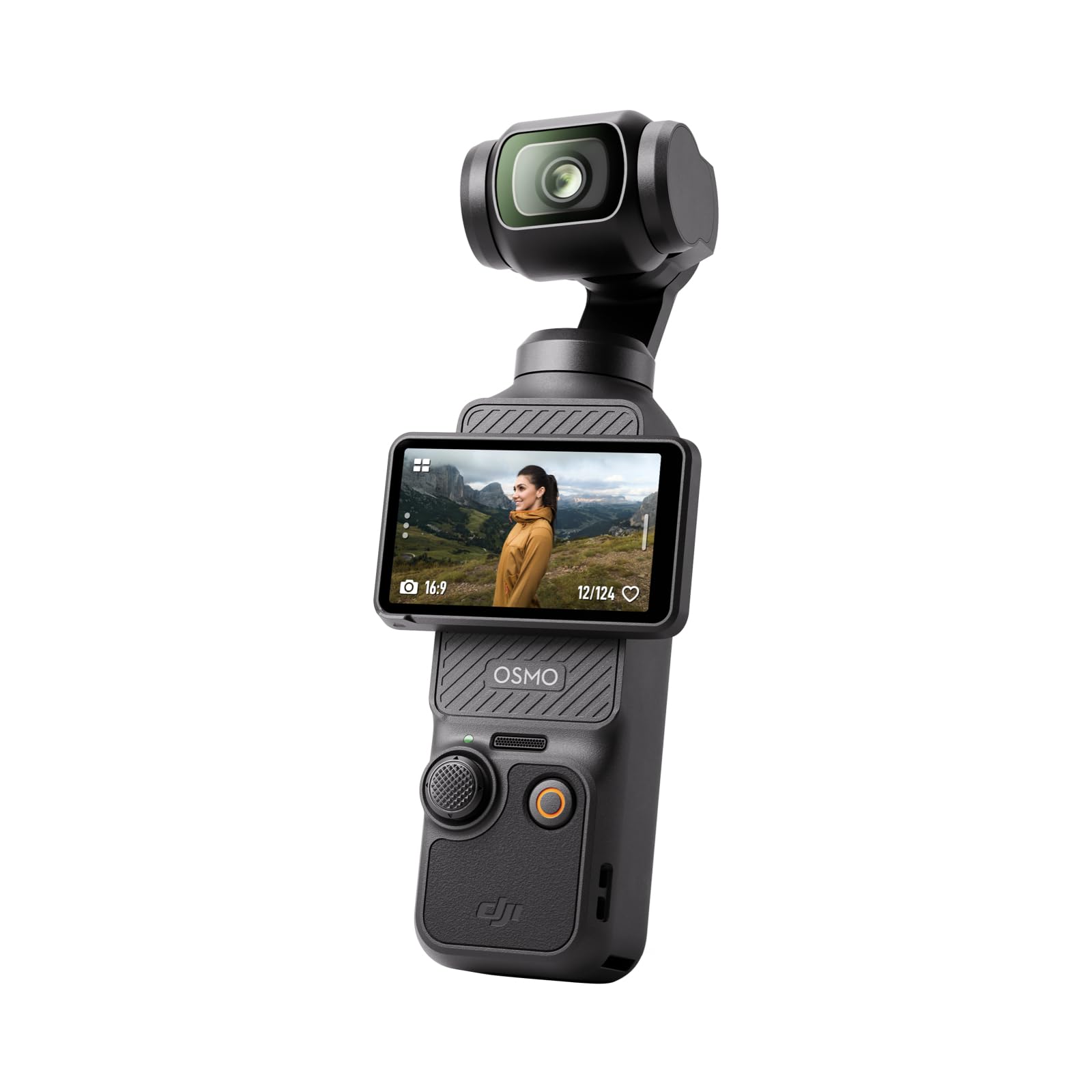
The DJI Osmo Pocket 3 sets the bar for handheld vlogging with a 1-inch CMOS sensor and a true 3-axis mechanical gimbal that eliminates walking shake without cropping the frame. Its 4K/120fps recording gives you flexibility for smooth slow-motion sequences, while the 2-inch rotatable touchscreen instantly switches between horizontal and vertical framing — a critical time-saver for cross-platform creators.
ActiveTrack 6.0 locks onto a subject and keeps them centered as you move, which is indispensable for solo vloggers using a tripod. The D-Log M 10-bit color profile offers headroom for color grading, pushing footage closer to cinema quality than typical consumer flat profiles. Battery life hits roughly 1300 mAh, but USB-C fast charging gets you back up to speed quickly between takes.
A built-in stereo mic performs well indoors, and direct wireless connection to DJI Mic 2 transmitters solves outdoor audio without a dangling cable. The pocket size means it lives in a jacket or small bag, ready the moment inspiration strikes.
Why it’s great
- Mechanical 3-axis stabilization for butter-smooth walking footage
- ActiveTrack 6.0 tracks a moving subject flawlessly solo
- Rotating screen for instant horizontal/vertical switch
- D-Log M with 10-bit color for professional-grade grading
Good to know
- Battery lasts about one hour of continuous recording
- No built-in memory; requires a microSD card
- Gimbal head is delicate — store in included case
2. DJI Osmo Pocket 3 (Bundle)
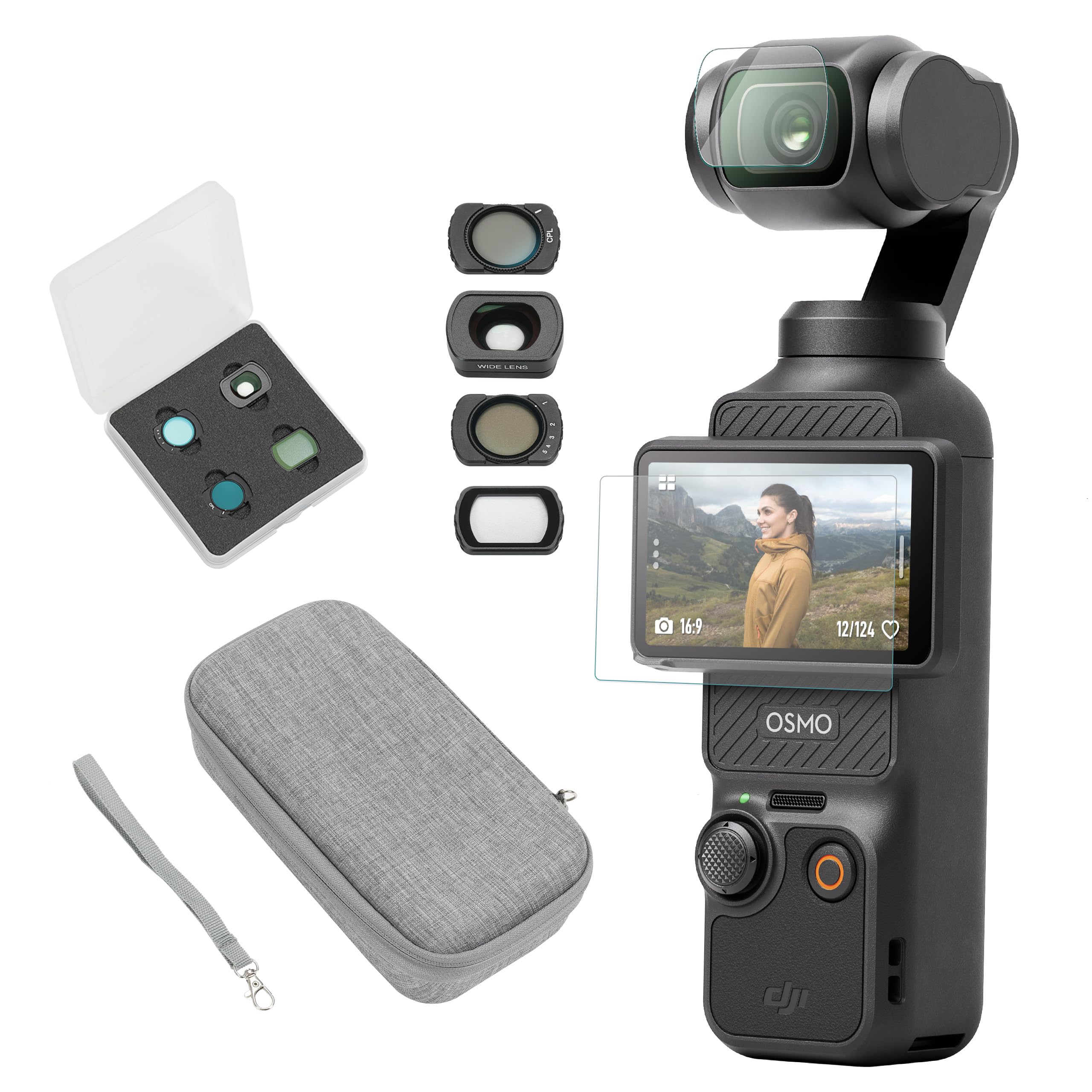
This bundle packages the same core DJI Osmo Pocket 3 with a carrying case, screen protector, and lens filter kit. The base camera remains identical — 1-inch CMOS, 3-axis gimbal, 4K/120fps — so you get the same excellent stabilization and ActiveTrack 6.0 subject tracking that made the standalone version our top pick.
The included carrying case is molded to the camera’s exact form factor, protecting the exposed gimbal during transit. Screen protectors prevent scratches on the rotating 2-inch touchscreen, which is a high-use component during every shoot. The filter kit offers ND and CPL options that help control shutter angle in bright daylight for that natural motion blur look.
For creators who want a turnkey kit without hunting third-party accessories, this bundle adds genuine utility. The filters alone save a separate purchase and allow proper exposure control at f/2 in midday sun, a scenario where bare cameras often clip highlights.
Why it’s great
- Includes ND/CPL filter kit for daylight exposure control
- Molded carrying case protects the gimbal during travel
- Same outstanding 3-axis stabilization as the standard version
- Screen protectors extend the life of the touch display
Good to know
- Filters add a step to your setup process before shooting
- Higher overall investment than the base model
- Battery is still 1300 mAh despite the extras
3. Sony ZV-1F

The Sony ZV-1F packs a 1-inch sensor and a fixed 20mm f/2 ultra-wide lens, making it one of the easiest cameras to use for desk vlogging, beauty tutorials, and product reviews. The wide field of view frames you and your background comfortably even at arm’s length. Sony’s Eye-AF locks onto your eye reliably, keeping focus sharp as you move naturally while speaking.
The side-articulating touchscreen flips out for selfie framing without blocking the hot shoe or mic port. A directional 3-capsule microphone with an included windscreen captures clear voice audio while reducing background rumble. Product Showcase mode shifts focus instantly from your face to an object held close to the lens, a feature gimmick-free and genuinely useful for unboxing content.
The main trade-off is stabilization — it relies on digital correction, which introduces a subtle wobble during walking shots. For stationary or tripod-based recording, this is a non-issue. Battery life hovers around 45 minutes of continuous shooting, so a spare battery is recommended for longer sessions.
Why it’s great
- Eye-AF and face tracking keep focus sharp during movement
- Directional 3-capsule mic with windscreen for clear audio
- Product Showcase mode is perfect for unboxing and reviews
- 20mm ultra-wide lens frames a generous selfie shot
Good to know
- Digital stabilization only — not suitable for walking footage
- Fixed lens offers no optical zoom
- Battery runs about 45 minutes of continuous recording
4. Canon PowerShot V10

The Canon PowerShot V10 is a purpose-built vlogging camera that prioritizes carrying convenience above all else. Its vertical form factor fits into a pocket or small bag with ease. The built-in stand folds out to prop the camera on any flat surface, eliminating the need for a separate tripod during desk shoots or coffee shop vlogs.
A 1-inch back-illuminated CMOS sensor and a fixed 19mm wide-angle lens (35mm equivalent) produce clean video in moderate light. The retractable front-facing LCD flips up so you can frame yourself while recording, and the touchscreen interface is intuitive for quick settings changes. Three stereo mics with a central noise-filtering channel deliver intelligible audio even in mildly noisy environments.
Frame rates cap at 4K/30fps, so slow-motion enthusiasts will miss the higher fps options. Battery life is competent for short sessions, and USB-C charging keeps it topped up between locations. The lack of zoom means you rely on walking closer — but for a grab-and-go camera, the simplicity is a strength.
Why it’s great
- Built-in folding stand for hands-free tabletop filming
- Retractable front-facing screen makes self-framing easy
- Extremely small and pocketable form factor
- Back-illuminated sensor works well indoors
Good to know
- No optical zoom — fixed wide-angle lens only
- Limited to 4K/30fps, no slow-motion mode
- Battery life could be better for day-long shoots
5. Insta360 GO 3S

The Insta360 GO 3S weighs only 39 grams and measures about the size of a thumb, making it the most mountable camera in this list. Clip it to a pendant, hat brim, or pet collar for true first-person perspective footage. Despite the tiny body, it records 4K video with FlowState stabilization that mimicks gimbal-like smoothness in post-processing.
The Action Pod — a larger housing with a 2.2-inch flip touchscreen — serves as a remote viewfinder, charging station, and battery extender. Combined run time reaches up to 140 minutes. The GO 3S itself is IPX8 waterproof (30 feet), and with the optional Dive Case it goes down to 197 feet, appealing to water-sports vloggers.
The trade-off is battery endurance in the standalone camera — about 30 minutes of continuous recording before it needs the Pod. The internal storage (128GB in this variant) cannot be expanded. For creators who shoot short, spontaneous clips rather than long monologues, the GO 3S offers perspectives no other camera here can match.
Why it’s great
- Extremely lightweight at 39g for unique mounting angles
- FlowState stabilization produces smooth POV footage
- IPX8 waterproof without housing
- Magnetic accessories enable creative hands-free shots
Good to know
- Only ~30 minutes of continuous recording on the standalone cam
- Internal storage is non-expandable
- Camera tends to drain battery when stored in the Pod
6. ORDRO M5
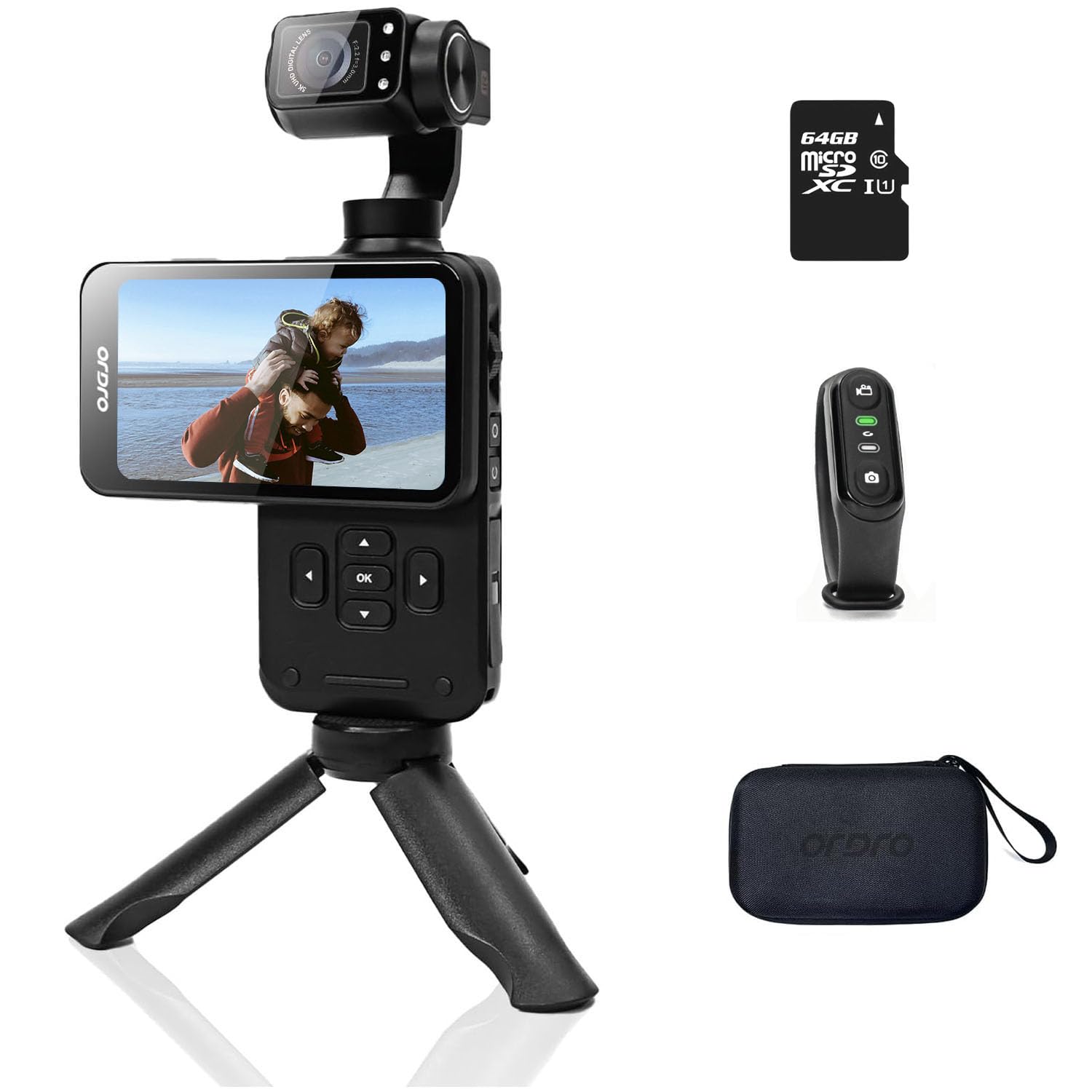
The ORDRO M5 is a budget-tier handheld camera that includes a built-in 3-axis gimbal — rare at this level — and a 1/2.5-inch CMOS sensor that records up to 5K at 30fps. While the sensor is smaller than the 1-inch competitors, the mechanical stabilization provides genuinely smooth footage for walking vlogs, making it a compelling entry point for beginners who can’t invest in higher-end options.
A 3.5-inch IPS HD touchscreen serves as the main interface, and the 180-degree rotating lens allows selfie framing. WiFi connectivity via the OD Cam app enables remote control and file transfer to your phone. The kit is generous: a 64GB microSD card, mini stand, remote control, and carrying bag come in the box, reducing the initial accessory spend.
Low-light footage shows noticeable noise compared to 1-inch sensor cameras, and the built-in microphone benefits significantly from an external mic upgrade. The gimbal works well but isn’t as fluid as the DJI system. For a first camera that teaches stabilization fundamentals without breaking the bank, the M5 delivers functional value.
Why it’s great
- Built-in 3-axis gimbal at an entry-level price point
- Comes with multiple accessories including 64GB card
- 5K resolution offers future-proofing for platforms
- IR night vision works in complete darkness
Good to know
- Smaller sensor struggles in low-light conditions
- Audio quality is poor without an external microphone
- Gimbal stabilization is good but not DJI-grade
FAQ
What is the minimum sensor size I should consider for low-light vlogging?
Does a 3-axis gimbal matter if I record stationary talking-head videos?
Can I use my smartphone as a vlogging device instead of a dedicated camera?
Final Thoughts: The Verdict
For most users, the best device for vlogging winner is the DJI Osmo Pocket 3 because it combines a 1-inch sensor with a true 3-axis mechanical gimbal in a pocket-sized body, solving the two biggest pain points of vlogging — stabilization and low-light quality — in one device. If you want a dedicated studio camera with Sony’s reliable Eye-AF, grab the Sony ZV-1F. And for spontaneous hands-free POV clips that no other camera can capture, nothing beats the Insta360 GO 3S.

Mo Maruf
I created WellFizz to bridge the gap between vague wellness advice and actionable solutions. My mission is simple: to decode the research and give you practical tools you can actually use.
Beyond the data, I am a passionate traveler. I believe that stepping away from the screen to explore new environments is essential for mental clarity and physical vitality.