Our readers keep the lights on and my smoothie glass nicely filled. As an Amazon Associate, I earn from qualifying purchases.
At nine months, your baby is a whirlwind of motion and curiosity—rolling, scooting, and starting to crawl toward anything within reach. The toys you choose now do more than entertain; they build the neural pathways for grasping, hand-eye coordination, and understanding that actions have consequences. This stage demands objects that reward movement, offer sensory feedback, and survive the relentless cycle of mouthing and dropping.
I’m Mohammad Maruf — the founder and writer behind WellFizz. I’ve spent hundreds of hours analyzing safety certifications, material durability, and age-specific design features across hundreds of infant developmental toys to separate the genuinely useful from the merely cute.
From cause-and-effect pop-ups to rolling sensory rollers, this guide breaks down the top contenders to help you find the safest, most engaging developmental toys for 9 month old infants that actually support their milestones.
How To Choose The Best Developmental Toys For 9 Month Old
A nine-month-old is in a unique developmental window: they can sit independently, transfer objects between hands, and are beginning to understand that their actions make things happen. The best toys for this stage reinforce those discoveries without overwhelming the baby with complex demands.
Prioritize Cause and Effect
Toys that produce a predictable reaction — a ball rolls away when pushed, an animal pops up when a button is pressed — teach babies that they have control over their environment. Look for mechanisms like levers, dials, drop holes, and push-activated sounds rather than passive static toys.
Check Material Safety and Texture
At this age everything goes into the mouth. Prioritize food-grade silicone, smooth unfinished wood, and BPA-free ABS plastics. Avoid toys with small detachable parts, sharp edges, or toxic paints. Washability matters too — toys that survive an occasional wipedown with mild cleaner are worth more than delicate fabric toys that stain.
Size and Grip-Friendliness
Nine-month-old hands are still developing a pincer grasp. Balls should be at least 1.5 inches in diameter to prevent choking, but small enough to be grasped with one hand. Avoid heavy toys — anything over about 0.5 pounds can be frustrating for a baby to lift and manipulate.
Quick Comparison
On smaller screens, swipe sideways to see the full table.
| Model | Category | Best For | Key Spec | Amazon |
|---|---|---|---|---|
| Duchong Pop Up Animals | Cause & Effect | Fine motor and problem solving | 3 play modes with music & light | Amazon |
| Busy edition Object Permanence Box | Montessori | Cognitive and hand-eye coordination | Smooth wood, 9.45 x 4.72 x 3.46 inches | Amazon |
| Qirptey 4-in-1 Montessori Set | Sensory & Shape Sorting | Stacking, sorting, teething | Silicone + ABS, shape sorter bin | Amazon |
| AWOTOY Music Caterpillar | Multi-Sensory Plush | Tummy time and teething | 6-in-1: rattle, mirror, crinkle, teether | Amazon |
| Thremhoo Inflatable Rolling Toy | Gross Motor Roller | Crawling encouragement | 16 x 8.5 inches, sequin and rattle balls | Amazon |
In‑Depth Reviews
1. Duchong Pop Up Toys for 1 Year Old

This pop-up animal toy stands out because it offers three distinct play modes — animal sound, game mode with follow-the-light, and a quiet mode that works without batteries. Nine-month-olds love the cause-and-effect thrill of pressing a button, sliding a switch, or turning a dial to make a friendly animal spring up. The audio in animal sound mode pairs each animal with its name and real sound, adding a gentle vocabulary-building layer.
The levers, dials, and buttons are perfectly sized for small hands that are still mastering the pincer grasp. The toy is built from polished ABS plastic with no sharp edges, and it’s lightweight enough for a baby to carry around. The quiet mode is a neat touch for car rides or winding down before naps.
Two things worth noting: batteries are not included (needs three AAA), and the flaps can occasionally get stuck if a baby pushes too hard with the full force of a toddler. But for the intended 9-to-12-month window, this toy delivers rich sensory feedback and problem-solving practice that keeps babies engaged for long stretches.
Why it’s great
- Three modes prevent boredom; quiet mode works battery-free
- Lever, dial, and button types build diverse fine-motor skills
- Durable ABS plastic withstands throwing and drops
Good to know
- Batteries not included
- Flaps may jam if toddler pushes with excessive force
2. Busy edition Montessori Object Permanence Box
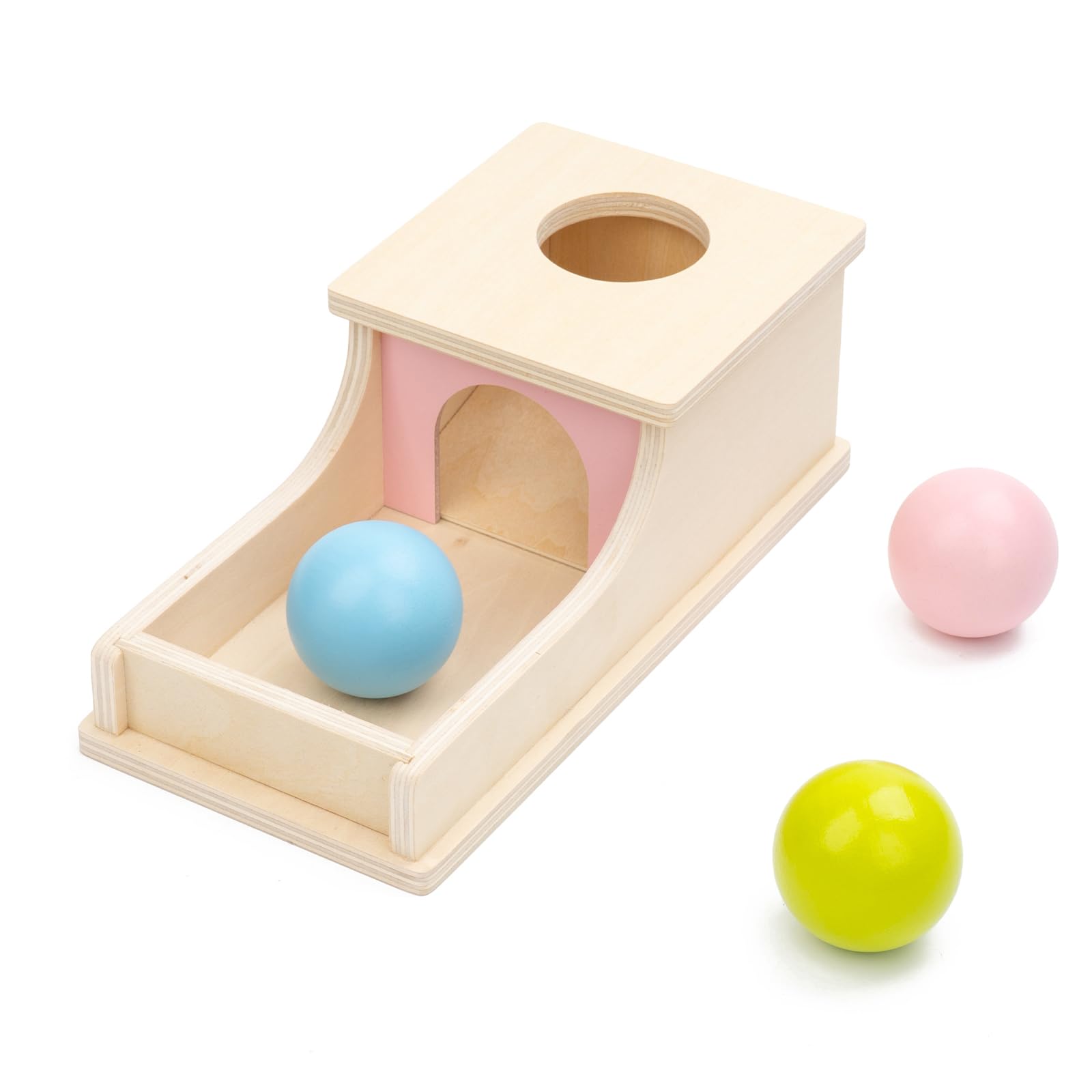
This is a pure Montessori tool with zero bells, whistles, or batteries — and that’s precisely why it works so well for a 9-month-old. The concept is elegant: a wooden box with a hole on top, a small tray at the bottom, and three brightly colored wooden balls. Baby drops a ball into the hole, watches it vanish, and then sees it roll back out onto the tray. This teaches object permanence — the understanding that things still exist even when out of sight.
The wooden construction is sanded smooth, with no splinters or sharp corners. The 1.77-inch balls are large enough to be safe but light enough for a baby to grip and lift. Parent reviews consistently note that babies as young as 7 months quickly learn the drop-and-wait game, and the rolling ball that emerges becomes a crawling incentive. At 9 months, many babies start chasing the ball across the room, turning a cognitive exercise into a gross-motor workout.
One caution: the paint can chip if wiped aggressively with harsh chemical wipes. Stick to a damp cloth. Also, some advanced crawlers may prefer more interactive play after several weeks, so this toy shines brightest as an early cognitive introduction rather than a long-term all-day staple.
Why it’s great
- Teaches object permanence through direct cause and effect
- Smooth wood construction is durable and safe for mouthing
- Rolling ball naturally encourages crawling
Good to know
- Paint may chip if cleaned with bleach or alcohol wipes
- Best as an early cognitive tool; novelty may fade
3. Qirptey 4-in-1 Montessori Toys
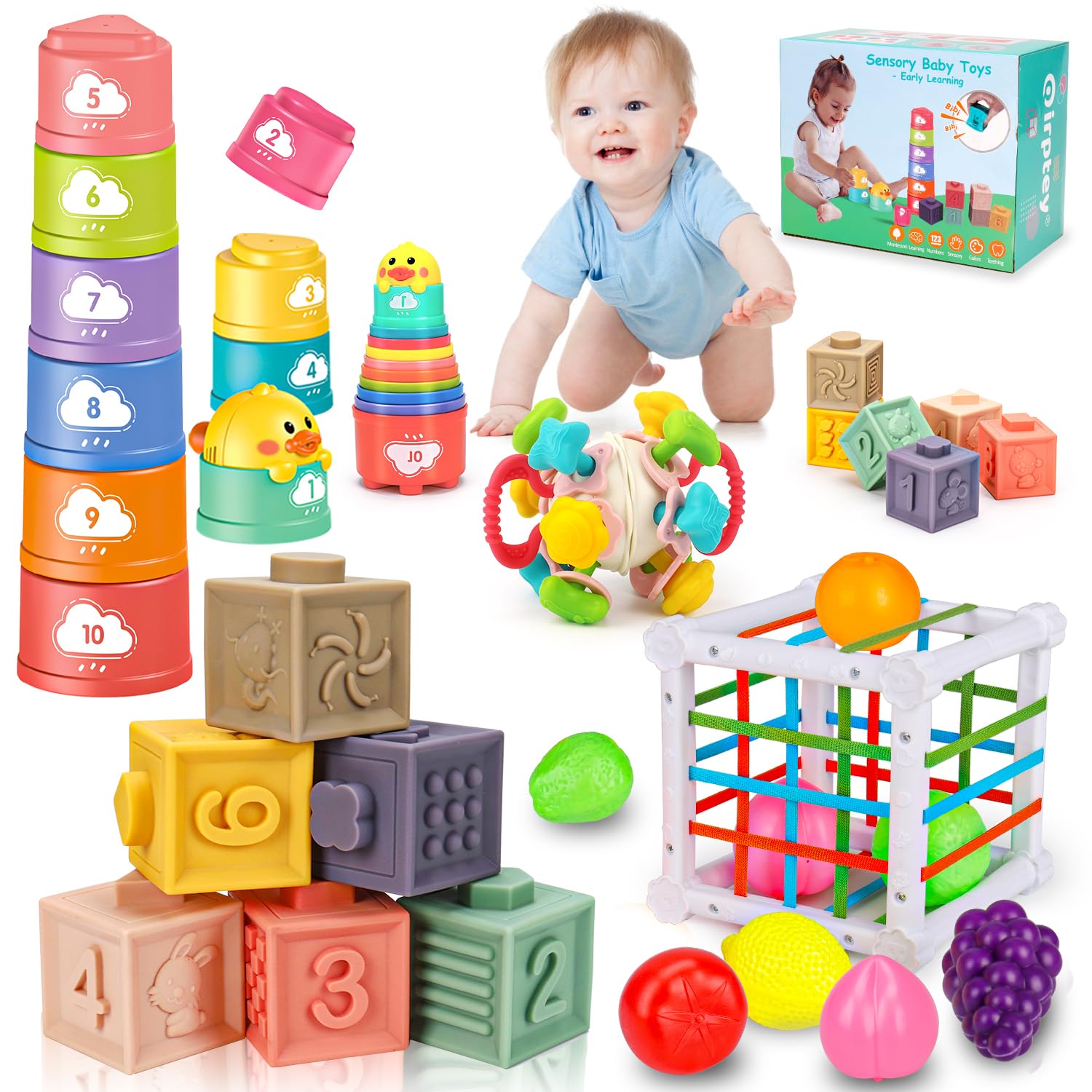
This bundle packs four activities into one box: stacking blocks, stacking cups, a shape sorter bin, and soft teethers. The stacking cups are particularly well-suited for a 9-month-old because they are light, have textured rims for teething, and feature numbers and shapes printed on the bottom for later learning phases. The soft building blocks are made from food-grade silicone that yields to biting without splintering or cracking.
The shape sorter bin uses fruit-shaped pieces — guava, orange, peach, tomato, lemon, grape — which are chunkier than traditional geometric shapes, making them easier for babies to manipulate. The bin itself is lightweight and has a lid with cutouts that match the fruit silhouettes. Parent reviewers note that the bright colors and satisfying “thunk” of a piece dropping into the bin hold a 9-month-old’s attention for solid 10- to 15-minute sessions.
The main trade-off is durability of the plastic bin — some reports indicate the lid can crack if the baby sits or stands on it. Also, the set is slightly smaller than it appears in product photos, so the stacking blocks may be too small for some 12-month-old hands. But for the 6- to 12-month range, this is a rich sensory toolkit that grows with the baby.
Why it’s great
- Four activities in one box maximize play value
- Silicone teethers are BPA-free, soft, and safe
- Fruit-shaped sorter pieces are easy for small hands
Good to know
- Plastic bin lid can crack under weight
- Overall size is smaller than product images suggest
4. AWOTOY Music Caterpillar
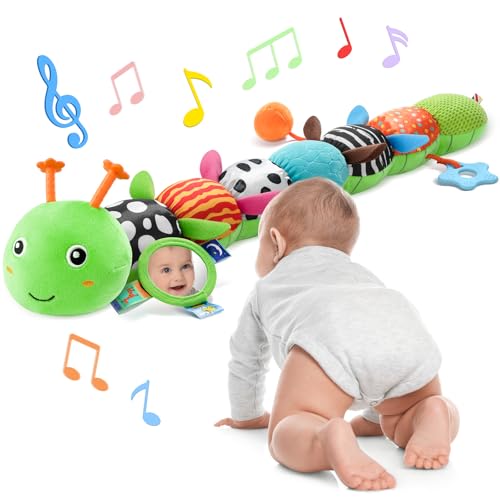
The AWOTOY caterpillar is a multi-sensory plush toy that combines a rattle, crinkle paper, a squeaker, a mirror, a teether, and a hidden music button — all in one segmented fabric body. At 9 months, babies are drawn to the contrasting patterns on each segment and the crinkle sound that rewards squeezing. The teether on the tail is made from medical-grade silicone, offering a safe surface for sore gums without any small parts that could break off.
The mirror on one segment is a clever addition: 9-month-olds are just beginning to recognize their own reflection, and this toy makes that discovery portable. The pull string at the head triggers gentle music, and the whole toy is machine-washable if it gets slobbered on (which it will). The 20-inch ruler printed on the belly is a cute bonus for tracking growth, though it’s not a primary reason to buy.
Some parents note that the music volume is moderate — not loud enough to annoy adults but audible enough to engage. The plush fabric is soft but may pill after repeated washes. Overall, this is a strong pick for tummy time and teething relief, offering variety without overwhelming a baby with flashing lights.
Why it’s great
- Six distinct sensory features in one compact toy
- Medical-grade silicone teether is safe for gumming
- Machine-washable for easy cleanup
Good to know
- Fabric may pill over time after washing
- Music volume is moderate, not adjustable
5. Thremhoo Inflatable Rolling Toy
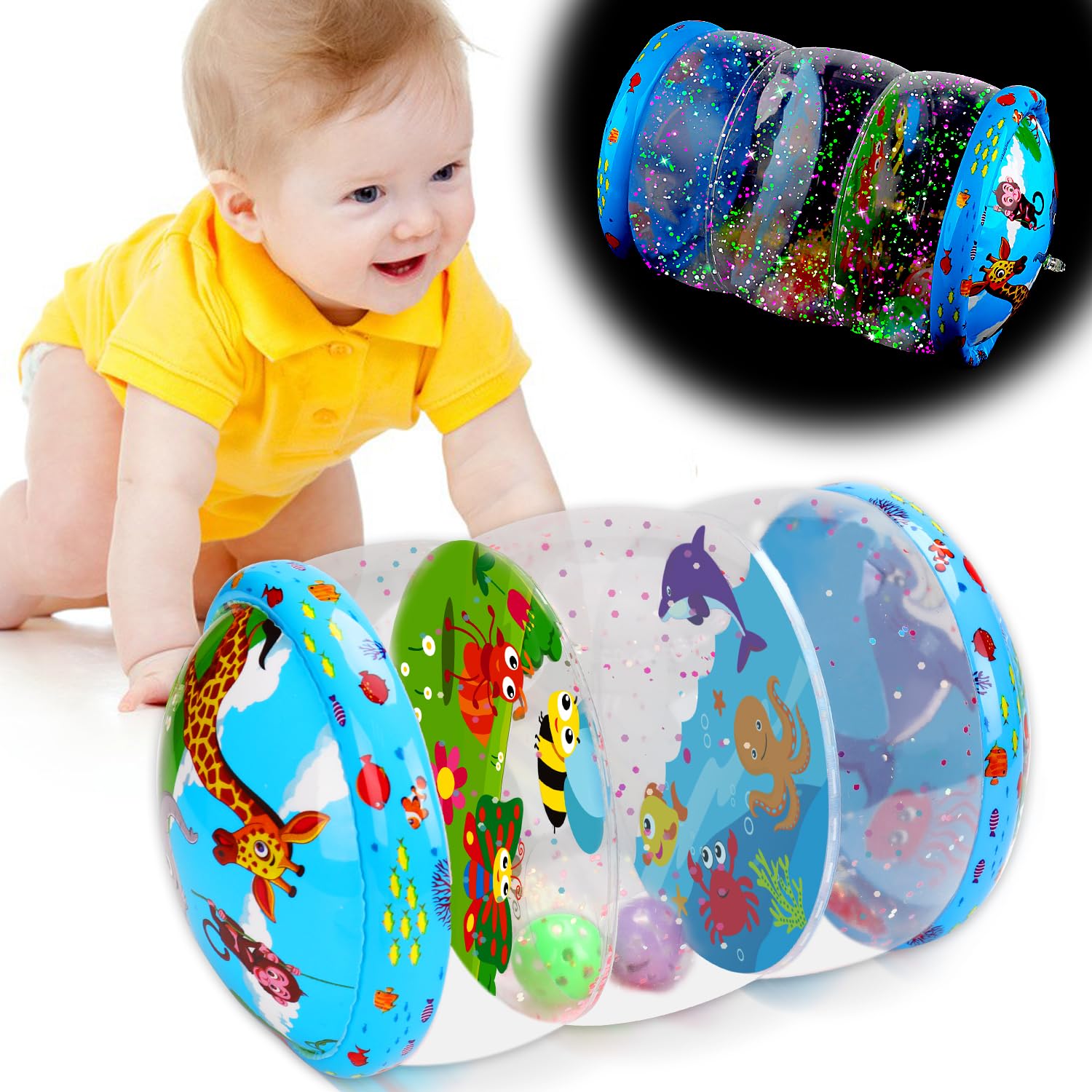
This inflatable jumbo roller is purpose-built for motivating crawlers. When a baby pushes it, the sequin-covered surface shimmers, and the two rattling balls inside shift and click, creating a reward loop that encourages the baby to chase it. At 16 inches long and 8.5 inches in diameter, it’s large enough to roll with a gentle push but light enough for a baby to nudge without frustration.
The plastic is thick enough to hold air for weeks without deflating, and the surface is easy to wipe clean. It deflates completely for travel or storage. The glowing sequins need direct light exposure to charge, but even without a strong glow, the visual shimmer during daytime play is enough to attract attention. Parent reviewers consistently mention that their 7- to 9-month-olds became much more active crawlers after a few sessions with this toy.
The main limitation is that the “glow in the dark” effect is subtle rather than bright — don’t expect a nightlight-level glow. Also, the toy is best suited for the crawling stage and may lose appeal once babies start walking confidently. But for a 9-month-old who is on the verge of mobility, this roller is a powerful training tool disguised as pure fun.
Why it’s great
- Rattling balls and sequins create a strong crawl incentive
- Lightweight, inflatable design makes it travel-friendly
- Easy to clean with a damp cloth
Good to know
- Glow effect is subtle and requires bright light to charge
- Best for crawlers; less engaging for walkers
FAQ
How do I know if a pop-up toy is safe for a 9-month-old?
Should I get a wooden Montessori toy or a plastic electronic toy for a 9-month-old?
How often should I rotate toys for a 9-month-old to keep them interested?
Final Thoughts: The Verdict
For most users, the developmental toys for 9 month old winner is the Duchong Pop Up Toys because its three play modes and variety of fine-motor actions provide the richest cause-and-effect learning at this age. If you prefer a screen-free cognitive trainer that teaches object permanence, grab the Busy edition Object Permanence Box. And for a baby who needs extra motivation to crawl, nothing beats the Thremhoo Inflatable Rolling Toy.

Mo Maruf
I created WellFizz to bridge the gap between vague wellness advice and actionable solutions. My mission is simple: to decode the research and give you practical tools you can actually use.
Beyond the data, I am a passionate traveler. I believe that stepping away from the screen to explore new environments is essential for mental clarity and physical vitality.