Our readers keep the lights on and my smoothie glass nicely filled. As an Amazon Associate, I earn from qualifying purchases.
That fresh claw-mark down your sofa, the puddle on the rug, or the neighbor’s cat digging up your newly planted garden — these are the daily frustrations that drive cat owners to seek reliable deterrents. The market offers everything from natural sprays to spiky mats and ultrasonic alarms, but separating effective solutions from water-in-a-bottle gimmicks requires understanding exactly how each type of deterrent works on a feline’s sensitive senses.
I’m Mohammad Maruf — the founder and writer behind WellFizz. After analyzing dozens of customer reviews, technical specs, and real-world usage reports across five distinct deterrent formats, I’ve mapped out which products actually deliver on their promises.
Whether you’re battling indoor scratching or outdoor trespassing, finding the right tool depends on matching the deterrent type to your specific cat’s behavior. This guide breaks down the top options to help you find the best deterrent for cats for your home.
How To Choose The Best Deterrent For Cats
Not all cat deterrents work the same way. A product that stops a cat from scratching a sofa may have zero effect on a stray spraying your front door. Start by identifying the specific behavior you need to stop and the environment where it occurs — indoor furniture, outdoor garden, or targeted surface like a Christmas tree.
Match the Deterrent to the Behavior
Sprays work best for surface-specific training — teaching a cat to avoid a particular sofa leg, curtain, or plant. The scent lingers and conditions the cat to associate that location with an unpleasant smell. For outdoor areas or persistent trespassers, physical mats with spikes create an immediate tactile deterrent that doesn’t rely on scent at all. Motion-activated sound devices cover larger zones and work well for yards or gardens where sprays would wash away.
Ingredients Matter More Than Branding
Effective spray deterrents use natural compounds like peppermint, citronella, or bitter citrus extracts that cats genuinely avoid. Cheap formulas often smell like plain water to a feline nose and fail immediately. Look for products with verified customer feedback confirming the scent actually repels — not just masks — the area. Cats have roughly 200 million scent receptors, so a weak or overly diluted formula won’t register.
Physical vs. Sensory Deterrence
Sprays and alarms rely on sensory aversion — smell or sound — which cats can sometimes adapt to over time. Physical mats with blunt spikes never lose their effectiveness because the tactile sensation is immediate and consistent. For stubborn cats or outdoor strays, a physical barrier often outperforms any scent-based product. Choose sensory methods for training indoor cats and physical methods for perimeter protection.
Quick Comparison
On smaller screens, swipe sideways to see the full table.
| Model | Category | Best For | Key Spec | Amazon |
|---|---|---|---|---|
| OCEANPAX Scat Mat | Physical Barrier | Outdoor gardens & counters | 12-pack, 16×8 inch mats | Amazon |
| HULPPRE Motion Alarm | Sound/Light Alarm | Yards & large outdoor areas | 130dB, 13 sounds, solar | Amazon |
| KTSAY Spray | Natural Spray | Furniture & indoor training | Peppermint & lemon extract | Amazon |
| Woyamay Spray | Natural Spray | Leather furniture & plants | 200ml, natural formula | Amazon |
| PINE PAWS Spray | Natural Spray | Budget indoor use | Plant-based, citrus scent | Amazon |
In‑Depth Reviews
1. OCEANPAX Scat Mat (12-Pack)
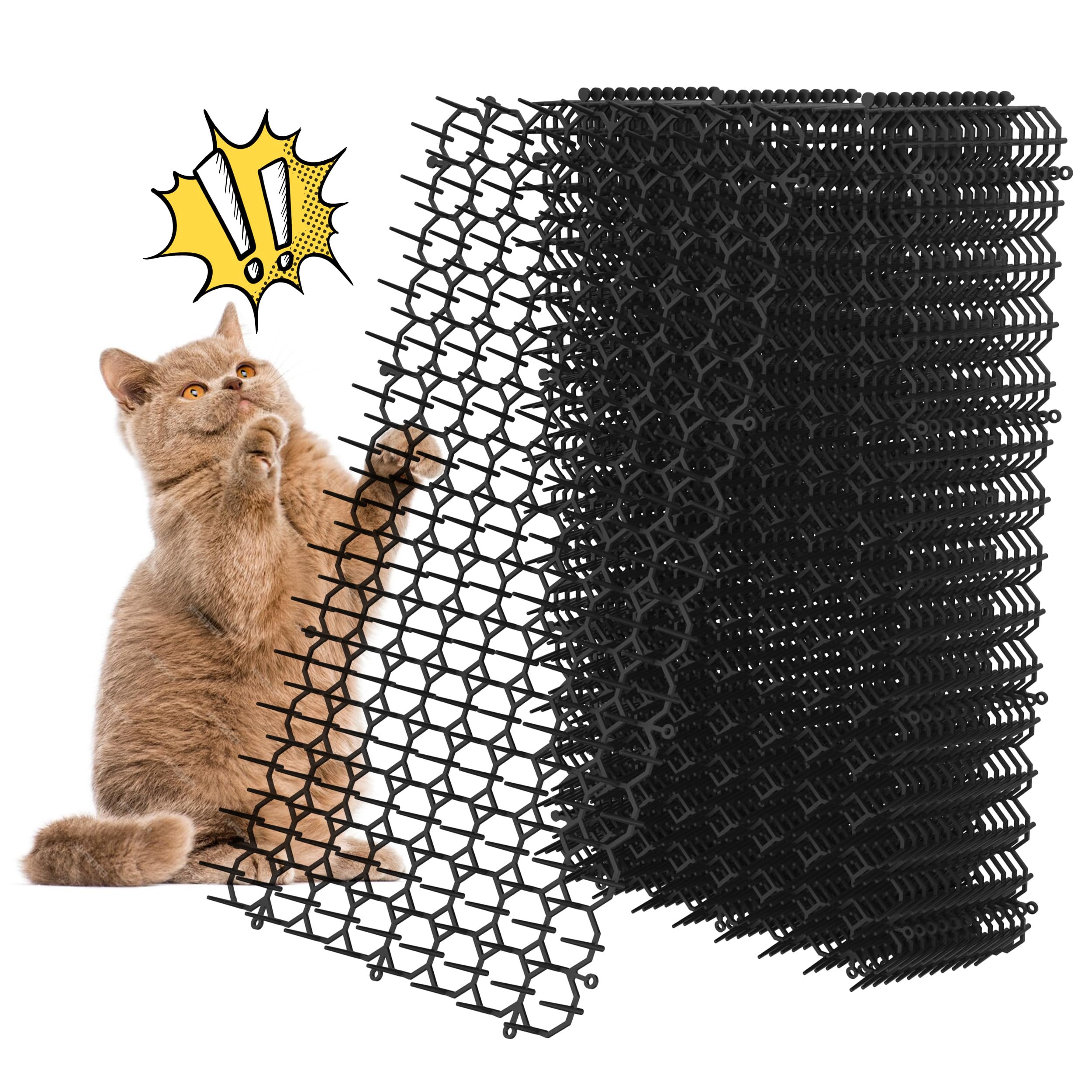
This 12-pack of scat mats offers the most versatile physical deterrent in this lineup. Each 16×8 inch polypropylene mat features blunt spikes that create an uncomfortable but harmless surface — cats learn to avoid the area after one or two encounters. The mats are easily cuttable to fit narrow window sills, countertops, or irregular garden beds, and the interlocking design lets you create custom-shaped barriers around flower beds or car hoods.
Weather-resistant construction makes these suitable for year-round outdoor use, though reviewers note they should be removed before winter to prevent cracking in freezing temperatures. The mats weigh just 1.7 pounds for the full set, so repositioning them for different seasons is simple. Customers consistently report success against both stray cats and persistent squirrels, making this a multi-pest solution for homeowners.
One limitation: the spikes can be painful if stepped on with bare feet, so placement in high-traffic walkways requires careful planning. Some users also note that determined cats may occasionally pull the mats apart if not securely fastened to the ground. Despite these minor drawbacks, this is the most effective option for outdoor perimeter defense and indoor countertop training.
Why it’s great
- Works immediately — no scent adaptation possible
- Weather-resistant polypropylene lasts multiple seasons
- Cuttable and interlocking for custom layouts
Good to know
- Can be painful to step on with bare feet
- Determined cats may dislodge loose mats
2. HULPPRE Solar Motion Sensor Alarm

This motion-activated alarm brings a completely different approach to cat deterrence — auditory and visual instead of physical or olfactory. With 13 different sounds including dog barking and a siren that cycle randomly when motion is detected, it prevents animals from habituating to a single noise. The red and blue strobe lights add a visual deterrent that works well at night, and the 26-foot detection range covers a substantial outdoor area.
The 4-mode system lets you customize operation: 24-hour detection with full sound and light, light-only mode, or night-only activation. Solar charging eliminates the need for battery changes, and installation takes 5-10 minutes using the included mounting stake. Customers report immediate success with raccoons, birds, and stray cats, with many noting the device held up through rain and heat after several months of use.
The primary trade-off is volume — at 130dB, this is genuinely loud and has no adjustable volume control. In dense neighborhoods, the barking and siren sounds may disturb neighbors or cause complaints. For rural or suburban properties with space between houses, this is an excellent perimeter guard, but urban dwellers should consider the scat mat or a spray for quieter deterrence.
Why it’s great
- 13 rotating sounds prevent animal habituation
- Solar powered with zero ongoing costs
- 4 operating modes for day/night flexibility
Good to know
- No volume control — extremely loud
- Not suitable for dense urban housing
3. KTSAY Cat Deterrent Spray
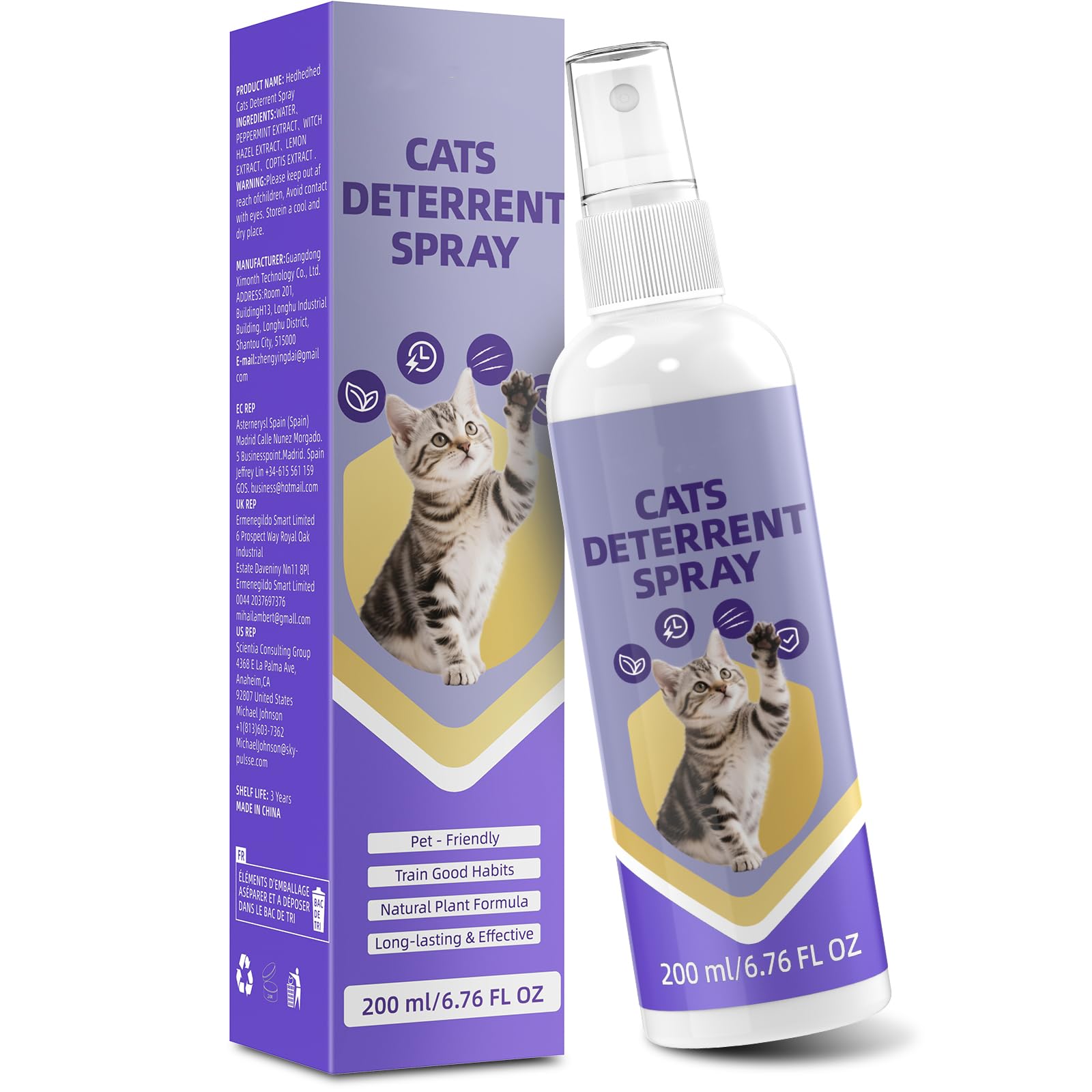
Built on a base of peppermint, witch hazel, and lemon extracts, this spray leverages three scents that cats naturally find offensive while remaining pleasant to humans. The fine-mist nozzle provides even coverage on fabric, wood, and plant surfaces without leaving sticky residue or causing discoloration. Multiple customer reviews confirm immediate behavioral changes — cats back away from sprayed areas and stop scratching or urine marking within days.
The formula is versatile enough for both indoor and outdoor use, with users reporting success on Christmas trees, balcony railings, and garden planters. The non-toxic composition means it’s safe around children and other pets, and the vet-recommended designation adds credibility for cautious pet owners. Each 7.8-ounce bottle provides roughly two weeks of daily application on a standard sofa or several large planters.
Performance varies by individual cat — some customers report their cats ignoring the scent entirely, particularly if the cat is highly food- or territory-driven. Reapplication every 2-3 days is necessary for consistent results, and the spray may need more frequent use in rainy outdoor conditions. For cats that respond to scent-based training, this is the most pleasant-smelling and effective spray option in the lineup.
Why it’s great
- Pleasant human scent with strong feline aversion
- Non-staining formula safe on fabrics and wood
- Vet-recommended natural ingredients
Good to know
- Results vary — some cats are unaffected
- Requires reapplication every 2-3 days
4. Woyamay Cat Deterrent Spray

Woyamay’s citrus-forward formula targets scratching behavior specifically, with multiple verified reviews confirming effectiveness on leather couches, velvet upholstery, and artificial plants. The scent is described as clean and not overpowering — a plus for owners sensitive to strong fragrances. The 200ml bottle delivers about 180-200 sprays, making it economical for daily use on multiple surfaces.
The advanced natural formula uses plant-based ingredients rather than synthetic chemicals, and reviewers note it doesn’t stain or leave residue on delicate fabrics. One user with 4 cats reported it broke their furniture-scratching habit after consistent daily application. The spray also works well for Christmas tree protection, with cats avoiding the lower branches for weeks after a single thorough application.
The most consistent complaint is longevity — most users report needing to reapply every 24 hours to maintain effectiveness, and some stubborn cats require twice-daily spraying. The effect is noticeable for a few hours but degrades significantly overnight. For owners willing to maintain a daily routine, this is a reliable training aid, but those seeking a set-it-and-forget-it solution should consider the scat mat instead.
Why it’s great
- Effective on leather and delicate surfaces
- Pleasant citrus scent for humans
- Good value with 200ml per bottle
Good to know
- Must reapply daily for consistent results
- Some cats need twice-daily spraying
5. PINE PAWS Cat Deterrent Spray
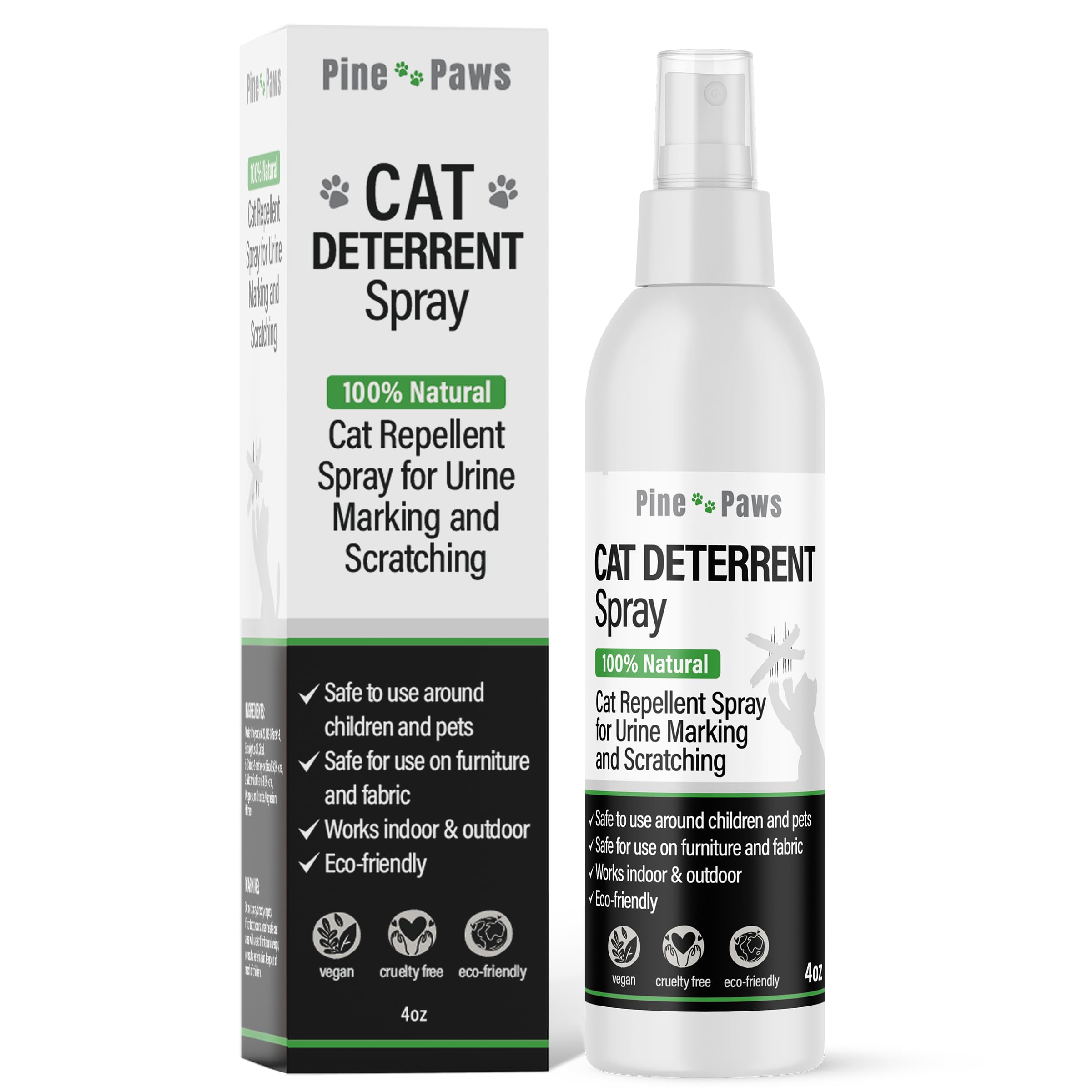
PINE PAWS offers a 100% natural formula with a lemon-forward scent that some cats find unpleasant. The spray is vegan, cruelty-free, and packaged in recyclable materials — appealing to environmentally conscious buyers. At 5.3 ounces, the bottle is smaller than competitors but still provides enough coverage for a sofa or several indoor plants with daily use. Customers report success protecting couch cushions and outdoor planters from digging and scratching.
The plant-based ingredients are gentle enough for use on fabrics and carpets without staining, and the formula leaves no sticky residue behind. One reviewer noted it stopped their cat from scratching the couch entirely after 4 days of consistent once-daily application. The spray works best as a training aid when paired with positive reinforcement — redirecting the cat to a scratching post after spraying the off-limits area.
The main concerns are inconsistent sprayer quality — several customers mention the pump leaking or failing to produce a consistent mist — and a significant portion of users report no effect on their cats at all. The split in reviews suggests individual cats vary widely in their sensitivity to this specific citrus blend. For the price, it’s worth trying as a first spray, but buyers with stubborn cats may need to upgrade to a more potent formula or physical barrier.
Why it’s great
- 100% natural plant-based ingredients
- Vegan and eco-friendly packaging
- Works as a training aid within days for responsive cats
Good to know
- Spray pump quality is inconsistent
- Effectiveness varies significantly between cats
FAQ
Does the OCEANPAX scat mat hurt the cat?
How long does the smell from cat deterrent sprays last indoors?
Can the HULPPRE motion alarm be used indoors?
Will cat deterrent sprays stain my sofa or curtains?
Final Thoughts: The Verdict
For most users, the best deterrent for cats winner is the OCEANPAX Scat Mat because it works on every cat — no adaptation, no reapplication, no scent resistance. If you want a quiet, surface-specific training tool, grab the KTSAY Spray. And for full-yard protection against stray cats and wildlife, nothing beats the HULPPRE Solar Motion Alarm.

Mo Maruf
I created WellFizz to bridge the gap between vague wellness advice and actionable solutions. My mission is simple: to decode the research and give you practical tools you can actually use.
Beyond the data, I am a passionate traveler. I believe that stepping away from the screen to explore new environments is essential for mental clarity and physical vitality.