Our readers keep the lights on and my smoothie glass nicely filled. As an Amazon Associate, I earn from qualifying purchases.
Pressure washing a concrete driveway, patio, or sidewalk often reveals that water alone won’t cut the ingrained grime, oil spots, and biological staining that define years of exposure. The right detergent breaks the surface tension on porous concrete, emulsifies embedded oils, and lifts biological growth without requiring excessive scrubbing or multiple passes that waste time and water.
I’m Mohammad Maruf — the founder and writer behind WellFizz. My process for this guide involved cross-referencing chemical formulations, coverage claims, dilution ratios, and real-world customer reports to isolate which formulas actually outperform plain water on stubborn concrete stains.
Understanding the chemistry behind these cleaners makes all the difference in selecting the best detergent for pressure washing concrete, so you avoid residue issues and wasted effort on the first pass.
How To Choose The Best Detergent For Pressure Washing Concrete
Concrete is porous and alkaline, which means some household-style detergents work against its natural chemistry. Choosing the wrong cleaner can leave a white film, fail to lift oil, or require neutralization steps that add time. The three criteria below separate effective concrete detergents from general-purpose wash solutions.
Active Chemistry: Bleach vs. Peroxide vs. Degreasers
Sodium hypochlorite (bleach) is the most aggressive on mold, mildew, and algae, but it can lighten concrete unevenly and requires careful rinsing to avoid killing landscaping. Hydrogen peroxide-based formulas offer a safer alternative for planted areas but may require longer dwell times on heavy biological staining. For oil and grease embedded in the concrete pores, a dedicated alkaline degreaser or a surfactant-heavy formula is necessary — bleach alone won’t emulsify hydrocarbon stains.
Concentration and Coverage per Gallon
Pay attention to the dilution ratio. A concentrate that makes 20 to 40 gallons of useable solution sounds like a value, but if the cleaning power is too weak at the recommend ratio, you end up using double strength or making multiple passes. Effective concrete detergents typically offer 1,000 to 6,400 square feet of coverage per bottle when mixed per instructions. Calculate your driveway or patio square footage before buying to avoid running out mid-job.
Residue and Rinse Requirements
Concrete’s porous surface holds onto residues longer than vinyl or metal siding. Detergents that leave a film when they dry require immediate and thorough rinsing from the top down, often with a second pass. Some formulas are labeled no-rinse or self-rinsing, but real-world reviews frequently note that full-strength rinsing is still required to avoid a dull haze. Choose a detergent that specifies clear rinsing properties for concrete applications.
Quick Comparison
On smaller screens, swipe sideways to see the full table.
| Model | Category | Best For | Key Spec | Amazon |
|---|---|---|---|---|
| Zep House and Siding | Premium | Large concrete areas | 25 gallons (5,000 sq. ft.) | Amazon |
| 30 SECONDS Concentrate | Bleach | Heavy biological stains | 1 gal makes 20 gallons | Amazon |
| Simple Green Oxy Solve | Peroxide | Pet/plant safety | 6,400 sq. ft. coverage | Amazon |
| Simple Green Oxy Solve House | Peroxide | Mold on concrete | 1 gal concentrate | Amazon |
| Krud Kutter House Wash | Budget | Light surface grime | 1,000 sq. ft. coverage | Amazon |
In‑Depth Reviews
1. Zep House and Siding Pressure Wash Cleaner Concentrate

Zep’s construction-grade formula is engineered specifically for heavy-duty restoration on concrete, brick, and cement-board siding, making it the strongest contender for large driveway and patio jobs. The concentrate yields an impressive 20 gallons of useable solution — enough to cover up to 5,000 square feet — which reduces the frequency of refills and allows continuous work on expansive surfaces. Real-world reports confirm it tackles thick algae growth on vinyl siding with a single pass using a pump sprayer and light brushing, even at the heavy-buildup dilution ratio.
What sets the Zep apart is its streak-free rinsing behavior when applied correctly: bottom-to-top application followed by top-to-bottom rinsing eliminates the film haze that plagues many concrete detergents. Users note that even stubborn soffit stains weren’t a product failure but an access issue, indicating the formula’s cleaning ceiling is very high. The industrial-grade surfactants penetrate concrete pores to lift embedded dirt and biological matter without requiring neutralization steps typically needed with bleach-heavy alternatives.
For those cleaning concrete driveways stained by years of car drips and mud, this concentrate’s alkaline degreasing action outperforms gentler peroxide formulas. The only practical trade-off is the need to pre-wet surrounding landscaping, as the formula is stronger than plant-safe options. If you want one bottle to handle the whole property — concrete, siding, fence, and hardscape — this is the most versatile and cost-efficient choice in the lineup.
Why it’s great
- Industrial-grade surfactants lift oil and biological stains from porous concrete
- Streak-free rinse when applied bottom-to-top with proper technique
Good to know
- Full-strength formula may require pre-wetting surrounding plants
2. 30 SECONDS Pressure Washer Concentrated Cleaner

30 SECONDS packs a sodium hypochlorite punch that dissolves mold, mildew, algae, and lichen on concrete almost visibly as it makes contact. Users report that even heavy biological growth on vinyl fences and pool decks lifts with a sponge and a quick rinse, without needing the pressure washer to run at full force. The anti-corrosive additive in the formula makes it safe for pressure washer pumps and internal components, addressing a common concern with bleach-based detergents.
Concrete patios that develop annual mold during rainy seasons benefit from the bleach’s deep penetration into surface pores. One gallon of concentrate makes up to 20 gallons of useable solution, which translates to roughly 2,000 to 3,000 square feet of concrete coverage depending on application method. The fast-acting nature means the dwell time is short — 30 seconds to two minutes — which speeds up workflow on large driveways.
However, the bleach formula requires careful attention to rinse timing. If the solution dries on the concrete surface, it can leave a lightened patch or a white residue that needs a second wash. Users on vinyl siding found that applying on cool, shaded surfaces and rinsing before the solution dries eliminated most streaking issues. This detergent is the best pick for concrete that is heavily stained by biological growth but less ideal for oil-soaked garage floors where a degreaser would work better.
Why it’s great
- Bleach formula dissolves mold and lichen in under a minute on concrete
- Anti-corrosive additives protect pressure washer pump internals
Good to know
- Dried-on solution can leave light patches; rinse before it dries
3. Simple Green Oxy Solve Total Outdoor Cleaner Concentrate
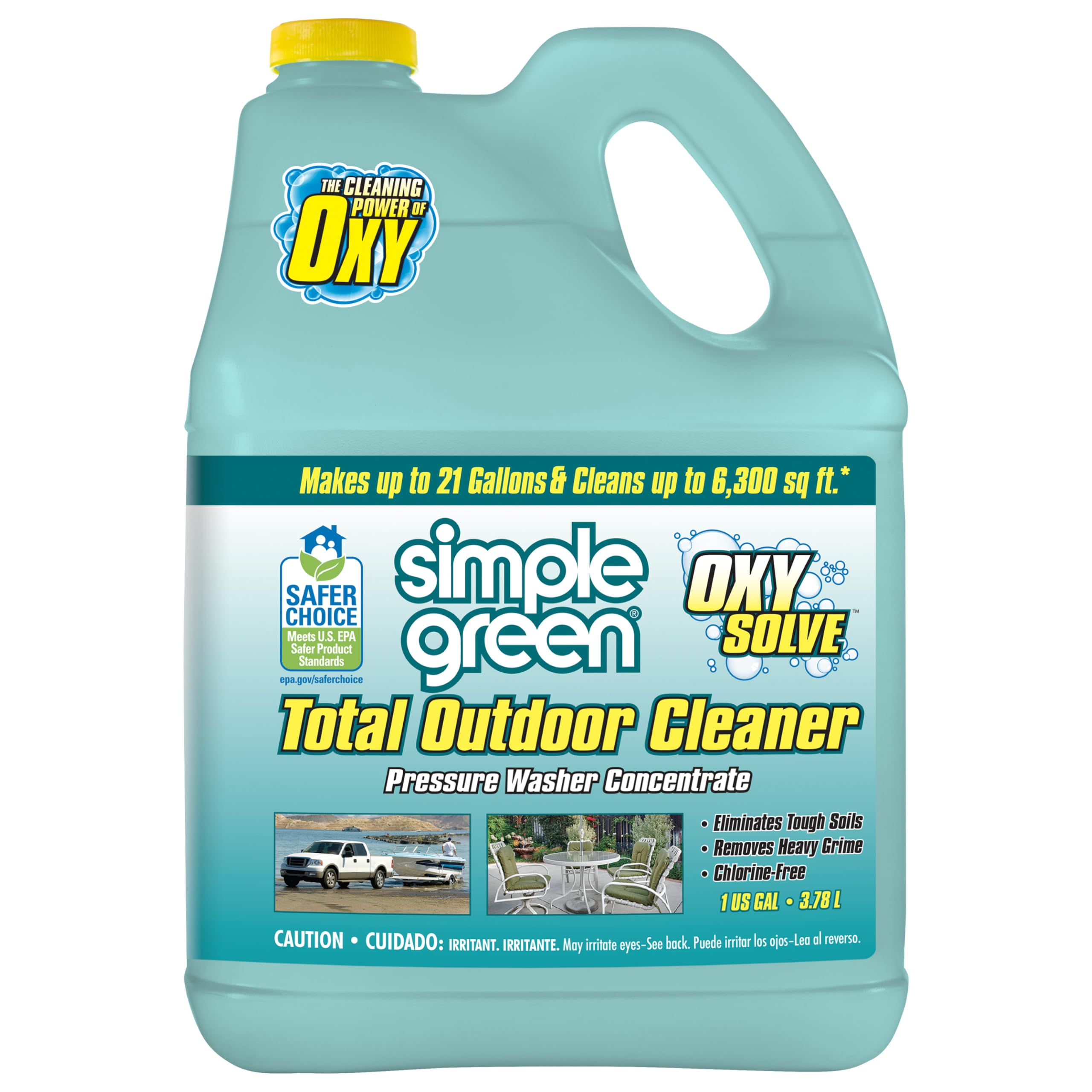
Simple Green’s Oxy Solve uses hydrogen peroxide as its active cleaning agent, making it significantly safer around lawns, flower beds, and pets compared to bleach-based alternatives. The concentrate covers up to 6,400 square feet per bottle — the highest coverage in this comparison — which means a single gallon can handle a large concrete driveway, patio, walkway, and still have enough left for siding or fence cleaning. Users consistently note that the foaming action lifts dirt visibly and rinses clean without leaving a residue when used with a pressure washer.
On concrete specifically, the peroxide formula excels at removing surface oxidation, light mildew staining, and general grime without etching or lightening the aggregate. Biodegradable and EPA Safer Choice certified, the formula breaks down into water and oxygen after cleaning, which eliminates environmental concerns when the runoff hits storm drains or garden beds. The bleach-free and chlorine-free composition is also less likely to cause discoloration on stamped or colored concrete finishes.
The trade-off is on heavy, set-in biological stains. Multiple reviewers note that thick mold or deeply embedded algae required a second pass or higher concentration than the standard dilution, whereas a bleach-based cleaner would have removed it in one pass. For concrete that is regularly maintained and only lightly to moderately stained, this is the most environmentally conscious and user-friendly option. It also works well as a no-rinse formula when used at the recommended dilution, which saves significant time on large surfaces.
Why it’s great
- Peroxide formula is safe for plants, pets, and colored concrete finishes
- Highest coverage at 6,400 sq. ft. per bottle reduces refill frequency
Good to know
- May require a second pass on heavy-set algae or mildew stains
4. Simple Green Oxy Solve House and Siding Pressure Washer Cleaner
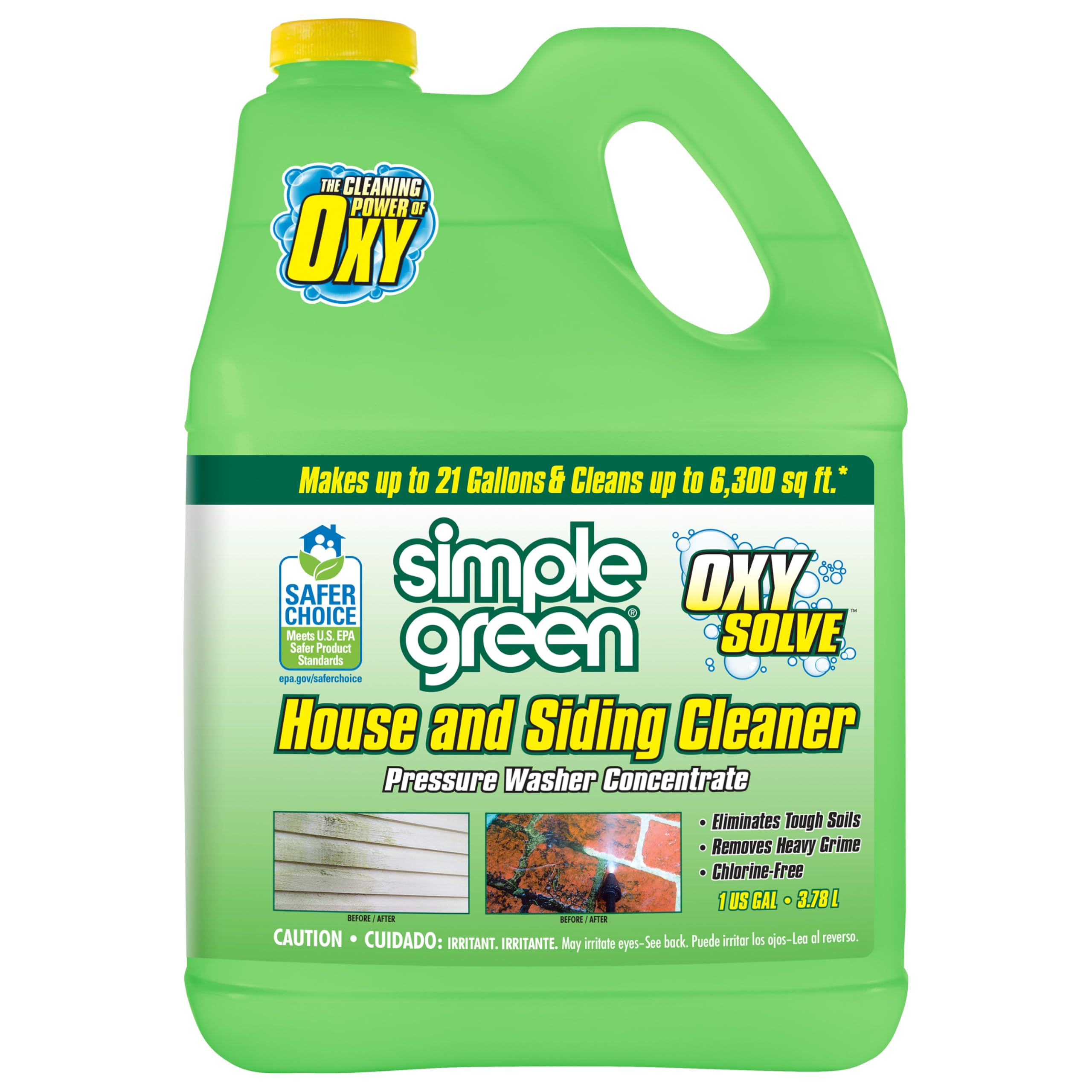
This sibling to the Total Outdoor Cleaner is formulated with the same peroxide chemistry but targets mold, mildew, algae, and moss on house siding and concrete surfaces. The 1-gallon concentrate dilutes to cover up to 6,400 square feet, and the orally non-toxic label means it is one of the safest detergent options for households with children and animals that frequent the driveway or patio area. Users report that it works well as a deck prep cleaner, removing the oxidized film that forms on concrete and wooden surfaces after a season of rain and sun exposure.
On concrete specifically, the formula excels at removing light to moderate biological staining without the harsh chemical smell associated with bleach. The peroxide foams on contact, allowing the user to see exactly where the solution has been applied, which helps avoid overlaps and dry spots that cause streaking. Rinsing with a pressure washer leaves the concrete looking refreshed without the whitened or etched look that can occur with sodium hypochlorite on darker aggregate finishes.
Where this cleaner falls short is on deeply ingrained concrete stains. Some users report that it performed no better than water on heavy, set-in grime and that high pressure was required to remove mold from a shed. The mild nature of peroxide means it works best on surfaces that have been cleaned within the last year or that see regular maintenance. For concrete that is heavily stained by years of neglect, a bleach-based alternative or the Zep construction-grade formula is more effective. This unit is best suited for homeowners who prioritize safety over raw stain-removal power.
Why it’s great
- Non-toxic formula is safe for households with children and pets
- Peroxide foam provides visible application coverage to avoid streaking
Good to know
- Less effective on deep-set concrete stains from years of neglect
5. Krud Kutter House Wash, 1 Gallon

Krud Kutter’s House Wash is a no-bleach, no-ammonia formula designed for fast action on light surface grime, making it a solid entry-level option for concrete that is moderately soiled rather than deeply stained. The 1-gallon concentrate cleans up to 1,000 square feet, which is significantly less coverage than the premium options but sufficient for a standard two-car driveway or a medium-sized patio. Real-world reviews highlight its effectiveness on gutters and house siding, where it removed 20 years of smoke and dirt accumulation with some pressure washer assistance.
On concrete surfaces, the formula works best on lighter biological film and surface dust rather than embedded oil stains or thick moss. Users who applied it on synthetic stucco noted that performance was comparable to bleach for light buildup, but the formula lacks the surfactant punch needed to break through heavy concrete grime. The biggest practical consideration is the rinse timing: if the solution dries on the concrete, it leaves a visible film that requires re-wetting and a second rinse to remove fully.
For the price point, Krud Kutter delivers adequate cleaning power for routine maintenance washes and works well as a pre-treatment for heavily soiled areas before switching to a stronger degreaser. The non-toxic formulation means it won’t kill plants or discolor concrete aggregate, but the lower coverage and need for careful rinse management make it best suited for smaller jobs or users who clean their concrete surfaces multiple times per year. It is not the right choice for a first deep clean on neglected concrete.
Why it’s great
- No bleach or ammonia formula is safe for plants and concrete aggregate
- Fast-acting spray-on formula works well on light surface grime
Good to know
- Leaves a heavy film if not rinsed quickly before drying
FAQ
Can I use a regular house detergent in my pressure washer on concrete?
Will a bleach-based cleaner damage my concrete driveway?
Why does my concrete look hazy after pressure washing with detergent?
Final Thoughts: The Verdict
For most users, the best detergent for pressure washing concrete winner is the Zep House and Siding because its construction-grade surfactants lift heavy biological stains and oil from porous concrete in one pass without leaving a film. If you want a plant-safe formula that works well on regularly maintained surfaces, grab the Simple Green Oxy Solve Total Outdoor Cleaner. And for rapid biological stain removal on heavily moldy concrete, nothing beats the 30 SECONDS Concentrate.

Mo Maruf
I created WellFizz to bridge the gap between vague wellness advice and actionable solutions. My mission is simple: to decode the research and give you practical tools you can actually use.
Beyond the data, I am a passionate traveler. I believe that stepping away from the screen to explore new environments is essential for mental clarity and physical vitality.