Our readers keep the lights on and my smoothie glass nicely filled. As an Amazon Associate, I earn from qualifying purchases.
A single scratch from a cheap rag can undo hours of paint correction. Detailing towels are the single point of failure between a flawless finish and swirl-mark regret, yet most buyers grab whatever is on the shelf. The right towel has a specific pile density, fiber blend, and edgeless construction that lifts wax, polish, and moisture without dragging debris across your clear coat.
I’m Mohammad Maruf — the founder and writer behind WellFizz. My research compares GSM weight, fiber composition, and edgeless stitching patterns across professional-grade towel packs so you can match the right cloth to the right detailing stage.
Reaching for the wrong towel risks marring your paint, leaving lint, or smearing sealants — which is why finding the best detailing towels means knowing what each pile weight and blend actually does on a clear coat surface.
How To Choose The Best Detailing Towels
Not all microfiber towels are the same. A high-GSM plush towel designed for wax removal will feel like a different tool entirely than a low-GSM waffle weave meant for glass. Mismatching the towel to the job is the fastest path to streaks, scratches, and wasted product. Focus on three key specs before buying.
GSM Weight and Pile Density
GSM stands for grams per square meter — the higher the number, the thicker and plushier the towel. Towels under 300 GSM work best for glass and interior dusting. The 300–500 GSM range handles wax removal, polish buffing, and quick detailer applications. Towels over 500 GSM, sometimes reaching 1200 GSM, are water-absorption machines ideal for drying entire panels without wringing. Thicker does not always mean better: a 600 GSM towel on glass will leave smears, while a 380 GSM towel on fresh wax may struggle to lift residue cleanly.
Fiber Blend and Country of Origin
The blend ratio directly affects softness and absorbency. An 80/20 polyester-to-polyamide blend is common and cost-effective, but a 70/30 ratio delivers denser fiber count and a silkier hand feel. Korean-sourced split microfiber is widely considered the premium standard because the split-fiber process creates more surface area for trapping dirt and liquid. Cheaper Chinese blends often feature round-tip fibers that smear rather than trap, increasing the risk of lint and streaks on dark paint.
Edgeless Construction vs. Hemmed Edges
Hemmed edges use stitched borders that can be rough enough to mar soft clear coats, especially on curved panels where the corner drags. Edgeless towels eliminate the border entirely, removing any hard edge that could catch on emblems, trim, or paint imperfections. For critical stages like wax removal and final buffing on ceramic-coated vehicles, edgeless is the safer choice. Hemmed towels are acceptable for wheels, door jambs, and heavy-duty engine bay wiping where scratch risk is lower.
Quick Comparison
On smaller screens, swipe sideways to see the full table.
| Model | Category | Best For | Key Spec | Amazon |
|---|---|---|---|---|
| The Rag Company Eagle 600 | Premium | Ultra-plush wax and sealant buffing | 600 GSM, 70/30 Korean | Amazon |
| The Rag Company Eagle 450 | Premium-Mid | All-purpose detailing and polish removal | 450 GSM, 70/30 Korean | Amazon |
| Griot’s Garage Plush Edgeless | Mid-Range | Spray-coating and ceramic wipe-downs | 470 GSM, edgeless | Amazon |
| SPTA 1200GSM Ultra-Thick | Value | Panel drying and water absorption | 1200 GSM, 3-pack | Amazon |
| SINLAND 380GSM 6-Pack | Budget | General cleaning and interior wiping | 380 GSM, 6-pack | Amazon |
In‑Depth Reviews
1. The Rag Company Eagle Edgeless 600 (3-Pack)

The 600 GSM density makes this towel feel like a dense pillow in your hand, yet the 70/30 Korean split microfiber keeps fibers soft enough to glide over ceramic coatings without dragging. At this pile height, the towel excels at removing sealant residue and final-buffing waxes where you need maximum absorption without applying pressure that could trap grit. The edgeless construction eliminates any border that could mar paint along sharp body lines or around emblems.
Customer feedback consistently highlights streak-free results on dark-colored vehicles after multiple wash cycles, with no lint shedding even on fresh paint. The three-pack quantity is a modest count compared to larger sets, but each towel holds up well to repeated machine washing with dedicated microfiber detergent. Several reviewers also report using them on bathroom surfaces and polished stone, confirming the versatility of a high-GSM towel.
The only trade-off is that 600 GSM can feel too thick for glass work or for applying thin spray sealants where you need a flatter surface contact. For dedicated wax removal and final buffing stages, this is the most plush and scratch-resistant option in the list. Replace your old waffle weaves with these for the finishing pass and you will notice the difference in gloss depth.
Why it’s great
- Dense 600 GSM pile traps polish residue without smearing
- Korean-split 70/30 fibers stay silky after repeated washing
- Edgeless design eliminates scratching on curved panels
Good to know
- Priced higher per towel than mid-range packs
- Too thick for glass or quick-detailer applications
2. The Rag Company Eagle Edgeless 450 (6-Pack)

The 450 GSM weight lands in a Goldilocks zone for enthusiasts who need one towel to handle polish buffing, wax removal, and quick detailer wipe-downs without swapping cloths constantly. Like its heavier sibling, it uses a premium 70/30 Korean split-fiber construction, but the lower pile density means it folds easier for controlled passes over small panels and mirror housings. The edgeless border again removes any scratch risk, and the six-pack quantity gives enough towels to separate tasks by color zone or chemical used.
Reviewers note that the 16×16 size is maneuverable for interior work and engine bay wipe-downs while still offering enough surface area for hood buffing. The teal blue color helps identify it as a paint-safe towel if you color-code your microfiber stash. Multiple washes with a dedicated wash detergent do not cause the fibers to mat down or lose absorbency, which is a common failure point on cheaper blends that go stiff after a few machine cycles.
The downside is that 450 GSM does not wring-dry a full wet panel in one pass like a 1200 GSM drying towel would, so this is not your primary drying cloth after a rinse. As a multi-purpose detailing towel for the critical coating and finishing stages, the blend and density hit the sweet spot between plush protection and workable flexibility.
Why it’s great
- Versatile 450 GSM suits buffing, wax removal, and quick detailers
- Six towels per pack provide good task separation
- Edgeless Korean blend resists lint and maintains softness
Good to know
- Not absorbent enough for full-panel drying
- Price per pack is higher than budget multi-packs
3. Griot’s Garage Microfiber Plush Edgeless Towels (6-Pack)
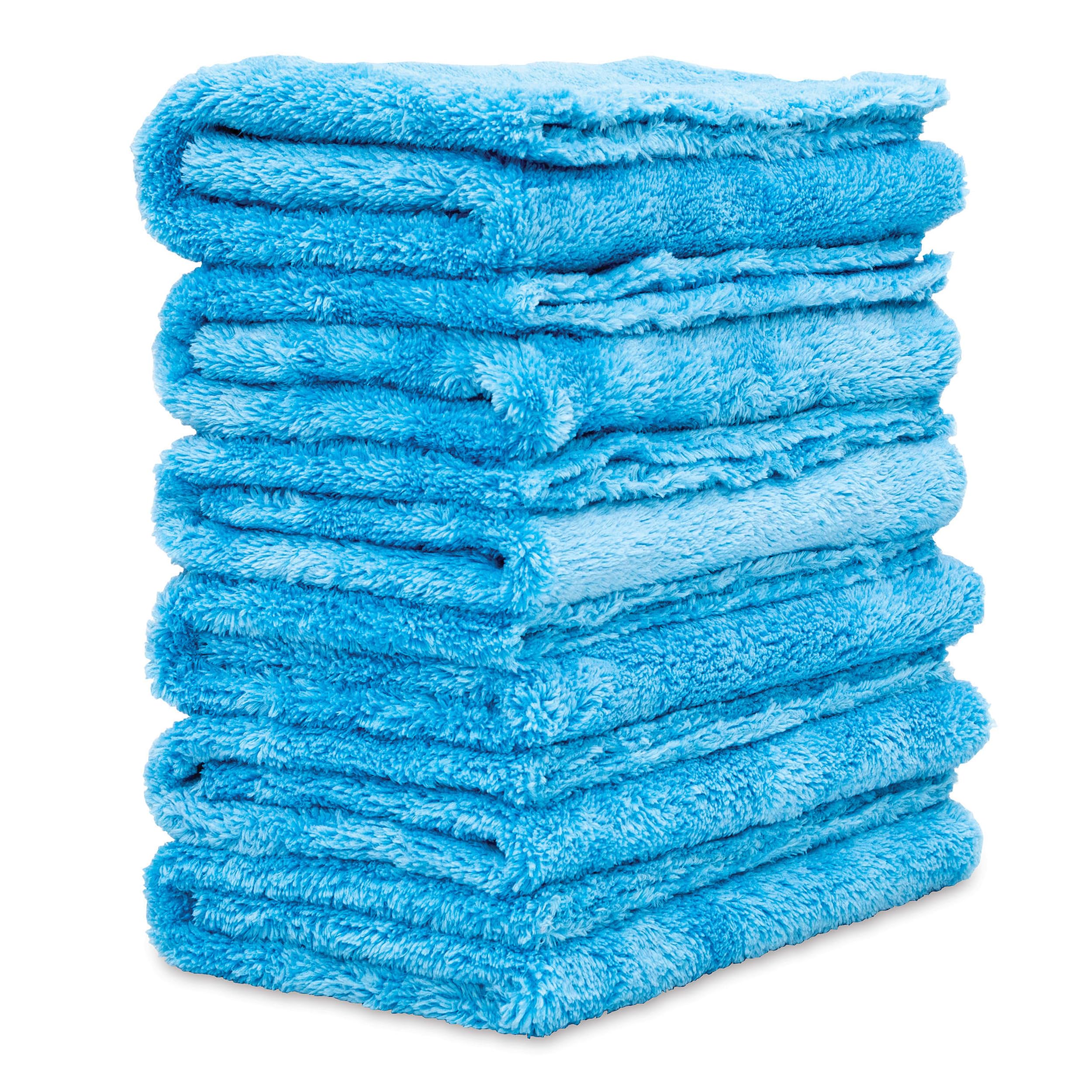
Griot’s Garage has built a reputation on complete car-care systems, and these 470 GSM edgeless towels are designed to pair specifically with their spray waxes and ceramic coatings. The 16×16 size offers maximum surface contact for broad passes, while the plush microfiber weave lifts product residue without pushing it into a film. The edgeless border prevents snagging on side mirrors, door handles, and trim edges that hemmed towels commonly catch.
Owners report that the towels work especially well with spray-on ceramic waxes where a streak-free wipe is the difference between a mirror shine and a hazy layer. The 470 GSM weight places it between the Eagle 450 and 600, giving slightly more plushness than the former while staying maneuverable. Multiple washes confirm that the towels hold their shape without shrinking or developing frayed corners that could introduce fibers to the paint surface.
The main consideration is price: per-towel cost sits higher than entry-level options, and the set of six is a fixed quantity with no smaller trial pack available. If you already use Griot’s garage spray products, the compatibility eliminates guesswork — these towels are engineered to work with the brand’s chemical formulations.
Why it’s great
- Optimized for spray waxes and ceramic coatings
- 470 GSM provides balanced plushness and foldability
- Edgeless construction snag-free on trim and emblems
Good to know
- Higher per-towel cost compared to multi-pack alternatives
- May feel slightly small for large SUV hoods
4. SPTA 1200GSM Ultra-Thick Microfiber Towels (3-Pack)
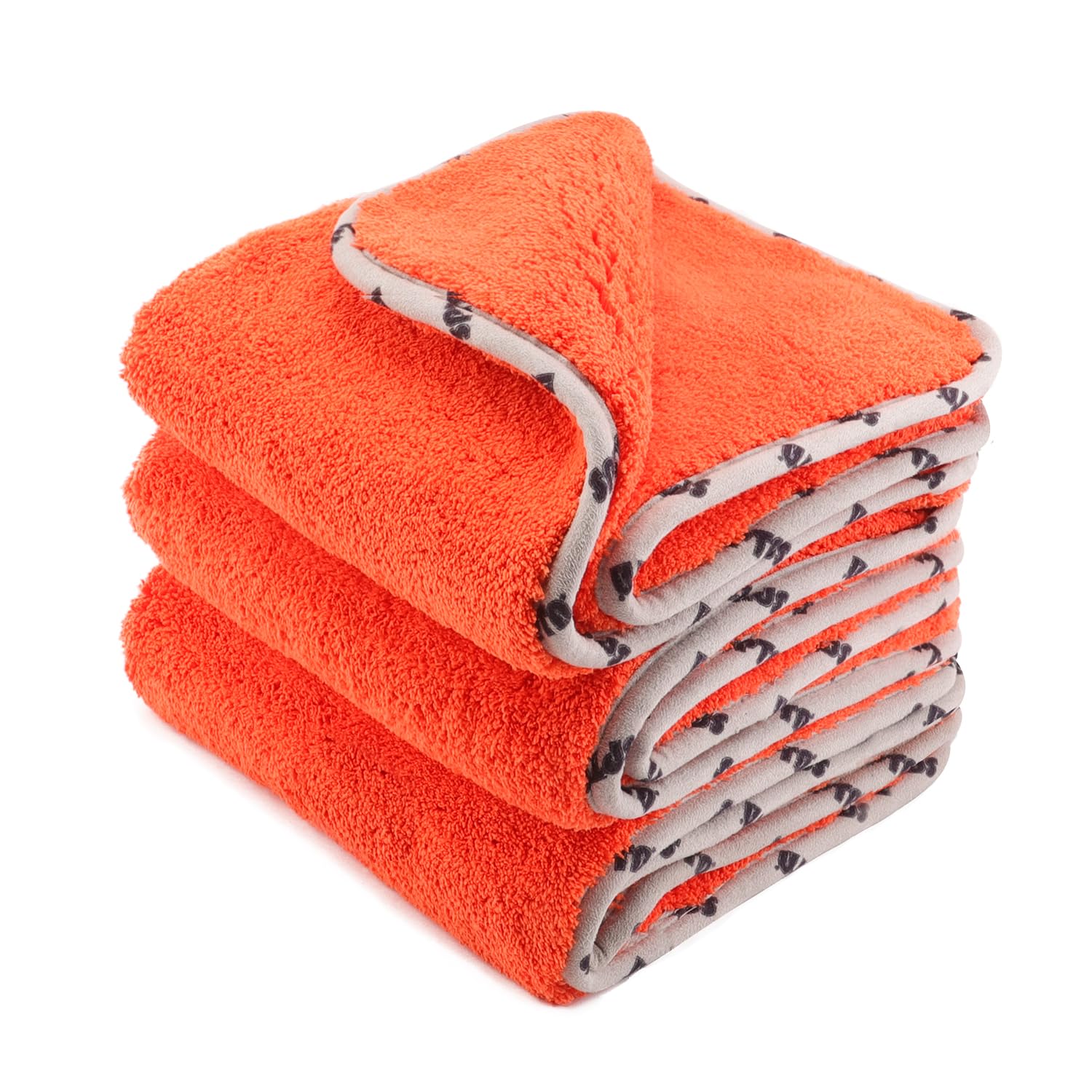
At 1200 GSM, this towel is purpose-built for one job: absorbing as much water as possible in a single pass. The ultra-thick pile drinks moisture from flat panels and curved surfaces alike, making it ideal for the drying stage after a rinseless wash or traditional rinse. The 60/40 cotton-polyester fabric weight listed in the specs is unusual for detailing — most premium towels use polyamide blends — so the texture leans more toward a traditional plush cloth than a silky microfiber.
User feedback praises the towel’s ability to dry an entire car hood without needing to flip to a dry side, which is rare for a 16×16 cloth. The thickness also provides a cushion layer that protects paint from accidental pressure against embedded particles. Several detailers report using it to buff wax off boat gelcoat with good results, though the thickness makes it less suited for precision work around emblems or tight body lines.
If your primary use is drying after a wash and you keep a separate towel for wax removal, the absorption capacity of this pack makes it a strong value addition to your rotation.
Why it’s great
- Exceptional 1200 GSM density soaks water quickly
- Cushiony pile protects paint during drying passes
- Low price point for an ultra-thick towel pack
Good to know
- 60/40 cotton blend may shed lint on black paint
- Too thick for buffing, glass, or detail spray applications
5. SINLAND Microfiber Car Drying Towels 380GSM (6-Pack)
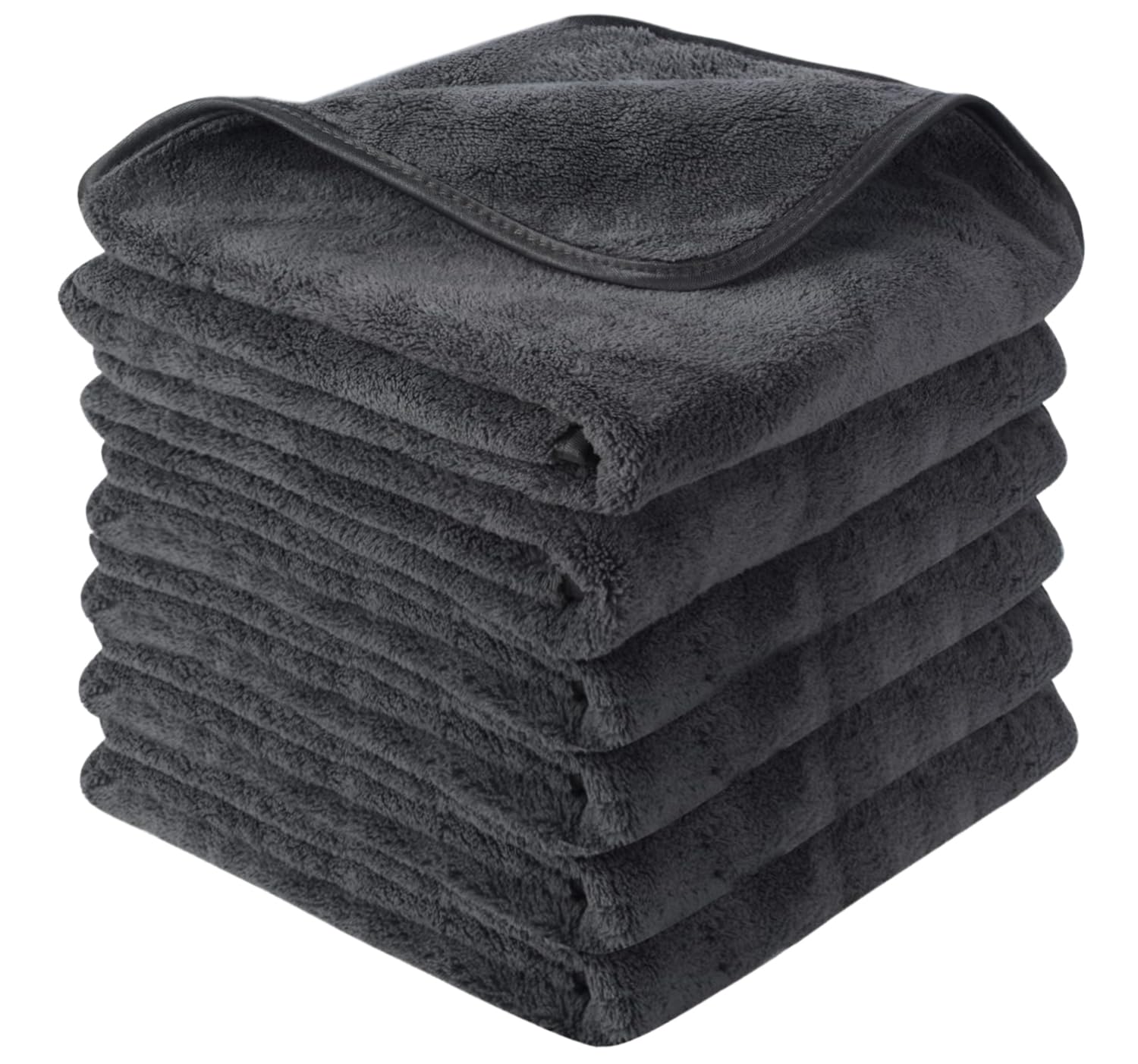
The SINLAND 380 GSM towels offer a budget-friendly entry point with a six-pack count that fills out a starter detailing kit affordably. The 80/20 polyester-to-nylon blend is softer than typical hardware-store rags, and the 16×24 size gives extra length for drying passes on windshields and side panels. The reinforced edge stitching is a cost-saving measure compared to edgeless designs, but it performs adequately for interior wiping, glass cleaning, and drying surfaces where minor contact is less critical.
Buyers consistently report that two towels are enough to dry a mid-size sedan without needing to wring, which is impressive for a 380 GSM weight. Users also appreciate the grey color for hiding dirt between washes, making these a practical choice for daily driver maintenance where you need to wipe down dust, bird droppings, or condensation repeatedly. They machine wash well without losing shape when kept separate from lint-producing laundry.
The hemmed edges can be a concern if you plan to use these for final-stage wax or ceramic removal on soft paint. For general cleaning, wheel duty, window wiping, and interior detailing, the low cost per towel makes this pack an easy recommendation. Keep a separate edgeless set for your final paint pass and use these for everything else.
Why it’s great
- Low cost per towel with a generous six-pack quantity
- Larger 16×24 size covers more panel area per pass
- Soft 80/20 blend suitable for glass and interior dusting
Good to know
- Hemmed edges may scratch soft clear coats during buffing
- 380 GSM lacks the plushness for premium wax removal
FAQ
Can I wash detailing towels with regular laundry detergent?
How many GSM do I need for ceramic coating removal?
Why do my microfiber towels leave streaks on glass?
Final Thoughts: The Verdict
For most users, the best detailing towels winner is the Rag Company Eagle Edgeless 600 because the 70/30 Korean blend and dense 600 GSM pile deliver unmatched scratch protection during final buffing stages. If you want a versatile mid-weight towel that handles both wax removal and quick detailers, grab the Rag Company Eagle Edgeless 450 six-pack. And for pure drying power on a budget, nothing beats the ultra-thick absorption of the SPTA 1200GSM towels.

Mo Maruf
I created WellFizz to bridge the gap between vague wellness advice and actionable solutions. My mission is simple: to decode the research and give you practical tools you can actually use.
Beyond the data, I am a passionate traveler. I believe that stepping away from the screen to explore new environments is essential for mental clarity and physical vitality.