Our readers keep the lights on and my smoothie glass nicely filled. As an Amazon Associate, I earn from qualifying purchases.
Burned pads, lifted traces, and hours spent wrestling with stubborn solder are the hallmarks of a bad desoldering experience. The right tool turns that frustration into a clean, one-shot extraction, preserving your vintage hardware or a critical repair job.
I’m Mohammad Maruf — the founder and writer behind WellFizz. I’ve spent hundreds of hours analyzing the specs, reading real-world user feedback, and comparing vacuum ratings, tip materials, and heating elements to separate the tools that genuinely work from those that just look the part.
After sifting through countless reviews and technical datasheets, this guide is engineered to help you find the absolute best desoldering tool for your specific workflow, whether you are restoring vintage arcade boards or just fixing a single joystick.
How To Choose The Best Desoldering Tool
Selecting the right tool starts with matching the device to your volume and precision needs. A manual pump is fine for isolated repairs, while a station is mandatory for bulk rework.
Manual Pump vs. Electric Sucker vs. Desoldering Station
Manual pumps are simple, require no power, and are easy to clean. They work best on smaller joints but struggle with large ground planes that cool quickly. Electric suckers combine heat and vacuum in one gun, allowing single-handed operation and faster workflow on medium-sized boards. Full desoldering stations offer precise temperature control and sustained vacuum, ideal for high-volume jobs where tip temperature consistency is critical to avoid pad damage.
Nozzle Material and Diameter
The nozzle is the point of contact, and its material and size directly affect performance. Silicone nozzles (used on premium manual pumps) create a better seal and withstand direct iron contact up to 350°C, while Teflon or nylon nozzles (common on electric guns) resist higher temperatures but can wear faster. A nozzle that is too wide will bridge adjacent pins, while one that is too narrow will clog easily. Look for interchangeable tip sizes—1.0mm and 1.2mm are standard for through-hole work.
Vacuum Power and Self-Cleaning Features
Vacuum strength is measured by how much molten solder the tool can pull in one actuation. A powerful spring mechanism or motor-driven pump makes the difference between a clean hole and a frustrating second attempt. Self-cleaning shafts or built-in cleaning needles prevent clogs from accumulating, keeping suction consistent across dozens of joints. Manual units with a bayonet-twist barrel are easier to maintain between jobs.
Quick Comparison
On smaller screens, swipe sideways to see the full table.
| Model | Category | Best For | Key Spec | Amazon |
|---|---|---|---|---|
| YIHUA 948 Station | Desoldering Station | High-volume rework | 80W / 716°F–896°F | Amazon |
| EDSYN DS017 SOLDAPULLT | Manual Pump | Vintage PCB restoration | 13″ barrel / 90g | Amazon |
| Preciva 929D-V Electric | Electric Gun | One-handed through-hole | 30W / 400°C max | Amazon |
| ENGINEER SS-03 | Manual Pump | Precision hobbyist work | Aluminum body / 350°C tip | Amazon |
| VAMPLIERS SS-03 | Manual Pump | DIY electronics repair | Aircraft-grade aluminum | Amazon |
| Weller 7874B | Manual Pump | Budget quick fixes | Aluminum body / 0.08kg | Amazon |
| Chemtronics Chem-Wik | Desoldering Braid | Surface-mount cleanup | 0.10″ wide / 50ft | Amazon |
In‑Depth Reviews
1. YIHUA 948 Standard Desoldering Station

This station replaces the clumsy two-hand dance of iron plus pump with a single-handed gun that heats and sucks simultaneously. The 80W heater brings the tip to temperature quickly, and the vacuum motor pulls large amounts of solder in one go—especially useful when removing connectors or through-hole ICs with many pins. The LED display lets you dial in exactly 380°C, avoiding the guesswork of a manual iron.
Included accessories are generous: four extra nozzles, a set of cleaning pins, filter springs, ceramic filters, and a heat-resistant pad. Users report recapping entire receivers without issue, and the auto shutoff and sleep functions add safety for longer sessions. The filter tube is easily replaced or cleaned, which is critical because a clogged filter is the single fastest way to lose suction on these units.
The main trade-off is heat-up time—it takes a few minutes to reach temperature, so it is not a grab-and-go tool. The pump can also weaken over time if the internal filters are neglected.
Why it’s great
- Single-handed operation eliminates juggling separate iron and pump
- Strong vacuum clears multi-pin components in one pull
- Full kit with spare nozzles, filters, and cleaning pins included
Good to know
- Slow warm-up period before suction activates
- Requires regular filter cleaning to maintain peak vacuum
2. EDSYN DS017 SOLDAPULLT Deluxe Desoldering Pump
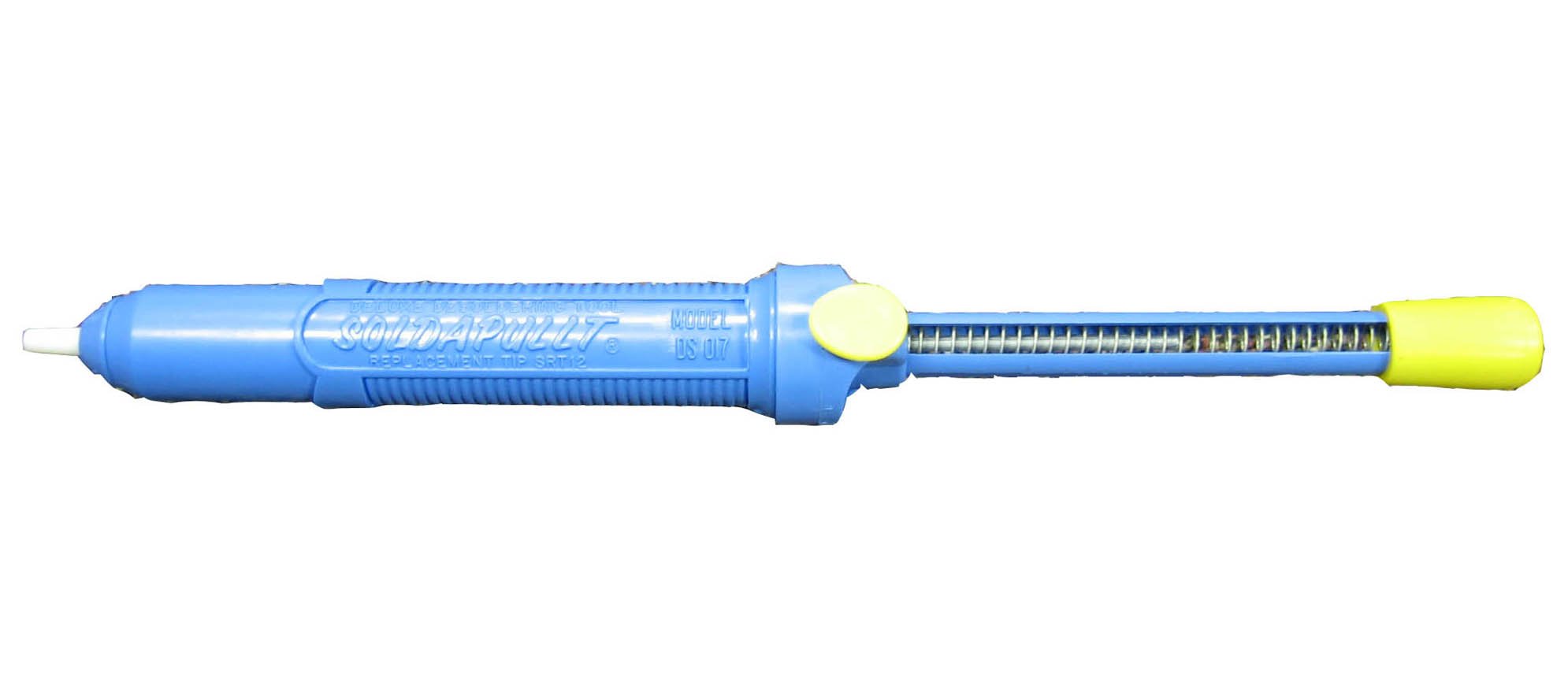
This pump has been the gold standard for technicians since the 1980s, and it is still manufactured in California. The long barrel provides a massive vacuum chamber that swallows large blobs of solder in a single trigger pull, which is why it shines on vintage through-hole boards where old solder is thick and stubborn. The push-button trigger releases the plunger instantly, and the self-cleaning shaft clears the nozzle each time you reload.
The one-handed loading operation works smoothly, and the comfortable grip suits both left and right-handed users. EDSYN sells replacement parts for virtually every component, so this tool can last for decades with basic maintenance. Users consistently report that components often fall out of the board after the last joint is cleared, which is the hallmark of a properly strong vacuum.
The size is the main constraint—at 13 inches long, it is less portable than compact aluminum pumps. It also struggles in tight spaces on modern dense boards. If your primary work is restoring 1960s-1980s hardware, nothing else hits with this authority.
Why it’s great
- Unmatched suction for large, stubborn joints
- Fully repairable with replaceable parts available
- Self-cleaning shaft keeps nozzle unclogged between shots
Good to know
- Long barrel is less maneuverable in tight spaces
- Overkill for small surface-mount cleanup tasks
3. Preciva 929D-V Electric Desoldering Iron

This electric desoldering iron bridges the gap between manual pumps and full stations. It combines a heated tip with a vacuum button, allowing one-handed operation that melts and removes solder without needing a separate iron. The 30W ceramic heater reaches 400°C, and the included 1.0mm and 1.2mm nylon nozzles handle standard through-hole joints. A cleaning needle is also included to clear the nozzle between uses.
Hobbyists have used it to remove dozens of capacitors from a Sega Genesis in under 30 minutes without damaging pads, which is impressive for a sub-station device. The grip is contoured with an anti-skid texture, and the built-in gaskets can be replaced if suction weakens. The design is simpler than a station but faster than using a manual pump plus iron separately.
Reliability is a concern—a small number of users report the heater failing after a couple of months. The initial power-up also emits a brief smoky smell as manufacturing oils burn off, which is normal but startling. For the price, it is a capable entry into electric desoldering, but it is not built for daily commercial use.
Why it’s great
- One-hand heat-and-suck operation speeds up medium-board rework
- Two nozzle diameters (1.0mm and 1.2mm) cover common joints
- Replaceable gaskets restore suction when aging
Good to know
- Heating element may fail after extended use
- Initial power-up produces a smoky odor
4. ENGINEER SS-03 Solder Sucker (Made in Japan)
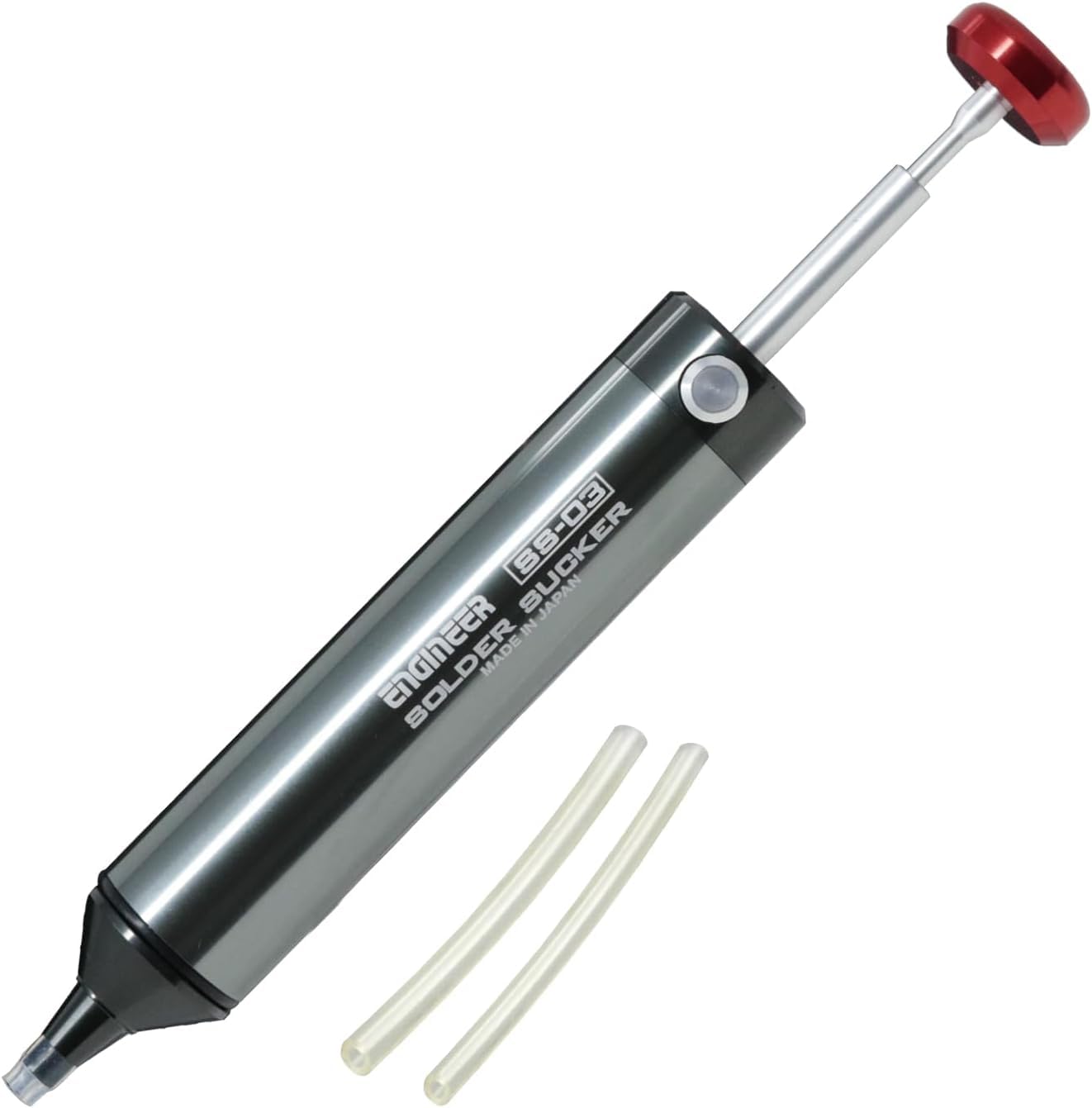
This compact manual pump is widely regarded as the best hand-held solder sucker on the market. The key differentiator is the silicone nozzle, which creates a better seal against the joint than hard plastic tips and withstands direct contact with an iron up to 350°C. The spring delivers a high-vacuum suction that clears through-hole joints in one actuation, often ejecting a solid 1.5cm cylinder of solder.
The aluminum body is lightweight at 48 grams, and the self-cleaning shaft minimizes clogs during continuous work. Included spare silicone tubes in 3mm and 4mm diameters let you trim the nozzle to your preferred length. ENGINEER (Japan) builds these to last, with users noting no jamming after extended use.
The only real limitation is that it is still a manual tool—you need a separate iron to heat the joint. It also requires two hands to depress the stiff spring, though this is what creates that powerful suction. For someone who wants a durable, accurate manual pump without moving parts, this is the reference standard.
Why it’s great
- Silicone nozzle seals tightly and resists iron heat up to 350°C
- One-shot suction clears most through-hole joints completely
- Self-cleaning shaft prevents clogging during repetitive work
Good to know
- Stiff spring requires two hands to cock
- Still requires a separate soldering iron for each joint
5. VAMPLIERS Premium Solder Sucker SS-03

This pump shares the same SS-03 design philosophy as the ENGINEER model, with aircraft-grade aluminum construction and a silicone nozzle that withstands 350°C. The built-in self-cleaning shaft keeps the vacuum path clear, and the compact 6-inch length makes it easy to pack in a service toolkit. The spring is stiff and delivers powerful suction, cleaning most holes in a single shot.
Users report that it works exceptionally well with standard 60/40 solder, clearing joints with minimal residue. The included spare silicone tubes (4mm and 3mm outer diameter) give flexibility for different joint sizes. Vampire Tools backs it with an automatic 4-year warranty and a 5-year warranty upon registration, which is rare for a manual tool at this price point.
The stiff spring can be difficult to depress one-handed, and some users note that lead-free solder tends to clog the nozzle more frequently than 60/40 blends. If you work primarily with modern lead-free joints, you may need to clean the nozzle more often. Otherwise, it is a beautifully built pump that feels premium in the hand.
Why it’s great
- Strong one-shot suction for standard 60/40 solder
- Includes two spare silicone nozzle tubes
- Exceptional warranty coverage for a manual tool
Good to know
- Stiff spring can be challenging to depress one-handed
- Lead-free solder clogs nozzle faster than standard blends
6. Weller 7874B ESD-Safe Desoldering Pump

Weller’s 7874B is a direct replacement for the older plastic RadioShack design, but built in aluminum for greater durability. The rubber handle provides a secure grip, and the one-handed operation is straightforward—just cock the spring, place the nozzle over the hot joint, and press the release button. The suction is adequate for small wires and hobbyist boards, and the double-click mechanism ejects waste into the barrel cleanly.
Users who have owned the plastic version note that this aluminum body feels much more solid and should last longer. It works well for quick fixes on through-hole components and is affordable enough that it is not a painful loss if damaged. The tip unscrews for emptying, making the cleaning process simple.
The biggest complaint is that solder often sticks inside the nozzle, requiring tapping after each use to dislodge it. The suction is good but not great—larger joints on ground planes may need multiple attempts. For occasional repairs and for someone on a strict budget, it is a functional entry point into manual desoldering.
Why it’s great
- Aluminum body is significantly more durable than plastic alternatives
- Ergonomic rubber handle for comfortable grip
- Simple one-handed cock-and-release mechanism
Good to know
- Solder often sticks in the nozzle, requiring frequent cleaning
- Suction is adequate but not strong enough for large ground planes
7. Chemtronics Chem-Wik Desoldering Braid (10-50L)

Not strictly a tool, but this braid is an essential companion for any desoldering kit. The Chem-Wik is made from ultra-thin pure copper that absorbs solder up to 50% faster than conventional braids, requiring less heat and shorter contact time to prevent pad lifting. The 0.10-inch width is ideal for cleaning up fine-pitch SMD components like TSSOP ICs, while the 50-foot roll will last through dozens of projects.
Users with over 30 years of soldering experience rank this as the best wick they have used. It does not unravel or spit solder like lower-quality braids, and one centimeter of wick can absorb all the BGA pads on an iPhone chip. The included rosin flux aids wetting, though you may want to add extra flux for oxidized or lead-free joints.
The braid leaves a brown sticky flux residue if held too long without enough solder present, which then requires isopropyl alcohol and scrubbing to clean. It also works best with a higher-wattage iron (100W recommended) to get the thermal mass needed for heavy joints. For the price per foot, it is the most economical desoldering consumable available.
Why it’s great
- Fine copper weave absorbs solder quickly with less heat
- 50-foot roll offers exceptional value per use
- Excellent for fine-pitch SMD bridge removal
Good to know
- Leaves sticky flux residue that requires cleaning
- Best results with a higher-wattage iron for thermal mass
FAQ
How often should I clean my desoldering pump nozzle?
Can I use a manual desoldering pump with lead-free solder?
What is the difference between a desoldering gun and a desoldering station?
Can desoldering braid replace a pump?
Final Thoughts: The Verdict
For most users, the best desoldering tool winner is the YIHUA 948 because it offers station-level performance at a mid-range price, making single-handed desoldering a reality. If you want precision and longevity in a manual pump, grab the ENGINEER SS-03. And for restoring vintage through-hole boards where brute suction is king, nothing beats the EDSYN DS017 SOLDAPULLT.

Mo Maruf
I created WellFizz to bridge the gap between vague wellness advice and actionable solutions. My mission is simple: to decode the research and give you practical tools you can actually use.
Beyond the data, I am a passionate traveler. I believe that stepping away from the screen to explore new environments is essential for mental clarity and physical vitality.