Our readers keep the lights on and my smoothie glass nicely filled. As an Amazon Associate, I earn from qualifying purchases.
The right desk chair for sciatica does more than cushion your seat—it actively reduces pressure on the sciatic nerve by supporting the natural curve of your lumbar spine and distributing weight evenly across the pelvis. Without these specific features, long hours at a desk can aggravate nerve pain, leading to numbness, tingling, and discomfort that radiates down the leg.
I’m Mohammad Maruf — the founder and writer behind WellFizz. My research into this category focuses on the critical interplay between lumbar support geometry, seat contour depth, and tilt mechanisms that determine whether a chair relieves or worsens sciatic nerve pressure during extended seated work.
The following guide breaks down the essential design elements and ergonomic specifications to consider before selecting from the best desk chairs for sciatica currently available on the market.
How To Choose The Best Desk Chairs For Sciatica
Selecting a chair for sciatica requires prioritizing features that directly influence how your pelvis and lower spine are positioned throughout the workday. The wrong seat contour or lumbar angle can increase pressure on the sciatic nerve, while the right setup can significantly reduce discomfort. Focus on these key areas.
Adjustable Lumbar Support with Depth Control
Fixed lumbar bumps often miss the exact curvature of your spine, which is critical when nerve compression is a concern. Look for lumbar support that adjusts both vertically and in depth—meaning the pad moves in and out. This allows you to fill the gap between your lower back and the chair backrest precisely, preventing the slouching that aggravates sciatica.
Waterfall Seat Cushion Design
A flat or overly rounded front edge of the seat pan can press against the back of your thighs, restricting blood flow and irritating the sciatic nerve. A waterfall-edge cushion slopes downward at the front, reducing pressure behind the knees and encouraging a more open hip angle. The cushion itself should be firm enough to prevent sinking but contoured to support the thighs without pinching.
Tilt Mechanism and Recline Range
Static sitting positions increase disc pressure over time. A synchronized tilt mechanism that allows the seat and backrest to move together lets you recline slightly while keeping your feet flat. This dynamic positioning shifts weight off the lumbar spine and can reduce nerve root compression. Chairs with a locking recline at multiple angles give you control without forcing one fixed posture.
Seat Depth Adjustment
The distance from the back of the seat to the front edge must match your thigh length. If the seat is too deep, you will sit with a rounded lower back to reach the backrest, worsening sciatica. If it is too shallow, your thighs lack support. A chair with sliding seat depth adjustment allows you to position the backrest against your lower back while leaving a few finger-widths of space behind your knees.
Quick Comparison
On smaller screens, swipe sideways to see the full table.
| Model | Category | Best For | Key Spec | Amazon |
|---|---|---|---|---|
| Vari CoreChair | Active Sitting | Core engagement & posture | Patented tilting mechanism | Amazon |
| WorkPro Quantum 9000 | Mid-Back | Long shift comfort | Ratchet-adjustable back height | Amazon |
| FLEXISPOT ErgoX-PRO | Premium Mesh | Full adjustability | 5D lumbar + 7D armrests | Amazon |
| Branch Ergonomic Chair | Design Focused | Petite user ergonomics | 8-point adjustment system | Amazon |
| FLEXISPOT ErgoX | Mid-Range | Dynamic lumbar support | Adjustable seat depth 17-20″ | Amazon |
| ELABEST Ergonomic Mesh Chair | BIFMA Certified | Shoulder & back relief | Bionic-curve mesh backrest | Amazon |
| MOLENTS Ergonomic Chair | Full Mesh | Breathability & lumbar control | 2-way adjustable lumbar | Amazon |
| CYKOV Reclining Chair | Recliner Style | Leg elevation during breaks | 90-160° recline with footrest | Amazon |
| CASASIO Home Office Chair | Entry Level | Budget sciatica relief | Virgin foam seat cushion | Amazon |
In‑Depth Reviews
1. Vari CoreChair – Ergonomic Armless Office Chair
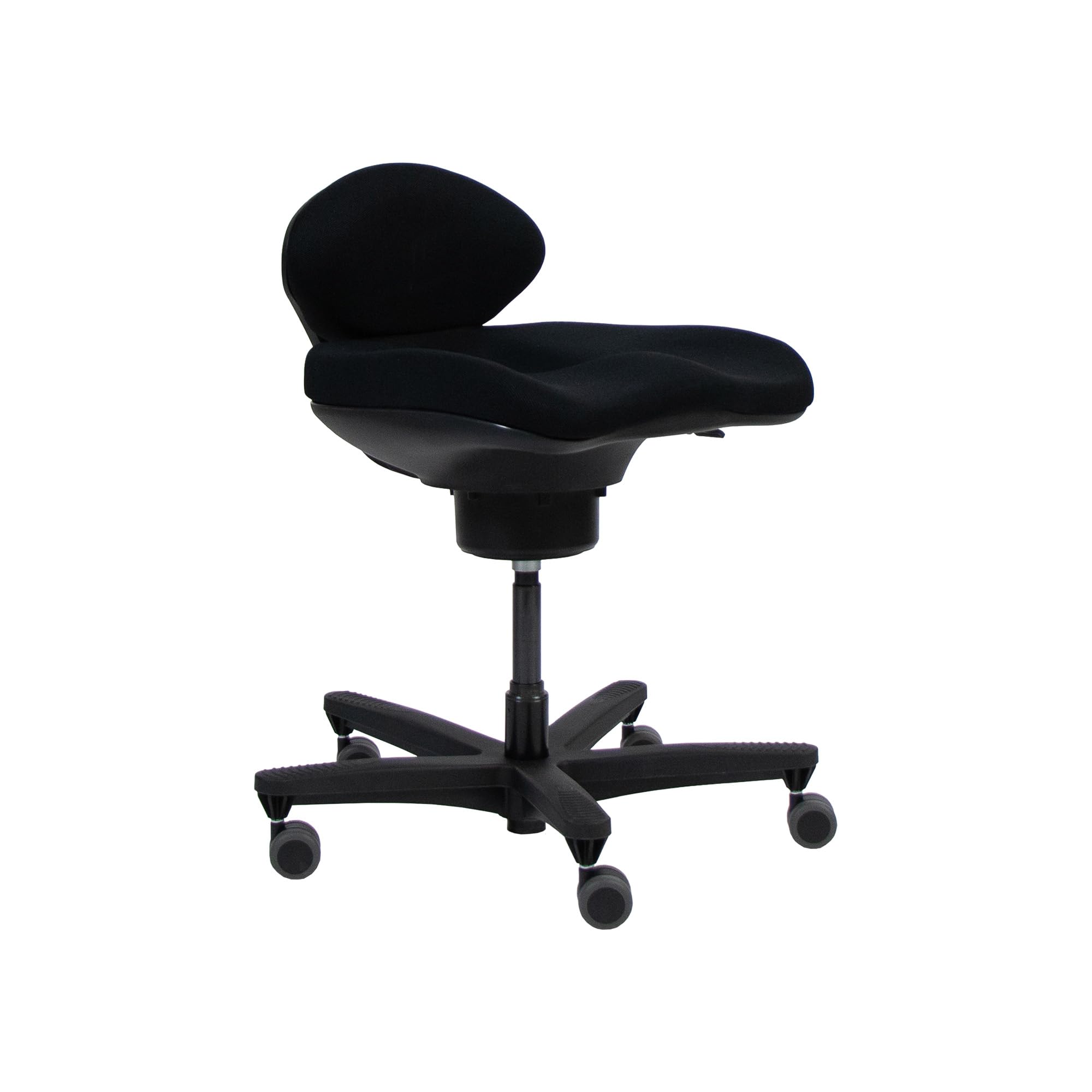
The Vari CoreChair stands apart from traditional desk chairs because it replaces passive sitting with a patented tilting mechanism that engages your core and encourages micro-movements throughout the day. For sciatica sufferers, this dynamic approach reduces the static loading on the lumbar spine that often triggers nerve compression. The sculpted seat and contoured backrest are specifically designed to stabilize the pelvis and align the spine, directly addressing the postural imbalances that worsen sciatic pain.
The seat height adjusts from 17 to 21.5 inches, and the seat depth slides between 16.75 and 18.33 inches, allowing a precise fit for different thigh lengths. The armless design makes it easy to slide under any desk and forces your shoulders into a natural, open position — which can reduce upper body tension that radiates down to the lower back. The 3D knit upholstery provides breathability, and the multi-surface casters roll smoothly on hardwood, carpet, or concrete without hesitation.
This chair is not meant for lounging. The firm seat and active movement requirement can feel uncomfortable at first, especially if you are accustomed to sinking into a padded cushion. Users with advanced sciatica or limited core strength may find the constant engagement fatiguing during the first two weeks. The higher price point also places it outside the budget tier, though the BIFMA certification and 3-year warranty signal long-term durability.
Why it’s great
- Active tilting mechanism reduces static lumbar pressure linked to sciatica
- Adjustable seat depth from 16.75 to 18.33 inches fits varied thigh lengths
- Armless design encourages open shoulder posture and fits compact workspaces
- BIFMA certified with a 3-year warranty for long-term durability
Good to know
- Firm seat cushion requires an adaptation period of up to two weeks
- Not suitable for users who prefer a heavily padded, stationary sitting experience
- Higher price point compared to standard office chairs
2. WorkPro Quantum 9000 Series Ergonomic Mid-Back Chair

The WorkPro Quantum 9000 is a mid-back mesh chair that has earned a strong reputation among users who sit for 8 to 10 hours daily. Its defining feature for sciatica relief is the ratchet-adjustable back height combined with a sliding seat depth. This means you can independently set the lumbar support height relative to your pelvis and adjust the seat pan depth to avoid pressure behind the knees — two adjustments that directly reduce nerve irritation.
The mesh fabric on both the seat and backrest promotes continuous airflow, preventing heat buildup that can worsen discomfort during long sessions. The waterfall front edge is designed to relieve thigh pressure, and the seat depth slides forward or backward to accommodate different leg lengths. The tilt mechanism locks in multiple positions with adjustable tension, so you can recline slightly to offload the lumbar spine without losing foot contact with the floor.
Some users note that the armrest padding is soft and can wear down after a few years, though replacement parts are available under the limited lifetime warranty. The weight capacity is tested at 275 pounds, which is lower than some premium options. The overall construction uses a mix of plastic and metal accents, so it may not feel as solid as a fully aluminum-frame chair, but for the price it delivers strong ergonomic value for sciatica management.
Why it’s great
- Ratchet system allows precise lumbar height adjustment for spinal alignment
- Sliding seat depth prevents compression behind the knees
- Breathable mesh seat and back reduce heat and moisture during long shifts
- Lockable tilt with tension control supports dynamic sitting postures
Good to know
- Armrest padding may show wear after 4 to 5 years of daily use
- Weight capacity limited to 275 pounds
- Mid-back design offers less shoulder support for taller users
3. FLEXISPOT ErgoX-PRO Ergonomic Office Chair
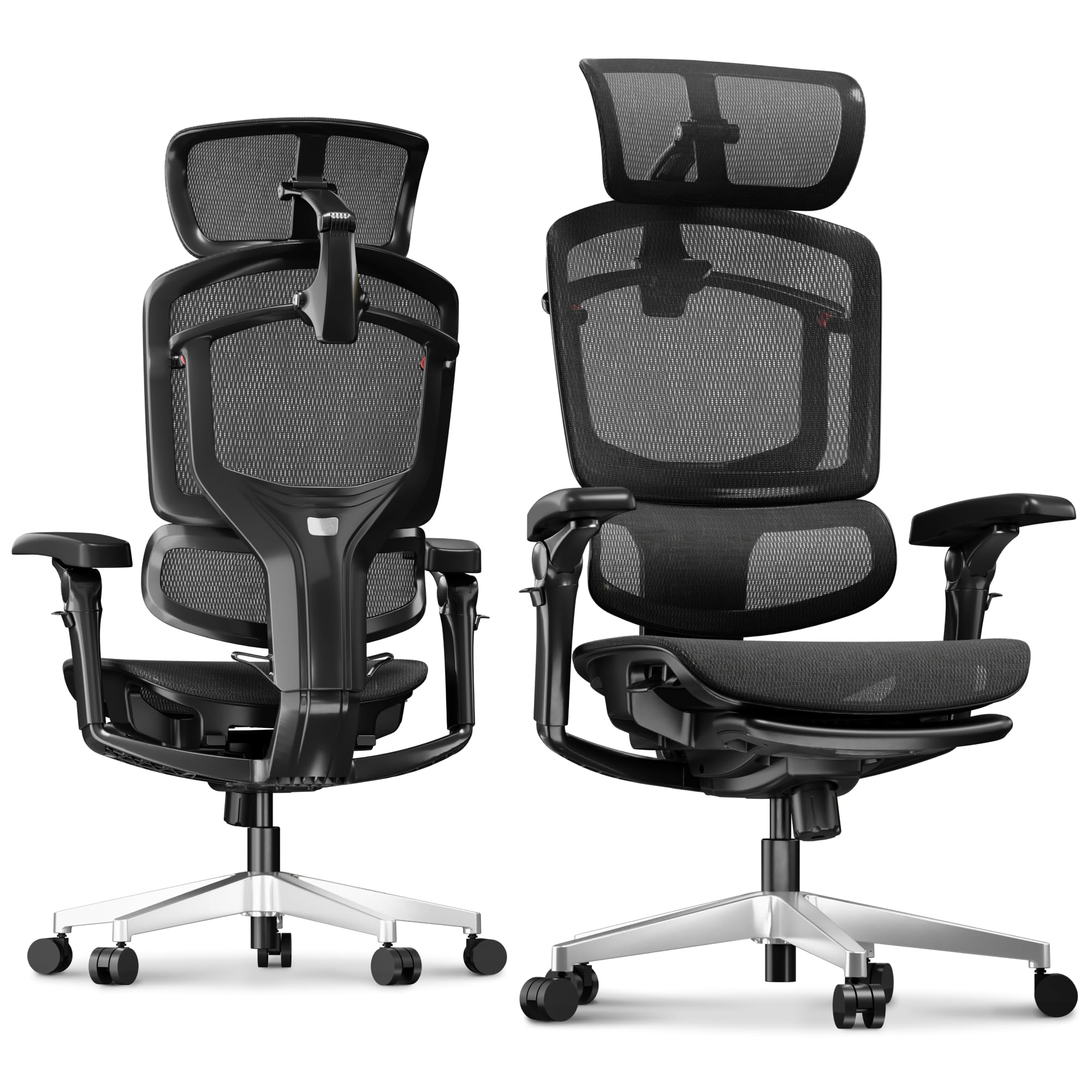
The FLEXISPOT ErgoX-PRO represents the highest level of adjustability in this guide, featuring a 5D fully extendable lumbar system that adapts to your lower back in real time as you shift positions. For sciatica, this dynamic support is critical because static lumbar pads often lose contact when you lean forward or recline. The 5D mechanism allows vertical, depth, and angle changes, effectively following the curvature of your spine throughout the workday.
The AeroWeave 5.0 mesh seat offers cooling airflow while maintaining a firm, supportive surface that prevents the pelvic tilt that can compress the sciatic nerve. The 7D linkage armrests move with your body as you type or recline, reducing shoulder tension that can indirectly affect lower back loading. The 12-level fine-tuned backrest with spring cushioning allows smooth recline without abrupt stops, and the 551-pound weight capacity makes it one of the most robust options available.
The 4D headrest doubles as a back support cushion for shorter users, adding versatility but also requiring some trial and error to dial in the perfect position. Assembly is straightforward thanks to pre-labeled parts, but the chair is heavier than average due to the reinforced nylon and fiberglass frame. The higher price reflects the advanced adjustability, and users with simple seating needs may find the range of adjustments overwhelming.
Why it’s great
- 5D lumbar support adjusts in height, depth, and angle for precise sciatica relief
- AeroWeave 5.0 mesh seat provides cooling airflow and firm pelvic support
- 7D armrests move dynamically to reduce upper body strain
- 551-pound weight capacity with reinforced nylon and fiberglass frame
Good to know
- High number of adjustments may require time to set up correctly
- Heavier than average; moving the chair around requires effort
- Premium price may exceed the budget of casual users
4. Branch Ergonomic Chair
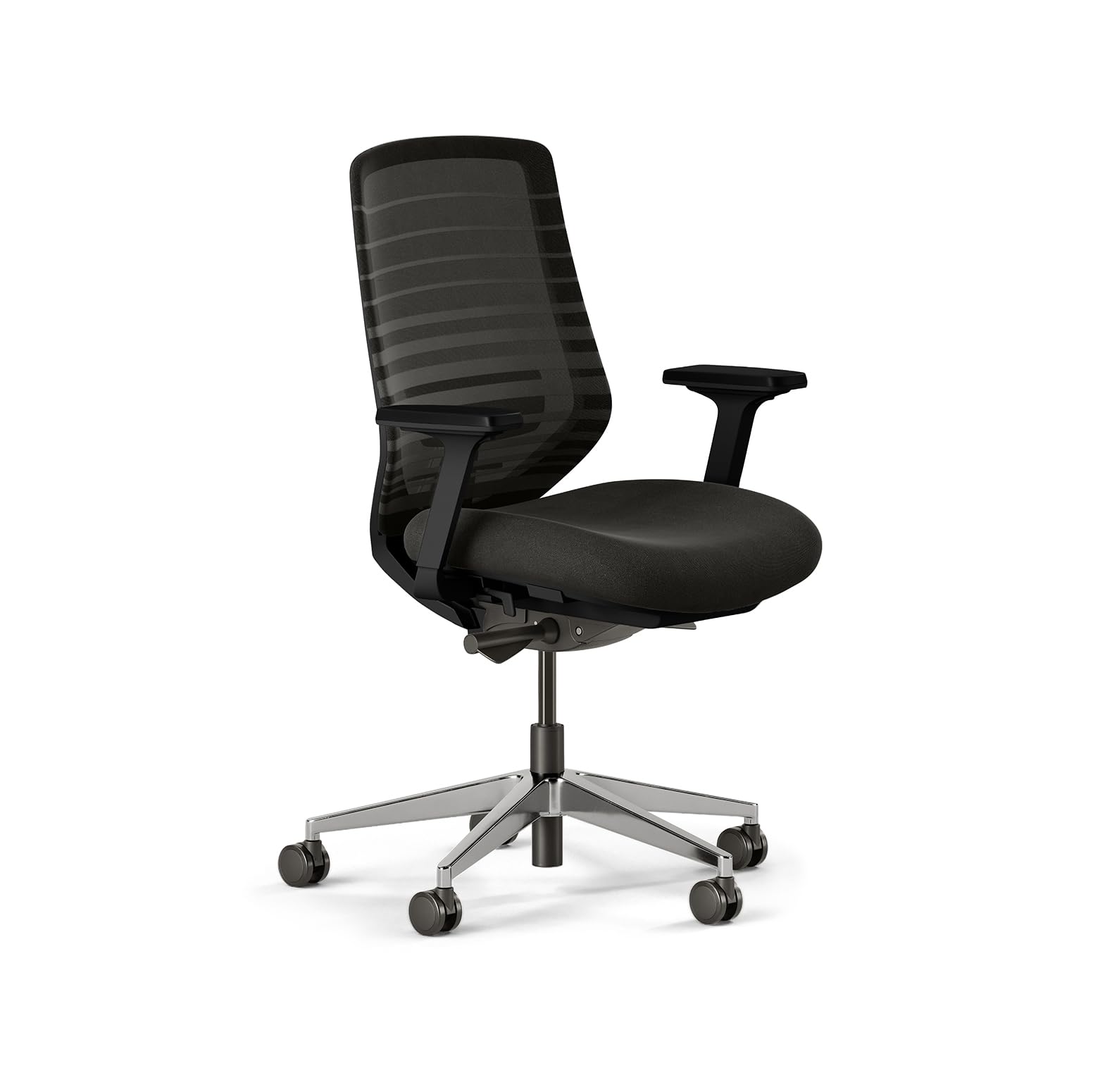
The Branch Ergonomic Chair offers eight adjustment points including seat height, seat depth, lumbar position, armrest placement, and recline tension. For sciatica management, the adjustable seat depth is particularly valuable because it allows users with shorter femurs to position the backrest against their lower back without the front edge pressing into their calves. The breathable mesh backrest keeps the spine cool while providing a flexible, supportive surface that conforms to natural curvature.
The aluminum frame keeps the chair relatively light at 27 pounds without sacrificing stability. The seat cushion strikes a balance between firm support and enough give to avoid creating hard pressure points under the sit bones. The tilt lock mechanism holds at multiple angles, and the tension adjustment lets you control how much resistance you feel when leaning back. Users between 5 and 5 feet 6 inches have specifically noted that the seat depth range accommodates them better than many other ergonomic chairs.
Some users report that the armrests can slide forward unintentionally during use if not tightened sufficiently. The lumbar support is mild compared to chairs with protruding pads, which may not be aggressive enough for those who need a pronounced lumbar curve to relieve sciatica. The wheels are designed for hard floors and can feel less stable on thick carpet without upgrading to rollerblade-style casters.
Why it’s great
- Adjustable seat depth suits shorter users and prevents behind-knee pressure
- Lightweight aluminum frame at 27 pounds for easy repositioning
- Tilt lock with adjustable tension supports dynamic sitting postures
- Breathable mesh back keeps the spine cool without sacrificing support
Good to know
- Armrests may shift forward if bolts are not fully tightened
- Lumbar support is relatively mild for users who need pronounced curvature
- Stock wheels perform better on hard floors than on thick carpet
5. FLEXISPOT ErgoX Premium Ergonomic Office Chair
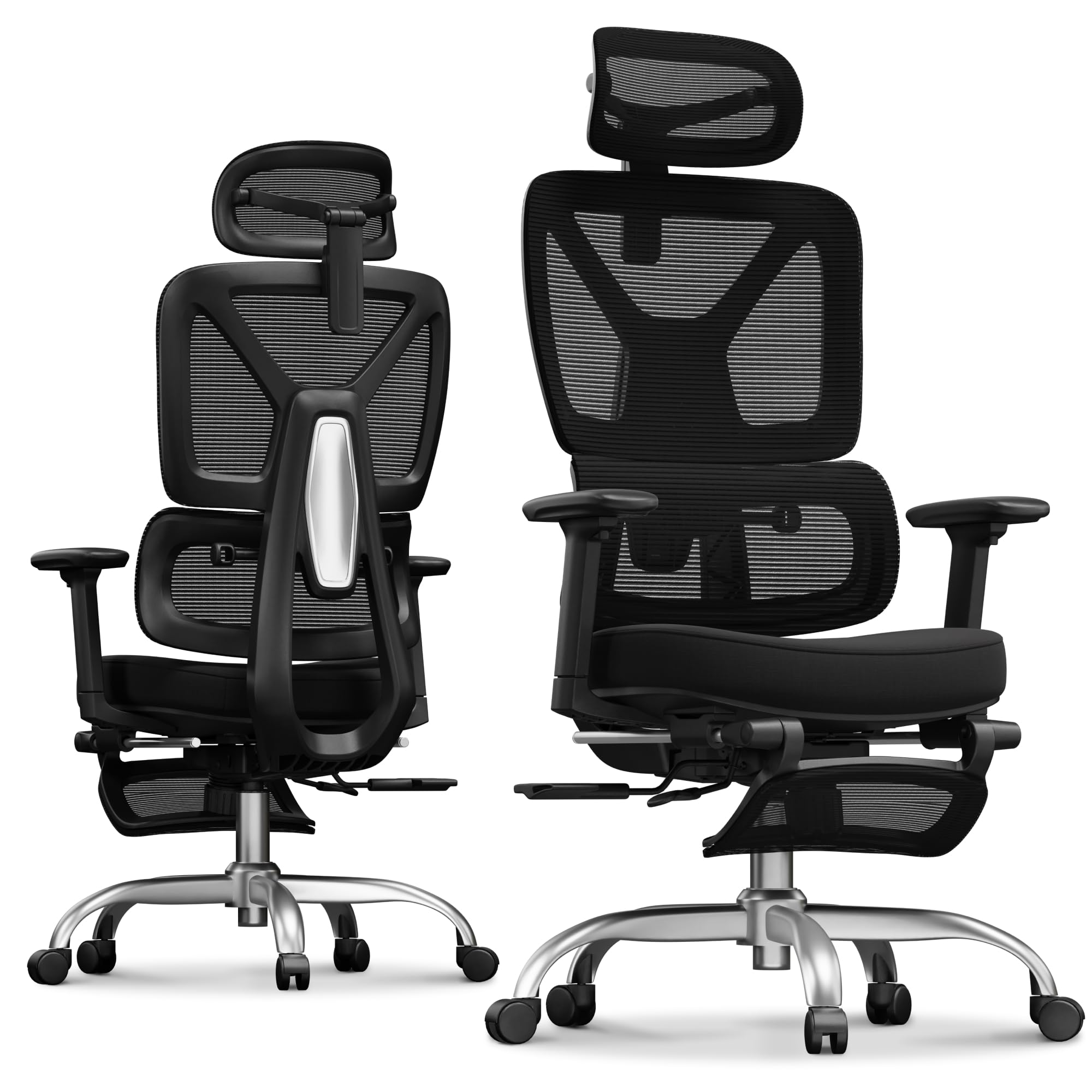
The FLEXISPOT ErgoX is designed with dynamic lumbar support that moves with your spine rather than holding it in a fixed position. For sciatica, this is a meaningful distinction because the lower back naturally changes curvature as you switch between typing, reading, and reclining. The lumbar support responds to these shifts, maintaining contact and reducing the chances of slouching into a position that compresses the sciatic nerve.
The seat depth adjusts from 17 to 20 inches, and the seat height ranges from 20.1 to 22.4 inches, making it suitable for users between 5 feet 1 inch and 6 feet 2 inches. The retractable footrest adds the option to elevate your legs during breaks, which can help reduce pressure on the lower back by changing the angle of the pelvis. The 3D armrests adjust in height, forward/back, and swivel, allowing you to position your arms so that your shoulders remain relaxed.
The mesh seat option provides better airflow than the foam version, but some users find the mesh firmer than expected. The footrest, while useful, extends the chair footprint and may not work in tight spaces. The headrest requires some adjustment to fit individual neck angles, and taller users may find it pushes their head forward. Assembly is straightforward with clear instructions, and the build quality feels solid for the price point.
Why it’s great
- Dynamic lumbar support maintains contact with the lower back during movement
- Adjustable seat depth from 17 to 20 inches accommodates varied leg lengths
- Retractable footrest allows leg elevation to reduce pelvic pressure
- 3D armrests reduce shoulder tension that can affect lower back loading
Good to know
- Mesh seat option is firm and may require an adaptation period
- Footrest increases the overall footprint when extended
- Headrest angle may need repeated adjustment to suit individual neck curvature
6. ELABEST Ergonomic Mesh Office Chair

The ELABEST chair uses a bionic-curve backrest that mimics the natural S-shape of the spine, combined with an adjustable lumbar support that moves vertically and in depth. This bionic contour is designed to follow the thoracic and lumbar curves simultaneously, which helps prevent the upper back from rounding forward — a common compensatory posture when the lower back is in pain. The synchro-tilt mechanism with three lockable positions and adjustable tension allows you to shift angles throughout the day without losing spinal alignment.
The mesh seat is notably breathable and uses a stretch-resistant weave that maintains its tension over time, unlike foam seats that can develop a sagging depression after months of use. The 3D adjustable armrests provide height, width, and angle customization, which is useful for reducing shoulder elevation that can indirectly increase lumbar tension. The chair is BIFMA 5.1 certified for commercial-grade durability, meaning it has passed standardized tests for stability, strength, and fatigue resistance.
The waterfall-edge seat design is effective at reducing pressure behind the knees, but the seat depth is fixed at 17.7 inches, which may be too deep for users with shorter legs. The armrests, while adjustable, may feel wide for users with narrow shoulders. Assembly is rated as straightforward by most users, though the chair is heavier than basic office chairs due to the metal frame components. The optional footrest and headrest can be added for additional comfort.
Why it’s great
- Bionic-curve backrest supports both lumbar and thoracic spine alignment
- BIFMA 5.1 certification ensures commercial-grade durability and safety
- Breathable mesh seat resists sagging and prevents heat buildup
- Synchro-tilt mechanism with lockable positions for dynamic sitting
Good to know
- Seat depth is fixed at 17.7 inches, which may not suit shorter users
- 3D armrests may feel too wide for users with narrow frames
- Heavier construction requires effort to move or reposition
7. MOLENTS Ergonomic Office Chair

The MOLENTS chair features a full-mesh construction that includes both the seat and backrest, providing maximum airflow and a supportive surface that conforms without heat retention. The lumbar support adjusts in two directions — up and down — allowing you to position the curve exactly where your lower back needs it. For sciatica, placing the lumbar support at the right height relative to the pelvis is essential because a misaligned pad can push the spine into an exaggerated curve that worsens nerve irritation.
The 3D armrests adjust in height, width, and rotation, making it easier to maintain a neutral shoulder position. The recline range goes from 90 to 120 degrees with three lockable positions, giving you options to shift between focused work and relaxed reading without losing postural support. The seat cushion uses a shaped sponge fill material that provides firm support while maintaining enough give to distribute weight evenly across the sit bones.
The seat width is 19.8 inches, which is generous for larger users, but the seat depth is fixed, so shorter users may find the front edge extends too far. The armrests have a sliding panel that some users find useful, but the mechanism can feel loose if not locked into position. Assembly is quick, and multiple users report that customer service proactively follows up to ensure satisfaction, which is a positive indicator of post-purchase support.
Why it’s great
- Full-mesh seat and back prevent heat buildup during extended sitting
- 2-way adjustable lumbar allows vertical and depth positioning for precise sciatica relief
- Generous 19.8-inch seat width accommodates larger body types
- Proactive customer service follows up to resolve fit and assembly questions
Good to know
- Seat depth is fixed and may be too deep for shorter users
- Sliding armrest panels can feel loose if not locked properly
- Recline range limited to 120 degrees, which is less than recliner-style chairs
8. CYKOV Ergonomic Office Chair with Footrest
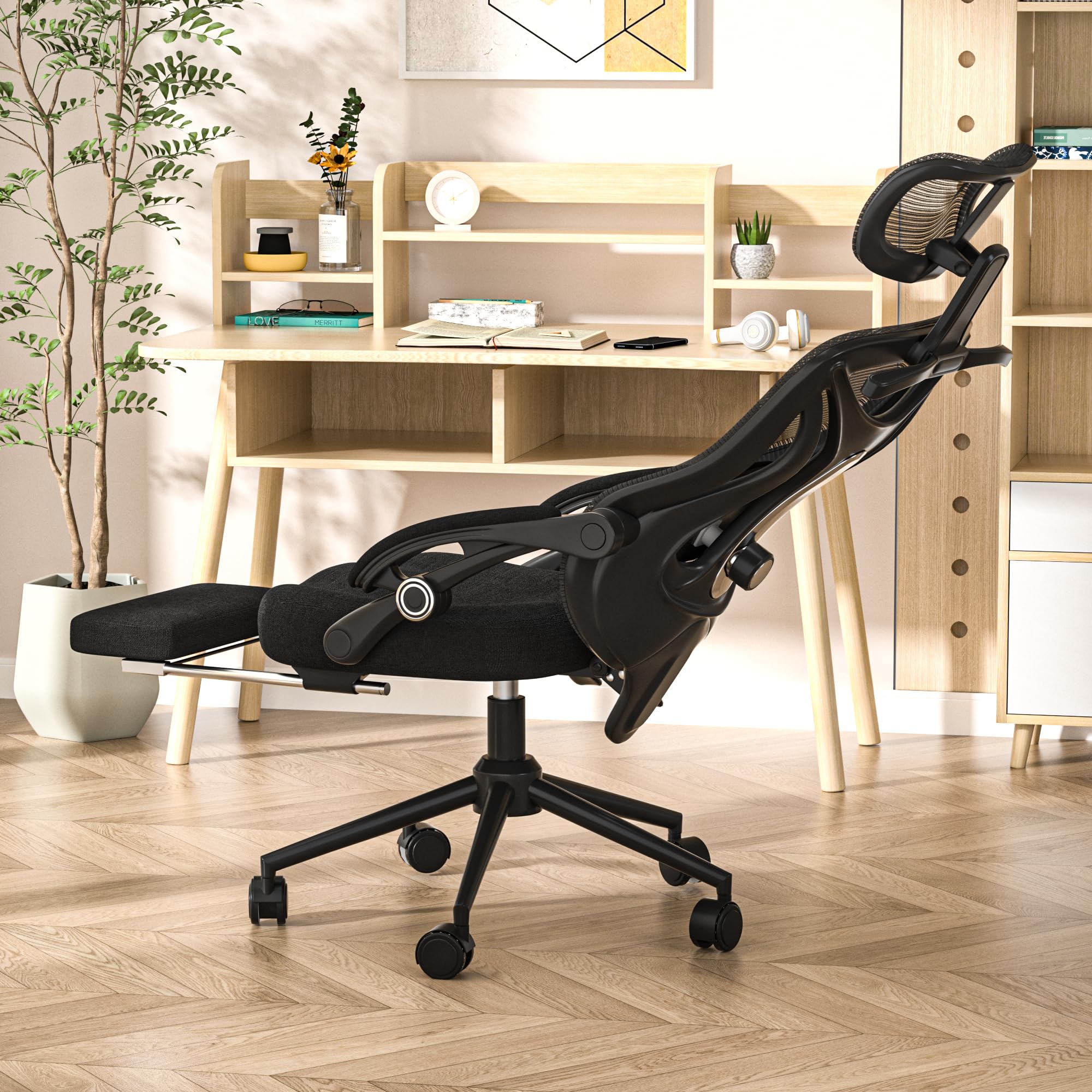
The CYKOV chair is designed around a retractable footrest and a recline range that extends from 90 to 160 degrees, allowing you to elevate your legs and recline significantly during breaks. For sciatica, elevating the legs can reduce the pelvic angle that compresses the lower lumbar discs, providing temporary relief from nerve pressure. The multi-dimensional adjustment system includes a 4-way headrest, 2-way lumbar support, and armrests, making it adaptable to different body sizes between 5 feet 1 inch and 6 feet 2 inches.
The footrest mechanism uses reinforced rubber bands for smooth extension and retraction, and the footrest surface is made from a shock-absorbing material that feels warmer and less slippery than hard plastic. The mesh backrest promotes airflow, and the high-density foam seat is rated to support up to 350 pounds without sagging. The built-in hanger behind the headrest is a thoughtful addition for keeping a jacket or headset within reach.
Some users report that the armrests attach to a thin metal tube that can wobble over time, and the bolts may loosen during use if thread locker is not applied during assembly. The headrest can be stiff initially, though this often resolves with use. Assembly takes about 45 minutes, which is longer than average. The 5-year warranty covers quality issues, adding a layer of security for a chair in this price range.
Why it’s great
- Retractable footrest allows leg elevation to reduce pelvic pressure on the sciatic nerve
- 160-degree recline range supports full relaxation during breaks
- High-density foam seat supports up to 350 pounds without sagging
- 5-year warranty provides long-term peace of mind
Good to know
- Armrests attach to a thin metal tube that may wobble under heavy use
- Bolts can loosen over time without thread locker during assembly
- Assembly takes approximately 45 minutes, longer than simpler models
9. CASASIO Home Office Desk Chair
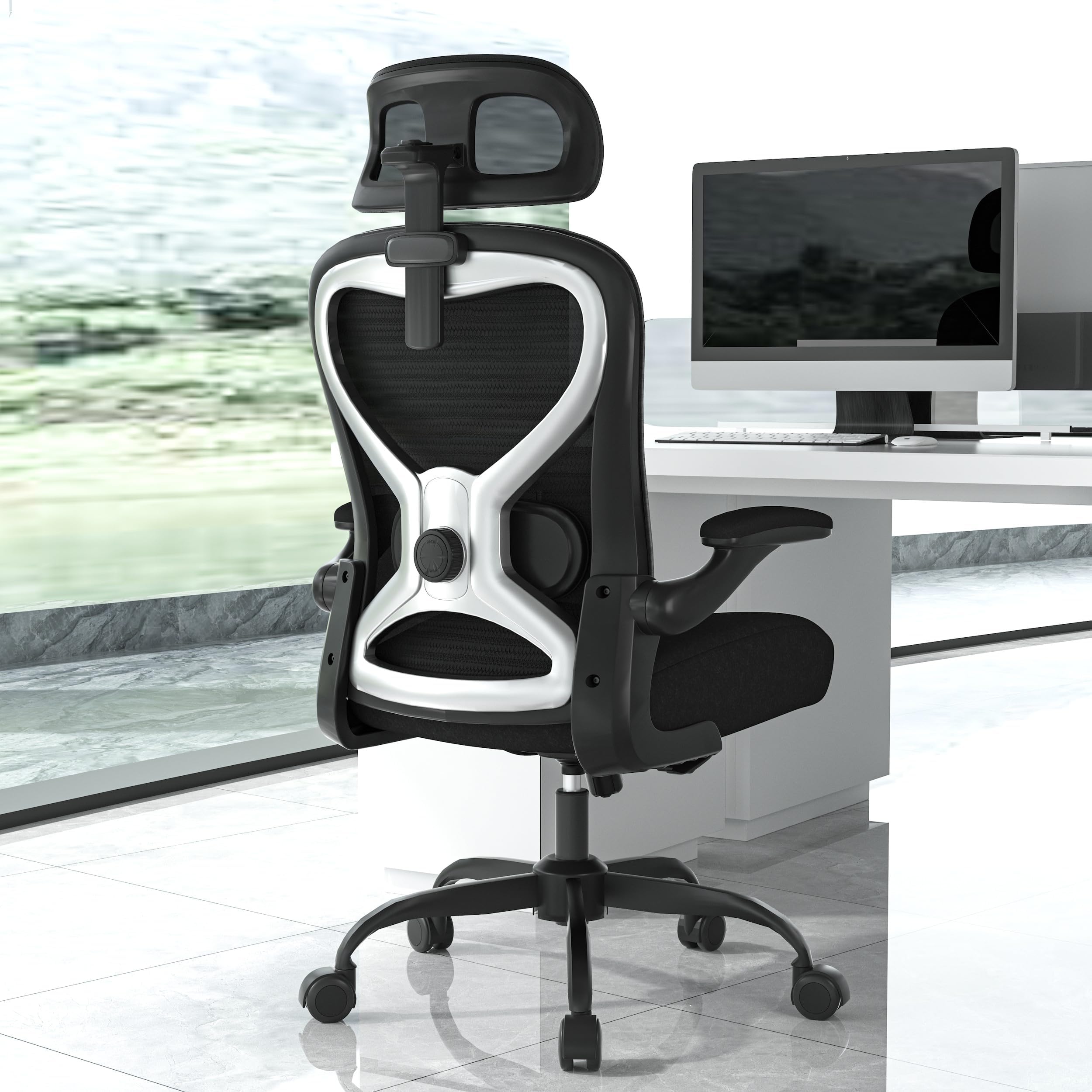
The CASASIO chair uses a virgin foam seat cushion designed to distribute weight evenly across the hips and thighs, reducing the pinpoint pressure that can aggravate sciatic nerve sensitivity. The contoured mesh back aligns with the natural curve of the spine, and the dual-direction adjustable lumbar cushion allows you to move it both up and down for a more targeted fit. For an entry-level price point, it offers a surprising degree of adjustability that addresses the basic needs of sciatica relief.
The 3D adjustable headrest supports the neck and head in multiple positions, which helps maintain spinal alignment from the cervical spine down to the lumbar region. The flip-up armrests allow you to tuck the chair under a desk or create more space when you need to shift positions. The tilt and rock mechanism provides gentle motion that can relieve tension and improve blood flow during long sessions. The reinforced metal base supports up to 350 pounds, and the premium casters roll smoothly on most floor surfaces.
The seat cushion, while comfortable initially, may compress faster than higher-density foam options over extended daily use. The assembly instructions are clear, but some users note that the tilt mechanism requires adequate clearance behind the chair to function fully. The overall build quality is solid for the price, but the chair lacks the seat depth adjustment found on more expensive models, which could be a limitation for taller or shorter users.
Why it’s great
- Virgin foam seat cushion distributes weight evenly to reduce hip and thigh pressure
- Dual-direction adjustable lumbar cushion allows vertical positioning for lower back relief
- Flip-up armrests create space for position changes during long sessions
- Reinforced metal base supports up to 350 pounds
Good to know
- Seat cushion may compress faster than higher-density foam with daily use
- No seat depth adjustment limits fit for very tall or very short users
- Tilt mechanism requires rear clearance for full range of motion
FAQ
Does a chair with a hard or soft seat cushion work better for sciatica?
How does seat height adjustment affect sciatic nerve pain?
Can a footrest help relieve sciatica while sitting at a desk?
What is the difference between a mesh seat and a foam seat for sciatica?
How important are adjustable armrests for sciatica relief?
Final Thoughts: The Verdict
For most users, the best desk chairs for sciatica winner is the Vari CoreChair because its active sitting mechanism directly addresses the static loading that triggers nerve compression, while offering adjustable seat depth and height for a precise fit. If you want a more traditional padded experience with deep recline and leg elevation, grab the CYKOV Reclining Chair. And for the highest level of adjustability with 5D lumbar and a robust frame, nothing beats the FLEXISPOT ErgoX-PRO.

Mo Maruf
I created WellFizz to bridge the gap between vague wellness advice and actionable solutions. My mission is simple: to decode the research and give you practical tools you can actually use.
Beyond the data, I am a passionate traveler. I believe that stepping away from the screen to explore new environments is essential for mental clarity and physical vitality.