Our readers keep the lights on and my smoothie glass nicely filled. As an Amazon Associate, I earn from qualifying purchases.
Eight hours of sitting puts roughly 40 percent more pressure on your spinal discs compared to standing. For anyone managing chronic back problems, that daily load adds up to real pain. A poorly designed chair leaves your lumbar spine unsupported, forcing your muscles to compensate until they fatigue and spasm. The right one keeps the natural S-curve intact, distributing load evenly across the pelvis and spine.
I’m Mohammad Maruf — the founder and writer behind WellFizz. My buying guides are built from hundreds of hours spent analyzing ergonomic specifications, reading verified user feedback on posture outcomes, and cross-referencing adjustability features that actually matter for back health.
This guide breaks down the specific mechanisms — lumbar depth adjustment, seat depth travel, recline tension, and foam density — that separate a chair that merely looks supportive from one that genuinely stabilizes your spine. Here are the best desk chairs for back problems you can buy right now.
How To Choose The Best Desk Chairs For Back Problems
Buying a chair for back issues is not about finding the softest cushion or the fanciest looks. The key is finding a chair that actively supports your spine in a neutral position throughout the day. Focus on these factors before clicking add to cart.
Lumbar Support Adjustability
Static lumbar pads often miss the mark because every spine curvature is different. Look for lumbar support that adjusts both vertically and in depth. Horizontal depth adjustment is the more critical spec: it fills the gap between your lower back and the chair back, preventing the slump that compresses discs.
Seat Depth and Cushion Density
A seat that is too shallow fails to support your thighs, forcing your pelvis to tilt backward — a direct cause of lower back strain. A seat that is too deep presses against your calves and restricts blood flow. Adjustable seat depth (found on some models in this guide) lets you dial in proper thigh support. For cushion density, 55D high-density foam or a well-tensioned mesh seat avoids the sinking effect that leads to hip and spine misalignment.
Recline and Tilt Mechanism
Static sitting loads the discs continuously. A chair with multi-position recline and tilt tension allows you to shift your posture throughout the day, redistributing pressure and giving your back muscles periodic relief. A lockable recline in the 110–130 degree range is ideal for breaks, while a near-upright 90 degree position supports focused work.
Quick Comparison
On smaller screens, swipe sideways to see the full table.
| Model | Category | Best For | Key Spec | Amazon |
|---|---|---|---|---|
| MOLENTS Mesh Chair | Mid-Range | Lower back pain relief | 2-way adjustable lumbar (vertical + depth) | Amazon |
| ProtoArc EC200 | Mid-Range | Custom body fit | Adjustable seat depth (1.97″ travel) | Amazon |
| ELABEST Mesh Chair | Mid-Range | Upper back and shoulder support | Bionic-curve backrest with synchro-tilt | Amazon |
| GABRYLLY Mesh Chair | Mid-Range | Reclining and nap breaks | 135° recline with retractable footrest | Amazon |
| FLEXISPOT ErgoX | Premium | Dynamic lumbar tracking | 5-level adjustable back + 3D headrest | Amazon |
| AutoFull M6 | Premium | Heated/cooled seat and massage | 3rd-gen active lumbar (6cm fore-aft) | Amazon |
| Hbada X7 Smart | Premium | Automated lumbar tracking | 8D massage rollers with 3-level heat | Amazon |
| YFO Desk Chair | Budget | Cross-legged sitting option | Armless-interchangeable design | Amazon |
| DUMOS Executive Chair | Budget | Five-point body support | Segmented layered sponge cushion design | Amazon |
In‑Depth Reviews
1. MOLENTS Ergonomic Office Chair

The MOLENTS chair delivers the most critical ergonomic feature for back problems — a lumbar support that adjusts both vertically and in depth. This dual-axis adjustability is rare in the mid-range tier and directly addresses the gap between the chair back and your lower spine that static lumbar pads leave unfilled. The breathable full-mesh seat and back keep airflow moving, which matters for eight-hour sessions where heat buildup becomes a comfort issue.
Buyers consistently report that lower back pain disappeared within days of switching to this chair. The 3D armrests adjust in height, width, and pivot angle, reducing shoulder strain during typing. Assembly takes under 15 minutes with labeled parts and a clear manual, and the proactive customer support team follows up to confirm fit — a level of service that signals confidence in the product.
One caveat: the wheels perform best on hard floors, and carpet users may want to swap for thicker casters. The tilt range locks at 90–120 degrees, which covers work and light reclining but does not go full-nap. For the adjustability-to-price ratio, the MOLENTS is the strongest value in this guide for chronic lower back issues.
Why it’s great
- Two-way lumbar adjustability (vertical + depth) provides tailored spine support
- Full mesh design prevents heat buildup during long sitting sessions
- Labeled components make assembly fast and frustration-free
Good to know
- Wheels may slide on thick carpet without aftermarket casters
- Armrest panels slide forward/back — preferred direction may need contact with manufacturer to lock
2. ProtoArc EC200 Ergonomic Chair
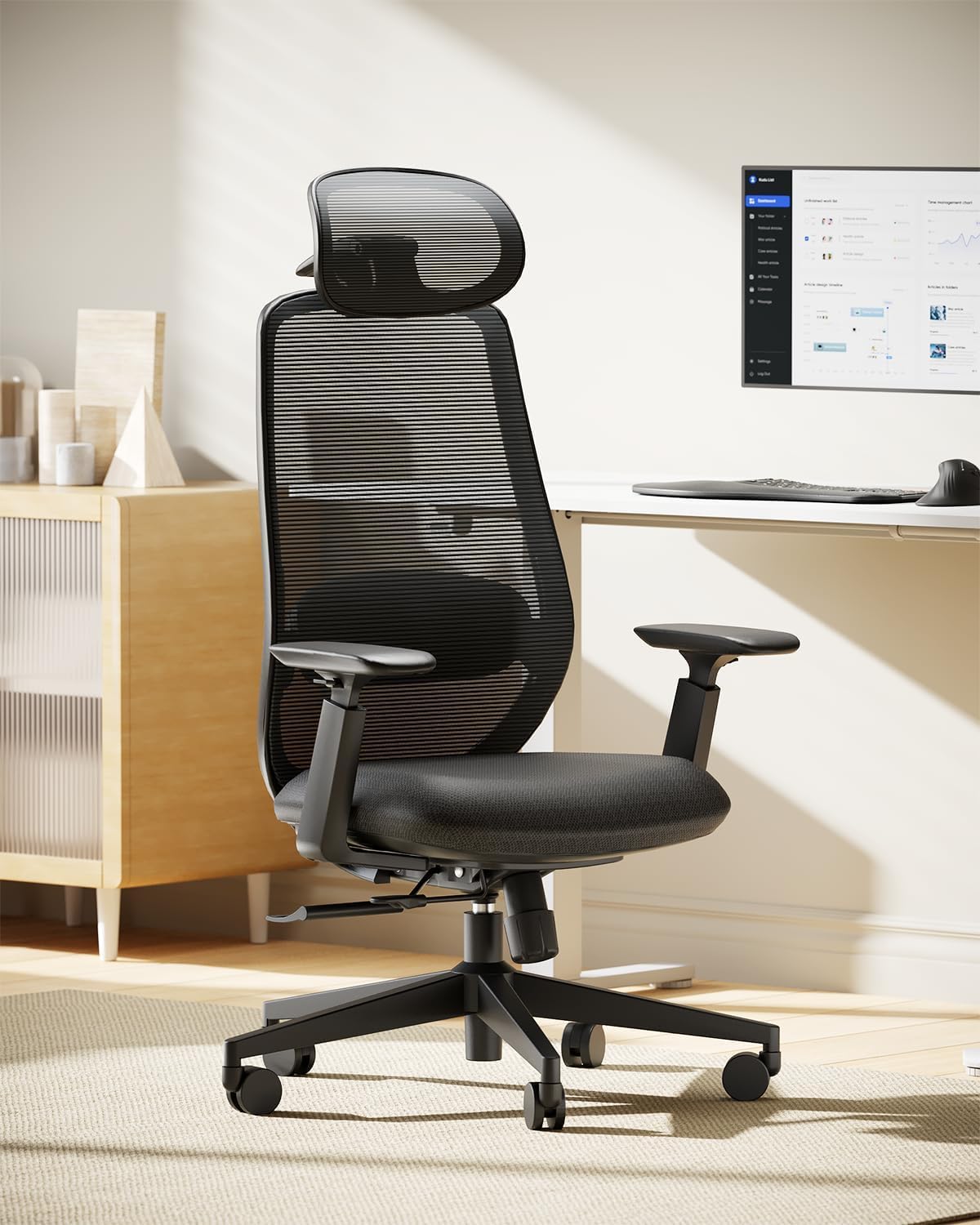
The ProtoArc EC200 brings a feature often missing at this price: a 5-position sliding seat with 1.97 inches of travel. That may sound minor, but for back health it is critical. Proper seat depth lets your thighs rest fully on the cushion without pressure behind the knees, keeping your pelvis neutral rather than tilted backward. The 55D high-density foam resists sagging months down the road, unlike softer cushions that collapse and throw off your alignment.
The 3-point support system aligns head, back, and lumbar, while the mesh back keeps you cool. The 3D headrest adjusts in height, tilt, and rotation — cradling the cervical spine without pushing the head forward. Users between 5’4” and 6’0” report that the adjustments dial in a custom fit that one-size-fits-all chairs cannot match. Assembly is well-packaged with tools and clear steps, averaging 20 minutes.
The lumbar support pad itself is padded and comfortable, but some users note it takes a few days to find the ideal depth setting. The chair is optimized for users up to 220 lbs and 6’0”, so taller individuals may find the headrest range limiting. If you prioritize a truly tailored lower-body fit — adjustable seat depth plus firm lumbar support — the EC200 earns its spot.
Why it’s great
- Adjustable seat depth prevents pelvic tilt that triggers lower back pain
- 55D high-density foam maintains support over years of use
- 3D headrest adjusts in multiple axes for neck relief
Good to know
- Optimal fit range is 5’4” to 6’0”; taller users may need the taller gas cylinder option
- Lumbar depth dial takes trial-and-error to dial in correctly
3. ELABEST Ergonomic Mesh Chair

The ELABEST chair addresses a specific oversight in many ergonomic designs: upper back and shoulder support. Its “Golden Triangle” back structure provides lateral stability for the shoulder blades, which matters for professionals who spend the day typing and coding. When the shoulders are properly supported, the trapezius muscles do not have to work as hard to maintain posture, reducing upper back fatigue that radiates down to the lower spine.
The synchro-tilt mechanism with three lockable positions and adjustable tension lets you shift between upright work mode and a relaxed recline without losing lumbar contact. The bionic-curve mesh back mimics the spine’s natural shape, and the adjustable lumbar support fills the lower curve. The 3D armrests adjust in height, width, and angle, cutting shoulder strain by keeping the elbows at a 90-degree angle relative to the desk surface.
Some users with a smaller frame found the armrests too wide out of the box — the manufacturer sent rotating replacements upon request, which speaks to responsive support. The seat cushion uses a firm mesh that avoids heat buildup but may feel less plush than foam options. The BIFMA 5.1 certification confirms commercial-grade durability. For anyone whose back pain originates in the upper body rather than the lumbar alone, the ELABEST is a top pick.
Why it’s great
- Golden Triangle back structure stabilizes shoulders and upper back
- Synchro-tilt mechanism maintains lumbar contact during recline
- BIFMA 5.1 certified for heavy daily use
Good to know
- Armrests may be too wide for petite users without a replacement part
- Mesh seat is firm — those accustomed to plush foam may need an adjustment period
4. GABRYLLY Ergonomic Chair with Footrest
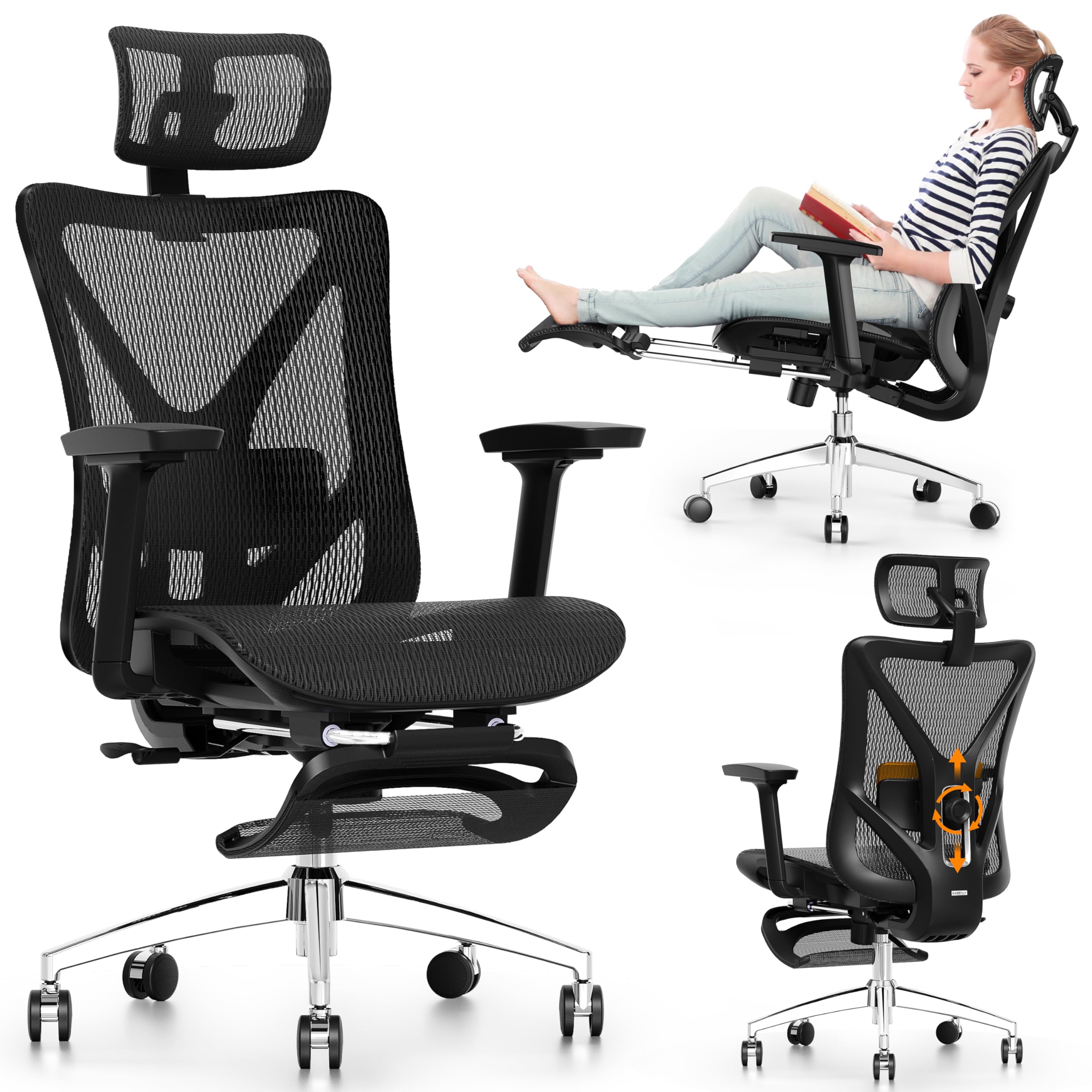
The GABRYLLY chair earns its place by pairing 2-way adjustable lumbar support with a 135-degree recline and a retractable steel footrest. For back pain sufferers who need periodic unloading of the spine, the recline three-position lock (90/110/135 degrees) lets you shift posture significantly throughout the day. The footrest extends 18.1 inches, providing stable leg support during breaks or even a nap — reducing the gravitational load on the lumbar discs.
The lumbar support adjusts 3 inches vertically and 1.6 inches in depth, giving enough range to fill the lower back gap for most users between 5’3” and 6’0”. The mesh back is breathable and keeps air circulating in warm environments. The 3D armrests allow height, width, and rotation adjustments, and the large 27.5-inch steel base provides stability during recline — a concern for chairs that rock when pushed back.
Some users report that the armrests shift unintentionally during use because the adjustment mechanism clicks rather than locks solidly. The mesh material on the seat and back is taut; a few users found it less forgiving than thicker padded chairs. For those who need a chair that transitions from focused typing to fully reclined rest while supporting the lower back, the GABRYLLY delivers solid value.
Why it’s great
- 135-degree recline with sturdy steel footrest reduces spinal disc pressure
- 2-way adjustable lumbar support with generous height and depth range
- Large steel base ensures stability even when fully reclined
Good to know
- Armrest adjustment mechanism can shift unintentionally during use
- Taut mesh may feel firmer than some users expect for extended sitting
5. FLEXISPOT ErgoX Premium Chair
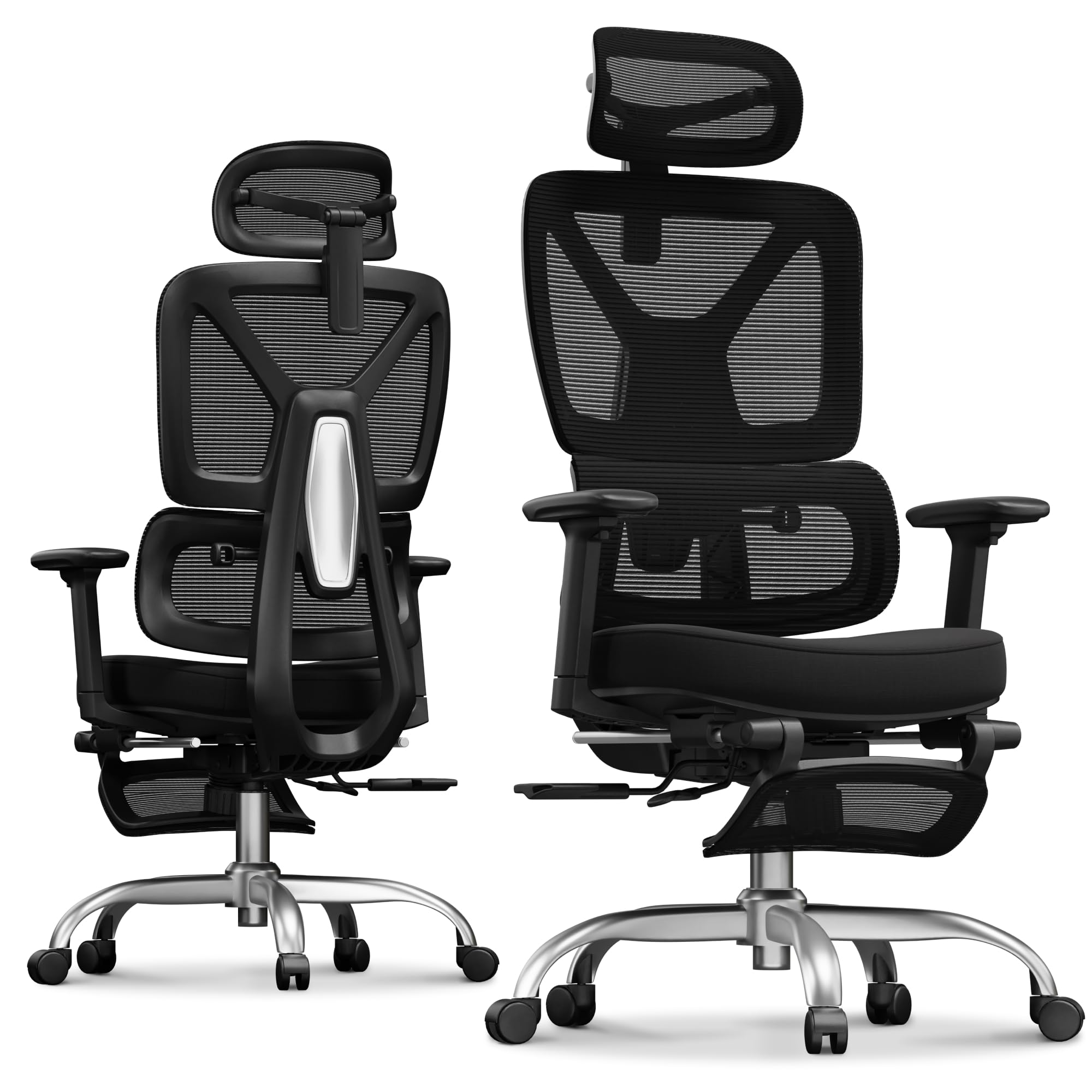
The FLEXISPOT ErgoX distinguishes itself with a dynamic lumbar support system that changes shape and angle as you shift your sitting position. Unlike static pads that stay in one place, the lumbar mechanism responds to your movement, providing continuous contact whether you are sitting upright or leaning back. This is especially valuable for back problems caused by the pelvis rotating forward or backward during the day — the dynamic support counteracts that drift.
The chair offers 5-level adjustable back, a 3D headrest with tilting and height adjustment, and a retractable footrest for breaks. The seat depth adjusts from 17 to 20 inches, accommodating users from 5’1” to 6’2”. The mesh seat variant provides cooling airflow, while a foam option is available for those who prefer a padded feel. The class 4 gas lift is a durability indicator — it is less likely to fail than cheaper class 2 or 3 cylinders.
One frequent user note: the footrest, while padded and comfortable, requires sliding the seat forward to extend fully, which can feel slightly awkward for taller users. The armrests lack the full rotational range found on some premium models. For a mid-premium price, the ErgoX delivers an adaptive back-support experience that sets it apart from static-lumbar chairs.
Why it’s great
- Dynamic lumbar adapts to movement, maintaining support through posture changes
- 5-level back adjustability pairs with 3D headrest for full spine alignment
- Class 4 gas lift provides durability and safety for heavy daily use
Good to know
- Footrest deployment requires seat to be slid forward, which may feel tight for tall users
- Armrests offer fewer dimensions of adjustment than some premium competitors
6. AutoFull M6 Gaming Chair
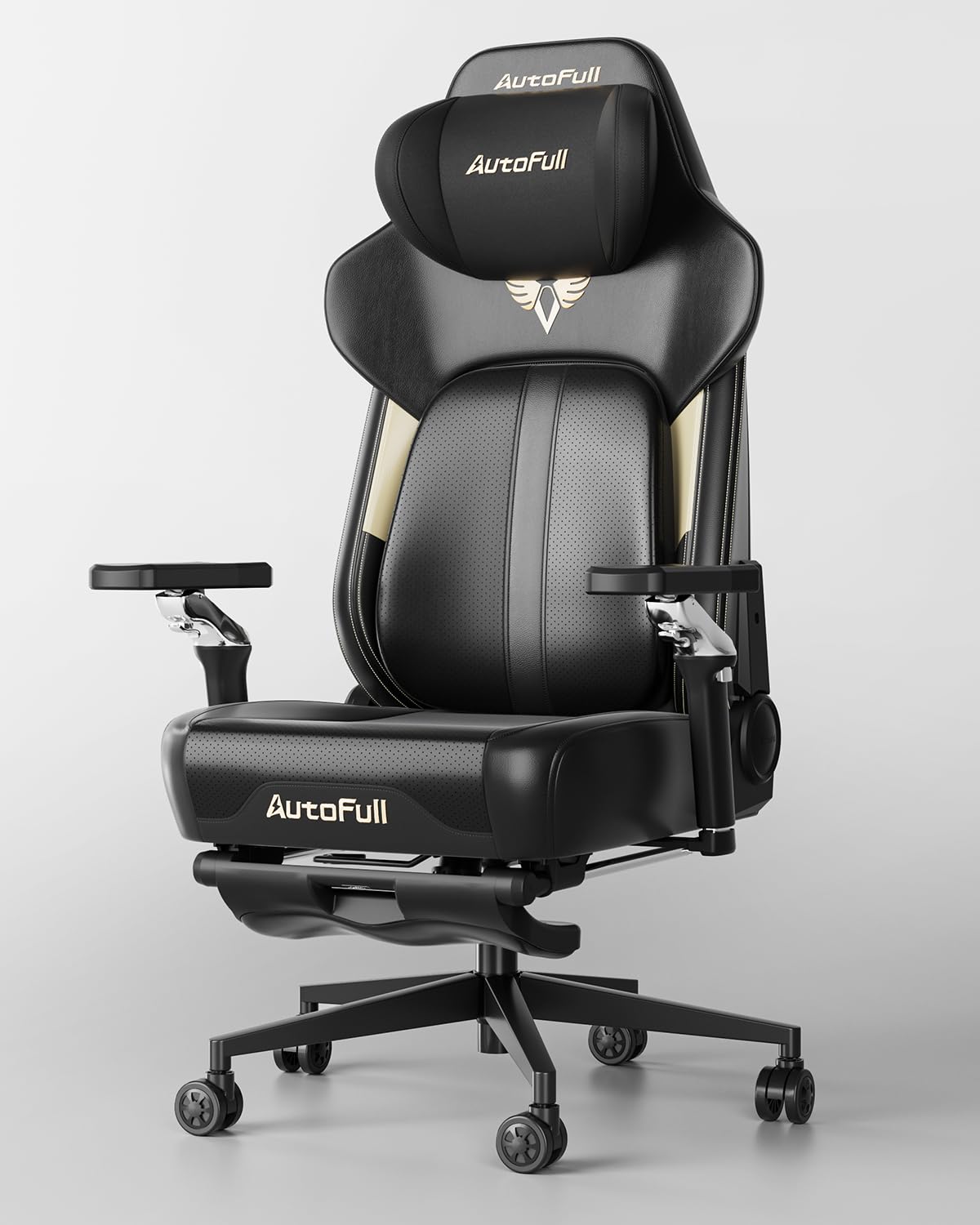
The AutoFull M6 brings a genuinely uncommon feature set for back health: a 3rd-generation active lumbar support that moves 6 cm forward and backward and 5 cm vertically, plus a swivel mechanism that follows your body’s rotation. This continuous adaptation prevents the pressure points that develop when a static lumbar pad loses contact during micro-movements. The built-in lumbar and thigh massage helps relieve muscle fatigue after extended sessions, which can reduce spasms that contribute to chronic back pain.
The temperature-control system uses dual fans for cooling and graphite heating up to 104°F. For back problems, the heat option increases blood flow to sore muscles, which can accelerate recovery during breaks. The 360-degree mechanical armrests adjust in five dimensions, accommodating keyboard typing, controller gaming, and relaxed sitting positions without forcing the shoulders to shrug or drop.
The assembly instructions have been a recurring complaint — black-on-black diagrams make it difficult to identify parts and steps. Some users reported a breakage in the base legs after two months, though the manufacturer sent replacement parts quickly. At 75 pounds, this is a heavy chair that requires two people to move. If you need a chair that actively supports your back movement, provides heat therapy, and includes massage, the M6 justifies its premium tier.
Why it’s great
- Active lumbar support moves with you, reducing pressure points over long sessions
- Built-in heating (up to 104°F) increases blood flow to sore back muscles
- Lumbar and thigh massagers relieve muscle fatigue during breaks
Good to know
- Assembly instructions are difficult to follow due to poor print quality
- Some units experienced leg breakage, though customer support replaced parts
7. Hbada X7 Smart Ergonomic Chair
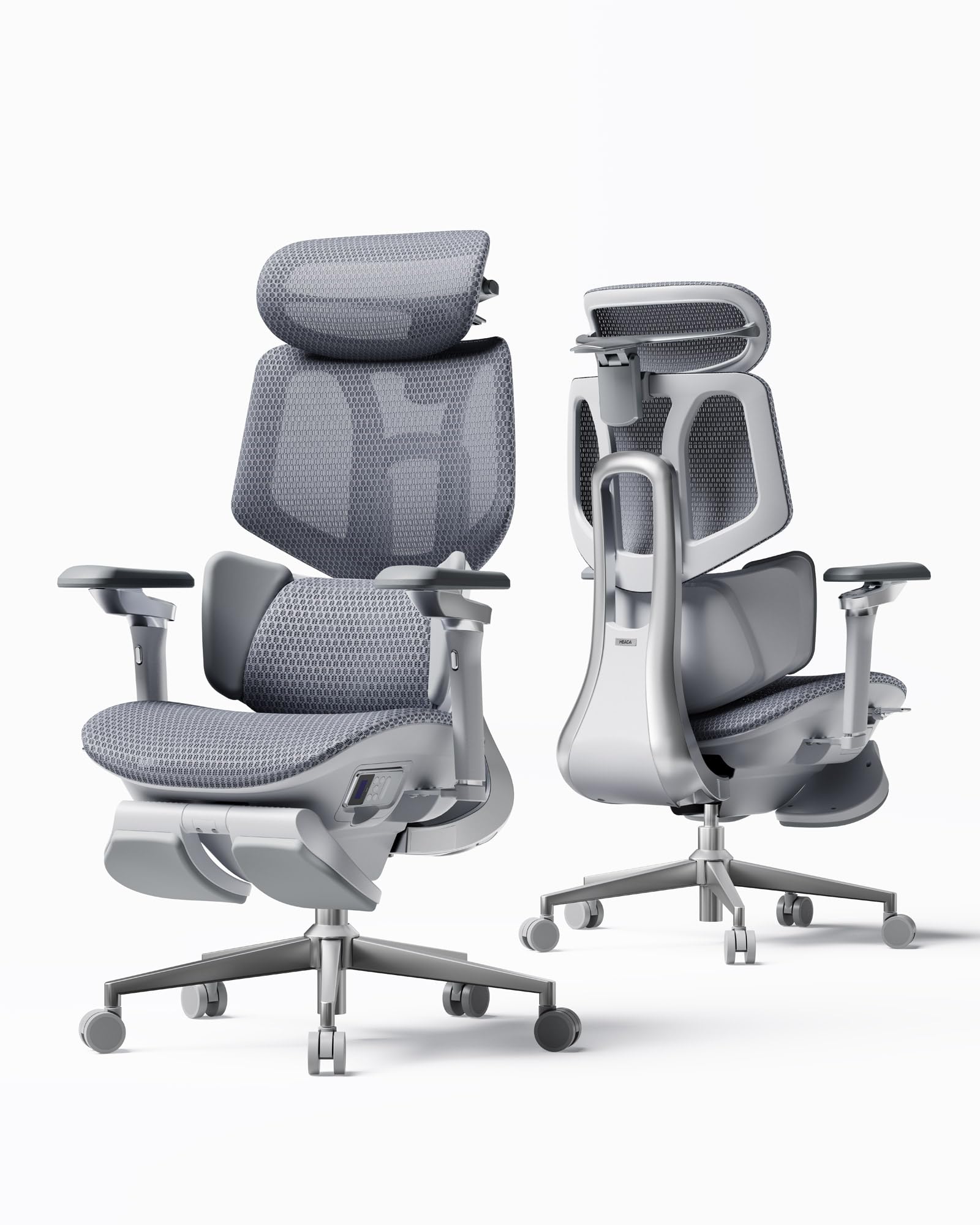
The Hbada X7 is the most technologically advanced chair in this guide, using a gravity-sensing base that auto-adjusts lumbar support intensity based on your sitting posture. The 6D adjustable waist pillow aligns with the natural curve of your spine, and the 8D massage rollers with three-level heating (40–50°C) target muscle fatigue with targeted kneading. The automated lumbar tracking is a step beyond manual adjustment — it responds in real time as you lean forward, sit upright, or recline.
The seat integrates a dual-fan cooling system with three speeds (Silent, Balanced, Turbo) that enhance breathability by 65 percent compared to standard mesh. For back pain sufferers, staying cool prevents sweat discomfort that can reduce sitting tolerance. The 720-degree omnidirectional armrests rotate fully on two axes, allowing any arm position without losing support. The aircraft-grade aluminum frame keeps the chair relatively light while supporting up to 150 kg.
The main limitation involves taller users: the standard cylinder may not provide enough seat height range for optimal ergonomics for those 6’0” and above, though the manufacturer can supply a taller cylinder. Some features, like the massage and auto lumbar, add complexity that may require occasional troubleshooting. For buyers who want the closest experience to a smart chair that adjusts itself to protect the spine, the Hbada X7 is the current leader.
Why it’s great
- Gravity-sensing base auto-adjusts lumbar support intensity to your posture
- 8D massage rollers with 3-level heat target deep muscle fatigue
- Dual-fan cooling system prevents heat buildup during long sessions
Good to know
- Standard cylinder may not suit users 6’0” and taller without a replacement part
- Electronic features add complexity and potential for periodic troubleshooting
8. YFO Home Office Desk Chair

The YFO chair offers a niche advantage for back health: you can install it with or without armrests. Running the chair armless opens up the ability to sit cross-legged, which shifts the pelvis into a different angle that can relieve lower back pressure for some users. The seat cushion uses a spring pack over a hardwood base, providing bounce and support that prevents the sinking effect typical of budget chairs with low-density foam.
The high-back version (carefully choose this variant for back support) provides a generous 15.8-inch backrest width and increases the sponge padding on the back for better lower back coverage. The rubber casters are quieter and more floor-friendly than standard hard plastic wheels, gliding smoothly on wood, carpet, and marble. Assembly takes roughly 30 minutes, and the frame feels solid for the price point.
Some users note that the mid-back version lacks the adjustable arms and recline function found on the high-back variant, so make sure you select the correct model. The lumbar support is present but not as adjustable as the chairs ahead of it — it relies on the overall back shape rather than a dedicated pad. For an entry-level price, the YFO is a functional option, especially for those who want the flexibility of an armless sitting position.
Why it’s great
- Armless option allows cross-legged sitting that can shift pelvic angle for relief
- Spring pack seat cushion prevents sagging and provides consistent support
- Rubber casters are quiet and work on multiple floor types
Good to know
- Mid-back variant lacks adjustable arms and recline — verify you are ordering the high-back
- Lumbar support is built into the back shape rather than independently adjustable
9. DUMOS Executive Chair with Footrest
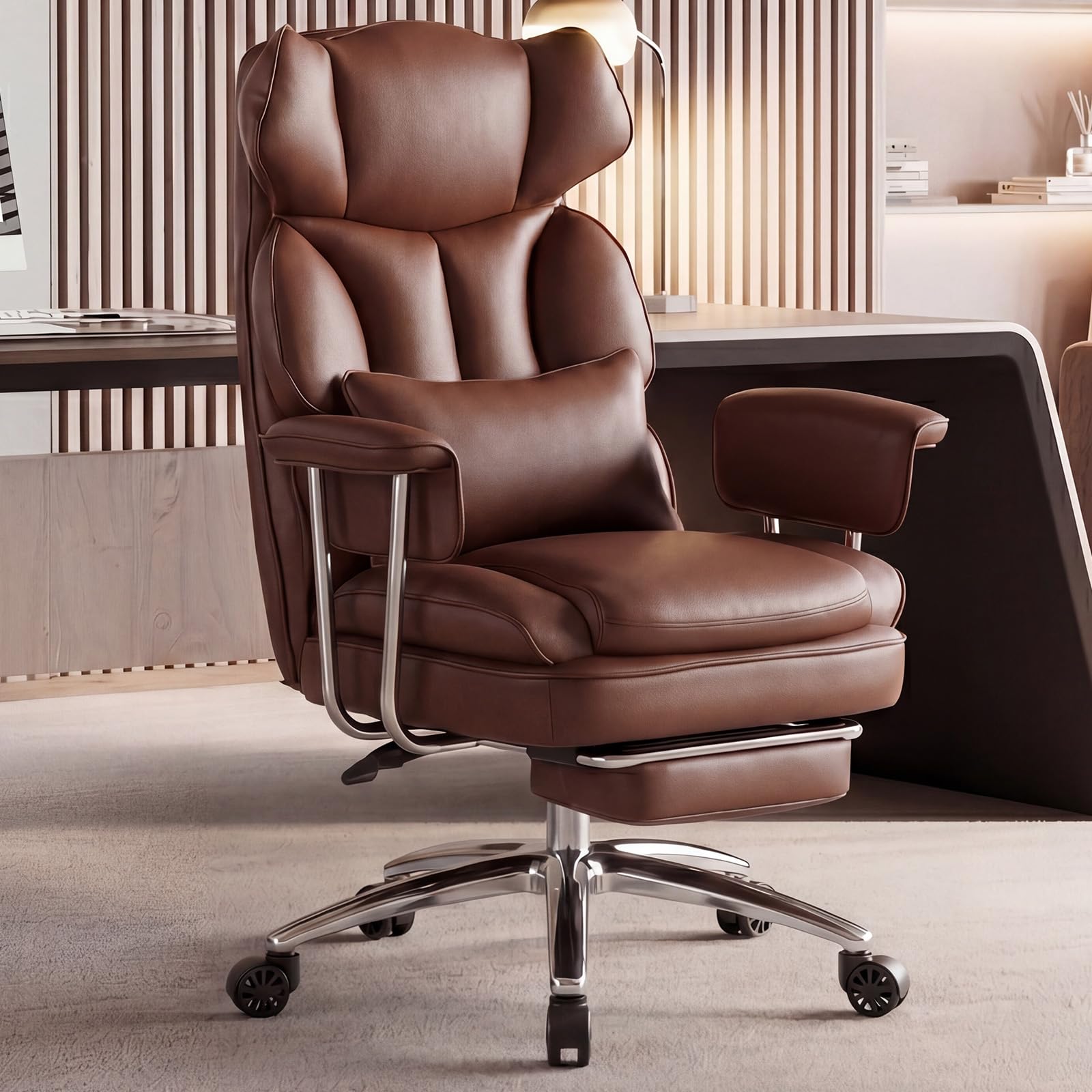
The DUMOS executive chair uses a segmented layered sponge design that divides cushion support across five zones: head, shoulders, back, buttocks, and legs. This five-point approach attempts to distribute pressure more evenly than a flat foam block, which is relevant for users whose back pain worsens when one body part (like the tailbone) takes excessive load. The memory sponge material adapts to body contours based on pressure, providing a personalized mold over time.
The chair includes a retractable leather footrest and a 135-degree tilt for napping, plus an adjustable lumbar pillow that can be positioned vertically. The PU leather upholstery is easy to clean, and the SGS-certified class 3 gas cylinder and BIFMA-tested metal base provide safety certification. Assembly takes about 25 minutes, and the included tools and labeled bolts make the process straightforward.
Some users reported a faint creaking noise after extended use, and the fixed armrests do not adjust in width or angle — a limitation for those who need to slide the chair close under a desk. The faux leather does not breathe as well as mesh, so hot climates may cause sweat buildup. For a budget-tier chair that offers memory-foam pressure distribution and a footrest for breaks, the DUMOS is a reasonable entry point.
Why it’s great
- Segmented layered sponge distributes pressure across five body zones
- Memory sponge material molds to individual body shape for personalized support
- Retractable footrest and 135-degree recline allow spine-unloading breaks
Good to know
- Fixed armrests lack width and angle adjustment
- PU leather can trap heat compared to breathable mesh alternatives
FAQ
Is a mesh seat better than foam for lower back pain?
How much lumbar depth adjustment do I need?
Should I get a chair with a headrest for back problems?
Can a recline function help with chronic back pain?
Final Thoughts: The Verdict
For most users, the desk chairs for back problems winner is the MOLENTS Ergonomic Chair because its two-way lumbar adjustability and full mesh seat address the two biggest causes of sitting pain — inadequate lumbar depth and heat buildup — at a price that undercuts premium chairs. If you want an adjustable seat depth to dial in thigh support precisely, grab the ProtoArc EC200. And for fully automated lumbar tracking that adapts as you move, nothing beats the Hbada X7 Smart Chair.

Mo Maruf
I created WellFizz to bridge the gap between vague wellness advice and actionable solutions. My mission is simple: to decode the research and give you practical tools you can actually use.
Beyond the data, I am a passionate traveler. I believe that stepping away from the screen to explore new environments is essential for mental clarity and physical vitality.