Our readers keep the lights on and my smoothie glass nicely filled. As an Amazon Associate, I earn from qualifying purchases.
Finding a chair that doesn’t aggravate sciatic nerve pain is a specific hunt. Standard office chairs often compress the lower back or cut off circulation, turning every workday into a battle against radiating leg pain.
I’m Mohammad Maruf — the founder and writer behind WellFizz. I’ve dug deep into the market, analyzing hundreds of spec sheets and real-user experiences to isolate the precise lumbar support, seat depth, and foam density that calm sciatica symptoms rather than trigger them.
This guide cuts through the marketing noise to deliver actionable, feature-specific advice on selecting the very best desk chair for sciatica, ranked by what actually relieves pressure on the sciatic nerve.
How To Choose The Best Desk Chair For Sciatica
Selecting a chair for sciatica is less about generic ergonomic claims and more about targeted structural features. You need a seat that removes direct pressure from the sciatic nerve while supporting the natural S-curve of your spine. Here are the three most critical factors to evaluate.
Adjustable Lumbar Support That Targets the Lower Lumbar Spine
Not all lumbar support is equal for sciatica. You need a mechanism that applies firm, adjustable pressure directly to the L4-S1 region — the lower lumbar and sacral area where sciatic nerve roots originate. Look for chairs with independent height and depth lumbar adjustment (5D or 4D systems) rather than fixed-curve backs. A one-size-fits-all lumbar pad that sits too high or too low can actually intensify nerve compression.
Seat Depth and Waterfall Edge Design
The seat pan is often overlooked, but it’s the primary contact point for nerve pressure. A seat that is too deep forces your knees to bend past 90 degrees, compressing the back of your thighs and aggravating the sciatic nerve. Look for adjustable seat depth (usually 16 to 19 inches) and a waterfall or cascading front edge that slopes downward, reducing pressure behind the knees and promoting healthy circulation through the glutes and hamstrings.
Firm, Pressure-Relieving Cushion vs. Plush Foam
Contrary to instinct, a plush, sink-in cushion is often worse for sciatica. Soft foam allows your pelvis to tilt backward, flattening the lumbar curve and straining the lower back. A medium-to-firm cushion made from cold-cure foam or high-density memory foam provides the stable base your hips need to stay level. Mesh seats work well here too, because they conform without sinking and improve airflow to reduce heat and moisture that can exacerbate nerve sensitivity.
Quick Comparison
On smaller screens, swipe sideways to see the full table.
| Model | Category | Best For | Key Spec | Amazon |
|---|---|---|---|---|
| ELABEST T96 | Mesh Ergonomic | Value-focused relief | Adjustable lumbar + waterfall seat | Amazon |
| Sleekform Kneeling | Kneeling Chair | Open hip angle | Forward-tilt seat, no backrest | Amazon |
| Branch Ergonomic | Mid-Range Task | Petite users (5’0″+) | 8-point adjustability, mesh back | Amazon |
| Desktronic SitOne | All-Day Comfort | Tall users (up to 6’3″) | Contoured seat, 4D armrests | Amazon |
| FLEXISPOT ErgoX-PRO | Full-Feature Mesh | Severe spine conditions | 5D lumbar + 7D armrests | Amazon |
| Vari CoreChair | Active Sitting | Standing desk companions | Patented tilting mechanism | Amazon |
| Secretlab Titan Evo | Premium Gaming | Firm all-day support | Cold-cure foam + 4-way lumbar | Amazon |
| Ergohuman ME7ERG GEN2 | Commercial Mesh | Long-term durability (10+ years) | Synchro tilt + seat depth adjust | Amazon |
| Hbada X7 Smart | Tech-Forward | Automated lumbar tracking | Auto-adjusting lumbar + massage | Amazon |
In‑Depth Reviews
1. Secretlab Titan Evo (Regular)

The Secretlab Titan Evo earns the top spot because its cold-cure foam formulation is deliberately firm — a critical advantage for sciatica sufferers who need a stable, non-sinking platform that prevents pelvic tilt. The foam density resists breakdown even after eight-plus hours, maintaining the neutral spine position that takes pressure off the sciatic nerve roots in the lower lumbar region.
Its 4-way built-in adjustable lumbar support lets you dial in both depth and height, targeting the L4-S1 area without the need for an external pillow. The full-metal 4D armrests and 165-degree recline give you the freedom to shift positions frequently, which is essential for preventing nerve entrapment. The memory foam magnetic head pillow adds critical neck support for those whose sciatica stems from postural chain reactions.
Three chassis sizes ensure a proper fit range, and the premium leatherette is 12x more durable than standard PU leather. Users report dramatic reductions in back pain after switching, though the firm seat takes about a week to acclimate to if you are used to plush cushions.
Why it’s great
- Cold-cure foam stays firm and supportive all day, no sagging.
- Built-in 4-way lumbar targets the exact lower spine region responsible for sciatica.
- Three size options ensure proper hip-to-knee alignment.
Good to know
- Firm cushion requires a short break-in period for first-time users.
- Leatherette can trap heat compared to mesh alternatives.
2. Ergohuman Eurotech ME7ERG GEN2

For sciatica sufferers, the adjustable lumbar support — combined with independent seat depth and back height customization — offers the precision needed to offload the sciatic nerve without compromising the chair’s structural integrity.
The synchro-tilt mechanism allows the seat and backrest to move in a coordinated ratio, keeping your pelvis stable while reclining. This prevents the sacral compression that can occur on chairs with basic tilt locks. The headrest is fully adjustable in height and angle, which is crucial for those whose sciatic pain stems from a forward-head posture pulling on the entire kinetic chain.
Its 275-pound weight capacity and all-metal frame make it a robust choice for larger users. The mesh back is highly breathable, preventing heat buildup that can worsen nerve sensitivity. The only compromise is that the armrest pads are not as generously padded as some premium competitors, and the lumbar curve may feel mild for users requiring aggressive lordotic support.
Why it’s great
- Proven durability — multiple users report 10+ years of daily use.
- Full seat depth adjustment accommodates a wide range of thigh lengths.
- Breathable mesh back reduces heat and moisture around the lower back.
Good to know
- Armrest foam can wear at the front tip over extended use.
- Lumbar support is effective but less aggressive than separate pillow systems.
3. Hbada X7 Smart Ergonomic Chair

The Hbada X7 Smart is the most technologically aggressive option for sciatica, featuring a gravity-sensing base that automatically adjusts lumbar support intensity based on your sitting posture and weight distribution. The 6D adjustable waist pillow moves with you, maintaining constant contact with the lumbar curve even as you shift from upright to reclined positions — a level of dynamic support that static lumbar pads cannot match.
Its ventilated seat cushion with a dual-fan cooling system is a standout for nerve comfort. Heat accumulation can aggravate inflamed sciatic nerves, and the 3-speed fan system actively pulls heat away from the underside of your thighs and glutes. The 720-degree omnidirectional armrests and 140-degree recline give you almost unlimited adjustability to find your zero-compression sweet spot.
The main limitation is the gas cylinder stroke — users 6 feet or taller may find the seat height range too short for proper ergonomic positioning, requiring a replacement cylinder. At 75 pounds, the aluminum frame is exceptionally sturdy, but it sacrifices portability and may be overkill for those with limited floor space.
Why it’s great
- Automated lumbar tracking adapts to every posture change in real-time.
- Active seat cooling system reduces nerve-aggravating heat buildup.
- Unmatched adjustability across armrests, headrest, and recline angle.
Good to know
- Cylinder height may be insufficient for users 6’0″ and taller.
- Very heavy at 75 pounds, difficult to move between rooms.
4. Vari CoreChair
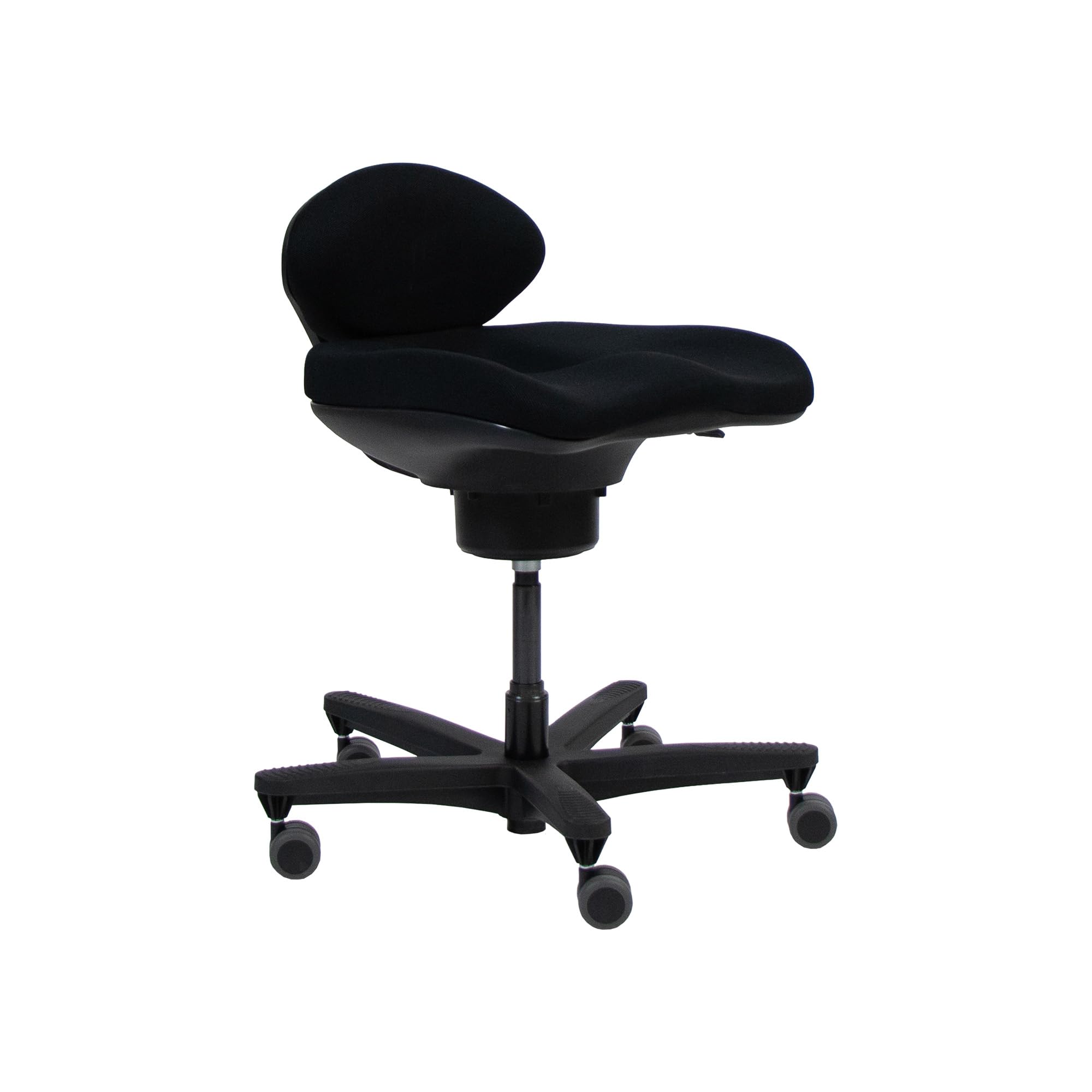
The Vari CoreChair flips the script on traditional sciatica seating by encouraging constant micro-movements through its patented tilting mechanism. For sciatica caused by prolonged static compression, this active-sitting approach can be transformative — it forces your core to engage, which stabilizes the pelvis and prevents the sacroiliac joint from locking up, a common contributor to sciatic pain.
The sculpted seat and contoured backrest stabilize the pelvis in a neutral position, while the adjustable seat depth and height allow you to find the 90-degree knee angle that minimizes hamstring compression. The armless design is deliberate — it lets your arms hang naturally, reducing shoulder tension that can radiate down into the lower back.
Be aware that this is not a “relaxing” chair. The tilting motion requires constant active muscle engagement, which can fatigue some users before their body adapts. It works best for those who alternate between sitting and standing throughout the day, and its compact footprint fits easily under standing desks. The seat cushion is intentionally firm, which is ideal for nerve relief but may feel punishing during the first week of use.
Why it’s great
- Active tilting mechanism prevents static nerve compression.
- Compact footprint slides easily under standing desks.
- Firm, stable seat keeps pelvis in neutral alignment.
Good to know
- Requires an adjustment period — not instantly comfortable.
- Best suited for users who embrace movement while working.
5. FLEXISPOT ErgoX-PRO
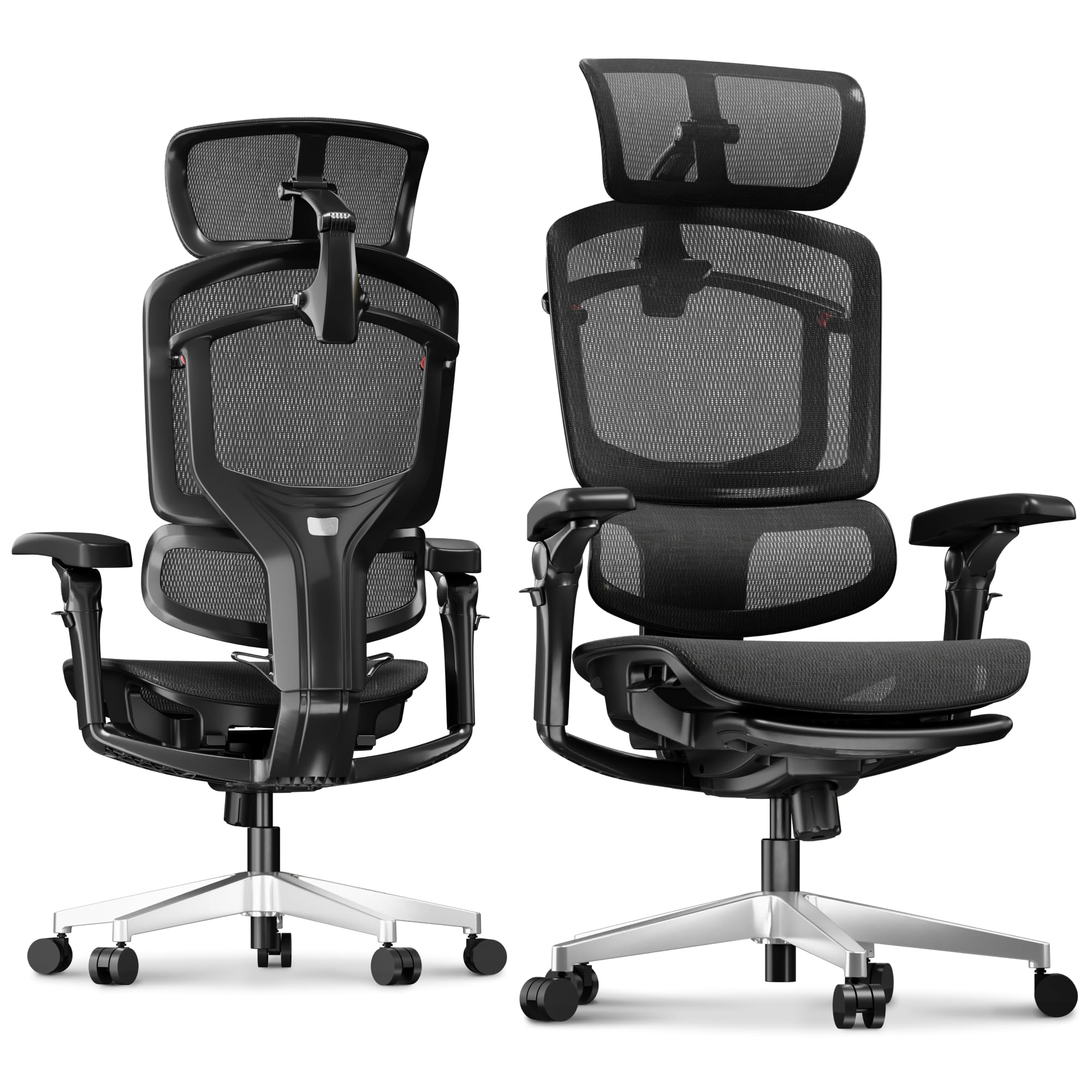
The FLEXISPOT ErgoX-PRO brings next-gen adjustability to the sciatica table with its 5D fully extendable lumbar system. Unlike chairs with single-point lumbar pressure, the 5D mechanism moves up, down, forward, backward, and rotates to cradle the exact curvature of your lower spine, adapting to your posture changes throughout the day. This is especially helpful for sciatica patients whose pain location shifts as the condition flares.
The AeroWeave 5.0 mesh seat offers a second option alongside the Cloudtech cushion — a critical choice for users who find foam too warm or too soft. The mesh variant provides firm tension that prevents the pelvic sink that aggravates the sciatic nerve. The 7D linkage armrests move in sync with your body, providing continuous support for the shoulders and upper back, which prevents the postural compensation that often tightens the piriformis muscle.
The 12-level fine-tuned backrest with 3-position tilt base (90°, 115°, 135°) gives you precise control over your recline angle, helping distribute pressure across the spine evenly. The 551-pound weight capacity and Class 4 lift make it suitable for larger body types. On the downside, the included footrest is functional but adds bulk, and the chair’s extensive adjustability means more points of potential wear over time.
Why it’s great
- 5D lumbar provides unmatched precision for targeting lower back pressure points.
- Choice between mesh and foam seat to suit nerve sensitivity preferences.
- High weight capacity supports larger users without structural compromise.
Good to know
- Complex adjustability may overwhelm users who prefer a set-and-forget setup.
- Footrest attachment increases the chair’s overall footprint.
6. Desktronic SitOne
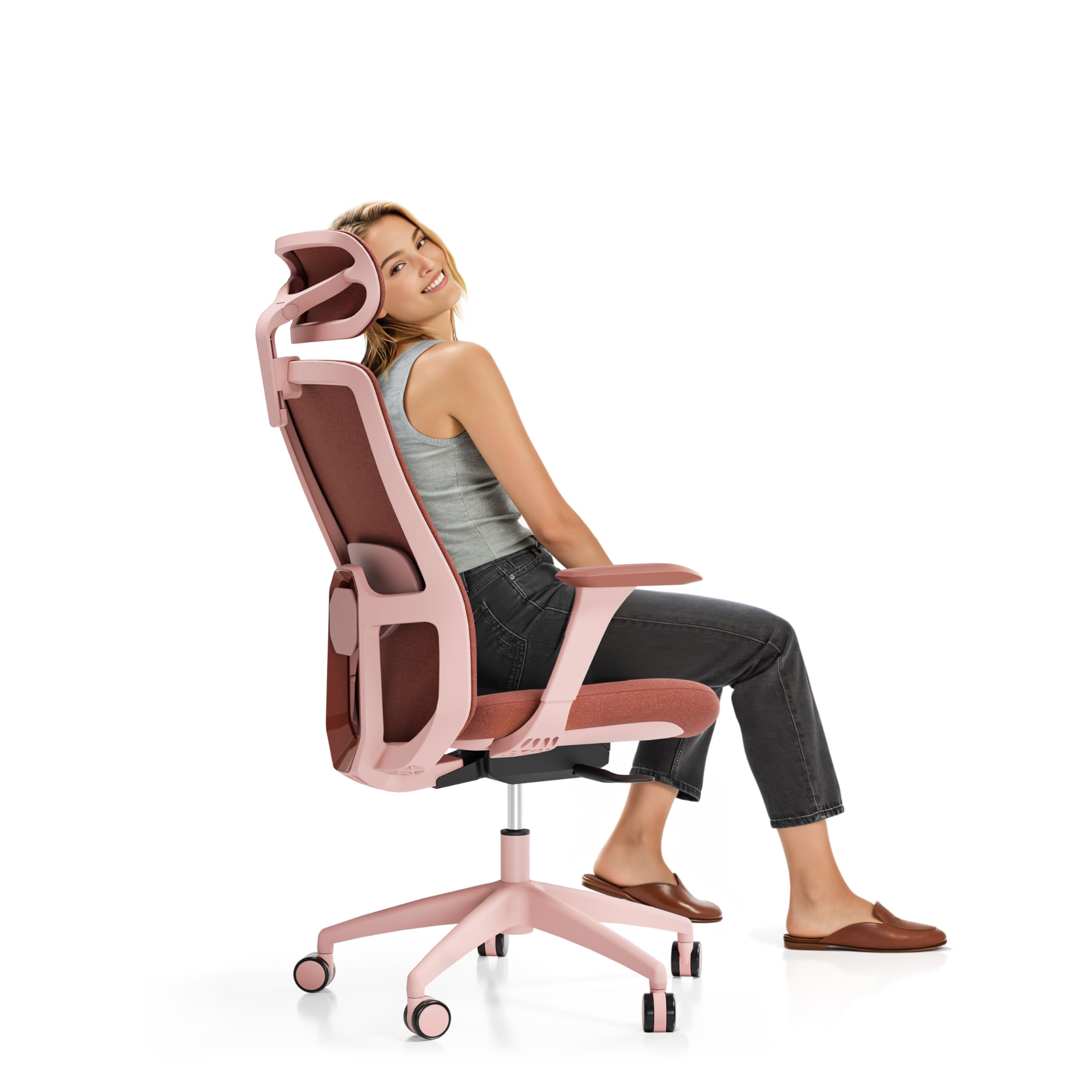
The Desktronic SitOne is built around a pressure-relieving ergonomic seat that evenly distributes weight to take strain off the legs and lower body — a direct benefit for sciatica patients who feel the nerve pinch most acutely in the glutes and back of the thigh. The seat cushion is firm enough to prevent sinking but shaped with a subtle contour that supports the sit bones without compressing the sciatic nerve exit points.
Its adjustable lumbar support, combined with a 4D headrest and 4D armrests, offers a dialed-in fit that taller users (up to 6’3″) will appreciate. The synchro-tilt mechanism keeps the knee angle open during recline, preventing the sharp 90-degree flexion that can trap the sciatic nerve behind the knee. Customers report zero numbness or back pain even after full-day use, which is a strong signal for nerve health.
The mesh back is highly breathable, and the overall build quality feels substantial without being monumentally heavy. The color options (Pink shown) are limited compared to competitors. One nuance: users with very wide hips may find the seat pan slightly narrow, though the contoured shape does a good job of centering the pelvis.
Why it’s great
- Contoured seat pan offloads pressure from the glutes and hamstrings.
- Excellent fit for tall users — seat depth and height range are generous.
- Smooth synchro-tilt prevents knee compression during recline.
Good to know
- Limited color choices may not suit all office aesthetics.
- Seat width may feel snug for users with broader hips or thighs.
7. Branch Ergonomic Chair
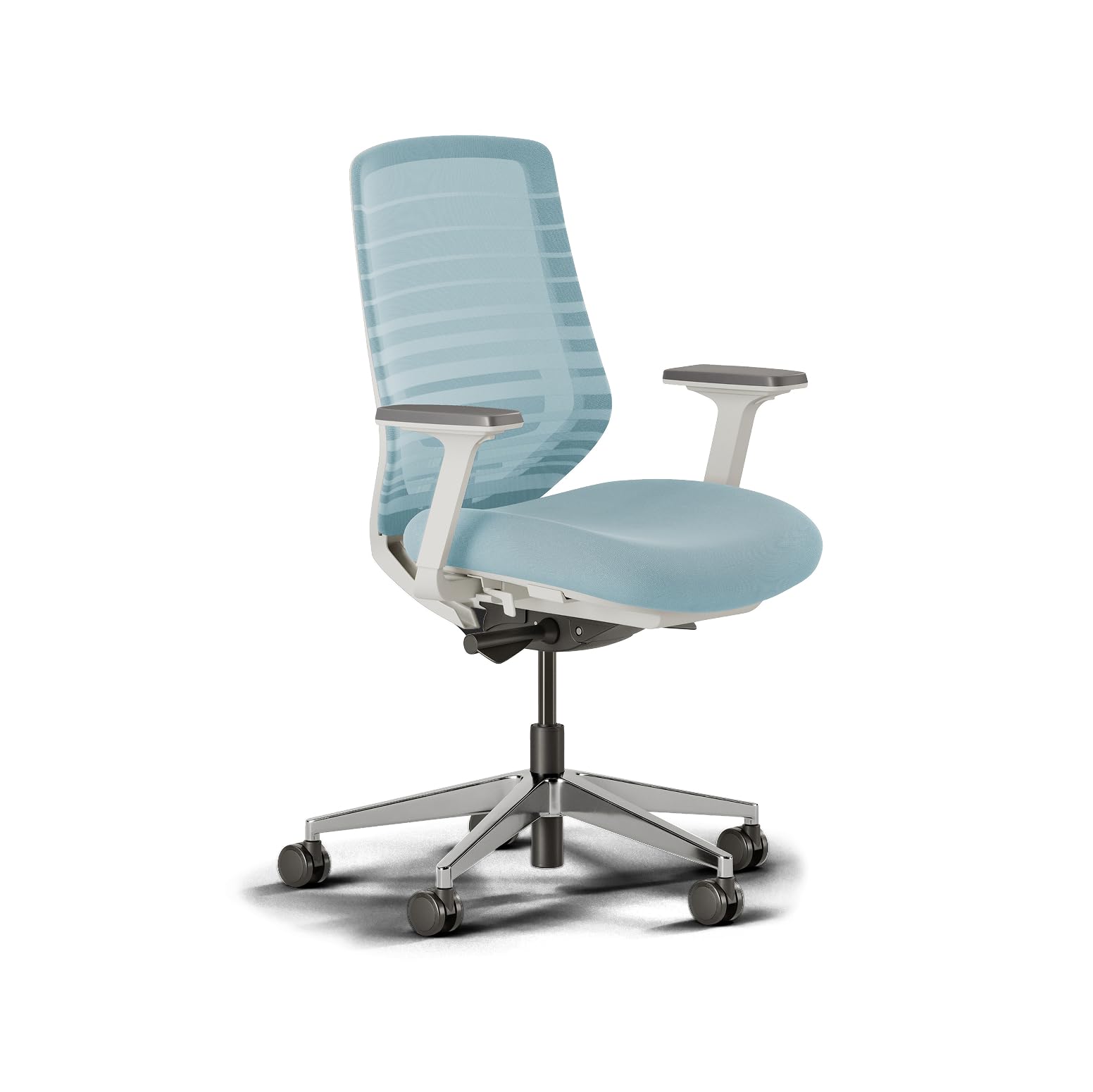
The Branch Ergonomic Chair is a standout for shorter users (5’0″ to 5’6″) with sciatica, a demographic often underserved by standard task chairs. The seat height range drops low enough that petite frames can plant their feet flat without pressure on the back of the thighs, and the adjustable seat depth prevents the knee from locking at an acute angle that aggravates sciatic nerve tension.
Its eight points of adjustment — including lumbar height, seat depth, tilt tension, and armrest angles — give you the fine-grained control needed to create a nerve-friendly setup. The mesh backrest allows constant airflow, reducing heat and moisture that can irritate sensitive nerve endings. The aluminum frame keeps the chair lightweight at just over 30 pounds, making it easy to move between workspaces.
The foam seat cushion is medium-firm, striking a balance between pressure relief and stability. Some users note that the armrests tend to slide forward/backward too easily during use, and there is no seat-tilt lock — a feature some sciatica patients prefer for locking into a precise recline angle. The minimalist design is clean and modern, but the lumbar support is less aggressive than dedicated sciatica chairs.
Why it’s great
- Seat height and depth adjust to accommodate petite frames perfectly.
- Breathable mesh back keeps the lumbar region cool.
- Lightweight aluminum frame makes repositioning effortless.
Good to know
- Armrests lack a secure lock, shifting position during active typing.
- No seat tilt lock for those who need a fixed recline angle.
8. ELABEST T96 Mesh Office Chair

The ELABEST T96 proves that effective sciatica support does not require a premium budget. Its bionic-curve backrest with adjustable lumbar mimics the natural S-curve of the spine, providing firm, targeted pressure to the lower lumbar region where sciatic nerve roots sit. The dual-layer mesh maintains its tension over time, meaning the lumbar curve doesn’t flatten out after weeks of use.
The waterfall-edge mesh seat is the T96’s secret weapon for sciatica. Unlike flat foam seats that compress the back of the thigh, the mesh surface contours to your body and slopes down at the front, eliminating the hard edge that cuts off circulation and pinches the sciatic nerve. Combined with 3D adjustable armrests, the chair allows you to find a neutral arm position that prevents the shoulder-drop that often worsens lower-back tension.
BIFMA 5.1 certification means this chair meets commercial-grade durability standards — a rarity at this price tier. The seat height range (19.6 to 23.6 inches) covers most average-height users, but taller users may find the backrest too short. Customer support is responsive, offering replacement gas cylinders if the standard length does not fit your desk height.
Why it’s great
- Waterfall mesh seat eliminates hard-edge compression behind the knees.
- BIFMA 5.1 certified for commercial-grade durability.
- Responsive customer support offers height cylinder replacements.
Good to know
- Backrest height may be too low for users over 6’0″.
- Mesh seat tension may feel too firm for users who prefer plush cushions.
9. Sleekform East Austin Kneeling Chair
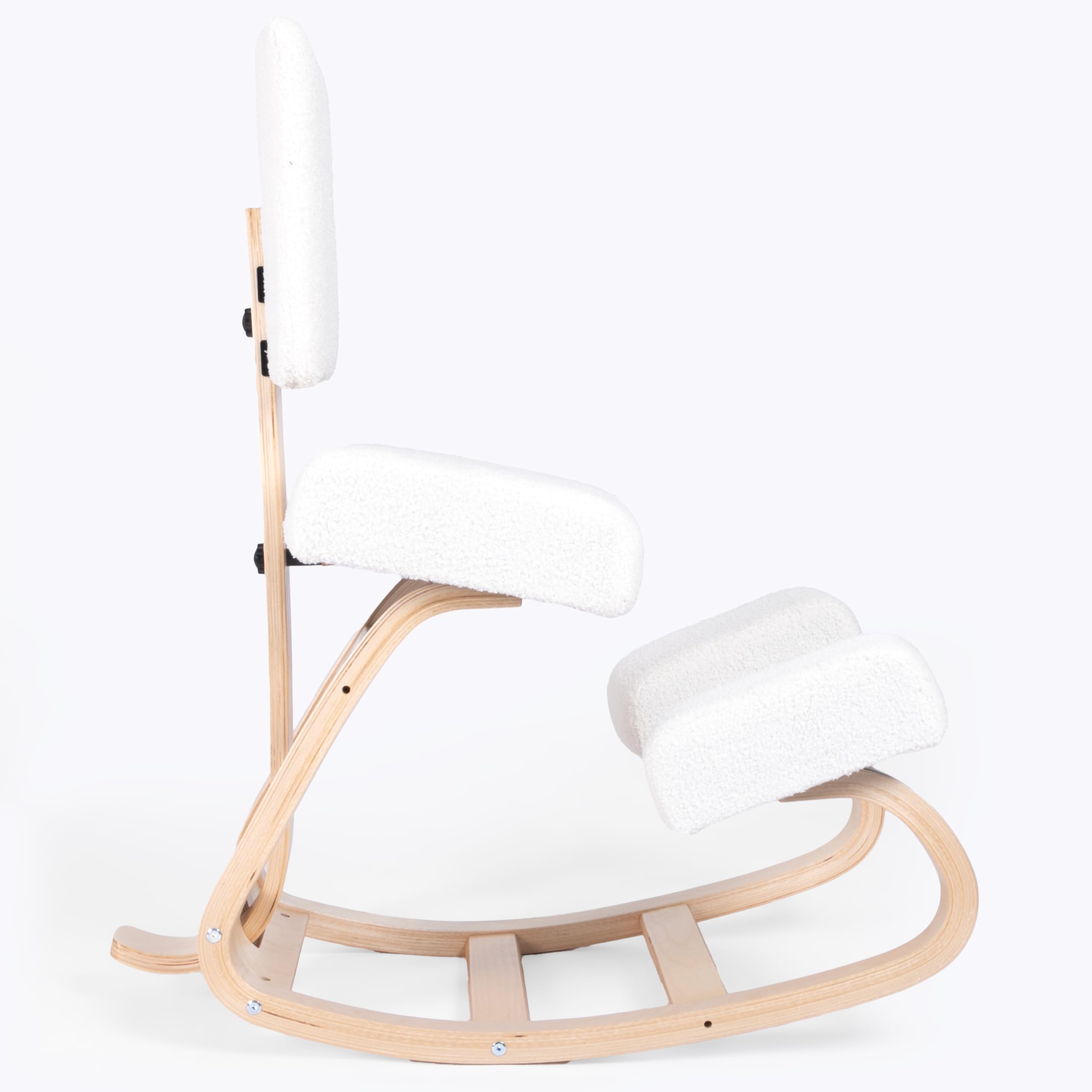
The Sleekform East Austin kneeling chair takes a radically different approach to sciatica by opening the hip angle to roughly 135 degrees, compared to the 90-degree bend of traditional chairs. This open-hip position reduces the stretch on the hamstrings and glutes, which in turn relieves tension on the sciatic nerve as it passes through the piriformis muscle — a common site of entrapment.
The forward-tilted seat distribution shifts weight from the tailbone to the shins and knees, which can be a game-changer for users whose sciatica is exacerbated by direct sitting pressure. The boucle upholstery is thick and comfortable against the shin pads, and the built-in backrest provides a subtle lumbar anchor without encouraging slouching. The rocking feature allows micro-movements that keep the spine mobile.
This chair will not work for everyone. Users with existing knee problems should avoid it, as the kneeling position places sustained pressure on the patella and tibial tuberosity. The frame is built from engineered wood, which feels less robust than the steel frames of the Varier Balans it mimics. Durability concerns about screw loosening appear in some reviews, and the chemical smell from the foam pads requires a few days of airing out.
Why it’s great
- Open hip angle reduces pressure on the piriformis and sciatic nerve.
- Forward tilt relieves tailbone weight and encourages core engagement.
- Compact design fits small spaces and low desks well.
Good to know
- Not suitable for users with knee or patellar pain.
- Engineered wood frame is less durable than metal alternatives.
FAQ
Is a mesh seat or foam seat better for sciatica pain?
Should I get a chair with armrests for sciatica?
Can a kneeling chair actually help sciatica?
Final Thoughts: The Verdict
For most users, the desk chair for sciatica winner is the Secretlab Titan Evo because its cold-cure foam and 4-way built-in lumbar provide a firm, stable platform that prevents pelvic tilt and nerve compression. If you want a breathable mesh option with proven decade-long durability, grab the Ergohuman ME7ERG GEN2. And for those who prefer an active-sitting approach that opens the hip angle and engages the core, nothing beats the Vari CoreChair.

Mo Maruf
I created WellFizz to bridge the gap between vague wellness advice and actionable solutions. My mission is simple: to decode the research and give you practical tools you can actually use.
Beyond the data, I am a passionate traveler. I believe that stepping away from the screen to explore new environments is essential for mental clarity and physical vitality.