Our readers keep the lights on and my smoothie glass nicely filled. As an Amazon Associate, I earn from qualifying purchases.
Chronic neck pain from desk work isn’t just about a bad pillow — it’s about a chair that fails to support your cervical spine through eight hours of micro-movements, forward leans, and screen glare. The right chair works as a passive alignment tool, holding your head over your shoulders and your shoulders over your hips without you thinking about it.
I’m Mohammad Maruf — the founder and writer behind WellFizz. I’ve spent hundreds of hours digging into lumbar biomechanics, headrest tracking ranges, seat depth geometries, and real-user fatigue patterns to separate chairs that actually offload neck tension from those that just look ergonomic on paper.
After weeks of spec analysis and cross-referencing thousands of verified owner experiences, I’ve built this guide to the best desk chair for neck pain — ranked by how effectively each model stabilizes your head, supports your mid-back, and reduces the forward-head posture that drives cervical strain.
How To Choose The Best Desk Chair For Neck Pain
A chair that ignores your cervical spine will force your neck muscles to act as a passive stabilizer all day — the exact mechanism behind tension headaches, trapezius knots, and forward-head syndrome. To break that cycle, you need to prioritize four structural zones that work together as a kinetic chain.
Headrest Geometry and Adjustment Range
For neck pain, a fixed headrest is almost useless. You need a 3D or 4D headrest that moves independently in height, depth, and angle so it can cradle the natural curve of your cervical spine whether you’re sitting upright, leaning forward to type, or reclining to read. Look for at least 50mm of height travel and 30° of tilt range. A headrest that only moves up and down cannot support the suboccipital muscles that tighten when your chin drifts toward the monitor.
Lumbar Support That Controls Thoracic Posture
Most people with neck pain actually start the problem in their lower back. When your lumbar spine slouches into posterior pelvic tilt, the thoracic spine rounds, and the head compensates by jutting forward by several inches — doubling the effective weight of your head on the neck. An adjustable lumbar support that moves vertically and in depth (2D or 4D) lets you maintain the natural S-curve, reducing the load transferred to your cervical spine by nearly 40 percent in many postures.
Seat Depth and Cushion Density
If the seat pan is too long, it hits the back of your calves and forces you to slide forward into a slouch that collapses your neck. If it’s too short, your thighs lack support and your pelvis tilts back. A seat depth range between 16 and 20 inches with a waterfall front edge promotes even weight distribution. For neck pain specifically, foam density matters: high-resilience virgin foam or dense mesh prevents the “bottoming out” that drops your hips below knee level and rotates your pelvis posteriorly.
Armrest Articulation and Shoulder Load
Fixed armrests that sit too high or too wide force your shoulders into a constant shrug, which shortens the upper trapezius and levator scapulae — muscles that directly attach to the cervical vertebrae. 3D or 4D armrests that adjust in height, width, angle, and depth allow your shoulders to relax into neutral depression, taking tension off the neck. For neck pain sufferers, armrests that can pivot inward when you recline are a major advantage because they maintain support through the whole range of motion.
Quick Comparison
On smaller screens, swipe sideways to see the full table.
| Model | Category | Best For | Key Spec | Amazon |
|---|---|---|---|---|
| Steelcase Leap | Premium | Long-term spinal health with full adjustability | 4D Arms + LiveBack lumbar | Amazon |
| Hbada X7 Smart | Premium | Automated lumbar tracking and heated massage | Auto-adapting lumbar + 4D headrest | Amazon |
| Ergohuman ME7ERG GEN2 | Premium | Tall users needing durable neck support | 8-way adjustment + synchro tilt | Amazon |
| FLEXISPOT ErgoX Max | Mid-Range | Heavy-duty build with full neck articulation | 4D headrest + 5D armrests | Amazon |
| FLEXISPOT ErgoX | Mid-Range | Dynamic lumbar with optional footrest | 3D headrest + adjustable seat depth | Amazon |
| ELABEST T96 | Mid-Range | BIFMA-certified mesh for desk workers | 3D arms + adjustable lumbar | Amazon |
| MOLENTS Mesh | Mid-Range | Breathable all-mesh with precise lumbar | 2D lumbar + 3D armrests | Amazon |
| FelixKing Big and Tall | Budget | Wide seat with pet-friendly reversible arms | 400 lb capacity + footrest | Amazon |
| CASASIO Ergonomic | Budget | Virgin foam seat with 3D headrest at entry price | 2D lumbar + tilt/rock | Amazon |
In‑Depth Reviews
1. Steelcase Leap Office Chair

The Steelcase Leap is widely regarded as the benchmark for ergonomic seating, and for neck pain sufferers, its LiveBack technology is the standout feature. The backrest mimics the natural movement of your spine, flexing and contouring as you shift positions, which keeps your cervical spine aligned even during dynamic sitting — a critical advantage over chairs with rigid backs that force your neck to compensate.
The Lower Back Firmness dial lets you dial in exactly the right lumbar tension to maintain pelvic neutrality, directly reducing the forward-head drift that causes upper trapezius strain. Combined with 4D adjustable armrests that allow width, height, depth, and pivot adjustments, your shoulders can stay relaxed and depression-loaded through a full day of typing or calls.
Multiple long-term users report using this chair for a decade without back or neck pain recurrence, and the Natural Glide System keeps you close to your desk while reclining. It arrives fully assembled, but at a premium entry point; the seat foam is initially firm for some, and a few users with smaller frames note the lumbar curve takes a short adjustment period to feel natural.
Why it’s great
- LiveBack technology dynamically supports spinal curves
- Lower back firmness dial for precise lumbar tension
- 4D armrests eliminate shoulder shrug
- Fully assembled out of the box
- Proven longevity with many users reporting 10+ years of use
Good to know
- Higher entry cost may be out of reach for some budgets
- Seat cushion is firm and may need a break-in period
- Fabric can feel scratchy to some users
2. Hbada X7 Smart Ergonomic Chair
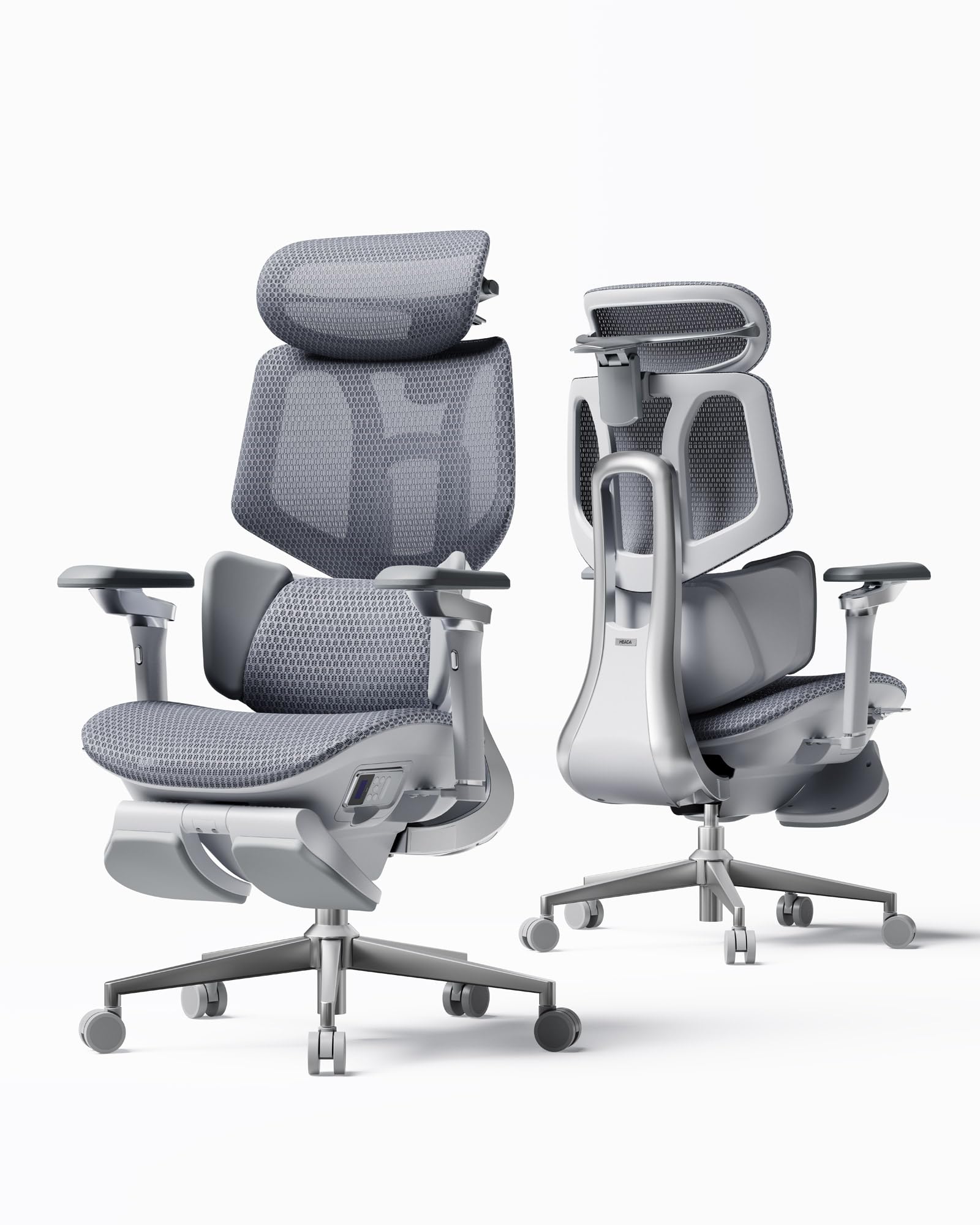
The Hbada X7 is one of the most technically advanced chairs for neck pain, featuring a gravity-sensing base that auto-adapts lumbar support intensity as you move. This automated tracking means your lower back never loses contact, which prevents the thoracic collapse that leads to forward head posture. The 8D massage rollers with three-level heating (40-50°C) can directly treat the trapezius and levator muscles that tighten during extended desk sessions.
The 4D headrest offers 70° rotation, 55mm sliding, and 45mm height adjustment, allowing you to fine-tune cervical support whether you’re upright, reclining, or leaning to one side. The dual-fan cooling system in the mesh seat also reduces heat buildup, which indirectly helps maintain a stable posture — you won’t fidget or shift into bad alignment because you’re sweating.
Some users above 6’ tall report that the cylinder height prevents them from achieving an optimal ergonomic position without aftermarket modifications. The aluminum frame and 5-star base feel premium, and it arrives largely pre-assembled. For those who want active, ongoing lumbar and cervical support adjustments, the X7 is a compelling choice.
Why it’s great
- Auto-adapting lumbar reduces need for manual adjustments
- Heated massage targets neck and shoulder tension directly
- 4D headrest with wide adjustment range
- Dual-fan ventilated seat prevents heat buildup
Good to know
- Cylinder height may be limiting for very tall users
- Some features (lumbar pillow) may require removal based on personal preference
- Premium price places it above some alternatives
3. Ergohuman Eurotech ME7ERG GEN2

The Ergohuman ME7ERG has been a mainstay in the ergonomic market for years, and the GEN2 version refines the design that made it popular. With eight distinct adjustment points — including headrest height and angle, back height, seat depth, arm height, and synchro tilt — it offers one of the highest levels of customization for matching a chair to your specific cervical spine geometry. The dynamic lumbar flexes with your body, which is essential for maintaining the S-curve that offloads the neck.
The US-manufactured mesh backing is noticeably sturdier than budget alternatives, providing firm support that doesn’t sag over time. The seat depth adjustment is especially useful for preventing the forward slide that rounds the shoulders and strains the neck.
At its price point, it competes directly with the Steelcase Leap, though some users note the armrests can feel too wide for narrow desks and the mesh can feel tacky when new. The limited lifetime warranty adds peace of mind, and reviews consistently highlight that it solves long-standing back and neck issues where other chairs failed.
Why it’s great
- Eight-way adjustment fits a wide range of body types
- Dynamic lumbar flexes with movement for continuous support
- Proven durability with many users reporting 10+ years
- Limited lifetime warranty
Good to know
- Armrest width may be too wide for some users
- Mesh can feel slightly tacky or rough during first week
- Seat does not tilt independently of the back
4. FLEXISPOT ErgoX Max
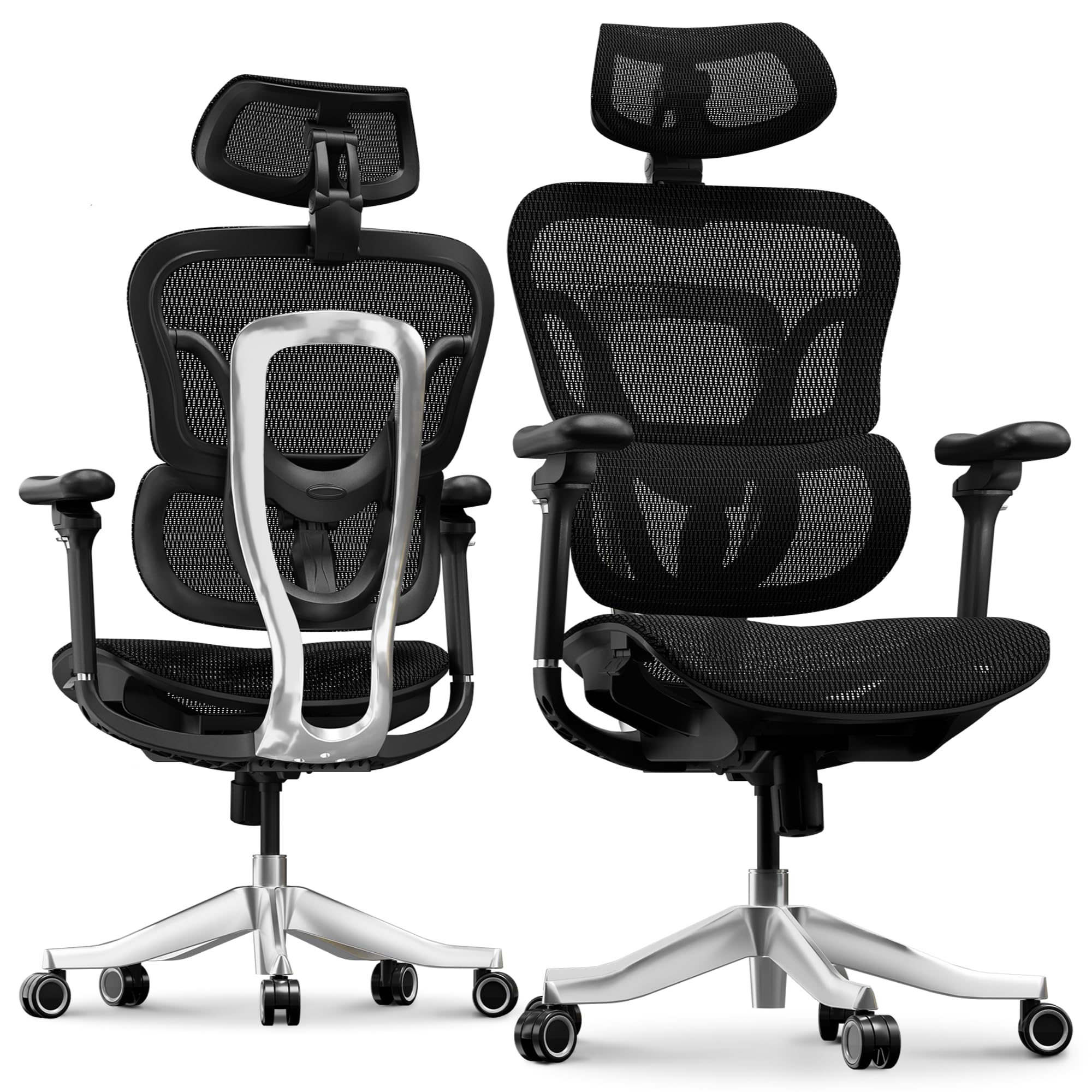
The FLEXISPOT ErgoX Max is a heavy-duty ergonomic chair built around a full aluminum alloy back frame and base, supporting up to 661 pounds without creaking or wobbling. For neck pain, the 4D adaptive lumbar support is the key feature — it dynamically adjusts to your posture, reducing fatigue and helping keep the thoracic spine upright, which directly prevents forward head drift. The 4D headrest provides independent height, depth, and angle adjustment for targeted cervical cradle.
The 5D armrests (height, width, depth, swivel, and pivot) allow micro-adjustments that keep your shoulders relaxed in any position, even when reclining. The electroplated chrome casters roll silently on any floor, and the optional retractable footrest makes breaks more restorative. Users often compare it favorably to chairs costing twice as much for its combination of build quality and adjustability.
Some users wish the armrests had even more articulation, and the seat foam is on the firmer side, which may not suit everyone. At this mid-range price point, the aluminum construction and 661-pound capacity provide a level of stability that supports a consistent neutral spine throughout the workday.
Why it’s great
- Full aluminum frame and base for exceptional stability
- 4D adaptive lumbar tracks posture automatically
- 5D armrests allow precise shoulder positioning
- Very high weight capacity for large users
Good to know
- Seat cushion is firm and may not suit all preferences
- Armrest adjustability could be more extensive
- Footrest is optional and may sit too high for shorter users
5. FLEXISPOT ErgoX
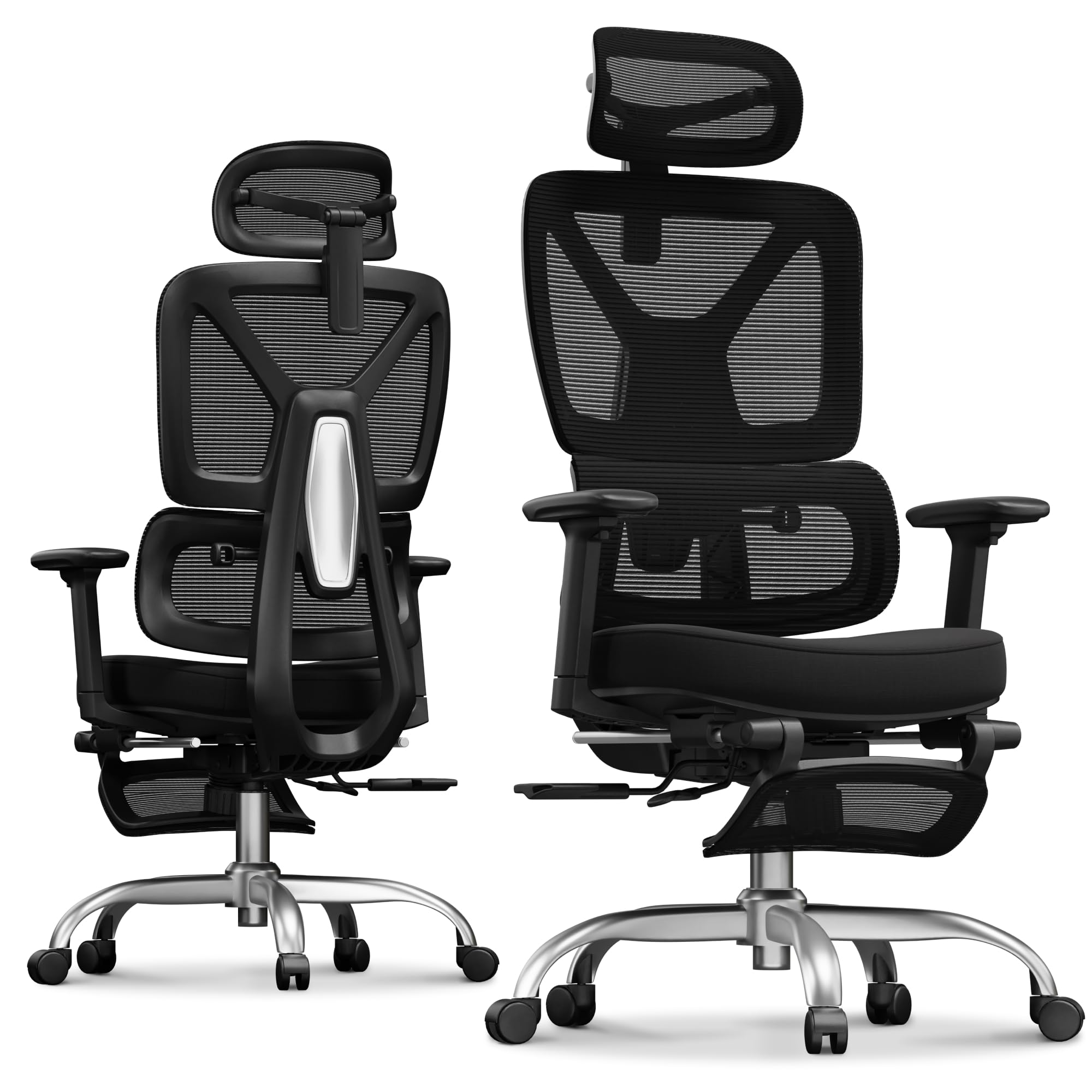
The standard FLEXISPOT ErgoX brings many of the ErgoX Max’s ergonomic principles to a more accessible price point. The dynamic lumbar support moves with your body, providing continuous lower back contact that prevents the slouch-chain reaction — when your lumbar loses support, your thoracic spine rounds, and your head juts forward. The 3D adjustable headrest (height, depth, angle) gives you enough control to cradle the suboccipital region during both upright work and reclined breaks.
Adjustable seat depth (17–20 inches) is a standout feature at this tier, allowing you to set the pan length so your legs are fully supported without pressing into your calves — a common cause of pelvic tilt that worsens neck strain. The retractable footrest adds a relaxation element that lets you take breaks without leaving the chair, reducing cumulative neck tension. Users note the 3D armrests help reduce shoulder fatigue during extended typing sessions.
One or two users have noted that the headrest needs periodic readjustment when switching between sitting upright and reclining, and the footrest can feel too high for very short users. Overall, the ErgoX offers strong cervical support architecture without jumping into premium pricing territory.
Why it’s great
- Dynamic lumbar adapts to body movement
- Adjustable seat depth prevents forward slide
- Includes retractable footrest for restorative breaks
- Breathable mesh seat reduces heat buildup
Good to know
- Headrest may need readjustment between work and recline modes
- Footrest may sit too high for shorter users
- Armrests lack full 4D articulation
6. ELABEST T96 Ergonomic Mesh Chair

The ELABEST T96 is a BIFMA 5.1 commercial-grade chair that targets the specific needs of desk workers with neck and shoulder tension. Its “Golden Triangle” back structure provides targeted support for the shoulders and upper back, a feature designed to alleviate the tension that builds during intense focus tasks. The bionic-curve backrest mimics your spine’s natural shape, and the adjustable lumbar support moves in both height and depth for a precise fit.
The 3D adjustable armrests (height, width, and angle) help reduce arm and shoulder strain by allowing you to position your arms at the correct height relative to your desk — preventing the shoulder shrug that shortens neck muscles. The full-mesh seat is highly breathable and prevents pressure points that can cause you to shift into bad postures. The waterfall front edge promotes circulation in your legs, indirectly supporting stable pelvic position.
Users consistently praise the customer service team, which proactively follows up to ensure satisfaction. At this mid-range price, the build quality and adjustable lumbar depth provide a level of neck support usually found in pricier chairs. The main trade-off is that the armrest slides on some versions, and the mesh seat may feel firm for users accustomed to plush foam.
Why it’s great
- BIFMA 5.1 certified for commercial durability
- Golden Triangle design targets upper back and shoulder tension
- Highly breathable mesh seat prevents heat buildup
- Excellent customer service follow-up
Good to know
- Armrest panels may slide forward on some units (manufacturer sends replacements)
- Mesh seat is firm and may not suit all preferences
- Best for users between 5’5” and 5’10”
7. MOLENTS Ergonomic Mesh Office Chair

The MOLENTS Mesh Chair focuses on maximum breathability and precise lumbar adjustability — two factors that indirectly but powerfully impact neck pain. The lumbar support moves both vertically and forward/backward (2D), allowing you to dial in exactly the right amount of lower back curve to keep your pelvis neutral. When your pelvis is stable, your thoracic spine stays upright, and your head naturally aligns over your shoulders without muscle strain.
The 3D armrests (height, forward/back, and rotation) help position your arms so your shoulders stay depressed and relaxed, reducing the load on the upper trapezius and levator scapulae. The mesh seat and back are highly elastic, conforming to your body without trapping heat — which matters for maintaining a consistent sitting posture through long sessions. The tilt function locks at three positions between 90° and 120° for work-to-rest transitions.
Some users note that the armrests are not long enough for very broad shoulders, and the standard wheels can be stiff on carpet. The manufacturer proactively emails new users to confirm satisfaction and offers free upgrades if needed — a level of service that reflects confidence in the product. For users who prioritize coolness and lumbar precision, this chair is a solid mid-range choice.
Why it’s great
- 2D lumbar adjusts in height and depth for precise fit
- Highly breathable mesh keeps you cool all day
- 3D armrests reduce shoulder tension
- Proactive customer service from manufacturer
Good to know
- Armrests may be too short for broad-shouldered users
- Wheels are designed for hard floors, not deep carpet
- Best for users 5’4” to 5’10”
8. FelixKing Big and Tall Office Chair
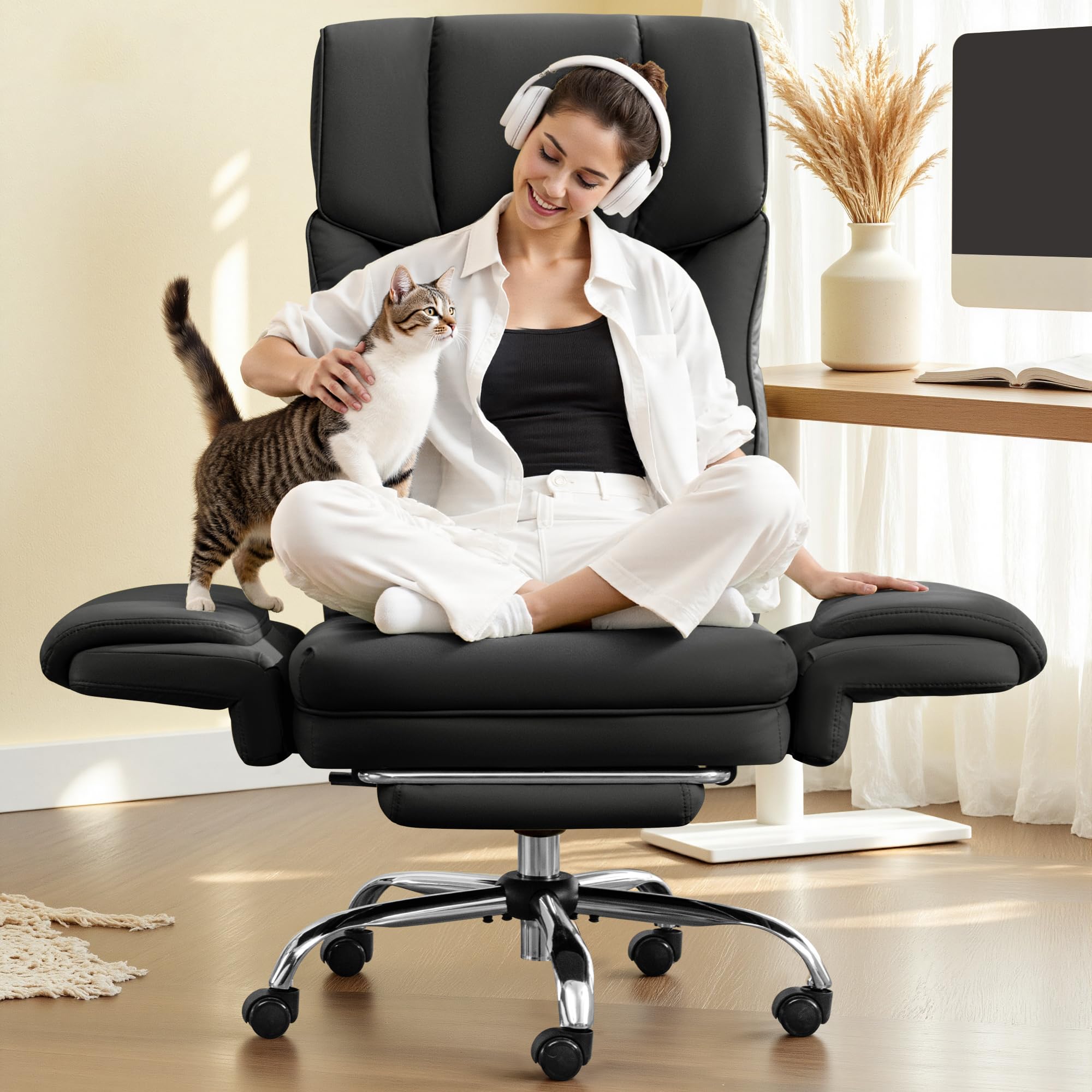
The FelixKing Big and Tall chair addresses a specific niche: larger users who need extra seat width without sacrificing neck support. The high back is tall enough to support the neck even for users over 6 feet, and the included lumbar pillow provides lower back support that helps maintain the spinal curve. The 135° recline with retractable footrest allows you to take pressure off the cervical spine by fully reclining during breaks — the footrest helps keep your legs elevated, which reduces the tendency to curl into a stressed posture.
The 5-gear adjustable armrests can swivel outward 90° to create a wider seating surface for cross-legged sitting, and this same design lets pet owners share the seat without crowding. The PU leather cover is waterproof and scratch-resistant, easy to clean, and the spring-core foam cushion resists sagging that could otherwise drop your hips below knee level and strain your neck.
Some users find the seat cushion slightly firm, and the chair lacks the fine lumbar adjustment of more expensive options — relying instead on the included lumbar pillow. The wide steel base provides stability for higher weight capacities. For larger users who also want the option to recline with foot support and have a pet-friendly design, this chair offers functional neck support at an entry-level price.
Why it’s great
- High back supports neck for larger users
- 135° recline with footrest reduces cervical load
- Reversible armrests create wide seating area
- Scratch-resistant, easy-clean PU leather
Good to know
- Seat cushion is firm and may need break-in
- Lumbar support is a separate pillow, not built-in adjustable
- No paper instructions in the box (QR code only)
9. CASASIO Ergonomic Office Chair
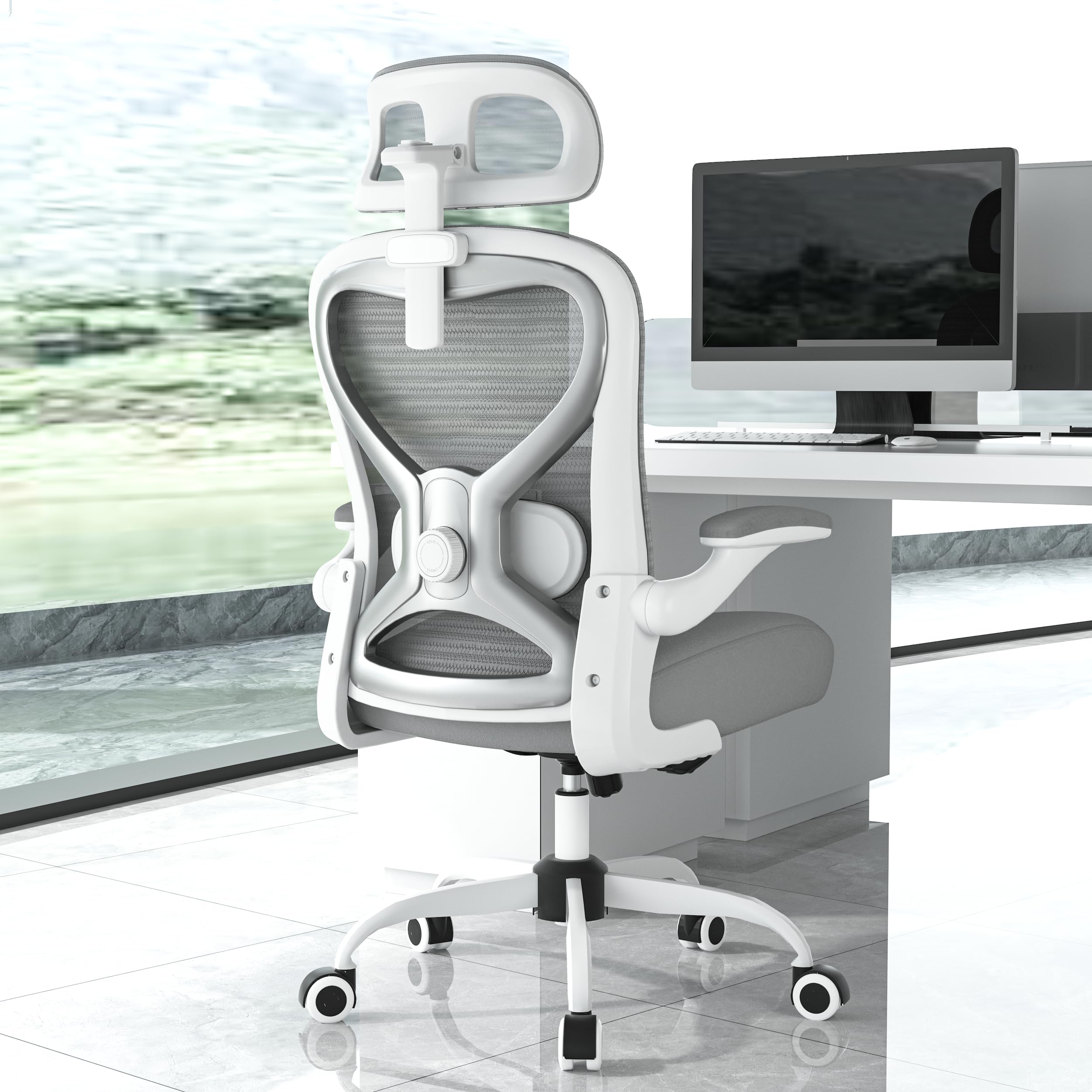
The CASASIO Ergonomic Chair brings neck-pain-specific features to an entry-level price point. The 3D adjustable headrest (height, depth, and angle) is the crown jewel here — it allows you to cradle the suboccipital muscles that tighten during extended screen time, and this level of headrest adjustability is rare in budget-tier chairs. The virgin foam seat cushion, at 3.5 inches thick, distributes weight evenly and resists sagging, maintaining your pelvic position so your neck doesn’t have to compensate for a tilted seat.
The 2D adjustable lumbar cushion (height and depth) provides targeted lower back support, and the contoured mesh back aligns with the spine’s natural curve. The tilt-and-rock mechanism reduces tension by allowing subtle movement throughout the day — a feature that helps prevent the rigid postures that aggravate neck pain. The flip-up armrests let you tuck the chair away, but they lack the depth and pivot adjustments of higher-tier models.
Multiple users note that this chair is comfortable for 8+ hour shifts and that the 3D headrest makes a noticeable difference in neck comfort compared to chairs with fixed headrests. The 300-pound weight capacity and reinforced metal base provide solid stability. For those on a tight budget who still need active headrest support, this is the strongest entry-level option available.
Why it’s great
- 3D adjustable headrest at an entry-level price
- Virgin foam seat resists sagging for consistent pelvic support
- Tilt-and-rock mechanism reduces static posture stress
- Excellent value for budget-constrained buyers
Good to know
- Armrests are flip-up only, not depth or pivot adjustable
- Assembly takes patience; clear instructions are included
- Best for users up to 5’11” for optimal headrest alignment
FAQ
Can a desk chair alone fix my chronic neck pain?
What headrest adjustment range do I need for neck pain relief?
Is mesh or foam better for a desk chair when I have neck pain?
How do I know if a chair’s lumbar support is actually helping my neck?
Final Thoughts: The Verdict
For most users, the best desk chair for neck pain winner is the Steelcase Leap because its LiveBack technology dynamically supports every spinal curve, and the lower back firmness dial and 4D armrests eliminate the two main drivers of cervical strain — pelvic collapse and shoulder elevation. If you want active lumbar tracking and heated massage for direct muscle relief, grab the Hbada X7 Smart. And for a budget-friendly entry with an adjustable 3D headrest that punches above its price tier, nothing beats the CASASIO Ergonomic Chair.

Mo Maruf
I created WellFizz to bridge the gap between vague wellness advice and actionable solutions. My mission is simple: to decode the research and give you practical tools you can actually use.
Beyond the data, I am a passionate traveler. I believe that stepping away from the screen to explore new environments is essential for mental clarity and physical vitality.