Our readers keep the lights on and my smoothie glass nicely filled. As an Amazon Associate, I earn from qualifying purchases.
That dull, grinding ache at the base of your skull or the sharp pinch between your shoulder blades after a full day at a desk is a signal your chair is working against your spine, not with it. The wrong seat forces your head forward and your shoulders up, compressing discs and straining muscles for hours on end. A properly designed ergonomic seat changes that dynamic entirely by aligning your cervical and thoracic spine with targeted, adjustable support.
I’m Mohammad Maruf — the founder and writer behind WellFizz. I’ve spent hundreds of hours analyzing the ergonomic specifications, adjustability ranges, and real-user feedback across hundreds of models to identify which chairs genuinely relieve neck and shoulder tension rather than just looking supportive on paper.
After cross-referencing lumbar depth, headrest articulation, seat foam density, and weight capacity data with verified long-sitting comfort reports, these picks represent the most effective options currently available for anyone searching for the best desk chair for neck and shoulder pain.
How To Choose The Best Desk Chair For Neck And Shoulder Pain
Selecting a chair specifically to treat neck and shoulder pain is different from shopping for general office comfort. The key is understanding how upper body support chain works: a chair that lets your pelvis sink backward forces your lumbar spine to flatten, which then pulls your shoulders forward and pushes your head into a forward-thrust posture. You need a chair that breaks this chain at every link.
Headrest Articulation: More Than Just Height
Most chairs offer a simple up/down headrest, which does little for a user who needs the support pad to also move forward and tilt. For true cervical support, look for a 3D or 4D headrest that adjusts in height, depth, and rotation angle. This ensures the pad cradles the base of the skull rather than just pushing the head forward.
Seat Foam Density and Edge Profile
A seat cushion that is too soft causes your hips to tilt posteriorly, flattening the lower back and forcing the upper spine to compensate. Virgin foam or high-density foam (55D or higher) maintains its shape over long sits, keeping your pelvis neutral. A waterfall front edge also reduces pressure behind the knees, allowing the entire spine to stack naturally.
Lumbar Depth Adjustability
Fixed lumbar bumps force your back into a single curve that may not match your anatomy. Depth-adjustable lumbar support lets you dial in the amount of forward pressure against your lower spine. This small adjustment prevents the thoracic spine from compensating, which directly reduces shoulder rounding and neck strain.
Armrest Geometry for Upper Body Unloading
Armrests that are too wide, too low, or fixed force you to shrug or reach upward, activating the upper trapezius. 3D or 4D armrests allow you to position the support directly under your elbows while typing, which relaxes the shoulders and reduces tension transfer to the neck.
Quick Comparison
On smaller screens, swipe sideways to see the full table.
| Model | Category | Best For | Key Spec | Amazon |
|---|---|---|---|---|
| Hbada X7 | Premium | Auto-adjusting lumbar & massage | 4D headrest + 8D massage rollers | Amazon |
| FLEXISPOT ErgoX Max | Premium | Heavy-duty build, 4D lumbar | 661 lb capacity, 5D armrests | Amazon |
| FLEXISPOT ErgoX | Mid-Range | Dynamic lumbar + retractable footrest | 5-level adjustable back | Amazon |
| ProtoArc EC200 | Mid-Range | Adjustable seat depth, 5’4”-6’0” | 2.36″ vertical lumbar travel | Amazon |
| ELABEST T96 | Mid-Range | Full-mesh seat, 3D armrests | 20″ wide seat | Amazon |
| MOLENTS Ergonomic | Mid-Range | 3D armrests, 90-120° recline | 19.8″ seat width | Amazon |
| Sytas Executive | Value | Budget-friendly leather, 400 lb cap | 135° tilt rocking function | Amazon |
| CASASIO Gray/Silver | Entry-Level | Virgin foam seat, 3D headrest | 3.5″ virgin foam cushion | Amazon |
| CASASIO Black/Silver | Entry-Level | 350 lb capacity, flip-up arms | 20 x 20 x 50 inches | Amazon |
In‑Depth Reviews
1. Hbada X7 Smart Ergonomic Chair
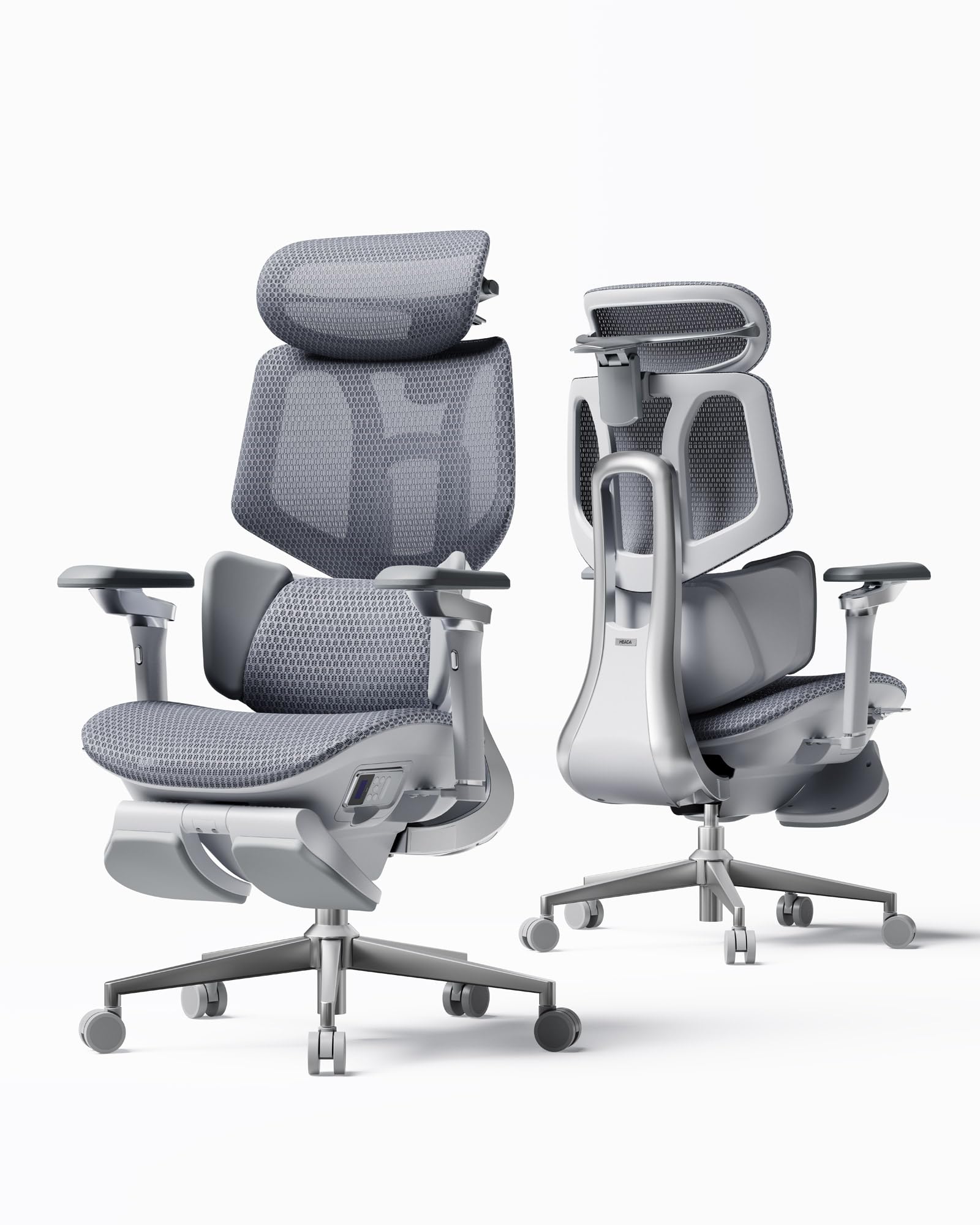
The Hbada X7 is a technological leap in the category, integrating a gravity-sensing base that auto-adapts lumbar support intensity as you shift positions. Its 4D headrest offers a full 70° rotation, 55mm of sliding depth, and 45mm of height adjustment — providing the most precise cervical cradle in this lineup. The 8D massage rollers with three-level heating (40–50°C) actively knead muscle tension in the mid-back, directly targeting the rhomboids and trapezius that knot up during long sits.
The ventilated seat cushion uses a dual-fan cooling system with three-speed airflow adjustment, preventing the heat buildup that causes fidgeting and posture breakdown. Aircraft-grade aluminum frame with a 5-star nylon base supports up to 150kg. The 720° omnidirectional armrests (360° rotation plus 110mm extension) let you position elbow support precisely under your shoulders, unloading the upper trapezius entirely.
Assembly is notably straightforward given the complexity, and the automated lumbar tracking genuinely adjusts without needing manual knob-twisting. The main limitation is the gas cylinder height — users over 6 feet may find the seat range too low for optimal ergonomic positioning, though the cylinder is replaceable.
Why it’s great
- Auto-adjusting lumbar tracks spinal changes throughout the day
- 4D headrest provides true cervical support without forward head push
- 8D massage with heat directly targets upper back muscle tension
Good to know
- Premium price point places it above most mid-range options
- Cylinder height may be short for users 6’0″ or taller
2. FLEXISPOT ErgoX Max
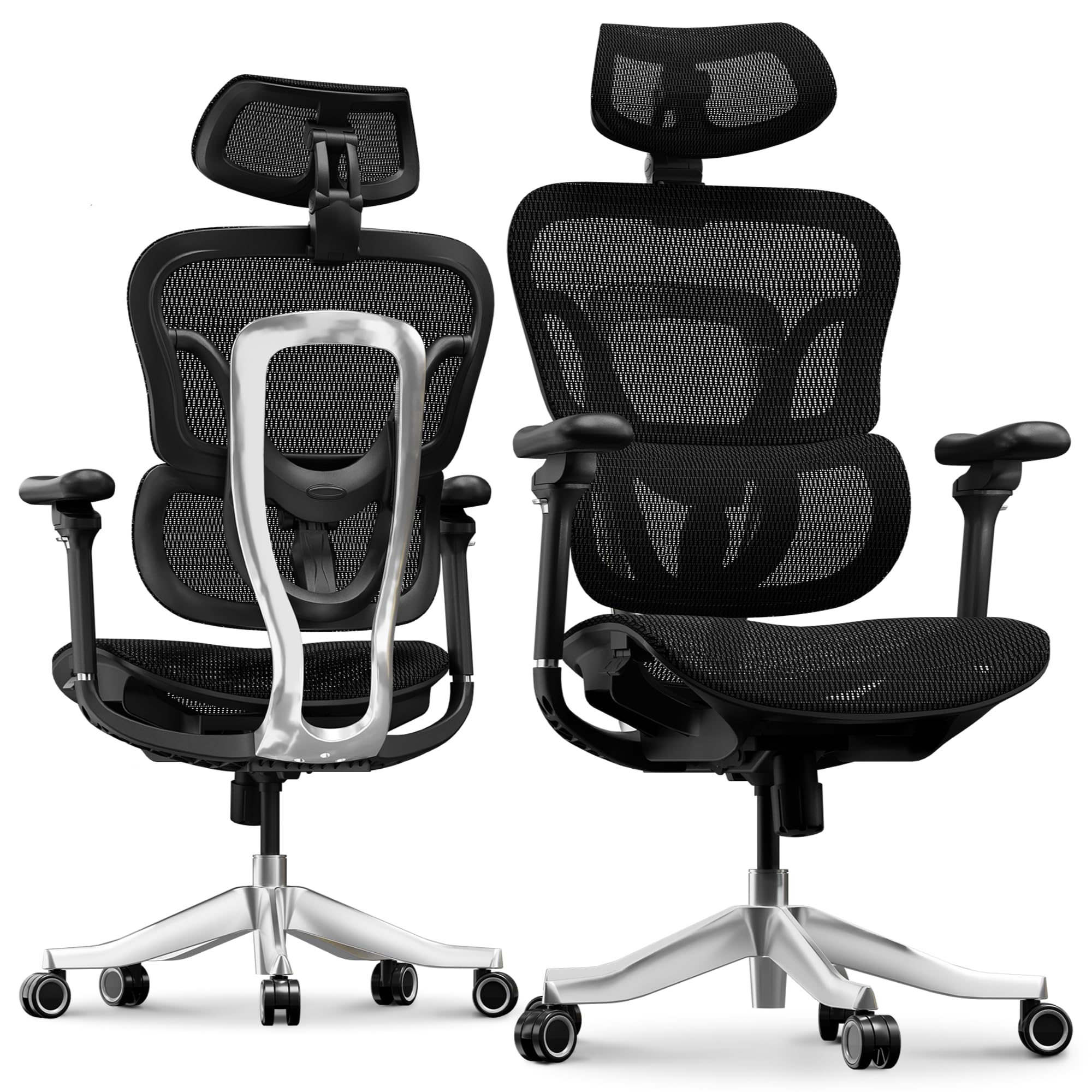
The FLEXISPOT ErgoX Max is built around a full aluminum alloy frame and base, giving it a 661-pound weight capacity that no other chair in this roundup matches. For neck and shoulder pain, the key feature is the 4D adaptive lumbar support that moves dynamically as you shift, maintaining lower back curve without requiring manual adjustment. The 4D headrest adjusts in height, depth, rotation, and tilt, allowing it to cup the occipital bone rather than push the head forward.
The 5D armrests (height, width, depth, swivel, and pivot) provide enough freedom to position your elbows at exactly 90 degrees while typing, which removes the shrug reflex that tightens the upper trapezius. The 5-level back height adjustment lets you match the lumbar curve to your specific spine length. Three reclining angles (up to 130°) paired with tilt tension control allow you to shift position without losing headrest contact.
Electroplated chrome casters roll silently on any floor, and the optional retractable footrest provides decompression for the lumbar spine during breaks. The mesh back is highly breathable, and the seat cushion uses high-density foam that resists sagging. Some users note the headrest can lose contact when fully reclined, requiring a brief re-adjustment of the tilt lock.
Why it’s great
- 4D adaptive lumbar moves with your body without manual input
- 661 lb capacity with aluminum alloy frame for heavy-duty stability
- 5D armrests provide full upper body position freedom
Good to know
- Headrest may lose contact during deep recline
- Premium tier requires larger budget commitment
3. FLEXISPOT ErgoX
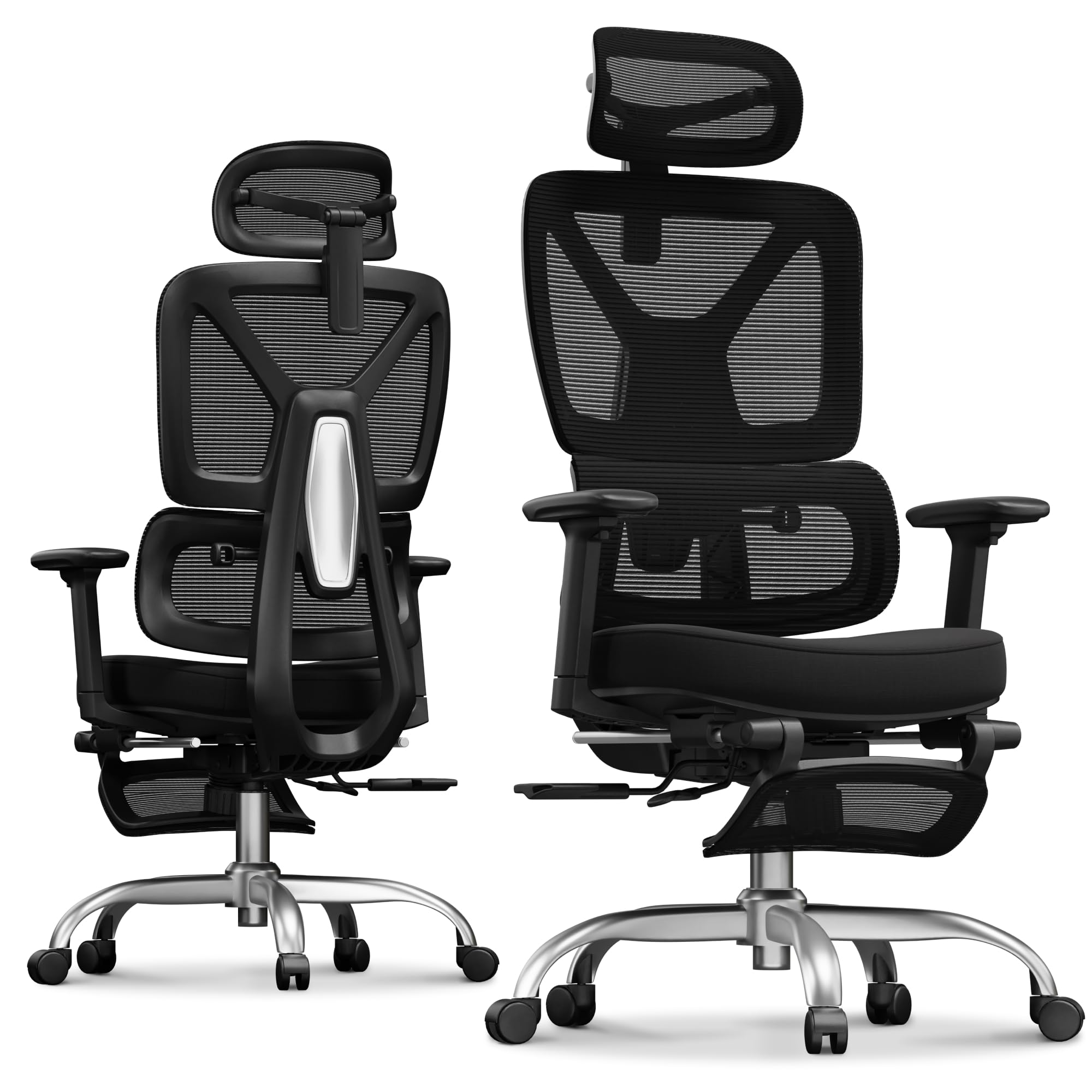
The FLEXISPOT ErgoX delivers many of the same ergonomic concepts as its Max sibling but in a more accessible mid-range package. Its dynamic lumbar support uses a spring-loaded mechanism that pushes back against your lower spine with variable pressure — it firms up when you lean back and softens when you sit upright. This prevents the lower back from flattening, which is a common trigger for upper back and neck compensation.
The 3D adjustable headrest provides five levels of height and tilt adjustment, allowing you to find the sweet spot where the pad meets the suboccipital muscles without forcing your chin down. The 3D armrests adjust in height, forward/back, and swivel, which is sufficient to unload the shoulders during typing. The seat depth adjusts from 17 to 20 inches, accommodating different femur lengths and ensuring proper thigh support.
A retractable footrest is included, which is rare at this tier. When used during recline breaks, it allows the lumbar spine to decompress, reducing cumulative disc pressure that radiates up to the neck. The mesh seat option provides excellent airflow. The chair is optimized for users between 5’1″ and 6’2″. Some users report the headrest needs slight re-positioning when fully reclined.
Why it’s great
- Dynamic lumbar adjusts pressure based on sitting posture
- Adjustable seat depth (17-20″) for proper thigh support
- Retractable footrest aids lumbar decompression during breaks
Good to know
- Headrest can lose contact during full recline
- 3D armrests lack the forward pivot of higher-tier models
4. ProtoArc EC200
The ProtoArc EC200 is designed specifically for users between 5’4″ and 6’0″, with a 5-position sliding seat depth that travels 1.97 inches. This feature is rare at the mid-range tier and directly addresses one of the most overlooked causes of neck pain: improper thigh support that forces the pelvis into posterior tilt. With the seat adjusted to your exact leg length, your whole thigh rests on the cushion, eliminating the forward-thrust head posture that develops when you compensate for a dangling lower leg.
The 55D high-density foam seat is deliberately firm — it resists the collapse that soft cushions develop within months, maintaining pelvic stability over 8+ hour sessions. The lumbar support adjusts 2.36 inches vertically and 0.8 inches in depth, allowing you to fill the natural gap in your lower back curve. The 3D headrest offers 3.94 inches of height adjustment, 2.76 inches of depth, 75° pivot, and 35° rotation, providing extensive cervical cradle options.
The 4-stage recline (90°, 105°, 120°, 130°) paired with tilt tension control lets you shift between focused work and relaxed positions without losing lumbar contact. The mesh back keeps you cool, and BIFMA X5.1 certification confirms structural integrity. At 5’3″, some users find the seat height lowest setting still slightly tall, but the overall adjustability more than compensates for shorter statures.
Why it’s great
- 5-position adjustable seat depth prevents pelvic tilt and neck compensation
- 55D high-density foam maintains shape and pelvic stability
- 3D headrest with 75° pivot and 35° rotation for precise cervical support
Good to know
- Optimal for users within 5’4″ to 6’0″ range
- Lowest seat height may still feel tall for very short users
5. ELABEST T96

The ELABEST T96 stands out for its “Golden Triangle” structural design at the back, which provides stable support across the shoulder blades — a feature specifically engineered to address upper body tension. The mesh back is contoured with a bionic curve that mimics the natural spine shape, and the synchro-tilt mechanism with 3-position lock and tension adjustment lets you recline while keeping the backrest angle relative to the seat.
The 3D adjustable armrests (height, width, angle) are critical for neck relief because they allow you to position the arm pads directly under your elbows at a neutral shoulder width. This prevents the arm abduction that forces the upper trapezius to work statically. The full-mesh seat is highly breathable with excellent elasticity that conforms to movement without losing shape, supporting healthy blood flow to the legs.
With a 350 lb weight capacity and heavy-duty nylon base, the T96 is built for long-term durability. The chair is optimized for users between 5’5″ and 5’10” under 200 lb. Some users note the armrests may be too wide for small frames, but the manufacturer provides rotating replacements to address this. The seat depth is 17.7 inches, which works well for average leg lengths.
Why it’s great
- “Golden Triangle” back design supports shoulder blades directly
- Synchro-tilt mechanism maintains ergonomic posture during recline
- Full-mesh seat provides airflow and movement conformity
Good to know
- Armrests may be too wide for users with small frames
- Best suited for 5’5″ to 5’10” users under 200 lb
6. MOLENTS Ergonomic Office Chair

The MOLENTS chair provides a well-balanced set of ergonomic features focused on upper body relief. Its lumbar support adjusts both up/down and forward/backward, giving you the ability to dial in the exact amount of lower back curve that keeps your shoulders from rolling forward. The 3D adjustable armrests (height, forward/back, and swivel) allow you to bring the support close to your body, reducing reach and arm abduction.
The breathable mesh material is skin-friendly and high-elasticity, preventing the heat and pressure points that cause fidgeting and poor posture. The backrest reclines in three positions between 90° and 120°, with a tilt tension knob to control resistance. The seat measures 19.8 inches wide with an 18.9-inch depth, providing a spacious perch that accommodates larger body types without edge pressure.
Assembly is straightforward with clearly labeled parts and takes around 15 minutes. The manufacturer (MOLENTS) proactively follows up with customers to ensure comfort, offering free accessories like foam seat covers if needed. Some users report the armrest panels slide forward/backward or rotate side to side, which can feel loose if you prefer fixed positioning — the manufacturer offers fixed replacement panels upon request.
Why it’s great
- Lumbar adjusts in depth and height for precise lower back curve
- 3D armrests reduce shoulder abduction and trapezius activation
- Manufacturer provides responsive customer follow-up and free adjustments
Good to know
- Armrest panels may slide or rotate if not secured to preference
- Wheels may roll poorly on thick carpet without a mat
7. Sytas Executive Ergonomic Chair
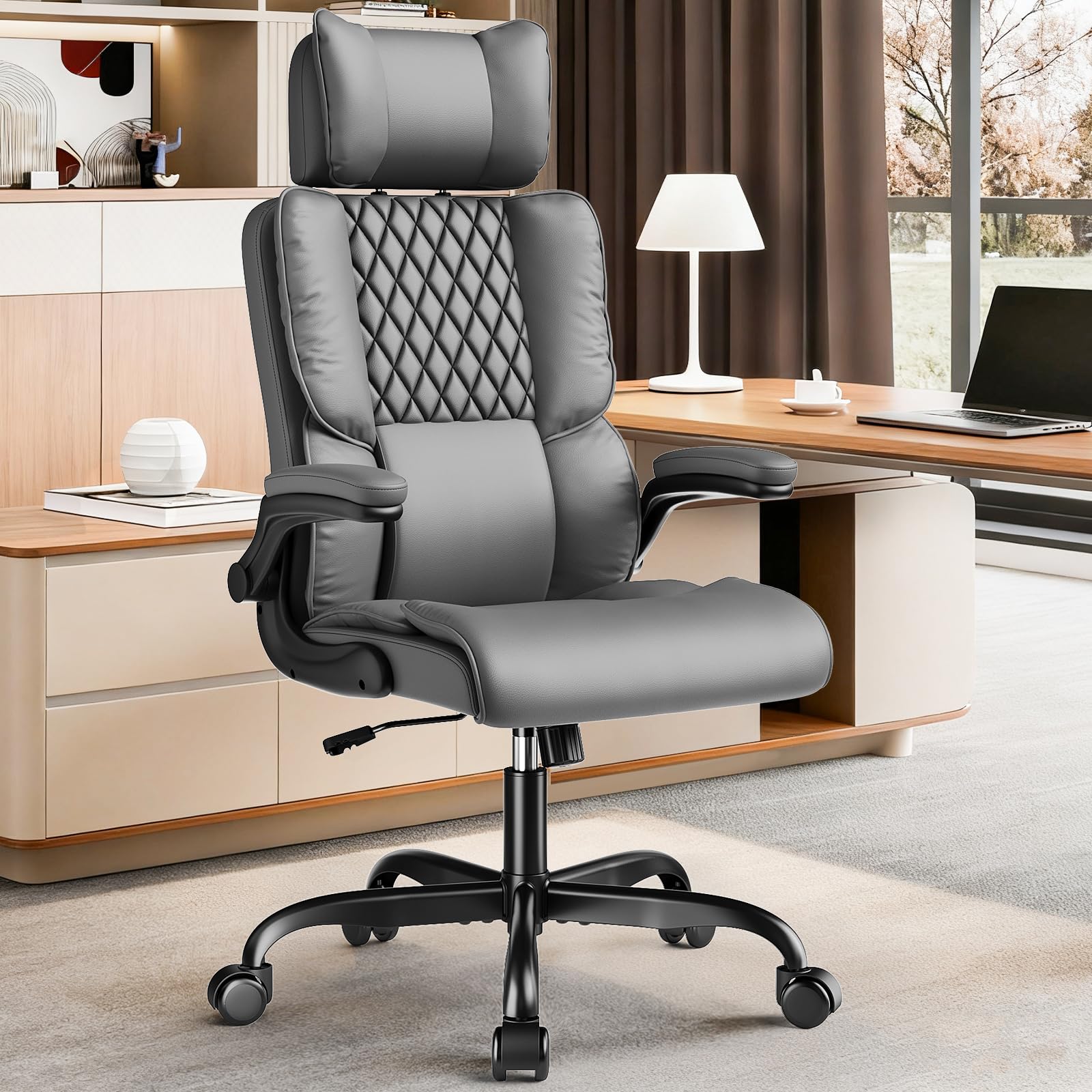
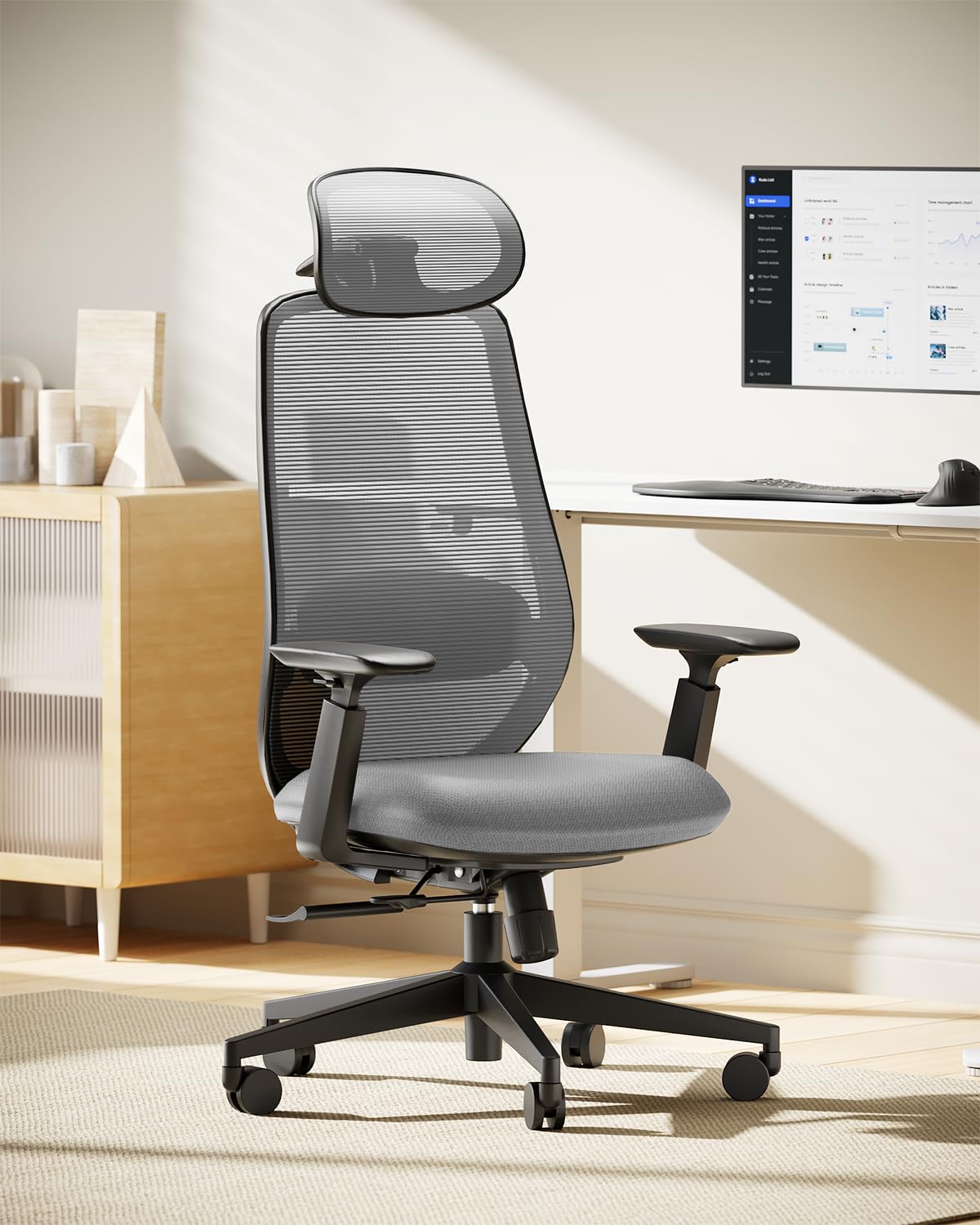
The Sytas chair takes a different approach to neck and shoulder relief by using a thickened, wrap-around sponge backrest with a diamond-pattern design that widens the contact area across the upper back. The upgraded lumbar cushion is thickened and designed to actively align with the spine, providing firm pressure against the lower back that prevents the slumped posture which often leads to neck strain. The 135° tilt rocking function with a 3-level adjustable, detachable headrest allows you to find a comfortable recline angle that keeps the headrest in contact.
The dual-layer high-resilience PP cotton and memory foam seat cushion resists thinning and tailbone fatigue, maintaining pelvic stability over long periods. With a 400 lb weight capacity, the reinforced metal frame provides stability for a wide range of body types. The breathable PU leather resists wear and pet scratches, while silent rubber casters glide smoothly without squeaking.
The 90-degree flip-up arms allow you to tuck the chair under a desk when not in use, saving space. Assembly is straightforward and takes about 20 minutes. Some users report the back support padding is quite firm — almost too hard in certain positions — requiring the lumbar cushion to be positioned in its lowest setting for maximum comfort. The mesh back isn’t present here, so breathability is slightly reduced compared to full-mesh models.
Why it’s great
- Thickened wrap-around backrest provides broad upper back support
- 400 lb weight capacity with reinforced metal frame
- 135° tilt rocking function with adjustable headrest
Good to know
- Back support padding can feel overly firm for some users
- PU leather is less breathable than mesh for long sessions
8. CASASIO Gray/Silver Ergonomic Chair
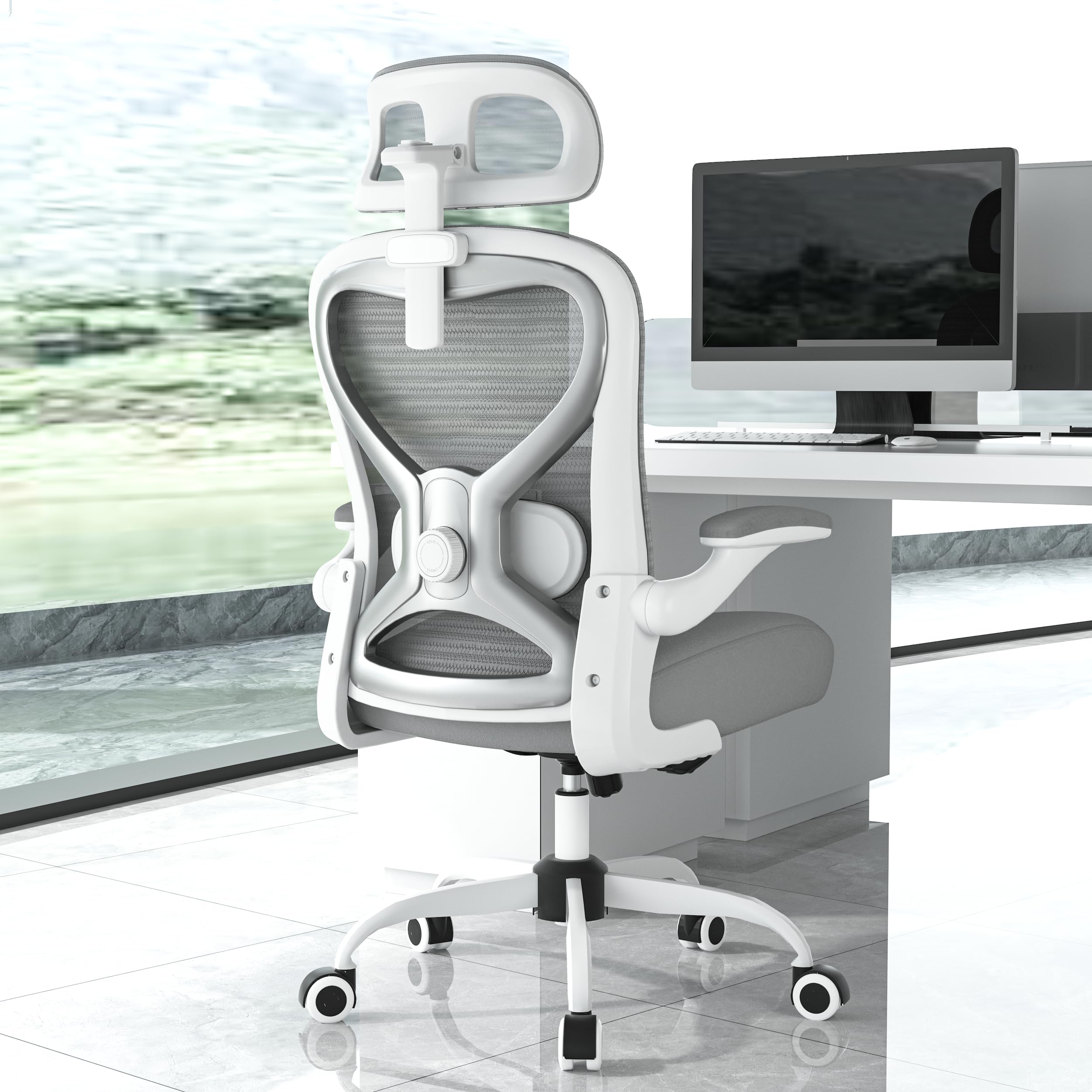
The CASASIO Gray/Silver chair provides an entry-level path to proper ergonomic support without sacrificing critical adjustability. Its virgin foam seat cushion is 3.5 inches thick, distributing weight evenly to prevent the hip soreness that leads to posture breakdown after 8+ hours. The contoured mesh back aligns with the spine, and the dual-direction adjustable lumbar cushion allows precise customization for your lower back curve.
The 3D adjustable headrest (height, depth, angle) cradles the neck and head during focused work, reading, or relaxation — a feature rarely found at this price point. The flip-up armrests allow you to tuck the chair under a desk or move freely, and the Tilt & Rock feature with adjustable tension provides gentle motion that reduces tension and improves blood flow.
With a reinforced metal base supporting up to 300 lbs and premium casters, the chair is stable and durable. Assembly is straightforward with clear instructions. User feedback consistently highlights the substantial cushioning and high-quality upholstery as standout features for the price. The main trade-off is that the flip-up armrests are not adjustable in width or angle, which may limit upper body unloading for some users.
Why it’s great
- 3.5-inch virgin foam seat prevents hip and thigh soreness
- 3D headrest provides genuine cervical support at entry-level price
- Tilt & Rock feature with adjustable tension reduces muscle tension
Good to know
- Flip-up armrests lack width and angle adjustment
- 300 lb capacity is lower than some premium options
9. CASASIO Black/Silver Ergonomic Chair
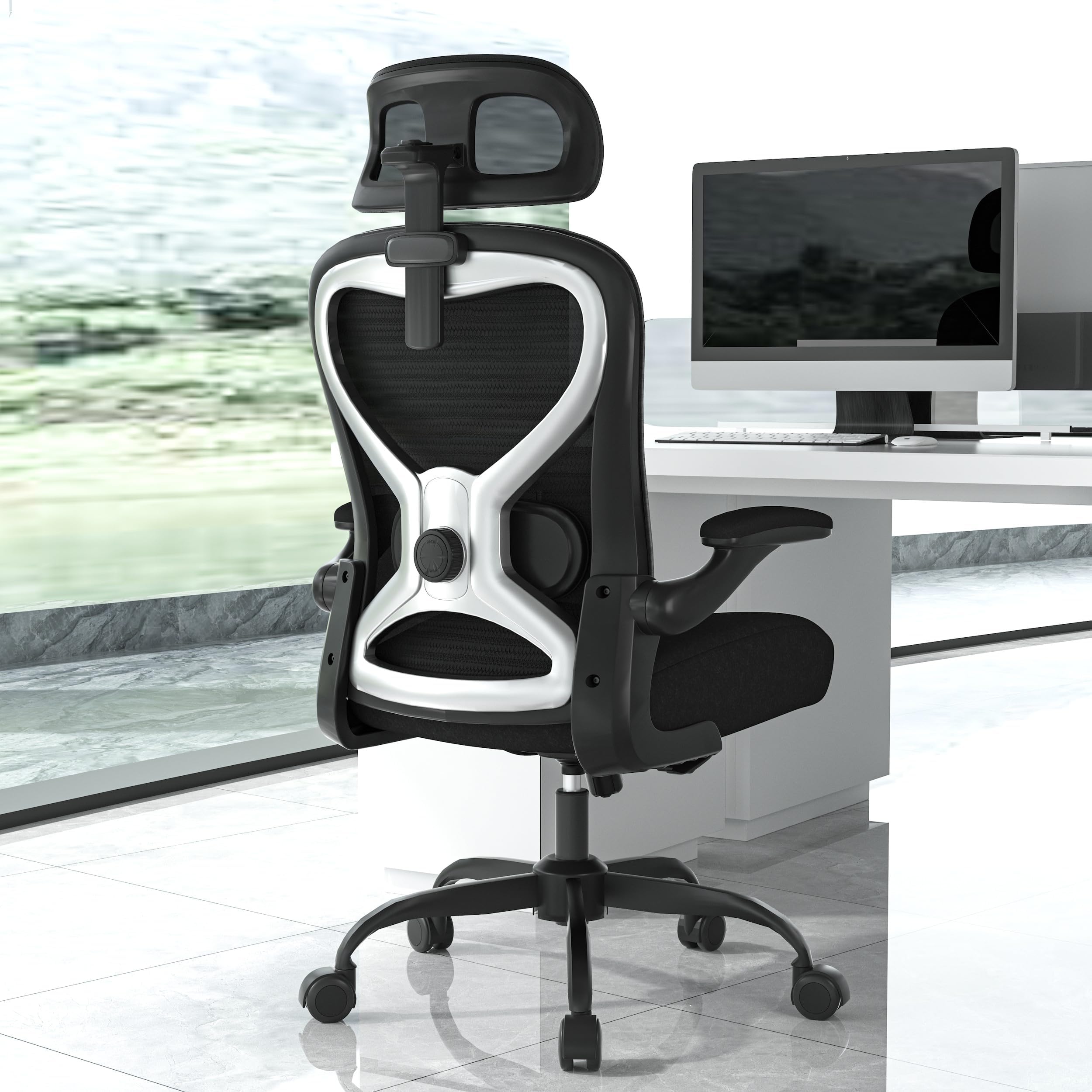
The CASASIO Black/Silver is essentially the same ergonomic platform as the Gray/Silver variant but with a 350 lb weight capacity and a black/silver color scheme. The virgin foam seat and 3D adjustable headrest are identical, providing the same level of hip and cervical support that makes this model a standout entry-level option. The contoured mesh back and dual-direction adjustable lumbar cushion remain consistent, offering reliable lower back alignment.
The flip-up armrests, Tilt & Rock feature with adjustable tension, and reinforced metal base are carried over from the Gray model. The 350 lb capacity makes it suitable for a wider range of body types while maintaining the same sturdy construction. Assembly is quick, with most customers reporting 15-20 minutes from box to finished chair.
User feedback echoes the Gray model’s praise for cushioning quality and overall value, but the fixed armrest design limits the ability to fine-tune upper body positioning. The chair dimensions are 20 x 20 x 50 inches, providing a compact footprint suitable for smaller workspaces. For users on a tighter budget who still need a 3D headrest and substantial lumbar support, this is a reliable starting point.
Why it’s great
- 350 lb capacity accommodates a wider range of body types
- Virgin foam seat and 3D headrest at an accessible price point
- Quick assembly with clear instructions
Good to know
- Armrests are non-adjustable in width and angle
- Same ergonomic platform as Gray model with cosmetic differences
FAQ
What headrest adjustment range is sufficient for neck pain relief?
Does a higher weight capacity improve neck and shoulder support?
Should I choose a mesh seat or padded foam seat for shoulder pain?
Final Thoughts: The Verdict
For most users, the best desk chair for neck and shoulder pain winner is the Hbada X7 because its automated lumbar tracking and 4D headrest offer the most comprehensive active support for the entire upper kinetic chain. If you want dynamic lumbar response without the premium investment, grab the FLEXISPOT ErgoX. And for a tailored fit with adjustable seat depth and precise lumbar depth control, nothing beats the ProtoArc EC200.

Mo Maruf
I created WellFizz to bridge the gap between vague wellness advice and actionable solutions. My mission is simple: to decode the research and give you practical tools you can actually use.
Beyond the data, I am a passionate traveler. I believe that stepping away from the screen to explore new environments is essential for mental clarity and physical vitality.