Our readers keep the lights on and my smoothie glass nicely filled. As an Amazon Associate, I earn from qualifying purchases.
Eight hours at a desk isn’t just a workday — it’s a stress test for your lumbar spine. The gap between a chair that works with your natural curve and one that ignores it is the difference between ending the day pain-free or scrambling for a heating pad. That’s why we stripped away the marketing fluff and put nine contenders through a deep spec-level analysis, focusing on the exact engineering details that translate into real lower-back relief.
I’m Mohammad Maruf — the founder and writer behind WellFizz. For this guide, I spent hours dissecting foam densities, lumbar adjustment ranges, recline mechanisms, and seat depth travel to separate chairs that promise support from those that actually deliver it.
Every model here was evaluated on the mechanics that matter most to your spine, not just the look of the box. This is your cut-and-dry resource for finding the absolute best desk chair for lower back support without wasting time on ergonomic window dressing.
How To Choose The Best Desk Chair For Lower Back Support
Lower back support isn’t a single feature — it’s a combination of seat geometry, lumbar adjustability, and recline mechanics. Here’s what to look for when the keyword you care about is lumbar relief.
Lumbar Adjustment Range — The Spine’s Fill Factor
The most common mistake is assuming any lumbar pad is good enough. Cheap chairs slap a fixed bump on the backrest and call it ergonomic. You need a support that moves both vertically (usually 2–3 inches) and horizontally (into your curve). Dual-direction adjustment lets you dial the exact pressure point that fills the natural lordotic gap between L1 and L5. Without horizontal travel, the pad either floats above your curve or pokes into your ribs.
Seat Depth — The Hidden Frame That Shapes Lumbar Contact
Seat depth determines how much of your thigh is supported and whether your pelvis rolls backward — a phenomenon called posterior pelvic tilt that flattens your lumbar curve. If the seat is too long, you sit with your legs splayed, your pelvis tucks under, and your lower back rounds. Look for a seat pan that travels at least 1.5 inches forward or backward. This lets you match the seat length to your femur length, keeping your pelvis neutral and your lumbar arch active.
Foam Density — The Unsung Hourly Endurance Factor
Soft cushions feel great in a showroom and terrible by hour four. Lumbar support works only if your pelvis is stable. A 55D high-density foam resists sagging and keeps your hips level, which is necessary for the backrest to do its job. Chairs that use virgin foam or high-resilience polyurethane foam (55D–60D) maintain their structural integrity for years. Any chair that collapses under your sit bones forces your spine into misalignment regardless of how fancy the lumbar mechanism looks.
Recline Tension and Lock Positions
Static sitting is the enemy of spinal health. A chair that allows you to shift between 90 degrees (typing), 105 degrees (reading), and 120 degrees (taking a call) promotes micro-movement, which pumps nutrients into your discs. But recline only helps if the lumbar support follows your spine through the arc. Some chairs have a fixed lumbar that pulls away as you lean back — that’s worse than no recline. Look for models where the lumbar pad stays in contact throughout the tilt range, preferably with a tension knob that lets you adjust resistance so you’re not fighting the chair to stay upright.
Quick Comparison
On smaller screens, swipe sideways to see the full table.
| Model | Category | Best For | Key Spec | Amazon |
|---|---|---|---|---|
| ProtoArc EC200 | Premium | Tailored Body Fit & Seat Depth | 5‑position seat depth (1.97″ travel) | Amazon |
| ELABEST T96 | Premium | BIFMA 5.1 Durability & Shoulder Support | Synchro‑tilt with 3 lockable positions | Amazon |
| MOLENTS Mesh Chair | Premium | Full Mesh Breathability & Relieve Lumbar Pain | 4D adjustable lumbar (vertical + horizontal) | Amazon |
| GABRYLLY Recliner | Mid-Range | Napping with Built-in Footrest | 135° recline + retractable footrest (18.1″) | Amazon |
| marrap Mesh Chair | Mid-Range | Full Mesh Premium Cooling | 3D armrests (flip‑up, slide, rotate) | Amazon |
| BrightSeat CLOUVOU | Mid-Range | Silent Wheels & Tall User Fit | 3‑position backrest tilt | Amazon |
| CASASIO Virgin Foam | Mid-Range | 8+ Hour Cushion Endurance | 3.5″ virgin foam seat cushion | Amazon |
| CASASIO Black/Silver | Mid-Range | Budget-friendly ergonomic build | Dual-direction adjustable lumbar | Amazon |
| TRALT Ergonomic Chair | Budget | Entry-level value & weight capacity | 330 lbs weight capacity | Amazon |
In‑Depth Reviews
1. ProtoArc EC200
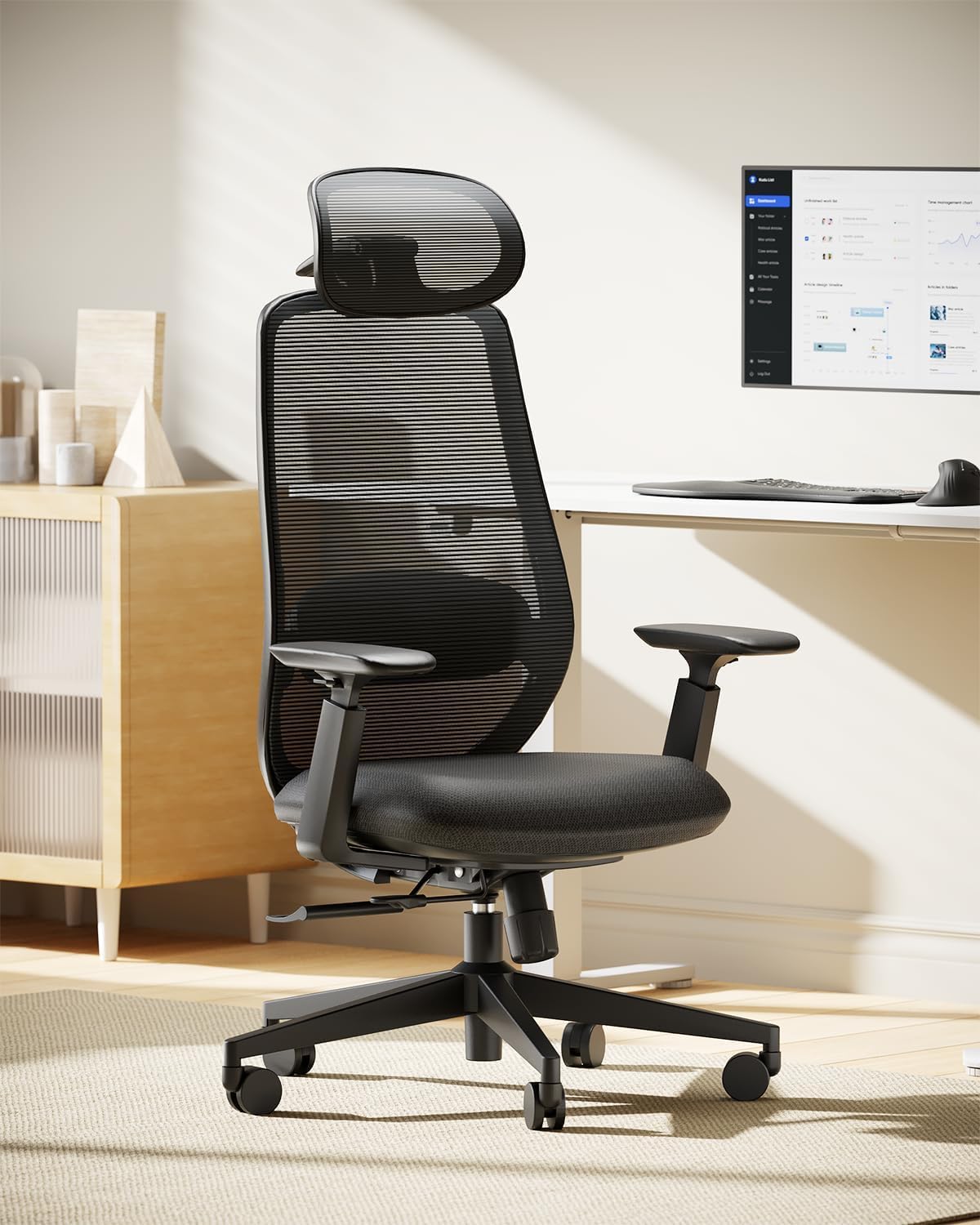
The ProtoArc EC200 is the only chair in this lineup with a true 5-position sliding seat depth that travels 1.97 inches — a rare feature at this level that directly addresses pelvis positioning for lumbar health. The 55D high-density foam seat resists collapse, and the 3-way headrest (3.94 inches vertical, 2.76 inches horizontal, 75-degree pivot) cradles your neck without pushing your head forward.
Its lumbar support adjusts 2.36 inches vertically and 0.8 inches in depth, giving you precise control to fill the lordotic gap. The mesh back is breathable enough for marathon coding sessions, and the 4-stage recline (90, 105, 120, 130 degrees) locks at each position so you aren’t fighting a loose tilt mechanism. Assembly is under 20 minutes with labeled hardware.
Build quality is above its price tier — TÜV-tested Class 4 gas lift, BIFMA X5.1 certified, and a reinforced nylon base that doesn’t wobble. Ideal for users between 5’4″ and 6’0″. The only trade-off is a firm seat feel; if you prefer plush cushoning, this may feel too dense initially, but that density is exactly what prevents postural collapse over extended use.
Why it’s great
- Adjustable seat depth rare in this class
- 55D foam resists sagging
- 4-stage recline with lock
Good to know
- Firm seat may need break-in
- Best for 5’4″–6’0″ users
2. ELABEST T96

The ELABEST T96 brings commercial-grade durability with a synchro-tilt mechanism that moves the backrest and seat as a unit, keeping your lumbar support engaged through the entire recline arc. The bionic-curve backrest mimics the spine’s natural S-shape, and the adjustable lumbar support fills the lower curve without creating a pressure point. The “Golden Triangle” upper back frame provides shoulder reinforcement missing from basic mesh chairs.
The seat is a full mesh design that prevents heat buildup, but the real standout is the waterfall front edge — it reduces pressure behind the knees, improving blood flow and keeping your pelvis neutral. The 3D adjustable armrests adjust in height, width, and angle, which helps reduce shoulder strain but some users reported the arms felt too wide for a smaller frame. Customer service is responsive, offering replacement parts when needed.
BIFMA 5.1 certification means this chair is built for multi-shift use. The seat height ranges from 19.6 to 23.6 inches, and the 20-inch-wide seat accommodates larger builds. The chair weighs significantly more than budget options due to metal frame components, which also makes it harder to move. It is best for professionals who want near-office-grade performance in a home setup.
Why it’s great
- Synchro-tilt maintains lumbar contact
- Waterfall seat edge reduces knee pressure
- Excellent customer support
Good to know
- Heavy unit, not easy to move
- Armrests may be too wide for small users
3. MOLENTS Mesh Desk Chair

The MOLENTS chair stands out for its 4D adjustable lumbar support — vertical, forward, and backward with enough range to target the precise point of your lower back pain. The seat is exclusively full mesh, which makes it one of the most breathable options on this list, and the 18.9-inch seat depth fits a wide range of thigh lengths without bottoming out.
Assembly takes about 15 minutes with clearly labeled parts. The tilt-back range (90 to 120 degrees) has three lockable positions, and the tension is firm enough that the chair doesn’t rock unintendedly while you type. Reviewers consistently mention the lumbar support eliminated their lower back pain within a few days of switching from a fixed-back chair.
The 3D armrests slide forward and rotate left/right, which is nice but some users noted the panels shift under heavy leaning. The casters roll well on hard floors but struggle on thick carpet — a chair mat is recommended. The included customer follow-up from MOLENTS is surprisingly thorough, with the brand proactively checking on fit and sending a foam seat cover as a free upgrade.
Why it’s great
- 4D adjustable lumbar for precise relief
- Full mesh for all-day breathability
- Proactive customer service
Good to know
- Armrest panels shift under pressure
- Wheels not ideal for thick carpet
4. GABRYLLY Ergonomic Office Chair with Footrest
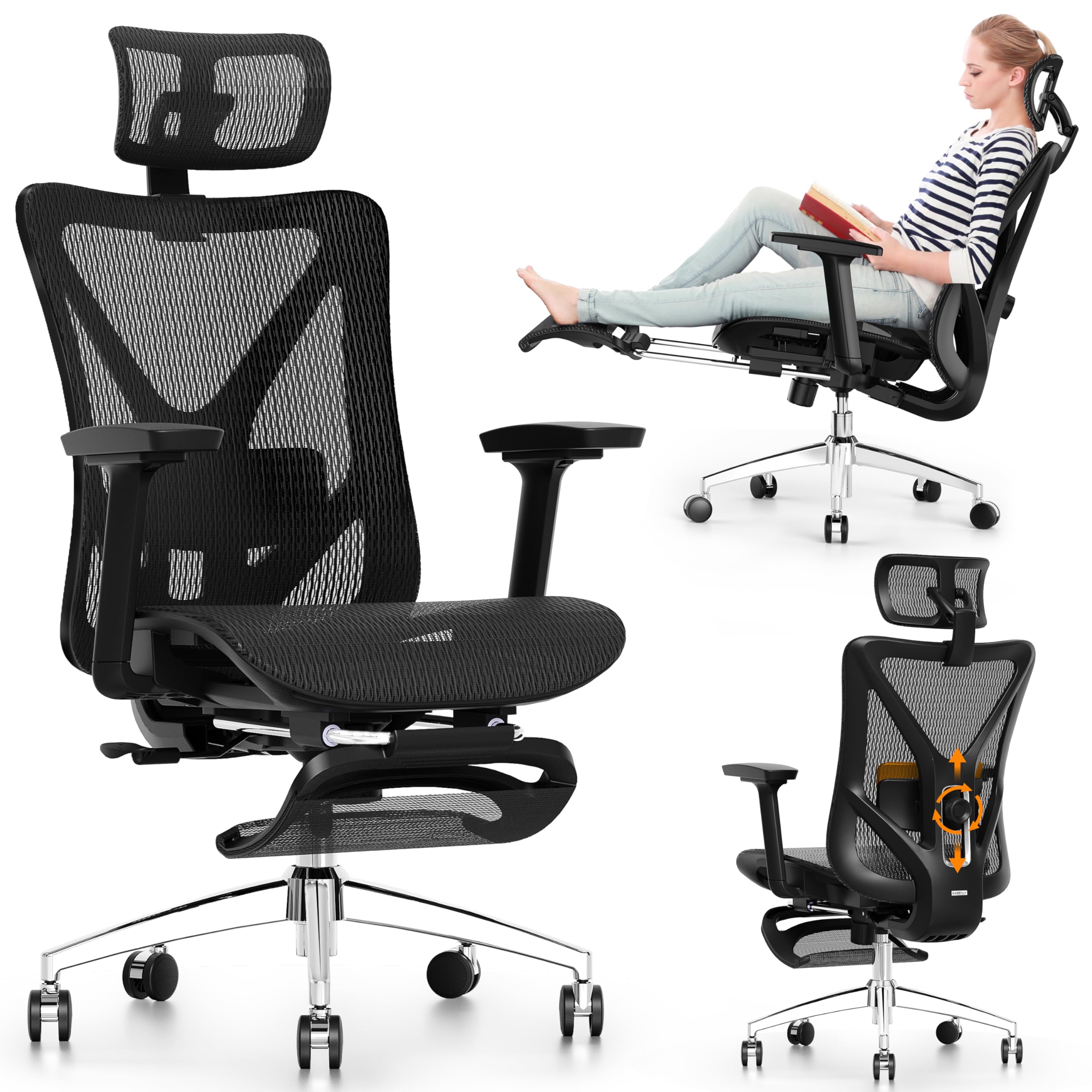
The GABRYLLY is the chair for users who want serious recline and a retractable footrest without sacrificing lumbar adjustability. The 2-way lumbar support (3 inches vertical, 1.6 inches horizontal) uses a padded cushion rather than a hard plastic bump — a critical detail that means the support surface conforms to your back rather than poking into it. The 135-degree recline has three lockable positions (90, 110, 135 degrees).
The steel base is wide at 27.5 inches, giving it excellent stability even when fully reclined with the footrest extended. The footrest slides out 18.1 inches and is strong enough to support full leg weight without bowing. The all-mesh back and seat keep air flowing, which is a clear advantage for warm environments. The headrest is large and adjusts in height, angle, and bracket position.
The 3D armrests are the weakest point — they adjust up/down, front/back, and in/out but shift under pressure with an audible click, which some users found annoying during typing. Also, the mesh is taut, which may feel too firm for some users. Assembly is 15-25 minutes and the chair is backed by a 3-year parts warranty.
Why it’s great
- Padded, not plastic, lumbar support
- Wide steel base for reclining stability
- 3-year warranty included
Good to know
- Armrests shift under pressure
- Mesh may feel too firm initially
5. marrap Ergonomic Office Chair
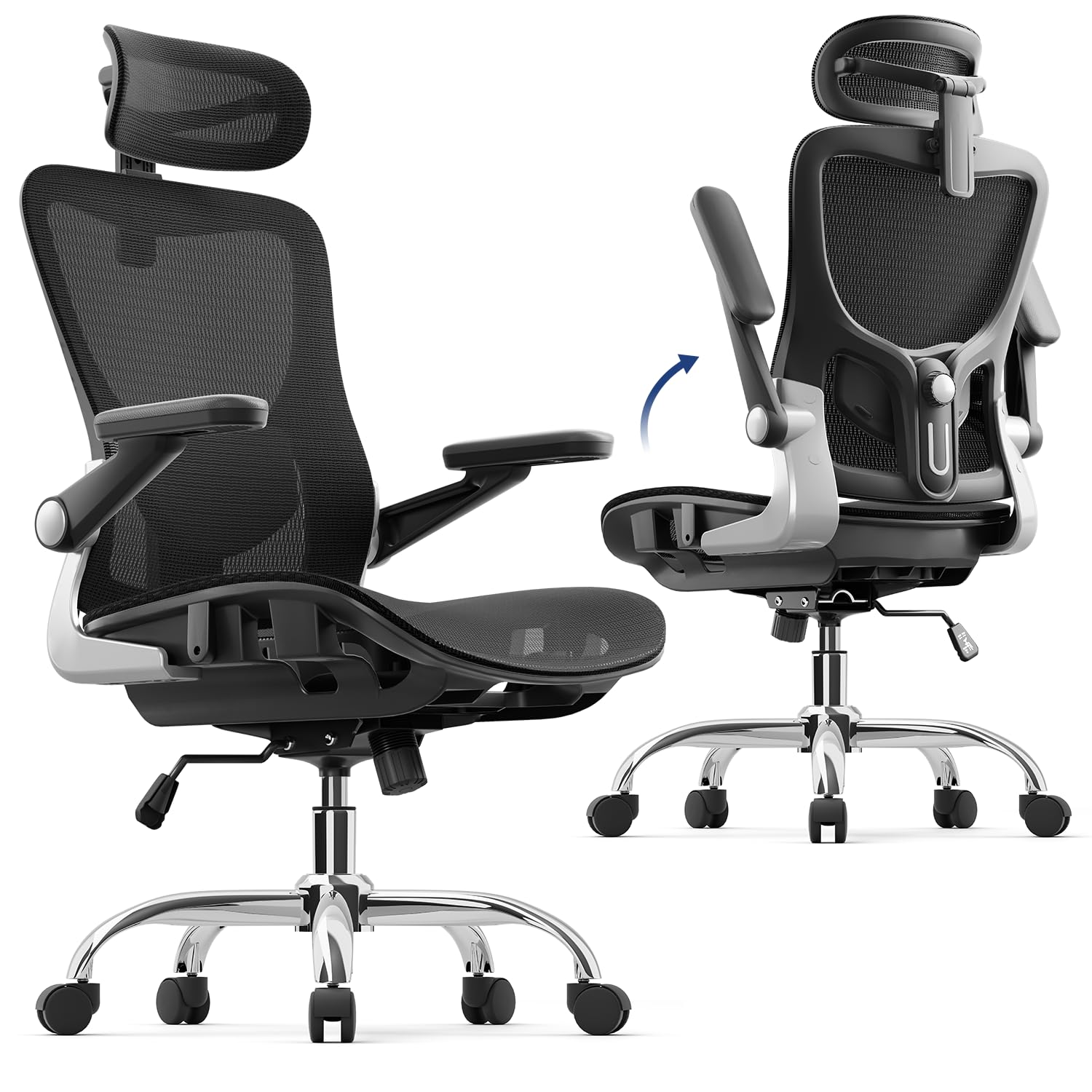
The marrap chair prioritizes cooling and adjustability with a premium full-mesh back and seat. The lumbar support moves up/down and forward/backward, giving you independent control over height and depth. The 3D armrests are unique at this price point: they flip up, slide forward and back, and rotate 360°, which is uncommon for a mid-range chair and helpful for tight desk spaces.
The rock function goes from 90 to 120 degrees with adjustable tension, so you can dial in exactly how much resistance the recline has. The mesh seat is taut but supportive, with high elasticity that returns to shape. Reviewers noted the chair feels “wicker-like” on the back and provides excellent airflow. The base is metal and the casters roll silently.
The seat width is 20.5 inches, which some users with wider hips found slightly narrow — the front lip has a plastic under-padding that can dig into the thighs during extended sitting. The chair is best for users who prioritize breathability and desk clearance (the flip-up arms help tuck it away) over a wide or plush seat.
Why it’s great
- Full mesh for maximum cooling
- 360° rotating flip-up armrests
- Adjustable rocking tension
Good to know
- Seat may feel narrow for wider hips
- Front lip has plastic under padding
6. BrightSeat CLOUVOU
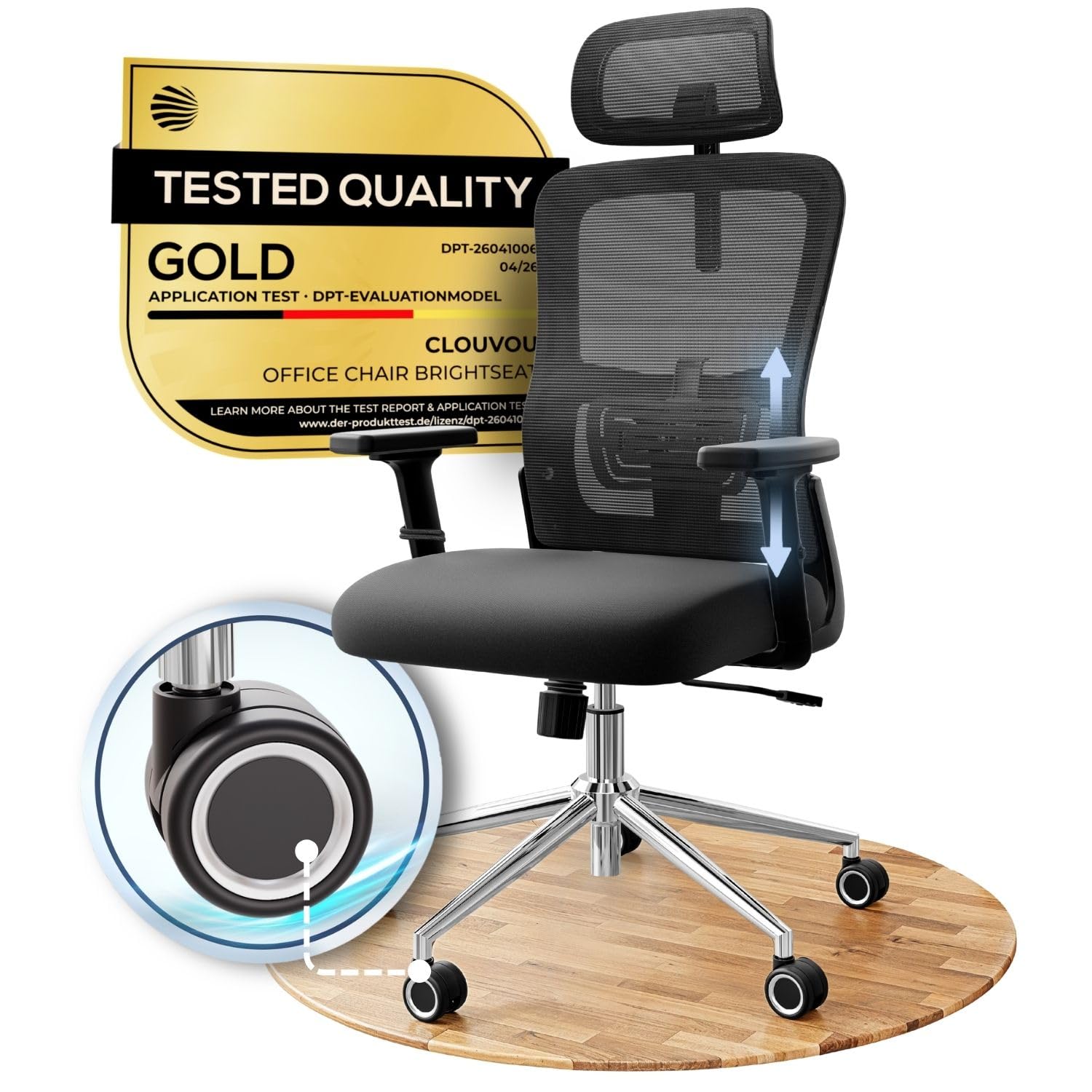
The BrightSeat is specifically engineered for quiet workspaces — its ultra-quiet casters produce almost no sound on hard floors, which makes it a strong pick for open offices or shared rooms. The 2D back support adjusts in height and depth, and the 3-position backrest tilt lets you lock in work, reading, or relax modes. The recline goes up to 135 degrees, one of the higher angles in this tier.
The chair supports users up to 6’3″, making it one of the taller-friendly options. The seat cushion is moderately firm with an ergonomic shape that supports the thighs without pinching. The back is made of elastic nylon fibers that feel closer to fabric than standard mesh — less breathable but more durable. The armrests adjust in 2 dimensions (height and width).
Assembly is straightforward and reviewers commented on the sturdy build despite a polymer frame rather than full metal. The lumbar support is effective but less adjustable than the top picks — it offers 2D movement, not 4D. It also lacks seat depth adjustment, so users with longer femurs may feel the seat pan is short.
Why it’s great
- Near-silent casters for quiet rooms
- Tall users up to 6’3″ supported
- 135-degree recline
Good to know
- No seat depth adjustment
- Lumbar is 2D only, not 4D
7. CASASIO Gray/Silver Virgin Foam
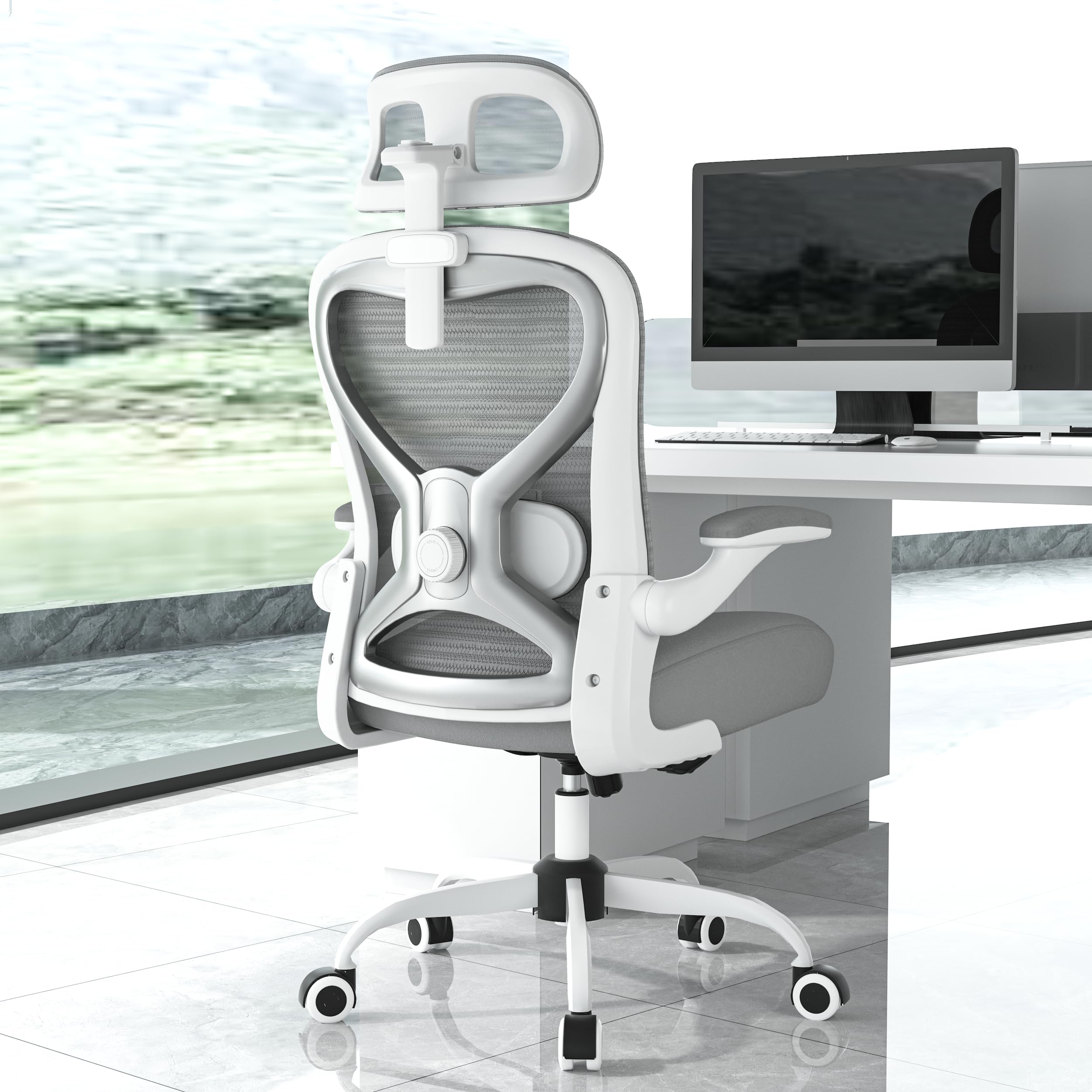
The CASASIO Gray/Silver chair uses a 3.5-inch virgin foam seat cushion that is notably thicker than most in this price range. Virgin foam has higher resilience than shredded foam, meaning it returns to shape after each use and resists sagging under daily weight. The seat distributes weight evenly across the hips, which prevents the “numb bottom” feeling after eight hours of work.
The 2D adjustable lumbar moves up/down and inward/outward, and the contoured mesh back aligns with the spine. The 3D headrest adjusts in height, depth, and angle for neck support. The tilt-and-rock mechanism includes adjustable tension so you can fine-tune how easily the chair reclines. The flip-up armrests clear the desk when not in use.
Build quality is solid with a reinforced metal base, but the maximum weight rating is 300 lbs — less than some competitors. The chair also requires clearance behind it for the recline function, which may be an issue in tight corners. Assembly takes 15-20 minutes with clear instructions.
Why it’s great
- Thick 3.5″ virgin foam retains shape
- 2D lumbar + 3D headrest adjustment
- Tension-adjustable rock function
Good to know
- 300 lbs max weight rating
- Needs clearance for recline
8. CASASIO Black/Silver Desk Chair
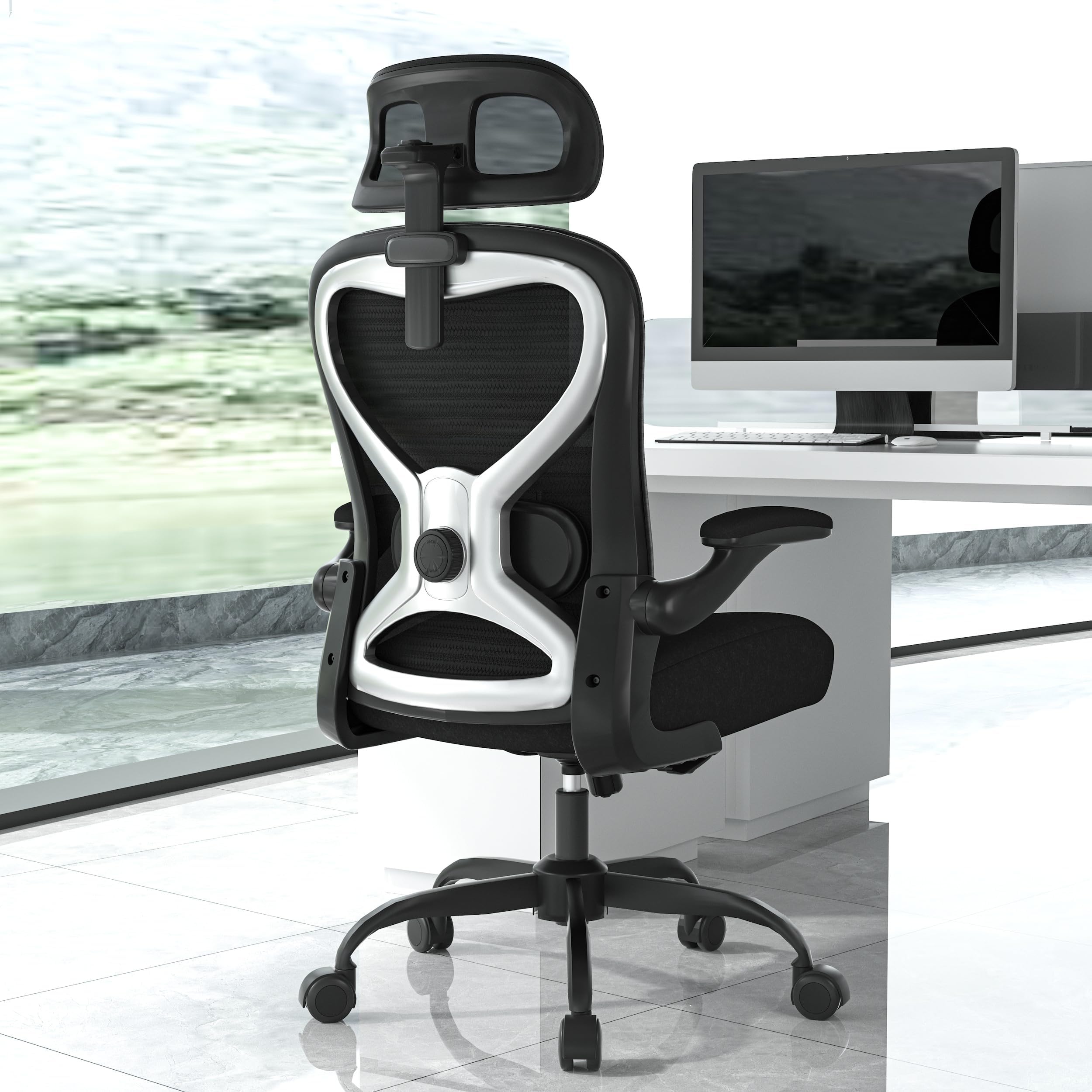
This CASASIO variant shares the same virgin foam cushion and dual-direction adjustable lumbar as its Gray sibling, but with a Black/Silver finish that blends into professional settings. The 3D headrest offers the same three-axis adjustability (height, depth, angle), and the flip-up armrests work well for sliding under a standing desk.
The tilt-and-rock mechanism uses adjustable tension, and the contoured mesh back provides consistent airflow. The chair supports up to 350 lbs — a 50-lb increase over the Gray version, likely due to the reinforced nylon base and premium casters. Assembly is quick at 15-20 minutes.
While the lumbar support is effective, it is 2D (vertical and depth) rather than the 4D found on premium models, so fine-tuning the inward pressure is less precise. The seat is also fixed in depth, which may cause posterior tilt for taller users. Still, at its price point, it delivers strong value for users who want thick foam without the premium price tag.
Why it’s great
- Virgin foam seat, thick 3.5″ cushion
- 350 lb weight capacity
- 3D adjustable headrest
Good to know
- Lumbar is 2D, not 4D
- Fixed seat depth, no sliding pan
9. TRALT Ergonomic Office Chair
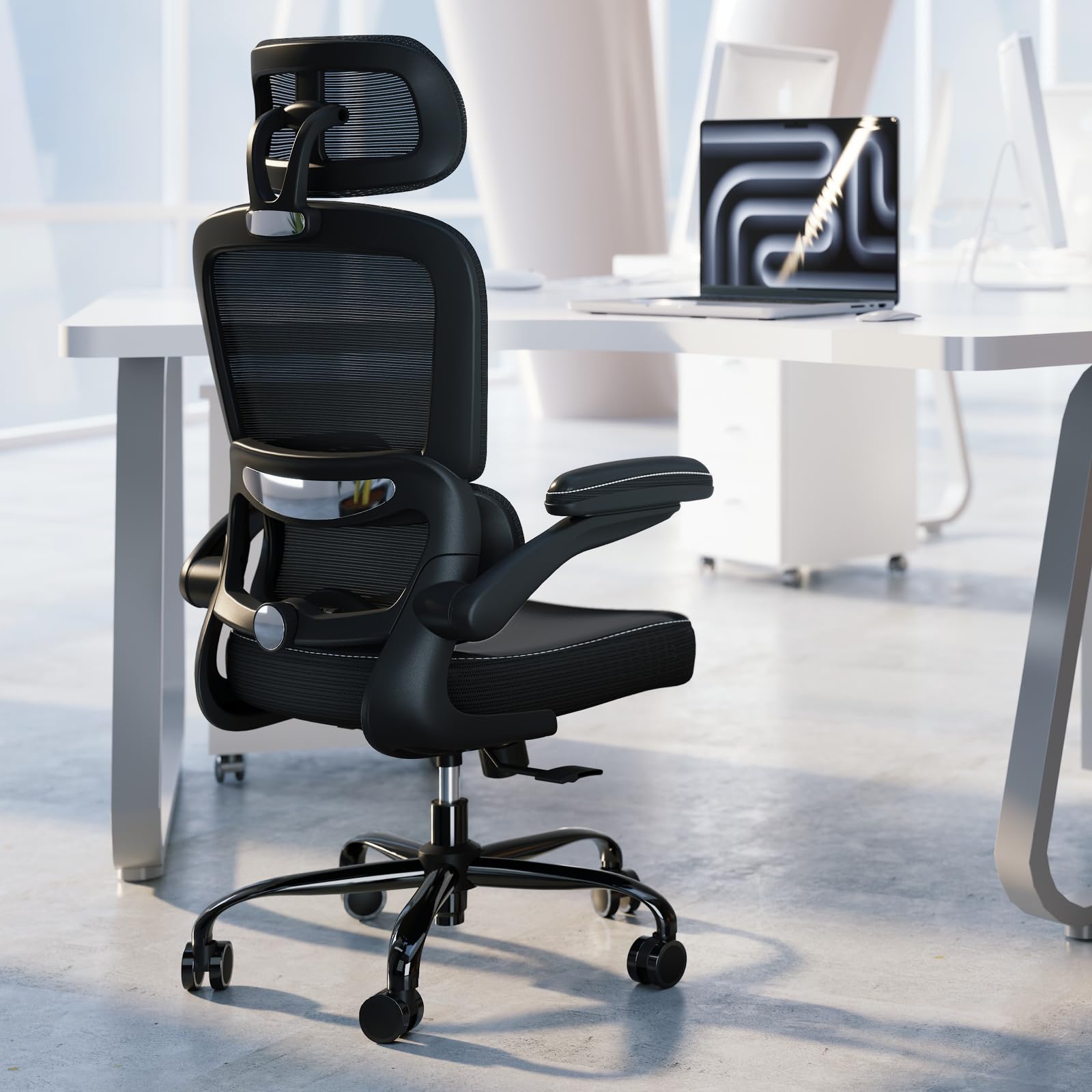
The TRALT chair is the budget-friendly entry point that doesn’t skip lumbar support entirely. It features an adjustable lumbar pad and headrest, a 3.5-inch high-density sponge cushion, and a wider seat (20 inches) that helps distribute weight for users up to 330 lbs. The flip-up armrests save space when the chair is not in use.
Construction is solid with a Class-3 gas lift and a metal five-star base. The leather seat cushion is skin-friendly and easy to clean, while the back is mesh for breathability. Assembly takes about 25-30 minutes. The chair is available in a white/pink color option that reviewers found visually pleasing.
The trade-offs are clear in the details: the flip-up armrests are less stable and can shift when leaned on heavily, and the headrest may feel low for users under 5’3″. The lumbar support is adjustable but the range is less than competing models, and the overall build uses more plastic in the mechanism housing. It’s a solid starting point for price-conscious buyers, but long-term lumbar support precision is not at the level of mid-range chairs.
Why it’s great
- 330 lb weight capacity
- Leather seat, easy to clean
- Adjustable lumbar and headrest
Good to know
- Flip-up arms unstable when leaned on
- Lumbar range is limited
FAQ
Is a mesh back better than a leather back for lower back support?
How much should I spend on a chair specifically for lower back relief?
Do I need a chair with a headrest for lower back support?
Final Thoughts: The Verdict
For most users, the best desk chair for lower back support winner is the ProtoArc EC200 because it combines a rare 5-position adjustable seat depth with 55D high-density foam and 2-way lumbar adjustment at a price that undercuts premium competitors. If you want a BIFMA certified chair that keeps lumbar contact through the entire recline arc, grab the ELABEST T96. And for those who need maximum breathability with precise lumbar targeting, the MOLENTS Mesh Chair delivers 4D lumbar support that eliminated back pain for many users within days.

Mo Maruf
I created WellFizz to bridge the gap between vague wellness advice and actionable solutions. My mission is simple: to decode the research and give you practical tools you can actually use.
Beyond the data, I am a passionate traveler. I believe that stepping away from the screen to explore new environments is essential for mental clarity and physical vitality.