Our readers keep the lights on and my smoothie glass nicely filled. As an Amazon Associate, I earn from qualifying purchases.
Eight hours in a chair that fights your spine’s natural curve leaves you stiff, sore, and dreading the next workday. The wrong seat amplifies lower back strain, tightens hip flexors, and can turn a productive session into a painful ordeal. Finding a desk chair that actively supports your lumbar region and encourages proper posture is not a luxury—it is a daily health necessity for anyone tethered to a workstation.
I’m Mohammad Maruf — the founder and writer behind WellFizz. After hundreds of hours analyzing ergonomic specifications, lumbar support mechanisms, and biomechanical design principles in the seating market, this guide breaks down which engineering choices actually relieve pressure on the spine.
This review of the best options available narrows the field to seats with proven lumbar architecture, breathable materials, and adjustability ranges that accommodate different body types for lasting relief. Read on for my complete analysis of the desk chair for back pain market.
How To Choose The Best Desk Chair For Back Pain
Not every chair labeled “ergonomic” delivers actual spinal relief. Many rely on a single foam pad that pushes against your lower back without adapting to your unique curve or movement. To find a seat that genuinely reduces pain, you need to understand four critical factors that separate therapeutic support from mere cushioning.
Lumbar Support Architecture
The most effective lumbar systems are adjustable in both height and depth. A static lump forces your spine into its shape, not yours. Look for a mechanism that lets you position the curve against the natural inward curve of your lower back—usually around the belt line. Dynamic or “auto-adjusting” lumbar systems track your movement as you shift from typing to reclining, maintaining contact throughout the range of motion.
Seat Depth and Waterfall Edge
When the seat pan is too long for your thighs, it presses into the back of your knees, compressing nerves and restricting blood flow. A proper seat depth leaves two to three finger-widths of space between the back of your knee and the seat edge. Waterfall-edge designs slope downward at the front, reducing pressure on the hamstrings and allowing your feet to rest flat on the floor—a position that tilts your pelvis forward and reduces lower back strain.
Mesh vs. Foam Seat Material
Foam cushions, even high-density varieties, compress over time and trap heat. A mesh seat offers continuous airflow, preventing sweat buildup and maintaining a consistent level of support across the entire sitting surface. Elastic mesh also conforms to your sit bones without creating pressure points, which helps distribute weight evenly and reduces the urge to fidget or shift position constantly.
Armrest Adjustability
Fixed armrests force your shoulders to hunch or your elbows to splay outward, pulling tension into your upper back and neck. Three-dimensional armrests that adjust in height, width, and angle let you position your arms so your shoulders remain relaxed and your wrists stay neutral while typing. Flip-up armrests can help if you frequently slide the chair under a desk, but they often sacrifice stability during lateral leaning.
Quick Comparison
On smaller screens, swipe sideways to see the full table.
| Model | Category | Best For | Key Spec | Amazon |
|---|---|---|---|---|
| Branch Ergonomic Chair | Mid-Range | All-day comfort with 8 adjustment points | Aluminum frame, 27 lb | Amazon |
| Steelcase Leap | Premium | Gold-standard ergonomics and durability | Natural Glide System, 4D arms | Amazon |
| Hbada X7 Smart | Premium | Automated lumbar tracking with massage | Auto-adjusting lumbar, 75 lb | Amazon |
| FLEXISPOT ErgoX-PRO | Premium | Ultra-adjustable with 5D lumbar | 5D lumbar, 551 lb capacity | Amazon |
| FLEXISPOT ErgoX | Mid-Range | Versatile mesh with retractable footrest | Dynamic lumbar, 38 lb | Amazon |
| ELABEST Ergonomic Mesh | Mid-Range | BIFMA-certified commercial durability | Bionic-curve back, 20″ seat width | Amazon |
| WorkPro 1000 Series | Mid-Range | Pro-grade synchro tilt on a budget | Synchro tilt, 275 lb capacity | Amazon |
| marrap Ergonomic Mesh | Budget | Entry-level adjustability for tight spaces | 90-120° rocking, 28 lb | Amazon |
| TRALT Ergonomic | Budget | High weight capacity with plush foam seat | 3.5″ thick sponge, 330 lb | Amazon |
In‑Depth Reviews
1. Branch Ergonomic Chair
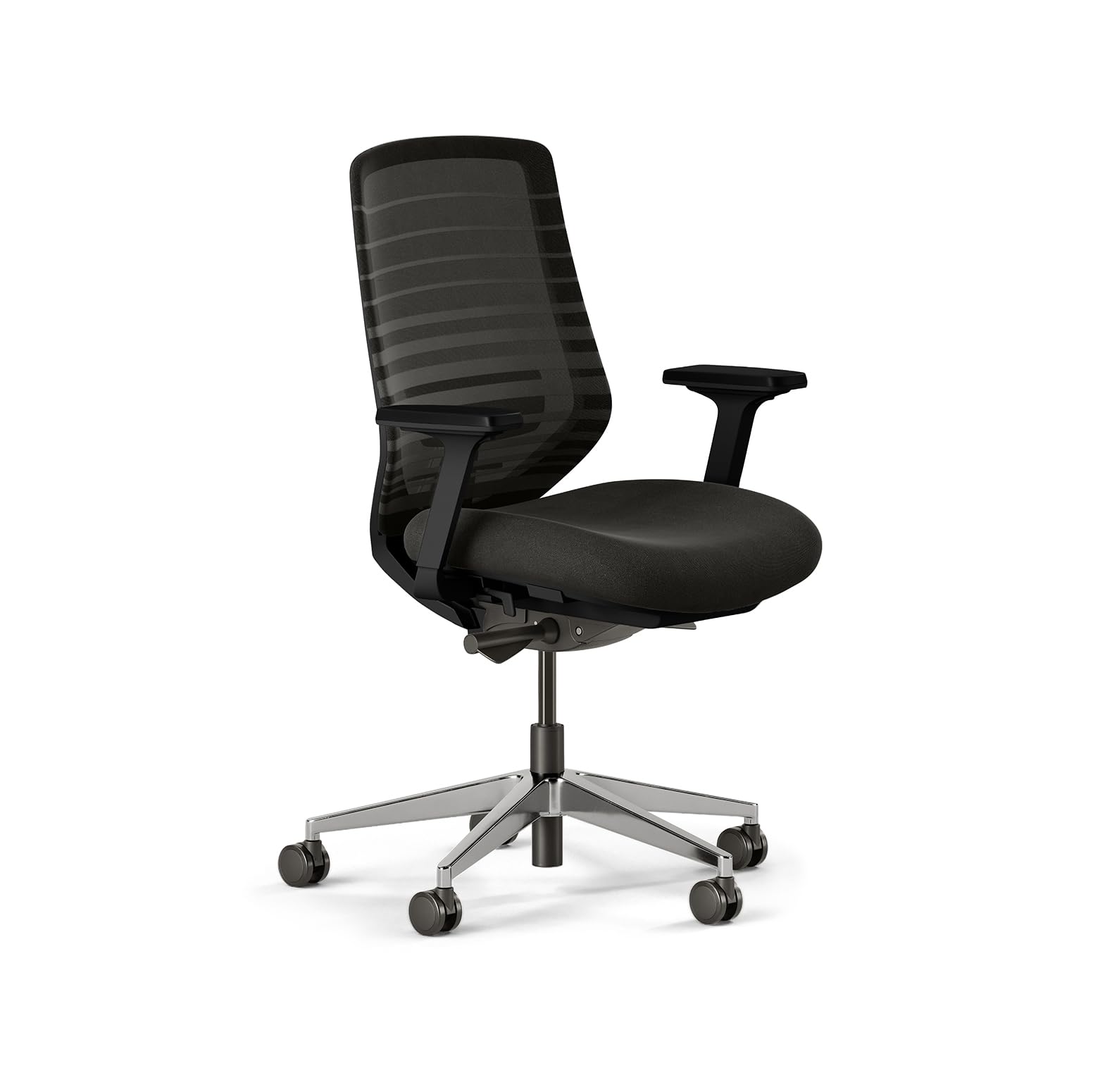
The Branch Ergonomic Chair earns its top position by offering eight distinct adjustment points that let you fine-tune lumbar position, armrest placement, seat depth, and recline tension without tools. The aluminum frame keeps the total weight at just 27 pounds, making it easy to move between rooms while maintaining a sturdy feel that supports extended sitting sessions without wobble.
Its breathable mesh backrest promotes continuous airflow, which prevents the sticky buildup common with upholstered chairs during long work blocks. The seat cushion uses a contoured foam that provides enough give for comfort while retaining shape even after eight hours of continuous use. Users between 5’0″ and 5’8″ report that the seat depth adjustment accommodates shorter legs without pressing behind the knees.
The minimalist design integrates smoothly into professional and home office environments, and the included smooth-rolling wheels glide easily on both carpet and hard floors. Some users note that the armrests slide forward and backward more easily than expected, though tightening the bolts resolves most of the looseness. For the combination of adjustability, build quality, and weight, this chair delivers exceptional value for long-term spinal health.
Why it’s great
- Eight points of adjustment cover lumbar height, depth, and arm angle
- Lightweight aluminum frame at 27 lb for easy repositioning
- Waterfall-edge seat reduces hamstring pressure
Good to know
- Armrests can feel loose if not fully torqued during assembly
- Seat tilt lock is not present, limiting leg angle adjustment
2. Steelcase Leap Office Chair

The Steelcase Leap sets the industry benchmark with its 3D LiveBack technology, which molds to the natural shape of your spine as you shift from upright typing to relaxed reclining. The seat glides forward and backward using the Natural Glide System, keeping your feet planted and your posture aligned even when you lean back—a feature that directly combats the pelvic tuck that triggers lower back pain.
Seven points of adjustability let you dial in lumbar firmness using a dedicated lower back dial, customize seat depth, position 4D armrests, and control tilt tension. The waterfall-edge cushion prevents pressure behind the knees, and the foam fill maintains its resilience over years of daily use. This chair arrives fully assembled, saving you the 30-45 minute build time required by most competitors.
The Leap excels for users who spend more than eight hours per session at a desk and need a seat that adapts to subtle position changes throughout the day. Its heavy-duty construction justifies the premium placement, though the polyester fabric can feel scratchy against bare legs and the seat padding may feel thin for those who prefer a plusher surface. Users under 5’8″ find the depth and arm range particularly accommodating.
Why it’s great
- LiveBack mimics natural spinal curvature during recline
- Lower back firmness dial provides precise lumbar tension control
- Pre-assembled out of the box, no tools required
Good to know
- Fabric texture may feel rough against thin clothing
- Seat pad is firm and may require a gel topper for some users
3. Hbada X7 Smart Ergonomic Chair
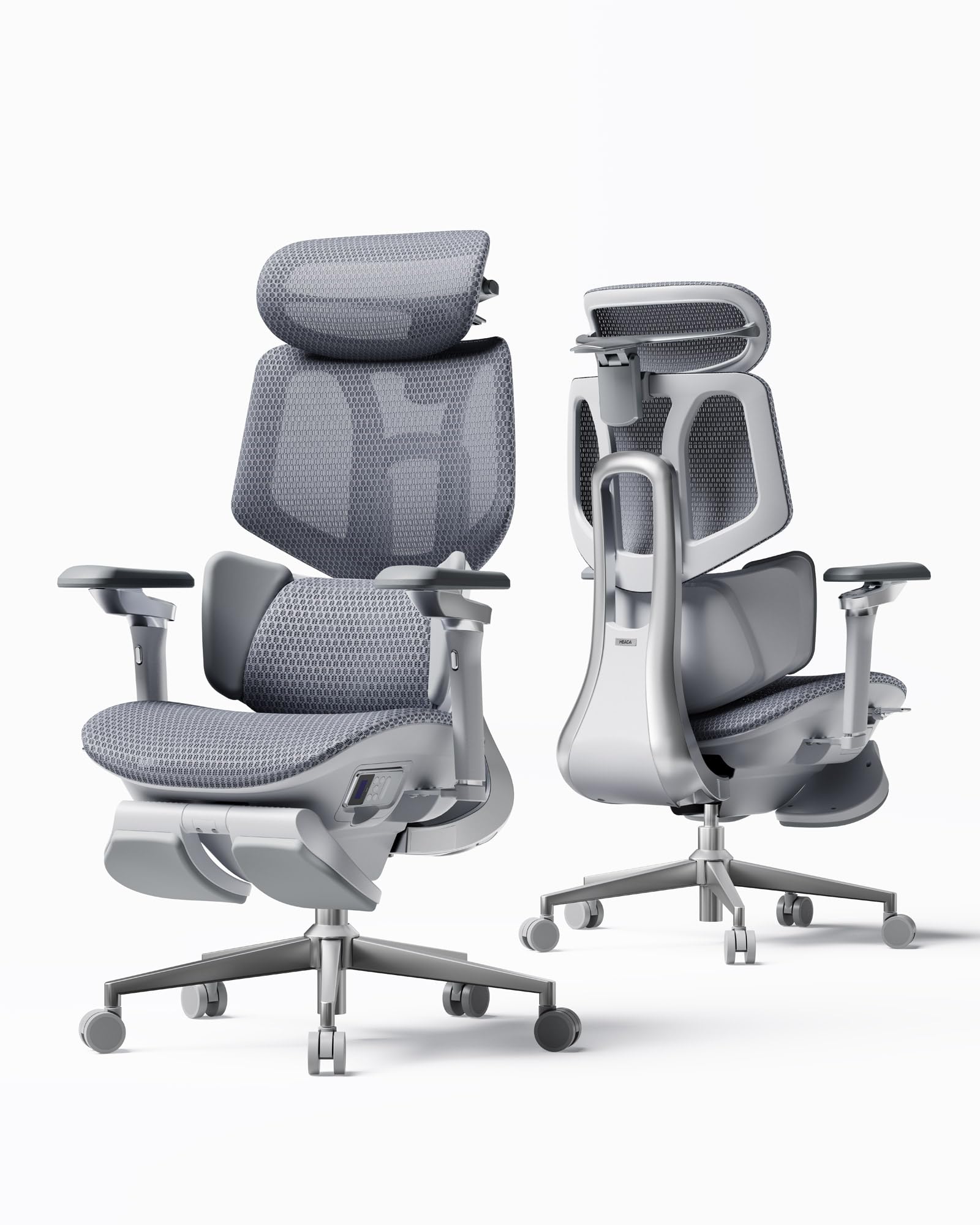
The Hbada X7 Smart brings motorized lumbar tracking to the desk chair category, using a gravity-sensing base that automatically adjusts support intensity as you lean forward or recline. The 6D adjustable waist pillow aligns with your spine’s curve, while integrated 8D massage rollers with three-level heating (40-50°C) target muscle fatigue directly—a feature set usually found in dedicated massage chairs, not office seating.
The ventilated seat cushion incorporates a dual-fan cooling system with three speed modes, boosting breathability by an estimated 65 percent compared to standard mesh. The 4D headrest rotates 70 degrees, slides 55 millimeters, and adjusts height by 45 millimeters, while the 720-degree omnidirectional armrests rotate fully and extend 110 millimeters to match any desk height. The 140-degree recline angle lets you transition from typing to napping without leaving the chair.
The aircraft-grade aluminum frame supports up to 330 pounds, and the five-star nylon base rolls quietly on any floor surface. At 75 pounds, this is a heavy chair that requires two people to lift and assemble. Tall users above six feet report that the standard gas cylinder is too short for proper ergonomic positioning, though aftermarket replacements resolve the issue. The automated lumbar tracking is genuinely useful but the massage and heating are secondary features that add weight and cost.
Why it’s great
- Auto-adjusting lumbar tracks spine movement in real time
- Built-in massage rollers with adjustable heat for muscle relief
- Dual-fan seat cooling system prevents heat buildup
Good to know
- Gas cylinder may be too short for users 6′ and taller
- 75 lb weight makes repositioning difficult
4. FLEXISPOT ErgoX-PRO Ergonomic Office Chair
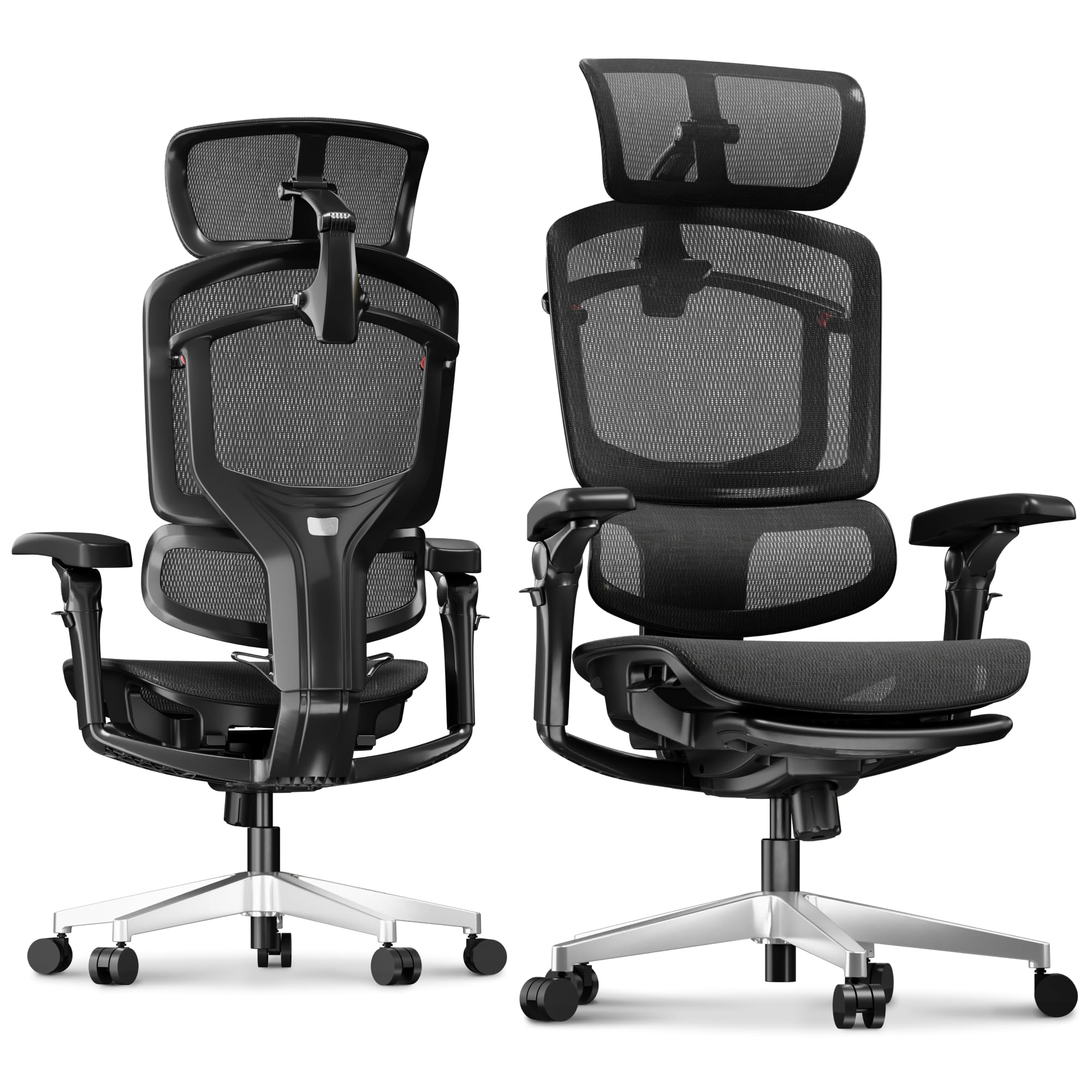
The FLEXISPOT ErgoX-PRO pushes adjustability to the extreme with a 5D lumbar system that extends, compresses, and articulates to match your spine’s position throughout the day. The 7D linkage armrests move in synch with your body, providing continuous support whether you are typing forward or reclining sideways—a design that reduces shoulder tension by keeping your elbows aligned with your torso at all angles.
Two seat options are available: the AeroWeave 5.0 mesh for maximum airflow during long gaming or work sessions, and the Cloudtech cushion for a plush feel that still breathes better than traditional foam. The 4D headrest doubles as a back-support cushion for compact desks where you need to switch orientation. The reinforced nylon frame with fiberglass core supports up to 551 pounds, making it one of the highest weight capacities in this tier.
The 12-level fine-tuned backrest offers spring cushioning that resists abrupt movement, and the three-position tilt base locks at 90, 115, or 135 degrees for focused work, relaxed reading, or console gaming. The included footrest adds a relaxation option, though it sits high enough that shorter users may find it awkward during recline. Assembly requires about 30 minutes, and the 38-pound weight makes it manageable for a single person to set up.
Why it’s great
- 5D lumbar adapts to posture changes in real time
- Linkage armrests track body movement across all recline angles
- 551 lb weight capacity with reinforced nylon frame
Good to know
- Footrest position is awkward for users under 5’4″
- Armrest adjustability is extensive but can be overwhelming to dial in
5. FLEXISPOT ErgoX Premium Ergonomic Office Chair
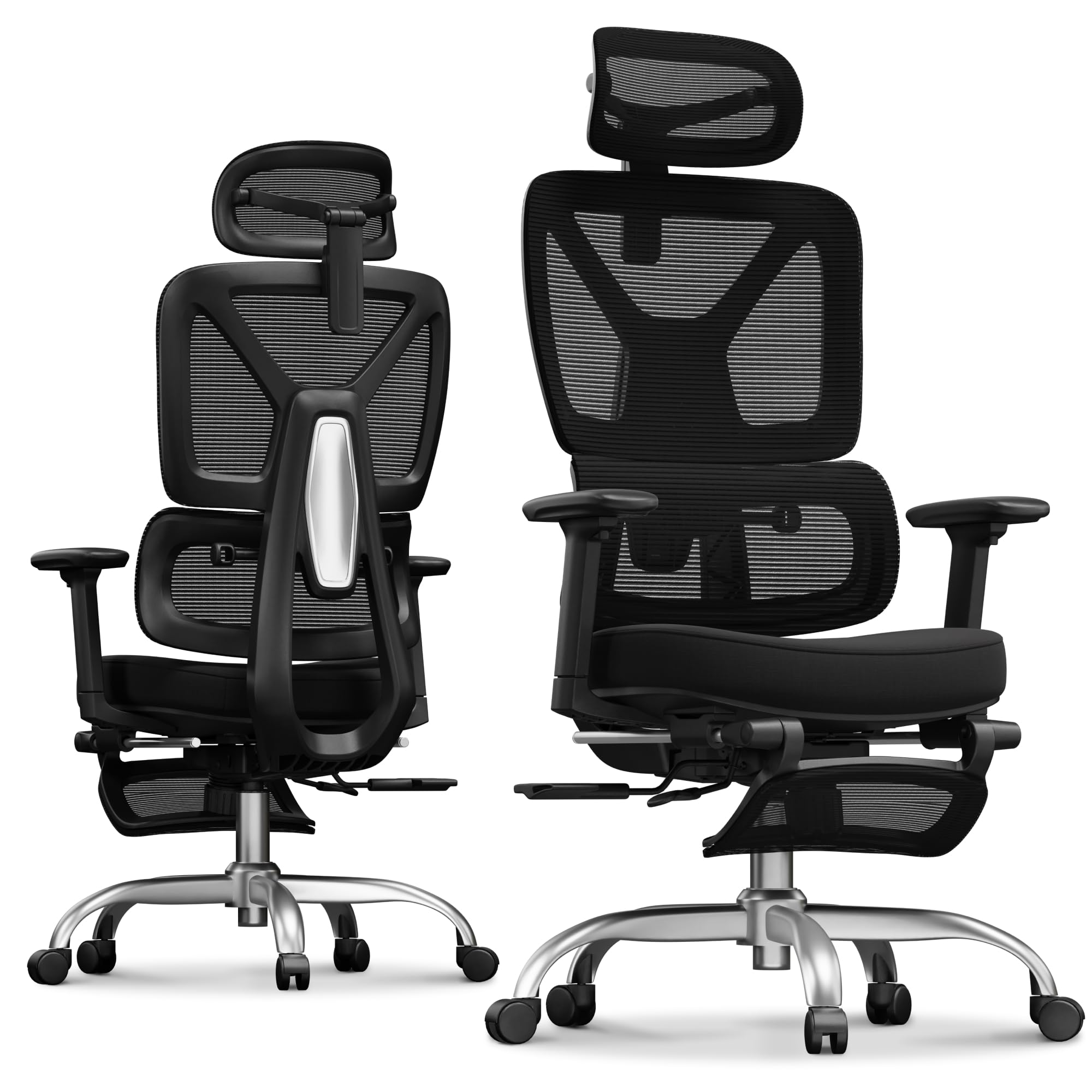
The FLEXISPOT ErgoX offers a slightly more accessible entry point into the ErgoX line while retaining core ergonomic features that matter for back pain relief. The dynamic lumbar support adjusts through five levels, and the backrest tilts in synch with your recline angle, maintaining contact with your lower back as you shift weight. The seat depth slides from 17 to 20 inches, accommodating femurs from short to long without compressing the back of the knees.
Users can choose between a mesh seat for continuous airflow or a cushioned foam seat for a softer landing, giving you the flexibility to prioritize breathability or plushness depending on your climate and personal preference. The 3D adjustable headrest rotates and tilts to support the neck during upright work and reclined breaks, while the padded 3D armrests move in height, forward-back, and swivel axes.
The retractable footrest extends from under the seat for short relaxation periods, though some users note that it sits too high to function as a true leg rest during deep recline. The reinforced nylon frame and class 4 gas lift ensure stable height adjustments, and the 38-pound weight strikes a balance between stability and mobility. Assembly takes roughly 30 minutes, and the clear instructions include labeled fasteners that reduce guesswork.
Why it’s great
- Seat depth adjustment spans 17 to 20 inches for varied leg lengths
- Mesh or foam seat options cater to different comfort preferences
- Retractable footrest adds a relaxation mode
Good to know
- Footrest is positioned too high for comfortable extended use
- Headrest requires re-adjustment when switching between upright and reclined sitting
6. ELABEST Ergonomic Mesh Office Chair

The ELABEST chair distinguishes itself with BIFMA 5.1 commercial-grade certification, meaning it passed rigorous testing for durability, stability, and safety under heavy daily use. The bionic-curve backrest mirrors the natural S-shape of the spine and includes an adjustable lumbar support that moves vertically and in depth, providing targeted relief exactly where your lower back curves inward.
The synchro-tilt mechanism offers three lockable positions with adjustable tension, allowing you to set the resistance level that matches your body weight. The “Golden Triangle” back structure reinforces the upper back area, reducing shoulder fatigue for professionals who spend their days typing and coding. The full-mesh seat and back promote constant airflow, and the mesh is high-grade stretch-resistant material that does not sag like cheaper nylon webbing.
The 3D adjustable armrests move in height, width, and angle, and the 20-inch seat width provides ample space for wider hip structures. Some users with smaller frames find the armrests too wide even at their narrowest setting, though the manufacturer provides narrower rotating replacements upon request. The heavy-duty base and smooth casters roll quietly on hard floors and carpets, and the overall build quality rivals chairs costing significantly more.
Why it’s great
- BIFMA 5.1 certification guarantees commercial-grade durability
- Bionic-curve backrest with adjustable depth lumbar support
- Full-mesh seat prevents heat buildup during long shifts
Good to know
- Armrests may be too wide for users with narrow shoulders
- Best suited for users between 5’5″ and 5’10” under 200 lb
7. WorkPro 1000 Series Ergonomic Mesh Task Chair

The WorkPro 1000 Series focuses on the fundamentals that matter most for back pain: synchro-tilt mechanism, breathable mesh back, and foam seat that retains shape under consistent load. The synchro-tilt action coordinates seat and backrest movement so your posture remains stable as you recline, preventing the pelvis from rolling backward—a common trigger for lower back strain.
The mesh back provides constant ventilation, while the seat uses a foam fill that offers enough give for comfort without bottoming out after hours of use. Padded adjustable-height arms provide a soft resting surface, though the arms swivel slightly side to side, which some users find distracting. The chair supports up to 275 pounds and is rated for professional use of 8 to 10 hours per day.
Assembly is straightforward with clear instructions, and the five-star base with rolling casters allows smooth movement around the workspace. The seat depth is adjustable, which helps shorter users maintain proper thigh support, but the armrests only adjust in height and inward angle—not in width or forward-back position. This is a practical, no-frills chair that delivers reliable ergonomic support without the complexity of multi-axis lumbar systems.
Why it’s great
- Synchro-tilt keeps pelvis stable during recline
- BIFMA compliant for professional 8-10 hour daily use
- Adjustable seat depth accommodates shorter leg lengths
Good to know
- Armrests only adjust in height and inward angle, not width
- Arms have a slight side-to-side wobble
8. marrap Ergonomic Office Chair
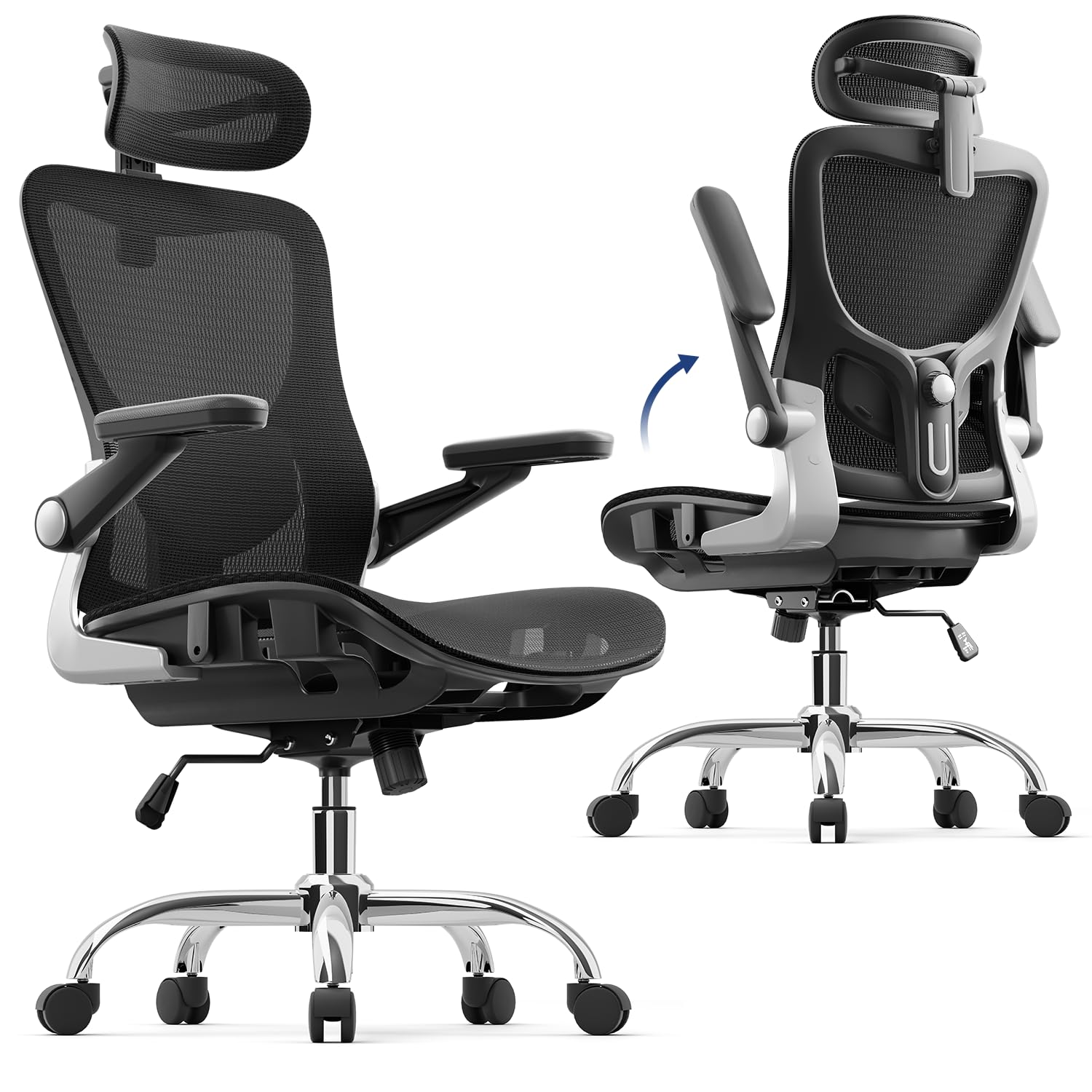
The marrap Ergonomic Office Chair proves that meaningful lumbar support does not require a premium budget. The lumbar system adjusts up and down as well as forward and backward, giving you the ability to position the curve exactly where your lower back needs it most. The 3D armrests flip up, slide forward and back, and rotate 360 degrees, offering flexibility that many budget-tier chairs omit entirely.
The mesh back and seat promote continuous airflow, preventing the heat buildup that makes foam seats uncomfortable during warm weather or long sessions. The rocking function ranges from 90 to 120 degrees, with adjustable tilt tension that lets you control how much resistance you feel when leaning back. Assembly takes roughly 15 minutes thanks to clear video instructions, and the 28-pound weight makes it easy to move between rooms.
The seat width is on the narrower side, and users with wider hips report that the front lip of the seat presses uncomfortably against the underside of the thighs due to minimal padding over the plastic edge. The adjustable headrest provides neck support, though shorter users may find it sits too high even at its lowest setting. For slim to average builds seeking ergonomic adjustability at an accessible price point, this chair covers the essential bases without claiming premium refinement.
Why it’s great
- Lumbar support adjusts in both height and depth for targeted relief
- 3D armrests flip up for easy desk storage
- Fast 15-minute assembly with video instructions
Good to know
- Seat is narrow and front lip may press against wider hips
- Headrest may be too tall for users under 5’4″
9. TRALT Ergonomic Office Chair
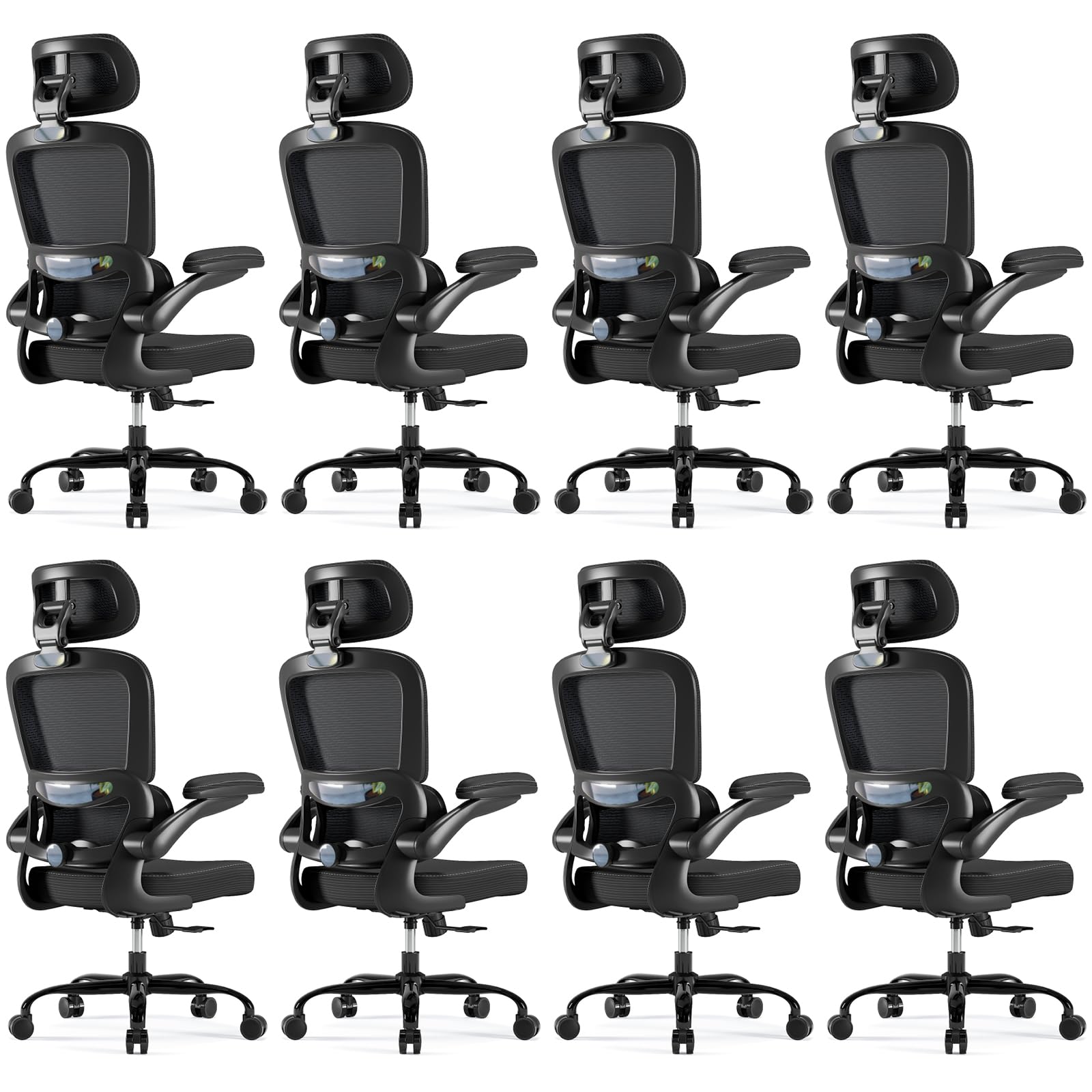
The TRALT Ergonomic Office Chair prioritizes plush comfort with a 3.5-inch high-density sponge cushion that resists sagging even after extended use. The foam is wrapped in a leather-like PU material that feels soft against the skin and wipes clean easily, making it a practical choice for those who eat at their desk or prefer a padded seat over mesh. The backrest uses breathable mesh to accelerate airflow and reduce stuffiness against the spine.
The adjustable lumbar support and headrest promote natural posture, and the flip-up armrests clear the way for sliding the chair under a desk when not in use—a useful feature for small home offices. The 20-inch-wide seat distributes weight evenly, accommodating users up to 330 pounds, and the metal base and class 3 gas lift ensure stable height adjustments. Assembly takes 25 to 30 minutes with included instructions and a video guide.
The flip-up armrests lack the lateral stability of fixed or 3D designs, and heavy leaning on one side causes noticeable wobble. The headrest works well for users around 5’1″, but taller users may find it pushes the head slightly forward rather than supporting it in a neutral position. For those who prioritize a soft, padded seat over breathability and need high weight capacity, this chair provides a stable foundation with adequate back support.
Why it’s great
- Thick 3.5″ sponge cushion resists compression over time
- Flip-up armrests allow easy desk storage
- 330 lb weight capacity with metal base
Good to know
- Flip-up arms are unstable under heavy lateral leaning
- Headrest may push taller users’ heads forward
FAQ
How do I know if a chair’s lumbar support is high enough for my spine?
Is a mesh seat better for back pain than a foam seat?
Can an office chair fix sciatica or is that a medical issue?
Final Thoughts: The Verdict
For most users, the desk chair for back pain winner is the Branch Ergonomic Chair because it combines eight adjustment points with a lightweight aluminum frame and breathable mesh backrest at a mid-range investment. If you want the gold standard of spinal support with proven LiveBack technology and pre-assembled convenience, grab the Steelcase Leap. And for those who need automated lumbar tracking and built-in massage features for intense muscle relief, nothing beats the Hbada X7 Smart.

Mo Maruf
I created WellFizz to bridge the gap between vague wellness advice and actionable solutions. My mission is simple: to decode the research and give you practical tools you can actually use.
Beyond the data, I am a passionate traveler. I believe that stepping away from the screen to explore new environments is essential for mental clarity and physical vitality.