Our readers keep the lights on and my smoothie glass nicely filled. As an Amazon Associate, I earn from qualifying purchases.
Running a jon boat into a shifting sandbar or a submerged log is a fast way to wreck a prop and a day. A dedicated depth finder turns that anxiety into a quiet confidence, letting you read the bottom contour, spot fish-holding structure, and navigate skinny water without dragging the hull. But the options range from castable wireless pucks to fully installed sonar units, and picking the wrong one can leave you with a screen full of noise or a transducer that won’t mount on a flat aluminum transom.
I’m Mohammad Maruf — the founder and writer behind WellFizz. I’ve spent hundreds of hours analyzing marine electronics, comparing sonar frequencies, beam angles, and mounting systems to understand what actually works when you’re running a small, tiller-steered aluminum boat in less than ten feet of water.
Whether you fish shallow bays, river channels, or small lakes with unpredictable depths, this guide breaks down the essential specs and real-world trade-offs to help you find the best depth finder for jon boat that fits your boat and your fishing style.
How To Choose The Best Depth Finder For Jon Boat
Selecting a depth finder for a jon boat involves balancing sonar technology, mounting style, and screen visibility against the realities of a small, often open fishing platform. Unlike a bass boat with a dedicated console, jon boats usually have limited flat surfaces and no permanent battery bank, so your choice often comes down to portable convenience versus permanent integration.
Mounting: Portable vs. Fixed Transom Installation
Jon boats with flat transoms accept a standard transom-mount transducer bracket easily. If you prefer a clean, always-ready setup, a fixed unit like the HawkEye DT2BX-TM or the Garmin Striker Vivid 5cv bolts right on. For jon boats that double as car-toppers or serve multiple roles (ice fishing, bank fishing), a castable or portable wireless unit like the Deeper PRO+ 2 or the LUCKY portable finders offers zero-install convenience without drilling holes in the hull.
Sonar Technology: CHIRP vs. Traditional Dual-Beam
CHIRP sonar sweeps through a range of frequencies, producing crisper target separation and better performance in stained or muddy water — critical for shallow jon boat waters where fish hold tight to cover. Traditional dual-beam sonar, found on the Humminbird PiranhaMAX 4 and the Helix 5, uses a fixed frequency and is perfectly adequate for depth reading and basic fish finding at a lower cost. If you fish mostly clear lakes under 20 feet deep, dual-beam is sufficient; for stained rivers or weedy flats, CHIRP gives a noticeable advantage.
Screen Size and Sunlight Readability
A 4.3-inch screen is the practical minimum for a jon boat, as you will often be glancing at the display from a standing position at the tiller. Models like the Garmin Striker Plus 4 and the Humminbird PiranhaMAX 4 offer bright, sunlight-readable color displays that cut glare even without a sunshade. Smaller LCD screens, such as those on the LUCKY portables, work fine for occasional use but become hard to read in direct afternoon sun.
GPS and Mapping Features
Built-in GPS allows you to mark submerged stumps, creek channels, and launch ramps — features that matter when running a small boat in unfamiliar water. The Garmin Striker Vivid 5cv and the Lowrance HOOK Reveal 5 include mapping and waypoint storage, while the Humminbird Helix 5 G2 offers AIS compatibility. If you primarily fish a single lake and know the hazards, a depth-only unit like the HawkEye DT2BX-TM may be all you need and saves money.
Quick Comparison
On smaller screens, swipe sideways to see the full table.
| Model | Category | Best For | Key Spec | Amazon |
|---|---|---|---|---|
| Garmin Striker Vivid 5cv | Premium | CHIRP sonar with GPS mapping | 5-inch color, CHIRP ClearVü | Amazon |
| Lowrance HOOK Reveal 5 SplitShot | Premium | FishReveal with DownScan | 5-inch SolarMAX, autotuning sonar | Amazon |
| Humminbird Helix 5 Sonar G2 | Mid-range | Dual-beam, SwitchFire sonar | 5-inch widescreen, 2D sonar | Amazon |
| Garmin Striker Plus 4 | Mid-range | CHIRP, GPS, Quickdraw Contours | 4.3-inch, dual-beam CHIRP | Amazon |
| Humminbird PiranhaMAX 4 DI | Mid-range | Down Imaging on a budget | 4.3-inch color, Down Imaging | Amazon |
| Deeper PRO+ 2 Sonar | Mid-range | Portable, castable, GPS mapping | WiFi, 330 ft range, 0.4 in target sep | Amazon |
| HawkEye DT2BX-TM | Mid-range | Simple depth-only in-dash install | 600 ft max, air/water temp | Amazon |
| LUCKY Portable Y2020-CWLA | Budget | Wireless portable, bank/kayak | 147 ft depth, 656 ft wireless range | Amazon |
| LUCKY Portable FF-1108-1CWLA | Budget | Entry-level portable fish finder | 2.4-inch LCD, 147 ft depth | Amazon |
In‑Depth Reviews
1. Garmin Striker Vivid 5cv

The Garmin Striker Vivid 5cv stands out as the most capable display for a jon boat that runs both shallow flats and deeper river channels. Its 5-inch color LCD uses CHIRP ClearVü scanning sonar to deliver photo-like images of submerged stumps, weed beds, and the bottom structure that holds baitfish and gamefish. The vivid scanning color palettes make it easy to distinguish fish arches from hard bottom or soft mud, which is critical when you are idling through a channel less than ten feet deep.
Built-in GPS with Quickdraw Contours mapping lets you create custom 1-foot contour maps of your favorite lake in real time. This is a major advantage if you fish multiple bodies of water or need to memorize a shallow bay without buoys. The transducer included is the GT20-TM, a transom-mount dual-beam CHIRP unit that reads depths accurately from 2 feet to well over 500 feet, giving you both shallow precision and deep-water capability when you venture into larger reservoirs.
Some users have noted that the unit occasionally starts in night mode, which can momentarily wash out the screen in bright sunlight, but the auto-adjust corrects within a few minutes. The menu system is intuitive and slightly easier to navigate than comparable Lowrance units, making it a great fit for anglers transitioning from basic sonar to CHIRP technology.
Why it’s great
- CHIRP ClearVü sonar delivers sharp structure detail even in stained water
- Quickdraw Contours mapping creates custom depth maps on the fly
- 5-inch display is readable in direct sunlight after brightness adjustment
Good to know
- Can start in night mode and needs a few minutes to auto-correct
- No preloaded maps for coastal or saltwater use
2. Lowrance HOOK Reveal 5 SplitShot

The Lowrance HOOK Reveal 5 SplitShot brings a technology called FishReveal to the jon boat market, which overlays CHIRP sonar returns onto DownScan Imaging for a single unified view. Instead of switching between two screens to see fish arches and structure separately, you see both simultaneously — fish that are hugging a brush pile or tucked under a dock railing appear as bright, identifiable targets. The 5-inch SolarMAX display is engineered for daylight visibility, a key requirement for open jon boats with no helm cover.
Preloaded C-MAP US Inland maps cover nearly 4,000 inland lakes, so you can begin navigating with depth contours and navigation aids immediately after installation. The SplitShot transducer includes both a wide-angle CHIRP element for traditional sonar and a high-resolution DownScan Imaging element. Autotuning sonar is a standout feature: the unit automatically adjusts gain and sensitivity as depth, speed, and water clarity change, meaning you spend less time fiddling with settings and more time fishing.
A few users have reported that the sonar function can ship in the off position and must be manually enabled in the menu, which is a minor hiccup but easy to correct. The unit is powered by 12-volt DC, requiring a battery connection typical of most fixed installations. For jon boat owners who want detailed mapping and the most advanced fish identification at this price point, the HOOK Reveal is a top contender.
Why it’s great
- FishReveal combines sonar and DownScan for quick fish identification
- Preloaded C-MAP maps for 4,000 US inland lakes
- Autotuning sonar adapts settings to changing water conditions
Good to know
- Sonar may need to be turned on manually after initial installation
- 5-inch screen feels small if you are used to larger displays
3. Humminbird Helix 5 Sonar G2

The Humminbird Helix 5 Sonar G2 is a dual-beam sonar unit that skips GPS and down imaging in favor of a straightforward, high-quality 2D sonar display. SwitchFire Sonar lets you toggle between two display modes — one that shows everything with maximum detail and one that cleans up noise from suspended particles or turbulent water. For a jon boat fishing weedy shallows in the spring runoff, this adjustability is valuable because you can reduce clutter without losing sight of bottom huggers.
The 5-inch widescreen color TFT display offers a generous viewing area for its footprint, and the menu system is the same intuitive interface found on Humminbird’s premium Helix 9 and 12 units. It includes water temperature readout and supports both narrow and wide beams, which you can view separately, side-by-side, or blended. AIS and AutoPilot compatibility may be overkill for a small jon boat, but they add future-proofing if you ever upgrade to a larger vessel with navigation systems.
The transducer cable length has been mentioned as a potential shortfall for deeper consoles, but on a typical jon boat with a tiller-mounted display, the included cable reaches without issue. The unit does not include GPS or speed sensor, so it is best suited for anglers who just want an excellent sonar display without paying for mapping features they will not use.
Why it’s great
- SwitchFire technology lets you adjust sonar detail on the fly
- Large 5-inch widescreen with excellent clarity for its class
- Familiar Humminbird interface shared with higher Helix models
Good to know
- No built-in GPS or speed sensor
- Transducer cable may be short for larger boats with distant consoles
4. Garmin Striker Plus 4
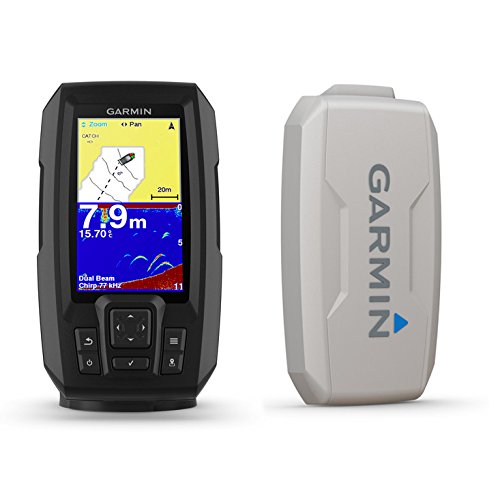
The Garmin Striker Plus 4 packs CHIRP traditional sonar, GPS, and Quickdraw Contours mapping into a rugged, sunlight-readable 4.3-inch display at a mid-range price point. The included dual-beam transducer produces crystal-clear images with exceptional target separation, making it easy to tell the difference between a baitfish school and a solid rock pile. This unit is a favorite among jon boat anglers because it floats — if it gets knocked off the deck, it does not sink to the bottom.
Quickdraw Contours mapping software lets you create and store maps with 1-foot contours for up to 2 million acres, which is effectively unlimited for a recreational angler. The built-in GPS marks waypoints, creates routes, and displays boat speed. The interface is intuitive, and the A-scope feature shows real-time sonar returns as fish move up and down in the water column, a helpful tool when you are vertical jigging in a river channel.
Some users mention that the auto gain setting runs high by default and that manual adjustment is needed periodically for the clearest picture, especially in weed-heavy water. The transducer cable and power cord connections are durable but feel slightly delicate compared to higher-end Garmin units. For the price, the Striker Plus 4 offers more sonar capability and mapping than any other 4-inch unit in its bracket.
Why it’s great
- CHIRP sonar with exceptional target separation for its size
- Quickdraw Contours mapping for creating custom depth charts
- Unit floats if accidentally dropped overboard
Good to know
- Auto gain can be too aggressive; manual adjustment recommended
- Cable connections are not as heavy-duty as premium models
5. Humminbird PiranhaMAX 4 DI

The Humminbird PiranhaMAX 4 DI brings Down Imaging to the budget-friendly segment, giving jon boat owners a clear view of underwater structure like timber, bridge pilings, and rocks directly below the hull. The 4.3-inch color display is large enough to read at a glance, and the redesigned interface is simpler to navigate than earlier PiranhaMAX generations. Dual-beam sonar lets you toggle between a narrow 20-degree beam for detail and a wide 60-degree beam for coverage, which is useful when you are prospecting new water.
Fish ID+ technology classes sonar returns into fish symbols and shows them on screen, though experienced anglers often prefer turning this feature off and reading raw fish arches for better accuracy. The included XNT 9 DI T transom-mount transducer is compact and easy to install on the flat transom of a jon boat. The tilt and swivel mount provides good viewing angle adjustment, which matters when you are standing at the tiller on a moving boat.
The transducer cable length has been flagged as a potential issue for larger boats — some users found it necessary to purchase an extension cable to reach the bow. On a standard jon boat, the cable usually reaches the midsection without extensions, but it is worth measuring your run before installation. For the price, the combination of Down Imaging and dual-beam sonar makes this a strong value choice for budget-conscious jon boat owners.
Why it’s great
- Down Imaging shows clear structure detail at an affordable price
- Bright 4.3-inch screen is readable in direct sunlight
- Compact transducer fits jon boat transoms easily
Good to know
- Transducer cable may be too short for larger boats
- Fish ID+ can misclassify debris as fish in very shallow water
6. Deeper PRO+ 2 Sonar
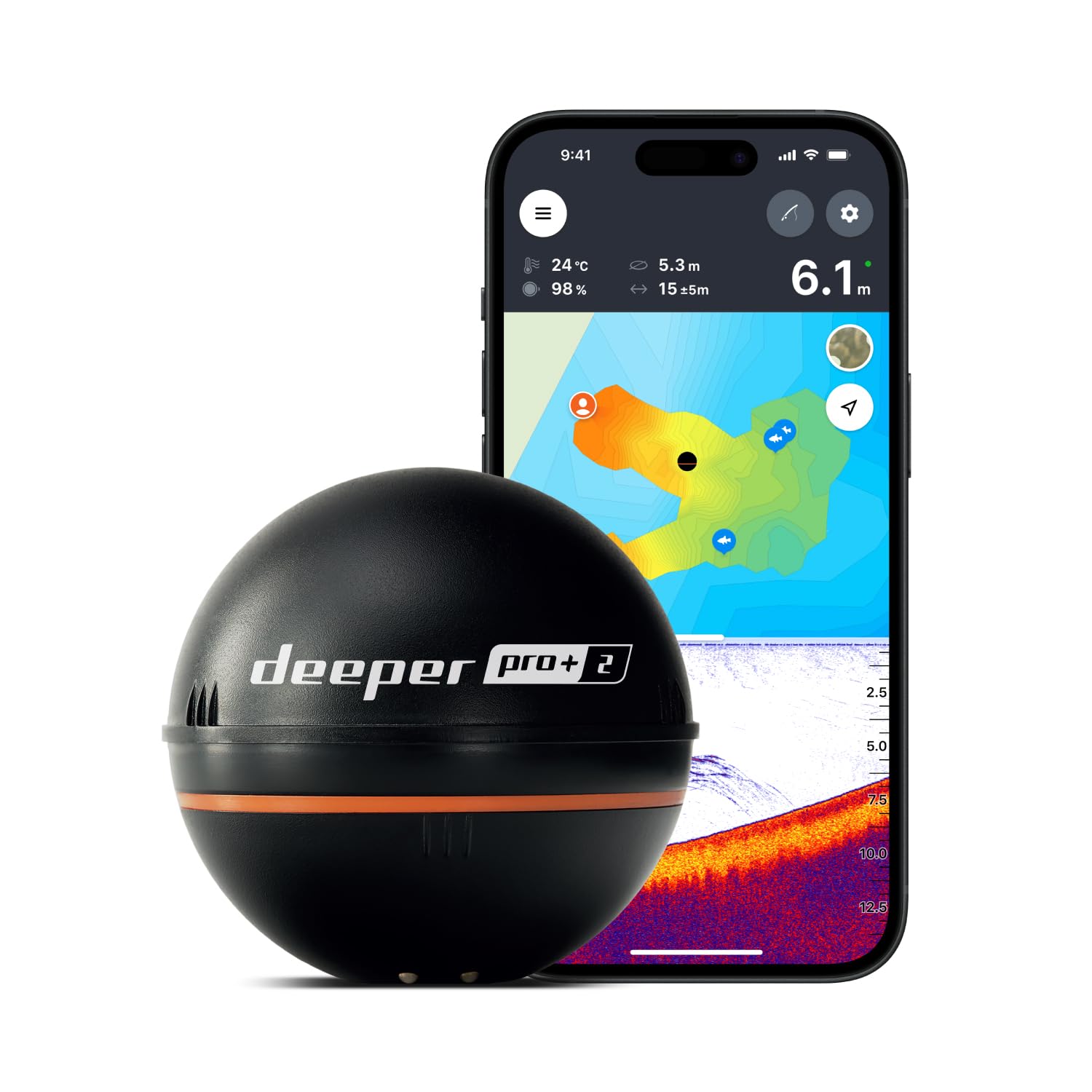
The Deeper PRO+ 2 is a wireless, castable sonar that works entirely through your phone or tablet, eliminating the need for any permanent installation on your jon boat. It connects via WiFi with a range of up to 330 feet and casts like a fishing lure, so you can scan water away from the boat before you drift into it. Three beam frequencies — wide, mid, and narrow — give you the flexibility to either cover a large area or zoom in on a specific structure with a target separation of just 0.4 inches on the narrowest beam.
Built-in GPS allows you to create bathymetric maps from the shore, dock, or boat directly within the Fish Deeper app, and you can save unlimited maps for future trips. The unit weighs just 0.2 pounds, making it an easy addition to any tackle box. Battery life from the internal rechargeable battery runs 5 to 7 hours, which covers a full day of fishing for most anglers.
Because the unit weighs over 3 ounces, it requires a stout rod with 20-pound braided line or heavier to cast effectively. Some users have reported connectivity dropouts near shoreline obstacles, and the included neoprene pouch is useful but can be lost if not secured. The optional Pro subscription in the app unlocks advanced features, but the free version covers all essential mapping and sonar functions. For jon boat owners who switch between multiple boats or fish from the bank, this is the most flexible option available.
Why it’s great
- Zero installation required; casts like a fishing lure
- Three beam angles for wide coverage or high detail
- Built-in GPS creates custom bathymetric maps in the app
Good to know
- Requires a heavy rod and 20lb+ braided line for casting
- WiFi connection can drop in areas with radio interference
7. HawkEye DT2BX-TM In-Dash Depth Sounder
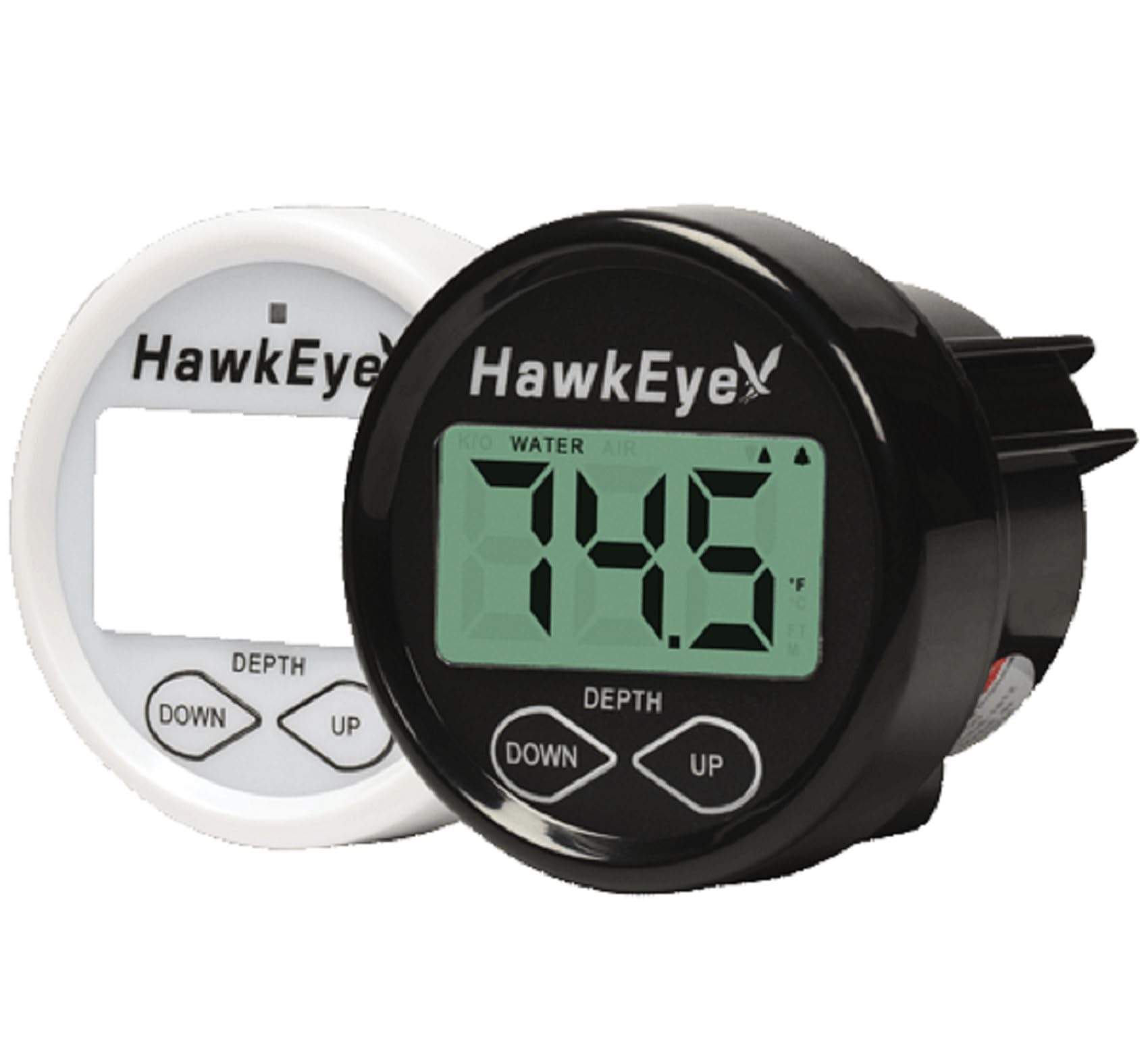
The HawkEye DT2BX-TM is a dedicated depth sounder with no GPS, no fish finder, and no download — just a simple, large LCD display that shows water depth, water temperature, and air temperature. The 2-inch screen is one of the largest available for an in-dash mount, and the polarized display with a storage sun cover ensures spot-free viewing with or without polarized sunglasses. It reads depths from 2.5 feet to 600 feet, giving it the widest depth range of any unit in this guide.
The three-stage advanced warning system uses an audible alarm, an LED warning light, and LCD alarm indicators to alert you of shallow water. The transducer is a transom-mount model with 30 feet of cable, and the unit can also be configured for thru-hull installation if you prefer a flush deck setup. Algorithmic programming reduces false readings from turbulence or suspended debris, which is helpful when navigating backwaters with fluctuating water levels.
Build quality and customer support have received mixed feedback — several users reported units failing after one or two seasons, and the support response has been described as unhelpful. The unit is best suited for jon boat owners who want a no-frills depth alarm for navigation safety and are willing to accept the risk of a shorter lifespan. For those who prioritize reliability over price, a more established brand like Garmin or Lowrance may be a safer long-term investment.
Why it’s great
- Large in-dash display with polarized LCD for glare-free viewing
- Reads depths from 2.5 ft to 600 ft with high accuracy
- Three-stage warning system with audible and visual shallow alerts
Good to know
- Reports of units failing after one or two seasons of use
- Customer support has been described as rude and unhelpful
8. LUCKY Portable Y2020-CWLA

The LUCKY Portable Y2020-CWLA is a wireless, castable sonar system that communicates with a handheld display unit via a 656-foot wireless range. The sonar transducer ball contains a 125 kHz element with a 90-degree beam angle, which provides broad coverage but lower detail than higher-frequency CHIRP alternatives. The display reads water depth, fish location and size, water temperature, and bottom contour, and includes a fish alarm and shallow alert.
The sonar ball features a fish-attracting lamp and a replaceable transparent cover that glows in the dark, making it easier to find after dark. Battery life is rated at 5 to 6 hours of continuous use, and with the battery save mode enabled, that extends to over 10 hours. The unit is waterproof against splashes and even floats if dropped, so losing the sonar ball in deep water is unlikely.
Customer experiences vary — some users report accurate depth readings and good performance for bank and kayak fishing, while others have mentioned charging issues and failures after just a few months. The transducer is not as durable as premium castable sonars, and the display screen is small by modern standards. For occasional use on a jon boat where you already have a phone for mapping, this entry-level wireless system provides depth and temperature data without a permanent installation.
Why it’s great
- Wireless operation allows casting from shore, dock, or boat
- Sonar ball floats and has a glow cover for low-light visibility
- Provides depth, water temp, and fish size information
Good to know
- Reports of charging and battery failures after a few months
- 125 kHz beam offers less detail than CHIRP or dual-frequency sonar
9. LUCKY Portable FF-1108-1CWLA
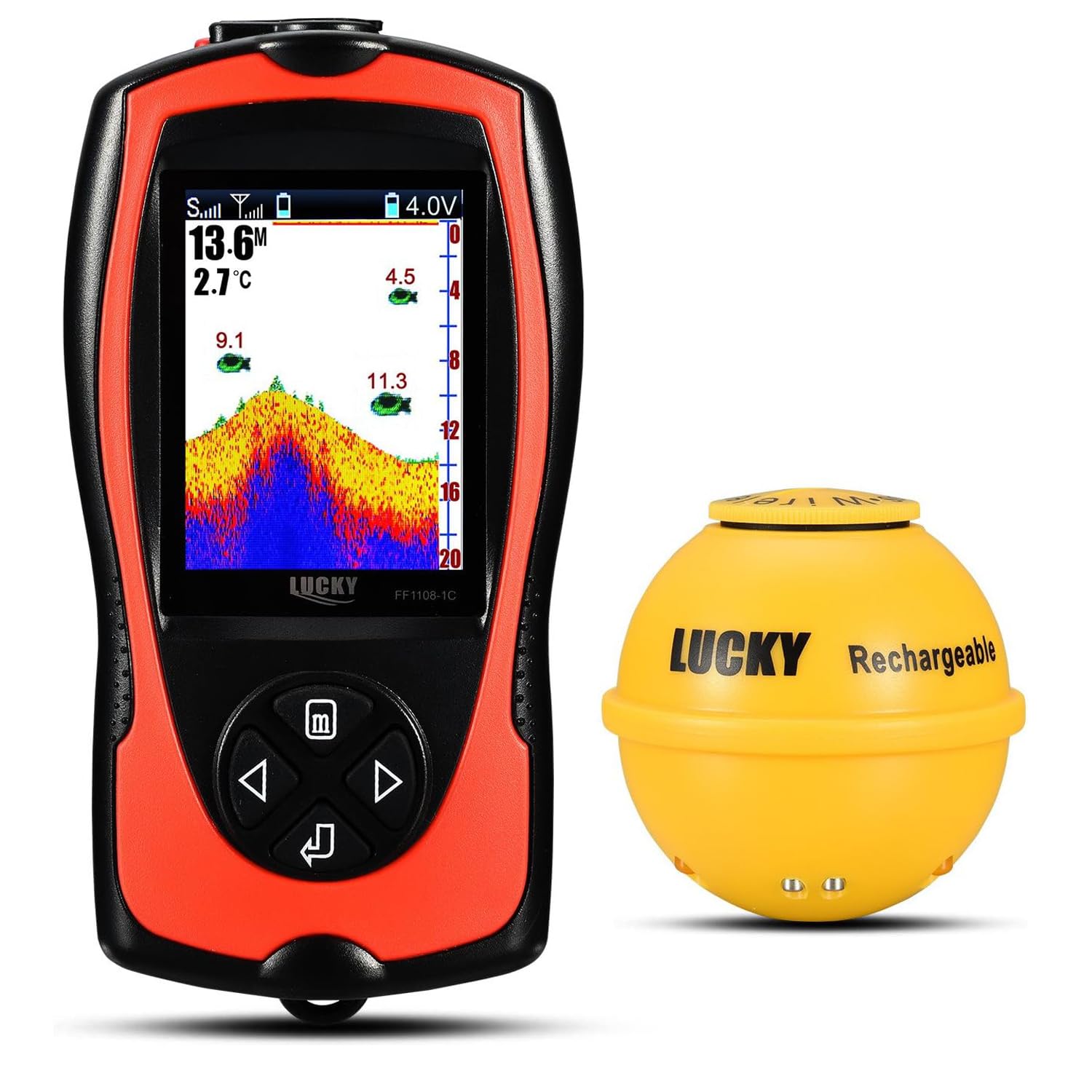
The LUCKY Portable FF-1108-1CWLA is the most affordable entry into sonar, featuring a 2.4-inch TFT color LCD screen with wireless sonar transducer and a fish-attracting lamp. The handheld display communicates with the sonar ball over a 492-foot wireless range and reads depth up to 147 feet, with additional data on water temperature, fish size, and bottom contour. The simulation mode lets you test all functions on land, which is a helpful training aid for new anglers.
The sonar transducer and the handheld unit are both rechargeable via USB. The handheld lasts about four hours per charge, while the sonar ball can run for ten hours. The display includes adjustable sensitivity, screen brightness, depth range, zoom, depth alarm, fish alarm, and language settings. For the price, the feature set is generous, and the unit has received positive feedback for accuracy in shallow, calm water from bank and kayak users.
The limitations are predictable at this entry level: the sonar does not reliably distinguish between fish and debris in weedy or fast-moving water, and some users have found it useless for anything beyond basic depth and temperature readings. Build quality is acceptable for occasional use but may not withstand frequent drops or prolonged sun exposure. If you just need a depth reading for a jon boat on a small, clear lake and want to spend the smallest amount possible, this unit works — but it is not a tool for serious fish finding.
Why it’s great
- Cost-effective entry into sonar for casual anglers
- Both handheld and sonar ball are rechargeable via USB
- Simulation mode lets you learn the controls on land
Good to know
- Cannot reliably separate fish from debris in weedy water
- Short 4-hour battery life on the handheld display
FAQ
Can I use a castable fish finder from a moving jon boat?
How do I mount a depth finder transducer on an aluminum jon boat transom?
What does Down Imaging do differently from traditional 2D sonar?
How deep do I need a depth finder to read for jon boat fishing?
Final Thoughts: The Verdict
For most users, the depth finder for jon boat winner is the Garmin Striker Vivid 5cv because it combines CHIRP ClearVü sonar, GPS mapping, and a readable 5-inch display in a compact unit that handles shallow and deep water with equal clarity. If you want the most advanced fish identification with DownScan overlay, grab the Lowrance HOOK Reveal 5 SplitShot. And for those who need a portable, no-install solution that works from boat, bank, or kayak, nothing beats the versatility of the Deeper PRO+ 2 Sonar.

Mo Maruf
I created WellFizz to bridge the gap between vague wellness advice and actionable solutions. My mission is simple: to decode the research and give you practical tools you can actually use.
Beyond the data, I am a passionate traveler. I believe that stepping away from the screen to explore new environments is essential for mental clarity and physical vitality.