Our readers keep the lights on and my smoothie glass nicely filled. As an Amazon Associate, I earn from qualifying purchases.
Every second counts when you’re scaling, probing, or polishing, and the last thing you need is a glove that blunts your tactile feedback or tears at the first sign of resistance. The right pair provides a close, secure fit that preserves finger dexterity while defending against bloodborne pathogens and chemical irritants, keeping your pace high and your hands safe.
I’m Mohammad Maruf — the founder and writer behind WellFizz. I’ve spent countless hours analyzing hundreds of product specs, sifting through verified user feedback, and cross-referencing material certifications to pinpoint the hand protection that actually supports a fast, precise clinical workflow.
This guide breaks down five proven contenders to help you find the best pair for your practice. Making a smart choice here means evaluating thickness, length, texture, and material composition side-by-side, which is exactly what this review of the best dental hygienist gloves for fast work is designed to help you do.
How To Choose The Best Dental Hygienist Gloves For Fast Work
Gloves for a clinical hygiene setting aren’t just about barrier protection — they’re a tool that either accelerates your workflow or becomes a constant source of frustration. Thin gloves tear easily mid-procedure, while overly thick models kill the tactile feedback you need for subgingival scaling. The following criteria will help you zero in on the right balance for speed and safety.
Material and Thickness (Mil Rating)
Nitrile is the standard for dental gloves because it offers excellent puncture resistance and is completely latex-free, eliminating the risk of Type I allergic reactions. The mil thickness (one mil equals 0.001 inch) directly dictates the trade-off between durability and feel. A glove in the 4.0 to 5.9 mil range hits the sweet spot for hygienists who need to change gloves multiple times per hour without sacrificing the sensitivity required for detecting calculus deposits.
Grip and Texture
Wet instruments and slippery gloves are a recipe for dropped scalers and wasted motion. Look for gloves with textured fingertips or a micro-roughened palm surface. This micro-texture provides a secure pinch grip on instrument handles even when you’re working in a moist environment, allowing you to maintain your fulcrum without tension.
Cuff Design and Length
A beaded cuff helps prevent the glove from rolling down your wrist during a long scaling session, and a 9.5-inch length provides extra coverage over the wrist area where splash exposure is most common. A cuff that is too short can leave a gap when you reach toward the patient’s mouth, while a cuff that is too long can bunch up and restrict wrist mobility.
Bulk Pack Sizing
Fast-paced clinics burn through dozens of glove pairs per day. Cases of 100 to 250 gloves per box are the most practical for a single operatory, and a consistent sizing standard between boxes ensures you don’t waste time re-evaluating fit with each new shipment. Check user feedback on sizing consistency before committing to a large order.
Quick Comparison
On smaller screens, swipe sideways to see the full table.
| Model | Category | Best For | Key Spec | Amazon |
|---|---|---|---|---|
| Ansell Kimtech Purple Nitrile | Mid-Range | Balanced dexterity & protection | 5.9 mil thickness | Amazon |
| HALYARD Purple Nitrile Dental | Premium | High fluid exposure procedures | 5.9 mil, 9.5″ length | Amazon |
| Ansell MICROFLEX Diamond Grip | Premium | Extended wear & chemical resistance | Textured diamond grip | Amazon |
| HALYARD Sterling SG Nitrile | Mid-Range | High-volume daily use | 3.7 mil, 250/box | Amazon |
| SAS Astro-Grip Exam Grade | Budget | General exam & light tasks | Thin nitrile, ambidextrous | Amazon |
In‑Depth Reviews
1. Ansell Kimtech Purple Nitrile Exam Gloves (55081)
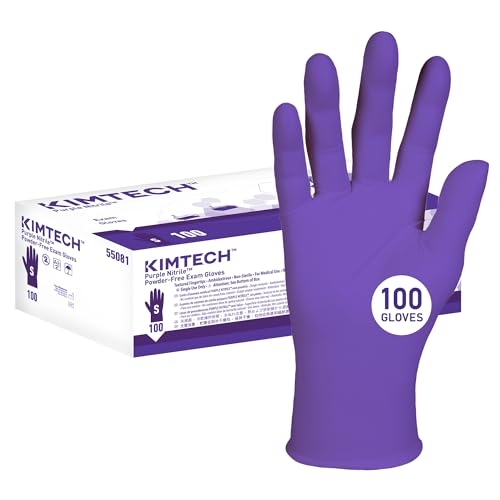
At 5.9 mil, the Ansell Kimtech Purple Nitrile glove hits the exact thickness that provides robust tear resistance without the stiffness that kills instrument feel. Users report that thinner 2-4 mil gloves tear too easily during high-motion tasks, while thicker 12 mil models turn your hands into clumsy mitts — this glove splits the difference perfectly. The textured fingertips add micro-grip that helps you maintain control of ultrasonic scaler handles and explorers during wet procedures.
These are ambidextrous, 9.5-inch length gloves that come in a box of 100, which is practical for an individual operator who doesn’t want to over-commit to a massive case before confirming the fit. The medium-stretch construction means they conform snugly to the hand without creating uncomfortable pressure points, even when you’re wearing them for back-to-back 45-minute appointments. The beaded cuff prevents roll-down, so you don’t get interrupted mid-scale to adjust your glove.
One thing to note: these tend to run slightly small, so if you normally wear a medium in other nitrile brands, consider sizing up to a large. Users with long, narrow fingers love the fit, but those with wider hands may find the snugness limiting. Still, for a daily-workhorse glove that balances speed, safety, and tactile feedback, this is the most versatile pick on the list.
Why it’s great
- 5.9 mil thickness provides excellent puncture resistance without sacrificing dexterity
- Textured fingertips enhance grip on wet instruments
- Beaded cuff stays in place during reaching motions
Good to know
- Sizing runs slightly small — consider ordering one size up
- Only 100 gloves per box, not as economical for high-volume practices
2. HALYARD Purple Nitrile Dental Patient Exam Gloves (53432)

HALYARD specifically markets this glove for dental patient exams, and the construction reflects that focus. The 5.9 mil nitrile formulation is designed for moderate to high exposure to fluids or chemicals — think high-volume suction, ultrasonic scaler spray, and the occasional bleach-based surface wipe. The purple color is a nice bonus for patient psychology: it signals cleanliness and adds a touch of visual fun that families and pediatric patients often appreciate.
Reviews from medical professionals repeatedly highlight how easy these gloves are to don and doff, which directly translates to faster glove changes between patients. The 9.5-inch length provides generous wrist coverage without restricting forearm rotation, and the ambidextrous design means you can grab any glove from the box without fumbling for orientation. One OB/GYN reviewer even noted these are their go-to for deliveries because they don’t tear under the dynamic forces of a clinical setting.
The main trade-off is cost — this is a premium-tier product per box of 100. For a solo hygienist who changes gloves 10-15 times per day, the per-glove cost adds up. However, if you have ever had a glove burst mid-procedure and had to break sterility to change it, you know that one failure can cost you far more in time and frustration than the price difference between two brands. For hygienists who prioritize absolute reliability, this is a top-tier choice.
Why it’s great
- Specifically designed for dental exam fluid exposure levels
- Easy-on design speeds up glove changes
- Excellent puncture and tear resistance for high-motion work
Good to know
- Higher per-box cost compared to standard exam gloves
- Only available in 100-count boxes
3. Ansell MICROFLEX Diamond Grip MF-300 Exam Standard Gloves

The MICROFLEX Diamond Grip MF-300 gloves stand out for their proprietary surface texture, which creates a diamond-pattern grip that is noticeably more aggressive than standard micro-roughened finishes. For a dental hygienist, this translates into rock-solid purchase on scalers, curettes, and explorers, even when your hands are glistening from latex glove sweat. This grip advantage means you can hold instruments with lighter force, reducing hand fatigue over a full day of appointments.
This bundle of 200 gloves offers a per-unit cost that undercuts most competitors in this quality bracket, making it a practical choice for practices that go through a box every two weeks. Multiple users report that these gloves last for extended periods of wear without tearing, with some mentioning they can reuse a single pair for multiple household tasks without degradation. For a hygiene setting where you change gloves often, that durability means each pair withstands the stress of rapid donning and aggressive movement.
The biggest consideration is sizing: these are available in natural fit, and some users have noted that the color and sizing can vary slightly between production lots. Also, while the thickness is substantial, it is not officially rated at a specific mil in the product documentation, so if you need a guaranteed 5.9+ mil for chemical resistance, the HALYARD or Kimtech gloves offer more transparency in that spec. However, for sheer grip confidence during fast-paced instrumentation, this is a standout performer.
Why it’s great
- Diamond-pattern texture offers superior grip on wet instruments
- Bundle of 200 provides excellent value for high-volume use
- Durable enough to survive multiple tasks without tearing
Good to know
- No official mil thickness spec published
- Sizing can vary slightly between production batches
4. HALYARD Sterling SG Nitrile Powder-Free Exam Gloves (41658)
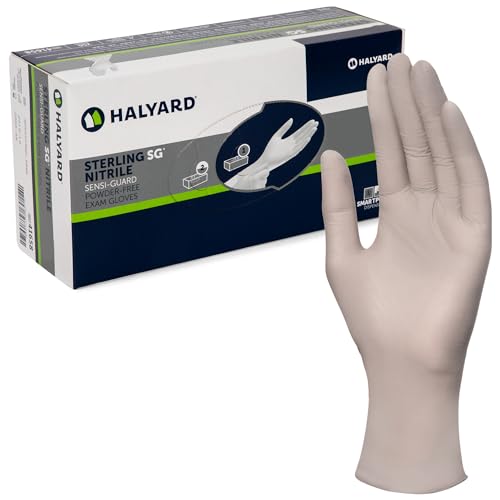
The HALYARD Sterling SG is the workhorse option for clinics that burn through gloves quickly. With 250 gloves per box, it offers the highest count of any product on this list, making it the most economical choice for stocking multiple operatories. At 3.7 mil, these gloves are thinner than the premium options, which means they deliver excellent tactile sensitivity — you can feel the faint roughness of residual calculus through the glove wall without having to press too hard.
The soft nitrile material is designed for comfort during extended wear, and multiple medical professionals have confirmed that these are the same gloves they see used in hospital settings. The powder-free construction means no powder residue contaminates your instruments or the patient’s mouth, and the beaded cuff provides a secure seal around the wrist. Users with small to medium hands consistently report that the fit is true to size and that the gloves go on easily without the material sticking to itself.
The downside of the thinner 3.7 mil design is that you trade some puncture resistance for that tactile sensitivity. Aggressive scaling with a sharp explorer or handling a prophy angle with a worn-out tip could increase the risk of tearing. For hygienists who do mostly periodontal maintenance and are gentle with their instrumentation, this tradeoff is acceptable. For those who work with heavy calculus or do a lot of deep scaling, the extra mil thickness of the Kimtech or HALYARD Purple might be a better long-term investment.
Why it’s great
- Highest glove count per box (250) for cost-effective restocking
- Excellent tactile sensitivity for feeling subgingival deposits
- Soft nitrile material reduces hand fatigue during long appointments
Good to know
- Thinner 3.7 mil material may tear under heavy scaling pressure
- Not ideal for handling harsh chemicals or strong disinfectants
5. SAS Astro-Grip Exam Grade Powder-Free Nitrile Disposable Gloves
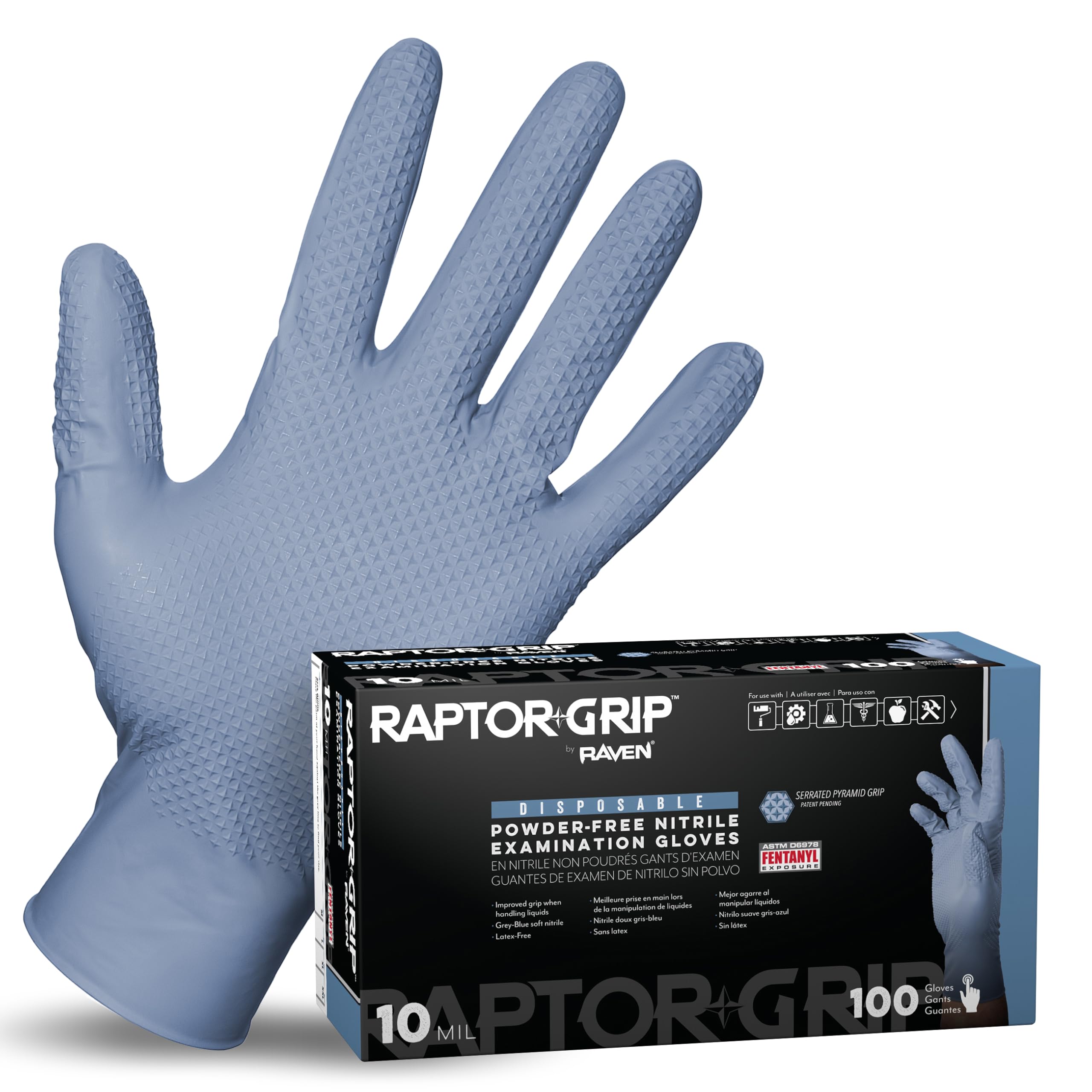
The SAS Astro-Grip gloves are positioned as a general-purpose nitrile option, and they perform well for tasks that don’t demand the heavy-duty puncture resistance of a 5.9 mil glove. Users praise them for painting, mechanical work, and light gardening — contexts where the thin material provides enough barrier protection without sacrificing finger dexterity. For a dental environment, these could work for non-clinical tasks such as room turnover, surface cleaning, or patient paperwork handling.
Multiple reviewers mention that these gloves are durable enough to withstand multiple uses before tearing, which suggests the material quality is solid despite the lower price point. However, the sizing seems to run small, with several users explicitly warning that you should order a size larger than your normal fit. For a hygienist who needs to glove up and down dozens of times per day, an inconsistent fit translates directly into wasted motion and frustration.
The main limitation for clinical use is the lack of a published mil thickness. Without knowing the exact material density, it’s hard to recommend these for high-exposure, high-motion procedures like ultrasonic scaling or root planing. If you need a budget option for stocking a backup drawer or for students who are still building their instrumentation skills, these are a fine choice. But for a full-time practicing hygienist who needs consistent, reliable barrier protection at speed, one of the mid-range or premium options above is a safer bet.
Why it’s great
- Budget-friendly option for non-clinical or backup use
- Lightweight material provides good tactile feedback
- Users report durable enough for multiple wears
Good to know
- No published mil thickness spec, less predictable protection level
- Sizing tends to run small — order one size larger than normal
FAQ
What is the best mil thickness for periodontal scaling?
Why do dental-specific gloves cost more than standard exam gloves?
How many glove changes should I plan for per patient appointment?
Final Thoughts: The Verdict
For most users, the best dental hygienist gloves for fast work winner is the Ansell Kimtech Purple Nitrile because its 5.9 mil thickness hits the perfect balance of tear resistance and tactile feedback, with textured fingertips that improve instrument control during wet procedures. If you want maximum fluid protection and don’t mind paying more per box, grab the HALYARD Purple Nitrile Dental. And for a high-volume clinic that prioritizes tactile sensitivity over extreme puncture resistance, nothing beats the value of the HALYARD Sterling SG with 250 gloves per box.

Mo Maruf
I created WellFizz to bridge the gap between vague wellness advice and actionable solutions. My mission is simple: to decode the research and give you practical tools you can actually use.
Beyond the data, I am a passionate traveler. I believe that stepping away from the screen to explore new environments is essential for mental clarity and physical vitality.