Our readers keep the lights on and my smoothie glass nicely filled. As an Amazon Associate, I earn from qualifying purchases.
You rake the leaves, prep the soil, scatter the seed, water faithfully, and two weeks later you’re staring at bare dirt where your lawn should be. Dense shade under mature trees or along north-facing walls is the single toughest environment for turf grass, and most bags on the shelf simply don’t have the genetics to handle it. The difference between a seed that survives and one that thrives comes down to specific shade-tolerant cultivar blends, not marketing claims.
I’m Mohammad Maruf — the founder and writer behind WellFizz. I’ve spent countless hours analyzing grass seed formulations, fine fescue percentages, germination rates in low-light conditions, and real buyer results across hundreds of verified reviews to identify which dense shade mixes actually hold up under canopy.
This guide breaks down the five highest-performing options so you can stop guessing. Keep reading for the definitive best dense shade grass seed recommendations based on real-world performance data.
How To Choose The Best Dense Shade Grass Seed
Not all shade seeds are created equal. A mix labeled “shade” might contain mostly Kentucky bluegrass, which needs 4+ hours of direct sun. Dense shade requires fine fescue species — creeping red, chewings, or hard fescue — that photosynthesize efficiently in as little as 2 hours of filtered light. Check the species breakdown on the label before you buy.
Sunlight Tolerance vs. Shade Preference
A seed that tolerates shade is not the same as a seed that prefers it. Dense shade mixes should specify a minimum sunlight requirement of 2 to 4 hours. If the bag says “partial shade” or “sun or shade,” assume it leans toward the sun side of that range. For true deep canopy areas, look for “dense shade” on the front of the bag and a fescue-dominant ingredient list on the back.
Seed Coating and Germination Aids
Coated seeds absorb more water per grain, which speeds germination and reduces the window when birds or heavy rain can ruin your work. Some premium mixes include a tackifier that glues the seed to the soil on slopes. Others bundle a starter fertilizer or a “mulch” layer that changes color when dry — a visual cue that saves you from over- or under-watering during the critical first three weeks.
Bag Weight and Coverage Area
Dense shade areas often need a heavier seeding rate because competition from tree roots reduces nutrient availability. A 3-pound bag typically covers 1,800 square feet. A 20-pound bag covers up to 8,000 square feet. Match the bag size to the area you’re repairing. For a single patch under a maple tree, a small bag is enough. For a whole side yard, buy the larger size to avoid mismatched batches.
Quick Comparison
On smaller screens, swipe sideways to see the full table.
| Model | Category | Best For | Key Spec | Amazon |
|---|---|---|---|---|
| Pennington Smart Seed Dense Shade Mix | Mix / Ryegrass-Blue-Fescue | Deep shade full lawns | Requires 2–6 hrs sunlight | Amazon |
| Jonathan Green Dense Shade | Pure Superior Seed | Heavily shaded front yards | 1,800 sq. ft. coverage per 3 lb | Amazon |
| JRK Premium Dense Shade Mix | Premium Fescue Blend | Deep canopy under maples/oaks | Moisture-tolerant fine fescues | Amazon |
| Pennington Smart Patch Dense Shade | Patch Repair w/ Mulch | Bare spots on slopes / dog spots | Tackifier prevents washaway | Amazon |
| Scotts Turf Builder All-Purpose Mix | Sun / Shade Blend | Mixed sun-shade northern lawns | Coated seed, 8,000 sq. ft. | Amazon |
In‑Depth Reviews
1. Pennington Smart Seed Dense Shade Mix

This tri-species blend of Perennial Ryegrass, Kentucky Bluegrass, and Tall Fescue is engineered for areas that receive as little as 2 hours of direct sunlight. Multiple verified buyers report visible sprouts within seven days and thick, movable turf by week two even in heavy shade where nothing grew before. The mix includes a starter fertilizer that reduces the need for separate soil amendments during establishment.
The 7-pound bag covers a substantial area while remaining light enough to carry, and the combination of disease resistance and traffic tolerance makes it suitable for shaded paths and play areas. One buyer noted that a top-dressing of peat moss helped prevent birds from picking the seed, and after three months the grass withstood heavy foot traffic without thinning.
While a small number of users experienced delayed germination beyond two weeks, those who waited three weeks reported full emergence and thick coverage. The blend’s ability to save water year after year compared to ordinary seed adds long-term value for homeowners with large shaded zones.
Why it’s great
- Germinates in 7–14 days in deep shade
- 3 grass species provide season-long color
- Fertilizer included for first feeding
Good to know
- Benefit from peat moss cover if birds are active
- Some bags may need 3 weeks for full germination
2. Jonathan Green 40600 Dense Shade Grass Seed
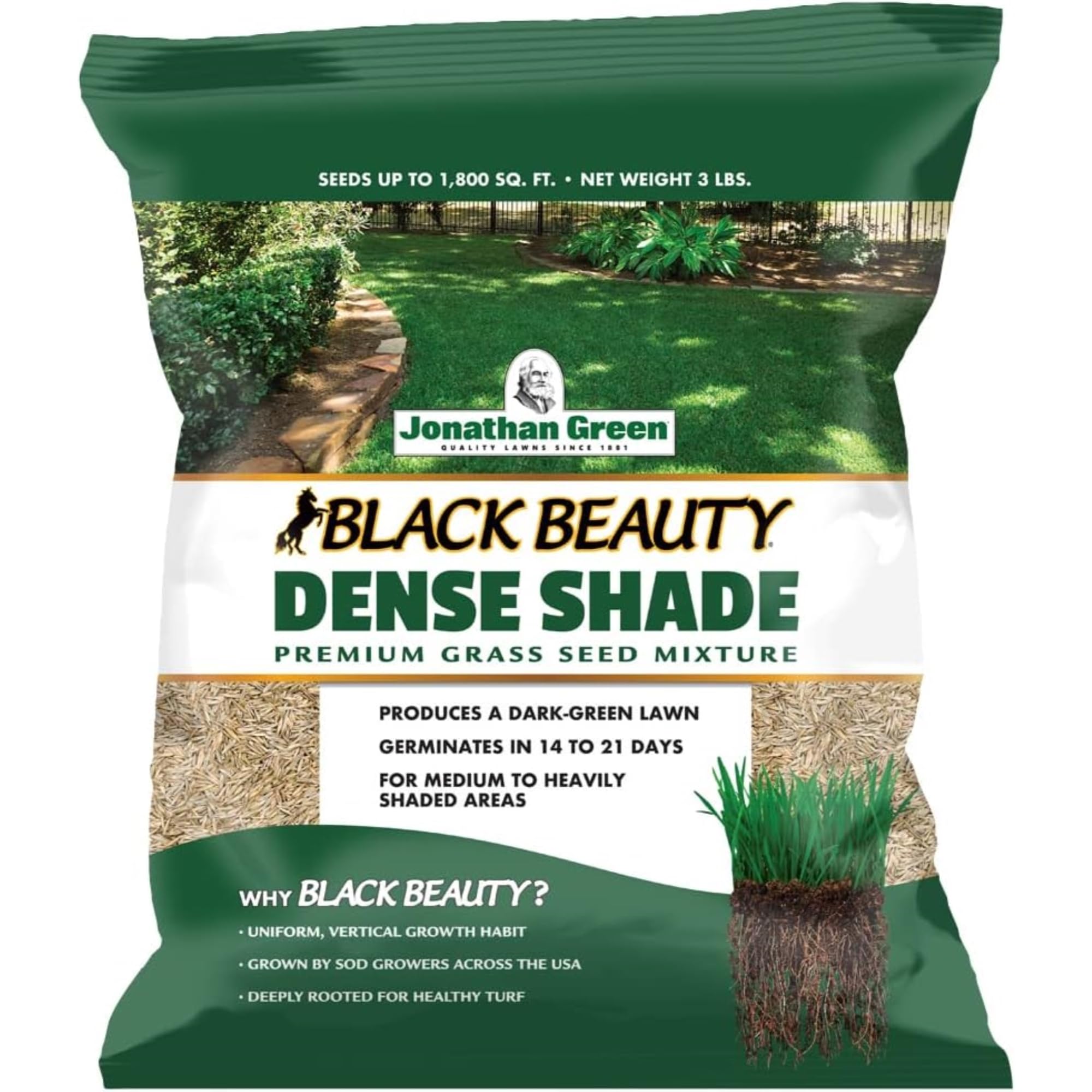
Jonathan Green positions this 100% superior grass seed as a specialist for the toughest shade conditions, and the verified reviews back it up. Multiple buyers with densely shaded front yards — where Bermuda and St. Augustine had failed entirely — reported germination in as little as three days and grass reaching 4–5 inches tall under heavy canopy. The beautiful dark green color and hardiness were frequently praised.
The 3-pound bag is compact, making it ideal for targeted repair of small to medium shaded areas, and the seed requires no additional coatings or mulch to establish. One user noted that while the grass grows well in shade, fallen leaves left on top can kill the new turf, so regular raking during autumn is essential.
This product is not a universal success story: a handful of buyers in very deep shade with poor soil prep reported 5–10% germination followed by die-off after a week, and another user noted the grass declined when temperatures rose into the mid-90s even with watering. That said, the brand’s shade-resistant genetics perform best when planted in spring or fall with consistent moisture and soil contact.
Why it’s great
- Very fast germination — often 3 days
- Rich dark green color and dense stand
- 100% pure seed, no coating or filler
Good to know
- Heat-sensitive above 90°F in deep shade
- Leaves must be removed promptly
3. JRK Premium Dense Shade Grass Seed Mix

This is the option buyers turn to when everything else has failed under solid canopy. The JRK mix features fine fescues bred specifically for heavy shade and moist conditions, and verified customers call it the “quickest germinating seed I have ever used.” One reviewer reported successful establishment directly under a full maple tree where previous attempts with other brands had produced nothing.
The manufacturer recommends fertilizing no more than four times per year and emphasizes consistent irrigation. Users in moderate climates saw germination in one week during summer/fall, while spring planting took 2–3 weeks but produced wide-bladed grass that filled in densely. The cloth bag packaging is a distinctive touch and helps with storage breathability.
On the downside, this mix demands regular watering when temperatures climb above 80°F. Several buyers noted the grass turns brown if daily irrigation is missed despite heavy shade cover. And like most fine-fescue-dominant blends, it does not tolerate flooding — heavy rain killed young plants that later recovered after a dry period. The premium price reflects the enhanced genetics, so it’s best reserved for the most challenging shade pockets.
Why it’s great
- Germinates faster than other dense shade seeds
- Survives under full maple canopy
- Low fertilizer requirement
Good to know
- Must be watered daily above 80°F
- Young grass vulnerable to heavy rain
4. Pennington Smart Patch Dense Shade Mix

This all-in-one patch product combines Tall Fescue and American Rye seeds with a biodegradable mulch and a tackifier that prevents washaway on slopes — a rare feature in the dense shade category. Buyers with virtually zero sunlight in their backyards reported quick germination and a mow-able lawn within a few weeks, praising the tackifier’s ability to hold seed in place during rain.
The 10-pound bag is the second-heaviest in this roundup, making it a strong choice for larger bare areas under shade. The included fertilizer is calibrated for the first month of growth, and the mulch layer changes to a lighter color when dry, telling you exactly when to water without guesswork. This feature alone reduces the risk of overwatering or underwatering during the critical establishment phase.
Not everyone had a perfect experience: one buyer reported zero germination from the patch mix (leaving fertilizer patches visible on the lawn), and another had to use a second product to get acceptable coverage. The tackifier also means the surface looks like brown mulch rather than bare soil for the first week, which may be an aesthetic consideration for some homeowners.
Why it’s great
- Tackifier holds seed on slopes and hills
- Color-change mulch indicates watering needs
- Fertilizer and seed combined in one bag
Good to know
- Mulch layer may look unsightly initially
- Inconsistent results in very deep shade
5. Scotts Turf Builder Quality All-Purpose Mix

While this is not a dedicated dense shade mix, the Scotts Turf Builder All-Purpose 20-pound bag earns a spot for homeowners who need a versatile, large-area solution for a mix of sunny and moderately shady spots. The seed is coated to absorb twice as much water as uncoated seed, which helps germination when tree roots compete for moisture. Verified buyers describe it as a “high quality” seed that comes up nice and thick in both sun and shade when planted in the right season.
The 20-pound bag covers up to 8,000 square feet, making it the most cost-effective option per square foot for northern lawns where grass receives between 4 and 6 hours of filtered sun. It blends well into established turf of blue ryegrass or tall fescue, and several long-term users report deep green color that holds up under heat. The manufacturer’s no-quibble guarantee provides extra confidence for first-time users.
The trade-off is clear: this mix is not formulated for the 2-hour sun environments that the fescue-dominant blends above handle easily. One reviewer noted significant crabgrass invasion that required separate herbicide treatment, and the mix’s performance drops noticeably in full, deep shade. Use it where you have mixed light conditions, not under a solid canopy.
Why it’s great
- High coverage — seeds up to 8,000 sq. ft.
- Water-absorbing coating speeds germination
- Blends well with existing northern grasses
Good to know
- Not a true dense shade formula
- May require crabgrass preventer
FAQ
How many hours of sunlight does dense shade grass seed really need?
What is the best time of year to plant dense shade grass seed?
Can I use regular sun grass seed under a tree and still get results?
Why does my grass seed germinate but then die in shaded areas?
Final Thoughts: The Verdict
For most users, the best dense shade grass seed winner is the Pennington Smart Seed Dense Shade Mix because it combines three complementary grass species with a built-in fertilizer, thrives in as little as 2 hours of sun, and emerges reliably within one to two weeks across a broad range of shade intensities. If your soil stays consistently moist and you need the fastest germination possible under full canopy, grab the JRK Premium Dense Shade Mix. And for repairing bare spots on a slope or a dog-worn patch in deep shade where seed keeps washing away, nothing beats the Pennington Smart Patch Dense Shade Mix with its built-in tackifier.

Mo Maruf
I created WellFizz to bridge the gap between vague wellness advice and actionable solutions. My mission is simple: to decode the research and give you practical tools you can actually use.
Beyond the data, I am a passionate traveler. I believe that stepping away from the screen to explore new environments is essential for mental clarity and physical vitality.