Our readers keep the lights on and my smoothie glass nicely filled. As an Amazon Associate, I earn from qualifying purchases.
The promise of a pantry that never spoils is compelling, but the reality of dehydrated food often lands somewhere between bland mush and a chemistry experiment. Most shoppers assume long shelf life means sacrificing flavor, texture, and nutritional value — a trade-off that feels unnecessary when you are stocking for emergencies, camping trips, or simply reducing food waste.
I’m Mohammad Maruf — the founder and writer behind WellFizz. This guide is the result of cross-referencing shelf-life claims with rehydration ratios, analyzing sodium content against whole-food ingredients, and filtering through thousands of verified buyer reports to separate genuinely edible provisions from shelf-stable regrets.
Whether you need lightweight trail meals, a 72-hour emergency kit, or a rotating pantry anchor that won’t expire in a season, the best dehydrated food delivers on its central promise: reliable nutrition that tastes like real cooking when it matters most.
How To Choose The Best Dehydrated Food
Choosing a dehydrated food system means balancing three variables: shelf-life integrity, rehydration quality, and caloric density per storage volume. The wrong product leaves you with a bucket of powder that no amount of seasoning can save.
Packaging Integrity and Oxygen Barriers
The container determines how long the food actually lasts. #10 cans with oxygen absorbers offer the best barrier against light, moisture, and pests. Buckets with multiple inner resealable pouches allow you to open one portion without compromising the rest, but the pouch seams can fail over a decade. For anything claiming a multi-decade shelf life, check whether the packaging uses mylar layers or simple polyethylene — the difference is years of viable storage.
Rehydration Time and Texture Recovery
Not all dehydrated foods rehydrate equally. Diced carrots and corn typically need 10–15 minutes of simmering, while egg powder reconstitutes in under a minute with cool water. If your use case involves trail cooking where fuel is limited, prioritize products that rehydrate in under five minutes. For home emergency storage, slower-rehydrating whole vegetables deliver better texture and visual appeal in soups and stews.
Serving Size Accuracy and Caloric Yield
Manufacturers define “servings” loosely. A pouch labeled “10 servings” might yield only 200 calories total when reconstituted — barely a snack for an active adult. Look for net weight of the dry product in grams and compare it against your daily caloric requirement. A true meal serving should provide at least 300–400 calories once prepared. Products built around starch-and-protein combos (beans + rice, pasta + meat) hit this target more reliably than vegetable-only blends.
Quick Comparison
On smaller screens, swipe sideways to see the full table.
| Model | Category | Best For | Key Spec | Amazon |
|---|---|---|---|---|
| ReadyWise Whole Egg Powder | Protein Powder | Breakfast & baking protein anchor | 72 servings, 2.1 lbs, <10 min rehydration | Amazon |
| Harmony House Vegetable Sampler | Vegetable Mix | Trail cooking & soup base variety | 15 varieties, 40 cups yield, 2.75 lbs | Amazon |
| Mountain House Beef Stroganoff | Freeze-Dried Entrée | Group camping & emergency comfort meal | 10 servings, <10 min prep, 30-yr shelf life | Amazon |
| Ready Hour Powdered Milk | Dairy Powder | Long-term dairy replacement for everyday use | 144 servings, 25-yr shelf life, 9 resealable pouches | Amazon |
| Ready Hour Black Bean Burger Mix | Plant-Based Entrée | Vegan emergency meals & camping patties | 60 servings, 25-yr shelf life, 10 resealable pouches | Amazon |
In‑Depth Reviews
1. ReadyWise Whole Egg Powder
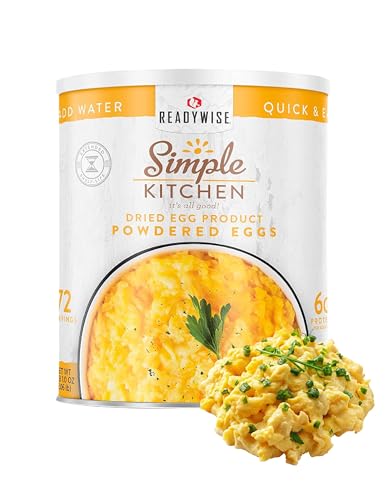
This mid-range powdered egg product solves the single biggest protein gap in any dehydrated pantry. Real scrambled egg texture without the rubbery aftertaste that plagues most powdered egg whites. The 2.1-pound can yields 72 servings, making it a dense protein anchor for breakfast, baking, or emergency rations where real egg nutrition matters most.
Rehydration is near-instant: add a measured amount of cool water, stir, and the powder integrates into a homogenous liquid that scrambles, fries, or folds into batters without clumping. Customer reports consistently confirm it passes the “blind taste test” against fresh eggs when prepared correctly, which is rare in this category. The #10 can format with oxygen absorber ensures the powder stays viable for extended cupboard storage without refrigeration.
The only adjustment new users need to make is water ratio — adding too much creates a thin scramble, so start with slightly less water than the label suggests and adjust. The can’s compact footprint (6.5 x 6.5 x 7 inches) stacks efficiently alongside other emergency food buckets.
Why it’s great
- Mixes and cooks indistinguishably from fresh eggs — verified by hundreds of buyers
- Compact #10 can stores easily and protects against light and moisture
- 72 servings provide protein density most dehydrated meals lack
Good to know
- Water ratio requires dialing in — too much water produces a thin scramble
- Single-can format means once opened, you must use within a few months
2. Harmony House Dehydrated Vegetable Sampler
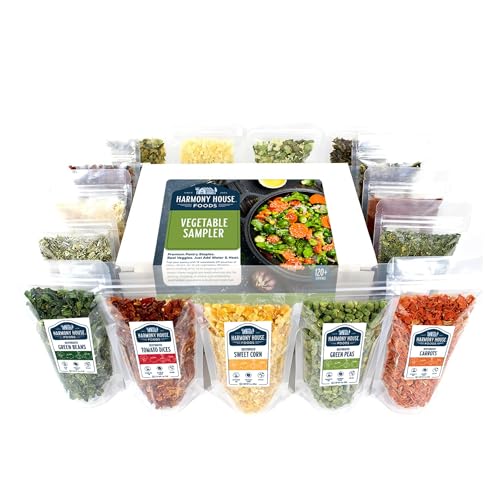
This 15-pouch sampler is the most versatile vegetable kit in the mid-range tier. Each pouch contains a single dehydrated vegetable variety — broccoli, cabbage, carrots, celery, corn, green beans, jalapenos, leeks, onions, peas, bell peppers, potatoes, spinach, and tomatoes. Total yield is 40 cups (10 quarts) of rehydrated vegetables, giving you enough volume for multiple meal builds without committing to a single flavor profile.
The key spec is the rehydration method: these are dried, not freeze-dried, meaning they require a 10–15 minute simmer or an overnight cold soak for best texture. That makes them ideal for basecamp cooking with a stove, but less practical for ultralight no-cook trail use. The jalapeno pouch is notably potent — experienced backpackers recommend using a teaspoon per meal rather than the full portion. Non-GMO, gluten-free, and kosher certified, with no added sodium or preservatives in the vegetables themselves.
Weight-to-yield ratio is excellent: the entire sampler weighs 2.75 pounds dry but produces 40 cups of vegetables, saving significant pack weight compared to fresh options. The resealable zip pouches let you open only what you need, and unopened pouches store in the cupboard for years without quality loss.
Why it’s great
- 15 individual varieties allow custom blending for soups, stir-fries, and omelets
- 40 cups total yield at only 2.75 lbs dry weight — exceptional pack efficiency
- Non-GMO, gluten-free, kosher, and free from added sodium
Good to know
- Rehydration requires simmering or long soaking — not ideal for no-cook trail meals
- Not organic (buyers who prioritize organic should look elsewhere)
3. Mountain House Beef Stroganoff with Noodles
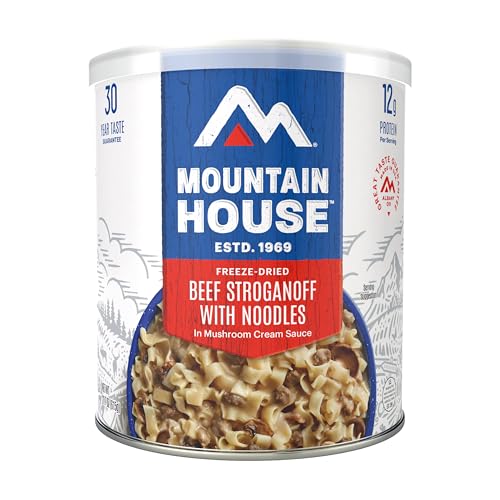
Mountain House is the gold standard for freeze-dried entrées, and this #10 can of Beef Stroganoff with Noodles is the benchmark in the premium tier. The freeze-drying process locks in the creamy sauce, tender beef, egg noodles, and mushroom-onion mix without the chemical stabilizers that compromise flavor in cheaper dehydrated meals. Rehydration takes under 10 minutes with hot water, and the texture of the beef and noodles comes remarkably close to a fresh-cooked stroganoff.
The 30-year taste guarantee is not marketing fluff — Mountain House has the longest proven shelf life in the industry, backed by independent testing. Each can contains 10 servings at 21.7 ounces dry weight. The serving size is calibrated for a substantial meal (not a calorie-deficient snack), making it suitable for group camping, emergency kits, or hunting expeditions where you need real energy without cooking effort. No artificial flavors, no fillers, and the sauce does not separate during rehydration.
One practical note: the #10 can instructions call for a water volume that produces a thinner sauce than the pouch version. Buyers recommend reducing water by about a quarter cup to achieve the creamy consistency the brand is known for. The can format is slightly heavier than pouches, but the 30-year shelf window justifies the storage footprint for long-term preparedness.
Why it’s great
- Industry-leading 30-year proven shelf life with taste guarantee
- Freeze-dried preparation retains meat texture and cream sauce integrity
- No artificial flavors or fillers — clean ingredient list
Good to know
- #10 can instructions produce a thinner sauce than the pouch version — reduce water slightly
- Premium-tier pricing reflects the freeze-dry process and shelf-life research
4. Ready Hour Bulk Powdered Milk
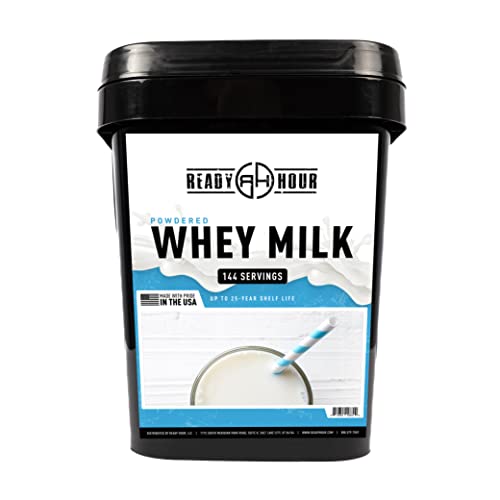
Ready Hour’s powdered milk sits in the premium tier because of its inner-pouch packaging design and 25-year sealed shelf life. The bucket contains nine separate resealable mylar pouches, each holding enough powder for 16 servings of milk. This multi-pouch system is a significant advantage over single-bulk containers — you open one pouch at a time, keeping the remaining eight sealed and fresh for up to 25 years. Once a pouch is opened, it stays good for roughly a year if resealed properly.
The freeze-dried whey formula produces a taste that buyers consistently describe as “creamy” and comparable to fresh whole milk, not the chalky, thin flavor typical of instant nonfat dry milk. It mixes easily with a spoon in cold water without clumping, making it practical for cereal, drinking, coffee, and baking. Each serving delivers 3 grams of protein, and the total protein across all 144 servings reaches 432 grams — meaningful for emergency nutrition where protein is often the hardest nutrient to source.
The bucket dimensions (roughly 10 x 10 x 8 inches) and built-in handle make it stackable and portable. It is flood-safe (the inner pouches have an additional moisture barrier) and requires no refrigeration. For families rotating emergency supplies, the 144-serving yield at this price-per-serving ratio is among the most efficient dairy options in the category.
Why it’s great
- Nine separate resealable pouches prevent spoilage of the entire supply when only one is opened
- Taste is creamy and comparable to whole milk — no chalky aftertaste
- 25-year sealed shelf life with flood-safe bucket packaging
Good to know
- Each serving is only 3g protein — not a standalone protein source for high-activity scenarios
- Bucket is slightly smaller than standard #10 can dimensions, which may affect stacking
5. Ready Hour Black Bean Burger Mix
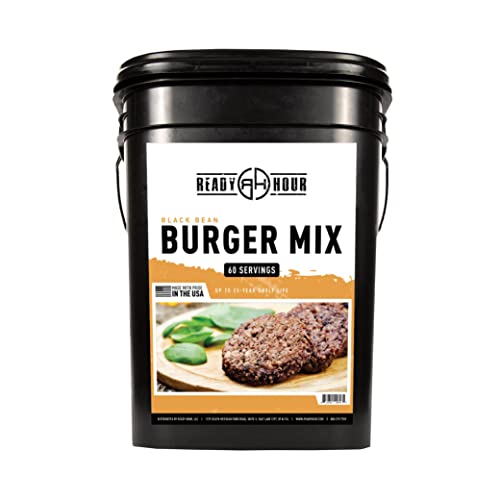
Ready Hour’s Black Bean Burger Mix is a premium-tier plant-based entrée designed for the long haul. The bucket holds 10 separate resealable pouches, each yielding 6 burger patties (60 total servings). The ingredient base is simple: black beans, rice, and oats, with a seasoning blend that buyers report rivals restaurant-style veggie burgers in flavor. The quadruple-wrapped pouch system ensures the mix stays viable for the full 25-year shelf life in sealed storage.
Preparation requires adding water and forming patties, then pan-frying or baking. The mix is dense enough to hold together during cooking without falling apart — a common failure point in DIY dehydrated burger blends. Meat-eaters in household taste tests have rated these burgers positively, making them a viable bridge food for mixed-diet households during emergencies. Vegan certification and the absence of animal products mean no refrigeration is needed at any stage.
The one functional downside is the bucket size: it is slightly smaller in diameter than standard #10 cans, which creates awkward stacking if you are building a uniform emergency food wall. The flavor is on the saltier side straight from the pouch, but adding water and a pat of butter or oil during cooking brings the sodium level into balance. For plant-forward households looking to diversify their long-term storage beyond pasta and rice, this mix provides a complete meal protein that does not require eggs or dairy to work.
Why it’s great
- Complete plant-based protein that holds together during cooking without crumbling
- 10 separate pouches prevent waste — open one pouch at a time over 25 years
- Vegan, non-perishable, and requires no refrigeration at any stage
Good to know
- Bucket diameter is smaller than standard #10 cans, making uniform stacking difficult
- Flavor can be slightly salty straight from the pouch — balance with water and butter during cooking
FAQ
Can I use dehydrated food past its stamped expiration date?
Which rehydration method works for no-cook camping scenarios?
How do I calculate actual servings from a dehydrated food bucket?
Does dehydrated food lose vitamin content over decades?
Final Thoughts: The Verdict
For most users, the best dehydrated food winner is the ReadyWise Whole Egg Powder because it closes the protein gap that every other dehydrated pantry struggles with — real egg texture, instant mixing, and 72 servings in a compact #10 can at a mid-range investment. If you want vegetable variety with lightweight trail efficiency, grab the Harmony House Vegetable Sampler. And for a premium comfort entrée that tastes like home cooking with a 30-year shelf life, nothing beats the Mountain House Beef Stroganoff.

Mo Maruf
I created WellFizz to bridge the gap between vague wellness advice and actionable solutions. My mission is simple: to decode the research and give you practical tools you can actually use.
Beyond the data, I am a passionate traveler. I believe that stepping away from the screen to explore new environments is essential for mental clarity and physical vitality.