Our readers keep the lights on and my smoothie glass nicely filled. As an Amazon Associate, I earn from qualifying purchases.
Backpackers and campers know the drill: you boil water, rip open a foil pouch, and hope the contents taste closer to a home-cooked meal than a salty, rehydrated paste. The right trail meal delivers real flavor, satisfying texture, and enough calories to fuel a long day on the trail — without weighing down your pack or filling your trash bag with excessive packaging.
I’m Mohammad Maruf — the founder and writer behind WellFizz. I’ve spent countless hours analyzing ingredient lists, rehydration ratios, serving sizes, and sodium levels across dozens of freeze-dried and dehydrated meal options to separate the genuinely good from the merely edible.
This guide breaks down the top contenders in the market so you can pick the right pouch for your next trip. Here is my curated list of the best dehydrated camping food for every appetite and adventure style.
How To Choose The Best Dehydrated Camping Food
Not all trail meals are created equal. Some prioritize shelf life over taste, while others pack in calories but push sodium past 2,000 mg per serving. Understanding a few core factors will help you pick a pouch that fits your appetite, pack weight limits, and dietary needs.
Calorie Density vs. Serving Size Claims
A pouch that advertises “two servings” may only hold 400 total calories — barely enough for one hungry hiker. Look at the total calorie count for the entire pouch, then divide by the weight in ounces. A value of 100 calories per ounce or higher indicates a dense, energy-efficient meal. Lower numbers mean you’ll need to pack more pouches to keep your energy up.
Sodium Content and Hydration Planning
Many freeze-dried meals lean heavily on salt for flavor and preservation, with some pouches exceeding 2,500 mg of sodium. While you lose electrolytes through sweat on the trail, excessive sodium forces you to carry and consume extra water. Compare sodium levels per serving and plan your water carry accordingly — especially on dry, high-elevation routes.
Prep Time and Water Requirements
Most pouches require boiling water and a 8- to 15-minute wait. Some meals, like Mountain House varieties, reconstitute in under 10 minutes directly in the pouch. Others, particularly bulk dehydrated vegetable blends, may need a 20-minute simmer or an overnight soak. Faster prep saves fuel and keeps you moving, but longer-soak items give you more control over texture and can be cheaper per serving.
Quick Comparison
On smaller screens, swipe sideways to see the full table.
| Model | Category | Best For | Key Spec | Amazon |
|---|---|---|---|---|
| Mountain House Chicken & Mashed Potato Dinner | Freeze-Dried Entrée | Quick solo dinners | 2 servings, 4.48 oz pouch weight | Amazon |
| Mountain House Classic Biscuits & Gravy | Freeze-Dried Breakfast | Hearty group breakfasts | 3 servings, 6.8 oz pouch weight | Amazon |
| ReadyWise Emergency Food Favorites Box | Survival Food Kit | Emergency prep & multi-day trips | 18 servings, 25-year shelf life | Amazon |
| Jack Link’s Beef Jerky Variety Pack | Protein Snack | High-protein trail snacking | 13g protein per 1.25 oz bag | Amazon |
| Harmony House Dehydrated Vegetable Sampler | Dehydrated Bulk Veggies | Adding veggies to trail meals | 15 pouches, 10 quarts rehydrated | Amazon |
In‑Depth Reviews
1. Mountain House Chicken & Mashed Potato Dinner
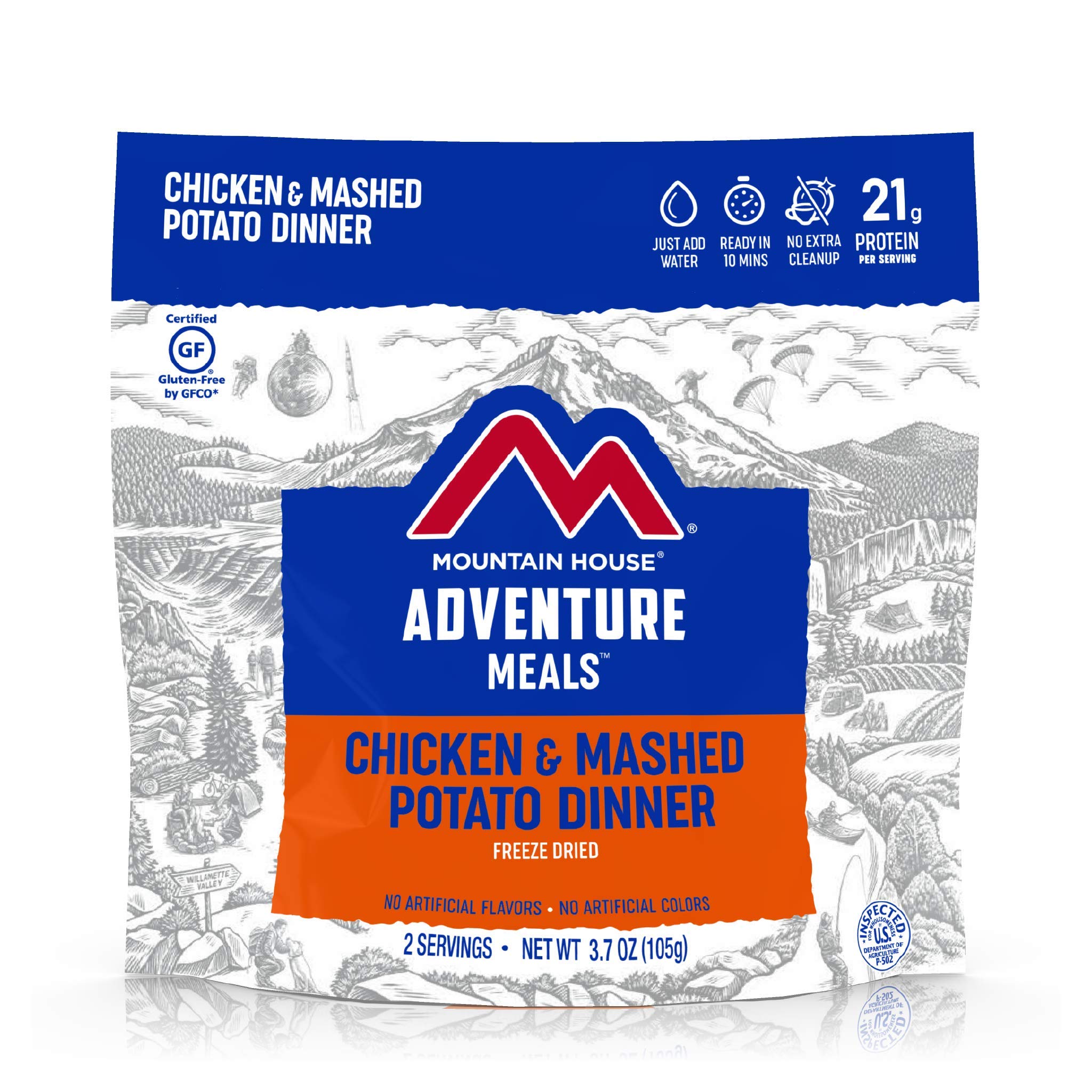
This pouch hits the sweet spot between weight, prep speed, and comfort-food satisfaction. The creamy mashed potatoes are studded with herb-seasoned chicken pieces that rehydrate to a surprisingly tender texture — a rarity among freeze-dried meats. Each pouch weighs just 4.48 ounces but delivers a filling two-serving portion that one hungry backpacker can comfortably polish off, or two can split with a side snack.
Prep is straightforward: add hot water, stir, and wait less than ten minutes. The GFCO gluten-free certification makes it a safe choice for those with sensitivities, and the 30-year taste guarantee means you can stash it in an emergency kit without worrying about rot. Some users note the flavor profile leans mild — a quick dash of garlic powder or black pepper at home can elevate it significantly.
On the trail, the pouch retains heat well, so transferring to a bowl to cool is recommended if you want to eat immediately. The sodium level is moderate for the category, and the chicken-to-potato ratio leans heavily potato, which suits carb-craving hikers but might disappoint those seeking a meat-forward meal.
Why it’s great
- Lightweight pouch at under 4.5 ounces saves pack space
- Certified gluten-free with proven 30-year shelf stability
- Quick 10-minute rehydration with no cleanup needed
Good to know
- Mild flavor out of the pouch; benefits from added seasoning
- Retains heat for a long time after cooking
2. Mountain House Classic Biscuits & Gravy

If you crave a hot, filling breakfast before breaking camp, this three-serving pouch is a contender. It combines buttermilk biscuit pieces with pork patty crumbles in a peppered gravy that reconstitutes into a surprisingly creamy texture. At 6.8 ounces total weight, it’s heavier than single-serve options, but the calorie payoff is substantial enough to fuel a long morning on the trail.
Reviewers consistently praise the taste and texture as among the best in the freeze-dried space, with many noting that it feels closer to a real diner breakfast than a dehydrated ration. The high calorie count is ideal for cold-weather trips where energy demands spike, though the sodium level of 2,940 mg per pouch is a significant factor — be prepared to carry extra water to stay hydrated.
The 30-year shelf life and Made-in-USA production add confidence for emergency food storage, but the price per serving runs higher than building your own dehydrated breakfast from bulk ingredients. Some users report the biscuit pieces can be slightly chewy if under-hydrated, so follow the water measurement closely and let it sit the full time.
Why it’s great
- Authentic comfort-food taste with creamy gravy texture
- Hearty three-serving size perfect for small groups
- Proven 30-year shelf stability for emergency prep
Good to know
- Very high sodium at nearly 3,000 mg per pouch
- Larger pack weight than single-serve breakfasts
3. ReadyWise Emergency Food Favorites Box

This kit offers a broader approach — 18 total servings across multiple entrées like Creamy Pasta & Vegetables, Cheesy Lasagna, and Tomato Basil Soup with Pasta. It’s designed as an emergency food supply with a 25-year shelf life, but the individual pouches are light enough to toss into a backpack for multi-day trips where you want meal variety without buying a dozen separate pouches.
Taste feedback is mixed but leans positive: many users find the meals decent for freeze-dried fare, comparable to grocery-store canned soups once properly hydrated. The biggest caveat is the serving size count — several reviewers note that the “servings” are smaller than advertised, often functioning as a light side rather than a full meal for an adult. This makes the kit better suited as a supplement to other food rather than a complete trail solution.
Prep requires boiling water and some cooking time to fully soften the noodles and vegetables, which uses more fuel than a simple add-and-wait pouch. The stackable box design is convenient for pantry storage, and the sheer variety helps prevent flavor fatigue on longer expeditions. Buy on sale for the best value per serving.
Why it’s great
- Versatile 18-serving kit with multiple entrée flavors
- 25-year shelf life ideal for emergency food storage
- Compact, stackable packaging saves pantry space
Good to know
- Serving sizes are smaller than pouch labels suggest
- Requires cooking time, consuming more fuel than instant pouches
4. Jack Link’s Beef Jerky Variety Pack
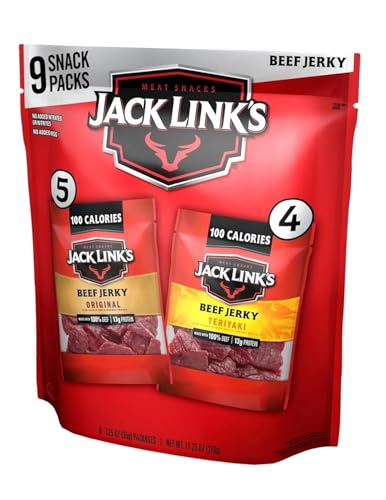
While not a full meal replacement, this jerky variety pack is an essential companion for any dehydrated camping food stash. Each 1.25-ounce bag delivers 13 grams of protein in either Original or Teriyaki flavor, providing a dense, shelf-stable protein boost that requires no water, no prep, and no cleanup. It’s the perfect high-energy snack to eat while hiking between camps or to add protein to a lighter freeze-dried dinner.
The texture is classic Jack Link’s — firm but not tough, with a smoky hardwood flavor that satisfies meat cravings. The 9-pack gives you enough for a long weekend without running out, and the individual bags fit easily into hip belt pockets or the top of a pack. Both flavors are well received, though Teriyaki edges out as the favorite for its slightly sweeter, less salty profile.
Sodium is moderate for jerky, but if you’re combining this with an entrée that already pushes 2,000 mg, your total daily intake can climb fast. No refrigeration is needed, making it a bulletproof addition to any trip or emergency kit. Just note that these are snacks, not meals — you’ll still need a main pouch to fuel serious mileage.
Why it’s great
- Zero-prep protein source ideal for trail snacking
- 9-count variety pack lasts multiple days
- Individual bags are ultralight and packable
Good to know
- Not a full meal; best paired with an entrée pouch
- Can add significant sodium to your daily total
5. Harmony House Dehydrated Vegetable Sampler
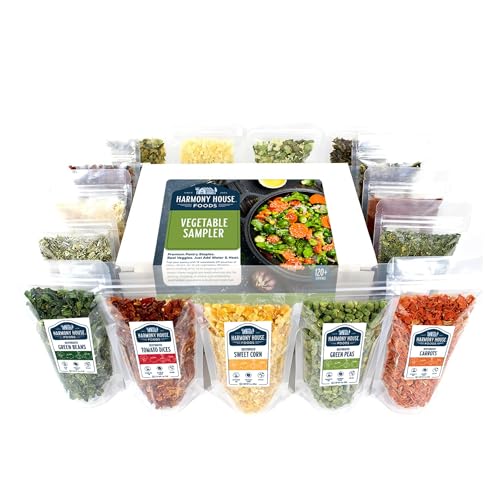
For hikers who want more control over their trail meals, this sampler is a powerhouse. It contains 15 individual resealable pouches of dehydrated vegetables — including broccoli, cabbage, carrots, corn, green beans, peas, bell peppers, spinach, and tomatoes — that together yield 10 quarts when rehydrated. You can add a handful to ramen, instant rice, or a freeze-dried entrée to boost fiber, vitamins, and texture without carrying the weight of fresh produce.
The biggest learning curve is rehydration timing. Some vegetables, like carrots and green beans, benefit from a 20-minute soak or an overnight steep in cold water to reach full tenderness. Jalapeños are exceptionally spicy — a single teaspoon is plenty for most dishes. Users who plan ahead find these veggies transform basic backpacking meals into something far more satisfying, and the lightweight pouches are ideal for long-distance thru-hikes where resupply is scarce.
The sampler is non-GMO, gluten-free, and Kosher OU certified, but the vegetables are not organic, which matters to some buyers. Prep requires either a stove for simmering or patience for cold-soaking, adding complexity compared to instant pouches. If you enjoy building custom meals on the trail, this kit offers unbeatable variety per ounce.
Why it’s great
- 15 vegetable varieties let you customize any backcountry meal
- Extremely lightweight with high rehydration yield
- Non-GMO, gluten-free, and Kosher certified
Good to know
- Requires planning ahead for proper rehydration
- Not certified organic
FAQ
How much water do I need to carry for dehydrated camping meals?
Can I rehydrate dehydrated camping food without a stove?
Final Thoughts: The Verdict
For most users, the best dehydrated camping food winner is the Mountain House Chicken & Mashed Potato Dinner because it balances low pack weight, fast prep, and genuinely comforting flavor in a certified gluten-free pouch. If you want a hearty group breakfast with a classic diner taste, grab the Mountain House Biscuits & Gravy. And for long-distance hikers who want to build custom meals with real vegetables, nothing beats the Harmony House Dehydrated Vegetable Sampler.

Mo Maruf
I created WellFizz to bridge the gap between vague wellness advice and actionable solutions. My mission is simple: to decode the research and give you practical tools you can actually use.
Beyond the data, I am a passionate traveler. I believe that stepping away from the screen to explore new environments is essential for mental clarity and physical vitality.