Our readers keep the lights on and my smoothie glass nicely filled. As an Amazon Associate, I earn from qualifying purchases.
High humidity inside a grow tent is the fastest route to bud rot, powdery mildew, and weak plant structure. A dehumidifier that can handle the enclosed, high-moisture environment of a tent while maintaining precise VPD targets is a non-negotiable tool for any serious indoor grower. Choosing the wrong unit—one designed for a damp basement, not a sealed plant room—can leave you fighting mold for an entire cycle.
I’m Mohammad Maruf — the founder and writer behind WellFizz. I’ve spent hundreds of hours digging into compressor specs, PWM motor technologies, and drainage configurations to separate the units that genuinely control a tent’s climate from the ones that just collect water in a bucket.
This guide focuses specifically on models optimized for enclosed plant environments, where standard home dehumidifiers often fall short. Whether you are managing a small 2×4 tent or a larger multi-plant setup, read on for the top contenders for the best dehumidifier for grow tent tasks.
How To Choose The Best Dehumidifier For Grow Tent
Selecting a dehumidifier for a grow tent is fundamentally different from choosing one for a living room or basement. Tents are sealed, high-humidity microclimates where standard “set-and-forget” humidistats often fail. You need a unit that can handle rapid moisture extraction, integrate into your existing ventilation, and not dump heat back into the canopy.
Match Capacity to Tent Volume
A small 2×2 tent may only need a 2-liter-per-day unit, while a 5×5 tent often requires 12 liters or more. The raw dehumidification capacity (measured in pints or liters per day) must exceed the moisture your plants transpire. For a 4×4 tent with mature plants, a 21-pint (approx. 10-liter) unit is the minimum. Under-spec here, and your RH stays stubbornly high.
Closed-Loop Ducting vs. Ambient Room Drying
Standard home dehumidifiers pull air from the room, dry it, and push it right back into the same room. In a grow tent, this loads the tent with hot, dry air but heats the space considerably. The best grow-tent units offer intake and exhaust ports so you can create a closed-loop system: duct air from the tent into the dehumidifier, duct the dry air back in, and keep the unit outside the tent. This minimizes temperature rise and concentrates drying power on your plants.
Precision Humidity and VPD Control
You don’t just want to keep the air under 60% RH — you need to hit specific Vapor Pressure Deficit (VPD) targets for each growth stage (seedling, veg, flower). Smart controls with a remote sensor probe or app connectivity let you set exact RH percentages and automate the dehumidifier to respond to changes within minutes. Units without this level of control force you to babysit the dial.
Drainage and Auto-Restart
In a tent, you may run lights 18 or 24 hours a day. A small tank that fills in 4 hours will kill your humidity targets unless you empty it constantly. The winning move is a unit with a continuous drain hose. Also, look for auto-restart after a power outage—without it, you lose an entire night of drying every time the circuit trips.
Quick Comparison
On smaller screens, swipe sideways to see the full table.
| Model | Category | Best For | Key Spec | Amazon |
|---|---|---|---|---|
| AC Infinity HYDRONE 7 | Premium Smart | 4-6 plants, AI VPD targeting | 10 drying levels / PWM rotary motor | Amazon |
| VIVOSUN AeroDrain D12 | Premium Smart | Up to 5×5 grow tents, app integration | 12L/day / compressor / dual ducts | Amazon |
| AC Infinity HYDRONE 5 | Mid-Range Precision | 2-3 plants, closed-loop ducting | 10 drying levels / compact footprint | Amazon |
| Onsekin 2000 Sq.Ft Dehumidifier | Rotary Tech | Cold environments, RVs, small tents | 50 dBA / 2.5L tank / 270W heater | Amazon |
| GoGuess 1600 Sq.Ft Dehumidifier | Value Pick | Basements and large rooms | 40 dBA / auto-restart / turbo mode | Amazon |
| PLUSCENT 21 Pint Dehumidifier | Entry-Level Compressor | Small tents, bathrooms, closets | 21 pints/day / 1.5L tank / drain hose | Amazon |
| Trazico 21 Pint Dehumidifier | Entry-Level Compressor | Budget-friendly, medium rooms | 21 pints/day / child lock / auto defrost | Amazon |
In‑Depth Reviews
1. AC Infinity HYDRONE 7
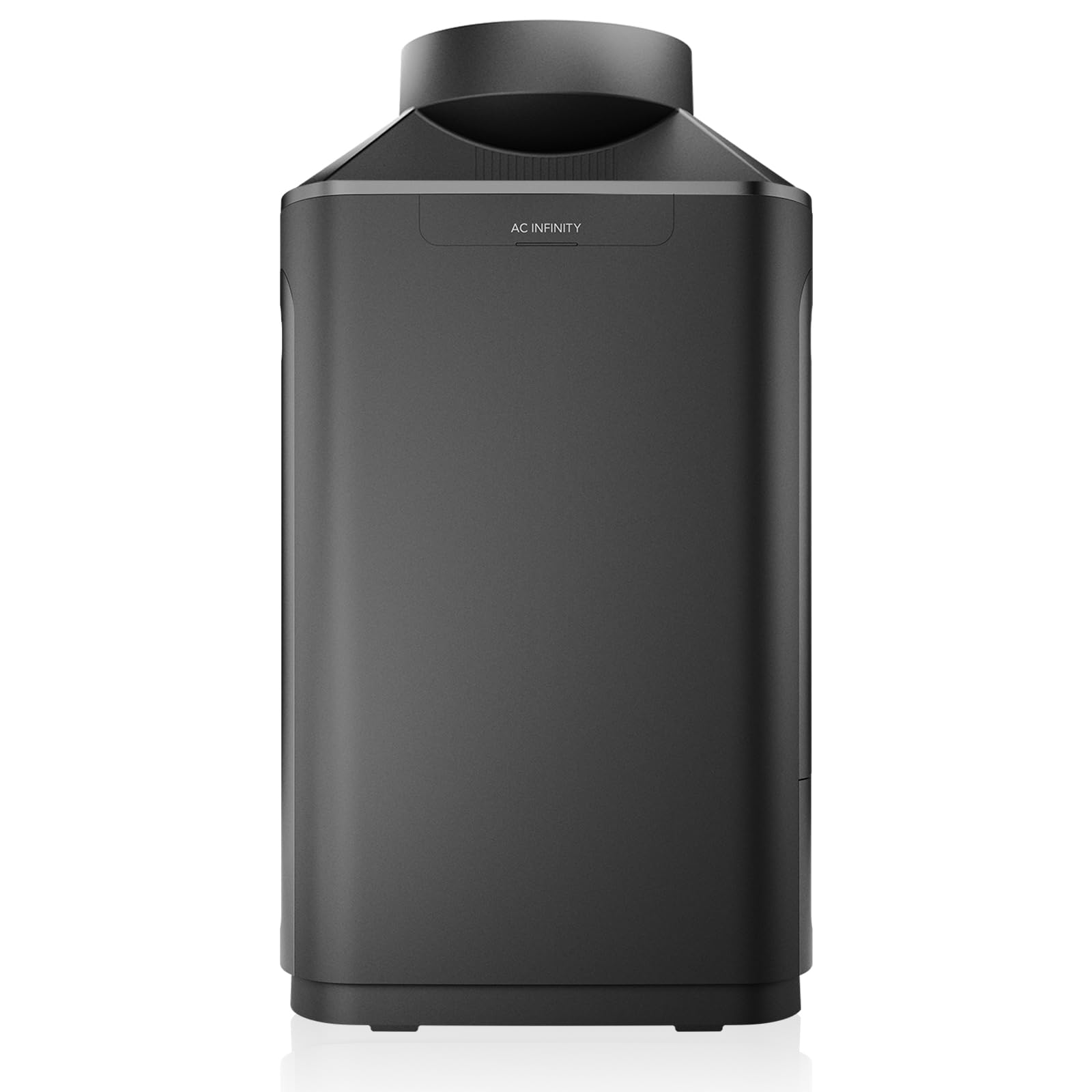
The AC Infinity HYDRONE 7 is the most advanced dehumidifier purpose-built for grow tents. Its proprietary PWM-controlled rotary motor delivers 10 distinct drying levels with instant on-off response, allowing micro-adjustments that standard compressor units simply cannot match. Designed for tents up to 8×4 feet supporting 4-6 plants, this unit uses a closed-loop ducting system where the dehumidifier sits outside the tent, pulling in humid air through one port and returning dry air through another—removing the heat load from the canopy.
Intelligent AI dynamic targeting automates VPD and humidity control, adjusting drying output in precise percentages to maintain your ideal climate. The unit is engineered to perform in both hot environments and extremely cold conditions, a rare capability for compressor-based dehumidifiers. The 7-liter tank is adequate for 24-hour drain hose setups, but the continuous drain is the smarter choice for unattended tent operation.
Some users have noted the unit adds a few degrees to the tent when running outside. However, the level of control—VPD curves, exact RH setpoints, and integration with AC Infinity smart controllers—makes it the most capable option for serious growers automating their environment. The build quality is premium, with a solid chassis and quiet operation at low and medium speeds.
Why it’s great
- 10 drying levels via PWM motor give unmatched precision for VPD tuning
- Closed-loop ducting removes heat load from the tent
- AI dynamic targeting self-adjusts for temperature and humidity swings
Good to know
- Premium price point; overkill for a 2×2 tent
- Some users report minor heat addition to the grow room
2. VIVOSUN AeroDrain D12
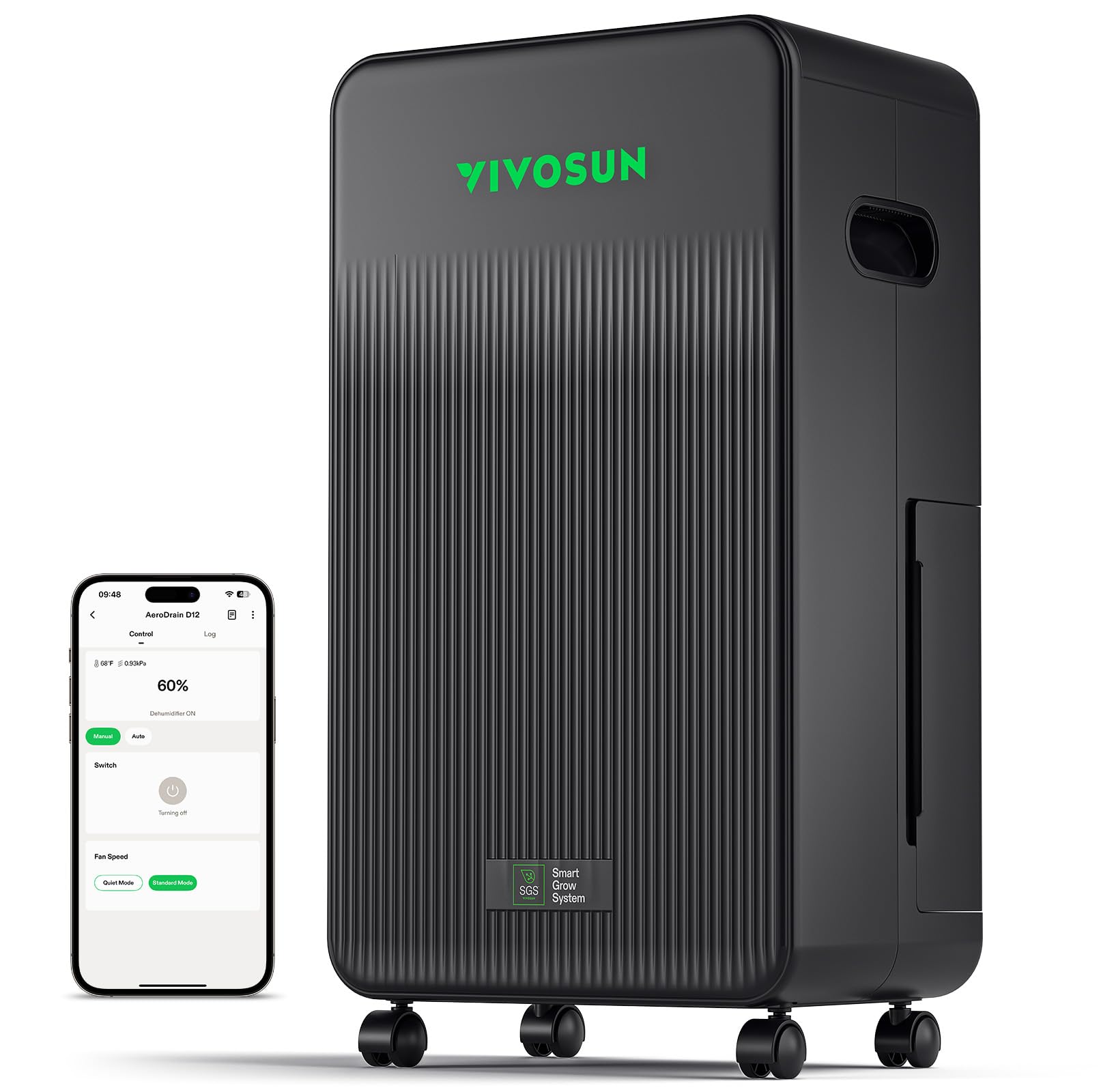
The VIVOSUN AeroDrain D12 brings true smart-home integration to the grow tent. It connects to the Vivosun app for remote monitoring and automation, seamlessly syncing with other VIVOSUN Smart Grow System devices like lights, fans, and humidifiers. The high-efficiency compressor removes up to 12 liters of moisture daily, and dual duct ports allow you to run a closed-loop setup similar to the HYDRONE 7. A remote temperature and humidity sensor probe gives you spot readings at canopy level rather than relying on the unit’s internal sensor.
Tool-free installation and built-in caster wheels make setup and repositioning effortless. The 2-liter tank is small for a unit of this capacity, but the continuous drain option via the included hose solves that issue entirely. Auto shut-off when the tank is full and auto-restart after a power outage provide reliable 24/7 operation. At roughly 200 watts max draw, it is energy-efficient for its output.
One reviewer noted that in a 4×4 space with very high ambient humidity, the D12 struggled to keep up with peak transpiration. However, for tents up to 5×5 feet in normal conditions, it performs as a workhorse that can be monitored from your phone. The app connectivity is a genuine differentiator—set VPD targets and get alerts if conditions drift.
Why it’s great
- VIVOSUN app integration for remote monitoring and automation
- Dual duct ports enable closed-loop tent dehumidification
- Energy efficient with auto-restart after power failure
Good to know
- Small 2L tank requires continuous drain for 24/7 use
- May be underpowered for 5×5 tents with extreme ambient humidity
3. AC Infinity HYDRONE 5
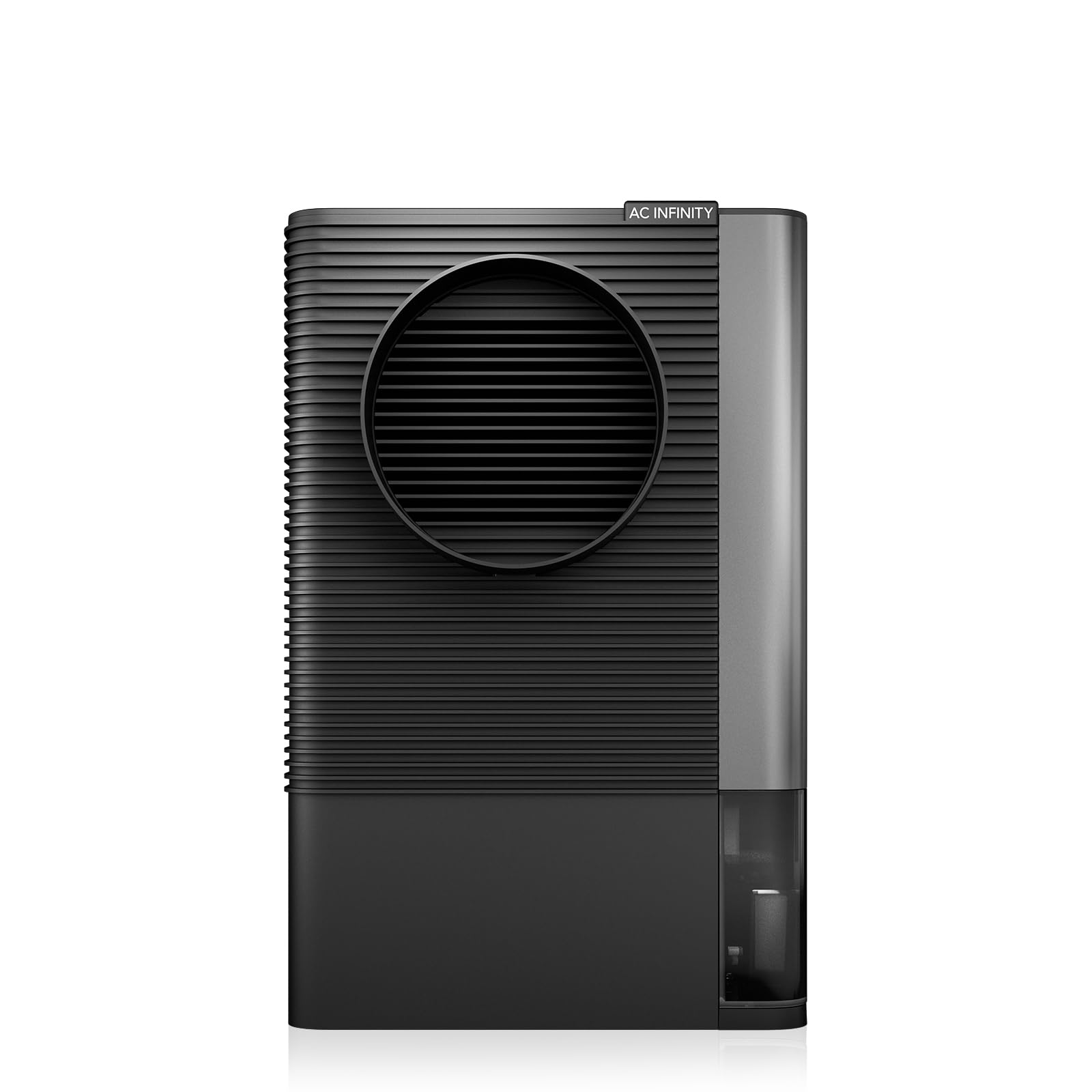
The AC Infinity HYDRONE 5 is the smaller sibling of the HYDRONE 7, sharing the same PWM rotary motor and 10-level precision but in a more compact package ideal for 2-3 plant tents or 2×4 spaces. It features an exhaust port for ducting dry air into the tent and an optional intake port for a closed-loop setup. If you have a small grow space but want the same smart controls (compatible with AC Infinity’s UIS controllers for WiFi app access and AI automations), this is the unit to buy.
Performance in both hot and extremely cold environments is a hallmark of the HYDRONE line. The rotary motor responds instantly to changes in humidity, so you don’t get the temperature lag that compressor units introduce. The 2-liter tank is small—again, the continuous drain hose is the practical choice—and the drain hose is included. The unit measures just 10.2 x 9.5 x 15.7 inches, tucking easily beside a tent without taking up much floor space.
Reviewers consistently praise its quiet operation and fast moisture removal. One 5-star review running it closed-loop on an 8×4 tent reported no heat issues and effective RH reduction. For the price, it offers a better feature-per-square-inch ratio than any standard home dehumidifier placed in a tent.
Why it’s great
- Same PWM motor and 10 levels as the HYDRONE 7 at a lower price
- Compact size fits easily beside small tents
- Closed-loop ducting options for zero heat dumping
Good to know
- Small 2L tank; continuous drain is essential for unattended use
- Designed specifically for 2-3 plant setups; underpowered for large tents
4. Onsekin 2000 Sq.Ft Dehumidifier
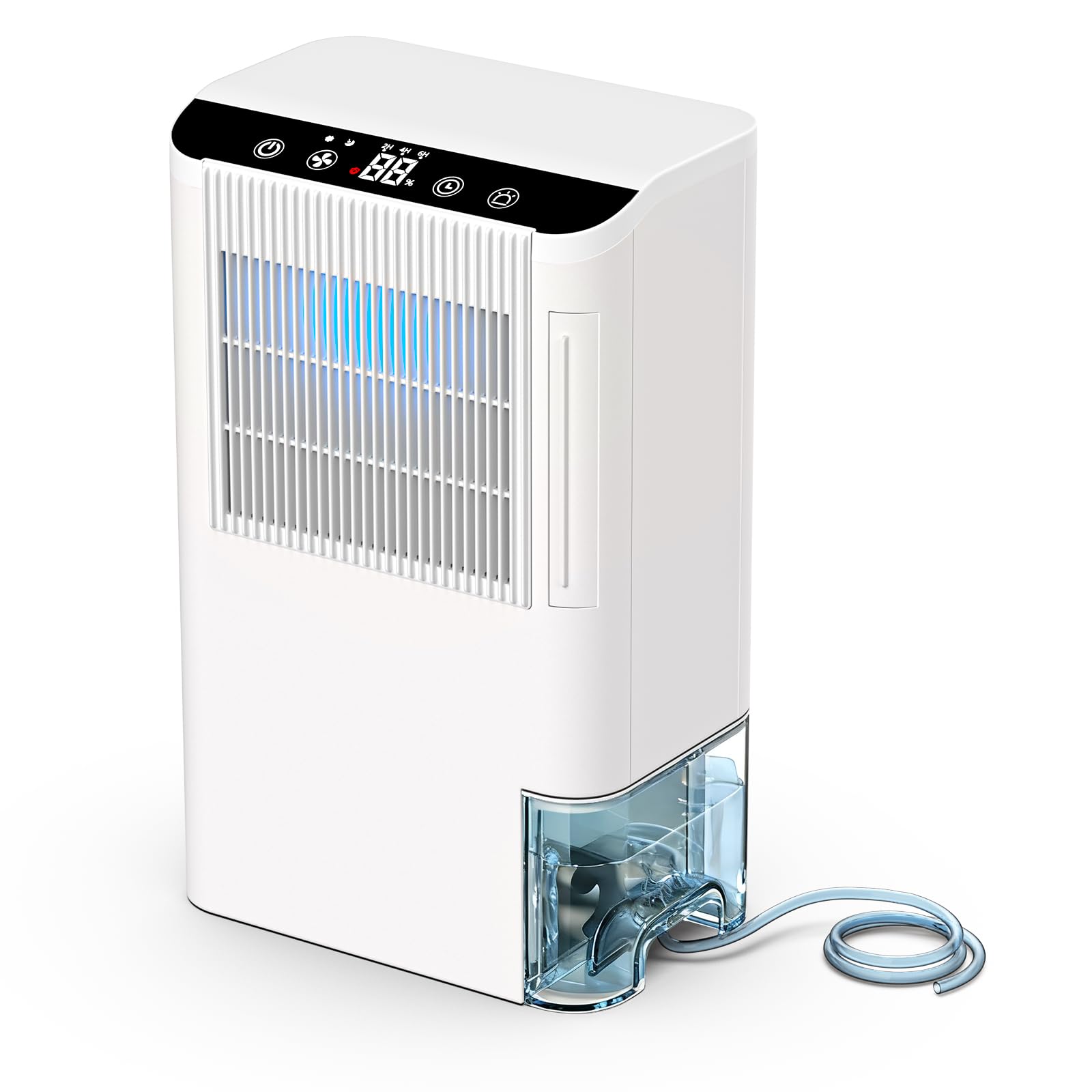
The Onsekin unit stands out because it uses a rotary (desiccant) motor rather than a compressor. This makes it uniquely effective in cold environments where compressor dehumidifiers lose efficiency—temperatures below 60°F. For growers using unheated basements or garages in winter, this is a serious advantage. The 270W heater and fan combo can modulate to hit exact humidity targets, and the digital hygrometer samples air every 3 seconds.
At 50 dBA, it is quieter than many compressor units, and sleep mode drops the fan speed from 2200 to 1900 RPM for an even calmer 46 dBA. The 2.5-liter tank is larger than the AC Infinity units, though you’ll still rely on the included 3.3-foot drain hose for 24/7 operation. The touch panel is intuitive, with timer settings and seven-color ambient RGB lighting that can be turned off.
Rotary dehumidifiers are inherently less efficient than compressors—this unit draws 270W versus a typical 200W compressor for similar output. However, for cold-weather duty cycles, it is the only option that doesn’t stall out. The unit also does not use ozone-depleting refrigerants, which is a nice bonus. It covers up to 2000 sq ft in open rooms, but in a sealed tent, its performance is strong even at low temperatures.
Why it’s great
- Rotary motor works efficiently in cold environments where compressors fail
- Whisper-quiet sleep mode at 46 dBA
- Digital hygrometer with ±2% accuracy for precise RH targeting
Good to know
- Higher energy draw (270W) compared to compressor units
- Not purpose-built for tent ducting—no closed-loop ports
5. GoGuess 1600 Sq.Ft Dehumidifier
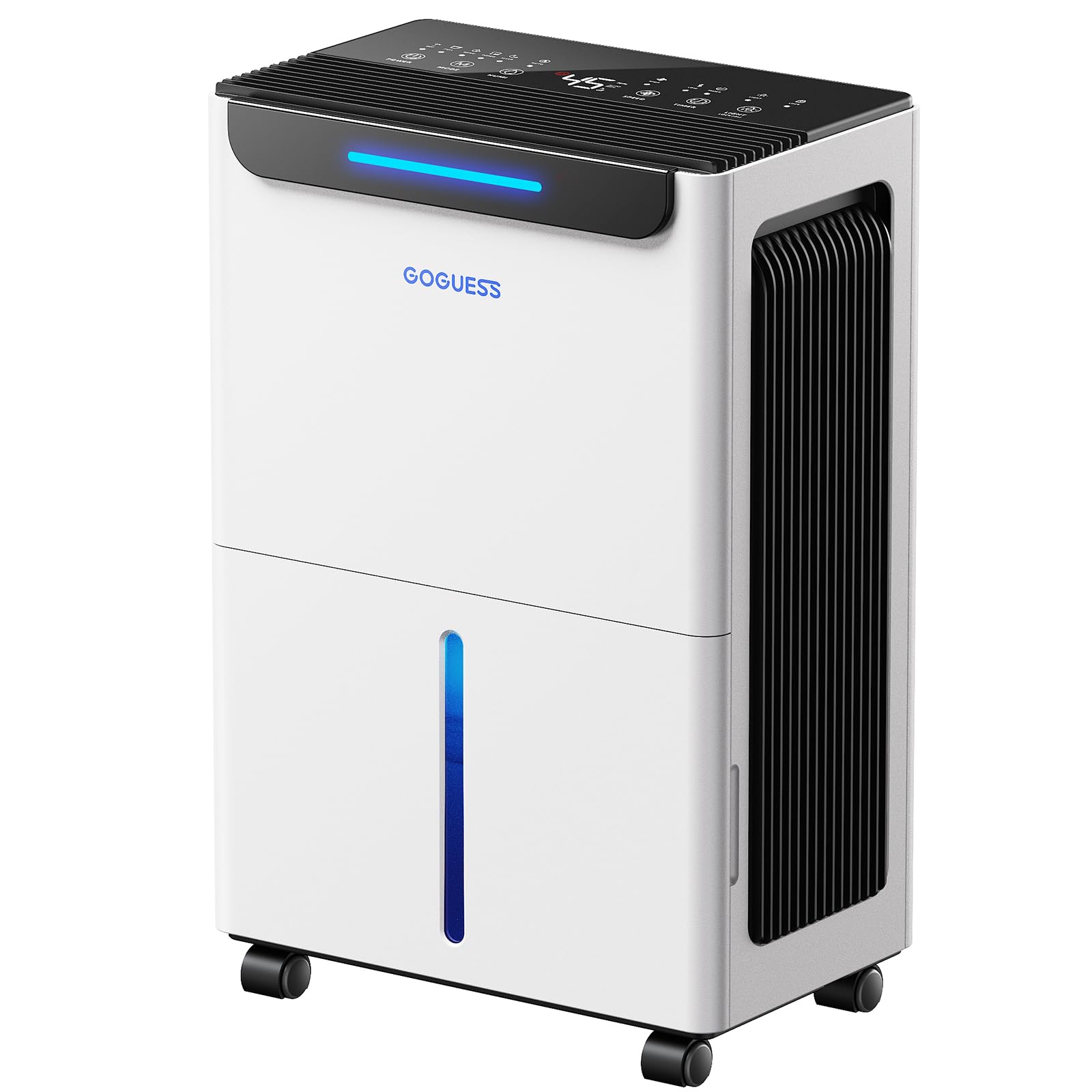
At only 40 dBA, the GoGuess is the quietest unit in this roundup, making it a strong candidate for tents placed in living areas or bedrooms. It offers three intelligent modes: DEHU for precise humidity setpoint control (30%-80% RH), TURBO for rapid drying, and SLEEP for silenced, low-speed operation. The compressor extracts up to 21 pints per day, which is sufficient for a 4×4 tent with average humidity loads.
The 2.3-liter tank is paired with a 3.28-foot drain hose for continuous drainage. The digital display shows real-time RH, and the color-changing LED indicator gives you a glanceable read even when the unit is off. Auto-restart after power failure and a child lock provide peace of mind for long-term unattended use. The dimensions (13.1 x 7.2 x 17.3 inches) and wheels make it fairly portable.
For growers who are not yet ready for a dedicated tent dehumidifier, the GoGuess works fine placed inside a grow room or next to a tent. It lacks duct ports for a closed-loop setup, so it will dump dry air into the room rather than directly into the tent. But its low noise floor and reliable compressor make it a solid entry-level choice for managing ambient humidity around your canopy.
Why it’s great
- Extremely quiet at 40 dBA in sleep mode
- Auto-restart and child lock for safe 24/7 operation
- Color-changing humidity display for quick status checks
Good to know
- No duct ports for closed-loop tent integration
- Tank is small for continuous run; hose is only 3.28 ft
6. PLUSCENT 21 Pint Dehumidifier
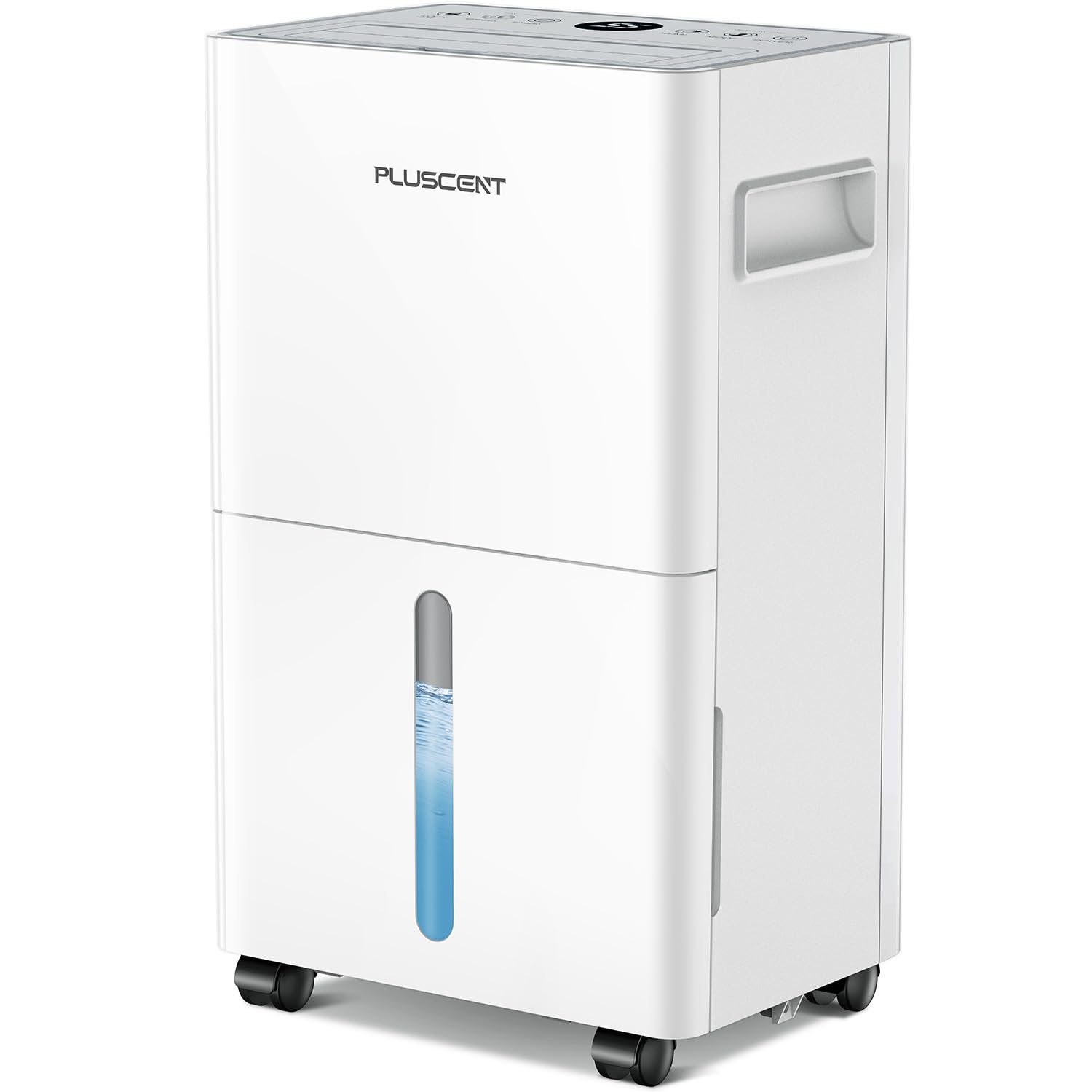
The PLUSCENT 21 Pint is a compact compressor dehumidifier designed for 1500 sq ft spaces, making it suitable for small grow tents or as a supplemental unit in a larger grow room. Its three modes—Dehumidification, Continuous, and Laundry—give you flexibility, and the 24-hour timer helps schedule operation around your light cycle. The unit includes a 1.5L removable tank and a 39.4-inch gravity hose for continuous drainage.
Auto-Defrost technology ensures stable operation in cooler conditions, which is useful for tents in unheated basements. The washable filter and 360° easy-roll wheels make maintenance and repositioning simple. At just 9.5 x 6.7 x 15.89 inches, it is one of the smallest compressor units available, fitting easily into tight spaces.
Reviewers note that the drain line exits from the back rather than the side, which can limit wall placement. The small tank fills quickly in high humidity, so plan on using the continuous drain hose. Overall, this is a budget-friendly entry point into compressor dehumidifiers for growers who need something compact and functional without smart controls or closed-loop ducting.
Why it’s great
- Smallest footprint of any compressor unit in this list
- Auto-Defrost for cooler tent environments
- Washable filter and easy-roll wheels for easy upkeep
Good to know
- 1.5L tank requires frequent emptying without hose
- No smart controls or duct ports for tent integration
7. Trazico 21 Pint Dehumidifier

The Trazico 21 Pint dehumidifier is the most budget-conscious option that still offers a reliable compressor and adjustable humidity control (30%-80%). It removes up to 21 pints per day, matching the PLUSCENT and GoGuess in peak output. Three operation modes—Dehumidification, Continuous, and Dry—give you flexibility for different growing stages. The 24-hour timer allows you to target operation during lights-on when transpiration peaks.
Dual drainage options include a tank that slides out smoothly with a handle, and a continuous drain hose for long-duration operation. The auto-defrost feature protects the compressor during cooler nighttime cycles in the tent. A child lock prevents accidental setting changes, and the built-in wheels and ergonomic handle make it easy to move between zones.
Where the Trazico falls short for tent-specific use is the lack of duct ports or any integration with smart controllers. It is a standalone home dehumidifier that will work if placed outside the tent or inside a large grow room. For absolute beginners looking to manage humidity on a tight budget, the Trazico does the job, but growers serious about precision VPD control should look at the HYDRONE or VIVOSUN options.
Why it’s great
- Budget-friendly entry point with reliable compressor performance
- Adjustable humidity control from 30% to 80%
- Auto-defrost and child lock for safe operation
Good to know
- No duct ports or smart controls for tent use
- Small tank requires hose for unattended 24/7 operation
FAQ
Can I put a standard home dehumidifier inside my grow tent?
How many pints per day do I need for a 4×4 grow tent?
What is VPD and why does my dehumidifier need to control it?
Final Thoughts: The Verdict
For most users, the best dehumidifier for grow tent winner is the AC Infinity HYDRONE 7 because it combines 10-level PWM precision, closed-loop ducting, and AI-driven VPD targeting into a single unit purpose-built for 4-6 plant tents. If you want smart app integration and a slightly lower price point, grab the VIVOSUN AeroDrain D12. And for compact tents or cold-environment setups, nothing beats the flexibility of the AC Infinity HYDRONE 5 or the cold-tolerant rotary motor of the Onsekin.

Mo Maruf
I created WellFizz to bridge the gap between vague wellness advice and actionable solutions. My mission is simple: to decode the research and give you practical tools you can actually use.
Beyond the data, I am a passionate traveler. I believe that stepping away from the screen to explore new environments is essential for mental clarity and physical vitality.