Our readers keep the lights on and my smoothie glass nicely filled. As an Amazon Associate, I earn from qualifying purchases.
A clogged diesel particulate filter (DPF) and a degraded Selective Catalytic Reduction (SCR) system don’t announce themselves with a gentle warning — they hit you with a constant regeneration cycle that dumps fuel, saps horsepower, and can lead to a repair bill that equals the value of your truck. The right cleaning chemistry, applied at the right stage of blockage, determines whether you reset your system in an afternoon or schedule a forced shop regeneration.
I’m Mohammad Maruf — the founder and writer behind WellFizz. I’ve spent hundreds of hours cross‑referencing foam‑based DPF cleaners, fuel‑side catalytic treatments, and DEF system maintenance chemistry to separate the formulas that actually reduce soot mass from those that only treat the symptoms.
This guide breaks down the mechanics of both direct‑injection foam cleaners and pour‑in fuel additives, then reviews the products that consistently clear error codes and drop regen intervals — giving you a clear path to the best def system cleaner for your specific diesel platform.
How To Choose The Best DEF System Cleaner
Selecting the right cleaner for your diesel exhaust aftertreatment system depends on the type and severity of the blockage you are facing. A fuel‑side additive works well for mild soot buildup and injector deposits, but a heavily clogged DPF or catalytic converter often requires a direct‑spray foam that reaches the filter matrix through the O2 sensor port. Below are the key factors to consider before buying.
Foam vs. Fuel Additive — The Delivery Mechanism
Foam cleaners are sprayed directly into the DPF or catalytic converter via the oxygen sensor or temperature sensor port. They physically contact the filter substrate and break down carbon and soot through chemical reaction and soak time. Fuel additives, by contrast, treat the entire fuel system and rely on combustion to carry the cleaning agents downstream. Foam is the heavy‑duty option for a blocked system; additives work better as preventive maintenance or for light buildup.
Regen Interval Improvement as a Metric
Experienced diesel owners track the miles between passive regeneration cycles. A healthy DPF might regen every 400‑500 miles on a highway truck. A cleaner that drops soot load from over 100% to near zero or increases the regen interval by 50 to 100 miles provides a measurable, objective proof of performance. Look for products whose customer reviews mention specific before‑and‑after regen data or error code clearance.
Compatibility With Your Engine Platform
European platforms such as the VW TDI and Mercedes Sprinter respond well to specific chemical formulations — Liqui‑Moly’s Diesel Purge is a benchmark for those. Domestic heavy‑duty trucks with Cummins, Powerstroke, or Duramax engines often benefit from broader‑spectrum foam cleaners or fuel‑side kits like Hot Shot’s Secret. Always check that the product is rated for diesel‑specific use and, if you drive a gasoline hybrid with a catalytic converter, verify compatibility before pouring.
Quick Comparison
On smaller screens, swipe sideways to see the full table.
| Model | Category | Best For | Key Spec | Amazon |
|---|---|---|---|---|
| MotorPower Care DPF Foam Cleaner | Foam Spray | Clogged DPF/Catalyst | Direct foam via O2 port | Amazon |
| Liqui-Moly Diesel Purge 2‑Pack | Fuel Additive | Injector/Fuel System | Direct‑inject diesel purge | Amazon |
| Hot Shot’s Secret Fuel Duo | Fuel Additive Kit | Preventive Maintenance | Cetane & lubricity boost | Amazon |
| MotorPower Care Cat Cleaner 2‑Pack | Fuel Additive | P0420/P0430 Code Fix | Gas & hybrid compatible | Amazon |
| Wynn’s DPF Regenerator | Fuel Additive | Frequent Regen Cycles | Lowers soot burn temp | Amazon |
| Nitrox Catalytic Converter Cleaner | Fuel Additive | Emissions Test Pass | Diesel fuel‑system clean | Amazon |
| Blue DEF DEF002-4PK | DEF Fluid | SCR System Refill | 2.5 gal x 4 packs | Amazon |
In‑Depth Reviews
1. MotorPower Care DPF Foam Cleaner
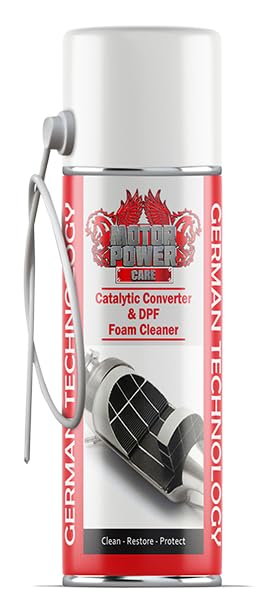
The MotorPower Care DPF Foam Cleaner is a German‑engineered direct‑spray foam that targets the deepest layer of soot and carbon inside a blocked diesel particulate filter or catalytic converter. Its application method — spray through the O2 sensor or temperature sensor port, soak for 20‑25 minutes, reinstall the sensor, and drive — bypasses the weak chemical dilution that fuel‑side additives suffer from. Users report clearing a DPF load from 114% to 0% after a single treatment and a 40‑minute highway drive, which is a dramatic recovery for a plug that prevented a forced regen.
The foam formulation works on diesel, gas, and hybrid vehicles, making it one of the few products in this category that covers both DPF and catalytic converter cleaning without requiring component removal. The included long‑reach nozzle allows you to hit the filter core directly, and the chemical reaction is aggressive enough to dissolve heavy carbon deposits that fuel additives cannot touch. Multiple verified buyers on Mercedes Sprinter, VW TDI, and heavy‑duty diesel platforms confirm that it cleared DPF warning lights and restored engine power after a single can.
Pair this foam cleaner with a periodic fuel‑side additive like the MotorPower Care DPF Purge every 3,000 miles to maintain the results. The only limitation is that some VW and Audi TDI owners needed an OBD‑II tool like Ross‑Tech to reset the soot load to zero after cleaning — the foam loosens the carbon, but the ECU may still read the old soot mass until manually recalibrated. For the price of a single can relative to a ‑ professional cleaning, this delivers extraordinary value.
Why it’s great
- Foam reaches the DPF substrate directly without disassembly
- Cleared 114% soot load to 0% in verified owner reports
- Works on diesel, gas, and hybrid platforms
Good to know
- Some ECUs require a separate soot‑load reset tool after cleaning
- Requires access to the O2 sensor port, which may be tight on certain vehicles
2. Liqui-Moly Diesel Purge 2‑Pack

Liqui‑Moly Diesel Purge is the benchmark pour‑in cleaner for diesel injectors and fuel systems, particularly on TDI and common‑rail platforms. Unlike a simple fuel additive that you dump into the tank, Diesel Purge is designed to be run directly through the injection system — either by filling the fuel filter or using a dedicated feed line — so it contacts the injector nozzles at full concentration. Users on 2003‑2005 VW TDI engines and even newer Duramax platforms report immediate smoothing of rough idle, elimination of startup smoke, and a noticeable power increase within five minutes of operation.
The chemistry targets carbon deposits on the injector tips and inside the combustion chamber, which restores the spray pattern and fuel atomization that degrades over high mileage. One verified buyer on a 2005 Jetta TDI at 207,000 miles stated that after pouring a full can into the new fuel filter and driving with varying RPM, acceleration became immediate and smoke at startup completely disappeared. The two‑pack provides a full treatment plus a spare for the next fuel filter change, which aligns with the recommended annual preventive maintenance schedule for most diesel owners.
Keep in mind that Diesel Purge is not a DPF or catalytic converter cleaner. It excels at the injection side of the fuel system, but a heavily clogged DPF that requires physical carbon removal will still need a foam‑based product like the MotorPower Care above. The best strategy is to use Diesel Purge after each fuel filter change to keep injectors clean while separately addressing DPF and catalyst buildup with a dedicated cleaner. For a investment that can transform a rough‑running TDI, it is a no‑brainer preventive tool.
Why it’s great
- Runs concentrated through the injection system for maximum contact
- Eliminates startup smoke and rough idle on high‑mileage diesels
- Trusted OEM‑grade chemistry from a German lubricant specialist
Good to know
- Does not clean the DPF or catalytic converter — fuel‑system only
- Requires a fuel‑filter fill or feed‑line procedure, not a simple tank dump
3. Hot Shot’s Secret Fuel Duo

The Hot Shot’s Secret Fuel Duo bundles two 16‑ounce bottles — Diesel Extreme for fuel system cleaning and EDT for everyday diesel treatment — giving you both a deep clean and a maintenance additive in a single kit. This is a strategic buy for owners who want one‑step preventive care: use Diesel Extreme annually to strip deposits from injectors, fuel pumps, and combustion chambers, then treat every tank with EDT to boost cetane and lubricity. Verified buyers on Duramax 6.6L engines noted that four weeks of daily use stopped a ticking noise and improved turbo response, suggesting the lubricity formula reduced high‑pressure fuel pump wear.
The Dual Action chemistry addresses two distinct problems that plague modern common‑rail diesels: carbon buildup from low‑sulfur fuel and poor lubricity that leads to CP4 pump failures. Ecodiesel and other European‑platform owners specifically praise the kit for preventing fuel pump issues on sensitive injection systems. The combo pricing undercuts buying the two bottles separately, and both products are designed to work in tandem — Diesel Extreme strips the varnish, then EDT maintains the clean state and protects against gelling in cold weather.
One note from the user base: the Fuel Duo is not a high‑concentration injector purge like Liqui‑Moly Diesel Purge — it is a tank‑additive system that requires steady use over multiple fill‑ups for full effect. It is best suited as a maintenance protocol rather than a one‑shot rescue for a severely clogged DPF or catalytic converter. For the diesel owner who wants a simple, no‑procedure cleaning and protection regimen, this kit delivers noticeable smoothness and longevity benefits at a reasonable per‑mile cost.
Why it’s great
- Two‑bottle kit covers deep cleaning and daily maintenance
- Cetane boost and lubricity protection reduce fuel pump wear
- Easy tank‑additive application — no fuel filter procedure needed
Good to know
- Requires multiple tanks to see full injector cleaning results
- Not a substitute for direct DPF or catalyst foam cleaning
4. MotorPower Care Catalytic Converter Cleaner 2‑Pack

MotorPower Care’s Catalytic Converter Cleaner 2‑Pack is specifically formulated to address the P0420 and P0430 check engine codes that signal a degraded catalytic converter or lazy oxygen sensor. Unlike many cleaners in this space that are diesel‑only, this formula is compatible with gasoline and hybrid vehicles, making it a versatile option for the household with mixed fuel types. Verified owners on a 1994 Miata and a 2021 Chevrolet Equinox both reported that after using the additive and driving aggressively, the check engine light turned off and their engines regained acceleration and fuel mileage.
The 8.45‑ounce bottle treats a full tank of fuel, and the two‑pack provides either a double‑dose for a stubborn code or two separate treatments for different vehicles. The chemistry works to clean the catalytic converter substrate and the oxygen sensor tip simultaneously, which is critical because a contaminated O2 sensor can falsely signal a failing catalyst. One buyer with a P0175 O2 sensor code saw the light clear the morning after applying two cans to a near‑empty tank and driving with sustained high RPM — a clear indication that the cleaner reached the sensor and removed the coating that was disrupting the voltage signal.
It is important to note that this product cannot repair a physically cracked, melted, or broken catalytic converter. If the substrate has structurally failed, no additive will fix it. However, for the much more common scenario of carbon and sulfur fouling that mimics converter failure, this cleaner provides a alternative to a ‑plus converter replacement. The only real downside is that results depend on driving conditions — short‑trip city driving may not produce enough exhaust temperature for the chemical reaction to fully activate, so a sustained highway run is recommended after the additive is added.
Why it’s great
- Clears P0420 and P0430 codes without replacing the converter
- Works on gasoline and hybrid vehicles, not just diesels
- Two‑pack gives a second dose or treats a second vehicle
Good to know
- Requires a highway drive at sustained RPM to fully activate
- Will not fix a physically cracked or melted catalytic converter
5. Wynn’s Diesel Particulate Filter Regenerator
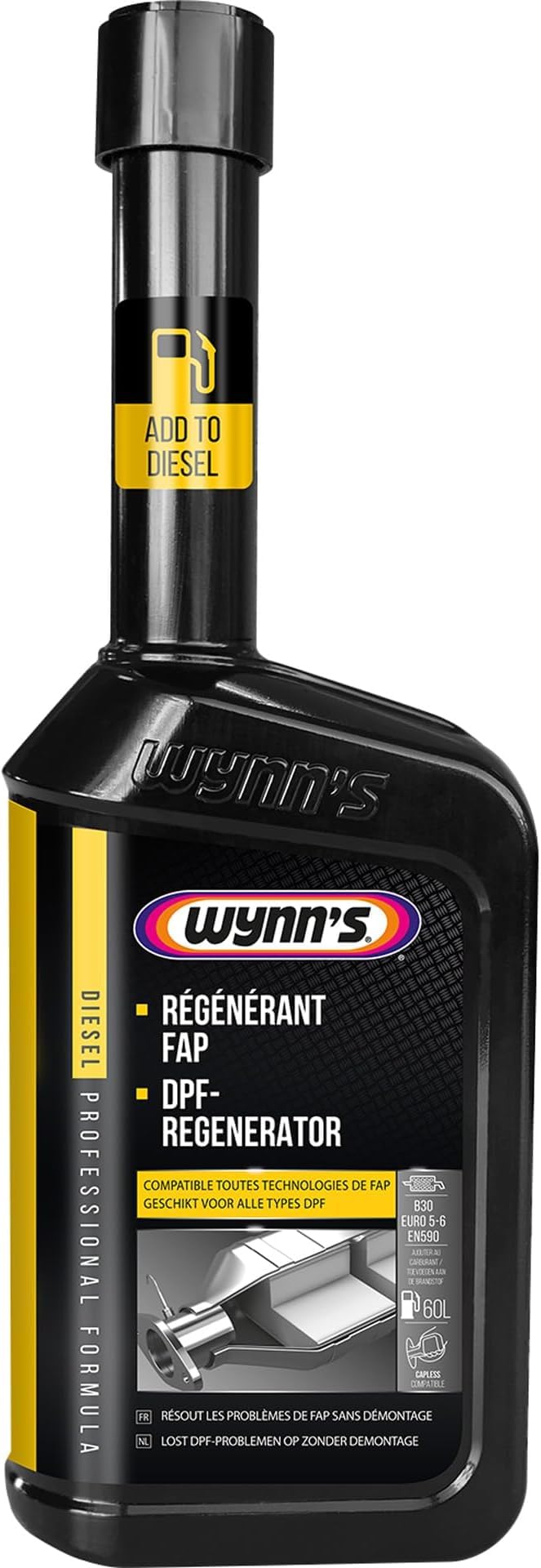
Wynn’s DPF Regenerator is a professional‑grade fuel additive designed to lower the combustion temperature of soot particles inside the diesel particulate filter, allowing them to burn off faster and at lower exhaust temperatures. This is a chemically distinct approach from foam cleaners: instead of physically soaking the filter, Wynn’s modifies the soot structure so that the normal regeneration cycle becomes more effective. One verified owner on a heavy‑duty diesel tracked a regen interval increase from 384 miles baseline to 462 miles after using 1,000 ml in a 26‑gallon tank — an improvement of 78 miles per cycle, which directly translates to less fuel wasted on active regenerations.
The 500‑ml bottle is intended for professional use, but the application is straightforward: pour the full bottle into the fuel tank before a long drive, then maintain highway speeds to allow the chemical to reach the DPF and catalyze the soot burn. Multiple European van and truck owners report that after a single treatment, their DPF warning light cleared and the vehicle ran with noticeably less smoke and better throttle response. The formula is explicitly designed to avoid the need for manual DPF removal, which saves the ‑ cost of a shop regeneration.
One critical detail is that Wynn’s DPF Regenerator works best when the DPF is partially clogged rather than fully blocked. If your DPF is so densely packed with soot that a forced regen fails, you will likely need a foam cleaner first to physically break up the mass, then use Wynn’s to maintain the clean state. Additionally, some users noted that the 500‑ml bottle is sized for a single treatment on a standard passenger diesel — heavy‑duty trucks with larger fuel tanks may require two bottles for full effect. For the price, it is an excellent chemical assist that prolongs DPF life without mechanical intervention.
Why it’s great
- Lowers soot combustion temperature to improve regen efficiency
- Increased regen interval by 78 miles in verified owner testing
- Easy pour‑in application with no disassembly required
Good to know
- Less effective on fully clogged DPFs needing mechanical cleaning first
- 500‑ml size may be insufficient for large commercial fuel tanks
6. Nitrox Catalytic Converter Cleaner
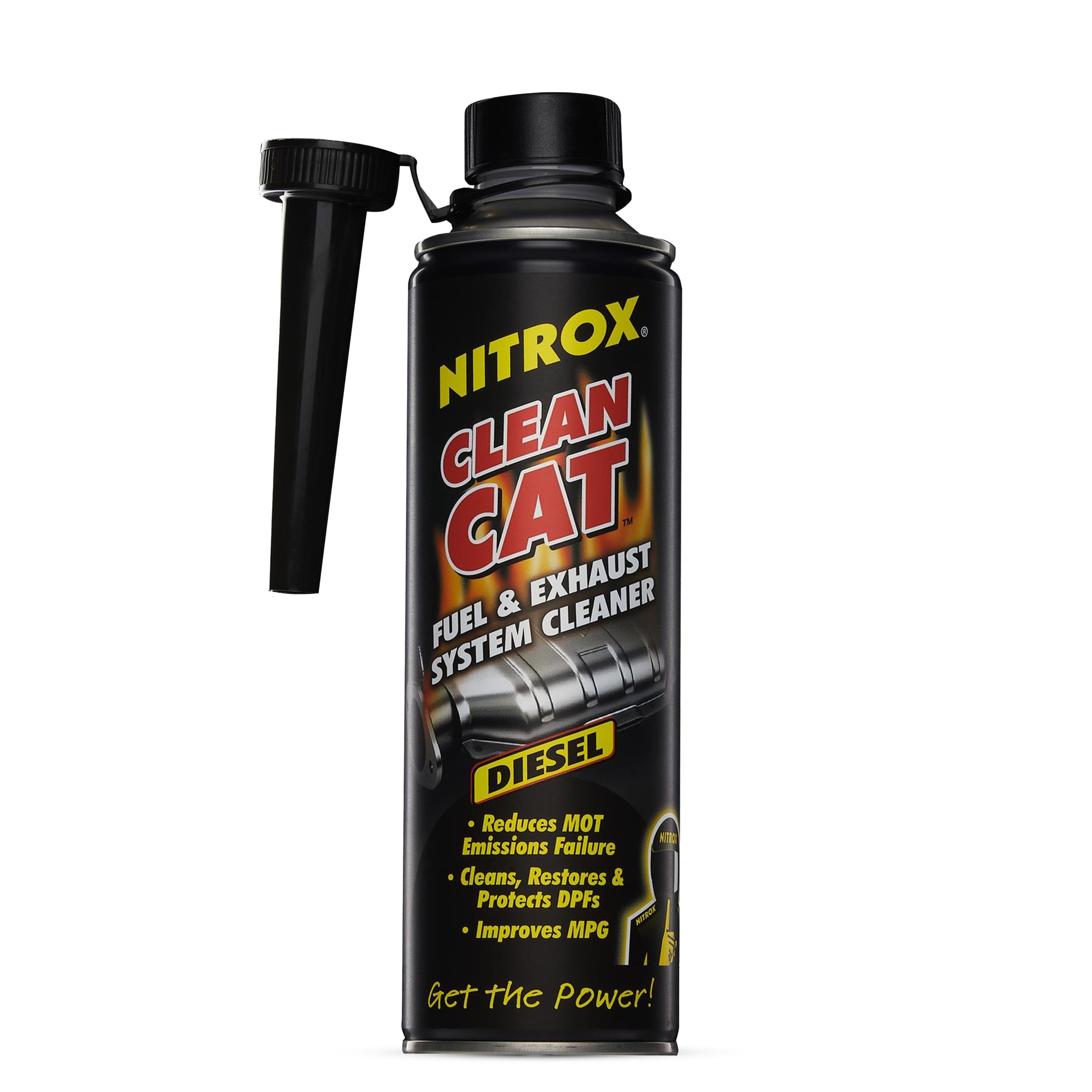
Nitrox Catalytic Converter Cleaner is a multi‑purpose fuel additive formulated for diesel engines that targets carbon and resin deposits throughout the entire fuel and exhaust system. The 17‑ounce bottle is poured directly into the fuel tank, and the manufacturer claims it can help vehicles pass emissions tests while restoring power and fuel economy. Verified buyer reports are split: one owner with a high‑mileage stock diesel truck tracked a regen interval increase from 324 miles to 402 miles after a double‑concentration treatment, while other users saw only modest improvements or no change in performance.
The formula works by circulating through the fuel system and entering the combustion chamber, where the cleaning agents travel downstream to the catalytic converter. This indirect delivery means the concentration reaching the catalyst is lower than a direct‑spray foam, which explains the mixed results — the product seems to shine when used preventively on a system that is not severely clogged. Owners who paired Nitrox with a highway drive at sustained RPM reported more consistent success, including DPF light clearance and smoother idle.
One strong positive is the product’s simplicity: no tools, no sensor removal, no professional procedure required. It is a true pour‑and‑drive solution. The drawback is that for a seriously blocked catalytic converter or DPF, the indirect concentration may not be enough to break through heavy carbon deposits. If you are facing a check engine light and suspect moderate buildup, Nitrox is a reasonable first attempt before escalating to a more aggressive foam or professional cleaning. Just be prepared to try a second bottle or a different approach if the first treatment does not clear the code.
Why it’s great
- Simple pour‑and‑drive application with no tools required
- Some owners saw regen interval increase and DPF light clearance
- Good value for preventive maintenance on mildly dirty systems
Good to know
- Mixed results on heavily clogged DPFs and catalysts
- Diesel‑only formula — not compatible with gasoline or hybrid engines
7. Blue DEF DEF002-4PK

Blue DEF DEF002-4PK is a bulk supply of Diesel Exhaust Fluid packaged in four 2.5‑gallon containers, providing a total of 10 gallons for vehicles equipped with Selective Catalytic Reduction (SCR) systems. This is not a cleaner per se, but the fluid that your DEF system injects into the exhaust stream to break down NOx emissions — and using clean, ISO‑standard DEF is essential for keeping the SCR catalyst and DEF injector free from crystallization and clogging. Contaminated or off‑spec DEF can lead to crystallized deposits, failed NOx sensors, and a derate condition that limits vehicle speed.
The four‑pack value is significant for owners of heavy‑duty trucks, fleet vehicles, and agricultural equipment that consume DEF at a rate of roughly one gallon every 300 miles. A 20‑gallon DEF tank can go up to 6,000 miles between fill‑ups, so this bulk purchase reduces the per‑gallon cost and ensures you always have fresh fluid on hand. Blue DEF is certified to the ISO 22241 standard, which guarantees the correct 32.5% urea concentration and ultra‑low impurity levels that prevent injector clogging and SCR system degradation.
One practical note: the 2.5‑gallon containers are heavy (23 pounds per four‑pack) and the included spouts can sometimes snap during transport. Buyers recommend transferring the fluid to a dedicated DEF dispensing jug with a flexible hose to avoid spills and ensure a clean pour. If your vehicle displays a DEF quality or level warning, topping off with this certified fluid is the first step before assuming a sensor or injector failure. For the diesel owner who wants to maintain a healthy SCR system and avoid costly repairs, this bulk pack is the smart replenishment choice.
Why it’s great
- Bulk 10‑gallon supply reduces per‑gallon cost for frequent users
- ISO 22241 certified for guaranteed purity and concentration
- Essential for maintaining SCR system health and preventing derates
Good to know
- Heavy containers — a dedicated dispensing jug is recommended
- Spout can snap during shipping; handle with care during transfer
FAQ
Can I use a DEF system cleaner in a gasoline engine?
Will a foam cleaner damage my O2 sensor or DPF pressure sensor?
Do I need a diagnostic tool to reset the ECU after cleaning the DPF?
Final Thoughts: The Verdict
For most users, the best def system cleaner winner is the MotorPower Care DPF Foam Cleaner because it physically reaches the filter core and has proven capable of dropping a 114% soot load to zero in a single treatment. If you want preventive injector and fuel‑system care, grab the Liqui-Moly Diesel Purge 2‑Pack. And for maintaining a clean SCR system and avoiding NOx sensor failures, nothing beats the Blue DEF DEF002-4PK bulk pack.

Mo Maruf
I created WellFizz to bridge the gap between vague wellness advice and actionable solutions. My mission is simple: to decode the research and give you practical tools you can actually use.
Beyond the data, I am a passionate traveler. I believe that stepping away from the screen to explore new environments is essential for mental clarity and physical vitality.