Our readers keep the lights on and my smoothie glass nicely filled. As an Amazon Associate, I earn from qualifying purchases.
Deer treat a flourishing garden like an open buffet, leaving behind trampled beds, stripped branches, and a season of hard work ruined overnight. The difference between an effective barrier and a wasted investment comes down to mesh density, material strength, and installation technique — each deciding whether deer are deterred or simply testing the next section of fence.
I’m Mohammad Maruf — the founder and writer behind WellFizz. I have spent countless hours analyzing fencing materials, mesh geometries, and customer feedback across real-world garden and orchard installations to understand what actually stops deer under varying pressure and climate conditions.
This buying guide breaks down the top options for defending your landscape, comparing polypropylene netting against rigid welded wire across height, gauge, and lifespan. Whether you need a seasonal solution or a permanent perimeter, the analysis below will help you identify the best deer fence for your property and budget.
How To Choose The Best Deer Fence
Selecting the right deer fence means balancing height, material durability, mesh size, and ease of installation against the specific deer pressure in your area. The wrong choice leads to expensive failures — deer jumping over, pushing through, or the fence deteriorating within a single season.
Height Is Your First Defense
White-tailed deer can easily clear a 6-foot fence under pressure, which is why 7 feet is the standard minimum for residential garden protection. Many growers opt for 8-foot fencing when dealing with larger bucks or areas where deer are accustomed to jumping. The height you choose directly correlates with the animals’ motivation — well-fed deer near wooded areas are more likely to attempt a high jump.
Material Matters: Netting vs. Welded Wire
Polypropylene netting is lightweight, affordable, and easy to install on temporary posts, but it can degrade under prolonged UV exposure unless treated. Welded wire fencing, especially PVC-coated galvanized steel, offers decades of service life and resists chewing, leaning, and weather damage. The trade-off is weight, cost, and a more labor-intensive setup. For permanent garden perimeters, welded wire is the stronger bet; for seasonal protection of fruit patches, quality netting often suffices.
Mesh Size and Gauge
Smaller mesh (0.75-inch to 1-inch openings) prevents fawns from squeezing through but also blocks birds and small mammals. Larger mesh (2-inch by 4-inch) is common for welded wire fencing but may allow fawns to pass early in the season. Wire gauge matters enormously — 14-gauge welded wire is substantially stiffer than lighter 16-gauge or 20-gauge netting. Thicker material resists deformation when deer lean or push against the fence.
Quick Comparison
On smaller screens, swipe sideways to see the full table.
| Model | Category | Best For | Key Spec | Amazon |
|---|---|---|---|---|
| Fencer Wire 7ft Netting | Polypro Netting | Lightweight garden protection | 0.75″ mesh, 8 lb weight | Amazon |
| Tenax Deer Netting 7×100 | Polypro Netting | Seasonal crop protection | 0.63″ x 0.75″ mesh | Amazon |
| Jobe’s Deer Barrier Fencing | Polypro Netting | UV-treated long-term use | 1.125″ x 0.875″ grid | Amazon |
| Kicari Green Welded Wire | Welded Wire | Rigid permanent perimeter | 12.5 ga coated, 2″x4″ mesh | Amazon |
| HITTITE Black Welded Wire | Welded Wire | High deer pressure zones | 14 ga inner, PVC coated | Amazon |
| FRUITEAM 8ft PP Netting | Polypro Netting | Extra height large areas | 0.7″ mesh, 11 lb weight | Amazon |
| Tenax Deer Fence Kit | Netting Kit | All-in-one setup solution | Includes poles and ties | Amazon |
In‑Depth Reviews
1. Fencer Wire 7 ft x 100 ft Garden Netting

The Fencer Wire netting uses a 0.75-inch polypropylene mesh that is lightweight enough to handle easily yet stiff enough to resist tangling during installation. At 7 feet by 100 feet, it covers a substantial garden perimeter without requiring heavy posts or specialized tools — zip ties and T-posts are sufficient for most setups. Multiple customer reports confirm the material has survived five years of Ozarks weather including snow, wind, and temperature swings without structural failure.
The mesh design is notably wildlife-friendly: the 0.75-inch openings are small enough to exclude fawns and birds but large enough that pollinators and small beneficial insects can pass through. The netting can be cut cleanly without fraying, allowing custom sizing for irregular garden shapes. Users with blueberry patches, fruit trees, and vine crops have all reported effective deer exclusion after installation.
One limitation is that the lightweight material may not withstand aggressive bucks that lean heavily against the fence. Using sturdy posts and frequent zip ties every 2-3 feet helps distribute pressure and prevents deer from pushing through gaps. The netting also ships folded, so it requires some shaking out and stretching to remove creases before final tensioning.
Why it’s great
- Exceptionally lightweight yet durable for multi-season use in varied climates
- Nearly invisible from 70 feet, preserving garden aesthetics
- Can be cut to size without fraying or unraveling
Good to know
- Requires close zip-tie spacing to prevent deer from pushing through
- Ships folded and may need time to relax into full shape
2. Tenax Deer Netting 7 ft x 100 ft
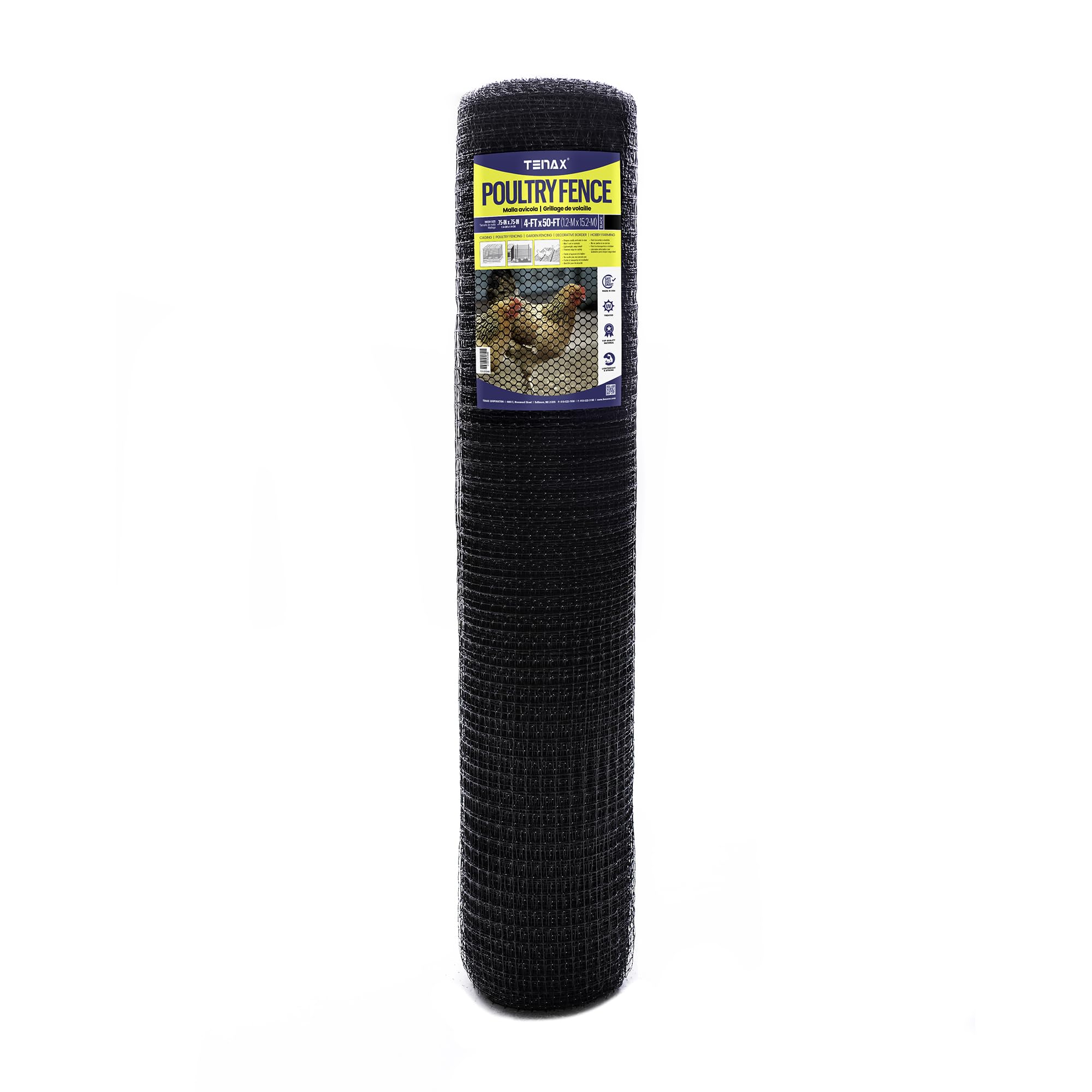
The Tenax deer netting is noticeably thicker and more rigid than standard garden-center netting, making it easier to handle during installation and less prone to tangling. The 0.63-inch by 0.75-inch mesh openings are designed specifically to exclude deer while allowing smaller wildlife to pass. Customers consistently note that the material has a visible stiffness that makes it hold its shape against wind and light animal pressure.
Multiple gardeners report using this netting for four consecutive seasons in flower beds and blueberry rows without degradation or knotting issues. The material rolls up easily for off-season storage and can be reinstalled the following year without losing structural integrity. The 7-foot height requires a helper for installation, but the trade-off is a reliable barrier that deer do not attempt to jump.
The main drawbacks are the price point, which is elevated compared to basic poly netting, and the cut ends, which can be sharp and may require trimming or covering. Some users find the material heavier than expected, but this weight translates directly to durability and longevity. For anyone frustrated by flimsy netting that tangles after one season, the Tenax is a worthwhile upgrade.
Why it’s great
- Thicker, stiffer material resists tangling and wind deformation
- Reusable for multiple seasons without loss of strength
- Larger openings effectively exclude deer while being safer for birds
Good to know
- Higher cost per foot than entry-level netting options
- Cut ends are sharp and may need trimming or taping
3. Jobe’s Deer Barrier Fencing 7 ft x 100 ft

Jobe’s Deer Barrier is a UV-treated polypropylene fencing designed for multi-season outdoor exposure without brittleness. The 1.125-inch by 0.875-inch grid is slightly larger than some alternatives, which can make it more visible from a distance but also easier to work with when attaching to posts. Customers in Arizona report the material holding up under intense sun for two years without significant degradation when paired with UV-rated zip ties.
The material is heavier than standard bird netting but lighter than welded wire, striking a practical balance for DIY installations on 8-foot T-posts. Users have successfully combined this fencing with a rabbit wire bottom section to create a full animal barrier. The 7-foot height has proven sufficient for does and fawns, though some customers note that motivated bucks may test the fence by leaning rather than jumping.
The primary downside is the material’s flexibility — while easier to install than stiff netting, it can sag between posts if not properly tensioned. Storm damage has been reported when branches fall against the fence, creating gaps deer can exploit. For permanent installations in high-wind areas, additional support posts or a top rail are recommended to maintain tension.
Why it’s great
- UV treatment extends outdoor lifespan significantly beyond untreated netting
- Heavier construction than basic netting, easier to handle and attach
- Compatible with electric fence add-ons for high-pressure areas
Good to know
- Can sag between posts if not stretched firmly during installation
- Not rigid enough for drape-style covers over bushes
4. Kicari Green Welded Wire Fence 72 in x 50 ft
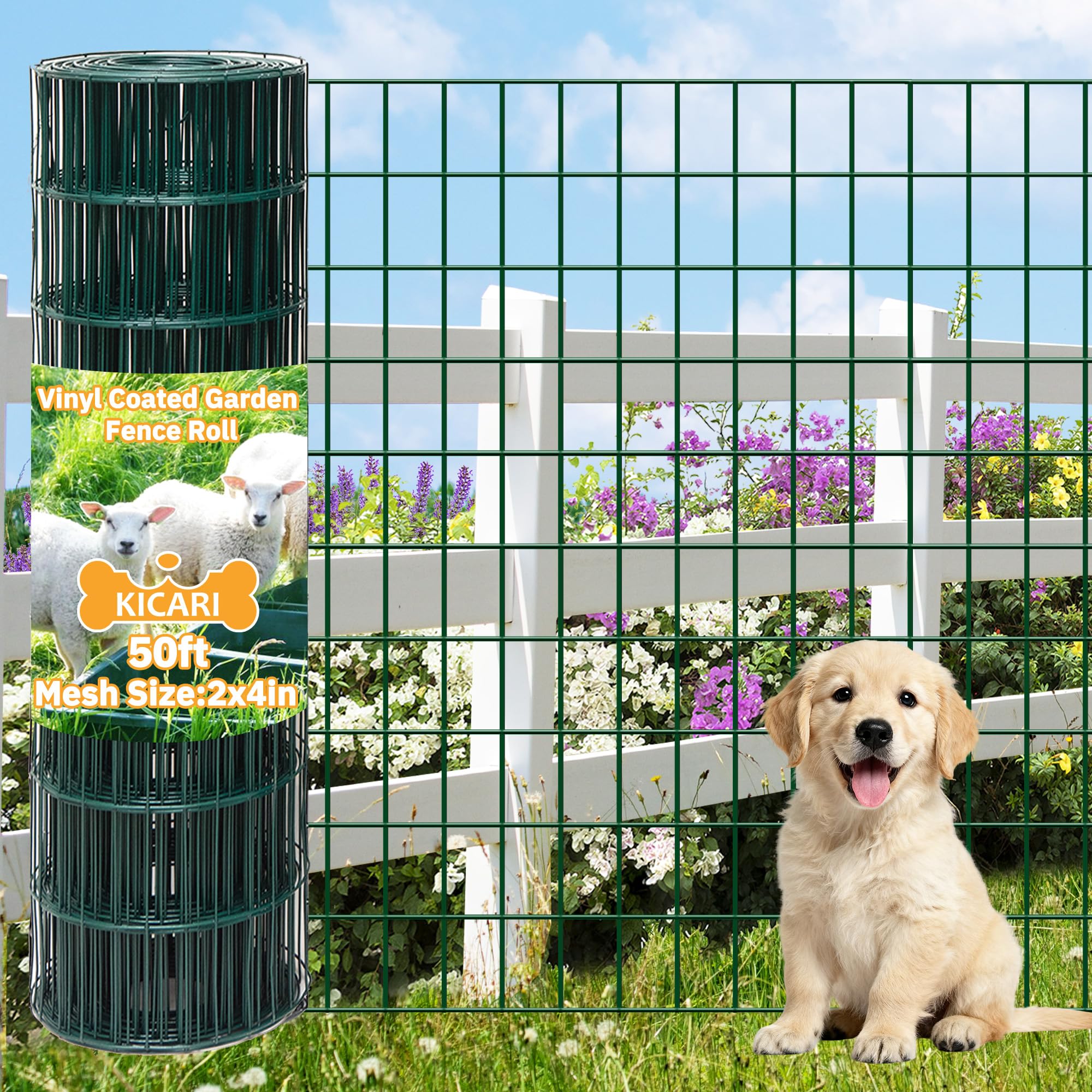
The Kicari welded wire fence shifts the conversation from netting to rigid steel protection. The 12.5-gauge galvanized wire with green vinyl coating provides a permanent barrier that deer cannot push through or deform over time. The 2-inch by 4-inch mesh is a standard dimension for deer fencing — large enough to maintain visibility but small enough to prevent adult deer from squeezing through. Customers frequently cite the coating quality as exceeding expectations for resistance to rust and weather exposure.
Installation requires more effort than netting — the 72-inch height and 50-foot length produce a heavy roll that is best handled by two people. Once installed on wooden or metal posts, the fencing holds its shape year after year without sagging. Users have repurposed leftover sections as tree cages for protecting young saplings, demonstrating the material’s versatility. The green color blends well into garden environments, making the fence less visually intrusive than bare galvanized wire.
The main considerations are the 6-foot height, which may be insufficient for areas with very determined deer, and the need for sturdy anchoring. The rigid wire cannot be draped over plants like netting, so it works best as a vertical perimeter fence. Cutting the wire requires bolt cutters, and the cut ends can be sharp without the coating — gloves are essential during installation.
Why it’s great
- Rigid welded steel construction stops even heavy-bodied bucks
- PVC coating provides exceptional rust and corrosion resistance
- Versatile for garden perimeters, tree cages, and pet enclosures
Good to know
- 6-foot height may not stop high-jumping deer in pressured areas
- Requires bolt cutters for sizing and sturdy posts for support
5. HITTITE Black PVC Coated Welded Wire Fence 72 in x 50 ft
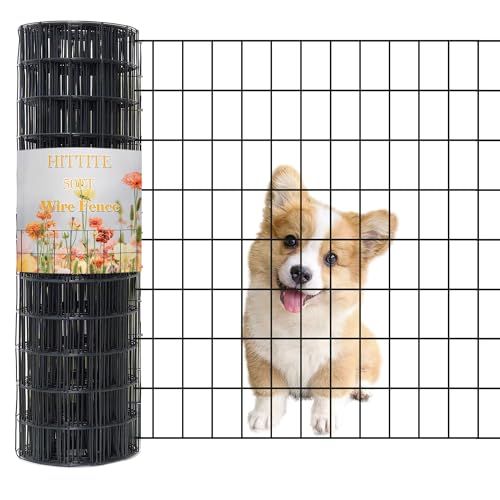
The HITTITE welded wire fencing uses 14-gauge galvanized steel with a black PVC outer coating, providing double-layer corrosion protection that significantly extends service life. The 2-inch by 4-inch mesh is a proven deer deterrent pattern, and the black color minimizes visual impact against wooded backdrops and shaded garden borders. Customers with medium-sized dogs have confirmed the fencing is sturdy enough to contain pets while also excluding deer and other wildlife.
The 72-inch height combined with the rigid weld structure creates a formidable barrier that does not require frequent tensioning or adjustment after installation. Users have enclosed partial yards and orchard sections, often combining this fencing with existing wooden posts or metal T-posts. The material cuts cleanly with angle grinders or bolt cutters, allowing custom fitting around corners and obstacles. One customer noted that the fencing worked so well it allowed them to finally protect plants that had been consistently destroyed for years.
The notable risk is shipping damage — some units arrive with bent sections that require straightening or replacement. The black coating can also scratch during installation, exposing the underlying galvanized layer. For maximum effectiveness, ensure posts are spaced no more than 8 feet apart and use tension wire along the top and bottom to prevent sagging over time.
Why it’s great
- Dual-layer rust protection with galvanized core and PVC coating
- Black finish blends into natural landscapes better than silver wire
- Rigid enough to contain medium dogs alongside deer exclusion
Good to know
- Risk of damage during shipping due to heavy roll weight
- Coating can scratch during cutting or installation
6. FRUITEAM Deer Fence Netting 8 ft x 100 ft
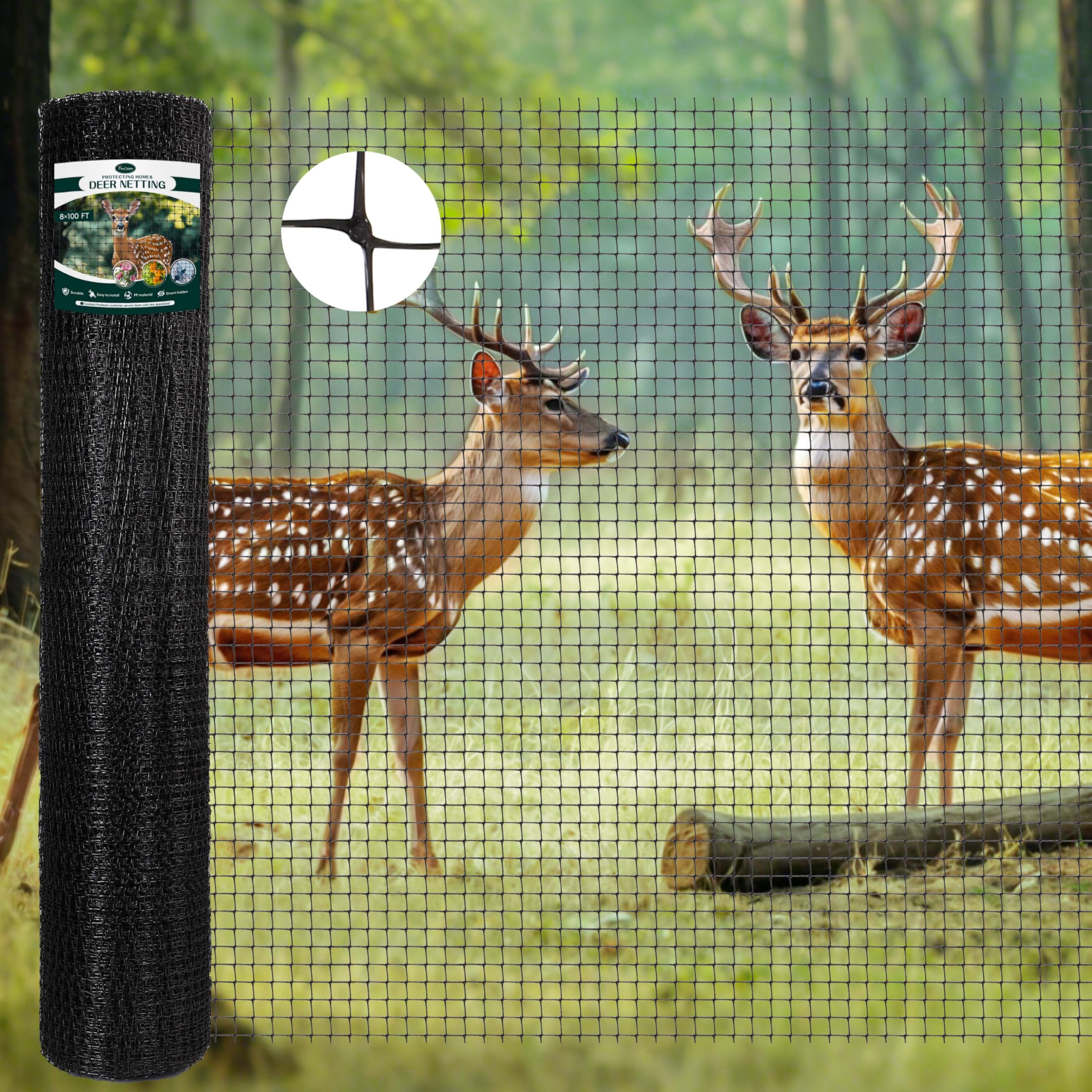
The FRUITEAM netting stands out with an 8-foot height — a full foot taller than the industry standard 7-foot option, making it an exceptional choice for areas with large bucks or deer that have learned to jump lower fences. The 0.7-inch mesh is finer than the typical 1-inch garden netting, reducing the chance of fawns slipping through while still allowing pollinators to access flowers. The polypropylene material is corrosion-resistant and anti-aging, with a 70-gram-per-square-meter density that provides stiffness without being brittle.
Installation is a two-person job due to the longer 100-foot roll and the 8-foot height, but users report completing the setup in two days using 10-foot rebar posts and zip ties. The mesh is tight enough to prevent bird entanglement while still allowing bees and butterflies to pass through — a crucial feature for pollinator-dependent gardens. Customers with blueberry patches and fruit trees have reported immediate results, with deer abandoning their usual feeding routes after the fence goes up.
A manufacturing defect has been reported where the netting arrived out of square, making it difficult to stretch into a straight vertical line. While this appears to be an occasional quality control issue, it is worth inspecting the roll immediately upon arrival. The netting also comes folded for shipping, requiring time and effort to unfold and stretch before installation.
Why it’s great
- 8-foot height provides extra margin against determined jumpers
- Fine 0.7-inch mesh prevents fawn and bird entrapment
- Corrosion-resistant PP material holds up in wet climates
Good to know
- Occasional manufacturing defects causing out-of-square mesh
- Requires two people and tall posts for proper installation
7. Tenax Deer Fence Kit 7 ft x 100 ft

The Tenax Deer Fence Kit bundles everything needed for a complete installation: 100 feet of 7-foot mesh netting, 10 adjustable poles, 50 self-locking ties, and 10 sod staples. This all-in-one approach removes the guesswork of sourcing compatible components separately. The netting has the same 0.63-inch by 0.75-inch mesh as the standalone Tenax roll, offering proven deer exclusion in a ready-to-deploy package.
Customers with blueberry rows and grape vines have reported the kit functional for multiple seasons without knotting or tangling issues. The included poles are adjustable, accommodating uneven ground and allowing for some tension customization. The self-locking ties simplify attachment and reduce the risk of the netting slipping down posts over time. For first-time deer fence installers, the kit reduces the chance of buying incompatible parts or underestimating what is needed for a secure setup.
The trade-off is that the included poles may not be as robust as dedicated T-posts or wooden stakes for permanent installations. Some users replace the kit poles with metal alternatives after the first season for added rigidity. The kit also represents a higher upfront cost than purchasing netting alone, though the convenience may offset the difference for smaller garden areas.
Why it’s great
- Everything included for a complete installation in one box
- Adjustable poles handle uneven terrain without custom cutting
- Netting proven reusable across multiple growing seasons
Good to know
- Included poles may need upgrading for long-term permanent use
- Higher cost than buying netting and hardware separately
FAQ
Is 6 feet tall enough to keep deer out of a garden?
Can deer push through polypropylene netting?
How long does UV-treated deer netting last outdoors?
What is the best post spacing for deer fence netting?
Final Thoughts: The Verdict
For most users, the deer fence winner is the Fencer Wire 7 ft Netting because it delivers proven durability across multiple seasons at a reasonable investment, with a lightweight design that simplifies DIY installation. If you want permanent rigidity that shrugs off any deer pressure, grab the Kicari Green Welded Wire for its steel-reinforced construction and decades-long lifespan. And for maximum height confidence in areas with large bucks, nothing beats the FRUITEAM 8 ft Netting with its extra foot of safety margin.

Mo Maruf
I created WellFizz to bridge the gap between vague wellness advice and actionable solutions. My mission is simple: to decode the research and give you practical tools you can actually use.
Beyond the data, I am a passionate traveler. I believe that stepping away from the screen to explore new environments is essential for mental clarity and physical vitality.