Our readers keep the lights on and my smoothie glass nicely filled. As an Amazon Associate, I earn from qualifying purchases.
A dull knife chews through meat, ruining the careful work of a clean field dressing. A proper deer boning knife separates muscle from bone with surgical precision, saving every ounce of venison and hours of frustrating sawing. The wrong blade leaves shreds behind; the right one follows the natural lines of the animal, turning a messy chore into a calm, efficient process.
I’m Mohammad Maruf — the founder and writer behind WellFizz. My research for this guide involved cross-referencing Rockwell hardness ratings, blade geometry data, and hundreds of verified buyer experiences to identify the knives that genuinely outperform in the field.
Whether you are butchering a whitetail for the first time or breaking down your yearly elk haul, the right tool makes every cut count. This guide breaks down seven blade-specific options to help you find the best deer boning knife for your process and budget.
How To Choose The Best Deer Boning Knife
Selecting a deer boning knife comes down to blade shape, steel composition, and handle ergonomics. A knife built for trimming a tenderloin will struggle when you need to pop a hip joint. Focus on these three aspects to narrow your choice.
Blade Length and Flexibility
Shorter blades (5 to 6 inches) offer more control around joints and tight spaces inside the carcass. A flexible blade is essential for peeling meat off the rib cage and following the contours of the femur. Stiffer blades work better for heavy cutting tasks like breaking through cartilage, but they lack the finesse needed for precision trimming.
Steel Hardness and Edge Retention
Rockwell hardness ratings between 56 and 58 HRC hit the sweet spot for a boning knife. Softer steels (below 55 HRC) dull quickly against bone contact. Harder steels (above 60 HRC) hold an edge longer but become brittle and chip during tough cuts. A 56 HRC blade offers the best balance of lasting sharpness and easy re-honing on a steel or stone.
Handle Grip and Safety
Processing a deer involves blood, fat, and moisture. A slippery handle is dangerous. Thermoplastic rubber (TPR) and textured synthetic materials provide a secure grip even in wet conditions. Full tang construction adds weight balance and durability, while a finger guard protects your hand from sliding onto the blade during forceful cuts.
Quick Comparison
On smaller screens, swipe sideways to see the full table.
| Model | Category | Best For | Key Spec | Amazon |
|---|---|---|---|---|
| Victorinox Fibrox 6″ | Premium | Versatile deer processing | 6″ Flexible blade, stamped steel | Amazon |
| WÜSTHOF Classic 5″ | Premium | Fine detail work & joints | 5″ Forged, high-carbon steel | Amazon |
| HENCKELS Forged Premio 5.5″ | Mid-Range | Home butcher & trim work | 5.5″ Forged, satin-finished blade | Amazon |
| Cutluxe Artisan 7″ | Mid-Range | Filleting & deboning fish/meat | 7″ Flexible, high-carbon German steel | Amazon |
| OUTDOOR EDGE VANTEX 5″ | Mid-Range | Field dressing & game cleaning | 5″ Titanium-coated, alloy steel | Amazon |
| F. DICK ErgoGrip 8.3″ | Value | Filleting & large muscle groups | 8.3″ Flexible, 56 HRC steel | Amazon |
| Mossy Oak Field Dressing Kit | Budget Set | First-time hunters & mobile kits | 4-piece set, TPR handles | Amazon |
In‑Depth Reviews
1. Victorinox Fibrox 6 Inch Flexible Boning Knife
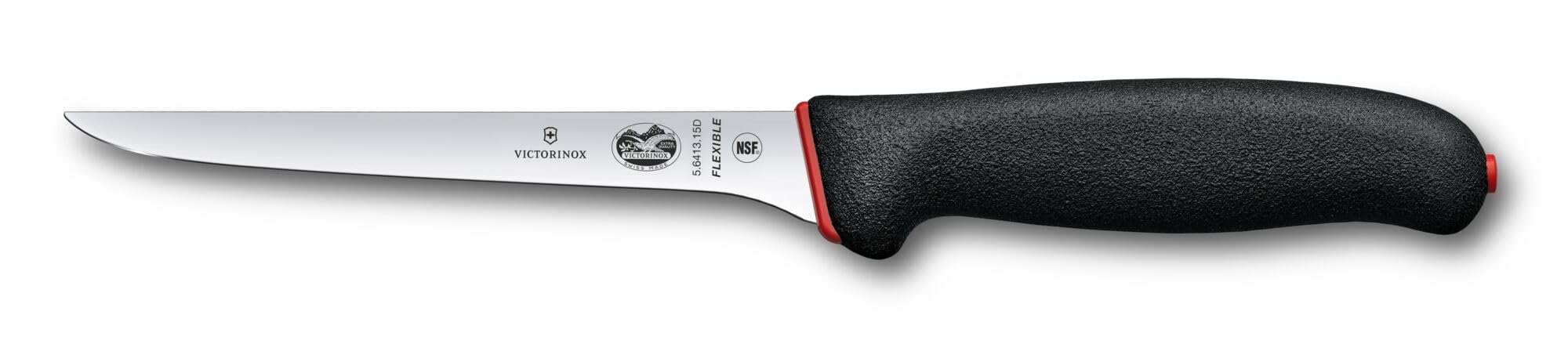
The Victorinox Fibrox is the most trusted boning knife among professional butchers and serious home processors for a clear reason: it works every time. The 6-inch flexible blade follows the contours of a deer carcass with precision, making short work of silverskin removal and joint separation. The stamped steel construction keeps the knife lightweight at just 0.19 pounds, reducing hand fatigue during a long session breaking down an entire animal.
Users consistently report that this knife holds its edge longer than comparable models from Dexter and other prominent brands. The thermoplastic rubber handle is shaped for a secure grip even when your hands are slick with fat and blood, and the curved blade profile allows smooth cuts along the bone without catching or tearing the meat. Professional chefs recommend it as their go-to boning tool, and that reputation holds true for deer processing.
The Fibrox handles everything from trimming a backstrap to deboning a whole shoulder. It is also versatile enough for everyday kitchen use, making it a practical investment that earns its place in any hunter’s kit. The balance between edge retention and easy resharpening makes it a low-maintenance workhorse that performs season after season.
Why it’s great
- Outstanding edge retention out of the box
- Lightweight design reduces wrist fatigue
- Non-slip handle performs well in wet conditions
Good to know
- Stamped blade may feel less substantial than forged options
- No sheath included for field carry
2. WÜSTHOF Classic 5″ Boning Knife
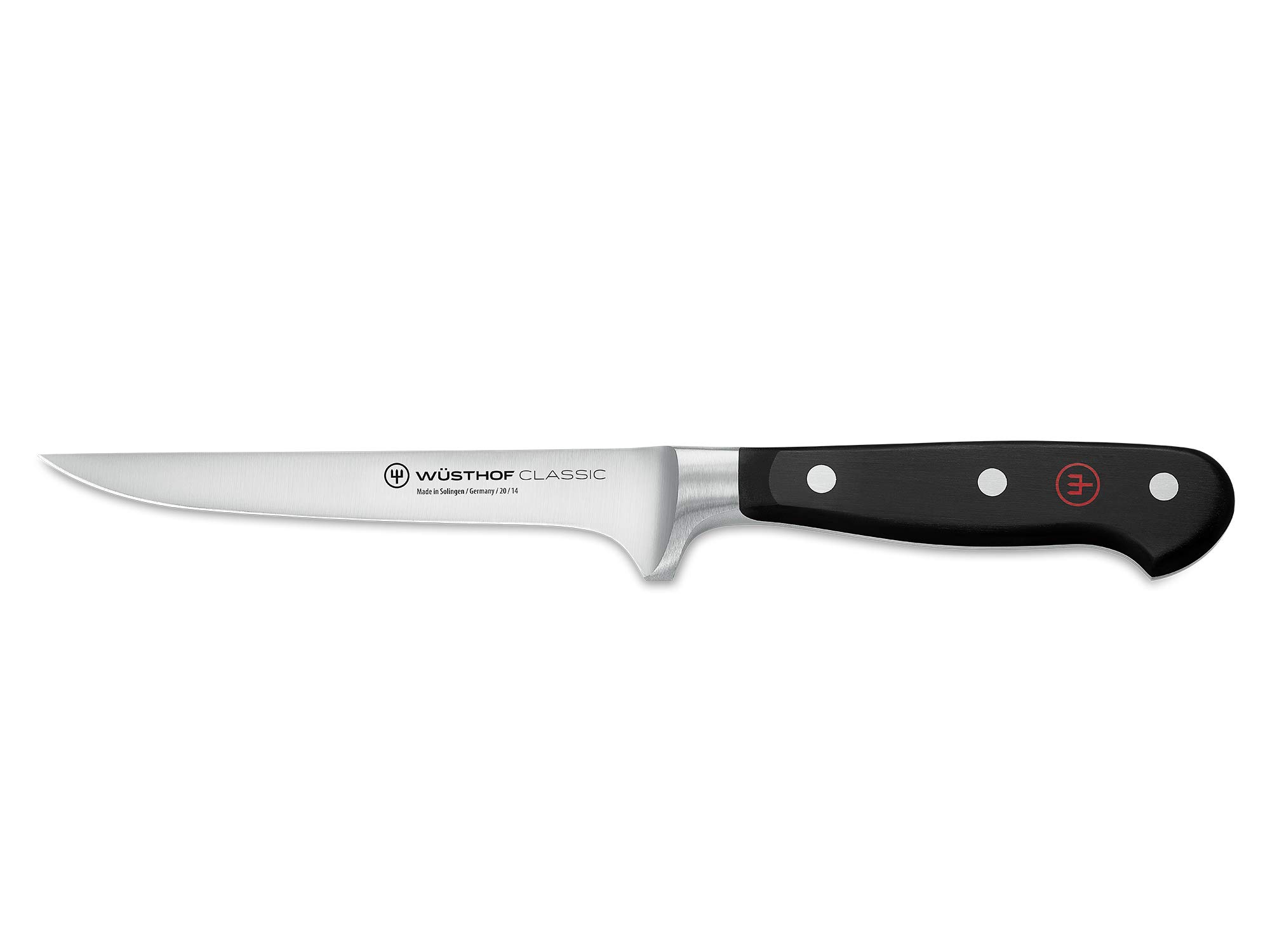
The WÜSTHOF Classic is the gold standard for hunters who demand precision above all else. Forged from a single block of high-carbon stainless steel in Solingen, Germany, this 5-inch blade offers exceptional hardness and edge stability. The full tang construction extends through the triple-riveted handle, giving the knife a balanced heft that provides confidence during delicate cuts around joints and connective tissue.
The shorter blade length makes this an ideal tool for detail work — trimming silver skin off a tenderloin, separating the oyster from the hip socket, or cleaning a roast. Users note that the knife arrives razor sharp and maintains that edge through multiple processing sessions. The handle profile fits naturally in medium to large hands, and the lack of a finger guard allows for a full range of motion during intricate cuts.
This is a premium investment for the hunter who processes multiple deer each season and wants a tool that will last a lifetime. The high-carbon steel requires care — hand washing and drying immediately — but the payoff is a blade that performs surgical cuts season after season without chipping or rolling.
Why it’s great
- Extremely sharp out of the box with long-lasting edge
- Full tang forged construction ensures durability
- Ideal for fine detail work around joints
Good to know
- Premium price point requires committed investment
- Not dishwasher safe; must be hand washed
3. HENCKELS Forged Premio 5.5-inch Boning Knife

The HENCKELS Forged Premio offers a forged construction at a price that undercuts many competitors. The 5.5-inch blade is slim and flexible enough for boning work while the forged bolster provides a seamless transition from blade to handle, adding stability during heavy cuts. The satin-finished blade arrives sharp and requires only a few passes on a honing rod to reach shaving sharpness.
Home butchers appreciate the comfortable triple-rivet handle that curves naturally in the palm. Users processing whole chickens and smaller cuts of deer report that the knife holds its edge throughout an entire session without needing a touch-up. The stainless steel composition offers good corrosion resistance, though the blade should still be dried promptly after washing to prevent staining.
This is a capable kitchen-to-field knife that performs reliably without the investment required by top-tier German brands. The 5.5-inch length hits a sweet spot for hunters who want enough blade for larger muscle groups but still need control for precise trimming. It represents a smart mid-range choice for the dedicated home processor.
Why it’s great
- Forged construction at a competitive price
- Comfortable curved handle fits various hand sizes
- Sharp out of the box and easy to maintain
Good to know
- Some users report minor burrs requiring initial honing
- Blade steel composition is unspecified German stainless
4. Cutluxe Artisan 7″ Fillet & Boning Knife
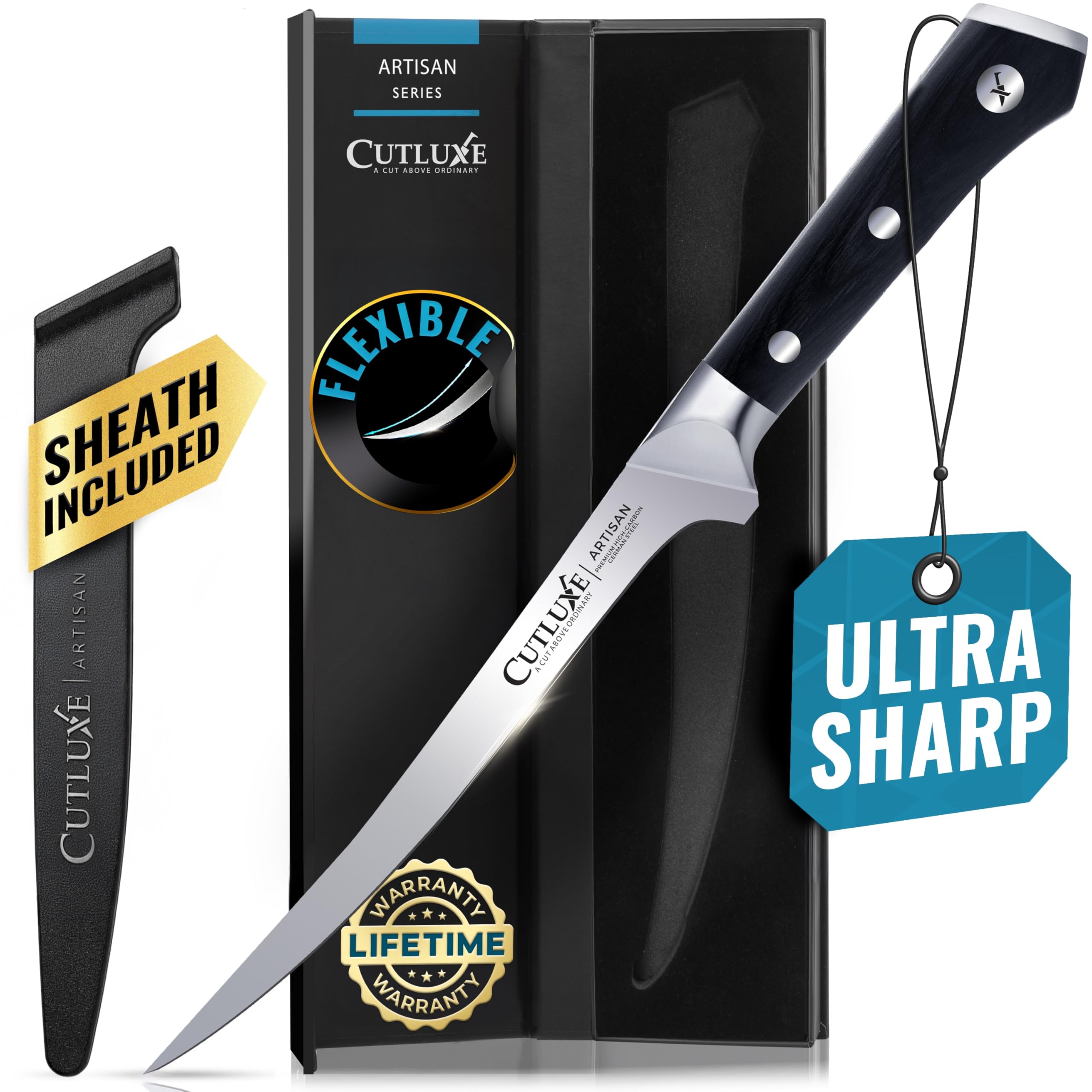
The Cutluxe Artisan series blends aesthetics with performance through a 7-inch blade engineered from high-carbon German steel. The hand-sharpened edge at 14-16 degrees per side produces a razor that glides through fish skin and deer membrane with equal ease. The extended length gives this knife an advantage for long, sweeping cuts along the backstrap or through a flank, while the flexible tip navigates tight spots around the rib cage.
The luxury pakkawood handle is triple-riveted for stability and polished to a sanitary finish that resists absorbing blood and fat. Users consistently mention the weight distribution — the heft sits in the handle, allowing the lightweight blade to follow natural muscle separations without forcing the cut. This design reduces wrist strain during extended processing sessions.
This model comes with a fitted sheath, a practical addition for field use. The lifetime warranty adds peace of mind for hunters who plan to use the knife hard. While the 7-inch blade is longer than traditional boning knives, it works exceptionally well for those who prefer the reach and flexibility of a fillet-style profile for deer processing.
Why it’s great
- Excellent handle-heavy balance for precise control
- Razor-sharp edge straight from the package
- Lifetime warranty against defects
Good to know
- 7-inch blade may feel long for tight joint work
- Some units shipped without the advertised sheath
5. OUTDOOR EDGE VANTEX 5″ Boning Knife
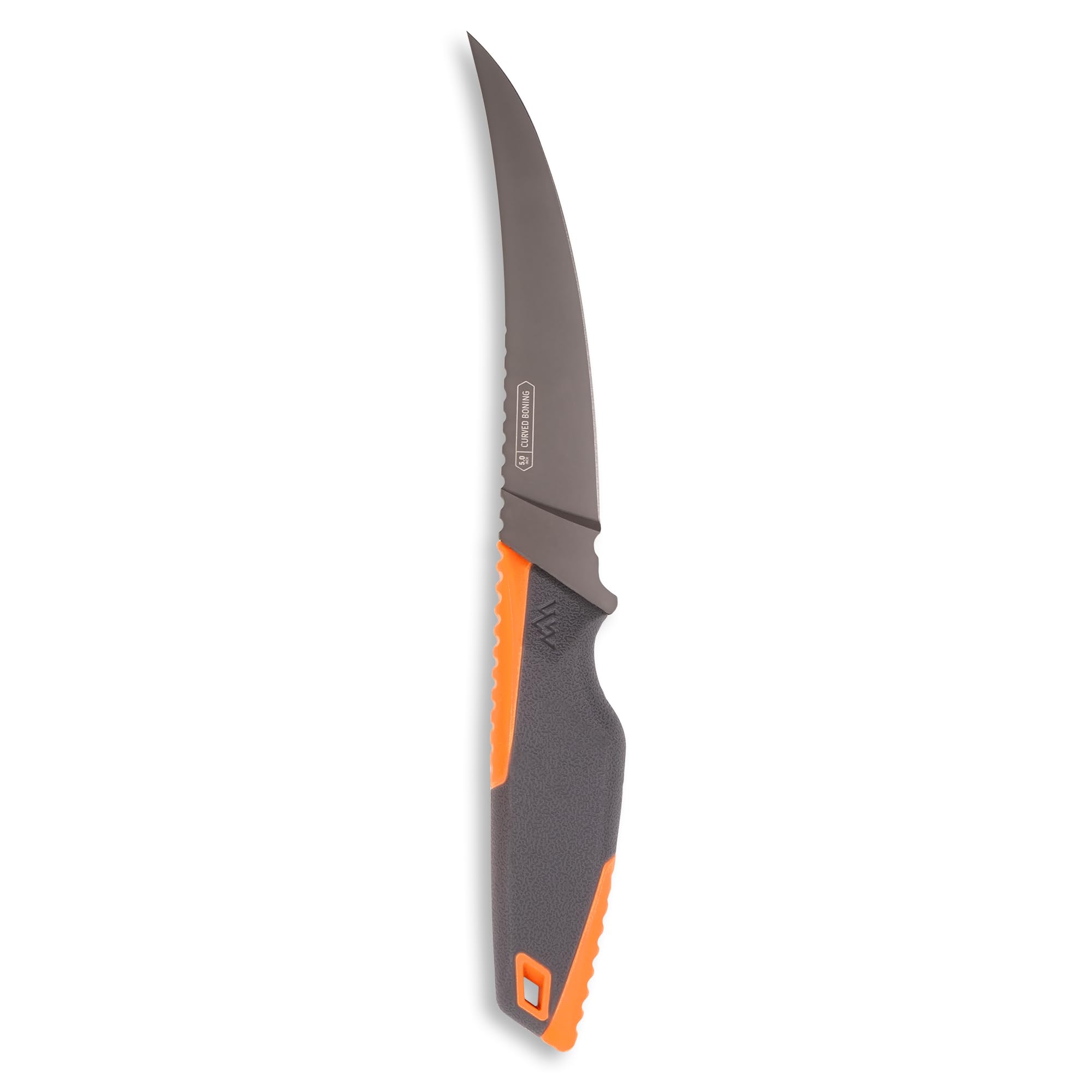
The OUTDOOR EDGE VANTEX is purpose-built for field dressing, combining a titanium-coated alloy steel blade with a lightweight 2.4-ounce design. The coating enhances corrosion resistance, a critical feature when the knife spends hours exposed to moisture and blood. The 5-inch straight-back blade profile offers stiffness that excels at severing joints and cutting through cartilage without flexing unpredictably.
The ergonomic TPR handle features jimping along the spine for added traction, and the included hard-shell sheath locks the blade securely with an audible click. Hunters appreciate this level of attention to safety when packing out a knife in a backpack or pocket. The blade arrives very sharp, though a quick touch on a stone brings it to shaving sharpness for those who demand a finer edge.
The handle-heavy balance provides excellent control during precise cuts, and the compact size makes it easy to maneuver inside a carcass. This is a dedicated field tool that prioritizes durability and corrosion resistance over kitchen aesthetics, making it a strong choice for hunters who need a reliable knife for remote processing.
Why it’s great
- Titanium coating resists corrosion in wet conditions
- Compact and lightweight for field carry
- Secure locking sheath enhances safety
Good to know
- Edge may require a few minutes on a stone out of the box
- Blade stiffness limits flexibility for curved cuts
6. F. DICK ErgoGrip 8.3″ Fillet Knife

F. DICK has been producing professional butcher tools in Germany for generations, and the ErgoGrip series brings that expertise to an accessible price point. The 8.3-inch blade is thin and highly flexible, optimized for filleting and slicing along the bone without jamming. The 56 HRC hardness hits the optimal balance between edge retention and easy resharpening, making it a practical choice for high-volume processing.
The non-slip synthetic handle features an extra-wide thumb rest and finger guard, providing safety during repetitive cuts. NSF certification confirms that the handle material resists grease and dirt absorption, a hygiene advantage when working with raw meat. The polished blade surface allows less residue to adhere, simplifying cleanup in the field or kitchen.
The longer blade excels at removing large muscle groups like the hind quarter and backstrap in single, clean strokes. Some users note the edge dulls faster than premium forged options, but the steel responds quickly to a sharpening steel. This is a smart buy for hunters who want professional-grade ergonomics without the premium price tag.
Why it’s great
- NSF certified for professional hygiene standards
- Thin flexible blade prevents jamming along the bone
- Ergonomic handle with thumb rest reduces fatigue
Good to know
- Edge may require frequent touching up during heavy use
- 8.3-inch blade is long for tight joint work
7. Mossy Oak Field Dressing Kit

The Mossy Oak Field Dressing Kit delivers four specialized tools for hunters who want a complete field-processing solution in one purchase. The set includes an 8.75-inch gut-hook skinner that opens game like a zipper without puncturing internal organs, a caping knife with a 3.4-inch blade for finer trimming, a wood and bone saw with a hook tip to avoid bladder damage, and a comfortable knife sharpener. The portable belt bag keeps everything organized and accessible.
The caping knife is suitable for daily use beyond hunting — trimming fat, butterflying meat, and general kitchen tasks. The gut-hook design eliminates the need for a separate tool for initial field work. Users report the set arrives sharp out of the box, and the TPR handles provide a secure grip even when hands are wet. The saw’s serrated edge cuts through pelvic bone and ribs efficiently without binding.
This kit is an excellent entry point for first-time deer hunters or as a backup set for experienced processors. Individual knives do not offer the same level of rigidity or edge retention as dedicated single-blade boning knives, but the convenience of having all the right tools in one compact package outweighs those limitations for many users.
Why it’s great
- Complete set covers all primary field dressing tasks
- Gut-hook skinner prevents internal organ damage
- Portable belt bag keeps tools organized
Good to know
- Individual knives lack the rigidity of dedicated boning blades
- Sheath fabric can catch on sharp edges when inserting
FAQ
What blade length is best for deer boning?
How often should I sharpen my deer boning knife?
Can I use a fishing fillet knife for deer boning?
Final Thoughts: The Verdict
For most users, the best deer boning knife winner is the Victorinox Fibrox 6″ because it combines professional-grade edge retention, a secure grip, and a flexible blade that handles any cut from field dressing to kitchen trimming. If you want premium forged construction for fine detail work, grab the WÜSTHOF Classic 5″. And for a complete field-ready solution on a budget, nothing beats the Mossy Oak Field Dressing Kit.

Mo Maruf
I created WellFizz to bridge the gap between vague wellness advice and actionable solutions. My mission is simple: to decode the research and give you practical tools you can actually use.
Beyond the data, I am a passionate traveler. I believe that stepping away from the screen to explore new environments is essential for mental clarity and physical vitality.