Our readers keep the lights on and my smoothie glass nicely filled. As an Amazon Associate, I earn from qualifying purchases.
Dragging a dead boat back to the ramp because your trolling motor battery gave out halfway through the morning is a scenario no angler wants to repeat. The right deep cycle battery determines whether you fish for hours in a productive spot or spend your day worrying about voltage sag.
I’m Mohammad Maruf — the founder and writer behind WellFizz. I’ve spent hundreds of hours analyzing battery chemistries, BMS specifications, cycle life claims, and real-world load testing data to separate marketing fluff from genuine performance in the marine power market.
This guide cuts through the noise to deliver a definitive ranking of the best deep cycle battery for trolling motor, covering everything from lightweight LiFePO4 upgrades to rugged AGM options built for long days on the water.
How To Choose The Best Deep Cycle Battery For Trolling Motor
Selecting a trolling motor battery involves more than just picking the highest amp-hour number. The chemistry, physical size, weight, and built-in management electronics all dictate how long you stay on the water and how much hassle you deal with at the end of the day. Below are the key factors that separate a great purchase from a disappointing one.
Chemistry: LiFePO4 vs. AGM vs. Flooded Lead-Acid
Lithium Iron Phosphate (LiFePO4) batteries now dominate the premium segment because they offer over 4,000 deep cycles at 100% depth of discharge, weigh roughly one-third of an equivalent AGM battery, and maintain steady voltage until the very end of their discharge curve. AGM batteries remain a solid mid-range choice — they are maintenance-free, spill-proof, and handle vibration well, but they deliver only 300–500 cycles and lose voltage progressively as they drain. Flooded lead-acid batteries are the budget-tier option: they are heavy, require periodic water checks, and produce hydrogen gas during charging, so proper ventilation is mandatory.
Capacity and Runtime Estimation
Capacity is measured in amp-hours (Ah). A 50Ah battery running a 55-lb thrust trolling motor at moderate speed (roughly 25–30 amps draw) will last about 1.5–2 hours before reaching a critical discharge state. A 100Ah battery extends that to roughly 3–4 hours. For a full day of fishing with frequent speed changes, a 100Ah lithium battery is the sweet spot for most 14-to-18-foot boats. Larger vessels or 24V/36V motor setups may require stacking two or four 100Ah units in series or parallel.
BMS and Low-Temperature Protection
Lithium batteries require an integrated Battery Management System (BMS) to prevent overcharge, over-discharge, overcurrent, and short circuits. For trolling motor use in colder climates, low-temperature cutoff is essential — charging a LiFePO4 battery below freezing can cause permanent cell damage. Look for a BMS that halts charging below 32°F and halts discharging below -4°F. Some premium models also include TVS diodes that shield the motor controller from voltage spikes that occur when the motor suddenly reverses direction.
Physical Size and Group Number
The Battery Council International (BCI) group number defines the physical footprint. Group 24 measures roughly 10.25 x 6.8 x 8.9 inches, Group 27 is about 12 x 6.8 x 9.4 inches, and Group 31 is approximately 13 x 6.8 x 9.4 inches. Most trolling motor battery trays are designed for Group 27 or Group 31 dimensions. Always measure your battery compartment before purchasing, especially when upgrading from a lead-acid battery — lithium batteries often fit the same footprint but weigh significantly less, which changes your boat’s weight distribution.
Quick Comparison
On smaller screens, swipe sideways to see the full table.
| Model | Category | Best For | Key Spec | Amazon |
|---|---|---|---|---|
| Litime 12V 100Ah TM | LiFePO4 | Premium all-day fishing | 22.16 lbs, 100Ah, low-temp cutoff | Amazon |
| OKMO 12V 100Ah (2 Pack) | LiFePO4 | High-capacity 24V systems | 23.15 lbs each, 100A BMS | Amazon |
| Power Queen 12V 100Ah | LiFePO4 | Mid-range lithium upgrade | 24 lbs, Group 31, 15,000 cycles | Amazon |
| Redodo 12V 100Ah | LiFePO4 | Reliable mid-range lifepo4 | 22 lbs, 100A BMS | Amazon |
| Timeusb 12V 100Ah Pro | LiFePO4 | Value-focused lifepo4 upgrade | 23 lbs, 100A BMS, Group 31 | Amazon |
| GOLDENMATE 12V 50Ah | LiFePO4 | Compact kayak setup | 14.1 lbs, IP67 waterproof | Amazon |
| Newport 12V 50Ah AGM | AGM | Budget-friendly entry | 32 lbs, 50Ah, sealed AGM | Amazon |
| VMAX MR127 12V 100Ah AGM | AGM | Heavy-duty lead-acid replacement | 68 lbs, Group 27, 100Ah | Amazon |
| Yeagulch 24V 314Ah | LiFePO4 | Massive off-grid capacity | 107.5 lbs, 200A BMS, 8083Wh | Amazon |
In‑Depth Reviews
1. Litime 12V 100Ah Trolling Motor LiFePO4 Battery

The Litime 12V 100Ah TM is purpose-built for trolling motor applications, verified by its ABYC E-13 compliance and triple BMS protection against dust, water, and salt spray. At just 22.16 pounds, it shaves roughly 40 pounds off an equivalent lead-acid battery, which improves your boat’s hole shot and overall handling. Users report running a 45-lb thrust motor for over eight hours and returning home with the battery still near full charge.
Smart low-temperature protection stops charging below 32°F and discharge below -4°F, a critical feature for anglers who fish during early spring or late fall. The built-in TVS diode shields both 12V and 36V motors from voltage spikes generated by rapid throttle changes. The battery fits a standard Group 31 footprint and supports expansion up to 4P4S, giving you room to scale a 48V 400Ah system later.
One reviewer noted that the batteries arrived in sleep mode with no explicit wake-up instructions, though the issue was resolved by using a Noco GenPro charger in force mode. A small learning curve aside, this battery delivers premium-grade cycle life (4,000 cycles at 100% DoD) and matches the features of competitors that cost nearly double.
Why it’s great
- ABYC E-13 certified with triple environmental protection
- Ultra-light at 22.16 lbs, transforms boat handling
- TVS protection for motor voltage spikes
Good to know
- Sleep-mode shipping may confuse first-time users
- No built-in cell balancing requires periodic multibank charging
2. OKMO 12V 100Ah LiFePO4 Battery 2-Pack
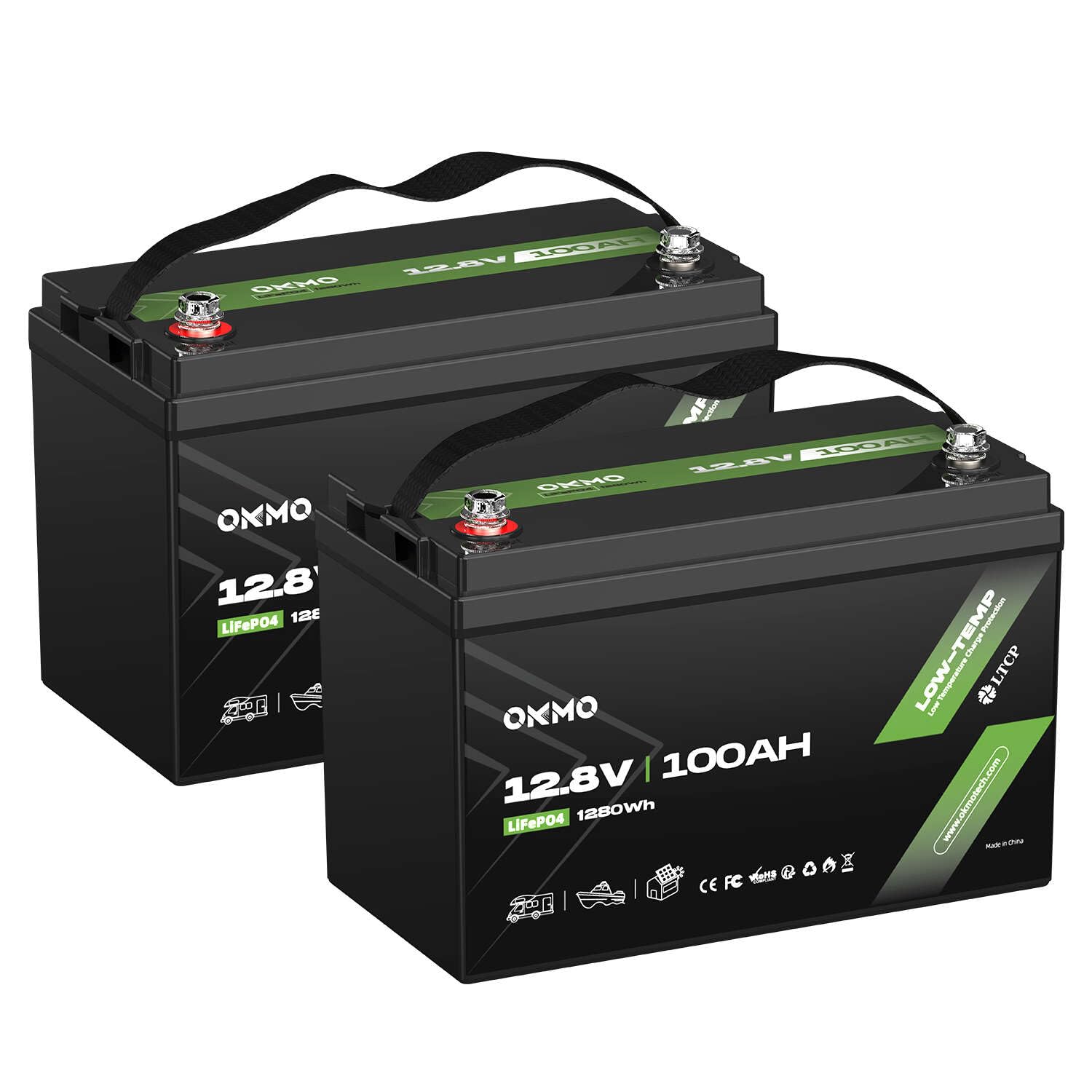
The OKMO two-pack is engineered for anglers who want to build a 24V or 48V system from the start without buying mismatched batteries later. Each unit weighs 23.15 pounds, uses A-grade LiFePO4 cells, and packs a 100A BMS with fortress-level protection against overcharge, over-discharge, overcurrent, and short circuits. The inclusion of low-temperature cutoff means you can leave these batteries in an unheated boat house during winter without risking permanent damage.
With 4,000 to 15,000 cycles depending on depth of discharge, this pair will outlast a decade of regular weekend use. The batteries are recommended for trolling motors between 30 and 100 lbs of thrust, making them a versatile fit for both small bass boats and larger bay boats. The integrated carrying handles simplify installation and repositioning.
A small number of users reported defective units or non-functional Bluetooth on the first try. While the manufacturer responded to verified defects with replacements, the initial quality control inconsistency is worth noting. For buyers who get a fully functional pair, the performance-to-price ratio is outstanding.
Why it’s great
- Ready-to-wire 24V system out of the box
- Automotive-grade cells with 10-year lifespan rating
- Low-temperature cutoff for cold storage
Good to know
- Occasional QC issues reported on Bluetooth feature
- Customer service response can be slow on weekends
3. Power Queen 12V 100Ah LiFePO4 Battery
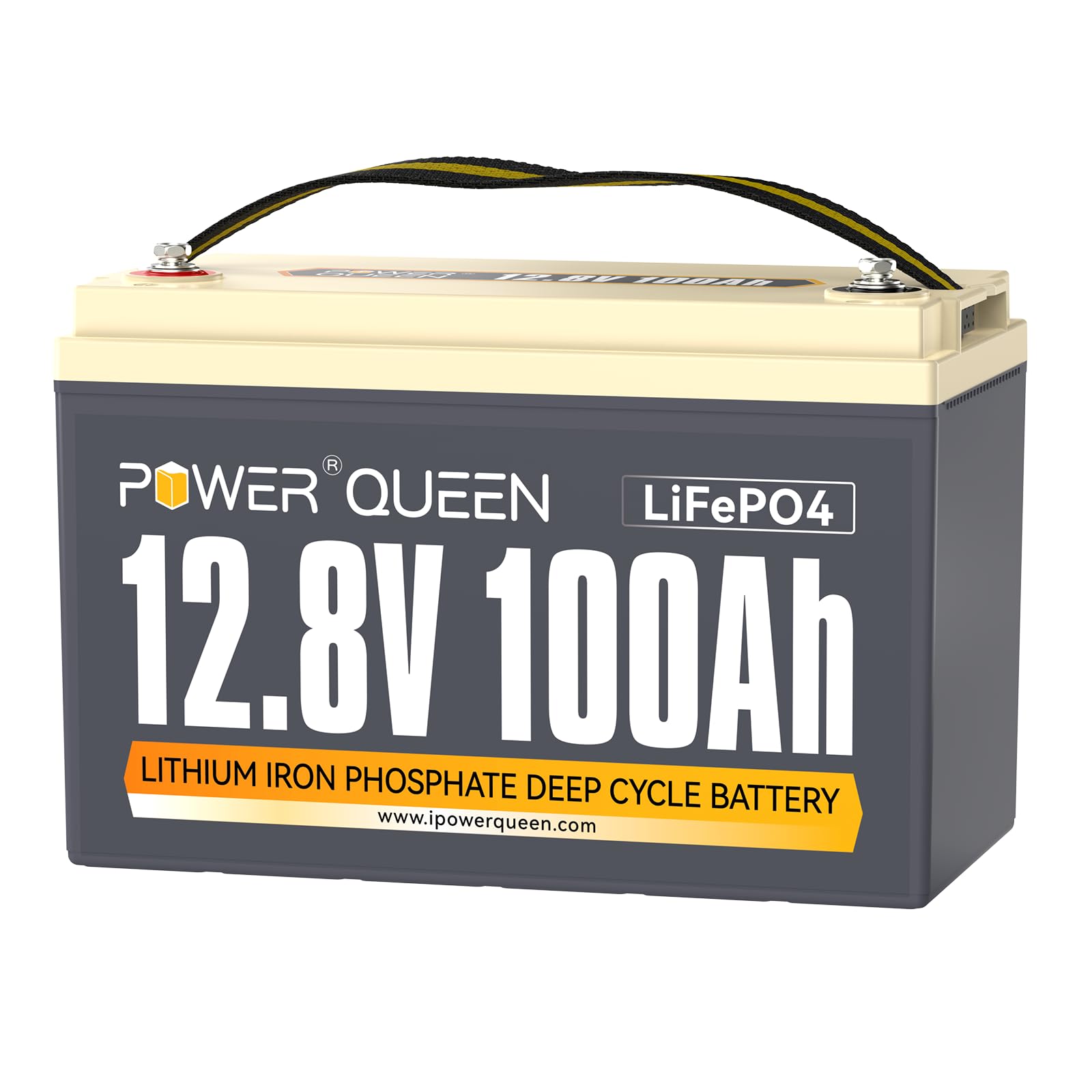
Power Queen’s 12V 100Ah Group 31 battery delivers a tested capacity of 102Ah and stable voltage output that keeps trolling motors running at full torque until the last 5% of capacity. At 24 pounds, it’s still light enough for a person with arthritis to lift and install — a detail multiple reviewers appreciated. The 100A BMS provides overcharge, over-discharge, and short-circuit protection, and the battery supports series and parallel connections up to 4S4P for a 48V 400Ah system.
One angler reported powering a 30-lb trolling motor, a LiveScope unit, and two Garmin screens for 12 hours daily over three full days without needing a recharge. The low self-discharge rate of 3% per month means you can store the battery for the off-season and find it ready to go when spring arrives. Grade-A LiFePO4 cells ensure consistent cycle life, with ratings up to 15,000 cycles at 60% depth of discharge.
The only recurring complaint concerns the 6mm terminal bolts, which some users found easy to cross-thread if not carefully aligned. Using a torque wrench set to 10 Nm eliminates this issue entirely. Overall, this is a proven mid-range lithium battery with strong real-world validation.
Why it’s great
- Tested capacity exceeds rated 100Ah
- Ultra-low self-discharge for seasonal storage
- Feeds multiple electronics for days on end
Good to know
- Terminal bolts are easy to cross-thread
- No onboard Bluetooth for cell monitoring
4. Redodo 12V 100Ah LiFePO4 Battery
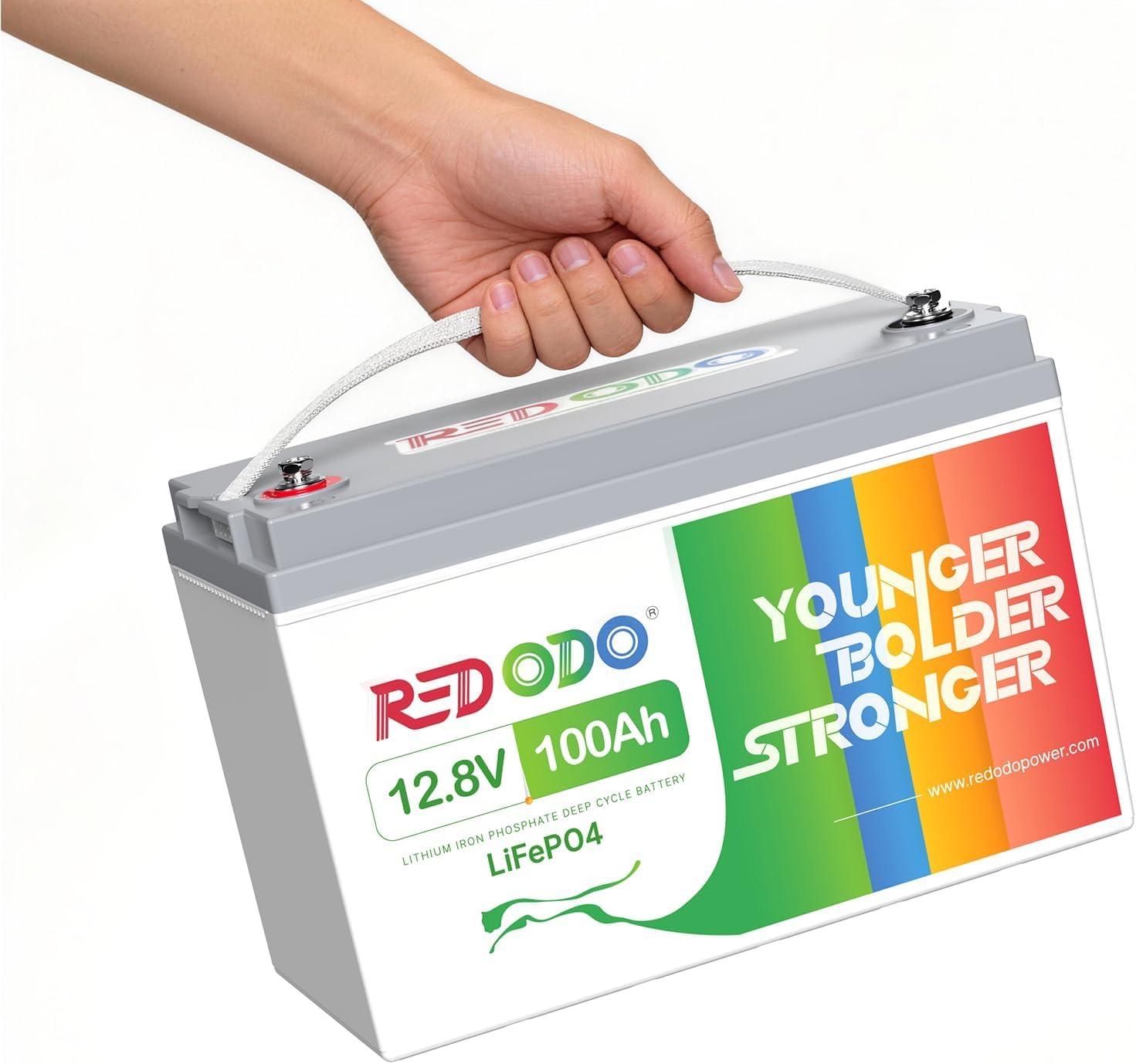
The Redodo 12V 100Ah LiFePO4 battery is the value champion of this list, offering automotive-grade cells and a 100A BMS at a price point that undercuts many name-brand equivalents by 30-40%. Weighing just 22 pounds and measuring 13 x 6.77 x 8.46 inches, it fits perfectly in a Group 31 battery box. Users have swapped out failed lead-acid banks in RVs and trolling motors and reported immediate improvements in runtime and voltage stability.
One reviewer replaced four failing lead-acid batteries in an electric riding mower with a single Redodo 100Ah unit and went from 20 minutes of run time to mowing the entire lawn twice without recharging. For trolling motor use, the battery is optimized for motors between 30 and 70 lbs of thrust. Three charging methods are supported — LiFePO4 charger, solar with MPPT controller, or alternator — giving you flexible recharging options.
The customer support team responded quickly to one user who needed help configuring a Renogy charge controller for LiFePO4 chemistry, while the Renogy team never replied. That level of responsiveness adds significant value. The only limitation is the lack of low-temperature protection, so this battery should not be charged below freezing.
Why it’s great
- Unbeatable price-to-capacity ratio in the mid-range
- Excellent customer support for setup troubleshooting
- Drop-in Group 31 fit for most battery trays
Good to know
- No low-temperature charging cutoff
- Not suitable for high-thrust motors above 70 lbs
5. Timeusb 12V 100Ah Pro LiFePO4 Battery

The Timeusb 12V 100Ah Pro uses true automotive-grade LiFePO4 cells with an energy density of 55Wh/lb, one of the highest in its price tier. At 23 pounds, it’s slightly heavier than some competitors but still represents a massive reduction from a comparable lead-acid battery that would weigh 63 pounds. The Group 31 footprint fits standard trays, and the IP65-rated shell provides solid resistance to rain and humidity on open boats.
The upgraded 100A BMS covers overcharge, over-discharge, short-circuit, and overheating while the battery is rated for 4,000 cycles at 100% DoD, 6,000 at 80%, and 15,000 at 60%. A 5-year warranty backs the unit, which is longer than many competitors at this price point. Users running 16 of these batteries in a marine trawler with a 2000W solar array reported flawless performance under heavy daily cycling.
One reviewer docked a star for the lack of low-temperature protection, making this battery unsuitable for freezing climates unless you bring it indoors for charging. The terminal bolts are M8, which matches common marine hardware, but the included insulating caps are basic. For warm-weather anglers on a budget, this battery delivers exceptional value.
Why it’s great
- Highest energy density in its price bracket (55Wh/lb)
- Long 5-year warranty
- IP65-rated for marine humidity
Good to know
- No low-temperature cutoff for cold charging
- Slightly heavier than some 100Ah LiFePO4 rivals
6. GOLDENMATE 12V 50Ah LiFePO4 Battery

For kayak anglers and those with small jon boats, the GOLDENMATE 12V 50Ah LiFePO4 battery is the best compact option on the list. Weighing only 14.1 pounds, it can be carried one-handed and stashed in a tight hatch. The IP67 waterproof rating means it can survive an accidental dunking or being left in an uncovered kayak during a rainstorm — a feature no other battery in this lineup offers.
Users report running a 25-lb trolling motor at full speed for approximately seven hours and powering fish finders and live scopes for a full day without performance drop. The built-in 50A BMS protects against the full range of electrical faults, and the claimed 5,000+ cycles at moderate discharge depths should keep this battery running for many seasons. It supports series and parallel connections, with up to 16 batteries combining for 10,240Wh of storage.
For a 50Ah battery paired with a 55-lb motor running at full speed, runtime is inherently limited — this unit is best suited for lower-thrust motors or moderate-speed trolling. The lack of a built-in charge indicator is a minor inconvenience easily solved with a external meter.
Why it’s great
- IP67 waterproof rating for kayak and open-boat use
- Extremely lightweight at 14.1 lbs
- 5,000+ cycle life rating
Good to know
- 50Ah capacity limits high-draw motor runtime
- No onboard charge indicator
7. Newport 12V 50Ah AGM Marine Battery
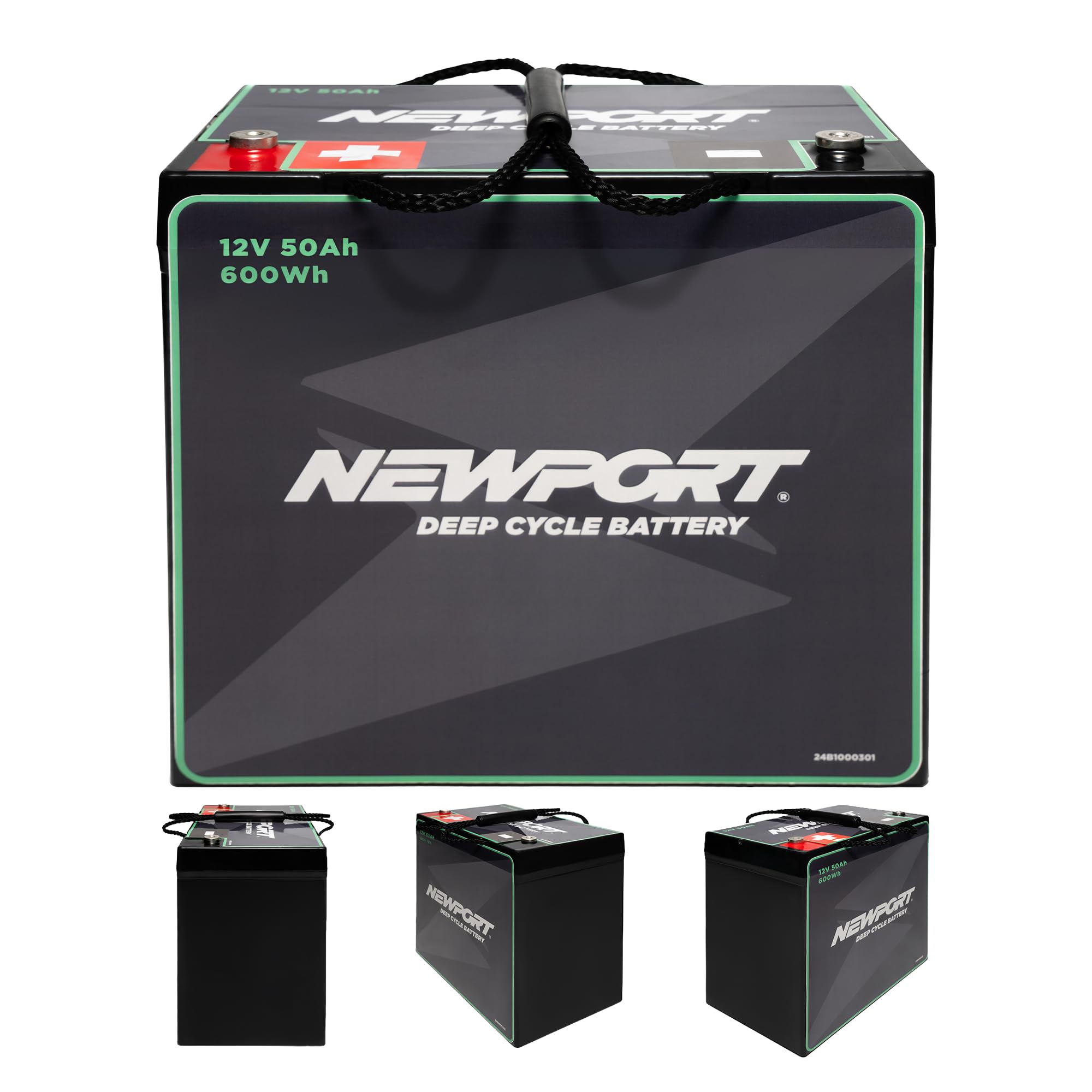
The Newport 12V 50Ah Deep Cycle AGM battery is the budget-friendly entry point for anglers who need a reliable power source without the upfront investment of lithium. At 32 pounds, it’s heavier than any lithium battery of similar capacity but still manageable for one person to carry. The sealed AGM construction is leak-proof and maintenance-free, making it a safe bet for boaters who don’t want to deal with acid spills or water refills.
Users have reported that this battery survives surprising abuse — one tumble from a truck bed at 20 mph left the battery cosmetically scratched but fully functional. A 50Ah capacity provides approximately 4+ hours of moderate-speed trolling on a 55-lb motor, which is enough for a half-day outing. The marine terminals accept standard ring connectors and are compatible with most trolling motor wiring setups.
The main trade-off is cycle life. AGM batteries typically last 300-500 cycles, meaning you’ll likely replace this unit every 2-3 seasons with regular use. A reviewer using it as a sump pump backup reported no issues, confirming its versatility. If you’re testing the waters with electric trolling for the first time and want minimal financial commitment, this is a solid starting point.
Why it’s great
- Rugged build survives physical impacts
- Sealed, leak-proof, maintenance-free AGM construction
- Budget-friendly entry to deep cycle power
Good to know
- Short cycle life compared to lithium (300-500 cycles)
- Heavy for its capacity at 32 lbs
8. VMAX MR127 12V 100Ah AGM Deep Cycle Battery

The VMAX MR127 is the benchmark for premium AGM deep cycle batteries, built with heavy-duty lead-tin alloy grids and an electrolyte suspension system that fully absorbs the acid into absorbent glass mats. At 68 pounds and Group 27 dimensions, it’s a beast — but that weight translates to dense energy storage and a reputation for surviving repeated over-discharges that would kill a standard flooded battery. Users report running a 55-lb Minn Kota on a 12-foot boat for six hours per day and recharging every other day.
The battery is compatible with trolling motors from 40 to 100 lbs of thrust, and two units wired in series for 24V have been used with 86-lb motors with excellent voltage retention. VMAX claims a service life of up to 10 years in float applications, though cyclic use in a trolling motor will reduce that. The marine terminals are robust and accept standard hardware without adapters.
The primary downside is weight and charging nuance. Users caution that running the battery completely flat can confuse some chargers — a brief jump-start with a car battery may be needed to raise voltage enough for the charger to recognize it. Once you learn that quirk, the VMAX delivers consistent power session after session. It’s the last AGM you’ll need if you’re not ready to switch to lithium.
Why it’s great
- Proven durability under repeated deep discharges
- Excellent power delivery for high-thrust motors
- True AGM with no gelling contaminants
Good to know
- Very heavy at 68 lbs
- Deep discharge can confuse some automatic chargers
9. Yeagulch 24V 300Ah (314Ah) LiFePO4 Battery
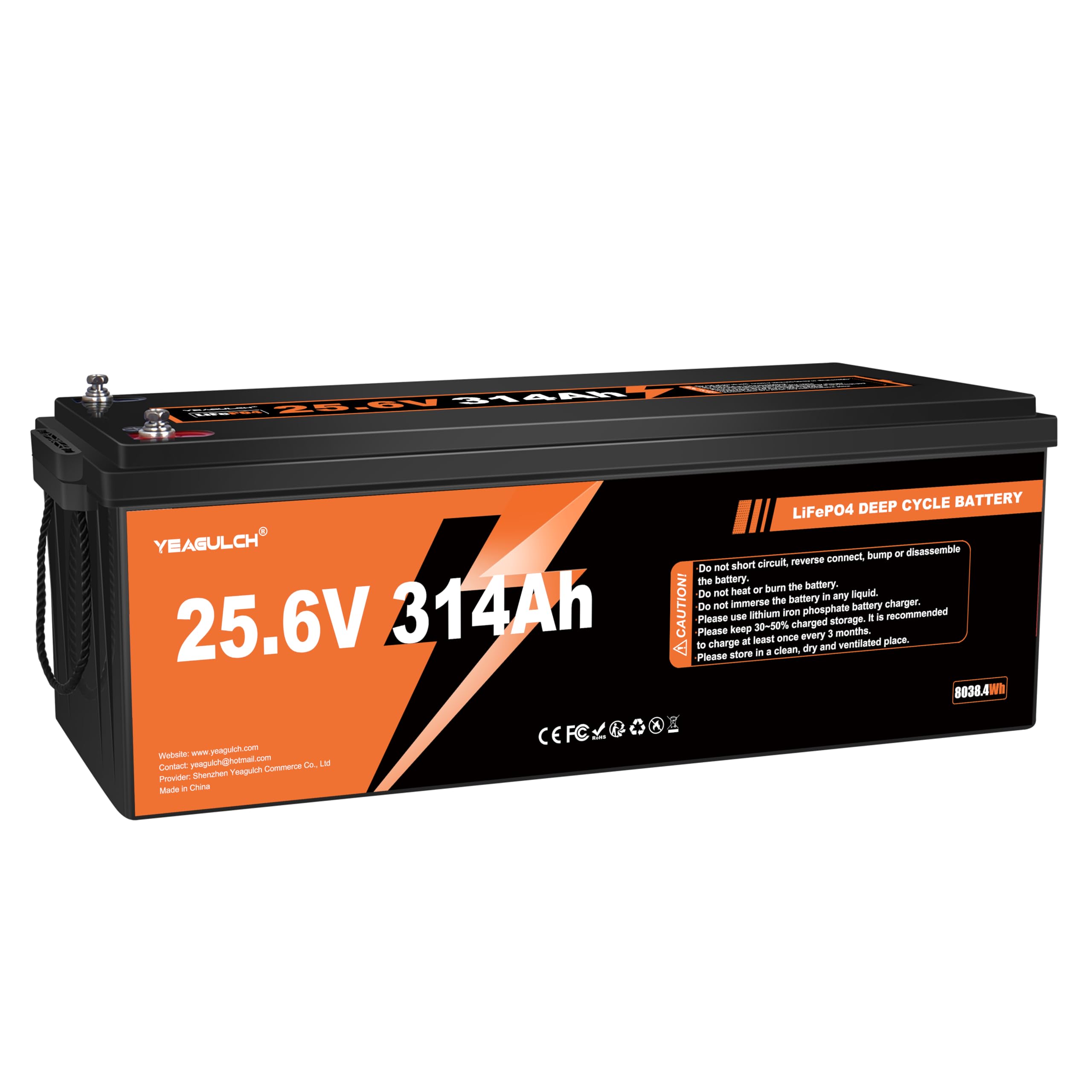
The Yeagulch 24V 314Ah LiFePO4 battery is the largest capacity single-unit battery in this guide, packing 8,083 watt-hours of energy into a single enclosure. Built for serious off-grid setups and high-capacity 24V trolling motor systems, it features a 200A BMS with low-temperature cutoff protection. The IP65-rated, flame-retardant ABS shell makes it suitable for both indoor marine installations and exposed outdoor compartments.
Users running this battery in campers report powering all appliances for a three-day weekend without coming close to depletion. For trolling motor applications, a single 24V 314Ah unit replaces four or more 12V 100Ah batteries wired in series-parallel, simplifying wiring and reducing the risk of imbalance. The 200A continuous discharge rating is more than sufficient for the largest electric trolling motors on the market.
Quality control has been inconsistent. Several verified purchasers received defective units that dropped to zero voltage when unused, and customer service was slow to respond to replacement requests. The physical size — nearly 25 inches long — requires careful measurement of your battery box before purchase. For buyers willing to accept some risk for massive capacity at a fraction of the price of premium brands, this battery delivers unmatched watt-hours per dollar.
Why it’s great
- Single-unit 8,083Wh capacity for 24V systems
- IP65 and flame-retardant shell for safety
- 200A BMS supports the largest trolling motors
Good to know
- QC inconsistencies with dead-on-arrival units reported
- Very large physical footprint (24.1 x 9.5 x 8.9 inches)
FAQ
Can I use a regular car battery for my trolling motor?
How many amp-hours do I need for a full day of fishing?
Can I connect two deep cycle batteries in series for a 24V motor?
What charger do I need for a LiFePO4 trolling motor battery?
Is it safe to charge a lithium battery in freezing temperatures?
Final Thoughts: The Verdict
For most users, the best deep cycle battery for trolling motor winner is the Litime 12V 100Ah TM because it combines ABYC-certified safety, built-in low-temperature protection, TVS voltage spike shielding, and a featherlight 22-pound build into a true drop-in Group 31 package. If you need a ready-to-wire 24V system from day one, grab the OKMO 2-pack. And for anglers on a strict budget who still want reliable power, the Timeusb 12V 100Ah Pro delivers exceptional value per amp-hour backed by a 5-year warranty.

Mo Maruf
I created WellFizz to bridge the gap between vague wellness advice and actionable solutions. My mission is simple: to decode the research and give you practical tools you can actually use.
Beyond the data, I am a passionate traveler. I believe that stepping away from the screen to explore new environments is essential for mental clarity and physical vitality.