Our readers keep the lights on and my smoothie glass nicely filled. As an Amazon Associate, I earn from qualifying purchases.
Choosing the wrong battery for your camper leaves you stranded in the dark with a dead fridge and a useless water pump. The difference between a weekend that works and a weekend that fails comes down to one decision: picking the right chemistry and capacity for your specific power draw. Lead-acid, AGM, and LiFePO4 lithium batteries behave completely differently under the same roof load, and most campers learn this the hard way after their first cold night.
I’m Mohammad Maruf — the founder and writer behind WellFizz. I’ve spent hundreds of hours analyzing deep cycle battery chemistry, BMS logic, cycle life ratings, and real-world user reports across lead-acid, AGM, and LiFePO4 platforms to find the exact units that actually hold up in camper environments.
This guide breaks down the specs that matter for camper owners, compares voltage stability and amp-hour delivery under real loads, and names the units that earn their spot. Whether you are outfitting a travel trailer or a van conversion, this list of the best deep cycle battery for camper will keep your system running when you need it most.
How To Choose The Best Deep Cycle Battery For Camper
Camper batteries differ from starting batteries in one critical way: they are designed to be drained and recharged hundreds of times. The wrong choice means you replace it every season. The right choice lasts for years without voltage sag.
Chemistry: LiFePO4 vs AGM vs Flooded Lead-Acid
LiFePO4 lithium batteries dominate the camper market because they deliver nearly 100% of their rated capacity down to the last amp-hour, weigh roughly one-third of lead-acid equivalents, and survive 3,000 to 15,000 cycles. AGM batteries offer a maintenance-free middle ground with decent cycle life but suffer from weight and lower depth-of-discharge limits. Flooded lead-acid costs the least upfront but requires ventilation, water refilling, and tolerates only partial discharge unless you want a short lifespan.
Amp-Hour Capacity and Your Real Load
A 100Ah battery running a 5-amp DC fridge lasts about 20 hours in theory, but real-world inverter losses, voltage drop, and temperature derating cut that number. Calculate your daily watt-hour consumption: multiply each device’s wattage by hours of use, divide by 12V, and that is your daily amp-hour need. Always overshoot by at least 20% to avoid deep discharges that shorten cycle life.
BMS Quality and Low-Temperature Protection
Lithium batteries rely on an internal Battery Management System to prevent overcharge, over-discharge, short circuits, and low-temperature charging. If you camp in freezing conditions, a BMS with low-temp cutoff at 32°F or below prevents permanent cell damage. Higher BMS continuous current ratings, such as 100A versus 200A, determine whether you can safely run a large inverter or heavy trolling motor without tripping protection.
Weight and Form Factor
A 100Ah LiFePO4 battery weighs around 23 pounds. An AGM battery of the same capacity weighs roughly 60 pounds. That difference matters for tongue weight distribution on travel trailers or flexible mounting in van conversions. Lithium also mounts in any orientation without spill risk.
Bluetooth Monitoring and Smart Features
Bluetooth-enabled batteries let you check state of charge, voltage, and remaining cycles from a phone app. This eliminates guesswork and helps you spot failing cells before they leave you stranded. Not every camper needs Bluetooth, but it removes the frustration of manual multimeter checks.
Quick Comparison
On smaller screens, swipe sideways to see the full table.
| Model | Category | Best For | Key Spec | Amazon |
|---|---|---|---|---|
| Battle Born 100Ah LiFePO4 | Premium | Full-time RV and long-term off-grid | 3,000-5,000 cycles, 100Ah usable | Amazon |
| Litime 12V 230Ah Bluetooth | Premium | High-capacity campers and solar systems | 230Ah, Bluetooth 5.0, IP65 | Amazon |
| ECO-WORTHY 12V 280Ah 2-Pack | Premium | Massive capacity for off-grid homes | 280Ah per battery, 200A BMS | Amazon |
| Power Queen 12V 100Ah | Mid-Range | Balanced performance for camper and trolling | Group 31, 100Ah, 100A BMS | Amazon |
| DJLBERMPW 12V 100Ah | Mid-Range | Budget-friendly lithium upgrade | 4,000 cycles, 100A BMS, IP66 | Amazon |
| HRBEENERGY 12.8V 100Ah | Mid-Range | Lightweight replacement for lead-acid | 19.4 lbs, IP67, 100A BMS | Amazon |
| WEIZE 12V 100Ah AGM | Mid-Range | Reliable AGM backup and solar storage | 100Ah, 63 lbs, Group 31 | Amazon |
| VMAX MR127 100Ah AGM | Mid-Range | Heavy-duty marine and trolling motor use | 100Ah AGM, Group 27, 68 lbs | Amazon |
| Newport 12V50Ah AGM | Budget | Small kayaks and light trolling setups | 50Ah, 32 lbs, sealed AGM | Amazon |
In‑Depth Reviews
1. Battle Born 100Ah 12V LiFePO4
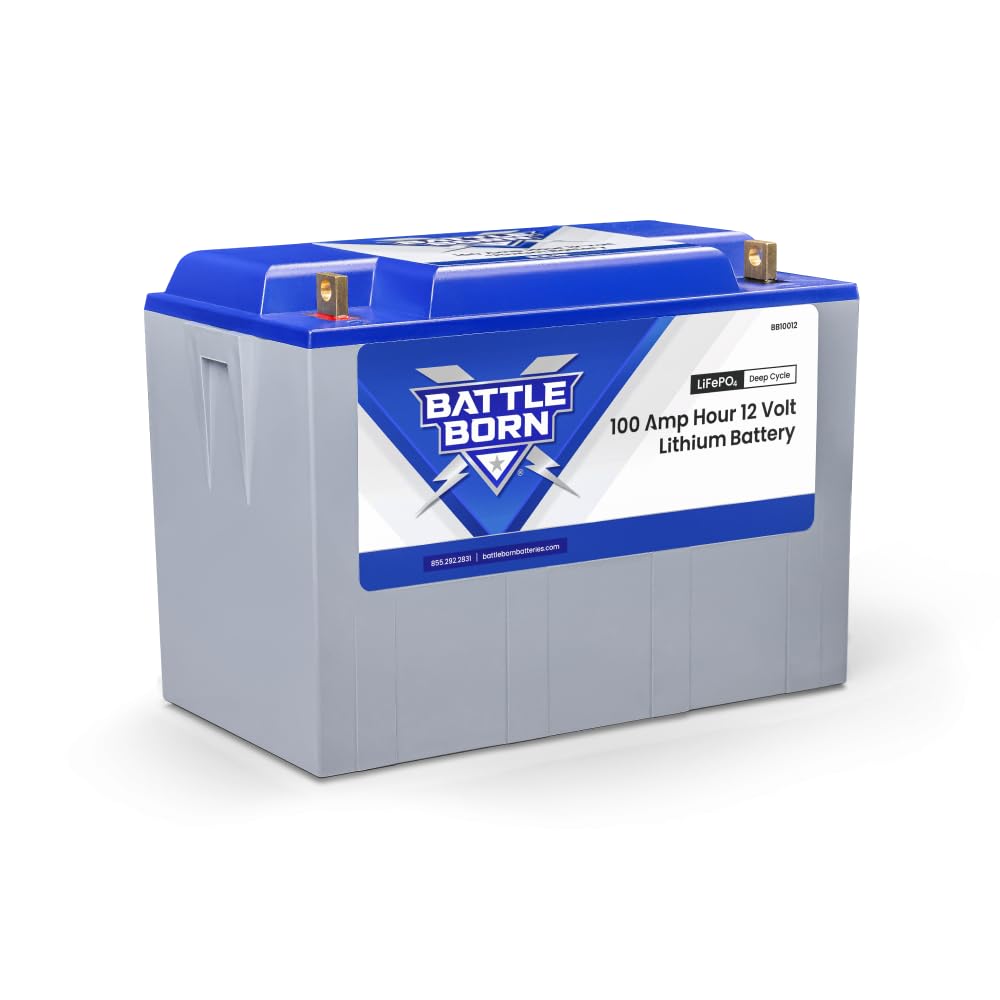
Battle Born sets the benchmark for premium camper lithium batteries. The BB10012 delivers 100Ah of usable capacity with zero maintenance required and a robust internal BMS that protects against over-voltage, under-voltage, short circuits, and low-temperature charging. At 31 pounds, it weighs roughly one-third of the lead-acid equivalent and mounts in any orientation without spill risk. Real-world reports show it runs a DC fridge, lights, water pump, and USB devices for a full week on a single charge.
The battery supports up to 3,000 to 5,000 deep discharge cycles, translating to a service life of 10 to 15 years under normal camper use. It works as a direct drop-in replacement for Group 27 and Group 31 battery trays. Users consistently note the fast charging with 300W solar panels and the ability to add a second battery in parallel even a year later, as long as both are fully charged before connection.
The 10-year warranty is the strongest in the category, and the US-based customer support team has a reputation for hassle-free replacements even after the first year. For campers who want maximum reliability and are willing to invest upfront, this is the standard.
Why it’s great
- 10-year warranty and excellent support
- 3,000-5,000 cycle lifespan with 100% DOD
- Lightweight drop-in replacement for Group 27/31
- Built-in low-temp protection
Good to know
- Premium price point
- May require lithium-compatible charge controller upgrade
- No built-in Bluetooth monitoring
2. Litime 12V 230Ah Bluetooth
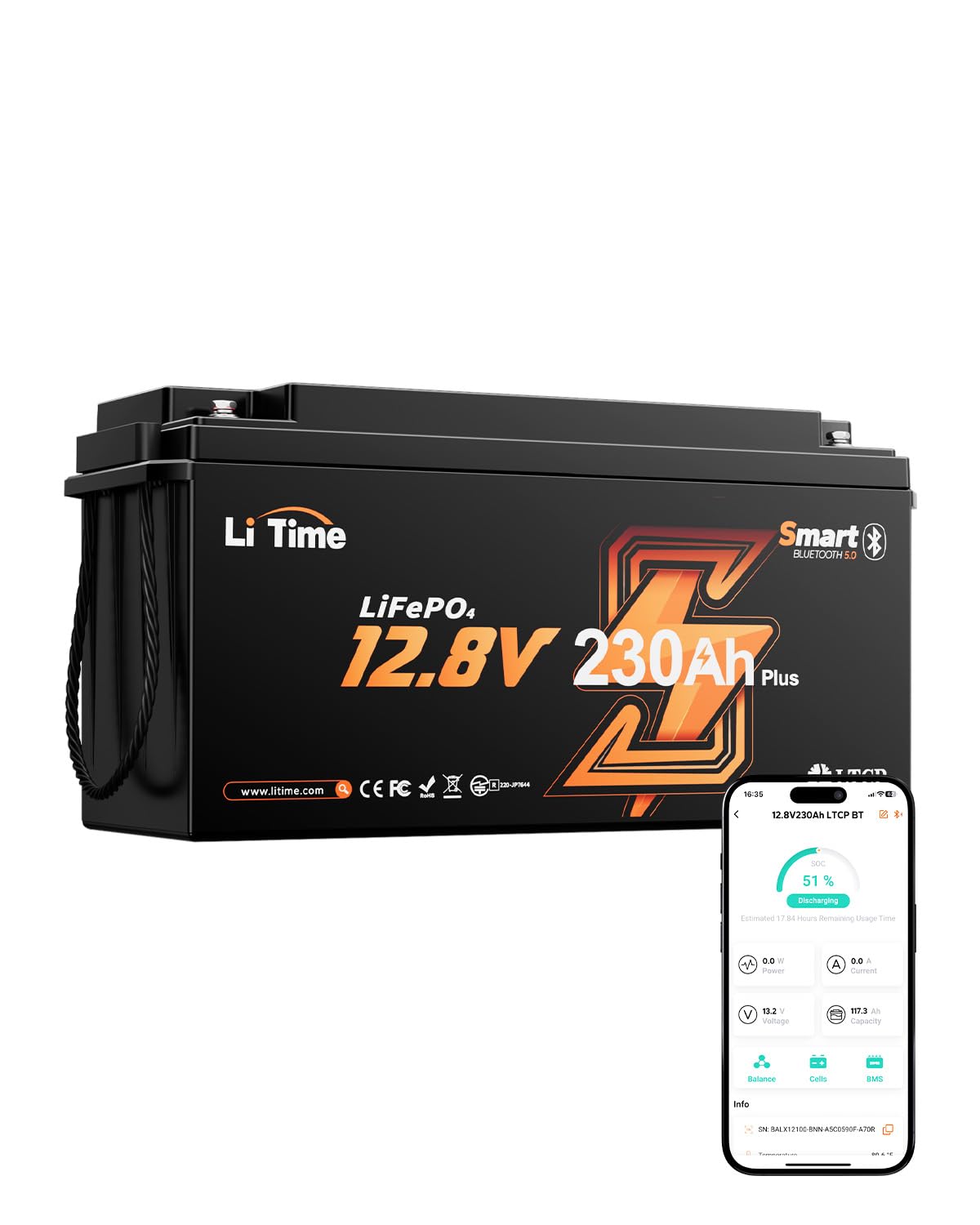
Litime’s 230Ah Bluetooth battery offers a massive 2,944Wh of stored energy in a single unit, making it a strong candidate for campers who need extended off-grid runtime without wiring multiple smaller batteries in parallel. The IP65 dustproof and water-resistant rating, combined with salt spray resistance, suits it for damp trailer compartments or outdoor solar battery boxes. The built-in Bluetooth 5.0 module feeds real-time voltage, current, state of charge, and temperature data to the Litime app.
The internal 200A BMS handles high continuous discharge loads, which is critical for running larger inverters or multiple appliances simultaneously. Low-temperature protection cuts charging below 32°F and discharging below -4°F, preventing cell damage in winter camping scenarios. The unit supports expansion up to 16 batteries in a 4P4S configuration for a theoretical 47.1kWh system, though most camper owners will stop at one or two.
Users report that the app can be finicky during initial pairing and sometimes requires reconnecting after charging cycles, but the battery performance itself earns high marks for stable voltage output and accurate capacity reporting. At 46 pounds, it is heavier than standard 100Ah lithium units but delivers more than double the capacity in roughly the same footprint.
Why it’s great
- 230Ah capacity with full Bluetooth monitoring
- 200A BMS for high-load inverter use
- IP65 waterproof and salt spray resistant
- Low-temp protection for winter camping
Good to know
- App connectivity sometimes glitchy
- Heavier than standard 100Ah lithium units
- Requires 0V-capable charger if BMS shuts down
3. ECO-WORTHY 12V 280Ah 2-Pack
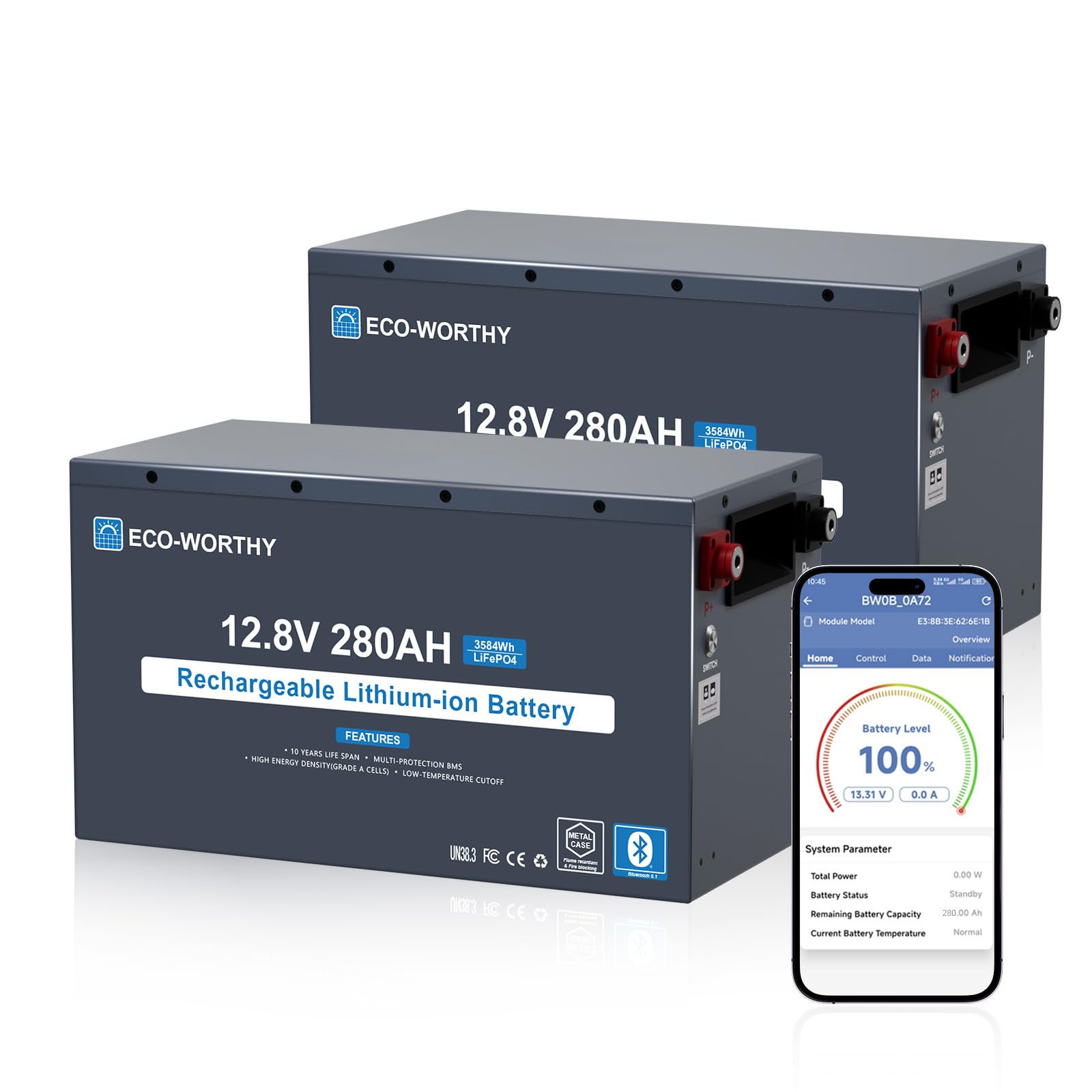
ECO-WORTHY’s 2-pack delivers 280Ah per battery in a metal case that improves thermal dissipation and structural rigidity compared to plastic enclosures. Each unit weighs roughly 61 pounds, so the pair totals 122 pounds, but the combined 7,168Wh of usable energy rivals small home backup systems. The upgraded Bluetooth 5.1 module provides real-time battery monitoring through the ECO-WORTHY app, including cell voltage balance and state of charge.
The 200A BMS includes low-temperature protection that halts charging below 19.4°F and discharging below -4°F. Users have tested these batteries at 290Ah actual capacity from a 280Ah rated unit, indicating conservative cell sizing. The metal case design incorporates an internal compression fixture that prevents cell expansion over time, a common failure point in cheaper plastic-housed LiFePO4 packs.
One drawback is the shipping weight and the fact that orders may arrive in multiple packages. Some users have reported that the BMS overvoltage cutoff at 14.2V can cause issues with certain charge controllers, requiring adjustment to a 14.1V absorption setting. For campers building a serious off-grid system, this 2-pack offers exceptional value per watt-hour.
Why it’s great
- 280Ah per battery with metal case durability
- Bluetooth 5.1 monitoring with cell balance data
- Internal compression fixture prevents expansion
- Excellent capacity per dollar ratio
Good to know
- Heavy at 61 lbs per battery
- BMS overvoltage may require charger adjustment
- 3-year warranty is shorter than competitors
4. Power Queen 12V 100Ah LiFePO4
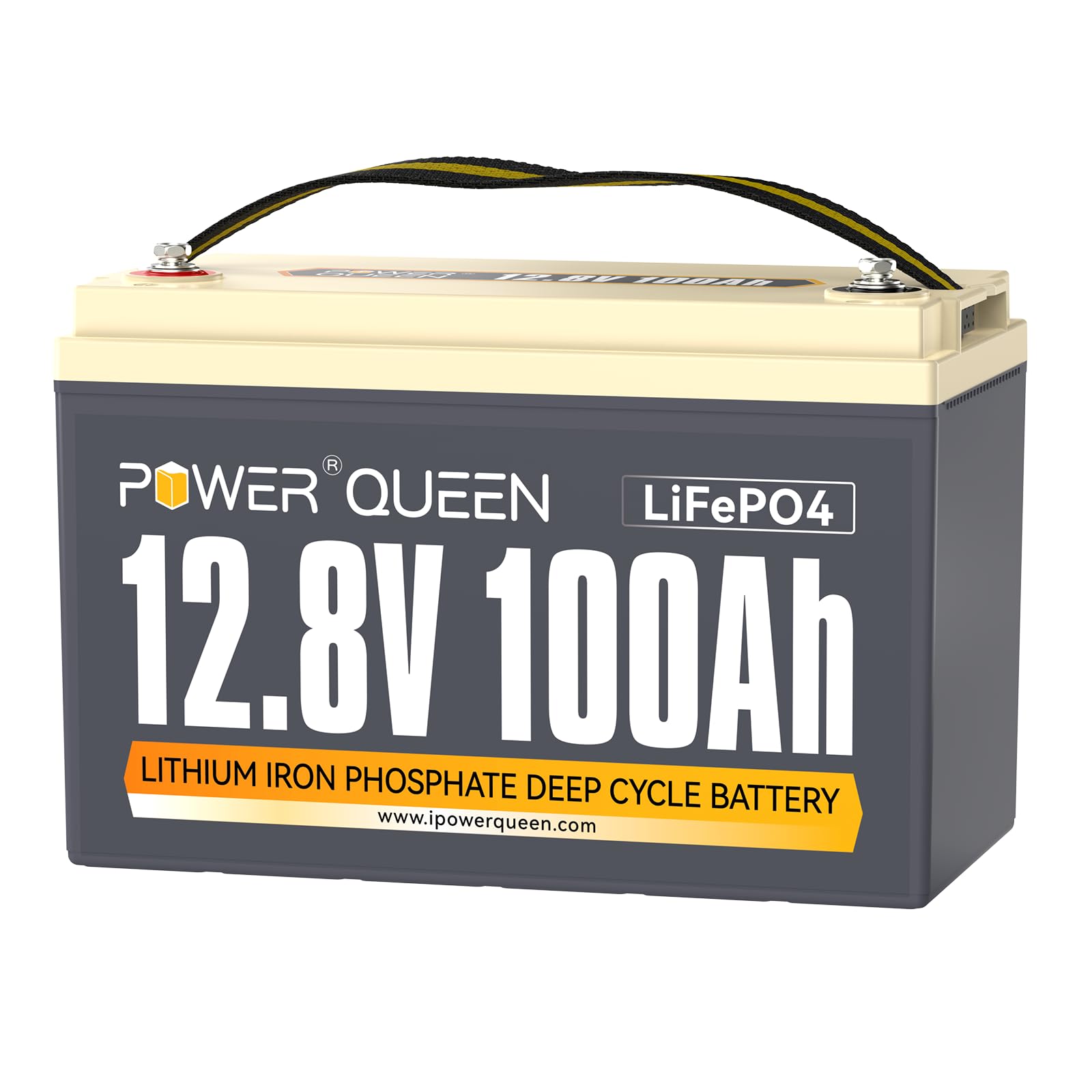
Power Queen occupies the sweet spot between budget lithium and premium brands. The Group 31 form factor fits standard battery trays, and the 100Ah capacity provides 1,280Wh of usable energy at just 24 pounds. The 100A BMS covers overcharge, over-discharge, short circuit, and overheat protection. Users have tested the unit at around 102Ah from full charge, indicating accurate cell matching.
The battery supports up to 4S4P configurations, allowing expansion to a 51.2V 400Ah system with 20.48kWh of energy. This makes it flexible for campers planning to build out a larger solar setup over time. The 3% self-discharge rate means the battery holds its charge well during seasonal storage. Real-world reports from sailboat and RV owners confirm stable voltage output under continuous loads such as trolling motors and fish finders.
The main complaint centers on the 6mm terminal bolts, which users note are easy to cross-thread if not carefully aligned. The 5-year warranty is solid for this tier, and customer service responsiveness has been praised in reviews. For campers looking for a reliable, lightweight lithium battery without paying Battle Born prices, Power Queen delivers consistent performance.
Why it’s great
- Lightweight at 24 lbs with Group 31 fit
- Accurate 102Ah tested capacity
- Flexible 4S4P expansion support
- Low 3% self-discharge rate
Good to know
- Terminal bolts easy to cross-thread
- No built-in Bluetooth on base model
- Not fully waterproof (IP rating not listed)
5. DJLBERMPW 12V 100Ah LiFePO4

DJLBERMPW offers one of the most affordable entry points into LiFePO4 power for camper owners. The 100Ah battery weighs 23 pounds and uses Grade A cells with a UL1973-tested safety certification. The 100A BMS includes low-temperature cutoff to prevent charging below freezing, a feature often missing from budget lithium packs. The IP66 waterproof rating makes it suitable for exposed marine or camper compartments.
The battery supports 4,000 cycles at 100% depth of discharge and up to 15,000 cycles at 60% DOD, giving it a theoretical lifespan of 10 years under normal use. Fast charging at 50A means it can replenish from empty to full in roughly two hours with a capable charger. Users have successfully run Garmin Livescope units all day without voltage sag and powered 24V trolling motor systems for three days of continuous fishing.
The biggest caveat is the 5-year warranty, which is shorter than premium brands but competitive at this price point. Some users reported that one battery in a multi-unit setup failed after winter storage, but the seller replaced it within a week. For campers on a tight budget who want to switch from lead-acid to lithium, this is a strong contender.
Why it’s great
- Very affordable lithium with UL1973 cells
- IP66 waterproof rating
- Low-temp cutoff protection
- Supports 50A fast charging
Good to know
- 5-year warranty, not 10
- BMS low-voltage cutoff may cycle on/off
- No Bluetooth monitoring
6. HRBEENERGY 12.8V 100Ah LiFePO4

At only 19.4 pounds, the HRBEENERGY 100Ah LiFePO4 battery is one of the lightest options available, making it a top pick for kayak campers and small van conversions where every pound matters. The IP67 waterproof rating means it can survive direct rain exposure and even temporary submersion, which is rare in this price bracket. The Group 24 form factor provides a direct 1:1 replacement for standard lead-acid batteries.
The built-in 100A BMS offers the standard suite of protections, and the internal Grade A cells support 8,000-plus cycles. Users report that three of these batteries in series power a 36V golf cart for 10 hours, and three in parallel run a 12V RV system for 3 to 4 days. The 1280Wh capacity delivers about 106 hours for a 12W LED lamp or 2.5 hours for a 500W heater.
The 10-year warranty is exceptional for this price tier. The only notable quirk is that the low-voltage cutoff engages around 9.5V and can cycle on and off for a few minutes before fully disconnecting, which may confuse some users. Overall, the weight savings alone justify the upgrade for portable camper setups.
Why it’s great
- Extremely lightweight at 19.4 lbs
- IP67 waterproof for wet environments
- 10-year manufacturer warranty
- Supports 16 batteries in parallel
Good to know
- Low-voltage cutoff cycles before full disconnect
- No Bluetooth or smart monitoring
- Group 24 size may not fit all trays
7. WEIZE 12V 100Ah AGM

WEIZE’s 100Ah AGM battery remains a popular choice for campers who prefer the simplicity and lower upfront cost of sealed lead-acid technology. At 63 pounds, it is heavy, but the AGM construction eliminates the need for water refilling and allows mounting in any position. The Group 31 size fits standard battery compartments, and the terminal orientation is clearly marked with red for positive and black for negative.
Users have run four of these in parallel feeding a 2,000W inverter for 4.8kWh of backup power, running 120V outlets, fans, and garage door openers. Two batteries paired with 300W solar panels have powered an off-grid RV for two years without issues. The 3% self-discharge rate means it holds charge well during seasonal storage.
The main limitation is the cycle life: AGM typically lasts 300 to 1,500 cycles depending on discharge depth, which is far shorter than LiFePO4. For campers on a strict budget or those who only camp a few weekends per year, this AGM option delivers dependable performance at a lower entry cost.
Why it’s great
- Reliable AGM with no water maintenance
- Good value for 100Ah capacity
- Low 3% self-discharge for storage
- Durable build for emergency backup systems
Good to know
- Heavy at 63 lbs
- AGM cycle life much shorter than lithium
- No BMS, requires external charge control
8. VMAX MR127 100Ah AGM

VMAX has built a strong reputation in the marine and RV world for AGM batteries that handle repeated deep discharges better than standard lead-acid units. The MR127 is a Group 27, 100Ah AGM battery that weighs 68 pounds and includes integrated carrying handles. The absorbed glass mat construction uses a high-porosity electrolyte suspension system without silica gels, which VMAX claims improves cycle life and tolerance to over-discharge incidents.
Users running 40-pound and 55-pound thrust Minn Kota trolling motors report 5-plus hours of runtime with 95% charge retained after use. Two batteries in series for a 86-pound thrust motor dropped from 26.4V to 24.2V after 4 hours of trolling, showing solid voltage stability. The battery is also compatible with solar charge controllers and standard AGM battery chargers.
The 1-year warranty is shorter than most competitors, and the weight makes installation a two-person job in tight compartments. Some users have reported that fully draining the battery can confuse some chargers and require a jump-start to reset. For dedicated boaters and campers who trust sealed AGM technology, VMAX offers a proven workhorse.
Why it’s great
- True deep cycle AGM with good over-discharge tolerance
- Voltage stability under high trolling motor loads
- Built-in carrying handles for easier transport
- 10-year expected service life in float applications
Good to know
- Very heavy at 68 lbs
- Only 1-year warranty
- May require jump-start after full discharge
9. Newport 12V50Ah AGM
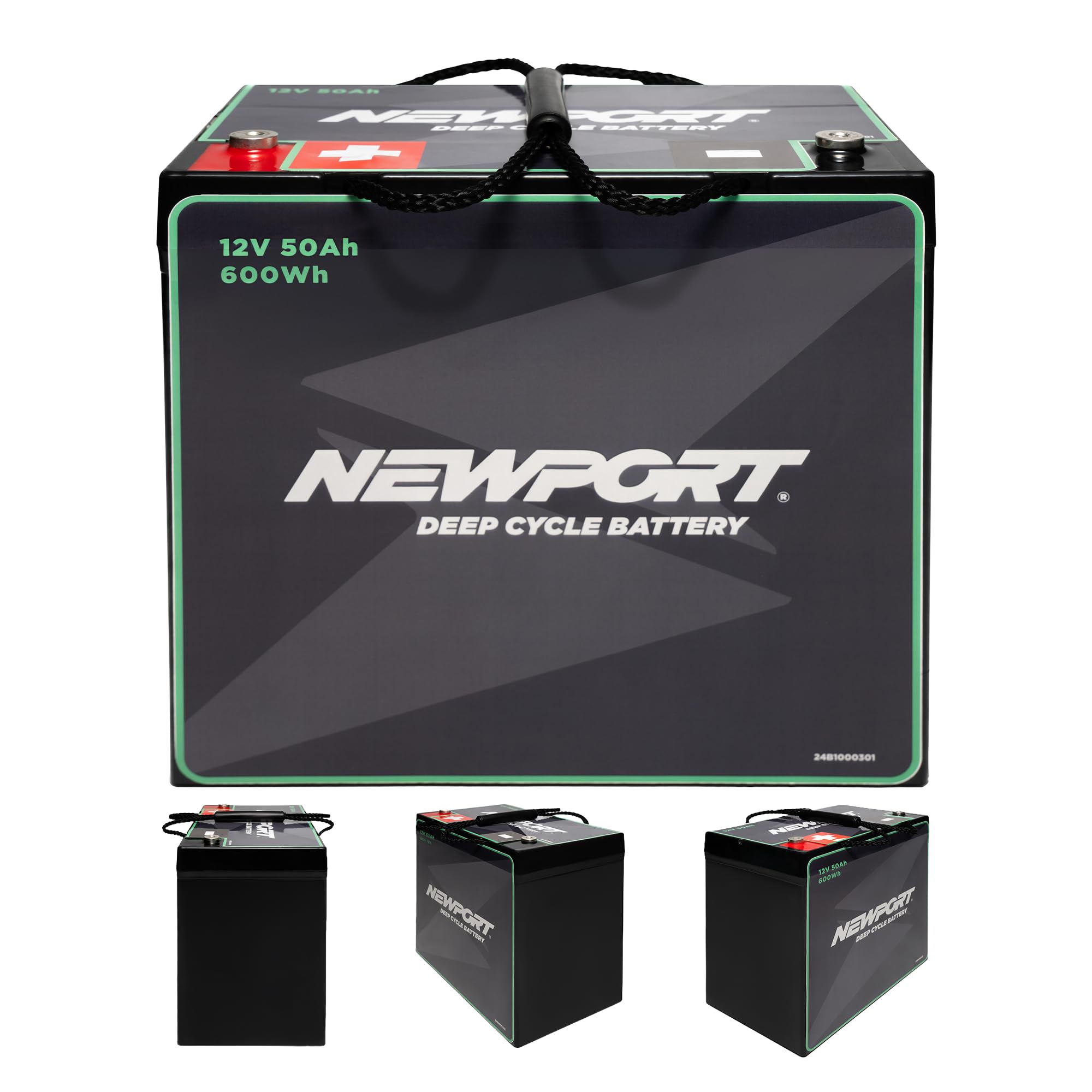
Newport’s 12V50Ah AGM battery targets campers and kayak anglers who need a lightweight sealed solution for smaller loads. At 32 pounds, it is the lightest lead-acid option on this list and remains easy to carry with one hand. The sealed AGM construction is leak-proof and maintenance-free, making it safe for tight compartments and transport in vehicle cabins.
Users report steady power delivery for 4-plus hours on a 55-pound thrust trolling motor at moderate speeds, and around 7 hours on a 25-pound motor at full speed. The battery survived a 20 MPH tumble from a truck bed onto asphalt with only cosmetic damage, demonstrating solid build quality. It also works as a backup sump pump battery, showing versatility beyond marine use.
There is no built-in charge indicator, so an external meter is recommended. For small kayak fishing setups or as a secondary battery for specific accessories, this compact AGM delivers good value.
Why it’s great
- Lightweight at 32 lbs for easy handling
- Sealed AGM with no maintenance
- Durable construction survived drop impact
- Good for small trolling motor setups
Good to know
- Only 50Ah capacity limits runtime
- No built-in charge indicator
- AGM cycle life shorter than lithium
FAQ
Can I replace my camper’s lead-acid battery with LiFePO4 without changing my charger?
How many amp-hours do I need for a typical camper setup?
Do I need a special solar charge controller for LiFePO4 batteries?
What is the difference between Group 24, Group 27, and Group 31 battery sizes?
Can I mix old and new LiFePO4 batteries in parallel?
Final Thoughts: The Verdict
For most users, the best deep cycle battery for camper winner is the Battle Born 100Ah LiFePO4 because it combines proven reliability, a 10-year warranty, and a robust BMS that protects against common camper mistakes. If you want maximum capacity with Bluetooth monitoring, grab the Litime 230Ah. And for a budget-friendly lithium upgrade that still delivers solid performance, nothing beats the DJLBERMPW 100Ah.

Mo Maruf
I created WellFizz to bridge the gap between vague wellness advice and actionable solutions. My mission is simple: to decode the research and give you practical tools you can actually use.
Beyond the data, I am a passionate traveler. I believe that stepping away from the screen to explore new environments is essential for mental clarity and physical vitality.