Our readers keep the lights on and my smoothie glass nicely filled. As an Amazon Associate, I earn from qualifying purchases.
Eustachian tube dysfunction turns every swallow, yawn, and altitude change into a painful, muffled reminder that pressure isn’t equalizing inside your head. The right decongestant targets the swollen lining of the eustachian tube itself, shrinking tissue so fluid can drain and pressure can normalize.
I’m Mohammad Maruf — the founder and writer behind WellFizz. I’ve spent countless hours analyzing the active ingredients, delivery mechanisms, and real-world user outcomes for decongestants specifically formulated to address eustachian tube swelling and middle ear pressure.
After sorting through oral tablets, nasal sprays, and mechanical options, this guide breaks down the top contenders to help you find the best decongestant for etd that fits your specific symptoms and lifestyle.
How to Choose the Best Decongestant for ETD
Selecting the right decongestant for eustachian tube dysfunction depends on whether your primary issue is swollen nasal passages blocking the tube’s opening, thick fluid trapped in the middle ear, or a mechanical failure of the tube to open during pressure changes. Each requires a different active ingredient or delivery method.
Oral Decongestants vs. Nasal Sprays vs. Mechanical Devices
Oral decongestants like phenylephrine (found in WELMATE and Vicks Sinex LiquiCaps) work systemically by constricting blood vessels throughout the upper respiratory tract, reducing swelling in both the nasal passages and the eustachian tube lining. Nasal sprays like Afrin deliver medication directly to the swollen tissue at the tube’s opening, offering faster localized relief but carrying a risk of rebound congestion if used beyond three days. Mechanical devices like Otovent bypass medication entirely by using gentle positive pressure to manually open the eustachian tube — ideal for chronic ETD where decongestants alone fail.
Maximum Strength vs. Children’s Formulations
Adult ETD sufferers often need maximum-strength formulations with 10 mg of phenylephrine per dose to adequately shrink swollen eustachian tube tissue. Children ages 2–10 require gentler, drug-free options like Pressureze that rely on saline and minerals to clear nasal passages without the risk of systemic side effects or rebound congestion. Always match the formulation to the patient’s age and symptom severity.
Quick Comparison
On smaller screens, swipe sideways to see the full table.
| Model | Category | Best For | Key Spec | Amazon |
|---|---|---|---|---|
| Otovent Glue Ear Treatment | Mechanical Device | Chronic ETD & pressure equalization | 10 balloons per pack | Amazon |
| Afrin No Drip Bundle | Nasal Spray | Fast sinus & ear pressure relief | 0.5 fl oz per bottle, Pack of 2 | Amazon |
| Vicks Sinex SEVERE LiquiCaps | Oral Capsules | All-in-one sinus + pain relief | 24 LiquiCaps per pack | Amazon |
| WELMATE PE Phenylephrine Tablets | Oral Tablets | Value-sized daily congestion control | 200 tablets at 10 mg each | Amazon |
| Pressureze Kids Nasal Spray | Saline Spray | Children’s congestion & ear relief | 245 sprays, 34 ml | Amazon |
In‑Depth Reviews
1. Otovent Glue Ear Treatment

The Otovent is a non-pharmacological approach that directly addresses the root mechanical failure of eustachian tube dysfunction. By blowing up a balloon through a specially designed nozzle placed in one nostril, you generate positive pressure that forces the eustachian tube open and allows trapped fluid to drain down the back of the throat. Users report immediate pressure relief after just one or two attempts, with chronic blockage often resolving after weeks of consistent use three to four times daily.
Each pack comes with ten balloons and a reusable plastic nozzle. The treatment takes seconds to perform and is completely painless. Many users who had tried oral decongestants and nasal sprays without success found Otovent to be the only thing that finally unblocked their ears after months or even years of suffering. One reviewer noted it resolved a severe middle ear infection after three weeks of misery where nothing else worked.
The main trade-off is the learning curve — it takes a few tries to seal the nostril properly and generate enough pressure without the balloon slipping. Some users experienced mild pressure headaches or dizziness, particularly if they blew too hard or had severe existing congestion. While the plastic component is simple, the price feels premium for what is essentially a balloon-and-nozzle system, though DIY alternatives are less reliable.
Why it’s great
- Directly opens the eustachian tube mechanically without medication
- Immediate pressure relief reported by most users
- No risk of rebound congestion or systemic side effects
Good to know
- Learning curve to achieve proper seal and balloon inflation
- Requires consistent use over weeks for chronic ETD
- Replacement balloons needed after the initial pack runs out
2. Afrin No Drip Original + Night Nasal Mist Bundle

The Afrin bundle combines a standard No Drip Original mist with a Night Nasal Mist featuring a calming chamomile scent and glycerin to moisturize nasal passages. Both rely on the active ingredient oxymetazoline, a potent vasoconstrictor that shrinks swollen blood vessels in the nasal lining and around the eustachian tube opening. Users report unblocking a stuffy nose and relieving sinus pressure in seconds, with effects lasting up to twelve hours per dose.
The No Drip formula is a genuine upgrade over older Afrin versions — the mist stays where it lands instead of running down your throat or out of your nose. This makes it more comfortable to use before bed, especially with the Night variant that helps you sleep through congestion.
The critical limitation is the three-day usage rule. Afrin’s rapid and powerful action comes with a high risk of rebound congestion (rhinitis medicamentosa) if used longer than three consecutive days. It is best reserved for acute flare-ups such as during a cold or a flight. Some users found the pump mechanism finicky to prime, and the mist can feel intense for sensitive noses.
Why it’s great
- Relief starts within seconds of spraying
- No Drip technology keeps medication in the nasal passages
- Night variant with chamomile scent aids sleep
Good to know
- Cannot be used for more than three consecutive days
- High potential for rebound congestion with overuse
- Pump can be difficult to prime initially
3. Vicks Sinex SEVERE LiquiCaps

Vicks Sinex SEVERE LiquiCaps combine a decongestant with a pain reliever, making them the ideal choice when ETD is accompanied by sinus headache and facial pressure. The LiquiCap format delivers liquid medication that absorbs faster than standard tablets, with several users reporting quicker sinus clearance compared to competing products like the Tylenol equivalent. Each pack contains 24 capsules at maximum strength, providing up to six days of relief if taken as directed.
This product is specifically formulated for sinus symptoms caused by colds, hay fever, or upper respiratory allergies — not for runny noses or sneezing, which require an antihistamine. Users consistently praise its ability to clear sinus pressure and reduce the dull ache that often accompanies eustachian tube congestion. The non-drowsy formula means you can take it during work or daily activities without feeling sedated.
The main downside is cost variability — some users noted the price has climbed noticeably over the past year. Additionally, the liquid inside the capsules can have a strong taste if a capsule leaks in the throat. As with any oral decongestant, it may cause mild jitteriness or elevated heart rate in sensitive individuals, particularly if taken too frequently.
Why it’s great
- Combination decongestant plus pain reliever for sinus headache
- LiquiCap format absorbs faster than tablets
- Non-drowsy and effective for daily use
Good to know
- Price has increased significantly from previous levels
- Liquid taste can be unpleasant if capsule leaks
- Not formulated for runny nose or allergic sneezing
4. WELMATE Nasal Decongestant PE Phenylephrine HCl 10 mg

The WELMATE offering is a straightforward, maximum-strength phenylephrine tablet at a remarkably low per-dose cost. With 200 tablets in a single bottle, this is the most economical option for anyone who needs daily congestion control during allergy season or persistent ETD. Each tablet contains 10 mg of phenylephrine HCl, the same active ingredient found in brand-name Suda-fed PE Congestion, making it a direct generic alternative.
Users report that the tablets work effectively for nasal congestion and sinus pressure, with relief noticeable within 30 to 60 minutes. The small, easy-to-swallow design is a practical advantage for those who struggle with larger pills. Many reviewers highlighted the value compared to drugstore brands, noting that the savings are substantial while the efficacy is identical.
The biggest consideration is that phenylephrine is generally considered less effective than pseudoephedrine (the original Suda-fed ingredient) for opening the eustachian tube, especially in chronic ETD. Users with severe congestion may need to take the full dose every four hours as directed. Some individuals experience mild stimulant effects such as restlessness or insomnia if taken too late in the day.
Why it’s great
- Extremely low cost per dose — 200 tablets in one bottle
- Small, easy-to-swallow tablets
- Works faster than some generic competitors
Good to know
- Phenylephrine is less potent than pseudoephedrine for deep congestion
- Must be taken every 4 hours for consistent effect
- May cause jitteriness or sleep disruption in sensitive users
5. Pressureze Preservative-Free Sterile Nasal Spray for Children
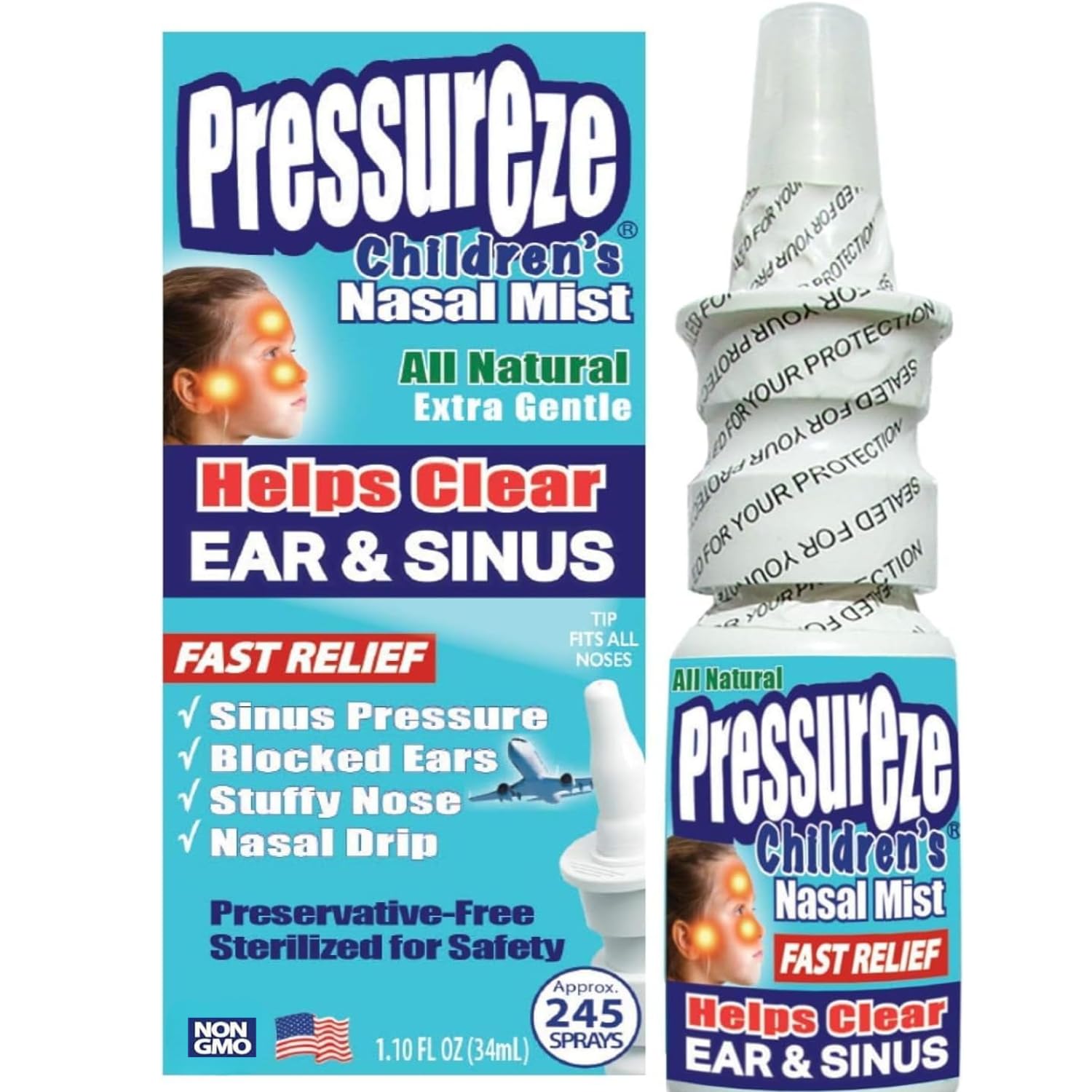
Pressureze is a drug-free saline nasal spray designed specifically for children aged 2 to 10, making it the safest option for managing ETD-related congestion in young kids. The blend includes purified water, saline, and mineral salts without any preservatives, BPA, alcohol, or sweeteners. Its one-way flow tip prevents backflow and contamination, keeping the bottle sterile for the entire 245-spray lifespan.
Parents report that the spray helps clear nasal passages during colds and seasonal allergies, reducing ear ringing and pressure from fluid buildup. Some users found it effective enough for adults too, though the gentle formulation is not designed for severe congestion. The spray also helps before flights, during swimming, and after diving — all high-risk scenarios for pediatric ETD.
Several reviewers noted that the spray’s force can be too intense for very young or sensitive children, causing a brief stinging sensation and leading to resistance. It is effective at clearing superficial nasal congestion but does not address deep sinus blockage. For children with chronic ETD who have already received ear tubes, this spray may offer limited additional benefit during travel.
Why it’s great
- Completely drug-free and safe for daily use in children
- One-way flow tip prevents contamination
- Effective for clearing nasal passages and reducing ear pressure
Good to know
- Spray force can be intense and cause stinging in sensitive kids
- Does not address deep sinus congestion
- Less effective after ear tube insertion
FAQ
Can a nasal decongestant spray cure eustachian tube dysfunction?
How often should I take phenylephrine tablets for ETD?
Is Otovent safe for children with ear tubes?
Final Thoughts: The Verdict
For most users, the best decongestant for etd winner is the Otovent Glue Ear Treatment because it directly addresses the mechanical failure of the eustachian tube without relying on medication or risking rebound congestion. If you need fast, targeted relief during acute flare-ups, grab the Afrin No Drip Bundle. And for cost-conscious daily congestion control during allergy season, nothing beats the WELMATE Phenylephrine Tablets.

Mo Maruf
I created WellFizz to bridge the gap between vague wellness advice and actionable solutions. My mission is simple: to decode the research and give you practical tools you can actually use.
Beyond the data, I am a passionate traveler. I believe that stepping away from the screen to explore new environments is essential for mental clarity and physical vitality.