Our readers keep the lights on and my smoothie glass nicely filled. As an Amazon Associate, I earn from qualifying purchases.
An uneven, blotchy, or prematurely faded deck is the result of a mismatch between your wood and the stain. Whether it’s a pressure-treated pine platform or an exotic Ipe surface, the chemistry of the finish determines how long the color holds and how much water the wood repels. Finding the right balance between film-building sealers and penetrating oils is the difference between a two-year finish and one that lasts through five seasons of rain and UV exposure.
I’m Mohammad Maruf — the founder and writer behind WellFizz. My research focuses on analyzing the polymer chemistry, solid-content ratios, and real-world coverage data of outdoor wood finishes to help you select a product that matches your specific wood species and climate.
This guide breaks down oil-based vs. water-based formulations, semi-transparent vs. solid finishes, and real coverage rates so you can confidently pick the best deck stain for your project and avoid the common mistake of reapplying every single season.
How To Choose The Best Deck Stain
The right deck stain depends entirely on the type of wood you’re covering and the look you want. The most common mistake is choosing a color first and a formulation second. You need to match the stain’s base chemistry to your wood’s density and porosity, then decide how much grain you want to show.
Match Chemistry to Wood Species
Softwoods like pressure-treated pine and cedar are porous and soak up water-based or oil-based stains readily. Exotic hardwoods like Ipe, Tigerwood, and Cumaru are dense and resist penetration; they require a penetrating oil like the Penofin or DeckWise formulas to actually get below the surface. Using a thick water-based sealer on Ipe will result in peeling within a year because the film can’t bond.
Semi-Transparent vs. Solid Color
If your wood is in good condition with a visible grain pattern you want to preserve, choose a semi-transparent stain like Thompson’s WaterSeal or KILZ. If the wood is weathered, stained, or has old finish residue, a solid color opaque stain like the SaverSystems #1 Deck Premium completely hides the grain and covers imperfections. Solid stains act more like a paint, while semi-transparents are closer to a true stain.
Verify Coverage and UV Protection
Coverage rates vary significantly. A gallon of semi-transparent stain may cover 300-400 square feet, while a solid color stain might only cover 100-150 square feet per coat. Always buy extra for a second coat, which dramatically improves water repellency. UV barrier additives prevent the wood from graying: the presence of UV-resistant polymers in the ingredient list indicates longer color life between reapplications.
Quick Comparison
On smaller screens, swipe sideways to see the full table.
| Model | Category | Best For | Key Spec | Amazon |
|---|---|---|---|---|
| #1 Deck Premium Solid Gray | Solid | Full coverage on aged wood | Opaque finish, 100-150 sq. ft./gal | Amazon |
| #1 Deck Premium Solid Simply White | Solid | Brightening fences & siding | Low-VOC, 100-150 sq. ft./gal | Amazon |
| Penofin Deep Penetrating Oil | Oil | Exotic hardwood decks | 350 sq. ft./gal penetration | Amazon |
| DeckWise Ipe Oil | Oil | Dense hardwoods | 250 sq. ft./gal, U.V. barrier | Amazon |
| KILZ Semi-Transparent Cedar | Semi | Softwood decks & fences | 250-500 sq. ft./gal coverage | Amazon |
| SaverSystems #1 Deck Cedar | Semi | Budget-friendly sealing | Water-based, 4.03 kg weight | Amazon |
| Thompson’s WaterSeal Chestnut | Semi | Quick DIY application | 150-400 sq. ft./gal coverage | Amazon |
In‑Depth Reviews
1. SaverSystems #1 Deck Premium Solid Gray
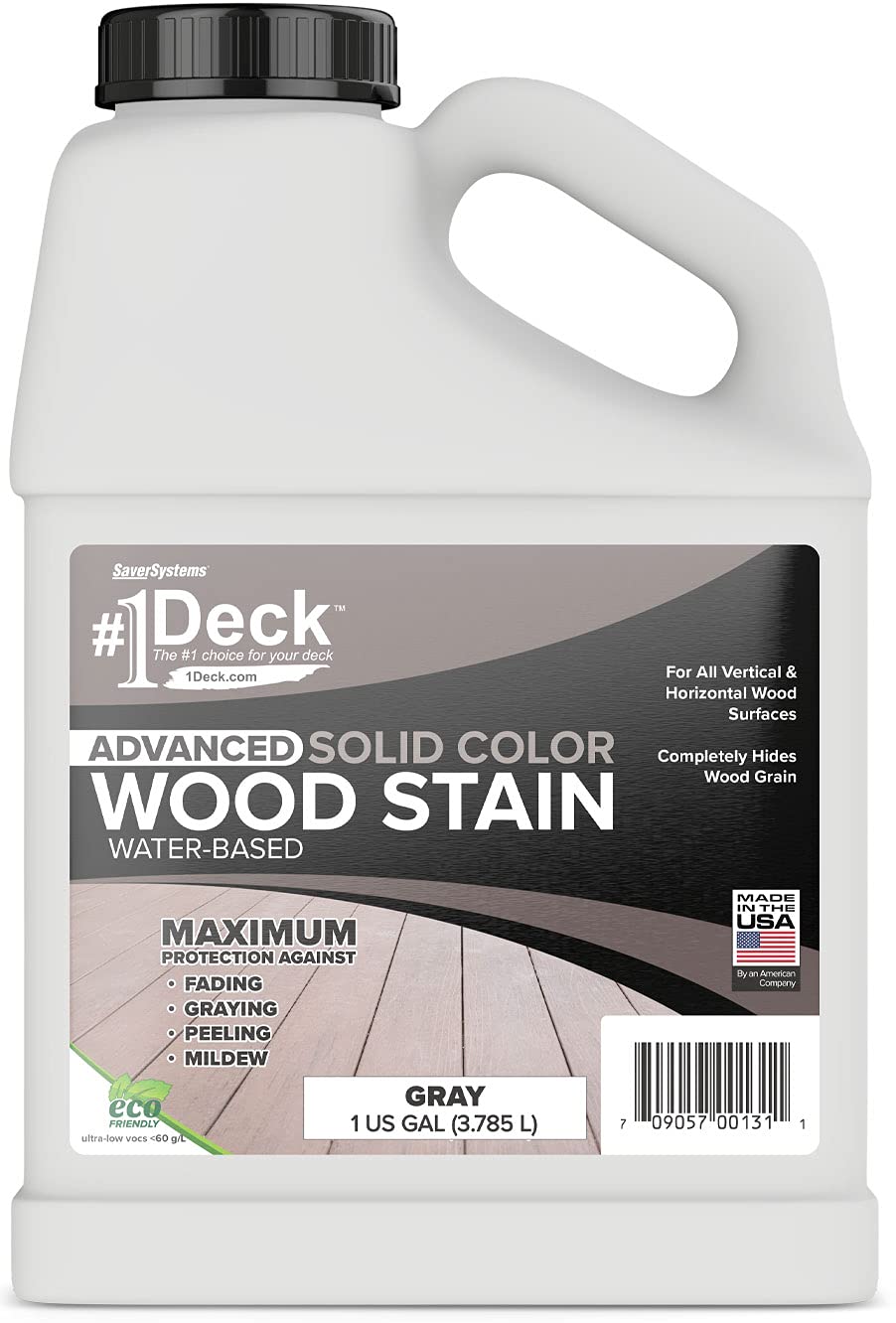
The #1 Deck Premium Solid Gray from SaverSystems delivers a true opaque finish that completely hides wood grain and surface imperfections. This is a dual-action stain and sealer that penetrates deep into wood pores while forming a protective film against UV rays, mildew, and moisture. With a coverage rate of 100-150 square feet per gallon, it requires careful planning for larger decks, but the payoff is a uniform, clean matte look that transforms weathered wood into something that appears new.
User reports confirm that this stain held up well even after an unexpected downpour just four hours post-application, which speaks to its quick water resistance. The low-VOC formula (<60 g/L) produces less odor during application and cleans up with soap and water, making it a more pleasant option for DIY staining projects. The gray color is described as clean and not too light, avoiding the chalky look some gray stains develop.
This product works on pressure-treated pine, fir, redwood, and mahogany, making it versatile for both horizontal deck boards and vertical siding. For homeowners with older, sun-beaten wood that needs a uniform refresh rather than a translucent enhancement, this solid stain provides the most dramatic transformation with long-lasting coverage.
Why it’s great
- Completely covers old stains and imperfections
- Low-VOC formula with easy soap-and-water cleanup
- Excellent rain resistance soon after application
Good to know
- Coverage is lower than semi-transparent stains
- Not suitable if you want natural wood grain visible
2. SaverSystems #1 Deck Premium Solid Simply White

The Simply White version from the same #1 Deck Premium line offers identical opaque coverage but in a bright, clean white tone that is ideal for fences, railings, and siding. Like its gray counterpart, this is a water-based stain/sealer hybrid with a low VOC content under 60 g/L. The coverage rate is similar at 100-150 square feet per gallon, and the formula is designed to resist fading, graying, peeling, and mildew.
Real-world user experiences align with the gray version: the product survived a rainstorm just hours after application without runoff or spotting. The clean white color transforms tired fences and older solid decks, giving them a crisp, refreshed appearance that blends well with modern exterior color schemes. One user noted that the stain cured in hours but recommended allowing a couple of days before heavy traffic to ensure full film hardness.
This stain works best on surfaces that are currently painted or have a solid stain in good adhesion — it can be applied directly over existing finishes that are still bonded. If your deck has deep grain or you want a natural wood look, choose a semi-transparent instead. But for a complete color transformation on a fence or older deck, Simply White is the standout choice.
Why it’s great
- Bright white finish revitalizes old fences and decks
- Low odor and easy water cleanup
- Can be applied over existing solid stains
Good to know
- Requires precise application to avoid lap marks
- Not designed for bare wood if grain visibility is desired
3. Penofin Deep Penetrating Oil Treatment

Penofin Deep Penetrating Oil is formulated specifically for dense exotic hardwoods like Ipe, Cumaru, and Tigerwood. Unlike water-based sealers that sit on the surface, this oil-based treatment penetrates deep into the wood fibers to nourish from within. It includes advanced mildew protection and UV stabilizers to slow the graying process that hardwoods naturally undergo. The coverage rate of 350 square feet per gallon is impressive, meaning a single gallon can handle a moderate deck with enough left for railings.
User feedback from Ipe deck owners is overwhelmingly positive, with one describing it as the best stain they have purchased in years after two coats gave a showroom-quality finish. The application process involves spraying or brushing, then wiping away excess after 15 minutes to ensure even absorption. Some users noted a strong solvent smell that can linger for weeks, so proper ventilation during and after application is essential.
This is not a film-forming finish — it leaves a natural translucent brown tone that allows the wood grain to show clearly. It is designed for new or well-prepared bare wood, not for surfaces with old paint or solid stain residue. If you own an Ipe deck or high-end hardwood furniture and want true penetration rather than surface coating, Penofin is the specialty product to choose.
Why it’s great
- Deeply penetrates dense hardwoods for lasting protection
- High coverage rate of 350 sq. ft. per gallon
- Natural translucent finish shows wood beauty
Good to know
- Strong solvent odor requires good ventilation
- Not suitable for painted or previously coated wood
4. DeckWise Ipe Oil Semi-Transparent

DeckWise Ipe Oil is a semi-transparent oil-based finish that is specifically formulated to preserve the natural beauty of exterior hardwood decks. It provides excellent penetration of dense woods like Ipe, Tigerwood, and Cumaru, delivering a warm brown tone that enhances the grain without hiding it. The U.V. barrier protection helps slow the silvering process that hardwoods experience in direct sunlight, and the coverage is rated at 250 square feet per gallon.
Users with Ipe decks report that this product holds up well for about 12 months before significant fading, requiring an annual pressure wash and reapplication. One long-term user stated they have used it for nine years and continue to get consistent results. The application process typically involves sanding with 80-grit paper before staining, then wiping the excess oil to achieve an even finish. Some customers noted that the color is darker than expected — this is a stain, not a clear oil — so check the undertone before applying.
DeckWise Ipe Oil is not available for sale in certain California jurisdictions due to VOC content regulations, so check local restrictions before ordering. For exotic hardwood owners who want a semi-transparent finish that highlights natural grain while providing UV protection, this specialized formula is a reliable annual maintenance solution.
Why it’s great
- Formulated specifically for dense exotic hardwoods
- UV barrier helps prevent graying
- Consistent results with annual reapplication
Good to know
- Annual reapplication needed for best appearance
- Not recommended for handrails due to slickness
5. KILZ Semi-Transparent Waterproofing Wood Stain

KILZ Waterproofing Wood Stain is a 100% acrylic semi-transparent formula that provides both UV protection and waterproofing for softwood decks, fences, and siding. The Cedar Naturaltone color delivers a warm red-brown hue that looks particularly good on pressure-treated pine and cedar. The coverage range is broad: the first coat covers 250-300 square feet per gallon, while a second coat brings total coverage to 500-600 square feet. It is warrantied up to 3 years on decks and up to 5 years on fences and siding.
DIY users consistently praise the ease of application and the beautiful color result. One customer with 45 years of experience selling KILZ products noted that the stain quality is outstanding and consistent with the brand’s reputation. Another user applied a single coat and reported that the waterproofing performance exceeded more expensive brands, with water beading on the surface after curing. The acrylic formula dries to a satin finish that resists mildew and fading.
The main drawback reported is shipping: some customers experienced lost packages, so ordering from a reliable fulfillment source is advisable. This stain works best on new to moderately weathered wood (0-10 years exposure), not on heavily degraded or previously painted surfaces. For a proven brand with a strong warranty and excellent affordability, KILZ is the top mid-range pick.
Why it’s great
- Excellent waterproofing with a single coat
- Strong brand warranty of 3-5 years
- Satin finish with good UV and mildew resistance
Good to know
- Some shipping reliability issues reported
- Not ideal for heavily weathered or painted wood
6. SaverSystems #1 Deck Semi-Transparent Cedar

This semi-transparent stain from SaverSystems offers a dual-purpose stain and sealer in one can, designed for softwoods like pressure-treated pine, cedar, fir, and redwood. The Cedar color dries to a flat, natural-looking finish that allows the wood grain to show through. With less than 50 g/L VOC content, it is a low-odor, environmentally conscious formula that cleans up easily with soap and water.
Users report that the stain applies smoothly and does not create drips or runs like some thicker formulas. One customer applied it to a pressure-treated fence and noted that two gallons covered five 8-foot panels, but recommended buying extra for full coverage. The product can be applied to damp wood, which minimizes the waiting time between pressure washing and staining — a real time-saver for weekend projects. Some users on treated wood found that one coat lasted about a year in high-traffic horizontal deck areas, with railings holding up longer.
The formula is somewhat thin, so a pump sprayer or Wagner-type sprayer is recommended for even application on large surfaces, followed by back-brushing. While the longevity on horizontal deck boards is not as long as premium oil-based options, the low price and easy application make this an excellent choice for fences, siding, or decks where annual maintenance is acceptable.
Why it’s great
- Very low VOC for safer application
- Can be applied to damp wood to save time
- Easy soap-and-water cleanup
Good to know
- May need annual reapplication on horizontal deck boards
- Thin consistency requires careful application to avoid runs
7. Thompson’s WaterSeal Semi-Transparent Chestnut

Thompson’s WaterSeal is one of the most widely recognized names in deck care, and this semi-transparent formula in Chestnut Brown is a solid entry-level option for DIY homeowners. The advanced polymer formulation delivers fade-resistant color with waterproofing protection that meets the ASTM D-4446 industry standard. It can be applied to damp or dry wood, and the coverage range is 150-400 square feet per gallon depending on wood porosity.
Customer feedback highlights that the Chestnut color has a reddish tint that dries darker than expected, so testing on a small area first is recommended. The stain has a thin consistency that dries quickly, especially in dry climates. One coat provides decent water resistance, but most users strongly advise buying enough for a second coat to achieve even coverage and long-term durability. The manufacturer itself suggests doubling the quantity for adequate results on porous wood.
For first-time deck stainer who needs a straightforward product with wide availability and a trusted brand name, Thompson’s WaterSeal works. The main limitation is that the finish may require touch-ups after a single season in high-traffic areas or direct sun exposure. Proper surface preparation — cleaning thoroughly and sanding if needed — is crucial to prevent uneven absorption and blotchiness.
Why it’s great
- Trusted brand with ASTM waterproofing standard
- Can be applied to damp wood for flexibility
- Fade-resistant polymers help maintain color
Good to know
- Color may be more red than on the label
- Two coats strongly recommended for lasting results
FAQ
Can I apply a semi-transparent stain over an old solid stain?
How long should I wait between washing and staining my deck?
What is the difference between a deck stain and a deck sealer?
How often should I reapply stain to an Ipe hardwood deck?
Why does my deck stain look blotchy after drying?
Final Thoughts: The Verdict
For most users, the best deck stain winner is the SaverSystems #1 Deck Premium Solid Gray because it offers a true opaque finish that completely revives weathered wood with low-VOC, water-based convenience and proven rain resistance. If you want a semi-transparent option that shows wood grain on softwoods, grab the KILZ Semi-Transparent Waterproofing Stain. And for dense exotic hardwood decks requiring deep penetration and natural grain visibility, nothing beats the Penofin Deep Penetrating Oil Treatment.

Mo Maruf
I created WellFizz to bridge the gap between vague wellness advice and actionable solutions. My mission is simple: to decode the research and give you practical tools you can actually use.
Beyond the data, I am a passionate traveler. I believe that stepping away from the screen to explore new environments is essential for mental clarity and physical vitality.