Our readers keep the lights on and my smoothie glass nicely filled. As an Amazon Associate, I earn from qualifying purchases.
The midday sun is the single greatest enemy of a freshly stained deck. Ultraviolet rays don’t just warm the boards — they chemically break down the binders and pigments in standard stains, turning a rich color into a dull, chalky gray within a single season. Full-sun exposure demands a coating engineered specifically to absorb that radiation without sacrificing color fidelity or wood protection.
I’m Mohammad Maruf — the founder and writer behind WellFizz. I’ve spent hundreds of hours cross-referencing formulations, UV-blocker ratings, and real-world application data to isolate the stains that genuinely hold their ground under direct, prolonged sunlight.
Whether you’re staining a new cedar deck or reviving a weather-beaten pressure-treated surface, the right product makes the difference between yearly maintenance and multi-season peace of mind. This guide breaks down five contenders to help you choose the best deck stain for full sun that matches your surface, budget, and finish preference.
How To Choose The Best Deck Stain For Full Sun
A stain’s ability to survive direct sun exposure hinges on more than marketing claims about “fade resistance.” You need to match the stain’s chemistry to the wood type, the amount of foot traffic, and the local UV index. Here are the three factors that separate a one-season stain from a multi-year investment.
Solid vs Semi-Transparent Finishes
Solid stains sit on top of the wood like a thin paint film, creating a dense barrier that blocks UV rays and hides the grain. Semi-transparent stains penetrate the wood fibers and let the natural grain show through, but they contain fewer pigments, so they rely more on UV-absorbing additives. For full-sun decks, a semi-transparent stain with high UV-blocker content can perform just as well as a solid — if the chemistry is right. But solid finishes generally require less maintenance because the protective film is thicker.
Base Chemistry: Water-Based vs Oil-Based
Oil-based stains penetrate deeper into the wood fibers and form a flexible, breathable barrier that resists cracking as the wood expands and contracts with temperature swings. They tend to hold color longer in direct sun because the pigments are carried into the wood rather than sitting on the surface. Water-based stains offer easier cleanup and lower VOCs, but the binders are more prone to UV degradation unless the manufacturer adds substantial UV stabilizers. Oil-based still leads for long-term sun exposure, though premium water-based formulas are closing the gap.
UV Additives and Mildew Resistance
A full-sun stain must include UV absorbers and hindered amine light stabilizers (HALS) that neutralize free radicals before they break down the resin. Check the technical data sheet for explicit UV resistance claims — vague wording like “fade resistant” is not enough. Also look for mildewcide additives. Heat and moisture create a breeding ground for mildew on shaded underside areas of full-sun decks, and a stain that lacks mildew resistance will show black spots within months.
Quick Comparison
On smaller screens, swipe sideways to see the full table.
| Model | Category | Best For | Key Spec | Amazon |
|---|---|---|---|---|
| DEFY DG Butternut | Semi-Transparent | Long UV protection on vertical surfaces | 100–150 sq.ft./gal for 2 coats | Amazon |
| Flood CWF-UV Honey Gold | Transparent Oil | Preserving natural wood grain under intense sun | Alkyd oil with Penetrol additive | Amazon |
| Vermont PolyWhey Bison Brown | Penetrating Stain | Low-VOC projects needing deep color | Whey protein co-binder, 48hr dry | Amazon |
| Thompson’s WaterSeal Chestnut | Solid Color | Hiding flaws with a waterproof layer | Solid finish, 150–400 sq.ft./gal | Amazon |
| SaverSystems #1 Cedar | Semi-Transparent | Budget-friendly renewal of tired fences | <50 g/L VOC, damp wood OK | Amazon |
In‑Depth Reviews
1. DEFY DG Semi-Transparent Wood Stain, Butternut
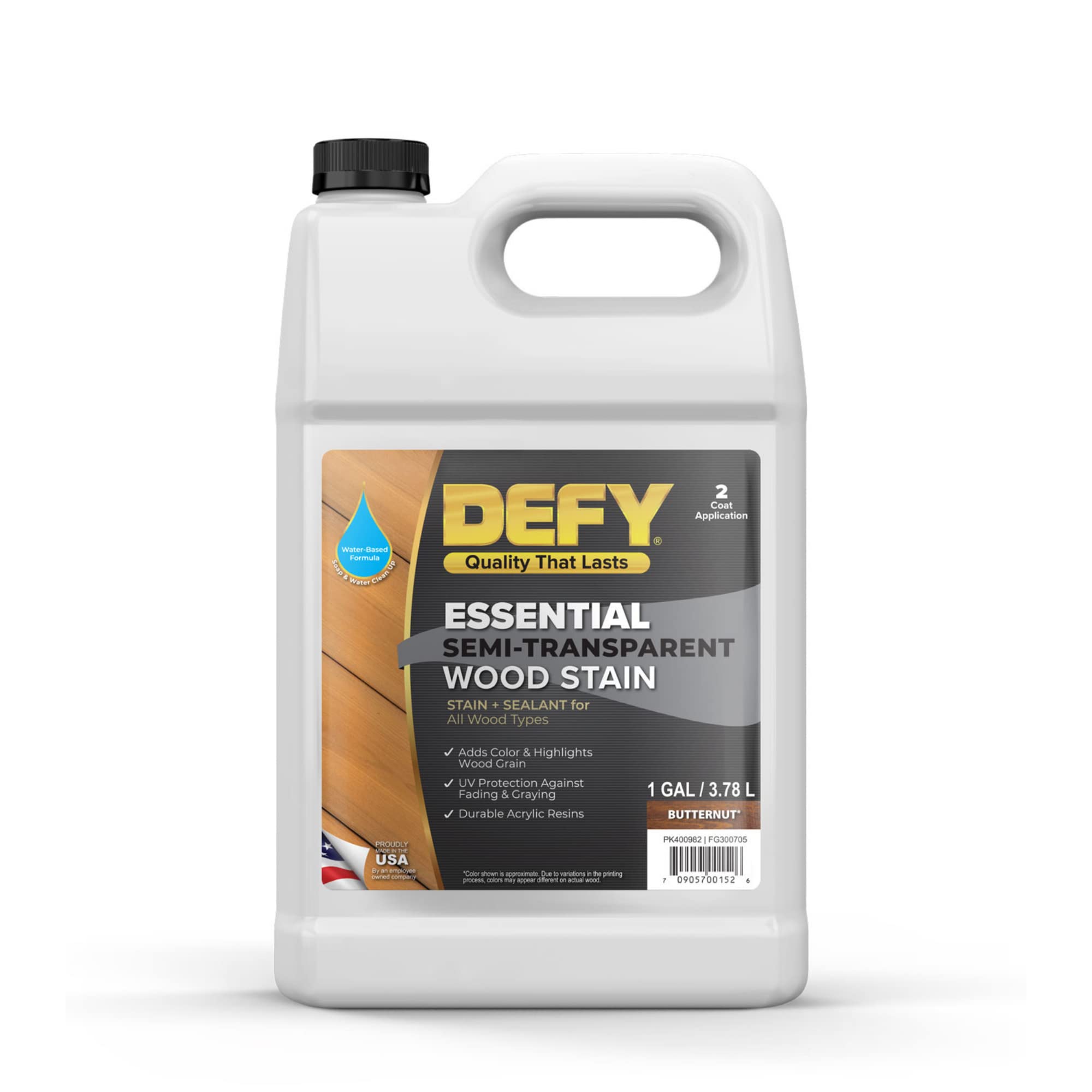
DEFY’s DG formula is built directly for the sun-exposed wood problem. The UV and moisture resistance isn’t an afterthought — it’s the headline. The butternut color lands somewhere between a light tan and a warm honey, and it enhances the wood grain without turning orange or yellow, which is a common failure mode for lesser stains under full sun. Coverage lands at 100 to 150 sq. ft. per gallon for two coats, so one gallon handles a small to medium deck, and the matte finish avoids the plasticky sheen that can look cheap on horizontal boards.
Application is forgiving. Users report success with spray guns, rollers, and brushes, and cleanup is simple soap and water. The acrylic resin binds tightly, resisting cracking even as the wood expands in direct heat. One reviewer noted the stain still looked great after a full season despite the deck facing south all day — a strong indicator that the UV stabilizers are working as advertised.
On the downside, the stain is quite thin straight out of the container. It can drip and run if you over-apply, so a drop cloth is essential. The coverage range is wide enough that you’ll need to gauge your wood’s porosity carefully — rough-sawn cedar will soak up much more than planed pine. Still, for the price point, you’re getting a dedicated sun-shield with a finish that looks natural rather than painted.
Why it’s great
- Explicit UV and moisture resistance built into the resin
- Easy soap-and-water cleanup without sacrificing durability
- Enhances wood grain without an artificial orange shift
Good to know
- Very thin consistency leads to drips and splatters easily
- Coverage range wide enough to require careful estimation
2. Flood CWF-UV Transparent Wood Stain, Honey Gold

Flood’s CWF-UV line has been a staple for full-sun applications for decades, and the transparent honey gold formula is the go-to for anyone who wants the natural wood character to remain visible. The alkyd oil base penetrates deep into the wood fibers rather than forming a surface film, which means the UV-absorbing treatment is distributed through the wood itself, not just the top layer. The Penetrol additive drives the stain even deeper, reducing the chance of peeling in direct sun.
Coverage is generous at up to 400 sq. ft. per gallon, and the finish resists both UV graying and mildew spotting. Users in high-UV climates like Florida report that the stain holds its color for two years before needing pressure washing and a re-coat — a solid performance window for a transparent product. Application with a sprayer is smooth, and after curing, the surface does not develop the waxy, paraffin-like feel that some oil-based stains leave behind.
The biggest drawback is the oil base itself. Cleanup requires mineral spirits instead of soap and water, extending the labor time. The honey gold color is also light enough that dirt and pollen can be visible between cleanings. But if your priority is deep penetration and a natural look that shrugs off UV, this is the stain that delivers year after year.
Why it’s great
- Alkyd oil penetrates deep for long-lasting sun protection
- Penetrol additive drives stain below the surface
- Proven multi-year performance in high-UV regions
Good to know
- Oil base requires mineral spirits for cleanup
- Light honey color can show dirt between cleanings
3. Vermont Natural Coatings PolyWhey Exterior Penetrating Stain, Bison Brown
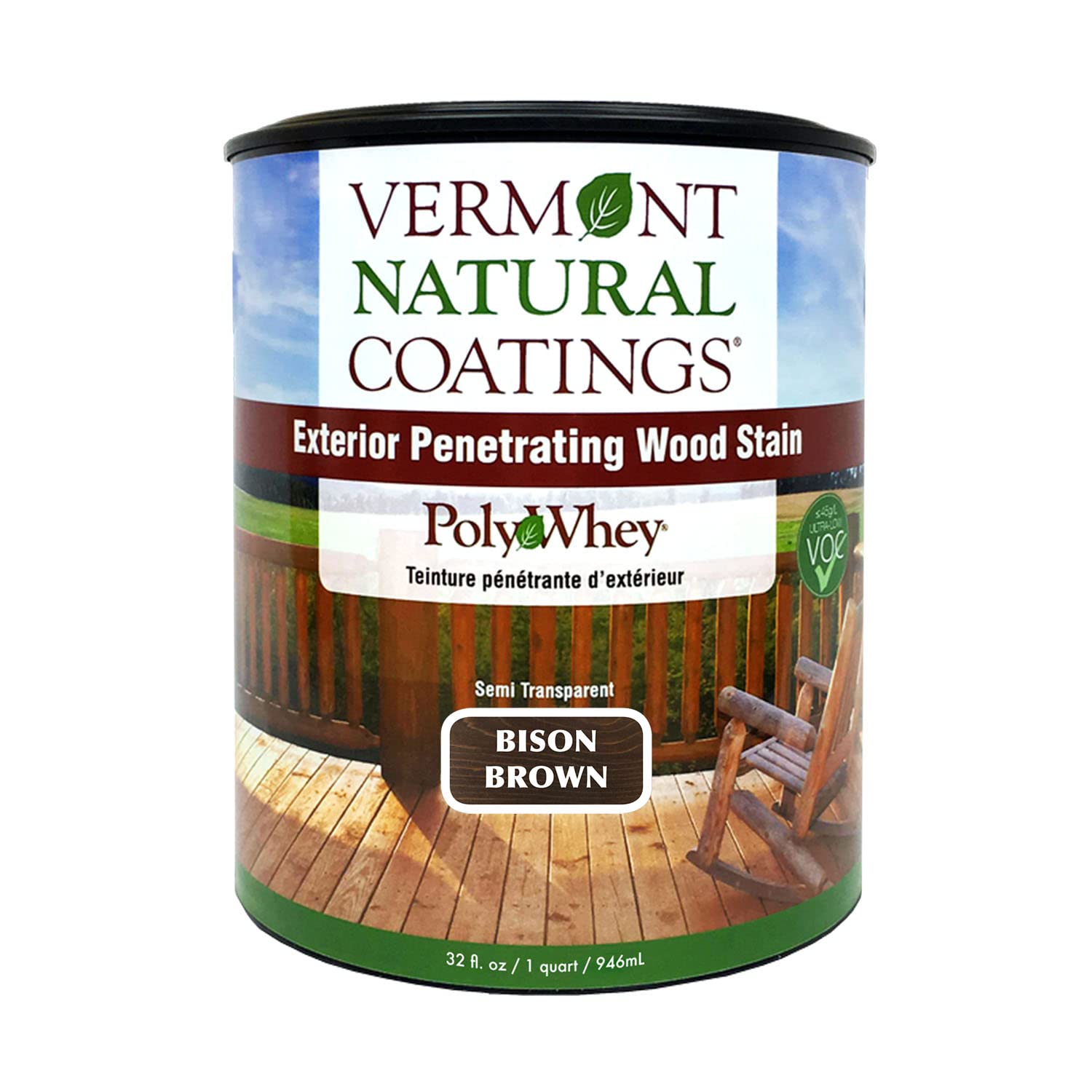
PolyWhey is an outlier in the deck stain category because it uses whey protein as a co-binder, which gives it an exceptionally low odor and a non-toxic profile that matters if you have kids, pets, or a garden near the deck. The bison brown is a rich, dark shade that hides dirt well and delivers deep color saturation. The penetrating nature of the stain means it soaks into the wood rather than forming a surface film, which helps prevent peeling in direct sun.
Users consistently praise the application feel — the stain glides on smoothly with a brush or sponge, and the 48-hour dry time is manageable for most weekend projects. Water resistance is strong right out of the gate, and the UV resistance, while not as aggressive as some dedicated UV shields, is adequate for decks that get partial shade or moderate full-sun exposure. The quart size is perfect for small projects like handrails or garden boxes, but you’ll need multiple quarts for a full deck.
The trade-off is the thin, watery consistency. The product is prone to leaking during shipping if the cap isn’t perfectly sealed, and the thinness makes it challenging to get even coverage without drips on vertical surfaces. For a full-sun horizontal deck with high foot traffic, you may need more frequent re-coats compared to an oil-based competitor. But if low VOCs and a non-toxic formulation are your deal-breakers, PolyWhey is the most responsible choice.
Why it’s great
- Non-toxic, low-odor formula ideal for sensitive environments
- Penetrates deep without surface peeling
- Smooth, gliding application with easy soap cleanup
Good to know
- Thin consistency risks drips and shipping leaks
- May need more frequent re-coats in intense full sun
4. Thompson’s WaterSeal Solid Color Waterproofing Wood Stain, Chestnut Brown

Thompson’s WaterSeal is a household name, and the solid color chestnut brown version is less of a stain and more of a thin-film coating that behaves like paint. It hides the wood grain entirely, covering imperfections and old stains with a uniform, waterproof barrier. The solid finish is excellent for full-sun decks because the pigment density blocks UV rays completely rather than relying on absorbed UV stabilizers. Coverage ranges from 150 to 400 sq. ft. per gallon, depending on wood porosity, and the advanced polymers are specifically designed to resist fading and water damage.
Application is straightforward on dry or damp wood, and the water-based formula means cleanup is just soap and water. Users report that the chestnut brown color is rich and even after a single coat, though a second coat is recommended for maximum color depth and protection. The ASTM D-4446 waterproofing certification adds a layer of credibility — this stain meets an industry standard, not just a marketing claim.
The solid finish has two main drawbacks. First, it hides the wood grain completely, which is a deal-breaker if you want a natural look. Second, because it sits on top of the wood, it can peel or flake in areas with high moisture exposure if the deck wasn’t cleaned thoroughly before application. On a full-sun deck that also gets rain, you need to ensure the surface is clean and dry to avoid delamination.
Why it’s great
- Dense pigment blocks all UV rays for maximum fade resistance
- Meets ASTM D-4446 waterproofing standard
- Easy soap-and-water cleanup with forgiving dry-time
Good to know
- Solid finish hides wood grain completely
- Film can peel if surface isn’t perfectly prepared
5. SaverSystems #1 Deck Premium Wood Fence Stain, Cedar

SaverSystems #1 Deck is the budget-friendly entry point for this category, but it punches above its price tier with features that matter for full-sun applications. The semi-transparent cedar color enhances the natural wood grain while adding UV and water protection in one coat. The water-based formula has a VOC content under 50 g/L, making it one of the cleaner options for environmentally conscious users. One of the most practical features is that it can be applied to visibly damp wood — this shaves hours off the project timeline because you don’t have to wait for the deck to bone-dry after pressure washing.
User feedback confirms that the stain provides a consistent, flat finish that doesn’t look plastic. Coverage is adequate, with one gallon handling roughly three to four standard fence panels, though a second coat improves color depth. The stain resists graying and fading reasonably well, though in extreme full-sun conditions, it may need a mid-season touch-up to maintain original vibrancy.
The downside is durability in high-traffic areas. Deck floors that get walked on daily show wear after one season, while vertical surfaces like railings hold the color much longer. The consistency is runny, and the manufacturer recommends wearing a mask during application to avoid lung irritation. For a budget-friendly refresh of a fence or low-traffic deck, this is a smart buy, but expect to re-coat more frequently than premium options.
Why it’s great
- Can be applied to damp wood, reducing prep time
- Low-VOC water-based formula with easy cleanup
- Consistent semi-transparent look that enhances grain
Good to know
- Shorter wear life on high-traffic horizontal surfaces
- Runny consistency requires drop cloths and a mask
FAQ
How often should I re-stain a deck in full sun?
Can I apply a semi-transparent stain over a solid stain?
Does a higher price guarantee better sun resistance?
Final Thoughts: The Verdict
For most users, the best deck stain for full sun winner is the DEFY DG Butternut because its UV and moisture resistance are built into the resin, not just the label, and the semi-transparent finish keeps your wood looking natural while blocking the worst of the sun’s damage. If you want deep oil penetration and a natural grain that shows through, grab the Flood CWF-UV Honey Gold. And for low-VOC projects where toxicity is your main concern, nothing beats the Vermont Natural Coatings PolyWhey Bison Brown.

Mo Maruf
I created WellFizz to bridge the gap between vague wellness advice and actionable solutions. My mission is simple: to decode the research and give you practical tools you can actually use.
Beyond the data, I am a passionate traveler. I believe that stepping away from the screen to explore new environments is essential for mental clarity and physical vitality.