Our readers keep the lights on and my smoothie glass nicely filled. As an Amazon Associate, I earn from qualifying purchases.
Protecting your deck from rain, snow, and relentless UV rays requires more than just paint — it demands a specialized coating that bonds deep into wood fibers while creating a waterproof barrier on the surface. Choosing the wrong formula leads to peeling, fading, and annual reapplication headaches that waste both time and material.
I’m Mohammad Maruf — the founder and writer behind WellFizz. My research for this guide involved cross-referencing hundreds of verified buyer experiences, analyzing ASTM waterproofing standards, and comparing acrylic vs. bio-based resin technologies to find the formulations that actually hold up across different wood species and climates.
The market offers everything from budget-friendly semi-transparents to premium bio-based sealers, making the selection process confusing for homeowners. This guide breaks down the five top-rated options to help you identify the right best deck stain and waterproofer for your specific wood type and weather exposure.
How To Choose The Best Deck Stain And Waterproofer
Selecting the right deck stain starts with understanding your wood’s current condition and your tolerance for maintenance. Old, weathered wood absorbs stain differently than fresh pressure-treated lumber, and the amount of direct sun your deck receives dictates how often you’ll need to reapply.
Finish Opacity: Semi-Transparent vs. Solid
Semi-transparent stains penetrate wood pores and let the natural grain show through, but they typically need reapplication every two to three years. Solid finishes sit on top like paint, hiding grain completely and lasting up to five years before showing wear. Choose semi-transparent if you want the wood texture visible; choose solid if your deck has old stains or color inconsistencies you want to cover.
Waterproofing Chemistry and ASTM Standards
Effective waterproofing depends on the resin system and additive package. Look for formulations that reference ASTM D-4446, the industry standard for measuring water repellency of wood. Acrylic-based stains offer strong UV resistance and flexibility, while newer bio-based options using whey protein co-binders provide low-odor, non-toxic protection with similar water beading performance.
Coverage Rate and Wood Porosity
Coverage varies dramatically based on wood texture. Smooth planed pine may need one gallon per 300–400 square feet, while rough-sawn cedar or weathered pressure-treated wood can absorb stain at half that rate — 150 to 200 square feet per gallon. Always calculate your deck’s square footage and budget for a second coat, especially on end-grain board edges where water intrusion starts first.
Quick Comparison
On smaller screens, swipe sideways to see the full table.
| Model | Category | Best For | Key Spec | Amazon |
|---|---|---|---|---|
| Vermont Natural Coatings PolyWhey | Premium | Longest durability with non-toxic formula | Bio-based whey protein co-binder | Amazon |
| #1 Deck Premium Advanced Solid | Mid-Range | Full opaque coverage over old stain | Opaque finish, 100–150 sq. ft./coat | Amazon |
| KILZ Waterproofing Semi-Transparent | Mid-Range | Budget-friendly acrylic with 3-year warranty | 100% Acrylic, 250–500 sq. ft./coat | Amazon |
| Thompson’s WaterSeal Solid Color | Entry-Level | Renewing old decks with even color | ASTM D-4446 compliant, 150–400 sq. ft. | Amazon |
| Thompson’s WaterSeal Semi-Transparent | Entry-Level | Quick one-coat water beading | Fade resistant, 150–400 sq. ft. | Amazon |
In‑Depth Reviews
1. Vermont Natural Coatings PolyWhey Exterior Penetrating Stain
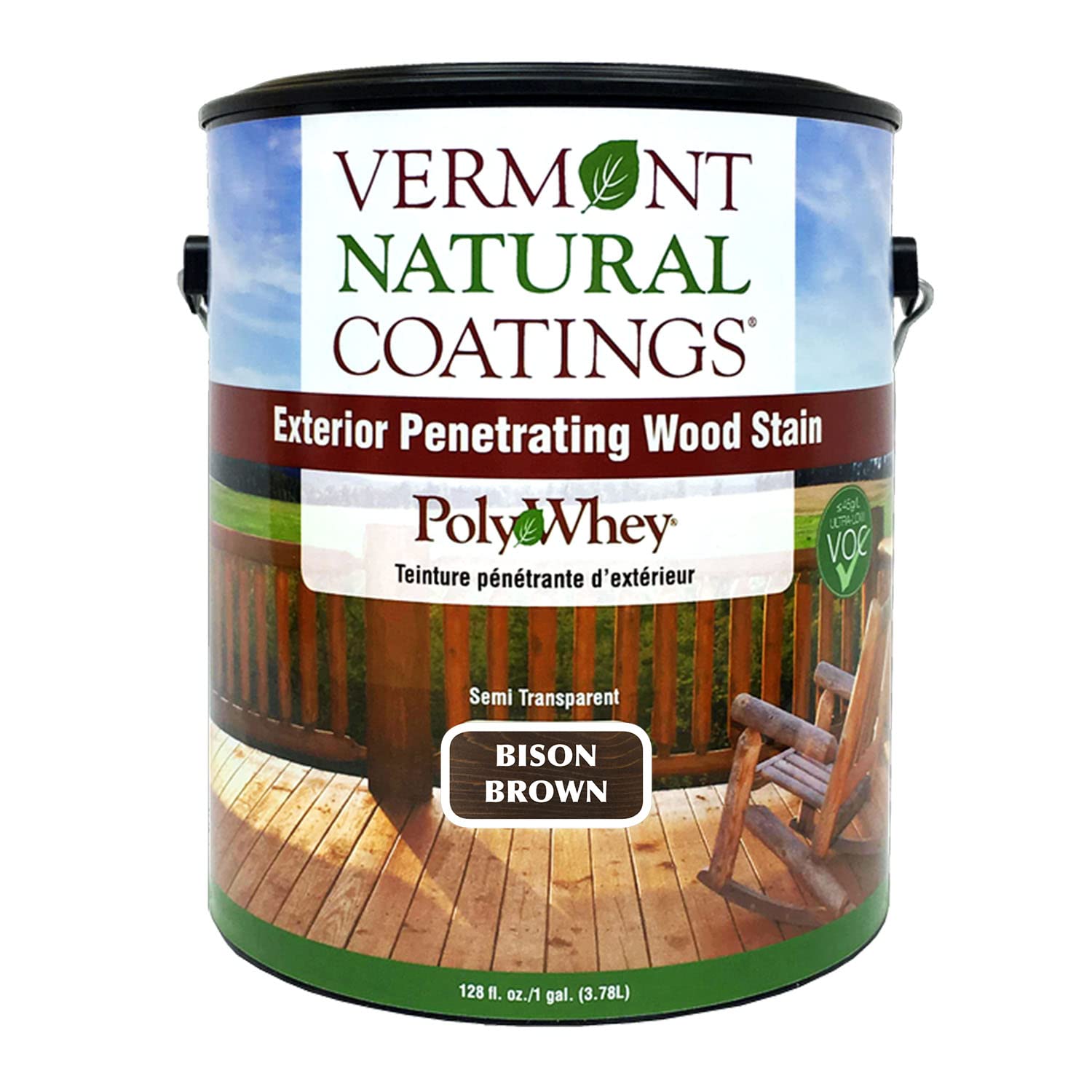
The PolyWhey formula stands apart by using whey protein as a co-binder — a renewable resource that delivers extraordinary penetration into wood pores without the harsh chemical smell typical of solvent-based stains. In Bison Brown, the color saturates deep, making the grain visible while creating a waterproof barrier that causes rain to bead on contact. The watery texture requires patience during application, but the pay-off is a flat, uniform finish that resists peeling even on vertical fence boards.
Customer feedback confirms its staying power: users report zero odor during application and excellent color retention through an entire growing season. The 48-hour dry time between coats is a trade-off for the non-toxic chemistry, but reviewers note that the finish hardens to a durable shell that withstands garden hose pressure and incidental moisture within hours of the final coat. It covers a deceptive amount of surface area given its thin consistency — expect one gallon to handle roughly 200–250 square feet on porous cedar.
The premium price reflects both the proprietary bio-resin technology and the manufacturing process that eliminates VOCs. For homeowners sensitive to chemical fumes or those staining near vegetable gardens, this is the safest high-performance option available. The only real downside is the limited color palette compared to mass-market brands, though the existing shades cover the most popular brown and gray tones.
Why it’s great
- Near-zero odor during and after application
- Deep wood penetration without surface peeling
- Non-toxic, safe for use around edible gardens
Good to know
- Watery consistency requires careful brush control on vertical surfaces
- Full 48-hour cure between coats may delay project completion
2. #1 Deck Premium Advanced Solid Color Outdoor Wood Stain
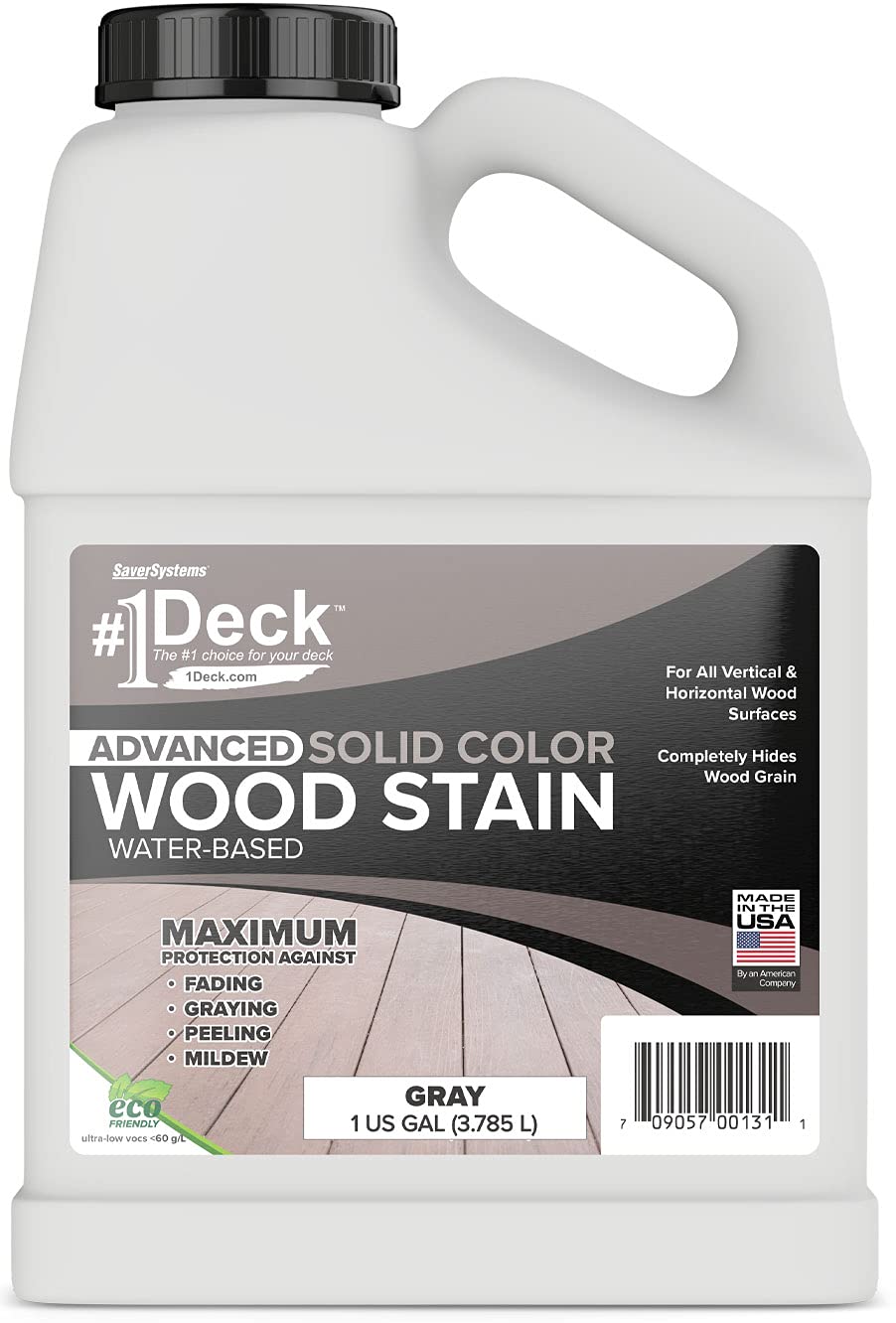
This solid-color stain from SaverSystems functions essentially as a high-performance paint designed specifically for exterior wood. The opaque Gray finish completely hides the wood grain, making it the best choice for covering old discoloration, mismatched boards, or previous stain failures. The water-based formula keeps VOCs below 60 g/L, and cleanup requires only soap and water — no mineral spirits or harsh solvents needed.
Application data from users shows the stain dries to the touch within hours, allowing for a second coat the same day on warm, dry afternoons. Coverage sits between 100 and 150 square feet per gallon per coat on textured wood, which is tighter than semi-transparent options but expected given the thicker film build. Reviewers who applied it to weathered fences report that a single coat transformed gray, mildewed wood into a consistent, fresh-looking surface that still shows the wood’s natural texture beneath the opaque layer.
The product’s durability shines in real-world weather tests: one reviewer reported a thunderstorm hit just four hours after application, yet the following day the finish remained intact with no wash-off. This resilience comes from the dual-action design that penetrates wood pores while building a protective film. It’s available in six colors including Classic Taupe and Dark Walnut, giving solid-stain users genuine choice without overwhelming the selection.
Why it’s great
- Completely conceals old stains and wood grain imperfections
- Quick dry time enables same-day second coat application
- Survived unexpected rain during curing without damage
Good to know
- Lower per-gallon coverage than semi-transparent stains
- Opaque film can peel if applied over existing loose stain
3. KILZ Waterproofing Semi-Transparent Wood Stain

KILZ brings its reputation for consistent quality into the deck stain category with this 100% acrylic semi-transparent formula. The Cedar Naturaltone color delivers a rich, warm tone that lets the wood grain show through while providing a satin sheen that reflects light rather than absorbing it. Users report that one coat is often sufficient on moderately weathered wood, with full waterproofing evident as water beads immediately after curing.
The warranty structure reflects KILZ’s confidence: three years on horizontal deck boards and five years on vertical fences and siding. Coverage is excellent at 250–300 square feet for the first coat and up to 600 square feet for the second coat on smoother wood. Reviewers with decades of experience selling KILZ products note that the consistency of the formula hasn’t wavered — the stain applies smoothly, levels well without lap marks, and resists fading even in full-sun decks in southern climates.
A practical consideration is the 72-hour cure time before the surface can be washed, though normal foot traffic is fine after 24 hours. The satin finish is slightly glossier than flat or matte alternatives, which some users prefer for its easy-to-clean surface. The main trade-off at this price point is the semi-transparent opacity — it won’t hide severe wood discoloration, so users with heavily stained decks should consider a solid option instead.
Why it’s great
- Industry-trusted brand with 45+ years of consistent quality
- Exceptional coverage range at 250–600 sq. ft. per gallon
- Warranted up to 5 years on vertical surfaces
Good to know
- Semi-transparent opacity won’t cover heavy wood staining
- Satin sheen may appear glossier than expected for some users
4. Thompson’s WaterSeal Solid Color Waterproofing Wood Stain

Thompson’s WaterSeal is a household name in wood waterproofing, and this solid color formulation in Natural Cedar lives up to that reputation. It applies as a thick, pigment-rich coating that hides the wood grain while letting the texture show through — a subtle difference from paint that keeps the deck looking like wood rather than plastic. The advanced polymer package delivers fade resistance and UV protection that users confirm keeps decks looking fresh through multiple seasons.
One detailed review from a homeowner who spent five to six days staining a wrap-around deck showed that the Natural Cedar color completely renewed a seven-year-old structure, with excellent rain and UV protection visible immediately. The product exceeds the ASTM D-4446 standard for wood waterproofing, which means it meets the same testing criteria used for commercial wood treatments. Application works best with rollers and brushes — users specifically warn against sprayers due to overspray concerns on nearby siding and plants.
Color uniformity can be a challenge on previously stained wood where the old finish has worn unevenly. Several reviewers note that a second coat eliminates these patchy areas, but that second coat significantly reduces the can’s effective coverage. The solid finish means this stain is best suited for decks where hiding the natural grain is acceptable, and the color selection includes Natural Cedar along with other common outdoor tones.
Why it’s great
- Meets ASTM D-4446 waterproofing standard for wood
- Hides grain while preserving wood texture visually
- Easy clean-up with soap and water
Good to know
- May require two coats for uniform color on old stain
- Not recommended for sprayer application due to overspray
5. Thompson’s WaterSeal Semi-Transparent Waterproofing Wood Stain

This entry-level semi-transparent stain in Chestnut Brown offers straightforward protection at the lowest price point in the lineup. The thin consistency means it penetrates dry, sanded wood quickly, but absorption can be uneven on the first coat — especially on wood that hasn’t been stained before. Multiple user reviews emphasize that a second coat is essential for uniform color and long-term waterproofing, which effectively halves the coverage you get from each gallon.
Water beading performance is impressive even after a single coat, as confirmed by several buyers who tested the surface with a hose immediately after drying. The color skews more red than the can packaging suggests, a point that multiple reviewers highlight. The chestnut tone looks warm and natural on cedar and redwood, but users seeking a neutral brown should check customer photos before purchasing.
The thin consistency dries fast — a benefit in humid climates but a challenge in direct sun where lap marks can form if you don’t maintain a wet edge. Coverage varies wildly based on wood porosity: one reviewer reported covering only 120 square feet per gallon, while others stretched a gallon across 300 square feet. The value proposition is strongest for small decks or raised garden beds where the lower initial cost offsets the need for a second gallon on larger projects.
Why it’s great
- Excellent initial water beading even with single coat
- Fast drying time speeds up multi-coat projects
- Affordable entry point for small wood surfaces
Good to know
- Color dries more red than label indicates
- Uneven absorption requires thorough mixing and second coat
FAQ
Should I use semi-transparent or solid stain for a weathered deck?
How long should I wait before applying a second coat of deck stain?
Can I apply a new deck stain over an old waterproofing coating?
Final Thoughts: The Verdict
For most users, the best deck stain and waterproofer winner is the Vermont Natural Coatings PolyWhey because it delivers deep wood penetration, zero toxic fumes, and proven water beading that lasts through all four seasons. If you want opaque coverage that hides old stains and discoloration, grab the #1 Deck Premium Solid. And for budget-friendly acrylic protection with a trusted brand warranty, nothing beats the KILZ Waterproofing Semi-Transparent.

Mo Maruf
I created WellFizz to bridge the gap between vague wellness advice and actionable solutions. My mission is simple: to decode the research and give you practical tools you can actually use.
Beyond the data, I am a passionate traveler. I believe that stepping away from the screen to explore new environments is essential for mental clarity and physical vitality.